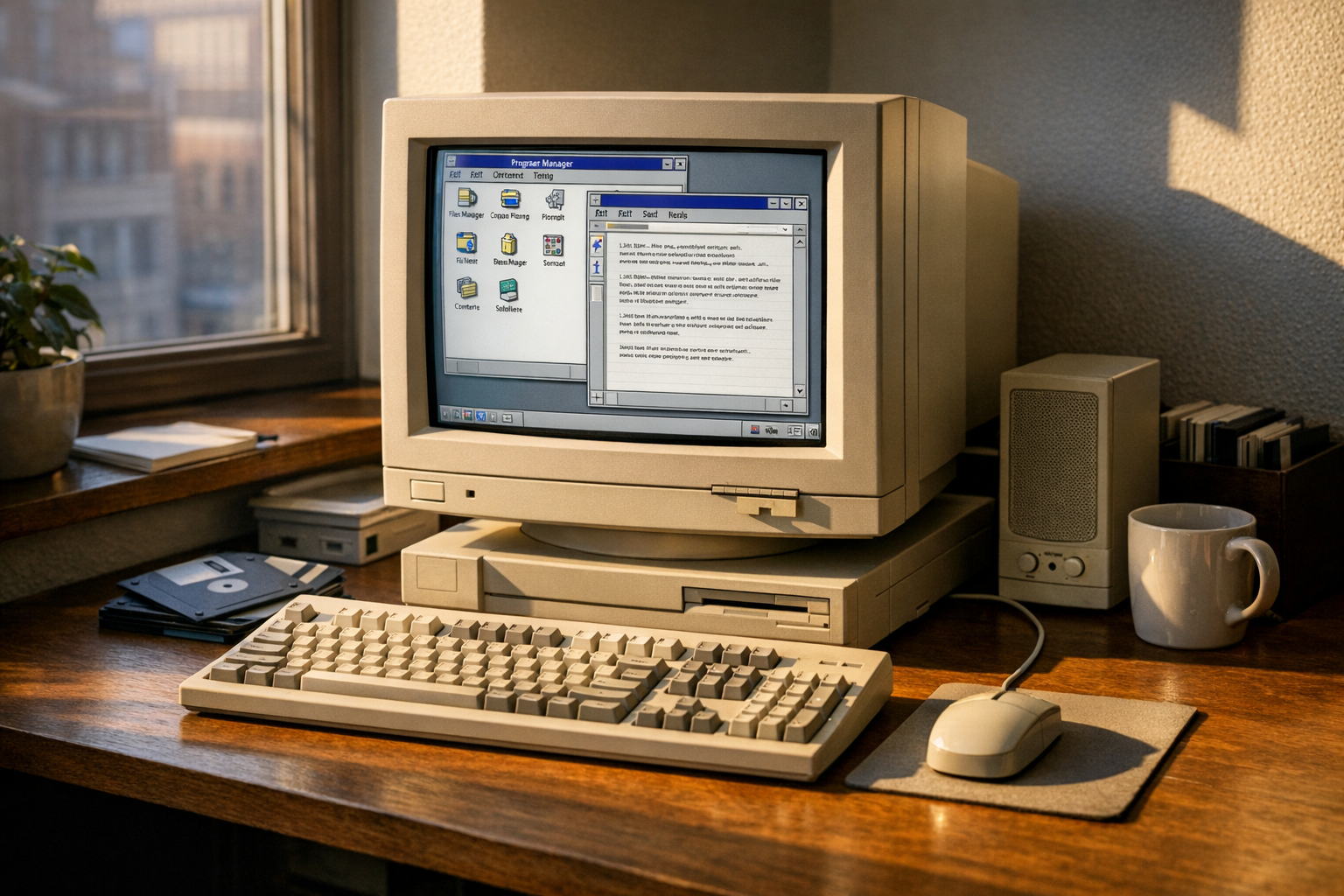
A Show HN remade my blog windows 31 post recently broke through the internet’s noise in a way most dev projects simply don’t. A developer rebuilt their entire blog as a functional Windows 3.1 desktop — draggable windows, Program Manager icons, that unmistakable battleship-gray interface and all. And here’s the thing: it wasn’t just a gimmick. It sparked a genuinely substantive conversation about retro UI design on the modern web.
This project isn’t an isolated experiment, either. Developers everywhere are recreating classic operating systems inside browsers, and the trend reveals something deeper about how we collectively think about design, nostalgia, and user experience. Furthermore, the movement is growing fast enough that understanding why actually matters — both technically and culturally.
Why Developers Are Rebuilding Classic OS Interfaces
The Show HN remade my blog windows 31 project taps into a powerful cultural current. Nostalgia drives much of it. But there’s considerably more going on beneath the surface than just warm fuzzy feelings about old computers.
Nostalgia as a design philosophy. People who grew up with Windows 3.1, Windows 95, or Mac OS 9 feel genuine warmth toward those interfaces. Chunky borders, limited color palettes, bitmap fonts — they trigger positive memories in a way modern UI simply can’t replicate. Consequently, recreating these environments online feels less like a tech demo and more like building a digital time capsule. I’ve shown these projects to non-technical friends and watched their faces light up. That reaction isn’t nothing.
Minimalism by constraint. Old operating systems worked within severe hardware limits. Designers couldn’t lean on gradients, animations, or high-resolution assets — every pixel had to earn its place. Therefore, modern developers find this constraint genuinely refreshing, because it forces the kind of clarity and intentional decision-making that’s rare in an era where you can throw a 4MB hero image at any problem. This surprised me when I first started digging into these projects — the discipline baked into those old UIs is actually impressive.
Accessibility benefits. Retro interfaces often feature high-contrast elements and clear visual hierarchies that hold up remarkably well by modern standards. Notably, the simple layouts work well with screen readers and keyboard navigation — the Web Content Accessibility Guidelines (WCAG) emphasize exactly these principles. Not bad for a 1992 UI design.
Standing out in a sea of sameness. Most blogs look identical today — same CSS frameworks, same design patterns, same hero section with the same sans-serif headline. A Windows 3.1 blog immediately grabs attention. It’s memorable, people share it, and that organic sharing is SEO gold. Bottom line: differentiation matters, and this delivers it.
Here are the top reasons developers cite for building retro OS web projects:
- Pure creative fun and genuine self-expression
- Portfolio differentiation in brutally competitive job markets
- Learning CSS and JavaScript through challenging, real constraints
- Building community through shared cultural references
- Exploring alternative interaction patterns that most developers never touch
Technical Patterns Behind Retro OS Web Projects
Whenever someone posts a Show HN remade my blog windows 31 project, the first comment is always some variation of “how did you build this?” The technical approaches vary more than you’d expect, but several common patterns show up again and again.
Pure HTML, CSS, and JavaScript. Many developers avoid frameworks entirely — and honestly, good for them. They write vanilla CSS that mimics the pixel-perfect look of Windows 3.1, using custom borders built from box-shadow and outline properties, with bitmap-style fonts loaded via @font-face. Specifically, nailing the MS Sans Serif aesthetic requires careful font selection and pixel-level alignment. Fair warning: getting this exactly right takes longer than you’d think.
Window management systems. Building a window manager in the browser is the core challenge — and the most satisfying part to get working. Each “window” is typically a div element with drag-and-drop functionality wired up through JavaScript event listeners for mousedown, mousemove, and mouseup. Z-index management handles window stacking. Additionally, resize handles require calculating cursor position relative to window edges, which is one of those problems that sounds simple until you’re three hours deep into it.
Existing retro UI libraries. Several open-source projects give you ready-made components so you’re not reinventing every beveled border from scratch:
- 98.css — A CSS library that faithfully recreates Windows 98’s visual style
- XP.css — Similarly targets the Windows XP aesthetic with solid accuracy
- 7.css — Focuses on Windows 7’s Aero-inspired look
- React95 — A React component library for Windows 95 interfaces
The 98.css project on GitHub has over 9,000 stars. I’ve tested dozens of CSS component libraries and this one actually delivers — the attention to detail is remarkable.
Routing and content management. Blog content still needs to load dynamically, obviously. Most developers use a static site generator like Hugo or Eleventy behind the scenes, with the retro UI layer sitting on top. Blog posts open in “windows” that fetch markdown content and render it inside the faux desktop environment. It’s a clean separation of concerns. Moreover, it means your content pipeline stays sane.
State management considerations. A convincing OS simulation needs to remember window positions, open applications, and user preferences — otherwise every page load feels jarring. Developers typically use localStorage for persistence. Meanwhile, more ambitious projects use Redux-style state management to track the entire desktop state. Heads up: this is where scope creep loves to hide.
Here’s a simplified architecture for a Windows 3.1 blog:
1. Static HTML shell renders the desktop background and taskbar
2. CSS handles all visual styling — borders, colors, typography
3. JavaScript manages window creation, dragging, resizing, and z-ordering
4. A content layer fetches blog posts from markdown files or a CMS
5. localStorage persists user preferences between sessions
Case Studies of Popular Retro UI Web Projects
The Show HN remade my blog windows 31 trend didn’t appear overnight. Several landmark projects paved the way, and understanding them helps explain why this movement keeps gaining momentum rather than fading out.
Windows 93 (windows93.net). This project recreated a fictional version of Windows from 1993 — including dozens of functional “applications” like a paint program, music player, and games. It went genuinely viral and proved that retro OS simulations could captivate millions of users. Moreover, it showed that novelty interfaces drive massive organic traffic in ways that conventional design simply can’t. I remember the first time I stumbled across it and spent 45 minutes just poking around.
Poolside FM. This Mac OS-inspired web app plays curated music through a retro interface, combining nostalgia with real utility. The real kicker? It attracted significant venture capital funding. Importantly, that shows retro aesthetics aren’t just for hobby projects — they can support actual businesses with actual revenue.
Aaron Iker’s CSS experiments. Designer Aaron Iker created pixel-perfect CSS recreations of classic OS elements. His work on CodePen inspired countless developers to attempt their own retro interfaces. Sometimes one person’s obsessive side project shifts an entire community’s sense of what’s possible.
Dustin Brett’s daedalOS. This ambitious project recreates an entire desktop operating system in the browser — file system, terminal emulator, dozens of working applications. It shows the upper limits of what’s achievable with web technologies, and those limits are further out than most people assume.
Personal blog transformations. Beyond showcase projects, individual developers regularly post Show HN remade my blog windows 31 style projects that reach the front page of Hacker News, generating discussion, attracting job offers, and building personal brands. Notably, these aren’t massive funded products — they’re one person’s weekend project. That’s what makes them compelling.
| Project | OS Recreated | Technology Stack | Stars/Users | Key Innovation |
|---|---|---|---|---|
| Windows 93 | Fictional Win93 | Vanilla JS | Millions of visitors | Full app ecosystem |
| Poolside FM | Classic Mac OS | React | Funded startup | Music + nostalgia |
| 98.css | Windows 98 | Pure CSS | 9,000+ GitHub stars | Reusable component library |
| React95 | Windows 95 | React | 6,000+ GitHub stars | React integration |
| daedalOS | Custom desktop | Next.js | 8,000+ GitHub stars | Full OS simulation |
| Various HN blogs | Windows 3.1 | Mixed | Front-page posts | Personal branding |
Performance and SEO for Retro OS Blogs
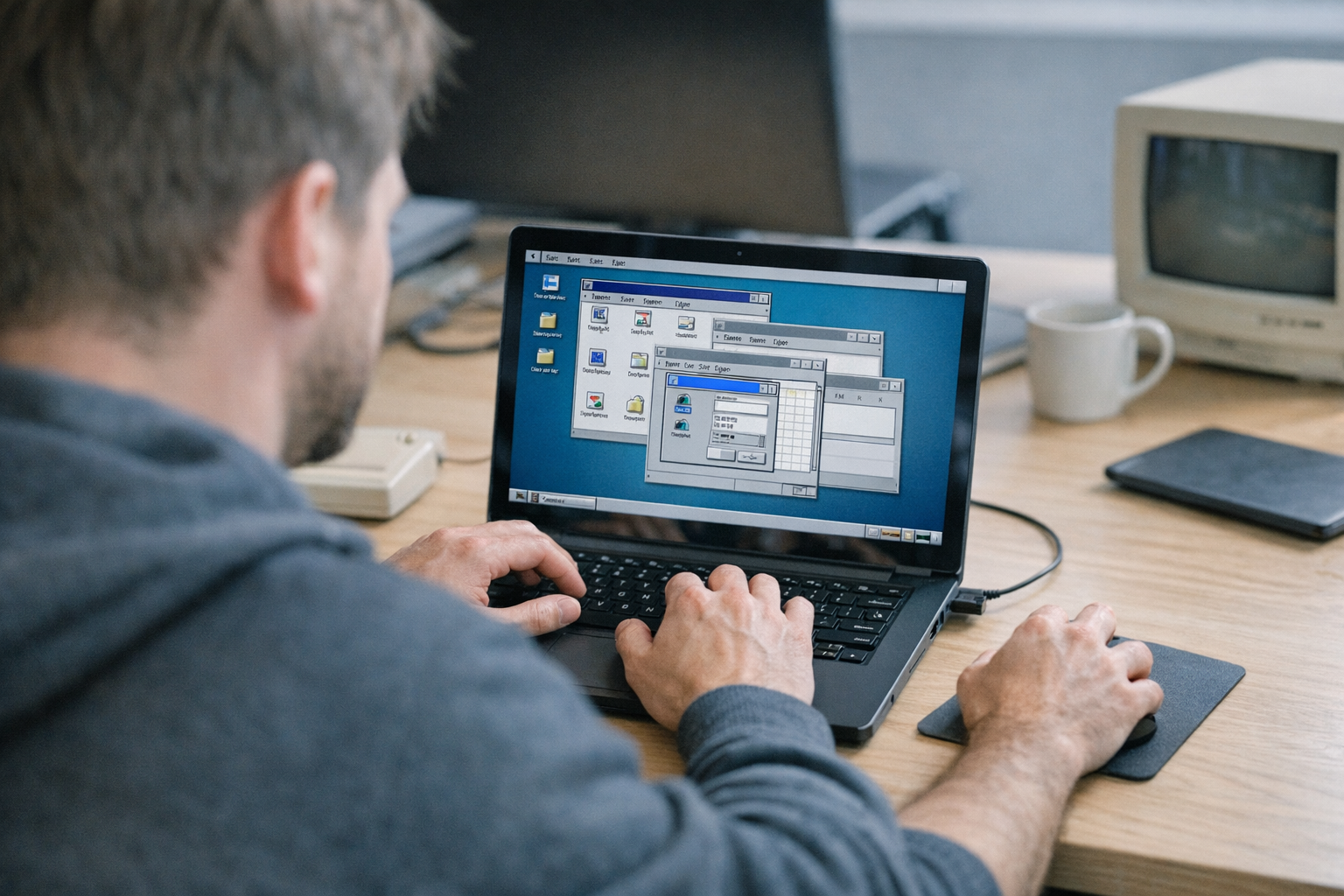
Building a retro OS blog sounds like a blast. But does it actually perform well? The answer is more nuanced than you’d expect. Consequently, developers need to think carefully about the tradeoffs before committing.
Initial load performance. A well-built Show HN remade my blog windows 31 project can actually load faster than most modern blogs. No heavy images, no complex animations, no 300KB JavaScript bundles just to render a nav bar. The visual style is almost entirely CSS, which is lightweight by nature. Nevertheless, poorly implemented projects can balloon quickly if you’re not watching your asset sizes.
JavaScript overhead. Window management logic adds JavaScript that a simple blog wouldn’t need — drag-and-drop, z-index management, state persistence. However, a solid implementation keeps this under 50KB gzipped. That’s far less than most React applications ship just for their framework dependencies. Worth keeping that comparison in mind when someone claims the complexity isn’t worth it.
Core Web Vitals impact. Google’s Core Web Vitals measure loading speed, interactivity, and visual stability. A retro OS blog can score well on all three, if built thoughtfully. Specifically:
- Largest Contentful Paint (LCP): The simple visual style loads quickly — there’s nothing heavy to paint
- First Input Delay (FID): Minimal JavaScript means fast interactivity from the start
- Cumulative Layout Shift (CLS): Fixed-position windows don’t cause the jarring layout shifts that plague modern sites
SEO content accessibility. Here’s the thing: search engines need to crawl your blog content. Because posts only render inside JavaScript-powered windows, crawlers might miss them entirely — and that’s a real problem, not a theoretical one. Therefore, set up server-side rendering or provide fallback HTML. The Google Search Central documentation explains specifically how Googlebot handles JavaScript-rendered content, and it’s worth reading before you ship anything.
Mobile responsiveness challenges. This is the biggest hurdle, full stop. Windows 3.1 wasn’t designed for touchscreens, and draggable windows don’t translate well to a 375px-wide phone screen. Smart developers create a simplified mobile layout — preserving the retro aesthetic while adapting the interaction model entirely. Additionally, they ensure touch targets meet the minimum 48×48 pixel recommendation, which is a constraint that actually aligns surprisingly well with old-school UI thinking.
Practical performance tips for retro OS blogs:
- Use CSS custom properties for theming instead of heavy image assets
- Lazy-load blog post content — don’t fetch everything on page load
- Set up proper semantic HTML underneath the visual layer
- Add
fallbacks for search engine crawlers - Compress custom bitmap fonts or use system font stacks where possible
- Test with Google Lighthouse early and often — catch issues before they compound
Why Retro Interfaces Strike Such a Nerve
Every Show HN remade my blog windows 31 post generates enthusiastic comments. People don’t just appreciate the technical skill — they feel something when they see it. Understanding this psychology explains why the trend has staying power instead of burning out like most web design fads.
The nostalgia effect. Psychologists call it “nostalgic reverie.” Encountering familiar artifacts from the past triggers warm, positive emotions. Similarly, research shows that nostalgia increases feelings of social connectedness. A Windows 3.1 blog doesn’t just display content — it creates an emotional experience that a clean white Notion-style layout simply can’t match.
Skeuomorphism’s return. The design world swung hard toward flat design around 2013, with Apple leading the charge through iOS 7. Conversely, many users now find flat interfaces cold and genuinely confusing — unlabeled icons, invisible affordances, mystery-meat navigation. Retro OS interfaces represent an extreme form of skeuomorphism, where every element has a clear visual identity through borders, shadows, and textures. Everything looks like what it is.
The “digital craft” movement. Developers increasingly value handmade digital experiences and actively reject cookie-cutter templates. A Show HN remade my blog windows 31 project represents hours of careful, deliberate work — and it shows. Furthermore, it demonstrates technical skill in a way that a standard blog template never could, however polished that template might be. I’ve seen developers get job offers directly from these projects. That’s not a coincidence.
Counterculture appeal. Modern web design follows strict conventions — rounded corners, sans-serif fonts, oceans of whitespace. Building a Windows 3.1 blog is a deliberate rejection of those norms. Although it might seem impractical, that rebellious energy attracts real attention and genuine admiration from people who are quietly tired of every website looking identical.
Community bonding. Sharing a retro OS blog on Hacker News fills the comments with shared memories — “I spent hours in Program Manager,” “that Solitaire win animation was peak computing.” These shared experiences turn a solo project into a collective moment of recognition. That kind of comment section engagement is something most marketing teams spend serious money trying to manufacture.
The emotional impact breaks down into measurable engagement patterns:
- Time on site increases — Users explore the interface out of pure curiosity
- Social sharing spikes — Novelty drives organic distribution faster than any ad campaign
- Return visits rise — People come back specifically to show friends
- Comment engagement grows — Shared nostalgia fuels real discussion
- Bounce rate drops — The interactive experience holds attention in a way static pages don’t
Conclusion
The Show HN remade my blog windows 31 movement represents more than clever nostalgia. It’s a meaningful design philosophy — one that challenges modern web conventions and makes a genuine argument for constraint, craft, and character. Developers who build these projects gain technical skills, community recognition, and personal brands that are actually memorable. That combination is rare.
If you’re inspired to build your own retro OS blog, start small. Pick a CSS library like 98.css, build a single draggable window that displays a blog post, then expand from there. Additionally, study the projects mentioned above — not just for inspiration but for the specific technical patterns they use to solve hard problems. You’ll learn more from reading their source code than from any tutorial.
Remember the fundamentals, though. Ensure your content stays accessible to search engines. Test performance with Lighthouse. Build mobile fallbacks before you ship, not after. Most importantly — and I mean this sincerely — have fun with it. The best show hn remade my blog windows 31 projects succeed because their creators genuinely enjoyed building them, and that energy comes through in every pixel.
The web doesn’t have to look the same everywhere. And sometimes, the most forward-thinking design choice is looking backward.
FAQ
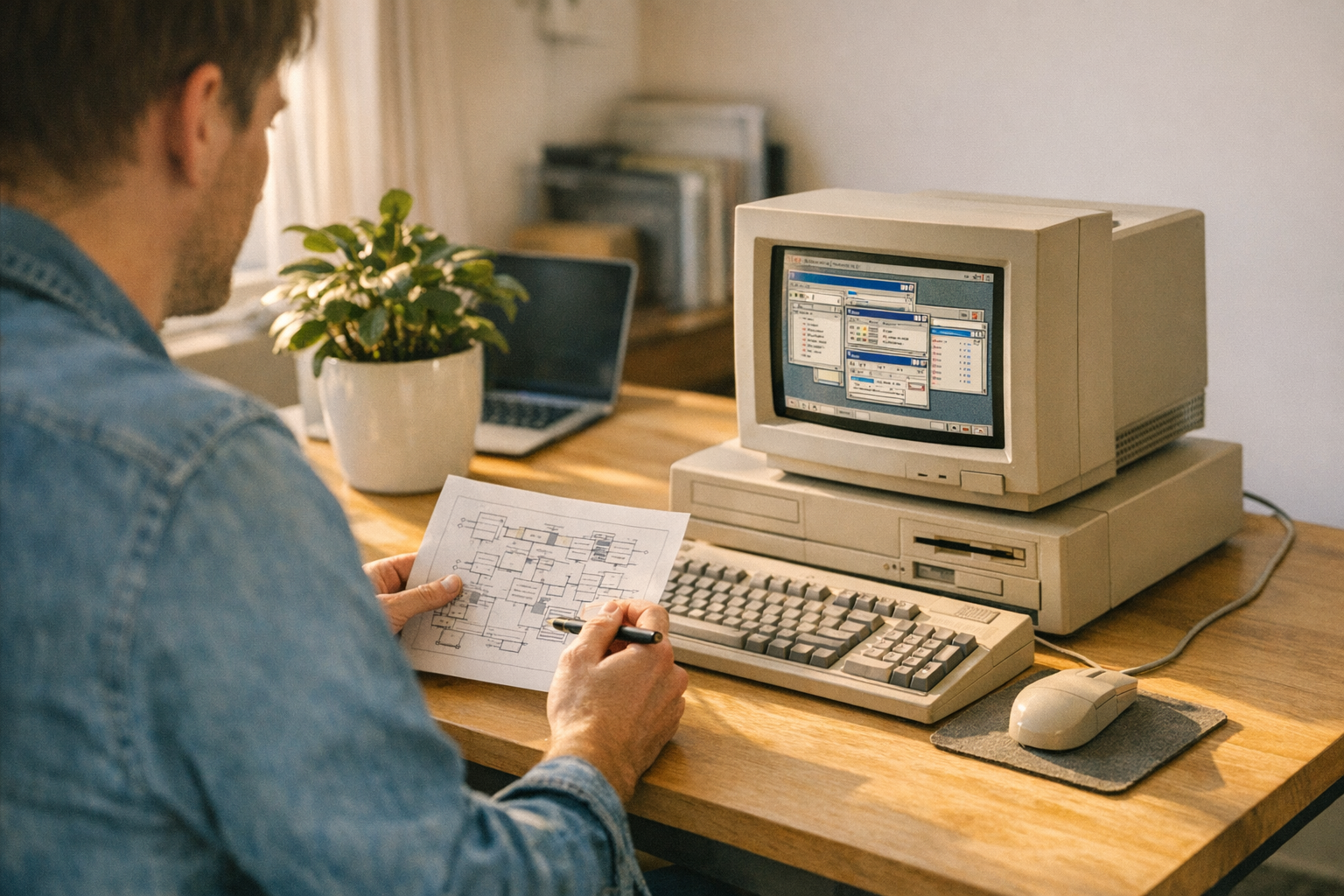
What does “Show HN: I remade my blog into a Windows 3.1 environment” mean?
“Show HN” is a Hacker News post format where developers show personal projects to the community. A Show HN remade my blog windows 31 post means someone rebuilt their blog to look and feel like the classic Windows 3.1 operating system — draggable windows, desktop icons, the whole thing. Users can click around, open blog posts inside faux windows, and interact with a retro interface that runs entirely in a modern web browser. It’s more impressive in practice than it sounds in description.
What technologies do I need to build a Windows 3.1 blog?
You need solid HTML, CSS, and JavaScript fundamentals — that’s genuinely it to start. Specifically, CSS handles the retro visual styling: pixel borders, system fonts, gray color palettes. JavaScript manages window dragging, resizing, and stacking order. You don’t need a framework, although libraries like 98.css and React95 can speed up development considerably. A static site generator like Hugo or Eleventy works well for content management behind the scenes, sitting cleanly underneath the retro UI layer.
Will a retro OS blog hurt my SEO rankings?
Not necessarily — but you have to be deliberate about it. However, you must ensure search engines can actually access your content, because posts that only render inside JavaScript-powered windows are invisible to crawlers by default. Use server-side rendering or provide fallback content. Keep your JavaScript bundle lean and maintain proper semantic HTML structure underneath the visual layer. Notably, a well-built Show HN remade my blog windows 31 project can actually improve engagement metrics like time on site and social shares, which indirectly benefit SEO in meaningful ways.
How do I make a Windows 3.1 blog work on mobile?
Mobile responsiveness is genuinely the biggest challenge here — draggable windows and touchscreens are a rough combination. The best approach is an adaptive layout: serve the full desktop experience on larger screens, and switch to a simplified layout on mobile that keeps the retro aesthetic without requiring drag interactions. CSS media queries handle the transition cleanly. Alternatively, display a single maximized window on mobile with navigation buttons instead of a multi-window desktop. Neither solution is perfect, but both are workable.
Are there legal issues with recreating Windows 3.1 in a browser?
Generally, recreating the visual style of an old operating system falls under fair use, because you’re building something new that references a design language rather than copying code. Nevertheless, avoid using actual Microsoft trademarks, copyrighted icons, or proprietary code directly. Create your own icon designs inspired by the originals, and use open-source fonts instead of extracting system fonts from old Windows installations. When in doubt, consult a legal professional who knows intellectual property law — this isn’t the area to wing it.
Why do Show HN retro OS projects consistently reach the front page?
Several factors stack together. The Show HN remade my blog windows 31 format combines genuine technical skill with real emotional resonance — a combination that’s rarer than it should be. Hacker News readers appreciate clever engineering and have strong nostalgia for early computing. Furthermore, these projects are immediately visual and interactive, so readers can explore right away rather than just reading about a feature. The novelty drives upvotes, the comment sections fill with shared memories, and that engagement compounds. It’s a recipe that keeps working because the underlying human response doesn’t change.
References
Keep reading
Here are the latest posts from the blog.

Building intelligent AI agents that interact with the web demands speed, safety, and reliability. A Rust Open-Source Headless Browser for AI Agents setup delivers exactly tha…
Here’s the thing: a Yale ethicist who studied AI for 25 years says the biggest threat isn’t a rogue machine overlord. It’s something far more mundane — and honestly, more fri…

Distributed code optimization via P2P networks represent a fundamental shift in how we build, compile, and ship software. Instead of funneling everything through a central se…