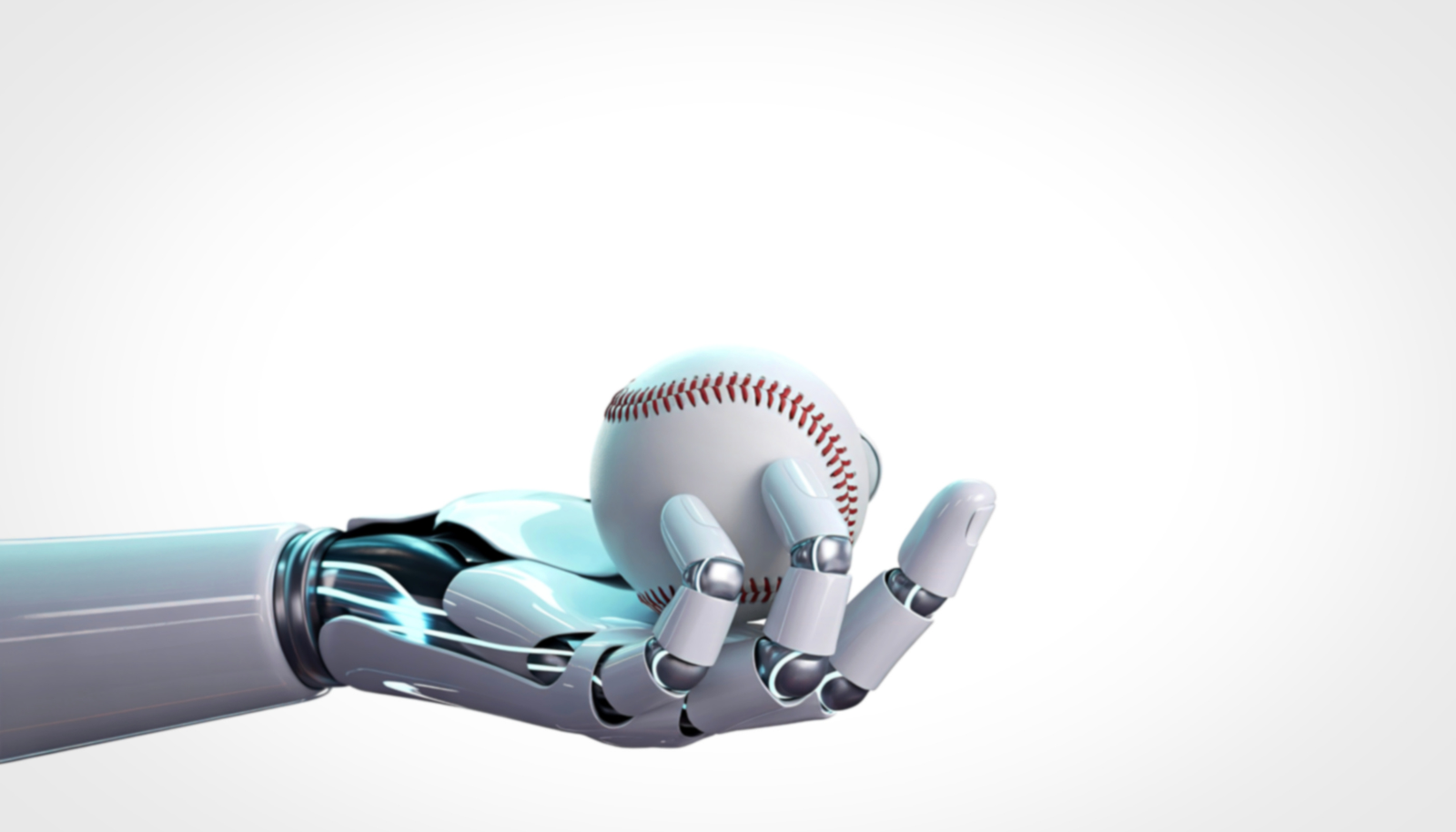
The race to AI vision for dexterous robotic hands 2026. It’s not about building a better gripper. It’s about solving one of the truly hard problems in robotics: building a machine hand that moves, feels and adapts like a human hand. Gesture Robotics has put their foot in the ring with a 10 degree-of-freedom (DOF) hand — and honestly it deserves more attention than it’s getting.
Why does it matter right now? AI models still have a pretty fundamental problem with hands. They can’t get them right in pictures, they can’t follow them reliably in video, and they certainly can’t control a real hand with anything approaching human-like accuracy. Gesture’s approach attacks all three problems at once. In addition, it bridges a very important gap between humanoid robotics hardware and the AI training data that is starving for these systems.
How Gesture’s 10 DOF Design Solves the Dexterity Problem
Computer Vision and Hand Tracking: The AI Side of Robotic Hand Dexterity AI Vision 2026
Bridging Humanoid Robotics and AI Training Data
Real Tasks: Where Robotic Hand Dexterity AI Vision 2026 Gets Tested
The Software Stack: Sim-to-Real Transfer and Reinforcement Learning
How Gesture’s 10 DOF Design Solves the Dexterity Problem
Robotic hands fall into one of two classes. Simple grippers can grasp but not manipulate objects. Hyper-complex hands with 20+ DOF are flexible, but are nightmares to control. Gesture hit the sweet spot — and the exact number they settled on was 10.
10 DOF meaning: What does 10 DOF mean? Each degree of freedom is an independent axis of movement. A human hand has approximately 27 DOF across all its joints. Stanford’s Robotics Lab, however, found that most everyday tasks require far fewer – about 8-12 DOF accounts for about 90% of common grasping and manipulation actions. That’s the number that counts here.
Gesture is created with:
- 4 fingers, each with 2 DOF (curl, spread)
- A thumb with two degrees of freedom (DOF) – flexion and opposition
- Actuation by Tendon Driven Mechanism Inspired by Human Muscle-Tendon Mechanics
- Real-time tactile feedback with force sensors at each fingertip
This arrangement strikes a real sweet-spot. “It’s complex enough to do real-world tasks like opening doorknobs, picking up eggs, or threading cables.” But it’s simple enough for AI controllers to actually learn fast. This leads to a drastic reduction in training time compared to higher-DOF alternatives — in some cases, we’re talking days vs. weeks.
I’ve looked at a lot of robotic hand designs and this tendon driven actuation choice is a smarter one than it looks. It keeps the finger profile lean and that’s huge when you are reaching into tight spaces.
The mechanical design also matters for AI vision 2026 goals specifically robotic hand dexterity. Compact brushless motors with harmonic drives actuate each joint, enabling smooth, backdrivable motion. That is to say, the hand gives way to forces which are unexpected rather than resisting them – drop a cup into it and the fingers yield a little before closing down. That’s an important part of safe human-robot interaction, and it’s harder to engineer than it sounds.
Computer Vision and Hand Tracking: The AI Side of Robotic Hand Dexterity AI Vision 2026
You can’t just build a great hand. You need an AI that can see and plan and execute. This is where Gesture’s computer vision really starts to get interesting.
The hand-consistency problem is a well-known problem and frankly embarrassing for the field. Generative AI models like Stable Diffusion and Midjourney often generate images with six fingers or joints at physically impossible angles. Pose estimation models also often fail to keep track of individual fingers when they overlap or occlude each other. These aren’t merely aesthetic failings, they’re basic shortcomings in AIs’ understanding of hand geometry and motion.
When I first looked into this I was surprised. They are not just noise in the failure modes. They are systematic, which implies that the underlying representations are actually wrong, not just undertrained.
Gesture does this with a tight hardware-software loop:
- Stereo cameras worn on the wrist capture depth and RGB data at the same time
- Visual input is processed at 120 fps using a custom hand tracking model.
- Inverse Kinematics solvers encode observed human hand pose as motor commands
- Improving grasping strategies with simulated and real-world practice in reinforcement learning policies
Interestingly enough, the vision system tracks not only the robot’s own hand – but also the humans demonstrating the task. This allows for teleoperation and imitation learning. The robot watches as a human performs a task with a glove containing IMU sensors, maps the movement onto its 10 DOF structure and learns. Moreover, each simulation yields high-quality training data with perfect joint-angle labels. That’s a big deal.
This approach directly feeds into the robotic hand dexterity AI vision 2026 pipeline in a compounding way over time. Every task the robot executes generates labelled data that can be used to improve robotic control and computer vision models. Better vision leads to better control, better control generates better training data, and better data improves vision models – a truly virtuous cycle.
MediaPipe Hands framework from Google offers a helpful point of comparison here. MediaPipe tracks 21 hand landmarks in real-time with a single RGB camera — impressive, but Gesture’s system adds depth sensing, proprioceptive feedback from motor encoders and force data from fingertip sensors. This multi-modal approach significantly reduces tracking errors, especially in complex manipulations with finger overlaps. More inputs. More context. Less errors.
Bridging Humanoid Robotics and AI Training Data
The big picture for robotic hand dexterity AI vision 2026 is an expanding fleet of humanoids heading to warehouses, factories and eventually homes. Companies such as Figure, Tesla and Apptronik are developing full body humanoids. But almost all are running into the same bottleneck – the hands.
A humanoid robot with clumsy hands is a surgeon wearing oven mitts.
The body can move through space, the arms can reach for objects, but it is the hands that decide if any useful work is done. Here’s how Gesture’s approach fits into the bigger picture:
| Feature | Simple Grippers | Gesture 10 DOF | Research Hands (20+ DOF) |
|---|---|---|---|
| Degrees of freedom | 1–3 | 10 | 20–27 |
| Task versatility | Low | High | Very high |
| Control complexity | Simple | Moderate | Extremely complex |
| AI training time | Hours | Days | Weeks to months |
| Cost range | $500–$2,000 | $5,000–$15,000 | $50,000+ |
| Durability | High | High | Often fragile |
| Real-world readiness | Production-ready | Near production | Mostly lab-only |
Just look at the cost column. $50,000+ research hands are impressive engineering — but they’re not going to factories any time soon.
There’s also a chicken and egg problem baked into AI training data for manipulation. Models need big data sets of hand interactions to learn, but to get those data sets you need capable robotic hands to do real tasks. We built the Gesture’s hand as a platform for data generation, not just as an end effector. That framing is important.
The Open X-Embodiment dataset from Google DeepMind is a good example of this challenge. It combines robotic manipulation data from 22 different robot types . The dataset is quite impressive , but hand manipulation data is still scarce compared to simple pick and place operations . Gesture’s system could help fill that gap by generating high-quality manipulation data at scale.
Importantly, the data produced is not only useful for robotics. And that feeds back into computer vision research, too. The system records RGB video, depth maps, joint angles and contact forces each time the robot picks up a new object. This multi-modal data aids in training better hand tracking models which in turn improves performance in applications ranging from AR/VR hand tracking to surgical robot control. The value shines.
Real Tasks: Where Robotic Hand Dexterity AI Vision 2026 Gets Tested
Theory and benchmarks only get you so far. Can robotic hand dexterity AI vision 2026 systems do real work? That is the real test. Gesture has been looking at a number of task types which show what the hand can actually do.
The most immediate commercial opportunity lies in assembly and manufacturing tasks. The 10 DOF hand can be used for:
- Insert plugs and connectors with submillimeter precision
- Route Flexible Cables in Confined Spaces
- Tighten and loosen small screws.
- Handle soft materials such as gaskets and O-rings
- Sort mixed parts by shape and size with a touch
And household and service chores push the hand’s ability still further – and are harder than they look. Open jars. Fold towels. Load dishwashers. Handle wine glasses. No robotic hand has matched human performance on these tasks yet, but Gesture’s 10 DOF configuration is surprisingly good at them. Be warned though: the edge cases are still real and common.
Medical and laboratory work needs precision and contamination control. The sealed design of the hand allows it to work in clean environments. Specifically, it can pipette liquids, handle sample containers, and operate standard lab equipment — which opens up a really interesting commercial vertical.
The thing is 10 DOF is enough range for most practical purposes. You don’t need 27 DOF to fold a towel. You need good tactile sensing, reliable vision and smart control policies. Gesture’s approach values those factors over pure mechanical complexity — and it’s the right call.
Meanwhile, the National Institute of Standards and Technology (NIST) is developing standardised tests for robotic manipulation. These benchmarks provide an objective way of comparing different hand designs. Gesture’s performance on NIST-style tasks shows that robotic hand dexterity AI vision 2026 solutions don’t require exotic hardware — they require thoughtful integration of proven components. That’s a lesson the field keeps having to relearn, notably.
The Software Stack: Sim-to-Real Transfer and Reinforcement Learning
Dexterity is not simply hardware. The software stack behind the Gesture’s hand deserves just as much attention — and in some ways it’s the more interesting story.
Simulation-first development saves tremendous time and costs. Gesture uses physics simulators such as NVIDIA Isaac Sim to train manipulation policies prior to real-world hardware deployment. The simulated hand has the same 10 DOF kinematics as the physical hand. The result is that policies transfer from simulation to reality with little loss of performance, which is harder than it sounds.
The training pipeline is staged:
- Domain randomisation: The simulator randomly varies object shapes, weights, friction, and lighting during training.
- Curriculum learning: starting from an easy task (grasping a cube) and increasing difficulty over time (grasping a cube from a cluttered bin avoiding fragile objects)
- Sim-to-real transfer: Policies trained in simulation deployed on the real hand with automatic calibration
- Real-world fine-tuning: A few hundred real-world trials refine the policy to accommodate sensor noise and mechanical tolerances
I’ve seen sim-to-real pipelines go horribly wrong when the simulation physics are too clean. The domain randomisation step here is not optional, it’s what makes this work.
This can speed up development, dramatically. It can take days rather than months to develop and deploy a new grasp policy. Also, the simulation environment generates unlimited training data, where each simulated grasp produces the same multi-modal data streams as a real grasp: images, depth maps, joint paths, and contact forces. So you are building on every part of learning.
The control policies are learned by reinforcement learning. Specifically, Gesture uses proximal policy optimisation (PPO) — a stable, efficient RL algorithm that has proven effective across a wide range of robotics applications. The reward functions balance multiple objectives at the same time, e.g., grasp success, energy efficiency, contact forces, and speed of task completion. This makes for natural behaviours and not jerky or aggressive behaviours. That naturalness is hugely important for human-robot collaboration.
One particularly clever aspect is how the system deals with new objects. The vision system estimates the shape, size and probable material of whatever the hand encounters. The controller then chooses from a library of grasp primitives and adapts in real-time according to tactile feedback. This is where robotic hand dexterity AI vision 2026 really comes together — vision informs the initial plan and touch refines execution. That’s a pretty elegant loop.
Conclusion
Robotic hand dexterity isn’t just one engineering challenge. It’s a convergence of mechanical design, computer vision, machine learning and practical task engineering — and Gesture’s 10 DOF hand proves that convergence is something we can achieve today with some careful design choices. No exotic materials. No moonshot physics. Just consistently smart tradeoffs.
Here are a few actionable takeaways for anyone following this space:
- Keep an eye on the data flywheel. The important lesson from able robotic hands is not their ability, it’s their ability to learn. This data is improving every downstream AI model.
- Don’t aim for max DOF. Twenty poorly controlled degrees of freedom beat ten well-controlled degrees of freedom. Simplicity means faster learning and more reliable deployment.
- Invest in sim-to-real pipelines. Progress on AI vision 2026 The biggest accelerator for robotic hand dexterity is the ability to train in simulation and deploy on hardware.
- Follow standard benchmarks. Objective comparison with benchmarks from NIST and academia. Use them to test claims of any robotic hand manufacturer.
- Look at full stack. Hardware, vision, control and learning must work together. Great hands and bad software are useless. Great software and clumsy hands are equally dead on arrival.
The next 12-18 months are going to be critical.” As humanoid robots evolve from labs to workplaces, the hand is the key differentiator. The Gesture approach – mixing mechanical ability with AI-driven control – provides a powerful template for how robotic hand dexterity AI vision 2026 will work in reality. The bottom line: a design philosophy to follow.
FAQ
What does 10 DOF mean in a robotic hand?
DOF stands for degrees of freedom. Each DOF represents one independent axis of motion in a joint. A 10 DOF robotic hand has ten such axes spread across its fingers and thumb, which provides enough flexibility for most real-world manipulation tasks. Although a human hand has roughly 27 DOF, research shows that 10 well-placed DOF covers approximately 90% of common grasps and manipulations — and that gap closes fast with smart control policies.
How does computer vision improve robotic hand dexterity AI vision 2026 systems?
Computer vision provides the “eyes” that guide the hand. Stereo cameras capture depth and color information about objects, and AI models estimate object position, shape, and orientation. This information feeds into control algorithms that plan and run grasps. Additionally, vision systems track the hand’s own fingers to fix errors in real time. The combination of seeing and touching creates far more capable manipulation than either sense alone — and the gap between one-sense and two-sense systems is larger than you’d expect.
Can Gesture’s hand work with existing humanoid robot platforms?
Yes. The hand uses standard mounting interfaces and communication protocols, connecting via EtherCAT or CAN bus, which most humanoid robot arms already support. Consequently, it can serve as a direct replacement for simpler grippers on platforms from companies like Universal Robots or Franka Emika. However, getting the most from the hand requires connecting its vision and control software stack with the host robot’s planning system — so it’s a mechanical drop-in, but not necessarily a software one. Worth keeping that distinction in mind.
How does sim-to-real transfer work for robotic hands?
Sim-to-real transfer trains AI control policies in a physics simulator before putting them on real hardware. The simulator models the hand’s movement, object physics, and sensor behavior. Domain randomization — varying conditions randomly during training — helps policies hold up to real-world variability. Specifically, the trained policy sees enough simulated variation that real-world conditions fall within its learned experience. Fine-tuning with a small number of real-world trials then closes any remaining performance gap. It’s not magic — it’s just very deliberate preparation.
What tasks can a 10 DOF robotic hand actually perform?
A well-designed 10 DOF hand handles a wide range of tasks. These include picking up objects of various shapes and sizes, turning knobs and handles, inserting plugs and connectors, using tools like screwdrivers, folding soft materials, and handling fragile items. Importantly, it can also perform in-hand manipulation — rotating or repositioning an object without setting it down. That last capability is the real differentiator that separates dexterous hands from simple grippers.
How does robotic hand dexterity AI vision 2026 research benefit other fields?
The benefits extend well beyond robotics — and this is an underappreciated point. Training data from robotic hands improves computer vision models used in AR/VR, gaming, and sign language recognition. Control algorithms developed for robotic hands similarly inform prosthetic hand design. Furthermore, the tactile sensing research advances haptic feedback technology for surgical robots and remote operation systems. The robotic hand dexterity AI vision 2026 research agenda therefore creates value across multiple industries at once — it’s not a niche pursuit.
References
Keep reading
Here are the latest posts from the blog.

The Google Search Generative Experience expert advice feature 2026 isn’t a minor update. It’s a fundamental rethink of how AI-generated answers earn — and deserve — trust. Go…
When you build context graph scaffold AI agents graph memory systems something really fascinating happens. Your agents recall relations, follow lines of reasoning, and mainta…
Picking the right AI assistant isn’t a trivial decision anymore. This personal AI assistant features comparison 2026 guide cuts through the noise and tells you what Claude, C…