
Broadcom launched an AI infrastructure financing platform today, and honestly, this is the kind of move that doesn’t make headlines the way a flashy new model does — but it should. Anthropic, the company behind Claude, signed on as the platform’s very first client. And that pairing tells you a lot about where the industry’s headed.
The timing matters here. AI labs are burning through billions on training runs, meanwhile traditional financing hasn’t come close to keeping up. Broadcom’s new platform is a direct attempt to fix that — purpose-built financial products for infrastructure at AI scale.
Why Broadcom Launched an AI Infrastructure Financing Platform Today
How the Anthropic Partnership Changes the Game
Leasing vs. Ownership: The AI Infrastructure Trade-off
What This Means for Smaller AI Labs
The Next Wave of Model Training and Capital Structures
Why Broadcom Launched an AI Infrastructure Financing Platform Today
This wasn’t a spontaneous decision. Broadcom launched an AI infrastructure financing platform today because the economics of training frontier models have genuinely broken the old playbook. A single training run can cost hundreds of millions of dollars — most of it going toward GPUs, networking gear, and custom silicon. That’s not sustainable under traditional financing structures.
Specifically, three forces pushed this:
- Skyrocketing hardware costs. Training clusters now need tens of thousands of accelerators. The upfront capital requirements aren’t just large — they’re structurally incompatible with how most companies manage cash.
- Supply chain bottlenecks. You can’t always buy hardware when you need it. Financing arrangements let companies lock in future capacity before the crunch hits.
- Broadcom’s expanding AI portfolio. The company already designs custom AI chips (XPUs) for major hyperscalers. Consequently, wrapping financing around those products creates a vertically integrated value proposition that’s genuinely hard to replicate.
Here’s the thing: Broadcom’s platform isn’t a standard equipment lease with a bow on it. It bundles hardware procurement, networking infrastructure, and ongoing support into one package. Labs can spread costs across multiple years and flex their commitments up or down based on actual training schedules.
Furthermore, the platform reportedly offers usage-based pricing tiers. So AI labs pay more during intensive training periods and less when they’re in evaluation or fine-tuning mode. Infrastructure financing has been around for a decade, and that kind of flexibility is genuinely new for this category — not marketing language, actually new.
Broadcom’s official AI solutions page outlines the company’s growing hardware portfolio. The financing platform sits on top of these existing products, which is an important detail people are glossing over.
How the Anthropic Partnership Changes the Game
Anthropic being the first client isn’t a small thing. The company recently raised $3.5 billion from Amazon and has been aggressively building out compute capacity. Nevertheless, even labs swimming in funding run into infrastructure walls.
The partnership between Broadcom and Anthropic reveals a few things worth paying attention to:
- Diversified hardware strategies. Anthropic has leaned heavily on cloud providers for compute. This deal suggests they want more direct control over their infrastructure stack — which, if you’ve ever been stuck in a cloud queue during a critical training run, makes complete sense.
- Custom silicon interest. Broadcom designs ASICs for AI workloads. Anthropic may be quietly exploring alternatives to standard GPU clusters. This detail surprised many observers when the announcement dropped — cloud dependency was expected to persist longer.
- Capital efficiency matters. Even with billions in the bank, Anthropic chose financing over outright purchases. That’s not a sign of cash problems — it’s a sign of financial maturity.
Notably, this connects directly to Anthropic’s competitive positioning. They’re in a genuine race with OpenAI, Google DeepMind, and Meta AI. Every dollar not spent on hardware can go toward research talent and training experiments instead.
Additionally, Anthropic has been exploring multi-model strategies that require diverse hardware configurations. Because the financing platform offers hardware flexibility, running those experiments becomes meaningfully cheaper. That’s the real kicker here — flexibility compounds over time.
The deal also has implications for Anthropic’s rumored IPO timeline. Companies heading toward public markets prefer predictable, structured expenses. Financing agreements convert massive capital expenditures into manageable operating expenses. Wall Street generally rewards that kind of financial discipline, which makes this a straightforward call from that angle.
Leasing vs. Ownership: The AI Infrastructure Trade-off
When Broadcom launched its AI infrastructure financing platform today, it stepped into a debate that’s been simmering in AI circles for a while. Should labs own their hardware or rent it? The answer isn’t clean — and anyone who tells you otherwise is selling something.
Here’s how the main options actually compare:
| Factor | Outright Purchase | Cloud Rental | Broadcom Financing Platform |
|---|---|---|---|
| Upfront cost | Very high | Low | Moderate |
| Long-term cost | Lower (if used well) | Higher over time | Mid-range |
| Hardware flexibility | Low (locked into purchased gear) | High | Moderate to high |
| Control over stack | Full | Limited | Significant |
| Balance sheet impact | Capital expenditure | Operating expense | Structured (hybrid) |
| Scalability | Slow | Fast | Moderate |
| Custom silicon access | Requires direct deals | Rarely available | Built into platform |
Importantly, the right answer depends entirely on where you are and what you’re doing. A startup running early experiments should probably just rent cloud GPUs. However, a company training frontier models every quarter needs a fundamentally different approach — and cloud costs at that scale become genuinely painful.
Traditional GPU financing has existed for years through equipment leasing companies. But those arrangements weren’t built for AI workloads. They use fixed payments regardless of use, they don’t account for rapid depreciation cycles, and they certainly don’t bundle networking and support. Teams that try to force-fit those old structures onto AI infrastructure tend to regret it.
Conversely, Broadcom’s platform appears purpose-built for training economics. Because the company makes much of the equipment itself, it understands the hardware lifecycle in a way that pure financial firms simply don’t. That vertical integration creates pricing advantages that are genuinely hard to match.
Similarly, NVIDIA’s DGX Cloud platform offers infrastructure-as-a-service. But NVIDIA is naturally optimized for its own hardware ecosystem. Broadcom’s approach is reportedly more hardware-agnostic — although, fair warning, it naturally favors Broadcom networking and custom silicon. Worth understanding that trade-off before signing anything.
What This Means for Smaller AI Labs
Here’s the obvious question nobody wants to ask directly: Broadcom launched an AI infrastructure financing platform today with a massively funded company as its launch client. So does this actually help anyone without a billion dollars?
Short answer: not immediately.
Broadcom’s initial focus appears to be on large-scale clients — specifically, companies spending $100 million or more annually on compute. The platform’s economics likely require minimum commitment levels that exclude seed-stage startups. Nevertheless, the downstream effects could benefit smaller players in real ways:
- Market validation. Broadcom’s entry makes AI infrastructure financing a legitimate category. Other financial institutions will follow with products targeting smaller companies — it always works this way.
- Used hardware markets. When large labs upgrade through financing programs, their previous-generation hardware enters secondary markets. Smaller labs can buy that equipment at significant discounts. Teams have built impressive capabilities on year-old hardware that bigger labs cycled out.
- Standardized terms. Broadcom’s platform will set benchmarks for pricing, contract length, and service levels. Smaller labs can use those benchmarks when negotiating their own deals — that’s genuinely valuable leverage.
- Cloud provider pressure. More competition in infrastructure financing forces cloud providers to sharpen their pricing. That benefits everyone, including startups who’ll never touch a financing platform.
Moreover, organizations like the National Science Foundation have been exploring ways to open up AI compute access more broadly. Broadcom’s financing model could serve as a template for public-sector programs aimed at smaller research teams.
Although the immediate impact clearly favors large labs, the long-term trajectory points toward broader access. Infrastructure financing follows a pattern that’s played out repeatedly in tech: enterprise customers get it first, mid-market follows within 18 months, and simplified versions reach smaller companies within three years. Therefore, smaller AI labs shouldn’t tune this out. Start thinking about your infrastructure financing strategies now, because the companies that plan ahead will move faster when these options actually become available.
The Next Wave of Model Training and Capital Structures
Broadcom launched an AI infrastructure financing platform today at exactly the moment when the industry is gearing up for a dramatic scaling of training runs. Next-generation frontier models will likely cost $1 billion or more to train. That’s not speculation — multiple AI lab executives have said it publicly. The number that used to make people gasp is now a planning assumption.
This cost escalation creates a structural problem. Even the best-funded private AI companies can’t self-finance training runs at this scale indefinitely. They need structured capital solutions, which is precisely what Broadcom’s platform is designed to provide.
Specifically, the next wave of model training will require:
- Longer training runs. Current frontier models train for weeks or months. Next-generation models may run for six months or longer. Financing must accommodate those extended, uneven timelines.
- Larger clusters. Training clusters are growing from tens of thousands to hundreds of thousands of accelerators. The capital scales accordingly — and it scales fast.
- Mixed hardware architectures. Future training runs may combine GPUs, custom ASICs, and specialized networking hardware. Financing platforms need to support that variety, not force labs into a single vendor stack.
- Geographic distribution. Power constraints are pushing labs to spread training across multiple data centers. Infrastructure financing must cover geographically dispersed deployments, which traditional leasing definitely wasn’t built for.
Consequently, the Broadcom AI infrastructure financing platform addresses a structural gap that’s been widening for two years. Traditional venture capital and corporate investment can fund research teams and smaller experiments. But neither was designed to finance multi-billion-dollar hardware deployments — and the gap between what those instruments can do and what labs actually need keeps growing.
The Information has reported extensively on how AI labs are restructuring their finances to handle these costs. The trend is unmistakable: AI companies are becoming infrastructure companies whether they want to be or not.
Furthermore, this financing model has direct precedent in other capital-intensive industries. Airlines don’t buy planes outright — they use structured financing. Telecommunications companies finance network buildouts over decades. The AI industry is simply maturing into a similar capital structure, just faster than anyone expected.
Industry analysts have pointed out that Broadcom’s move positions the company unusually well. It’s simultaneously a hardware manufacturer, a chip designer, and now a financing provider. That triple role gives Broadcom negotiating leverage that’s genuinely hard to counter. Additionally, the platform could influence how investors evaluate AI companies — a lab with structured infrastructure financing signals financial sophistication, not just model architecture chops. That distinction increasingly matters as companies approach public markets.
Reuters has covered the growing intersection of AI and financial engineering extensively. The consensus is that infrastructure financing becomes a standard tool for AI companies within the next two years. The shorter end of that estimate seems more likely.
Competitive Implications Across the AI Ecosystem
The announcement that Broadcom launched an AI infrastructure financing platform today reshapes competitive dynamics across multiple layers of the AI stack. And not in ways that are immediately obvious.
For chip manufacturers: NVIDIA, AMD, and Intel now face a competitor that bundles financing with hardware. Broadcom can offer package deals that pure chip companies can’t easily replicate. Although NVIDIA’s market position remains dominant — and that’s unlikely to change overnight — this financing angle creates a new competitive vector that didn’t exist before.
For cloud providers: AWS, Google Cloud, and Azure have been the default infrastructure option for most AI labs. Broadcom’s platform gives labs a credible alternative. Specifically, it lets them build owned or co-located infrastructure without the massive upfront costs that previously made cloud the only practical choice. That’s a meaningful shift in negotiating dynamics.
For AI labs: The Broadcom infrastructure financing platform creates more options. And more options mean better leverage. Labs can now play cloud providers against direct infrastructure financing — that competition should drive down costs across the board, which is genuinely good for the field.
For investors: Structured infrastructure financing changes the unit economics of AI companies. It converts large, uneven capital expenditures into predictable operating expenses. That makes financial modeling easier and valuations more transparent. Anyone building financial models on AI companies should note that this changes some key assumptions.
Meanwhile, this move could speed up the trend toward sovereign AI infrastructure. Countries building national AI capabilities need financing tools for large hardware deployments, and Broadcom’s platform could serve government clients alongside commercial ones. That’s a market most people aren’t talking about yet.
Importantly, the competitive effects will take time to show up. Anthropic is the first client — not the last. The real impact becomes visible over the next 12 to 24 months, not this quarter.
Conclusion
Broadcom launched an AI infrastructure financing platform today, and the ripple effects extend well beyond a single partnership announcement. This isn’t just a new financial product — it’s a structural shift in how the AI industry funds its most expensive activity.
The Anthropic partnership validates the concept in a way that a press release alone never could. A company with billions in funding still chose structured financing over outright hardware purchases. That decision tells you something important about where the industry is heading.
Here are the takeaways that actually matter:
- AI lab leaders: Start evaluating infrastructure financing options now — not when your next training run is imminent. Compare Broadcom’s platform against cloud commitments and traditional equipment leases before you need to make a fast decision.
- Investors: Pay attention to how AI companies structure their infrastructure spending. Sophisticated financing shows mature financial management, and that distinction will increasingly separate serious contenders from the rest.
- Smaller startups: Watch the secondary hardware markets that will emerge as large labs cycle through financed equipment. Plan your infrastructure roadmap with financing availability in mind, even if you can’t access these platforms yet.
- Enterprise technology teams: Understand that Broadcom’s AI infrastructure financing platform signals broader changes in how compute is bought and paid for. These models will eventually reach enterprise AI deployments — probably sooner than you think.
The fact that Broadcom launched an AI infrastructure financing platform today marks a genuine milestone. The AI industry is growing up. And like every maturing industry before it, it’s developing the financial tools to match its ambitions.
FAQ
What exactly did Broadcom launch today?
Broadcom launched an AI infrastructure financing platform today that bundles hardware procurement, networking equipment, and support services into structured financial packages. The platform lets AI companies spread infrastructure costs over multiple years and offers usage-based pricing that adjusts to training schedules. Anthropic is the platform’s first announced client.
Why did Anthropic choose Broadcom’s financing platform?
Anthropic chose this platform for several strategic reasons. Although the company has raised billions in funding, structured financing converts large capital expenditures into manageable operating expenses. Furthermore, the platform gives Anthropic access to Broadcom’s custom silicon and networking hardware. This diversifies Anthropic’s infrastructure beyond standard cloud GPU rentals — and given how competitive the inference market has become, that flexibility matters.
How does Broadcom’s platform differ from traditional equipment leasing?
Traditional equipment leases weren’t designed for AI workloads. They use fixed monthly payments regardless of use, and they don’t account for how quickly AI hardware loses value. Broadcom’s platform, conversely, offers usage-based pricing tiers and bundles networking infrastructure and ongoing support into one package. Additionally, Broadcom’s manufacturing expertise means the company understands hardware depreciation cycles better than pure financial firms ever could. Investopedia’s guide to equipment financing explains traditional models well if you want a baseline for comparison.
Will smaller AI companies be able to use this platform?
Not immediately. The platform’s initial focus is on large-scale clients spending $100 million or more annually on compute. However, smaller companies will benefit indirectly. Broadcom’s entry makes infrastructure financing a recognized category, and other providers will create products targeting mid-market and smaller companies. Moreover, used hardware from large labs’ upgrade cycles will become available at lower prices — and that secondary market could be significant.
How does this affect NVIDIA’s position in the AI hardware market?
NVIDIA remains the dominant AI chip provider. Nevertheless, Broadcom’s AI infrastructure financing platform creates a new competitive dimension. Because Broadcom can bundle financing with its own custom ASICs and networking products, that package deal approach is harder for NVIDIA to replicate directly. Although NVIDIA offers its DGX Cloud service, it doesn’t provide the same kind of structured multi-year financing — and that gap will matter more as training costs keep climbing.
What does this mean for the future of AI model training costs?
This platform signals that AI training costs will keep rising sharply — and that the industry knows it. The expectation is that next-generation frontier models will cost $1 billion or more to train. Consequently, structured financing isn’t a nice-to-have — it’s becoming necessary infrastructure for the field. Broadcom launched its AI infrastructure financing platform today precisely because the industry needs new capital structures to fund these increasingly expensive training runs. The platform won’t reduce absolute costs, but it will make them far more manageable from a financial planning standpoint. That’s the bottom line.
References
Keep reading
Here are the latest posts from the blog.

When you hear context windows explained why size AI memory matters, think of it like a desk. A small desk limits what you can spread out. A large one lets you see everything…
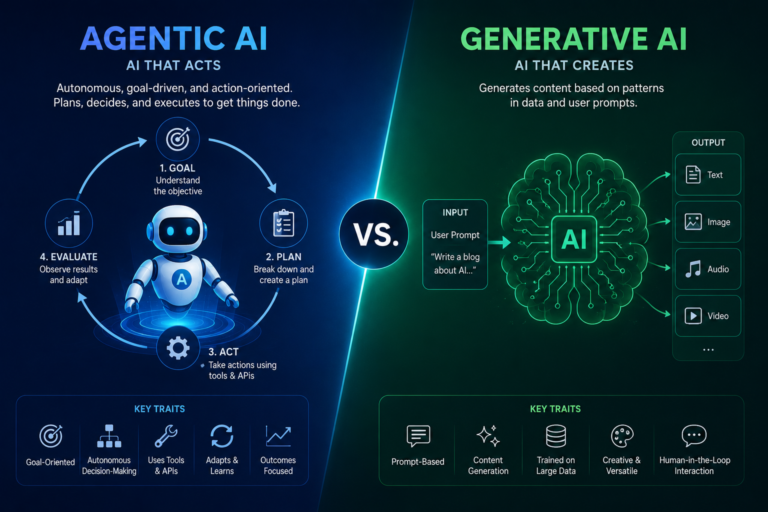
Understanding agentic AI vs. generative AI what’s difference is no longer something you can put off. These two paradigms are actively reshaping how companies operate, compete…

Apple refused to comply with EU rules, and now Gemini Siri won’t be launching in Europe anytime soon. That one decision sends shockwaves through the global tech industry. It…