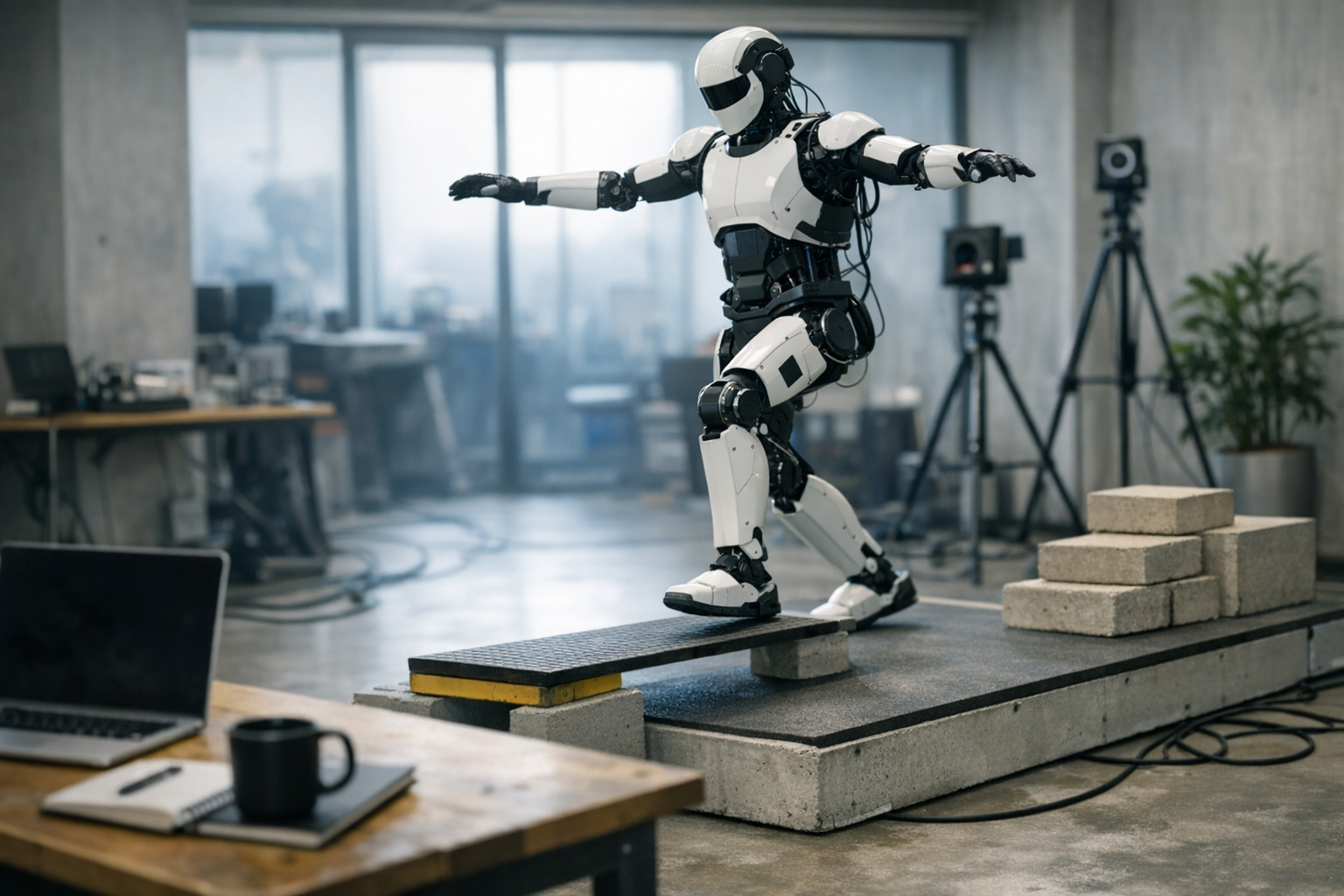
Walking seems simple. You’ve done it since you were a toddler. Yet humanoid robot locomotion and balance control systems represent one of engineering’s hardest unsolved puzzles — every step a robot takes demands thousands of calculations per second.
Recent breakthroughs have pushed humanoid robots to remarkable feats. China’s STAR1 robot completed a full marathon distance in Beijing. That achievement required decades of progress in balance control systems, gait optimization, and real-time sensor fusion. Understanding the engineering behind these milestones reveals why robotics companies are investing billions in bipedal machines.
Furthermore, the race to build reliable walking robots isn’t purely academic. Companies like Boston Dynamics, Agility Robotics, and Tesla are betting that bipedal robots will transform warehouses, construction sites, and homes. So how do these machines actually stay upright?
Why Humanoid Robot Locomotion and Balance Control Systems Are So Difficult
Core Biomechanics Behind Robot Walking and Balance
Control Algorithms That Keep Humanoids Upright
Zero Moment Point (ZMP) Control
Model Predictive Control (MPC)
Reinforcement Learning Approaches
Comparison of Control Approaches
Sensors and Hardware Powering Balance Control Systems
Advanced Gait Strategies for Different Terrains
Dynamic Walking vs. Static Walking
Running and High-Speed Locomotion
Real-World Applications Driving Innovation in Locomotion
Healthcare and Assistive Applications
The Future of Humanoid Robot Locomotion and Balance Control Systems
Sim-to-Real Transfer Improvements
Energy Efficiency Breakthroughs
Whole-Body Control Integration
How do humanoid robots recover from being pushed or tripped?
Why don’t most humanoid robots walk as smoothly as humans?
What role does reinforcement learning play in modern balance control systems?
How much power does a humanoid robot use while walking?
Can humanoid robots walk on ice, sand, or other challenging surfaces?
Why Humanoid Robot Locomotion and Balance Control Systems Are So Difficult
Humans walk without thinking about it. Robots don’t have that luxury. Specifically, bipedal locomotion is an inherently unstable process — a two-legged robot is essentially a tall, heavy inverted pendulum balancing on a tiny contact patch.
I’ve spent years covering this field, and that inverted pendulum framing never gets old. It sounds almost absurd when you put it that way. But it’s exactly right.
The Physics Problem
Consider the basic challenge. A humanoid robot must:
Consequently, humanoid robot locomotion and balance control systems must solve a multi-variable optimization problem in real time. Even a 10-millisecond delay in response can cause a fall. That number surprised me when I first dug into the literature — 10 milliseconds is nothing, and yet it’s everything.
Why Wheels Are Easier
Wheeled robots are statically stable — they don’t tip over when they stop moving. Bipedal robots, however, are dynamically stable. They’re constantly falling and catching themselves, which is essentially what walking is: controlled falling.
This distinction makes balance control exponentially harder for humanoid platforms. It’s not a minor engineering inconvenience. It’s a fundamentally different class of problem.
Core Biomechanics Behind Robot Walking and Balance
To build effective humanoid robot locomotion and balance control systems, engineers first study human biomechanics. Our bodies provide the blueprint. And honestly, the more you learn about how humans walk, the more impressive it is that we do it unconsciously.
The Gait Cycle Explained
Human walking follows a predictable cycle, with each leg alternating between two phases:
1. Stance phase — the foot is on the ground, supporting weight (about 60% of the cycle)
2. Swing phase — the foot is in the air, moving forward (about 40% of the cycle)
Additionally, there’s a brief double support phase when both feet touch the ground. This phase provides maximum stability. During running, this phase disappears entirely. Instead, there’s a flight phase where neither foot touches the ground — which is where things get really interesting for robot designers.
Key Biomechanical Concepts
Engineers translate biological principles into mathematical models. The most important concepts include:
Notably, as long as the ZMP stays within the support polygon, the robot won’t tip over. This principle, first described by Miomir Vukobratović in the 1970s, remains foundational to most balance control systems used today. That it’s still the bedrock after 50 years tells you something about how fundamental it really is.
Control Algorithms That Keep Humanoids Upright
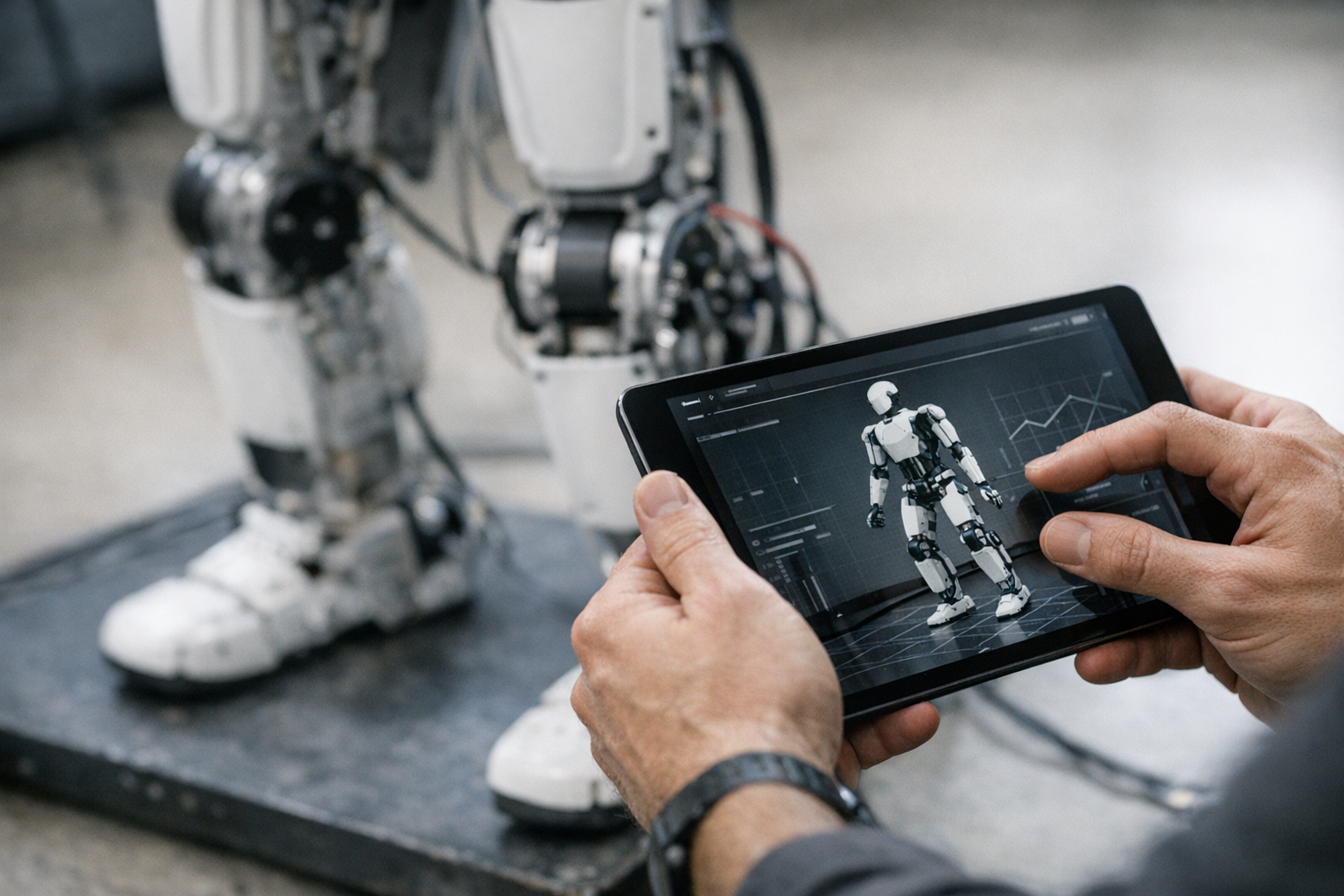
The software behind humanoid robot locomotion and balance control systems has evolved dramatically. Several algorithmic approaches now compete for dominance. Here’s the thing: none of them is a clean winner — each involves real tradeoffs.
Zero Moment Point (ZMP) Control
ZMP-based control is the classical approach. Honda’s ASIMO robot used this method extensively. The algorithm pre-plans foot placements and body trajectories, ensuring the ZMP never leaves the support polygon.
Advantages:
Limitations:
Fair warning: if you’ve only ever seen ZMP-controlled robots in action, you might think humanoid walking is inherently stiff and robotic. It’s not — that’s just the algorithm’s personality.
Model Predictive Control (MPC)
MPC takes a more dynamic approach. It predicts the robot’s future states over a short time horizon, then optimizes control inputs to achieve desired outcomes. Moreover, it recalculates continuously as new sensor data arrives.
This gives robots more adaptive locomotion and balance control, allowing them to handle moderate terrain variations. Nevertheless, MPC demands significant computational power — real-time performance requires specialized hardware, and that adds cost and heat. Those are real engineering constraints, not minor footnotes.
Reinforcement Learning Approaches
The newest frontier uses machine learning. Specifically, reinforcement learning (RL) trains robots through millions of simulated trials. The robot learns balance control by trial and error — falling thousands of times in simulation before ever touching real ground. The resulting controllers are often surprisingly adaptable.
Companies like Agility Robotics and Figure AI now lean heavily on RL-based controllers. I’ve watched demos from both, and the gait quality genuinely looks different — more fluid, more human. Importantly, these systems generalize to unseen terrain better than hand-coded approaches. But the learning curve to train them well is real, and training instability is still a genuine headache for researchers.
Comparison of Control Approaches
| Feature | ZMP Control | Model Predictive Control | Reinforcement Learning |
|---|---|---|---|
| Terrain adaptability | Low | Medium | High |
| Computational cost | Low | High | High (training), Medium (inference) |
| Robustness to pushes | Low | Medium | High |
| Gait naturalness | Stiff | Moderate | Most natural |
| Development time | Long (manual tuning) | Medium | Long (training time) |
| Predictability | Very high | High | Lower |
| Real-time capability | Excellent | Good | Good |
Sensors and Hardware Powering Balance Control Systems
Software alone can’t maintain balance. Humanoid robot locomotion and balance control systems depend on sophisticated sensor suites and actuator hardware — and this is the layer that often gets underappreciated in mainstream coverage.
Essential Sensors
Every bipedal robot needs these sensor types:
Similarly, some advanced platforms add pressure-sensitive skin to detect unexpected contacts across the entire body. The MIT Biomimetic Robotics Lab has pioneered several of these sensing approaches, and their work is worth following if you want to understand where tactile sensing is headed.
Actuator Technologies
The choice of actuator fundamentally shapes a robot’s walking ability. Three main types dominate:
Electric motors with gearboxes — Most common today. Tesla’s Optimus and Agility’s Digit use them. They’re precise and controllable. However, gearboxes add weight and reduce backdrivability — the robot’s ability to “feel” external forces through its joints.
Hydraulic actuators — Boston Dynamics’ earlier Atlas versions used hydraulics. They provide exceptional power density. Conversely, they’re heavy, noisy, and prone to leaks. Atlas has since moved away from them, which tells you something.
Quasi-direct drive actuators — These use low-ratio gearing for better force sensitivity, allowing the robot to feel ground contact more naturally. This approach improves balance control significantly, and I’d watch this space closely over the next few years.
The Computation Challenge
Processing sensor data and running control algorithms demands serious hardware. Modern humanoid robots typically use:
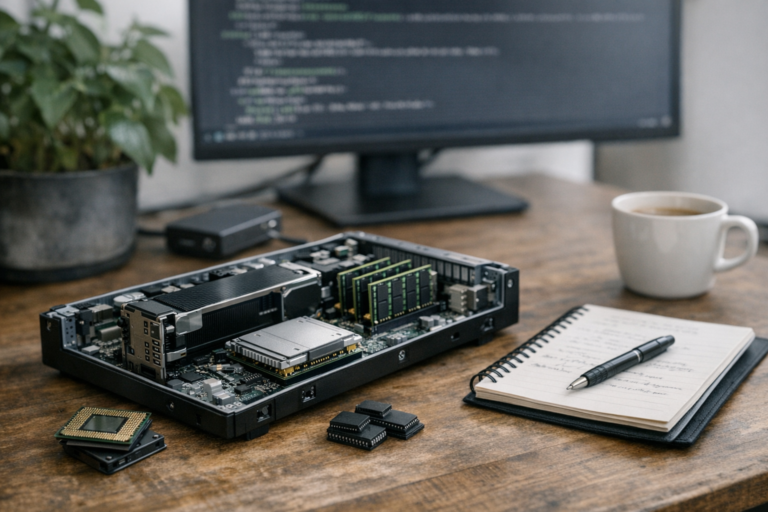
Consequently, the computing architecture resembles a small data center packed into a robot torso. That’s not an exaggeration — it’s a thermal and power-budget nightmare that engineers spend enormous effort managing.
Advanced Gait Strategies for Different Terrains
Flat-floor walking is just the beginning. Practical humanoid robot locomotion and balance control systems must handle real-world environments. And real-world environments, as anyone who’s ever tripped on a sidewalk crack knows, are relentlessly unpredictable.
Dynamic Walking vs. Static Walking
Static walking keeps the robot’s center of mass over its support polygon at all times. It’s slow but stable — think of how a person crosses an icy parking lot, taking cautious, deliberate steps.
Dynamic walking, alternatively, allows the center of mass to move outside the support polygon temporarily. The robot catches itself with the next step. This approach enables faster, more efficient gaits, and most modern systems use it. The real kicker is that dynamic walking is also more energy-efficient, which matters enormously for battery life.
Stair Climbing
Stairs present unique challenges for balance control systems. The robot must:
1. Detect stair geometry using vision sensors
2. Plan foot placements precisely
3. Generate extra torque at the knee and hip joints
4. Manage significant height changes in the center of mass
5. Maintain balance during the transition between flat ground and stairs
Heads up: stair climbing is where a lot of demo robots quietly fail. It’s one thing to handle a clean test staircase. Real stairs — worn edges, varying heights, no handrail — are another matter entirely.
Running and High-Speed Locomotion
Running removes the double-support phase entirely — both feet leave the ground simultaneously during the flight phase. Therefore, the robot must handle aerial dynamics and predict exactly where and how each foot will land.
Atlas from Boston Dynamics showed parkour-level running in 2023. Meanwhile, STAR1 achieved marathon-distance endurance running. These feats show how far humanoid robot locomotion has progressed. Notably, they represent very different engineering priorities — one optimizes for agility, the other for endurance.
Rough Terrain Navigation
Uneven ground requires adaptive foot placement. The robot continuously adjusts its gait based on terrain feedback. Reinforcement learning shines here. RL-trained controllers handle gravel, grass, slopes, and debris without pre-programmed terrain models. This surprised me when I first saw it live — the adaptation happens fast enough that it almost looks instinctive.
Real-World Applications Driving Innovation in Locomotion
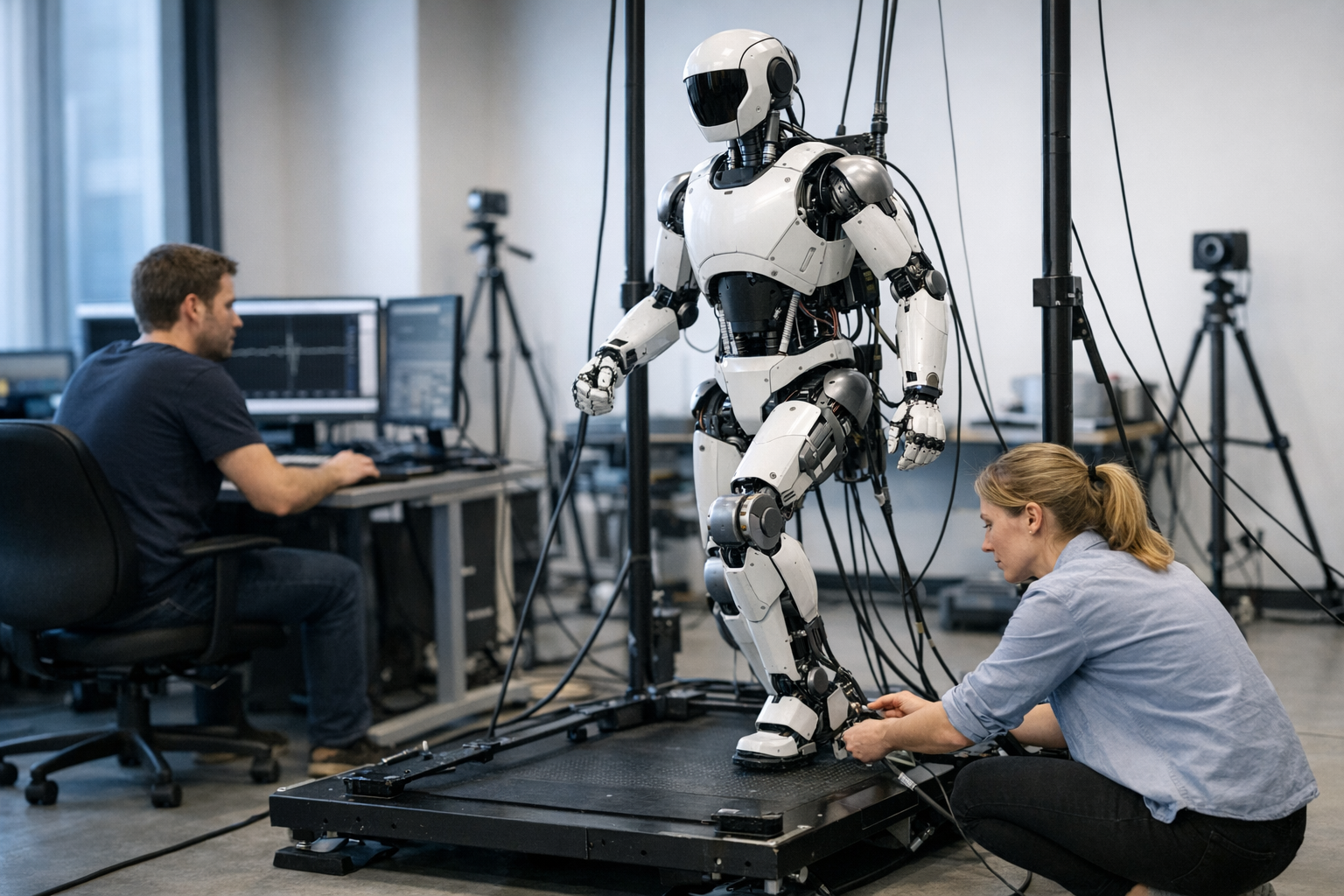
The push to perfect humanoid robot locomotion and balance control systems isn’t purely academic. Real commercial applications are fueling investment — and the money flowing in right now is unlike anything I’ve seen in a decade of covering this space.
Warehouse and Logistics
Agility Robotics’ Digit already works in warehouses, picking up tote bins and moving them between locations. Reliable locomotion and balance control lets it move through crowded aisles alongside human workers. The fact that it’s deployed commercially — not just in a lab — is a meaningful milestone.
Construction and Inspection
Construction sites feature uneven terrain, stairs, and obstacles. Humanoid robots with solid balance control systems can inspect structures, carry materials, and reach areas unsafe for humans. Furthermore, they don’t need the site redesigned around them the way wheeled robots do — that’s a genuine practical advantage.
Disaster Response
Collapsed buildings and flooded areas demand robots that can walk over rubble. The DARPA Robotics Challenge specifically tested humanoid robots in disaster scenarios. Many robots fell during the competition. That highlighted, pretty brutally, how much work remained in locomotion and balance control. It was humbling to watch. But it also accelerated progress in ways that no lab benchmark could.
Healthcare and Assistive Applications
Bipedal robots could eventually assist elderly or disabled individuals at home. They’d need to move through tight hallways, climb stairs, and stay balanced while carrying objects. These scenarios demand exceptionally reliable humanoid robot locomotion and balance control systems — because the cost of a fall here isn’t a failed demo. It’s a person getting hurt.
The Future of Humanoid Robot Locomotion and Balance Control Systems
The field is moving fast. Several trends will shape the next generation of walking robots. Moreover, these trends are converging at the same time, which makes the next five years genuinely hard to predict.
Sim-to-Real Transfer Improvements
Training robots in simulation is fast and cheap. Transferring those skills to physical hardware remains challenging, though. Better physics simulators and domain randomization techniques are closing this gap. Consequently, robots trained entirely in simulation now perform well in the real world — something that felt like a distant goal just a few years ago.
Energy Efficiency Breakthroughs
Current humanoid robots consume far more energy per step than humans do. New actuator designs, passive dynamics, and optimized gait patterns will cut power consumption. This matters enormously for practical deployment. A robot that runs out of battery after 30 minutes isn’t commercially viable — it’s a very expensive paperweight. Energy efficiency isn’t a nice-to-have. It’s a make-or-break requirement.
Multi-Modal Locomotion
Future robots won’t just walk. They’ll shift between walking, running, crouching, crawling, and climbing. This multi-modal approach requires flexible balance control systems that adapt to each locomotion mode instantly. Similarly, it requires mechanical designs that don’t optimize so heavily for one mode that they sacrifice the others.
Whole-Body Control Integration
Modern research increasingly treats locomotion and balance control as part of whole-body coordination. A robot carrying a heavy box needs different balance strategies than one walking freely. Therefore, arms, torso, and legs must work together as a unified system. That integration is harder than it sounds — and it’s one of the more interesting open problems in the field right now.
Conclusion
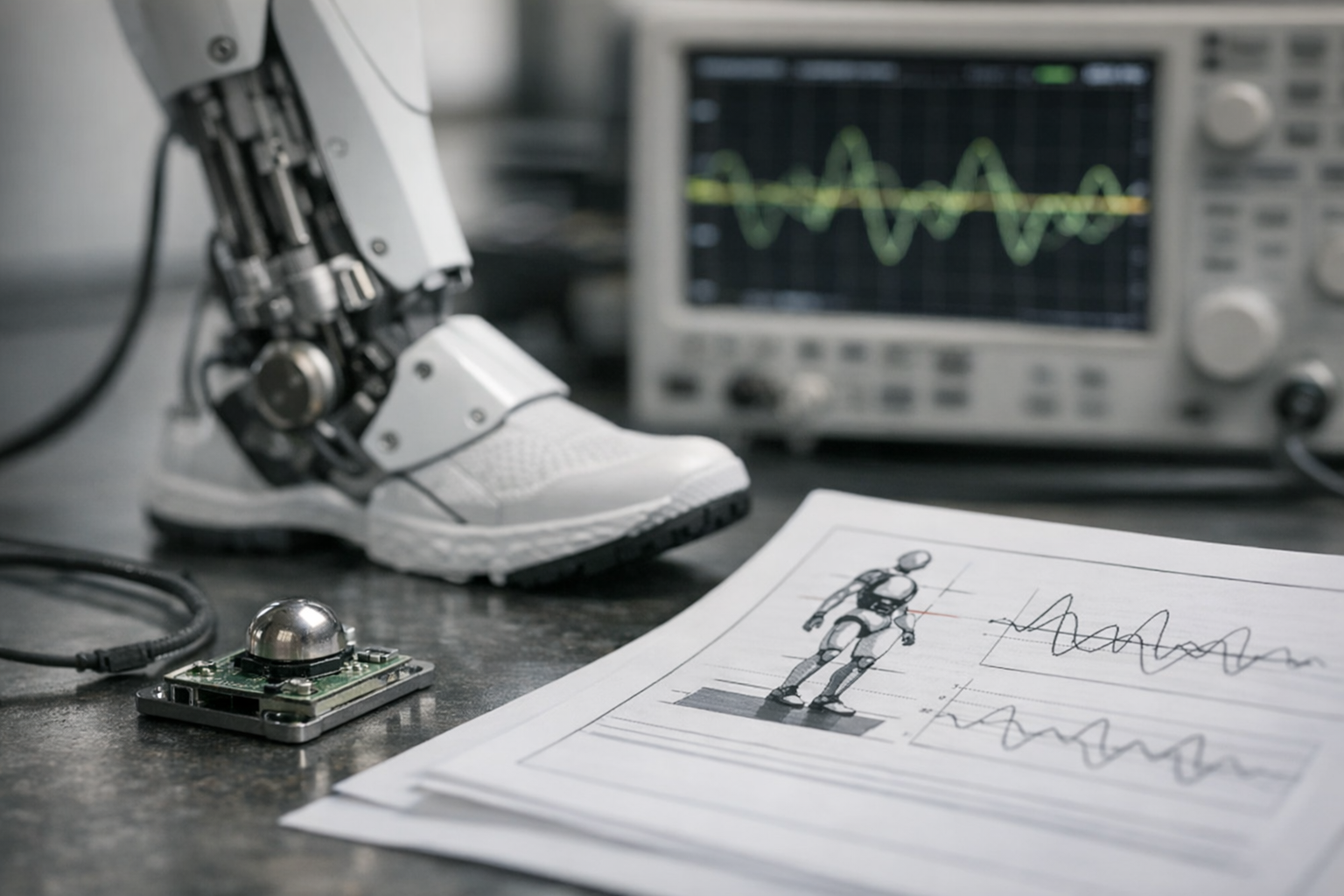
Humanoid robot locomotion and balance control systems sit at the intersection of biomechanics, control theory, and artificial intelligence — and they represent one of robotics’ greatest technical challenges. Every walking robot you see, from Atlas doing backflips to Digit stacking boxes, relies on the principles covered here.
The field has moved from stiff, pre-programmed ZMP walkers to adaptive, learning-based controllers. Nevertheless, significant challenges remain. Energy efficiency, terrain generalization, and solid recovery from falls all need improvement. Humanoid robot locomotion and balance control systems will keep advancing as computing power grows and machine learning techniques mature — and if the last five years are any indication, the next five will be genuinely surprising.
If you’re interested in this field, here are actionable next steps:
The robots that walk among us tomorrow depend on the humanoid robot locomotion and balance control breakthroughs happening today. That’s not hype — it’s just where the physics and the money are both pointing.
FAQ
What is the Zero Moment Point, and why does it matter for humanoid robot locomotion and balance control systems?
The Zero Moment Point (ZMP) is the location on the ground where the total horizontal inertial and gravitational forces produce zero net torque. In simpler terms, it’s the point where the robot’s weight and movement forces balance out. As long as the ZMP stays within the robot’s foot contact area, the robot won’t tip over. This concept has been foundational to humanoid robot locomotion and balance control systems since the 1970s. Most classical walking algorithms use ZMP as their primary stability criterion.
How do humanoid robots recover from being pushed or tripped?
Robots use several recovery strategies. Ankle strategy involves small adjustments at the ankle joint for minor disturbances. Hip strategy uses rapid hip movements to shift the center of mass. Stepping strategy places a foot in the direction of the fall to catch the robot. Additionally, modern reinforcement learning controllers train specifically on push recovery. They experience millions of virtual pushes during training. Consequently, they develop solid reflexive responses that hold up in real-world conditions.
Why don’t most humanoid robots walk as smoothly as humans?
Several factors contribute to this gap. First, robot actuators lack the give of human muscles and tendons — our tendons store and release energy naturally, whereas robot joints are typically stiffer. Furthermore, human balance control uses the vestibular system, proprioception, and vision simultaneously. Robots approximate these senses with IMUs and encoders, so the sensory resolution is lower. Additionally, human neural processing for locomotion evolved over millions of years, while robot controllers have had only decades of development.
What role does reinforcement learning play in modern balance control systems?
Reinforcement learning (RL) has changed how robots learn to walk. Instead of engineers manually programming every movement, RL lets robots discover good gaits through trial and error. The robot receives rewards for staying upright and moving forward and receives penalties for falling. After millions of simulated episodes, the controller develops solid walking behaviors. Importantly, RL-trained controllers often handle unexpected situations better than hand-coded alternatives, generalizing to terrain and disturbances they never explicitly trained on.
How much power does a humanoid robot use while walking?
Keep reading
Here are the latest posts from the blog.