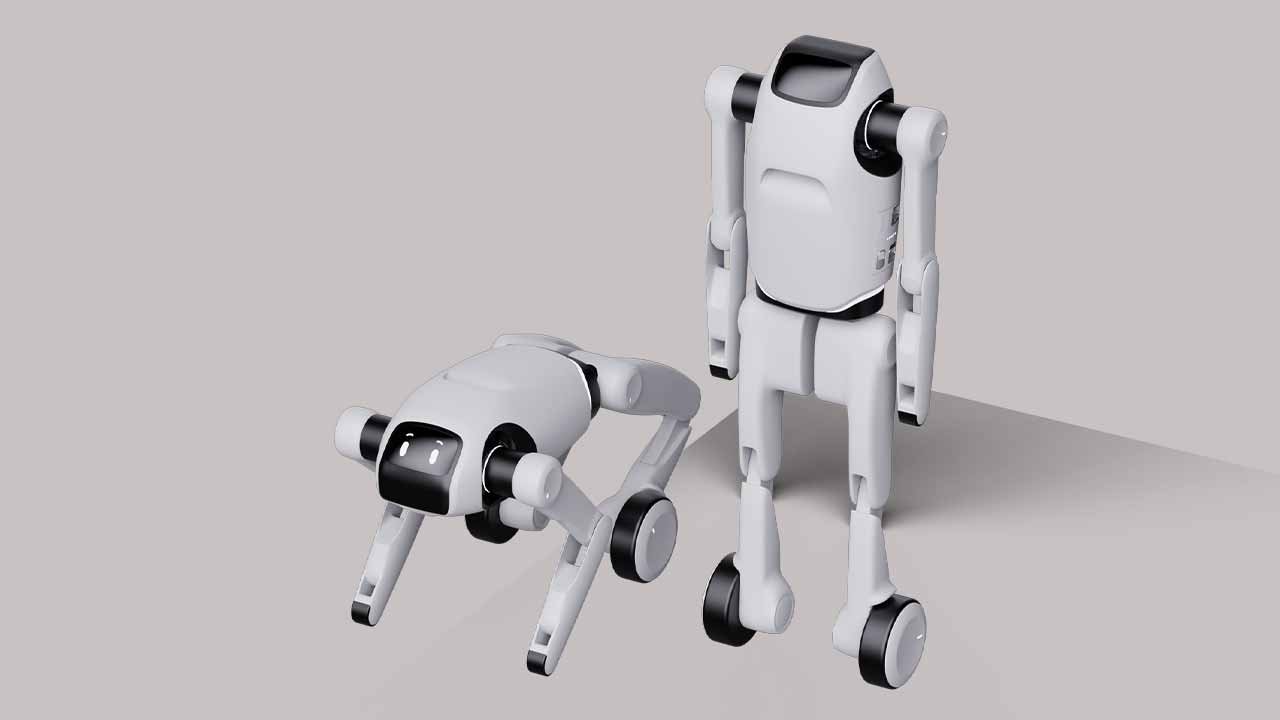
Here’s the thing: the data isn’t subtle. Narrow-use robots outselling humanoids 20 founders should be studying isn’t some fringe contrarian take — it’s the dominant commercial reality right now. While venture dollars flood into humanoid robotics with all the enthusiasm of a Twitter hype cycle, specialized machines are quietly running warehouses, flipping burgers, and sorting packages at scale.
Humanoid robots make incredible demos. They walk, wave, and rack up millions of social media impressions. However, enterprises actually writing purchase orders overwhelmingly choose purpose-built machines — and it isn’t close. For roughly every humanoid deployed commercially, twenty narrow-use robots enter service somewhere.
Founders chasing the humanoid dream aren’t necessarily wrong long-term. Nevertheless, they’re leaving a massive near-term opportunity sitting on the table. This piece breaks down the economics, deployment timelines, and real case studies that explain why specialized robots are winning today’s market — and why that gap is widening, not closing.
Why Narrow-Use Robots Dominate Enterprise Purchasing
Enterprise buyers don’t care about viral demos.
They care about return on investment. Specifically, they evaluate three things before signing a robotics contract: cost per task, time to deployment, and reliability in production environments. I’ve talked to enough logistics directors to tell you — nobody’s getting promoted for being the guinea pig on a humanoid’s first warehouse rollout.
Narrow-use robots win on all three counts. A specialized palletizing arm from Fanuc costs between $50,000 and $150,000, deploys in weeks, and runs 24/7 with minimal downtime. Conversely, a humanoid robot from leading developers costs $100,000 to $250,000 — and still requires extensive on-site calibration before it does anything useful.
The math gets more compelling at scale. These are real deployment economics, not lab benchmarks:
- Autonomous mobile robots (AMRs) in warehouses handle 300+ picks per hour at roughly $0.03 per pick
- Humanoid prototypes in similar settings manage 40–80 picks per hour at $0.25+ per pick
- Robotic kitchen arms produce 150 meals per shift at $0.12 per meal in labor cost
- General-purpose humanoids in food service remain largely experimental
Consider what that per-pick cost difference means at real volume. A mid-sized e-commerce fulfillment center processing 50,000 orders daily runs roughly 150,000 individual picks per shift. At $0.03 per pick with an AMR versus $0.25 with a humanoid, the daily cost gap exceeds $33,000. That’s not a rounding error — that’s a hiring decision, a lease payment, or a capital reinvestment happening every single day.
Importantly, the gap between specialized and general-purpose robotics isn’t shrinking. It’s widening as narrow-use systems build up operational data and get iteratively better at their one job. A palletizing arm that has completed 10 million cycles has failure-mode data that simply cannot be replicated in a lab. That accumulated operational knowledge is a compounding advantage.
Furthermore, enterprise procurement cycles favor proven technology. A logistics director at a Fortune 500 company wants references, case studies, and guaranteed uptime — not a pitch deck. Narrow-use robots have years of production data behind them. That’s a moat humanoids won’t cross quickly.
The Economics Behind Narrow-Use Robots Outselling Humanoids 20:1
The cost-per-task metric reveals everything.
Narrow-use robots outselling humanoids 20 founders consistently underestimate comes down to simple unit economics. Specialized robots do one thing exceptionally well. Humanoids do many things adequately. And “adequately” doesn’t get you a signed contract.
Here’s a comparison that makes the gap concrete:
| Metric | Narrow-Use Robot (AMR) | Humanoid Robot | Advantage |
|---|---|---|---|
| Average unit cost | $25,000–$75,000 | $100,000–$250,000 | Narrow-use by 3–5× |
| Deployment time | 2–6 weeks | 3–12 months | Narrow-use by 4–8× |
| Uptime (production) | 95–99% | 60–85% | Narrow-use by 15–30% |
| Cost per task | $0.02–$0.10 | $0.15–$0.50+ | Narrow-use by 5–7× |
| Payback period | 6–18 months | 24–48+ months | Narrow-use by 2–4× |
| Training data needed | Task-specific, limited | Massive, multi-domain | Narrow-use |
These aren’t theoretical projections. Companies like Locus Robotics and 6 River Systems have published deployment data showing consistent payback within 12 months. Meanwhile, humanoid deployments from even the most advanced companies remain in pilot phases — which is a polite way of saying they’re not really deployed yet.
The payback period difference matters enormously. A warehouse operator deploying 50 AMRs at $50,000 each invests $2.5 million and typically sees full ROI within 14 months. That same operator considering humanoids faces a $7.5 million investment with uncertain returns over four-plus years. The decision practically makes itself.
Additionally, maintenance costs favor specialized machines. A narrow-use robot has fewer moving parts, standardized components, and well-documented failure modes. A Fanuc welding arm, for instance, has a published mean time between failures exceeding 80,000 hours, and replacement parts ship from regional depots within 24 hours. Humanoid robots, however, carry dozens of actuators, complex balance systems, and software stacks that need frequent updates. Consequently, total cost of ownership diverges even further over a five-year horizon — and that’s before you factor in support contracts.
One practical tip worth internalizing: when evaluating any robotics investment, always model the five-year total cost of ownership rather than the sticker price. Include consumables, software licensing, technician time, and the cost of unplanned downtime. Narrow-use robots almost always look better at year five than they do at year one, while humanoid economics tend to move in the opposite direction as complexity compounds.
So why do founders keep chasing humanoids? Notably, it’s often about fundraising narrative rather than market demand. “We’re building a humanoid robot” generates headlines and LP excitement. “We’re building a better palletizing system” doesn’t — even though the latter represents a far larger addressable market today. I’ve seen this play out repeatedly, and it’s a little maddening.
Case Studies: Logistics, Manufacturing, and Food Service
Real deployments tell the story better than projections.
Across three major sectors, the pattern behind narrow-use robots outselling humanoids 20 founders need to study is remarkably consistent. The consistency across industries is striking once you start digging into the numbers.
Logistics and warehousing. Amazon operates over 750,000 robots across its fulfillment network, according to the company’s own reporting. The vast majority are specialized units — Proteus AMRs, Sparrow picking arms, and Sequoia sorting systems. Each handles a specific task, and none tries to copy human form. Amazon has explored humanoid partnerships, notably with Agility Robotics and its Digit platform. However, those deployments remain small-scale pilots compared to the hundreds of thousands of narrow-use units already running. That’s not a rounding error — that’s the whole story.
Similarly, DHL deployed over 5,000 Locus Robotics units across its global network. The average deployment took four weeks per facility, and throughput increased 2–3× per associate. These aren’t experimental programs — they’re operational infrastructure that people’s Amazon Prime deliveries depend on. A useful detail here: DHL’s facilities didn’t require structural modification to accommodate the Locus units. The robots adapted to the existing floor layout rather than the other way around — a deployment advantage that narrow-use designs consistently hold over more complex platforms.
Manufacturing. The International Federation of Robotics reported approximately 553,000 industrial robot installations globally in 2023. Overwhelmingly, these were specialized arms for welding, painting, assembly, and material handling. Humanoid installations in manufacturing numbered in the low hundreds at most. That’s the 20:1 ratio playing out at global scale.
Collaborative robots (cobots) from Universal Robots and others have found strong success alongside human workers for specific tasks. A cobot doesn’t need legs, a head, or human-like hands — it needs a precise arm, good sensors, and reliable software. Therefore, it costs less and works sooner. Simple as that. A small automotive supplier in Ohio, for example, can deploy a UR10e cobot for torque-wrench verification in a single afternoon, with no safety cage required, because the task envelope is tightly defined and the risk profile is well understood.
Food service. Miso Robotics runs its Flippy system in commercial kitchens across fast-food chains. The robot handles frying — one task, done consistently, without calling in sick. It doesn’t bus tables, take orders, or mop floors. Alternatively, companies like Bear Robotics deploy specialized delivery robots in restaurants. These wheeled platforms carry food from kitchen to table without arms, legs, or conversational AI — and restaurants love them for it.
Moreover, the food service sector illustrates a key insight. Restaurants don’t need a humanoid that can do everything a human server does. They need machines that handle specific bottleneck tasks — the fry station, the food runner route, the dish return — with each task getting its own optimized solution. A busy casual-dining chain might deploy a Bear Robotics runner for the dining room, a Flippy unit at the fry station, and an automated beverage dispenser at the bar, each purpose-built and each paying for itself independently. Nobody’s waiting for a robot that does it all when a robot that does one thing perfectly is available today.
Where Humanoids Fit — And Where Founders Should Build
This isn’t an anti-humanoid argument. It’s a timing argument.
Narrow-use robots outselling humanoids 20 founders who ignore this reality risk building products nobody will buy for years. The fundraising environment can mask this problem for a while, but commercial reality catches up eventually.
Humanoid robots have genuine long-term potential in several areas:
- Unstructured environments where task variety is extreme — think disaster response or home care
- Legacy infrastructure designed exclusively for human bodies — stairs, doors, standard workstations
- Social interaction roles where human form builds trust — eldercare companions, retail assistance
- General-purpose labor in settings too varied for multiple specialized machines
Nevertheless, each of these use cases faces significant technical and commercial barriers today. Battery life limits most humanoids to 2–4 hours of operation — and that’s not a typo. Balance and locomotion remain fragile under real-world conditions; a small spill on a warehouse floor that an AMR navigates without incident can stop a bipedal platform entirely. The software needed for truly general-purpose behavior doesn’t exist yet, although projects like Google DeepMind’s robotics research are making meaningful progress. Importantly, “meaningful progress” and “commercially deployable” are still two very different things.
Where should founders actually build? The opportunity map is surprisingly clear:
- Agricultural harvesting robots — a massive labor shortage with well-defined, repeatable tasks
- Construction site automation — rebar tying, bricklaying, and site surveying robots are early but growing fast
- Last-mile delivery — sidewalk and aerial delivery robots serving defined routes
- Inspection and maintenance — pipeline, power line, and infrastructure inspection robots
- Healthcare logistics — pharmacy dispensing and supply delivery within hospitals
Each of these markets exceeds $1 billion in addressable revenue and favors narrow-use designs. Importantly, each has willing enterprise buyers today — not in five years. Furthermore, each is underserved precisely because the narrative isn’t exciting enough to attract crowded competition. A founder building autonomous strawberry-harvesting robots isn’t going to end up in a TechCrunch headline, but they might end up with a $40 million Series B from a strategic agricultural investor who has a very specific, very expensive labor problem and no other viable solution on the horizon.
The tradeoff worth acknowledging honestly: narrow-use robots carry their own risks. A highly specialized machine is exposed to demand concentration — if the target task gets automated differently, or if a single large customer churns, the business can compress quickly. The mitigation is to pick sectors with structural, multi-decade labor shortages rather than cyclical ones, and to build software platforms on top of the hardware that create switching costs over time.
The pattern behind narrow-use robots outselling humanoids 20 founders consistently miss is straightforward. Enterprises buy solutions to specific problems. They don’t buy platforms hoping to find problems later. I’ve reviewed dozens of robotics pitches over the years, and the ones that land with buyers almost always start with a specific pain point — not a vision of general intelligence.
How the 20:1 Ratio Shapes Robotics Investment Strategy
The investment picture reflects a genuine paradox.
Humanoid robotics companies attract disproportionate venture funding relative to their commercial traction. Meanwhile, narrow-use robotics companies generate real revenue but receive comparatively little attention — which, notably, means less competition for the founders smart enough to notice.
According to the Association for Advancing Automation (A3), North American robot orders in 2023 totaled approximately 31,000 units. The overwhelming majority were specialized industrial and service robots, while humanoid units shipped commercially numbered in the low hundreds globally.
That’s the disconnect founders need to understand. The fact that narrow-use robots outselling humanoids 20 founders keep overlooking creates a genuine market opportunity. Less competition exists in specialized robotics niches precisely because the narrative isn’t as exciting. And in venture-backed markets, boring narratives often mean better cap tables.
Smart investors are catching on. Several trends point to a meaningful shift:
- Series A and B rounds for narrow-use robotics companies have increased steadily since 2022
- Corporate venture arms from logistics and manufacturing companies invest almost exclusively in specialized solutions
- Time to revenue for narrow-use robotics startups averages 18–24 months versus 36–60 months for humanoid companies
- Acquisition activity favors specialized robotics — Amazon’s Kiva Systems acquisition targeted a narrow-use platform, and that playbook keeps repeating
The Kiva acquisition is worth dwelling on for a moment. Amazon paid $775 million in 2012 for a company that made mobile shelving robots — not a general-purpose platform, not a humanoid, just a very good solution to a very specific warehouse navigation problem. That exit multiple rewarded focus, not breadth. The acquirer got exactly what they needed, and the founder got a clean, strategic outcome. That template has repeated with Righthand Robotics, Canvas Technology, and several smaller acquisitions that never made the front page but made their founders very comfortable.
Furthermore, the regulatory environment favors specialized machines. The Occupational Safety and Health Administration (OSHA) has established frameworks for industrial robots and cobots. Humanoid robots operating in shared human spaces, however, face regulatory uncertainty that adds months or years to deployment timelines. Consequently, the risk-adjusted return on narrow-use robotics investments often exceeds humanoid bets by a significant margin.
A narrow-use robotics startup with $5 million in funding can reach profitability within three years. A humanoid startup with $50 million may still be pre-revenue at the same point. The real kicker? Both might carry similar valuations on paper — for now.
The 20:1 sales ratio isn’t just a market observation. It’s an investment thesis. Founders who align with it position themselves for faster growth, easier fundraising from strategic investors, and clearer paths to profitability.
Conclusion
The evidence is overwhelming, and it’s not getting less overwhelming over time. Narrow-use robots outselling humanoids 20 founders who ignore this trend do so at their own commercial risk. Specialized robots win on cost, deployment speed, reliability, and ROI — the four metrics enterprise buyers actually care about when they’re spending real money.
This doesn’t mean humanoid robotics is a dead end. It means the timing isn’t right for most commercial applications — and timing is everything in hardware. The founders building the next billion-dollar robotics companies are more likely solving specific problems in warehouses, farms, kitchens, and hospitals than building general-purpose humanoid platforms. That’s not pessimism. That’s where the checks are being written.
Here are your actionable next steps:
- Evaluate narrow-use opportunities in sectors with documented labor shortages — agriculture, logistics, food service, and healthcare
- Study the unit economics of successful narrow-use deployments before designing your product
- Talk to enterprise buyers and ask what specific tasks they’d automate first — the answers will surprise you
- Design for deployment speed — every extra week of integration time erodes your competitive advantage
- Build for reliability over capability — a robot that does one thing at 99% uptime beats one that does ten things at 80%
The 20:1 ratio represents both a market reality and a founder opportunity. The question isn’t whether narrow-use robots will keep dominating — they will. It’s whether you’ll build for the market that exists or the one you wish existed.
FAQ
Why are narrow-use robots outselling humanoids by such a wide margin?
Narrow-use robots outselling humanoids 20 founders often find surprising comes down to economics and readiness. Specialized robots cost less, deploy faster, and deliver measurable ROI within months. Humanoids remain expensive, complex, and largely unproven in production environments. Enterprise buyers choose solutions that solve immediate problems reliably — and notably, they choose them again and again at scale.
What industries show the strongest demand for narrow-use robots?
Logistics and warehousing lead current demand, with manufacturing following closely — particularly for welding, assembly, and material handling. Additionally, food service, agriculture, and healthcare logistics are growing rapidly. Each sector has well-defined tasks that specialized robots handle more efficiently than human workers or general-purpose machines. Similarly, construction and last-mile delivery are emerging as strong growth categories worth watching.
How long does it take to deploy a narrow-use robot versus a humanoid?
Narrow-use robots typically deploy in two to six weeks, and simpler systems like delivery robots in restaurants can be up and running within days. Conversely, humanoid deployments require three to twelve months of integration, calibration, and testing. This timeline difference significantly affects ROI calculations and enterprise purchasing decisions — and moreover, it affects how quickly a vendor can build references and case studies.
Are humanoid robots ever the better choice?
Yes, in specific scenarios. Humanoids make sense in unstructured environments with extreme task variety and in legacy spaces designed exclusively for human bodies. However, these use cases remain niche today. Most commercial environments benefit more from multiple specialized robots than one general-purpose humanoid — and consequently, that’s where procurement budgets are flowing.
What’s the typical ROI timeline for narrow-use robotics?
Most narrow-use robot deployments achieve full payback within six to eighteen months. AMRs in warehouses often hit ROI even faster due to immediate productivity gains. Importantly, these timelines come from actual commercial deployments, not projections. Humanoid robots, by comparison, face payback periods of 24 months or longer — when they can show payback at all. That gap makes the case for specialized robotics hard to argue with.
Should robotics founders avoid humanoid development entirely?
Not necessarily. The narrow-use robots outselling humanoids 20 founders reality doesn’t invalidate humanoid research — it reframes the timeline question. If you need revenue within two years, narrow-use robotics offers a far clearer path. If you have deep funding and a five-to-ten-year horizon, humanoid development remains a viable long-term bet. Alternatively, some founders find hybrid approaches worth a shot — building specialized robots today while developing humanoid capabilities for tomorrow. That’s probably the most defensible position if you can pull it off.
Keep reading
Here are the latest posts from the blog.

Meta Muse Spark AI features capabilities release date — these three things are dominating every tech conversation I’m having right now. And honestly? The timing couldn’t be m…
The three-way collision coming month GPT, Claude and Gemini fans have been waiting for is almost here. Three frontier AI models — OpenAI’s GPT-5.6, Anthropic’s Claude Sonnet…

Vibe coding went from meme to Microsoft product faster than anyone predicted — and honestly, faster than I expected when I first heard the term tossed around on developer Twi…