
The numbers are staggering. 192,000 tech jobs gone in just five months — and for once, companies aren’t hiding behind vague corporate-speak about it.
Between January and May 2025, layoff trackers logged a relentless wave of cuts across the tech sector. But something feels different this time. Executives aren’t blaming economic headwinds or “strategic restructuring.” They’re pointing directly at AI — furthermore, they’re doing it publicly, on earnings calls, in press releases, in interviews. No euphemisms. No hedging.
This isn’t a temporary downturn. It’s a structural shift, and understanding which roles are disappearing — and which are quietly emerging — could determine your career path for the next decade.
Why Companies Are Finally Admitting AI Is Replacing Workers
Which Roles Are Most Vulnerable to Automation
How AI Model Breakthroughs Are Accelerating Displacement
Retraining Programs and Emerging Roles Worth Watching
The Broader Economic Impact Beyond Silicon Valley
Why Companies Are Finally Admitting AI Is Replacing Workers
For years, the official line was reassuring: “AI will augment, not replace.” That narrative has crumbled. Consequently, we’re seeing a new kind of bluntness from corporate leadership that I honestly didn’t expect this soon.
Shopify CEO Tobi Lütke made headlines with an internal memo stating that teams must now prove a task can’t be done by AI before requesting new hires. That’s not a suggestion. It’s a hiring freeze dressed up as policy. Similarly, Klarna’s CEO Sebastian Siemiatkowski announced the company had cut its workforce from 3,800 to 2,000 — largely through AI replacement of customer service roles. That’s not a rounding error. That’s half the company.
Key admissions from major companies in 2025:
- Dropbox cut 16% of its workforce, citing AI-driven efficiency gains
- IBM paused hiring for back-office roles that AI could handle
- UPS eliminated thousands of management positions after deploying automation tools
- Duolingo let go of contract workers after shifting to AI-generated content
- Chegg watched its stock collapse as AI tutoring tools gutted its core business
Notably, these aren’t struggling startups scrambling to survive — they’re established, profitable companies making deliberate choices. The pattern is clear: with 192,000 tech jobs gone in months, companies saying the quiet part out loud has become the norm. Reuters has tracked dozens of similar announcements across the sector.
The shift in rhetoric matters enormously. When CEOs publicly credit AI for headcount reductions, it signals to investors that automation is a feature, not a bug. It also signals to workers that the old playbook — learn to code, land a tech job, enjoy stability — needs serious revision. I’ve covered enough of these cycles to know when something is genuinely different. This is one of those times.
Which Roles Are Most Vulnerable to Automation
Not all tech jobs face equal risk. Specifically, roles involving repetitive tasks, pattern recognition, and content generation are disappearing fastest. Meanwhile, roles requiring complex judgment, physical presence, or deep domain expertise remain safer — for now.
High-risk roles in 2025:
- Customer support agents — Chatbots powered by models like Claude and GPT-4o handle most tier-one tickets without breaking a sweat
- Junior software developers — AI coding assistants write boilerplate code in seconds, not hours
- QA testers — Automated testing frameworks now catch bugs faster than any human team
- Data entry and processing clerks — Optical character recognition and language models have already eliminated most of these roles
- Content moderators — AI classifiers flag harmful content at a scale no human team can match
- Basic graphic designers — Image generation tools produce marketing assets instantly and cheaply
Lower-risk roles (for now):
- Senior systems architects
- AI safety researchers
- Cybersecurity specialists
- Hardware engineers
- Product managers with deep domain knowledge
- DevOps and infrastructure engineers
| Role Category | Risk Level | Primary AI Threat | Timeline |
|---|---|---|---|
| Customer support | Very high | LLM chatbots | Already happening |
| Junior developers | High | Code generation tools | 12–18 months |
| QA testing | High | Automated test suites | Already happening |
| Data analysts | Medium | AI dashboards | 18–24 months |
| Senior engineers | Low | Copilot augmentation | 3–5 years |
| AI/ML specialists | Very low | None currently | 5+ years |
Importantly, the vulnerability isn’t just about the task — it’s about cost. A company can replace a $75,000-per-year employee with a $200-per-month AI subscription. That math is brutal, and no amount of loyalty or institutional knowledge changes it. Therefore, roles where AI achieves “good enough” output at a fraction of the cost face the steepest decline first.
This explains why 192,000 tech jobs are gone in just months, with companies saying they simply can’t justify the headcount anymore. The economic incentive is overwhelming — and I don’t see it reversing.
How AI Model Breakthroughs Are Accelerating Displacement
The timing isn’t coincidental. Every major model release in 2024 and 2025 has directly lined up with hiring freezes and layoffs. Additionally, these models have crossed capability thresholds that finally make real-world deployment practical at scale.
The capability timeline tells the story:
OpenAI’s GPT-4o introduced multimodal reasoning that handles text, images, and audio at once. Anthropic’s Claude 3.5 Sonnet delivered coding performance that genuinely rivals mid-level developers — I’ve tested it myself on non-trivial problems, and the results surprised me. DeepSeek then shocked the industry by hitting comparable performance at a fraction of the training cost. Each release lowered the barrier to automation further.
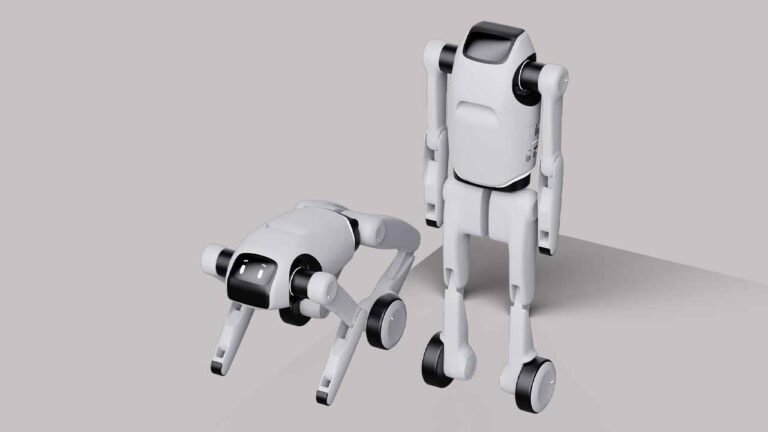
But it’s not just language models driving displacement. Robotics has entered a new phase. Narrow-use robots — machines built for specific, repeatable tasks — are replacing warehouse workers, assembly line inspectors, and delivery personnel. Projects like MolmoAct 2 are pushing robot manipulation forward rapidly. The Luna humanoid robot represents yet another step toward physical task automation. Consequently, the displacement isn’t limited to desk jobs anymore.
Model breakthroughs that triggered hiring changes:
- GPT-4o (May 2024) — Companies began replacing customer-facing chat teams almost immediately
- Claude 3.5 Sonnet (June 2024) — Coding assistant adoption surged; junior developer hiring quietly slowed
- DeepSeek R1 (January 2025) — Low-cost AI made automation accessible to smaller firms overnight
- Gemini 2.0 (December 2024) — Google integrated AI across its product suite, reducing internal teams
- Llama 3.1 (July 2024) — Open-source models let companies build custom tools without hiring entire ML teams
The link between model releases and job losses is now undeniable. Nevertheless, the Bureau of Labor Statistics still groups many of these losses under general “restructuring.” Official data lags behind reality by months, sometimes longer.
With 192,000 tech jobs gone in recent months, companies saying AI is the primary driver marks a clear break from every previous tech downturn. In 2001 and 2008, jobs came back when the economy recovered. This time, the roles themselves are being automated away — permanently.
Retraining Programs and Emerging Roles Worth Watching
The picture isn’t entirely bleak. However, the opportunities require deliberate action. Waiting for things to “go back to normal” is honestly the riskiest move available right now.
Government and corporate retraining initiatives:
Several programs have launched to address the displacement. Google’s Career Certificates program now includes AI-specific tracks. Microsoft offers free AI training through LinkedIn Learning. Amazon has committed billions to upskilling warehouse and tech workers. Additionally, community colleges across the US are partnering with tech companies to build accelerated certification programs. Fair warning: quality varies wildly, so vet them carefully before investing your time.
These programs typically cover:
- AI prompt engineering and workflow design
- Machine learning operations (MLOps)
- AI safety and alignment testing
- Human-AI collaboration frameworks
- Robotics maintenance and supervision
Emerging roles that didn’t exist two years ago:
- AI integration specialist — Bridges the gap between AI tools and business processes
- Prompt engineer — Designs and refines instructions for language models (more nuanced than it sounds)
- AI ethics auditor — Checks AI systems for bias and compliance
- Synthetic data curator — Creates and manages training datasets
- Human-in-the-loop coordinator — Manages workflows where humans verify AI output
- Robotics fleet manager — Oversees deployment of narrow-use robots across facilities
Importantly, these roles pay well. AI integration specialists earn between $120,000 and $180,000 at major firms. Prompt engineering roles at companies like Anthropic and OpenAI start above $150,000. I’ve spoken with people who made this transition in under a year — it’s doable, but it takes focus.
The real kicker? The 192,000 tech jobs gone in months reality means companies aren’t saying “retrain and come back.” They’ve moved on. Therefore, workers need to start building new skills now, not after the next layoff announcement.
Practical steps for displaced tech workers:
- Build a portfolio of AI-augmented projects, not just traditional coding samples
- Learn to use tools like Claude, GPT, and Copilot at an advanced level — not just the basics
- Focus on skills AI can’t easily copy: stakeholder management, system design, ethical judgment
- Network within emerging AI safety and governance communities
- Consider adjacent industries where tech skills plus domain knowledge create genuinely unique value
Conversely, simply adding “AI” to your LinkedIn headline won’t help. Employers want demonstrated capability, not buzzwords. I’ve seen enough resumes lately to know the difference is immediately obvious.
The Broader Economic Impact Beyond Silicon Valley
This wave isn’t confined to San Francisco and Seattle. Furthermore, the ripple effects are hitting tech hubs and secondary markets alike — Austin, Denver, Raleigh, and Atlanta have all seen significant layoffs.
The San Francisco Bay Area has absorbed the largest absolute number of cuts. However, smaller tech markets are feeling proportionally greater pain. Austin aggressively courted tech companies over the past five years. Now it faces a surplus of displaced workers competing for fewer openings. The math doesn’t work in their favor.
Moreover, the downstream effects on local economies are real. When tech workers lose jobs, they cut restaurant spending, delay home purchases, and pull back on discretionary outlays across the board. The Wall Street Journal has documented declining commercial real estate demand in multiple tech corridors — and that’s before the full displacement wave has even landed.
The contractor and gig economy squeeze:
Full-time employees aren’t the only ones affected. Contract workers, freelancers, and gig economy participants face even steeper declines — and they have far fewer safety nets. Companies that once hired large pools of contractors for content creation, testing, and data labeling now use AI for these tasks. Specifically, content creation platforms have seen freelancer earnings drop sharply. Translation services, copywriting, and basic design work have all been disrupted. Similarly, data labeling — once a massive source of contract work — is increasingly handled by synthetic data generation.
With 192,000 tech jobs gone in months, companies saying they prefer AI over contractors sends a clear message. The gig economy safety net that many displaced workers relied on is fraying at exactly the wrong moment.
International competition adds pressure:
DeepSeek’s success showed that AI development isn’t exclusively a US endeavor. Chinese AI companies are producing competitive models at dramatically lower costs. Consequently, US tech firms face added pressure to cut costs further — which means more automation and fewer employees at every level.
The World Economic Forum projects that AI will create 170 million new jobs globally by 2030 while displacing 92 million. That’s a net positive on paper. But workers losing jobs today can’t wait until 2030 for relief — and the transition period is going to be genuinely painful.
What History Tells Us — And Where It Falls Short
Tech optimists love pointing to historical precedent. The automobile replaced horse-drawn carriages. ATMs didn’t eliminate bank tellers. Spreadsheets created more accounting jobs, not fewer.
These comparisons have real limits.
Although previous technological shifts created new industries over decades, AI is compressing that timeline dramatically. The gap between displacement and new job creation is widening in ways that historical comparisons don’t adequately capture. Nevertheless, some patterns remain relevant.
- Workers who adapt early benefit most. Those who learned web development in the late 1990s thrived. Those who waited faced a much harder transition.
- New categories of work emerge unpredictably. Nobody anticipated “social media manager” as a viable career in 2005. Similarly, roles we can’t yet imagine will likely emerge from AI — but the timing is uncertain.
- Policy responses lag behind technology. Government retraining programs typically arrive years after displacement begins. That gap is the danger zone.
Alternatively, this wave could follow a completely different pattern. AI can learn and improve continuously. It doesn’t just replace one generation of tasks — it keeps expanding what it can automate. That’s fundamentally different from a static technology like an ATM, and it’s why I’m skeptical of “it’ll all work out” reassurances.
The fact that 192,000 tech jobs are gone in months, with companies saying this is just the beginning, suggests we’re in genuinely uncharted territory. MIT Technology Review has published extensive analysis arguing that AI displacement will accelerate — not stabilize — over the next three years. That tracks with everything I’ve observed.
What you can do right now:
- Audit your current role honestly for AI-replaceable tasks
- Invest 5–10 hours per week learning AI tools relevant to your specific field
- Build relationships with people working in AI safety, governance, and integration
- Diversify your income streams beyond a single employer
- Stay informed about policy changes around AI regulation and worker protections
Conclusion
The reality of 192,000 tech jobs gone in months, with companies saying it plainly is a genuine wake-up call — and I don’t use that phrase lightly.
This isn’t a cyclical downturn. It’s a permanent restructuring of how technology companies operate. Executives are no longer hiding behind euphemisms — they’re crediting AI directly for headcount reductions. Model breakthroughs from OpenAI, Anthropic, DeepSeek, and others have made automation cheaper and more capable than ever. Narrow-use robots and humanoid platforms are pushing displacement beyond software into physical tasks.
Your actionable next steps:
- Assess your vulnerability — Honestly evaluate which parts of your job AI can already do well enough
- Start upskilling immediately — Don’t wait for your employer to offer training; they probably won’t
- Pivot toward AI-adjacent roles — Integration, safety, governance, and supervision are all growing
- Build a financial buffer — If you’re in a high-risk role, prepare for disruption before it arrives
- Stay connected — Join communities focused on AI’s workforce impact; the information flow matters
The workers who thrive won’t be those who ignore the shift. They’ll be the ones who recognized that 192,000 tech jobs gone in months — and companies saying so publicly — was the signal to act. The window for proactive adaptation is open. But it’s closing faster than most people realize.
FAQ
How many tech jobs have been lost in 2025 so far?
Approximately 192,000 tech jobs are gone in the first five months of 2025. Companies are saying AI and automation are the primary drivers. Layoff tracking sites like Layoffs.fyi have documented cuts across hundreds of firms, from early-stage startups to Fortune 500 companies.
Which companies have publicly blamed AI for layoffs?
Several major companies have made direct connections. Shopify, Klarna, Duolingo, and IBM have all publicly stated that AI capabilities influenced their hiring and staffing decisions. Additionally, Dropbox and Chegg have acknowledged AI’s role in their workforce reductions — notably, without much apparent reluctance.
Are coding jobs safe from AI replacement?
Not entirely. Junior and mid-level coding roles face significant risk from AI coding assistants like GitHub Copilot and Claude. However, senior engineers who design systems, make architectural decisions, and manage complex trade-offs remain in strong demand. The key differentiator is judgment, not syntax — and that’s worth remembering.
What new jobs is AI creating?
AI is generating demand for prompt engineers, AI integration specialists, ethics auditors, synthetic data curators, and robotics fleet managers. Furthermore, roles in AI safety, alignment research, and human-AI collaboration are growing rapidly. These positions often pay well above traditional tech salaries, which makes the transition genuinely worthwhile for those willing to put in the work.
Will the government help displaced tech workers?
Government programs exist but typically lag behind the pace of displacement — sometimes by years. The Department of Labor offers workforce development resources, and some states have launched AI-specific retraining initiatives. Nevertheless, most experts recommend proactive, self-directed learning rather than waiting for government programs to catch up. By the time the policy response arrives, the first wave of adaptation will already be over.
Is this different from previous tech layoff waves?
Yes, fundamentally. Previous waves in 2001 and 2008 were driven by economic downturns — jobs returned when markets recovered. This time, with 192,000 tech jobs gone in months and companies saying AI is the cause, the positions themselves are being permanently automated. The roles aren’t coming back in their original form, which makes this displacement structurally different from anything the tech industry has experienced before. That’s not pessimism — it’s just the honest read of what the data shows.
References
Keep reading
Here are the latest posts from the blog.

The future of health monitoring isn’t sitting in a hospital. It’s on your skin. AI biosensing UC San Diego’s breakthrough wearable technology is fundamentally changing how we…
Here’s the thing: the data isn’t subtle. Narrow-use robots outselling humanoids 20 founders should be studying isn’t some fringe contrarian take — it’s the dominant commercia…

Meta Muse Spark AI features capabilities release date — these three things are dominating every tech conversation I’m having right now. And honestly? The timing couldn’t be m…