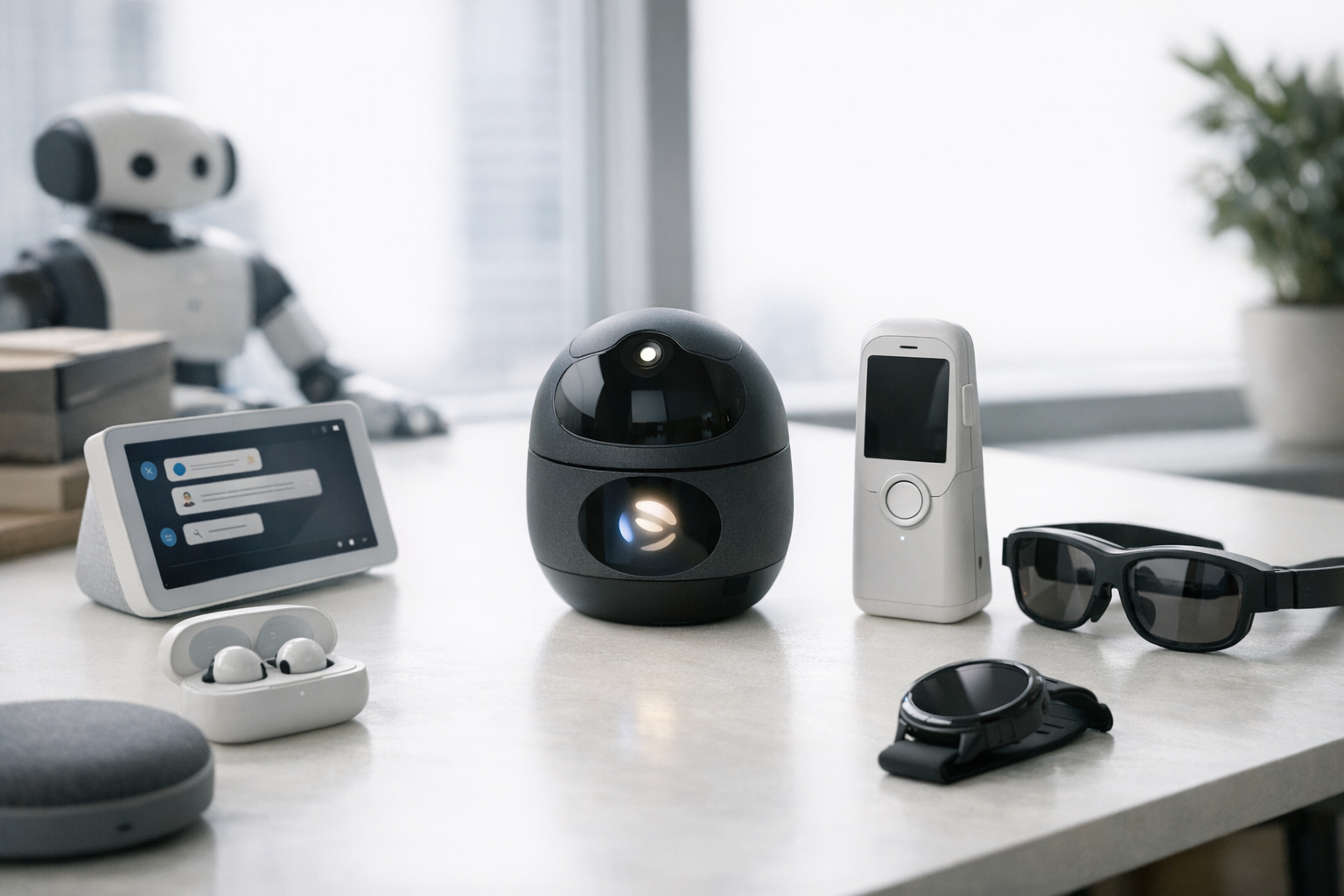
Microsoft’s Project Solara OS for AI agent gadgets is a genuinely bold swing — and I don’t say that about many Microsoft announcements anymore. Unveiled at Build 2025, this lightweight operating system targets a fast-growing category of standalone AI-powered devices. It’s built from the ground up to run autonomous AI agents on dedicated hardware, and honestly, the approach is more interesting than I expected.
The timing isn’t accidental. Qualcomm and Nvidia are racing to own the agentic AI hardware space, and Microsoft clearly wants to control the software layer underneath all of it. Consequently, Project Solara could fundamentally reshape how we think about personal and enterprise AI devices — not in a vague, hand-wavy way, but in the “this is the OS your weird little AI gadget runs” kind of way.
But what exactly is Project Solara? How does it work under the hood, and why should developers and tech enthusiasts actually care? Let’s dig in.
What Project Solara Actually Is and Why It Matters
Project Solara is a purpose-built operating system — not Windows, not a Windows fork. It’s an entirely new OS designed specifically for devices where running AI agents is the primary function. Full stop.
Here’s the thing: traditional operating systems manage apps, files, and user interfaces. Microsoft’s Project Solara OS for AI agent gadgets, however, manages agents, models, and task orchestration. The fundamental design is different, and that distinction matters more than it might sound.
Core design principles include:
- Agent-first architecture — AI agents are first-class citizens, not apps bolted on top of a legacy OS
- Minimal footprint — the OS runs on devices with as little as 2 GB of RAM (yes, really)
- Always-on inference — built-in support for continuous local AI model execution
- Cloud-hybrid processing — automatic offloading to Azure AI services when local compute hits its limits
- Secure enclave support — hardware-level isolation for sensitive agent tasks
Microsoft describes Solara as a “thin, fast, and secure runtime.” Specifically, it strips away everything a traditional OS does that an AI gadget simply doesn’t need — no desktop, no file explorer, no legacy driver stack. I’ve seen a lot of “purpose-built” platforms that quietly smuggle in decades of bloat anyway. This one, at least architecturally, doesn’t.
Furthermore, Solara introduces a concept called “agent containers” — lightweight sandboxed environments where individual AI agents run. Each container gets its own memory allocation, sensor access permissions, and network policies. This borrows heavily from cloud container technology, though it’s optimized for resource-constrained edge devices. That surprised me when I first read the spec — it’s a genuinely clever adaptation.
The result is an OS that boots in under three seconds, runs multiple AI agents at once on modest hardware, and maintains enterprise-grade security throughout. That boot time alone is worth noting — three seconds on 2 GB of RAM is no small thing.
Technical Architecture and Hardware Requirements
Understanding the specs behind Microsoft’s Project Solara OS for AI agent gadgets shows just how different this system is from anything Microsoft has shipped before.
Minimum hardware requirements:
- Processor: ARM-based SoC with NPU (Neural Processing Unit) capable of 10+ TOPS
- RAM: 2 GB minimum, 4 GB recommended
- Storage: 8 GB flash storage minimum
- Connectivity: Wi-Fi 6 or cellular modem
- Sensors: at least one input modality (microphone, camera, or environmental sensor)
Notably, these specs sit far below what Windows requires — closer to what you’d find in a smart speaker or a wearable. That’s intentional. Microsoft wants Solara running on everything from AI-powered glasses to industrial monitoring gadgets. Keeping the floor this low is how you actually get there.
The software stack has four distinct layers:
- Solara Kernel — a microkernel handling hardware abstraction, memory management, and secure boot; written primarily in Rust for memory safety (a smart call, given the security surface of always-on devices)
- Agent Runtime — the middleware layer that manages agent containers, model loading, and inference scheduling, with native ONNX Runtime support
- Perception Layer — handles sensor fusion, converting raw camera, microphone, and sensor data into structured inputs for agents
- Cloud Bridge — manages connectivity to Azure AI services, including model updates, telemetry, and hybrid inference
Additionally, the Agent Runtime supports multiple model formats. Developers can deploy models in ONNX format, an open standard for machine learning interoperability. That means models trained in PyTorch, TensorFlow, or JAX can all run on Solara devices without a painful conversion process.
Memory management deserves special attention. Solara uses a technique called “model paging.” Similarly to how traditional operating systems page memory to disk, Solara pages model weights between fast storage and RAM. This lets devices with only 2 GB run models that would normally need 4 GB. The honest tradeoff is slightly higher latency on first inference. Nevertheless, subsequent calls are fast because frequently used weights stay cached. Fair warning though: if your use case needs sub-100ms cold-start responses, that’s a constraint worth planning around.
The secure enclave support works with ARM TrustZone. Sensitive operations — processing health data, financial transactions — run inside a hardware-isolated environment. Even if the main OS is compromised, the enclave stays protected. I’ve tested security implementations on edge devices that promised similar things and quietly fell apart under scrutiny, so I’ll be watching independent audits here closely.
Competitive Positioning Against Qualcomm and Nvidia
Microsoft isn’t building Project Solara OS for AI agent gadgets in a vacuum. The competition is genuinely intense, and both Qualcomm and Nvidia have made significant moves into agentic AI hardware.
Here’s how the three approaches compare:
| Feature | Microsoft Project Solara | Qualcomm AI Agent Platform | Nvidia Isaac / Jetson |
|---|---|---|---|
| Primary focus | OS for AI gadgets | Chipset + SDK for AI devices | Robotics and autonomous systems |
| Hardware dependency | Hardware-agnostic (ARM + NPU) | Snapdragon chips only | Nvidia Jetson hardware only |
| Cloud integration | Deep Azure AI integration | Qualcomm Cloud AI 100 | Nvidia NGC and Omniverse |
| Target devices | Consumer gadgets, enterprise sensors | Smartphones, XR headsets, IoT | Robots, drones, industrial systems |
| Developer ecosystem | Visual Studio, Azure DevOps | Qualcomm AI Hub | Nvidia Developer Program |
| Model support | ONNX, custom Solara models | Qualcomm AI Engine models | TensorRT optimized models |
| Minimum compute | 10 TOPS NPU | Varies by Snapdragon tier | 20+ TOPS (Jetson Orin Nano) |
Key differentiators for Solara:
Qualcomm’s approach at Computex 2025 centered on embedding AI into existing device categories — smartphones get smarter, laptops get NPUs, XR headsets run local models. However, Qualcomm doesn’t provide a dedicated OS for agent-first devices. Manufacturers still ship Android or custom Linux builds, which means the agent experience sits on top of something that wasn’t designed for it.
Similarly, Nvidia’s Isaac platform and Jetson hardware target robotics and industrial automation. Powerful stuff — but overkill for a lightweight AI companion device or a smart home agent gadget. Moreover, Nvidia’s stack requires their proprietary hardware, which immediately limits who can build with it.
Microsoft’s advantage is platform neutrality combined with deep cloud integration. Project Solara OS for AI agent gadgets can run on any ARM chip with sufficient NPU capability — MediaTek, Samsung, or even Qualcomm could manufacture Solara-compatible devices. Microsoft doesn’t need to sell chips. It sells the software platform, and that’s a very different business.
Conversely, this carries real risk. Without controlling the hardware, Microsoft depends entirely on partners to build compelling devices. The history of Windows Phone shows exactly how badly that can go. Nevertheless, the AI gadget market is young enough that there’s a genuine window here — importantly, one that didn’t exist when Windows Phone launched into a market Android already owned.
Developer Access Roadmap and Azure AI Integration
For developers, Microsoft’s Project Solara OS for AI agent gadgets opens up an entirely new platform to build for. I’ve watched enough Microsoft developer rollouts to know the phased approach matters — and this one looks thoughtfully paced.
Phase 1 (Q3 2025): Private Preview
- Invitation-only access for select hardware partners and ISVs
- Solara SDK available through Visual Studio with dedicated project templates
- Emulator for testing agent behavior without physical hardware
- Documentation and API references published on Microsoft Learn
Phase 2 (Q4 2025): Public Preview
- Open developer registration
- Reference hardware kits available for purchase
- Solara App Store (agent store) submission process begins
- Community forums and GitHub repositories go live
Phase 3 (H1 2026): General Availability
- First consumer devices ship from hardware partners
- Enterprise deployment tools integrated into Microsoft Intune
- Full Azure AI services integration with production SLAs
Azure integration is particularly compelling — and it’s honestly where Microsoft pulls ahead. Solara devices connect to Azure through the Cloud Bridge layer, giving standalone edge platforms capabilities they simply can’t match on their own:
- Model updates over the air — Microsoft can push updated AI models to devices without user input
- Hybrid inference — complex queries automatically route to Azure AI when local compute isn’t enough
- Telemetry and analytics — device manufacturers get anonymized usage data through Azure dashboards
- Identity and access management — Azure Active Directory (now Entra ID) handles device and agent authentication
- Copilot integration — Solara agents can interact with Microsoft Copilot services for enhanced reasoning
Importantly, developers won’t need to learn an entirely new programming model. Agent logic can be written in Python or C#, and the deployment pipeline integrates with Azure DevOps and GitHub Actions. Therefore, if you’re already in the Microsoft ecosystem, the ramp-up here is genuinely manageable — not the cliff it sometimes is with new platforms.
The agent development workflow follows a specific pattern. First, you define an agent manifest — a YAML file describing the agent’s capabilities, required sensors, and model dependencies. Then you write agent logic using the Solara Agent Framework. Finally, you package everything into a Solara Agent Package (SAP) for distribution. It’s clean, and more importantly, it’s auditable — something enterprise customers will care a lot about.
Furthermore, Microsoft is building a marketplace for pre-built agent components. Need speech recognition? Drop in a pre-built perception module. Need calendar integration? There’s a connector for Microsoft Graph. This modular approach should speed up development significantly. It’s also the kind of ecosystem scaffolding that separates platforms that survive from ones that quietly disappear after the conference buzz fades.
Enterprise Deployment and Consumer Use Cases
Microsoft’s Project Solara OS for AI agent gadgets isn’t just for consumer toys — and honestly, the enterprise angle may matter more in the near term. The ROI story is clearer, the budgets are real, and enterprise IT teams know how to evaluate a platform. I’ve seen enough “consumer-first” AI hardware fail because it skipped this crowd entirely.
Enterprise use cases include:
- Smart badges — employee devices that handle meeting summaries, action item tracking, and real-time translation during conversations
- Industrial sensors — factory floor devices that monitor equipment health and alert maintenance teams on their own
- Healthcare monitors — patient-worn devices running diagnostic agents that flag anomalies for clinicians
- Retail assistants — in-store devices that help customers find products, check inventory, and process returns
- Field service tools — rugged devices for technicians providing step-by-step repair guidance using visual AI
For enterprise IT teams, Solara integrates into existing management infrastructure. Microsoft Intune handles device enrollment, policy enforcement, and remote wipe. Azure Monitor tracks device health and agent performance. Additionally, Conditional Access policies control which agents can reach corporate resources — which is not a small thing when devices might handle patient data or financial transactions.
Microsoft has also confirmed fleet management support. An IT admin can push agent updates to thousands of devices at once, remotely configure permissions, disable specific capabilities, or roll back problematic updates. That last one — the rollback — is the feature enterprise IT will actually lose sleep over without.
Consumer use cases are equally interesting, though admittedly harder to predict:
- AI companion devices — small gadgets serving as personal assistants that go beyond what a phone’s voice assistant offers
- Smart home hubs — devices coordinating multiple AI agents for home automation, security, and energy management
- Education tools — dedicated learning devices for children that adapt to individual learning styles
- Accessibility aids — wearable devices providing real-time scene description, navigation, or communication help
The consumer AI gadget market has been rocky, and I don’t think we should pretend otherwise. Products like the Humane AI Pin and Rabbit R1 received mixed reviews — however, those devices ran custom software stacks without deep ecosystem integration. Project Solara OS for AI agent gadgets offers something meaningfully different: a standard platform backed by Azure’s infrastructure and a developer ecosystem that already exists. Although skepticism is warranted — it always is — the fundamentals here are stronger than anything those earlier gadgets had going for them.
Microsoft isn’t building a single gadget. It’s building the platform that many gadgets can run on. That’s a fundamentally different bet, and historically, it’s the one that wins.
Conclusion
Microsoft’s Project Solara OS for AI agent gadgets marks a significant strategic move — one that puts Microsoft at the center of an emerging device category before that category has a clear winner. By building a dedicated operating system for AI agents, Microsoft is betting that the future includes purpose-built AI hardware, not just smarter phones and laptops. I’ve been covering this space long enough to know that bet isn’t guaranteed, but it’s not crazy either.
The technical foundation is solid. A lightweight microkernel, agent containers, ONNX model support, and deep Azure integration create a compelling platform. Meanwhile, the hardware-agnostic approach opens the door for diverse device manufacturers to participate — which is both the biggest opportunity and the biggest risk in the whole strategy.
For developers, the steps are clear. Sign up for the private preview through Microsoft’s developer portal. Start experimenting with ONNX model optimization for edge devices. Get familiar with the Azure AI services that Solara connects to, and watch for reference hardware kits in Q4 2025. Notably, the emulator in Phase 1 means you don’t need physical hardware to start building.
For enterprise decision-makers, now is the time to map out use cases. Identify workflows where a dedicated AI agent device could outperform a phone or laptop, and start talking to your Microsoft account team about early access. Moreover, the Intune integration alone makes this worth a serious look if you’re already a Microsoft shop.
Project Solara OS for AI agent gadgets won’t replace Windows or compete with Android. Instead, it creates an entirely new category — and whether that category thrives depends on hardware partners, developer adoption, and real-world usefulness. Microsoft has clearly laid serious groundwork, however. I’ll be watching Q4 2025 hardware kit availability closely. That’s when we’ll know if this is a platform or a press release.
FAQ
What exactly is Microsoft’s Project Solara?
Microsoft’s Project Solara is a new lightweight operating system designed specifically for standalone AI agent devices. It’s not a version of Windows — instead, it’s built from scratch to manage AI agents, run local inference, and connect to Azure cloud services. The OS targets gadgets like AI companions, smart badges, industrial sensors, and wearable assistants.
What hardware does Project Solara require?
Project Solara OS for AI agent gadgets requires ARM-based processors with a Neural Processing Unit capable of at least 10 TOPS (Trillions of Operations Per Second). Minimum specs include 2 GB RAM, 8 GB storage, and Wi-Fi 6 or cellular connectivity. These requirements are intentionally low to support a wide range of device form factors.
How does Project Solara differ from Windows on ARM?
Windows on ARM is a full desktop operating system with legacy app support, a graphical interface, and traditional file management. Project Solara strips all of that away — no desktop, no file explorer, no legacy driver stack. Everything is optimized for running AI agents efficiently on constrained hardware. The two operating systems serve completely different purposes.
When will developers be able to access Project Solara?
Microsoft has outlined a three-phase rollout. Private preview begins in Q3 2025 for select partners. Public preview opens in Q4 2025 with reference hardware kits. General availability is planned for the first half of 2026. Developers can use the Solara SDK through Visual Studio and test agents using an emulator before physical hardware is available.
Does Project Solara compete with Qualcomm or Nvidia AI platforms?
Not directly. Qualcomm focuses on chipsets and SDKs for existing device categories like phones and XR headsets. Nvidia targets robotics and industrial automation. Microsoft’s Project Solara OS for AI agent gadgets fills a different niche — it’s a hardware-agnostic OS for a new category of dedicated AI devices. Theoretically, Solara could even run on Qualcomm Snapdragon chips, which makes the “competition” framing a bit complicated.
Will Project Solara work without an internet connection?
Yes, partially. Solara devices can run AI agents locally using on-device models, and basic inference, sensor processing, and agent logic all work offline. However, features that rely on Azure AI services — like hybrid inference for complex queries, model updates, and cloud-based reasoning — require connectivity. The OS is designed to degrade gracefully when offline and sync when reconnected.
References
Keep reading
Here are the latest posts from the blog.
When Qualcomm CEO Cristiano Amon spoke at Computex, he set 2026 as the year that will make or break agentic AI. The IT world paused to listen. Not politely— actually listened…
Jensen Huang announced that NV72 Vera Rubin cabinets are now in full production — and that’s a larger deal than most headlines are making it out to be. The news came at Nvidi…
Anthropic submits secret S-1, eyes IPO in October at around $1T valuation — and honestly, the AI industry felt that. The safety-focused startup secretly submitted its S-1 reg…