Start with a correction, because the DeepSeek IPO headline number gets used wrong almost everywhere.
The company is not raising $70 billion. That figure is a valuation. The raise itself is far smaller: reports put it at up to 50 billion yuan, or roughly $7 billion.
Mixing those two up makes the story sound like a Western mega round. It is not one. And the difference matters more than the arithmetic, because the structure underneath tells you who really controls the company.
So here is the accurate version, plus what the DeepSeek IPO would actually require.
Key Takeaways: The DeepSeek IPO in Brief
- The $71–74 billion figure is a pre-money valuation, not a raise. Reported new capital tops out near 50 billion yuan.
- June 2026 brought the first outside money ever: about $7.4 billion at a post-money mark above $50 billion.
- Commercial backers got no vote and a five-year lock-up. China’s state AI fund got both a vote and no lock-up.
- Shanghai’s STAR Market opened its fifth listing standard to AI firms on June 17, 2026, which cleared the path.
- The second round paused in late July after an internal meeting leaked.
- Every timeline here comes from anonymous sources. Nothing has been filed.
Quick Navigation
- What the $70B DeepSeek IPO Number Actually Means
- The June Round That Set Up the DeepSeek IPO
- Why Only Beijing Got a Vote in the DeepSeek IPO Setup
- Why Talent, Not Compute, Drove the DeepSeek IPO
- How Shanghai Rewrote Its Rules Before the DeepSeek IPO
- What the Open-Weight Model Does to the Numbers
- Why the DeepSeek IPO Process Paused in July
- What a DeepSeek IPO Filing Would Have to Show
- How the DeepSeek IPO Fits China's Listing Rush
- DeepSeek IPO Reports: What to Trust, What to Discount
- What the DeepSeek IPO Means for Global Investors
- Conclusion: The DeepSeek IPO Is About Control, Not Capital
- FAQ About the DeepSeek IPO
What the $70B DeepSeek IPO Number Actually Means
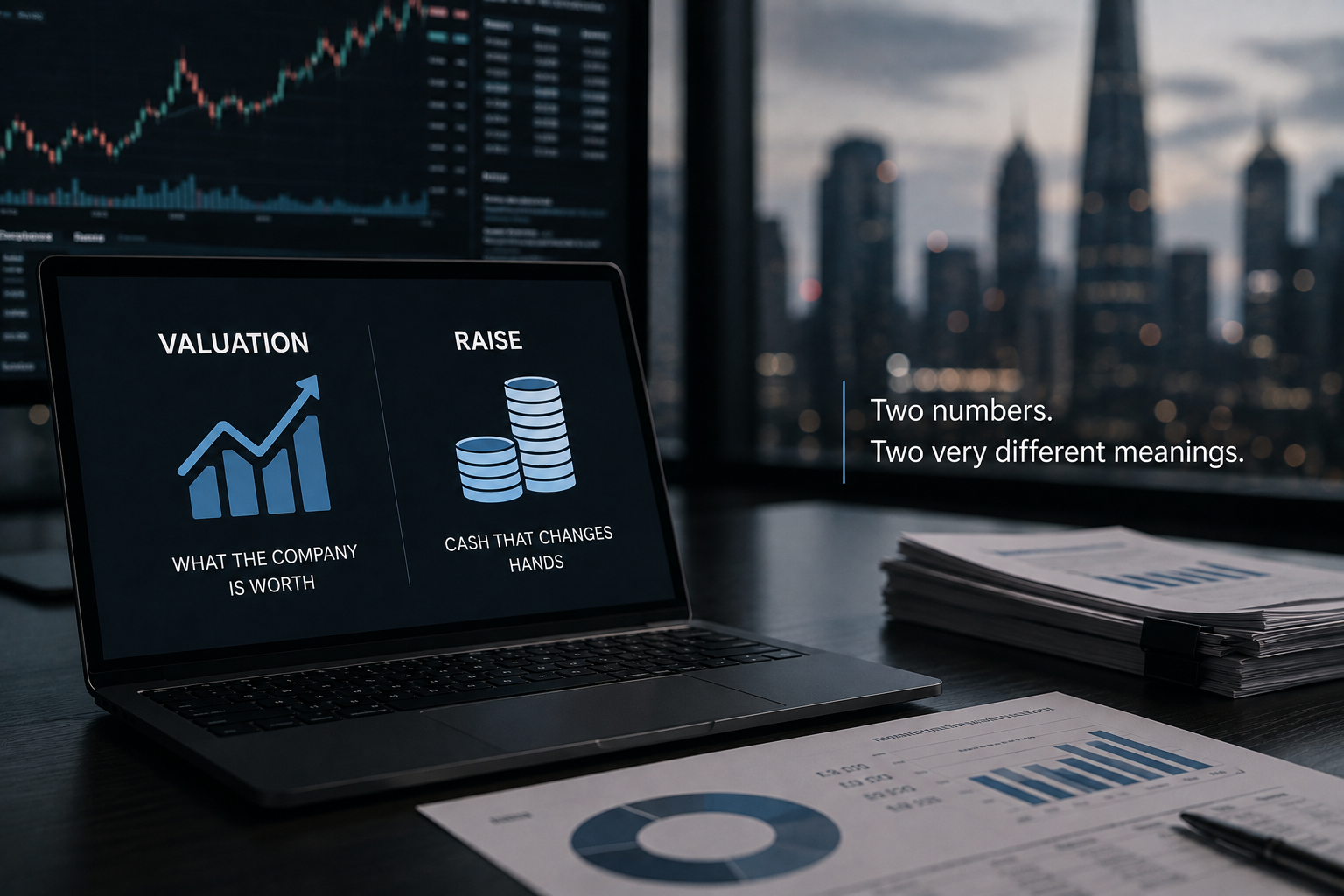
Two numbers keep getting merged into one across DeepSeek IPO coverage, so separate them.
Valuation is what buyers agree the whole company is worth. A raise is the cash that actually changes hands. In June the lab sold a slice at a price implying over $50 billion, and collected about $7.4 billion doing it.
Now reports point to a fresh round at $71–74 billion pre-money. Reuters put the target near 500 billion yuan, with up to 50 billion yuan of new money.
So the valuation would jump roughly 40% in about six weeks. The cheque size stays modest by frontier standards.
Compare the DeepSeek IPO with US peers and the contrast is stark. OpenAI closed a round near $122 billion at roughly $852 billion. Anthropic raised $65 billion.
The Hangzhou lab plays a different game, and not by choice. Capital access is domestic, and chip access is restricted. We looked at how export controls reshape compute economics here, and those constraints set the ceiling on what any Chinese lab can usefully spend.
Founder Liang Wenfeng has said as much, long before any listing talk. Money was never the bottleneck. Chip shipments were.
The June Round That Set Up the DeepSeek IPO
Until mid-2026 the lab had never taken outside money, so this IPO story starts here. Liang funded it from High-Flyer, the quant hedge fund he also founded.
That changed on June 16, and it set up everything since. The round totalled over 50 billion yuan, about $7.4 billion, at a post-money valuation reported between $52 billion and $59 billion.
Liang was the largest single contributor to the pre-DeepSeek IPO round, at roughly 20 billion yuan of his own money. Tencent put in about 10 billion yuan. CATL added around 5 billion.
JD.com, NetEase, and IDG Capital each committed near 3 billion yuan. China’s National AI Industry Investment Fund joined too.
Note the CATL entry on that cap table. A battery maker buying into an AI lab is a bet on data centre power supply, not on models.
The structure that makes the DeepSeek IPO unusual
Here the DeepSeek IPO backstory stops resembling a normal round. Commercial investors did not buy shares in the company at all.
Their capital went into a limited partnership managed by Liang, and that fact outlives this IPO. Forbes summarized the terms: five-year lock-up, no voting rights, no easy exit.
So Tencent’s roughly $1.4 billion bought exposure to a fund, not governance in the company heading toward a DeepSeek IPO. Secondary sales are barred.
Why Only Beijing Got a Vote in the DeepSeek IPO Setup
One investor was carved out, and that exception shapes the entire DeepSeek IPO.
The National AI Industry Investment Fund invested directly into the operating entity. It received voting rights. It faces no lock-up.
That makes a state vehicle the sole outside holder with governance power and immediate liquidity. Liang keeps roughly 78–84% control, depending on which reporting you follow.
What this means for later buyers
Read the cap table before the DeepSeek IPO prospectus. Control here was settled in June, not at pricing. A public offering does not automatically undo this arrangement.
Retail buyers in a Shanghai listing would sit behind a founder with super majority control and a state fund with the only external vote. So this IPO would price a minority economic stake, not influence.
That is not unusual in Chinese tech, and the DeepSeek IPO will not be judged in isolation. Still, it should be stated plainly rather than buried.
Why Talent, Not Compute, Drove the DeepSeek IPO
One detail in the reporting reframes the whole raise, and it rarely gets picked up.
The pressure behind the DeepSeek IPO was retention, not hardware. Chinese labs have been poaching aggressively from each other, and pay packages climbed fast through 2026.
A lab funded from a hedge fund balance sheet can buy chips. It cannot easily offer equity that anyone can sell.
So a round ahead of this IPO does two things at once. It sets a market price for the shares, and it creates a path toward liquidity. Both matter enormously when a rival can offer cash today.
That reading also explains the five-year lock-up. Liang wanted a valuation mark and a listing path, but not a crowd of investors pushing for an exit.
Why that changes how you read the numbers
Once you see retention as the driver, the modest cheque size stops looking odd. The company did not need $70 billion of capital. It needed a price.
So this IPO looks less like a funding event and more like the last step in a compensation redesign.
How Shanghai Rewrote Its Rules Before the DeepSeek IPO
Timing here is not coincidence, and it is the most overlooked part of this IPO story.
On June 17, 2026 — one day after the funding round closed — CSRC chairman Wu Qing announced at the Lujiazui Forum that the STAR Market’s fifth listing standard would expand to cover artificial intelligence.
That pathway matters for the DeepSeek IPO because it sets no profit or revenue threshold at all. It was created when the STAR Market launched in 2019, suspended in 2023 over investor protection concerns, then revived in 2025 as part of a “1+6” reform package.
Before June the standard covered biotech, chip firms, and commercial aerospace. Now AI large-model developers qualify.
The Shanghai Stock Exchange published review guidance the same afternoon. Applicants need at least one large model in market and evidence of scaled use.
The criterion nobody in the West would recognize
Read the official DeepSeek IPO pathway wording closely. Eligible companies must have a main business or product “approved by the state,” alongside large market space and staged R&D results.
State approval is not a tiebreaker there. It is a threshold. So this IPO would run through a gate where policy alignment is a formal listing requirement, not an informal advantage.
The SSE also flags these stocks with a “U” suffix in the Sci-Tech Growth Tier, so buyers can see which listings are pre-profit.
A stated policy goal sits behind the DeepSeek IPO too. Beijing reportedly wants an AI model developer listed on the STAR Market, which currently has none.
What the Open-Weight Model Does to the Numbers
Revenue is the hardest thing to guess from outside, and open weights are why.
Anyone can download the models and run them on their own hardware. So a large share of real-world usage generates no payment to the lab at all.
That is deliberate. Open releases build ecosystem share, pressure rival pricing, and recruit engineers. Yet this IPO will still need a revenue line. But none of it books as revenue.
A listing forces the question into the open. Investors will want to know what share of income comes from the API, from enterprise licensing, and from High-Flyer-adjacent work.
Until a DeepSeek IPO filing lands, every revenue estimate you read is an outsider’s guess.
Why the DeepSeek IPO Process Paused in July
Then the process stalled, which most DeepSeek IPO coverage missed entirely.
On July 26 the company said it would not proceed with planned investment agreements. Reporting ties the pause to Liang’s frustration after a four-hour internal meeting leaked during the first round.
Fifty-two of his remarks on culture, open-source strategy, and AI circulated widely online. The company has not confirmed the leak’s authenticity.
Fundraising may resume, and this IPO filing may still land this year. But a founder who halts a round over a leak is not a founder in a hurry to publish audited financials.
That tension sits at the centre of the IPO question. Going public means disclosure, and this is a company that has guarded its internals closely.
What a DeepSeek IPO Filing Would Have to Show
Set aside the valuation talk around the DeepSeek IPO. A STAR Market prospectus forces specifics.
The lab prices aggressively and open-weights its models. R1 was reportedly trained for around $294,000 using 512 Nvidia H800 chips, and its reasoning costs came in far below comparable US offerings.
Cheap inference is a strategy, and the DeepSeek IPO would have to price it honestly. It is also a revenue question. A filing would show what open weights actually earn, and that number has never been public.
Compute and supply
Export controls limit access to leading-edge hardware, so any IPO document must address them. Any prospectus would need to describe the chip inventory, domestic alternatives, and the risk that restrictions tighten.
That section would be read closely outside China. It is the clearest available window into how far domestic silicon has come.
Governance
The limited partnership arrangement would need full description in a DeepSeek IPO filing. So would the state fund’s rights, related-party dealings with High-Flyer, and Liang’s control.
Chinese disclosure rules are real. The SSE chairman has stressed strict gatekeeping, so a DeepSeek IPO would face genuine scrutiny.
How the DeepSeek IPO Fits China’s Listing Rush
The DeepSeek IPO is not a solo move. A queue has formed.
Zhipu AI and MiniMax both debuted in Hong Kong in early January, then initiated STAR Market applications. Moonshot AI is reportedly lining up a Hong Kong listing at just over $30 billion.
Moonshot matters as a comparison. Its K3 model runs to 2.8 trillion parameters and has topped several benchmark tables. We covered why those benchmark tables are getting harder to read, which is worth keeping in mind when labs cite them in listing documents.
Eight unprofitable firms listed under the Sci-Tech Growth Tier in its first year, and six reached first profit. Since 2025 the STAR Market has accepted 24 more pre-profit applicants.
So the pathway works mechanically. Whether it works financially for a lab giving models away is a separate question.
Fortune framed the wave as a great Chinese AI listing rush. That reads right. The DeepSeek IPO would be its largest test.
DeepSeek IPO Reports: What to Trust, What to Discount
Sourcing quality varies wildly across DeepSeek IPO coverage, so sort it.
Reasonably solid
The June round that preceded the DeepSeek IPO push happened. The structure was broken by The Information and confirmed across Reuters, Forbes, and SCMP reporting. The STAR Market rule change is on the record from the CSRC and the exchange.
Reported, not confirmed
Everything about the DeepSeek IPO timeline sits here. A late-2026 filing target and a Q2 2027 debut both come from anonymous sources, via Bloomberg, the Wall Street Journal, and Reuters.
This IPO valuation figures vary between $71 billion and $74 billion depending on the outlet. Treat the range as a range.
Worth ignoring
Any claim of a $70 billion raise. Any specific ticker or pricing. Neither exists.
One number circulating online puts the second round at a $710 billion valuation. That appears to be a decimal error and should be discarded.
What the DeepSeek IPO Means for Global Investors
Access is the first practical DeepSeek IPO question, and the answer disappoints most foreign readers.
A STAR Market debut is a mainland A-share offering. Overseas buyers reach it through qualified institutional channels or Stock Connect eligibility, not an ordinary brokerage account.
Index inclusion rules matter here too. Newly listed pre-profit stocks carry a “U” marker, and index providers treat them cautiously at first.
So early trading tends to be domestic, retail-heavy, and volatile. The STAR Market has drawn criticism for exactly that pattern, including studies finding revenue surges before listing that reverse afterwards.
Western AI firms raise private capital at scale and delay listing, unlike the DeepSeek IPO route. Anthropic’s approach to compute partnerships shows how far that model can stretch before a public market becomes necessary.
China is running the opposite experiment. It is building a listing venue first, then routing its strongest labs into it. The DeepSeek IPO would be the clearest test of whether that works.
One more variable sits outside the company’s control. Yicai reported the CSRC’s stated aim of using the growth tier to help strong tech firms cross the funding gap before profitability.
That framing helps applicants. Yet it also means the window can narrow if regulators sour on pre-profit listings again, as they did in 2023.
So the schedule depends on Beijing’s appetite as much as on any prospectus. Watch how Zhipu and MiniMax trade after their STAR applications clear. Their reception will shape the terms available later.
Conclusion: The DeepSeek IPO Is About Control, Not Capital
The DeepSeek IPO is unusual for a reason most coverage skips. This company does not obviously need the money.
High-Flyer funded it for three years. The founder wrote the largest cheque in its first outside round. Compute, not capital, is the binding constraint.
So why pursue a DeepSeek IPO at all? Three plausible answers, and they are not exclusive. A public market gives Chinese investors access to an asset they currently cannot own. It gives Beijing a flagship AI listing on a board that lacks one. And it gives employees liquidity in a market where talent poaching has intensified.
None of those DeepSeek IPO motives is about funding the next model. That is the tell.
Watch the filing, if it comes. The valuation will make headlines, but the share class table and the related-party notes will tell you what the DeepSeek IPO actually is.
FAQ About the DeepSeek IPO
Is DeepSeek raising $70 billion?
No. The $71–74 billion figure is a pre-money valuation, not new capital. Reports put the actual raise at up to 50 billion yuan, roughly $7 billion. The June 2026 round raised about $7.4 billion at a post-money valuation above $50 billion.
When is the DeepSeek IPO expected?
Nothing is confirmed. Reporting from Bloomberg, the Wall Street Journal, and Reuters points to an internal target of filing in late 2026, with a possible debut on Shanghai’s STAR Market as early as the second quarter of 2027. All sources were anonymous, and timelines could change.
Can foreign investors buy into the DeepSeek IPO?
Not directly in most cases. A STAR Market listing is a mainland A-share offering, and access for overseas buyers runs through qualified investor channels and Stock Connect eligibility rather than an ordinary brokerage account.
Who controls the company before the DeepSeek IPO?
Liang Wenfeng retains roughly 78–84% control going into the DeepSeek IPO. Commercial investors including Tencent, CATL, JD.com, and NetEase hold interests in a limited partnership with no voting rights and a five-year lock-up. China’s National AI Industry Investment Fund is the only outside holder with a direct stake, voting rights, and no lock-up.
Why does the STAR Market allow an unprofitable AI company to list?
The fifth listing standard behind the DeepSeek IPO sets no profit or revenue requirement. Regulators suspended it in 2023, revived it in 2025, and expanded it to artificial intelligence in June 2026. Applicants must have a large model in market with scaled use, and the exchange requires the main business to be state-approved.
Is DeepSeek profitable?
No public figures exist ahead of the DeepSeek IPO. The lab has never filed audited accounts, and its open-weight model releases make revenue hard to estimate from the outside. That gap is exactly what a listing document would have to close.
Keep reading
Here are the latest posts from the blog.
Alibaba’s Zhenwu V900 and the Memory Wall Behind a 500,000-Card Cluster
GPT-6 Sol vs Claude Opus 5.5: What the 50% Cut Misses
Employee-Level Evaluator Access: The Security Problem Nobody Priced