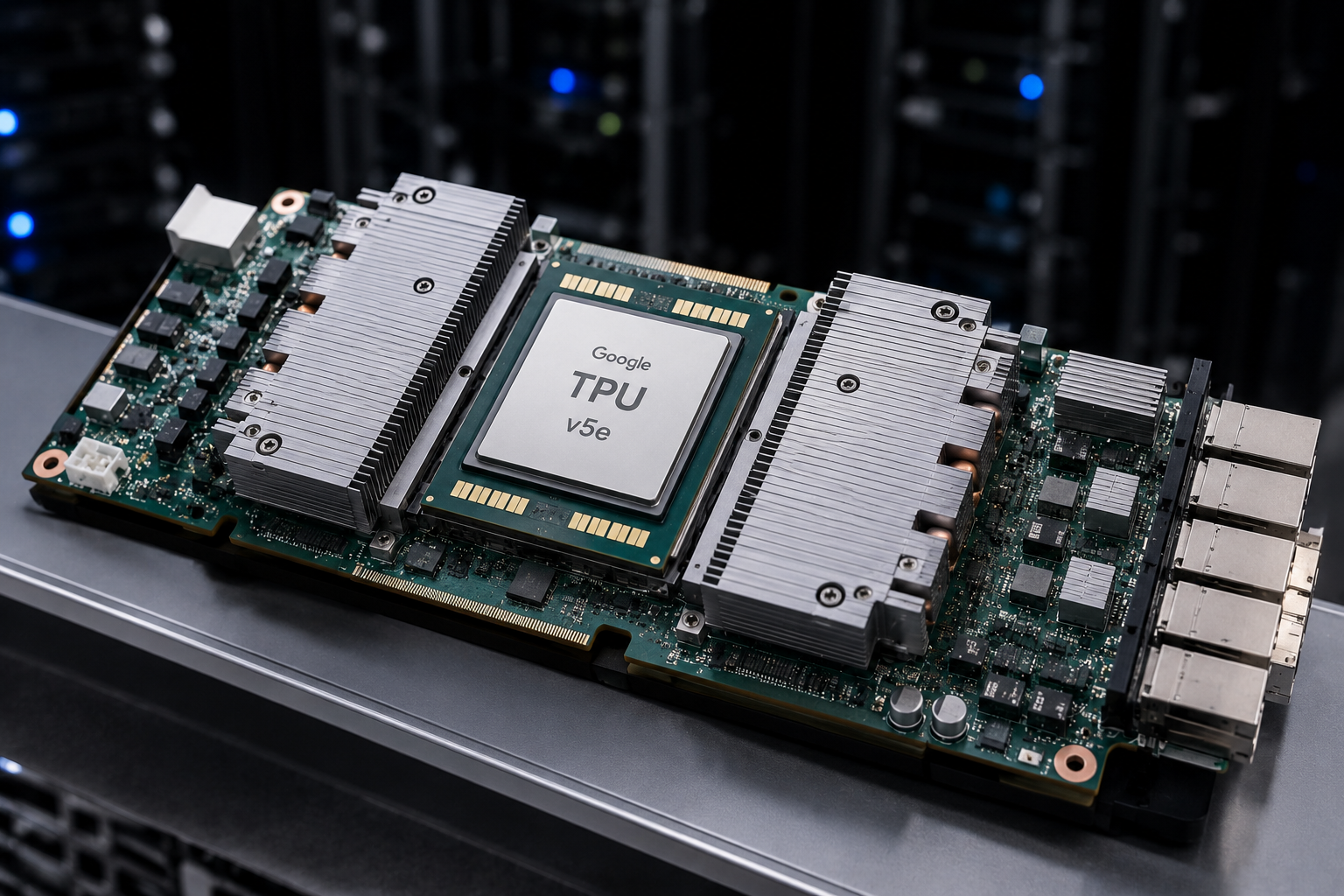
The irony here is almost too good: Google TPU Anthropic now depends on are the same chips Google’s own researchers are queuing to use. Google designed these Tensor Processing Units to power its own machine learning ambitions. Thanks to a massive cloud deal with Anthropic, Google’s internal teams are now lining up for the very chips they built.
This isn’t just a funny headline worth a chuckle and a scroll-past. Underneath the Google TPUs Anthropic story lies a genuinely interesting story about token economics, inference costs, and why custom silicon matters more than ever. Once you understand the business logic, Google’s decision makes a lot more sense than it first appears.
The Google TPUs Anthropic relationship connects directly to bigger questions about AI pricing, cache optimization, and what it actually costs to serve billions of tokens every single day.
Key Takeaways on Google TPU Anthropic
- Google TPUs Anthropic runs on stem from a $2 billion-plus investment tied to a Google Cloud commitment.
- Anthropic chose TPUs over Nvidia GPUs mainly for guaranteed availability, not raw performance.
- The 167X pricing gap between cached and uncached tokens shapes how efficiently Google TPUs Anthropic capacity gets used.
- Google’s own researchers face real queuing and training delays because of the Google TPUs Anthropic allocation.
- TPU v6 (Trillium) and better inference software could ease the crunch, but demand keeps growing too.
Why Google TPU Anthropic Uses Makes Economic Sense
The Google TPU Anthropic Chose Over Nvidia GPUs
Google TPU Anthropic and the Real Economics of Serving Claude
How Google TPU Anthropic Uses Affect Google’s Own Research
What Google TPU Anthropic Means for Cloud Competition
Conclusion: What Google TPU Anthropic Reveals About AI Infrastructure
Why Google TPU Anthropic Uses Makes Economic Sense
The Google TPUs Anthropic relationship began when Google invested over $2 billion in Anthropic as part of a broader cloud partnership, and that investment came with a critical condition: Anthropic would run Claude on Google Cloud’s TPU infrastructure. Anthropic became one of Google’s largest cloud customers essentially overnight.
The math works out surprisingly well for Google. Every TPU hour Anthropic burns generates cloud revenue, and Google’s Cloud division reported $9.57 billion in Q3 2023 revenue, with large AI customers a meaningful driver of that growth. TPUs sitting idle cost money regardless, so selling that capacity to Anthropic keeps utilization high and the economics tight.
Hosting Claude on Google Cloud also creates real switching costs in the Google TPUs Anthropic relationship — Anthropic can’t easily pick up and move elsewhere. Google gets genuine insight into how a top-tier competitor actually uses its hardware in production, too.
The Business Logic Behind Google TPUs Anthropic Runs On
This arrangement creates genuine tension, though. Google’s own researchers need TPU access for Gemini training, experimental models, and pure research projects, while the Google TPUs Anthropic contract guarantees a large chunk of that same capacity goes elsewhere.
Picture a Google DeepMind researcher who needs 2,000 TPU v5e chips for a two-week training run. If Anthropic’s contractual allocation is already saturating available capacity that week, that researcher’s project slips — not because Google lacks TPUs in some abstract sense, but because the specific chips sitting in a specific data center are already spoken for.
The queuing problem is real. Internal Google teams reportedly face actual wait times for TPU clusters, and large training runs requiring thousands of chips can get pushed back when capacity is already committed. It’s a classic build-vs.-sell dilemma, playing out at a scale most companies never reach.
The Google TPU Anthropic Chose Over Nvidia GPUs
Anthropic didn’t land on TPUs by accident. This was a careful decision rooted in inference latency, cost-per-token, and total cost of ownership, and understanding those factors explains why the Google TPUs Anthropic arrangement was an acceptable trade-off for both sides.
Inference latency measures how fast a model generates each token. For Claude, which handles millions of API calls daily, even small latency improvements compound dramatically at scale. TPUs excel at the matrix multiplication operations that dominate transformer inference, and Google’s TPU v5e chips were specifically engineered for efficient inference workloads — not an afterthought, but the actual design goal.
Cost-per-token is arguably the most important metric in this whole story. TPU v5e chips offer high inference throughput, lower cost per chip-hour, and excellent power efficiency, with 819 GB/s of memory bandwidth and guaranteed availability under contract. Nvidia’s A100 sits in the middle on most of these measures with variable availability, while the premium H100 offers very high throughput and 3.35 TB/s of bandwidth but severely constrained availability.
Why Availability Beat Raw Power for Google TPUs Anthropic
Nvidia’s H100 offers superior raw performance, and it genuinely does. But in the Google TPUs Anthropic decision, availability is the critical differentiator. Anthropic needed guaranteed access to thousands of accelerators, and Google could deliver that. Nvidia’s GPU supply was notoriously constrained throughout 2023 and 2024, and “notoriously” is doing real work in that sentence.
Power efficiency matters too, and not just for the environment. TPU v5e’s excellent power-per-token ratio directly lowers Google’s own operating costs per TPU hour, which is part of why bulk pricing to Anthropic can still be profitable even at a discount versus GPU rates.
Google also offered Anthropic favorable pricing through the partnership. Bulk TPU pricing at scale likely undercuts equivalent GPU costs significantly, which is precisely why Google TPUs Anthropic became essentially inevitable — the commercial incentive was simply too strong to leave on the table.
Total cost of ownership tilts toward TPUs for Anthropic’s use case too. TPUs integrate tightly with Google Cloud’s networking, storage, and orchestration tooling, and Google’s custom interconnects let TPU pods communicate with minimal overhead. That tight integration cuts both ways, though — it also makes migrating away from Google Cloud genuinely painful, which is exactly the point.
| Metric | TPU v5e (Google Cloud) | NVIDIA A100 (Comparable) | NVIDIA H100 (Premium) |
|---|---|---|---|
| Inference throughput | High | Medium | Very high |
| Cost per chip-hour | Lower | Medium | Higher |
| Power efficiency | Excellent | Good | Good |
| Memory bandwidth | 819 GB/s | 2 TB/s | 3.35 TB/s |
| Availability for large clusters | Guaranteed (contract) | Variable | Severely constrained |
Google TPU Anthropic and the Real Economics of Serving Claude
The Google TPUs Anthropic story connects directly to the brutal economics of LLM serving. Every API call to Claude costs money. Every cached response saves money. The margins are razor-thin, and the volume is enormous.
Understanding token pricing is essential to the Google TPUs Anthropic story. Anthropic’s Claude 3.5 Sonnet charges different rates for input and output tokens. Input tokens, the prompt you send, cost less than output tokens, the response Claude actually generates. That pricing structure reflects computational reality: generating tokens requires sequential processing, which is inherently more expensive than encoding input in parallel.
Here’s where it gets genuinely interesting. The 167X pricing gap between cached and uncached tokens fundamentally changes the economics of serving at scale. When Claude serves a response from its prompt cache, the cost drops dramatically. Anthropic has enormous incentives to optimize cache hit rates, and those optimizations flow directly back to Google TPUs Anthropic utilization.
The Cache Pricing Gap Behind Google TPUs Anthropic Serving
Prompt caching lets repeated system prompts and common instructions avoid reprocessing the same tokens millions of times daily — a no-brainer optimization at Anthropic’s scale. Batch inference groups multiple requests together to improve TPU utilization, and TPUs are particularly efficient at batched workloads specifically.
Consider the practical stakes: a single popular system prompt served from cache instead of regenerated fresh might cost a fraction of a cent instead of several cents per call. Multiply that across millions of daily API calls, and the savings — and the TPU hours freed up — become substantial fast.
Speculative decoding uses a smaller model to predict likely tokens, then the full model verifies them, meaningfully speeding up generation without adding chips. Quantization runs models at reduced precision, like INT8 instead of FP32, cutting memory usage and improving throughput — TPUs handle quantized workloads efficiently, which matters a lot at this scale.
The relationship between inference cost and TPU allocation links directly to the Google TPUs Anthropic queuing problem. More efficient inference means fewer TPUs needed per request, and fewer TPUs per request means more capacity available for both Anthropic and Google’s internal teams.
The economics also explain why Google tolerates the internal friction. Anthropic’s cloud spend likely generates hundreds of millions in annual revenue, funding further TPU development. The next generation, TPU v6, codenamed Trillium, promises meaningfully better price-performance ratios, which could ease the Google TPUs Anthropic capacity crunch considerably.
How Google TPU Anthropic Uses Affect Google’s Own Research
The Google TPUs Anthropic arrangement has tangible consequences for Google’s own AI development. Although Google commands enormous compute resources, they aren’t infinite, and every TPU allocated to Anthropic is one that Google DeepMind or Google Research can’t use.
The impact shows up in several concrete ways. Training delays happen because large model training runs require sustained access to thousands of TPUs for weeks or months, and scheduling conflicts push timelines back, sometimes significantly. Experimentation bottlenecks slow research too, since researchers need quick access to test hypotheses, and queuing discourages rapid experimentation.
Priority conflicts add friction as well within Google TPUs Anthropic allocation. Product teams working on Gemini compete with research teams exploring novel architectures, and both compete with Anthropic’s contractual allocation. Talent retention becomes a risk too, since researchers frustrated by compute access may start eyeing competitors with better availability.
That talent risk isn’t hypothetical. Researchers who feel throttled by internal resource competition have historically moved to well-funded startups or rivals offering more predictable compute access, and in a market this competitive, losing even a handful of senior researchers over infrastructure frustration is a real cost.
Other major cloud providers face this same tension. Amazon invested $4 billion in Anthropic and also provides compute capacity, while Microsoft committed billions to OpenAI. The pattern repeats across the industry, which tells you something about how structural this problem really is.
How Google Manages the Google TPUs Anthropic Capacity Crunch
Google has strategies to manage the Google TPUs Anthropic crunch. Capacity planning involves forecasting demand months in advance, and Google’s TPU fabrication pipeline, manufactured by Broadcom in partnership with Google’s chip design team, can adjust production volumes. Chip manufacturing carries long lead times, though, typically 6 to 12 months from order to deployment — you can’t just spin up more chips next Tuesday.
Internal allocation systems help too. Google uses scheduling software that prioritizes jobs based on urgency, team, and project importance, and preemptible TPU instances let lower-priority jobs run during off-peak hours, so Google’s internal teams can temporarily reclaim capacity when Anthropic’s workloads dip.
Google has also been expanding TPU capacity aggressively. New data centers across the US, Europe, and Asia are coming online with dedicated TPU installations, aiming to grow total capacity fast enough that both internal and external demand can be met.
What Google TPU Anthropic Means for Cloud Competition
The Google TPUs Anthropic story reveals something deeper about AI infrastructure right now. Custom silicon is becoming a strategic weapon. Cloud partnerships are reshaping competitive dynamics, and the economics of AI serving will determine which companies are still standing in five years.
Custom silicon matters more than ever. Google’s TPUs, Amazon’s Trainium and Inferentia chips, and Meta’s MTIA accelerators all represent major bets on custom hardware, since general-purpose Nvidia GPUs are expensive and supply-constrained. Custom chips can be optimized for specific workloads and manufactured independently.
Nvidia isn’t standing still, though. The company’s Blackwell architecture promises massive performance gains, but availability remains a genuine challenge, so companies like Anthropic that need guaranteed large-scale compute turn to cloud partners with custom silicon they can actually get their hands on — which is exactly the dynamic behind Google TPUs Anthropic in the first place.
| Cloud Provider | AI Partner | Investment | Hardware Used | Queuing Impact |
|---|---|---|---|---|
| Google Cloud | Anthropic | $2B+ | TPU v5e, v5p | High (internal teams affected) |
| AWS | Anthropic | $4B | Trainium, Inferentia | Moderate |
| Microsoft Azure | OpenAI | $13B+ | NVIDIA GPUs | High |
| Oracle Cloud | xAI | $10B (data center deal) | NVIDIA GPUs | Lower (dedicated facility) |
How Google TPU Anthropic Compares to Other Cloud AI Deals
The cloud competition angle is equally important. Google, Amazon, and Microsoft are all using AI partnerships to lock in cloud revenue, and each investment comes with cloud consumption commitments baked in. This creates a self-reinforcing cycle: AI companies get compute, cloud providers get revenue, revenue funds more hardware, and around we go.
Google Cloud’s deal with Anthropic runs over $2 billion, using TPU v5e and v5p chips, with high queuing impact on internal teams. AWS invested $4 billion in Anthropic using Trainium and Inferentia chips, with moderate queuing impact. Microsoft Azure committed over $13 billion to OpenAI using Nvidia GPUs, also with high queuing impact. Oracle Cloud struck a $10 billion data center deal with xAI using Nvidia GPUs, with lower queuing impact thanks to a dedicated facility.
This competitive dynamic means the queuing problem isn’t unique to Google TPUs Anthropic arrangements. It’s a structural feature of the current AI boom — demand for accelerator compute far exceeds supply across the entire industry, and Google’s situation is just unusually visible.
On-device inference is worth watching too. As smaller, more efficient models improve, some workloads will shift to edge devices entirely, meaningfully reducing cloud demand over time. That shift won’t solve the near-term Google TPUs Anthropic crunch, but it changes the multi-year trajectory of accelerator demand industry-wide.
Conclusion: What Google TPU Anthropic Reveals About AI Infrastructure
Google TPUs Anthropic uses isn’t a bug in Google’s strategy. It’s a feature — a calculated decision to monetize custom silicon through cloud partnerships, even at the cost of some internal inconvenience. The economics justify it. Cloud revenue, utilization rates, and strategic positioning make the trade-off rational, even if it’s awkward to explain at an all-hands meeting.
The situation highlights critical dynamics in token economics, inference optimization, and cloud competition that affect everyone building in this space. Understanding why TPUs won out for Claude serving helps explain broader trends in AI infrastructure.
If you’re building AI applications, pay close attention to inference costs and hardware choices. Monitor token pricing across providers, since the gap between cached and uncached tokens can dramatically affect your costs. Evaluate custom silicon options, since TPUs, Trainium, and other accelerators may offer better price-performance than GPUs for your specific workload. Plan for capacity constraints, since the queuing problem affects everyone, and optimize inference aggressively, since every efficiency gain reduces your hardware needs.
None of this is going away soon, and companies that build their infrastructure strategy assuming today’s capacity constraints are permanent will make better decisions than those hoping the market fixes itself. The Google TPUs Anthropic story will keep evolving as new hardware generations arrive and AI demand grows.
FAQ About Google TPU Anthropic
Why Are Google’s Researchers Queuing for TPUs Sold to Anthropic?
Google committed significant TPU capacity to Anthropic as part of a multi-billion-dollar cloud partnership, and Anthropic uses those TPUs to serve Claude at scale. Google’s internal research teams now compete directly for the same hardware. The Google TPUs Anthropic queuing happens because total demand, internal plus external, exceeds available supply at any given moment.
How Much Did Google Invest in Anthropic?
Google invested over $2 billion in Anthropic across multiple funding rounds. That investment was tied to a cloud computing agreement requiring Anthropic to run its workloads on Google Cloud infrastructure, primarily using TPUs. Amazon separately invested $4 billion in Anthropic for similar cloud commitments on AWS, so the Google TPUs Anthropic deal isn’t Anthropic’s only major cloud partnership.
What Makes TPUs Better Than GPUs for Serving Claude?
TPUs offer real advantages for Anthropic’s specific needs: lower cost-per-chip-hour at scale, guaranteed availability through the Google TPUs Anthropic cloud contract, and tight integration with Google Cloud’s networking stack. Nvidia’s H100 GPUs deliver higher raw performance, but their limited supply made them impractical for Anthropic’s scale requirements.
What Is the 167X Pricing Gap in Google TPUs Anthropic Token Economics?
The 167X pricing gap refers to the dramatic cost difference between cached and uncached token processing. When a prompt or response can be served from cache, the computational cost drops by orders of magnitude compared to generating fresh output. This gap drives aggressive caching strategies and directly affects how efficiently Google TPUs Anthropic capacity gets used.
Will the Google TPUs Anthropic Queuing Problem Get Better Over Time?
Most likely yes, but probably not as fast as Google’s researchers would like. Google is actively deploying TPU v6 (Trillium) chips with significantly improved performance, and new data centers are expanding total capacity. Software optimizations like quantization and speculative decoding also reduce the number of TPUs needed per request, though AI demand keeps growing too.
How Does Google TPUs Anthropic Affect Gemini Development?
The capacity competition can slow Gemini development in concrete ways: large training runs may face scheduling delays, and experimental research projects might wait longer for TPU access than teams would prefer. Google prioritizes Gemini as a flagship product, though, so it typically receives high-priority allocation despite the Google TPUs Anthropic capacity pressure.
Keep reading
Here are the latest posts from the blog.

Colorado AI Act compliance one month in — has anything actually changed? Every product team, compliance officer, and in-house counsel I’ve talked to lately is asking exactly…

Apple Amazon AI spending is the real story hiding behind today’s earnings reports, and the answer might genuinely surprise you. Both giants report today, and investors are wr…

Should every AI lab run an AI jailbreak bug bounty program the way traditional software companies handle security bounties? That question is genuinely splitting the AI safety…