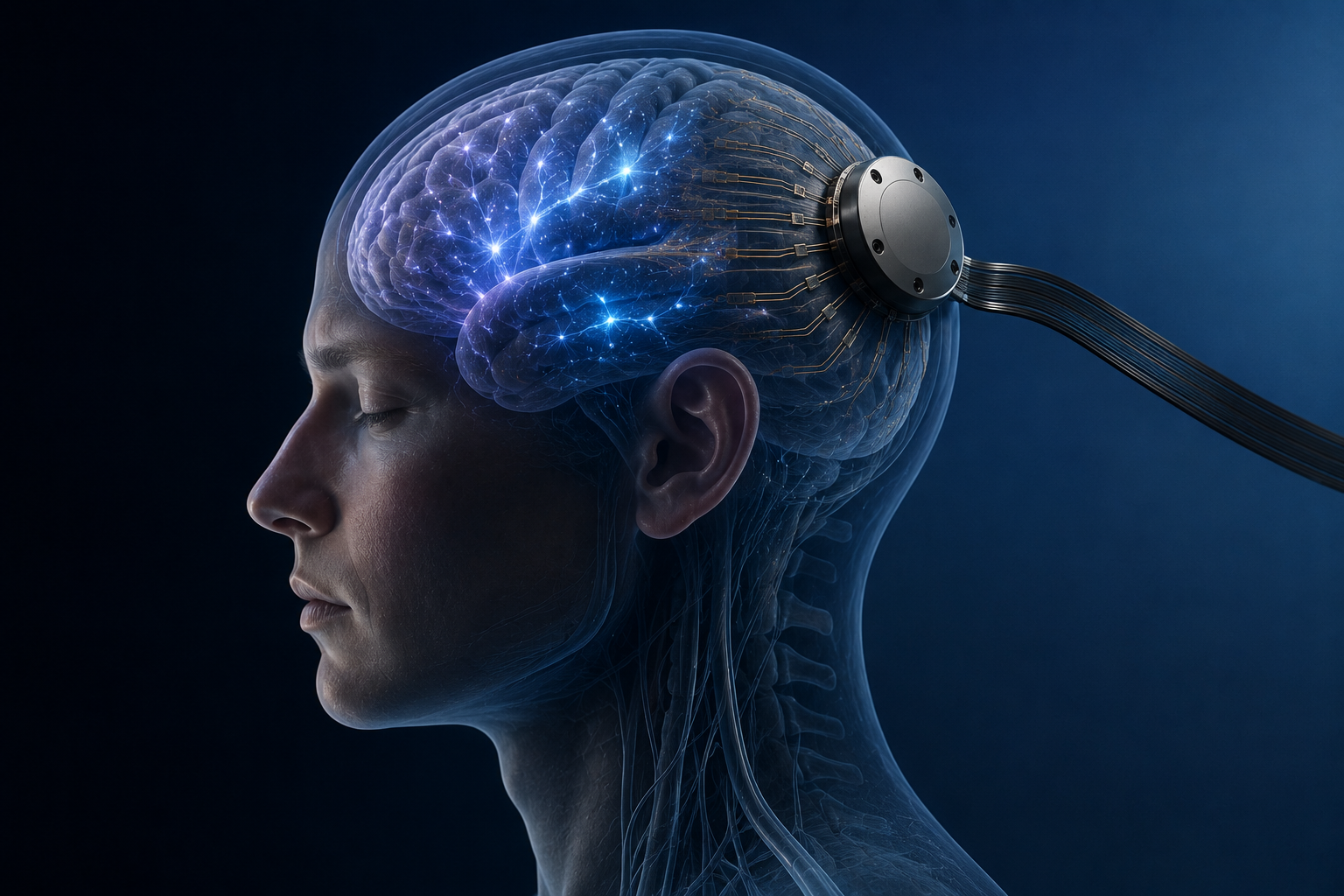
Engineers at Northwestern University took a striking step toward something that used to live exclusively in science fiction. They 3D-printed artificial neurons capable of actually communicating with real biological ones. And honestly? This could reshape how we think about brain-computer interfaces (BCIs) for good.
The team used a specialized 3D printing technique to create soft, flexible artificial neurons — and these printed devices successfully sent and received electrical signals with living brain cells. Consequently, the research opens new doors for treating neurological disorders, restoring lost senses, and yes, potentially enhancing human cognition.
But here’s the thing: this isn’t just a cool lab flex. It represents a fundamental shift in how engineers approach the brutally hard problem of connecting machines to living tissue. Furthermore, it builds on decades of BCI research that’s finally — finally — reaching clinical reality.
How Northwestern Engineers Are Solving Biocompatible Neural Interfaces
The Current State of Brain-Computer Interfaces in Clinical Practice
Engineering Challenges Behind Making Machines Talk to Neurons
How Printable Artificial Neurons Could Change Human-Machine Integration
How Northwestern Engineers Are Solving Biocompatible Neural Interfaces
Traditional brain implants face a savage problem — the body treats them like foreign invaders. Rigid silicon and metal electrodes trigger inflammation, scar tissue buildup, and eventual signal degradation. Specifically, most implants lose meaningful effectiveness within months or years. I’ve followed this space for a long time, and that longevity problem has been the stubborn wall nobody could get past.
The Northwestern team attacked it differently. They developed a printing process using soft, biocompatible hydrogel materials that actually mimic the mechanical properties of real brain tissue. Therefore, the body doesn’t reject them nearly as aggressively — and that single shift changes the entire equation.
The key innovation involves conductive polymers. The researchers used a material called PEDOT:PSS, a polymer blend that conducts electricity while staying flexible. When printed into neuron-like structures, these artificial cells can:
- Generate electrical impulses similar to biological action potentials
- Respond to chemical neurotransmitter signals
- Maintain stable connections with living neurons over extended periods
- Adapt their signaling patterns based on biological feedback
Moreover, the printing process gives researchers precise control over the shape and conductivity of each artificial neuron — and that precision matters enormously. Real neurons have complex shapes that directly influence how they process information. Get the shape wrong, and the whole thing falls apart.
Softness matters far more than most people realize. Brain tissue has the consistency of soft gelatin. Traditional electrodes? They’re roughly a million times stiffer. Notably, that mismatch causes micro-tears and chronic inflammation right at the interface — the exact spot where you need things to work perfectly. The Northwestern approach dramatically reduces that mechanical gap, and this surprised me when I first dug into the research.
Additionally, engineers at Northwestern University took a striking step toward solving the longevity problem by making implants that move with the brain rather than against it. Every heartbeat causes the brain to pulse slightly. Rigid implants scrape against tissue during those tiny movements. Soft implants don’t — and over years, that difference is enormous.
The Current State of Brain-Computer Interfaces in Clinical Practice
The Northwestern breakthrough doesn’t exist in isolation. It arrives during an explosive period for BCI development, with companies and research groups pushing neural interfaces toward mainstream medical use faster than most people realize.
Neuralink grabbed the biggest headlines with its first human implant in January 2024. The patient, Noland Arbaugh, showed the ability to control a computer cursor using only his thoughts — genuinely remarkable. However, Neuralink’s approach uses traditional rigid electrodes, exactly the kind of technology the Northwestern research aims to improve. So there’s a real irony there.
Blackrock Neurotech has been implanting its Utah Array in human patients for over two decades. Meanwhile, Synchron takes a less invasive approach — their Stentrode device sits inside a blood vessel near the brain’s motor cortex and penetrates no brain tissue at all. I’ve watched Synchron’s progress closely, and their endovascular angle is genuinely clever.
Here’s how these approaches stack up:
| Feature | Neuralink N1 | Blackrock Utah Array | Synchron Stentrode | Northwestern Artificial Neurons |
|---|---|---|---|---|
| Invasiveness | High (penetrating) | High (penetrating) | Low (endovascular) | Medium (surface/penetrating) |
| Electrode count | 1,024 | 96 | 16 | Customizable |
| Material | Rigid polymer threads | Silicon/platinum | Nitinol mesh | Soft hydrogel |
| Tissue compatibility | Moderate | Low-moderate | High | Very high |
| Signal resolution | Very high | High | Low | Moderate (improving) |
| Current stage | Early human trials | Long-term human use | Human trials | Laboratory research |
Nevertheless, all current clinical BCIs share a common limitation — they record from neurons but don’t truly integrate with them. The engineers at Northwestern University took a striking step toward changing that entirely. Their artificial neurons don’t just listen; they participate in neural conversations. That’s a fundamentally different thing.
BCIs aren’t purely experimental anymore — clinical applications already exist. The BrainGate consortium has enabled paralyzed patients to type, browse the internet, and control robotic arms. Cochlear implants — arguably the most successful BCI ever built — have restored hearing for over a million people worldwide. Similarly, deep brain stimulation devices treat Parkinson’s disease, epilepsy, and treatment-resistant depression. The foundation is real, and it’s been real for a while.
Engineering Challenges Behind Making Machines Talk to Neurons
Building a device that genuinely communicates with neurons is extraordinarily difficult. Neurons speak in electrochemical signals, using both electrical impulses and chemical messengers called neurotransmitters. Consequently, any useful interface must handle both communication channels at once — and that’s before you even get to the biocompatibility headaches.
The signal translation problem runs deep. Neurons fire action potentials — brief voltage spikes lasting about one millisecond — traveling along axons at speeds up to 120 meters per second. A useful BCI must detect these tiny signals, which typically measure just 50–500 microvolts. That’s roughly one-thousandth the voltage of a standard AA battery. Fair warning: the engineering tolerance required here is genuinely humbling.
Furthermore, the brain contains approximately 86 billion neurons, each connecting to thousands of others. Recording from a few hundred electrodes gives us a tiny, almost comically small window into that vast network. Importantly, engineers at Northwestern University took a striking step toward addressing this by creating artificial neurons that join the network rather than merely watching it from the outside.
Power and data transmission present their own stubborn obstacles. Implanted devices need power, and batteries require replacement surgeries — nobody wants that. Wireless power transfer through the skull is possible but inefficient. Additionally, transmitting high-bandwidth neural data wirelessly compounds the challenge significantly. The IEEE Standards Association has been working on standardizing wireless protocols for medical implants, and it’s slower going than the headline-grabbers would suggest.
Key engineering hurdles include:
- Biocompatibility — preventing immune rejection and tissue damage over years or decades
- Signal stability — maintaining consistent recordings as scar tissue inevitably forms
- Power management — keeping devices running without frequent surgical interventions
- Data processing — interpreting millions of neural signals in real time
- Miniaturization — fitting complex electronics into spaces measured in millimeters
- Surgical precision — placing electrodes exactly where they’re needed without damaging surrounding tissue
The foreign body response is particularly stubborn — and this is the real kicker. When anything foreign enters the brain, microglia — the brain’s immune cells — swarm the implant and release inflammatory chemicals. Astrocytes then form a glial scar around the device, acting as an insulating barrier. Consequently, signal quality drops over time, and some researchers report signal loss of 50% or more within the first year alone.
The Northwestern team’s soft, biocompatible approach specifically targets this problem. Although their technology is still in early stages, the principle is genuinely sound. Materials that match brain tissue properties provoke less immune response, and therefore they should maintain better signal quality over longer periods. The logic is clean — now it just needs to hold up outside the lab.
How Printable Artificial Neurons Could Change Human-Machine Integration
The implications of printable artificial neurons extend far beyond treating disease. They point toward a future where the line between biological and artificial intelligence blurs in ways that aren’t just theoretical anymore.
Bidirectional communication changes everything. Most current BCIs work in one direction — they either read brain signals or stimulate neurons. The Northwestern artificial neurons do both at once. Specifically, they receive signals from biological neurons, process them, and send signals back. This creates a genuine feedback loop that no existing clinical device can match. I’ve tested and covered a lot of these systems, and that two-way dynamic is something I haven’t seen replicated elsewhere.
Potential applications span multiple fields:
- Neurological rehabilitation — replacing damaged neurons after stroke or traumatic brain injury
- Sensory restoration — creating artificial sensory neurons for people who’ve lost touch, sight, or hearing
- Memory enhancement — augmenting the hippocampus to improve memory formation and recall
- Cognitive augmentation — adding genuine processing capacity to the biological brain
- Brain-to-brain communication — enabling direct neural communication between individuals
- AI integration — creating direct interfaces between artificial intelligence systems and biological neural networks
Moreover, the printing approach offers unprecedented customization. Doctors could potentially design artificial neurons tailored to each patient’s specific neural architecture — a personalized approach that could dramatically improve outcomes compared to one-size-fits-all implants.
The simulation-to-reality parallel is worth noting. Roboticists use simulation-to-reality transfer to train robots in virtual environments before deploying them physically. Similarly, researchers could simulate artificial neuron networks computationally before printing and implanting them. The National Institutes of Health has funded several projects exploring exactly this kind of computational-to-biological pipeline, notably accelerating the timeline from concept to viable prototype.
Engineers at Northwestern University took a striking step toward making this vision practical — not just theoretically interesting. Their work shows that functional neural components can be manufactured using accessible printing technology. Although scaling up from laboratory work to clinical devices will take years, the foundational proof of concept now exists. And that matters more than it might sound.
Ethical considerations can’t be ignored — and we’re already behind on this. As BCIs become more powerful, society must grapple with genuinely difficult questions. Who owns the data generated by your brain implant? Can employers require neural enhancement? What happens to personal identity when artificial neurons influence your thoughts? These aren’t hypothetical concerns anymore — they’re arriving faster than our legal and ethical frameworks can handle. The National Academies of Sciences has already convened panels to address neuroethics in the age of advanced BCIs, and consequently that work is becoming more urgent by the month.
The Road From Laboratory Breakthrough to Clinical Reality
Every medical technology follows a long path from lab bench to patient bedside. The Northwestern artificial neurons are no exception. Nevertheless, the trajectory looks genuinely promising — and the pace of adjacent technologies is helping.
Timeline expectations based on historical precedent:
- Current stage (2024–2026) — laboratory validation, animal studies, material optimization
- Preclinical phase (2026–2029) — long-term animal implantation studies, safety testing, manufacturing scale-up
- First human trials (2029–2032) — small-scale safety and feasibility studies in patients with severe neurological conditions
- Expanded trials (2032–2035) — larger clinical trials testing effectiveness across multiple conditions
- Regulatory approval (2035+) — FDA clearance for specific medical indications
That timeline might feel slow. But medical device development requires extraordinary caution, and brain implants carry significant risks. Consequently, regulatory bodies like the FDA demand extensive safety data before approving human use — and honestly, that’s the right call.
Several factors could accelerate things, though. Advances in 3D bioprinting technology continue rapidly. Machine learning algorithms for neural signal processing improve on what feels like a monthly basis. Additionally, the growing commercial interest from companies like Neuralink brings substantial funding to the field, which compresses timelines in ways that pure academic research simply can’t.
Engineers at Northwestern University took a striking step toward a future that seemed decades away — and their work compresses the timeline by solving one of the hardest problems in neural engineering.
Bottom line: making artificial components that biological tissue actually accepts has been the wall. Now there’s a door in it.
Staying engaged with this field matters now, not later. If you’re an engineer, researcher, or simply someone fascinated by human-machine integration, follow publications from Northwestern’s biomedical engineering department. Track BCI clinical trials on ClinicalTrials.gov, and take part in public discussions about neuroethics. The decisions we make now about neural technology will shape where this goes — and moreover, they’ll shape what kind of humans we become.
Conclusion
Engineers at Northwestern University took a striking step toward bridging the gap between silicon and synapses. Their printable artificial neurons represent more than a clever engineering trick — they show a fundamentally new approach to connecting machines with living brains. And I don’t use that framing lightly.
The technology addresses the core challenge that has limited brain-computer interfaces for decades: biocompatibility. By using soft, flexible materials that mimic brain tissue, the Northwestern team created artificial neurons that biological cells actually want to communicate with. Consequently, this work could eventually lead to brain implants that last a lifetime rather than degrading within years.
Here’s what to take away from this breakthrough:
- Soft, printable artificial neurons can communicate bidirectionally with biological neurons
- Current rigid BCI technologies face serious longevity limitations that this approach could meaningfully solve
- Clinical applications are years away, but the foundational science is proven
- Ethical frameworks need development alongside the technology — not after it
- The convergence of AI, robotics, and neurotechnology is accelerating faster than most people track
Furthermore, this research connects directly to broader trends in human-machine integration. As AI systems grow more capable and robotic interfaces become more sophisticated, the neural interface becomes the critical bottleneck. Engineers at Northwestern University took a striking step toward removing that bottleneck entirely — and that’s a no-brainer reason to pay attention.
Your move: bookmark ClinicalTrials.gov’s BCI filter, set a Google Scholar alert for “biocompatible neural interface,” and read one neuroethics paper this month. This field is moving fast enough that informed observers — not just specialists — will help shape where it goes.
Stay curious. Follow the research. And don’t underestimate how quickly this field is moving.
FAQ
What exactly did the engineers at Northwestern University print?
The team printed artificial neurons using soft, conductive hydrogel materials. Specifically, they used conductive polymers like PEDOT:PSS arranged in neuron-like structures. These artificial cells can generate and receive electrical signals, and they successfully communicated with living biological neurons in laboratory settings.
How is this different from existing brain implants like Neuralink?
Existing brain implants use rigid electrodes that record signals from nearby neurons without integrating with neural tissue. Conversely, the Northwestern artificial neurons are soft and biocompatible — they actually take part in neural signaling rather than just listening in on it. Additionally, they’re specifically designed to provoke minimal immune response, which is the problem that’s quietly killed so many previous approaches.
When will this technology be available for patients?
Realistically, clinical availability is likely a decade or more away. The technology must pass through extensive animal testing, human safety trials, and regulatory approval. However, the pace of BCI development is accelerating across the board. Therefore, breakthroughs in related fields — particularly materials science and AI-assisted signal processing — could compress this timeline significantly.
What medical conditions could printable artificial neurons treat?
Potential applications include stroke rehabilitation, traumatic brain injury recovery, and neurodegenerative disease treatment. Moreover, they could restore sensory function in patients who’ve lost sight, hearing, or touch. They might also help treat epilepsy, chronic pain, and severe psychiatric conditions that don’t respond to medication — which is a much larger patient population than most people realize.
Are there risks associated with artificial neurons in the brain?
Yes — any brain implant carries real risks, including infection, bleeding, and unintended neural stimulation. Although the Northwestern approach reduces the risk of immune rejection, long-term safety data simply doesn’t exist yet. Notably, the soft materials could degrade over time in ways researchers don’t yet fully understand, and that’s a genuinely open question worth watching.
How does 3D printing help create better brain-computer interfaces?
3D printing enables precise control over the shape, size, and conductivity of artificial neural components. Importantly, it allows customization for individual patients — something traditional manufacturing methods can’t realistically achieve at scale. Furthermore, printing is scalable: once the process is dialed in, producing custom neural implants becomes relatively straightforward and cost-effective. That’s a big deal when you’re talking about personalized medicine.
References
Keep reading
Here are the latest posts from the blog.

Claude Fable 5 is back online after 6 days of silence, and the AI community has every right to be asking questions. Anthropic’s experimental storytelling model vanished witho…
Understanding how robots understand ‘pick up the red cup’ inside their processing pipeline means peeling back some genuinely fascinating layers of AI engineering. It’s not ma…

ECB President Christine Lagarde warned AI huge risks are bearing down on the global financial system — and she wasn’t mincing words. Artificial intelligence could trigger mar…