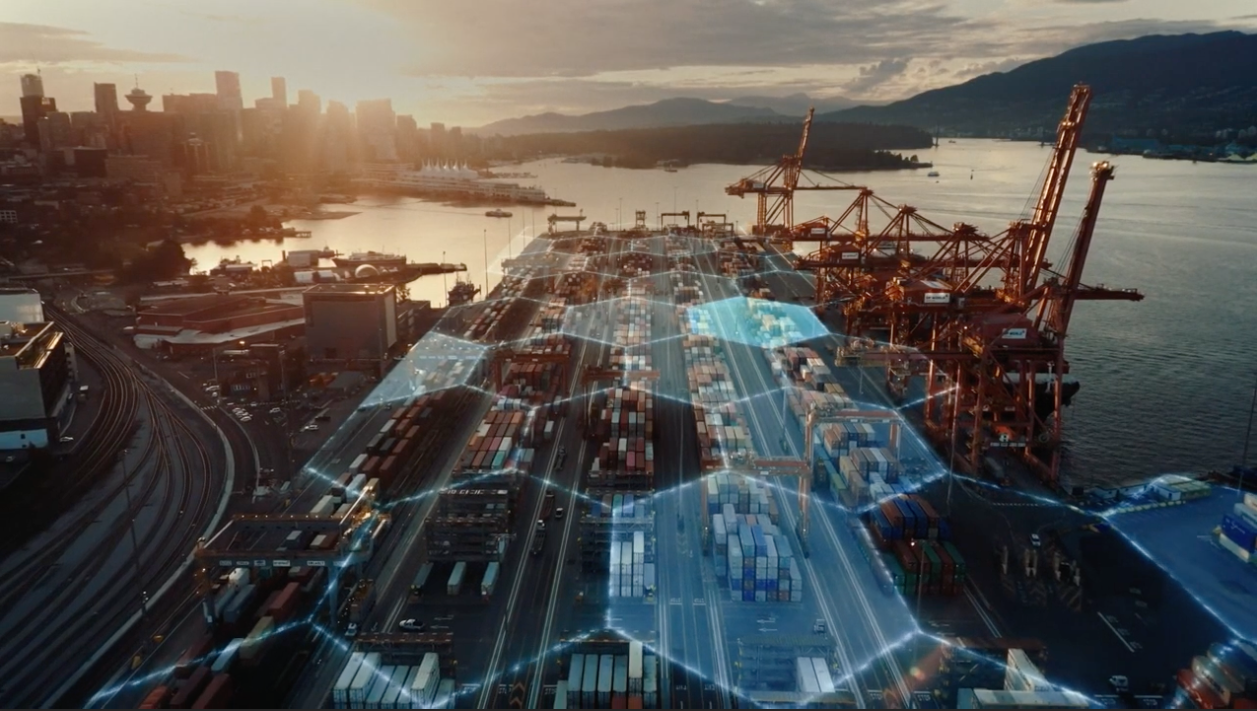
The partnership between Niantic and Spexi for city-scale drone imagery for robot training isn’t just another Tuesday in tech news. This one actually matters. Niantic — yeah, the Pokémon GO company — has quietly built one of the most detailed 3D maps on the planet. Now they’re teaming up with Spexi’s drone fleet to capture aerial imagery that teaches robots how to move through the real world. Not a simulation. The actual, messy, complicated real world.
I’ve been watching the robotics data space for years, and this is the kind of infrastructure play that doesn’t get enough attention. Everyone obsesses over the hardware. But the data pipeline? That’s where the real work happens.
Furthermore, it fills a critical gap that hardware-focused platforms like Nvidia’s Isaac GR00T simply can’t solve alone — and that’s not a knock on Nvidia, it’s just the reality of what each piece does.
Why Niantic and Spexi Are Building City-Scale Drone Imagery
Technical Breakdown of the Drone Capture and Processing Pipeline
How City-Scale Drone Imagery Powers Humanoid and Industrial Robotics
Dataset Annotation Techniques That Make Drone Imagery Robot-Ready
Scaling Challenges and the Road Ahead for City-Scale Robot Training Data
Why Niantic and Spexi Are Building City-Scale Drone Imagery
Here’s the thing: robots need data. Specifically, they need massive volumes of high-resolution, geospatially accurate visual data — not the sanitized, controlled-environment stuff that looks great in demos.
Simulated environments only go so far. Eventually, every autonomous system has to understand real streets, real buildings, and real obstacles. A robot that’s only ever seen clean 3D renders is going to have a bad time the moment it meets a cracked sidewalk or an illegally parked delivery truck.
Niantic’s Visual Positioning System (VPS) already maps millions of locations worldwide. Their Lightship platform powers augmented reality experiences by understanding physical spaces at centimeter-level accuracy. However, ground-level data alone doesn’t give you the full picture — and robots need the full picture.
That’s where Spexi enters the equation. They run a decentralized network of drone pilots who capture high-resolution aerial imagery on demand, coordinating flights across entire metropolitan areas. Consequently, they can produce consistent, overlapping datasets that cover neighborhoods, districts, or whole cities — without the months-long delays traditional mapping involves.
Together, Niantic and Spexi create city-scale drone imagery datasets purpose-built for robot training. The combination merges Niantic’s ground-level 3D understanding with Spexi’s bird’s-eye perspective. I’ve seen a lot of “synergistic partnerships” announced with great fanfare and zero follow-through — this one is structurally different because both sides bring something genuinely irreplaceable.
Key reasons this partnership matters:
- Ground-level maps lack overhead context for navigation planning
- Satellite imagery is too low-resolution for real robotic decision-making
- Drone imagery fills the gap between street view and satellite data — cleanly and specifically
- Niantic’s existing 3D mesh provides alignment anchors for aerial captures
- Robot training requires fresh, frequently updated environmental data, not stale snapshots
Moreover, traditional mapping companies update their imagery every few years. Spexi’s on-demand drone network can refresh datasets monthly or even weekly. For robots operating in cities that change constantly, that freshness isn’t a nice-to-have — it’s the whole point.
Technical Breakdown of the Drone Capture and Processing Pipeline
Understanding how city-scale drone imagery becomes robot training data requires looking at the full pipeline. It’s genuinely more complex than flying a drone and snapping some photos. Fair warning: this section gets into the weeds, but stick with it — the details are what make this approach interesting.
- Flight planning and coordination. Spexi’s platform divides target areas into grid cells, each assigned to certified drone operators in their network. Flight paths overlap by 70–80% to ensure complete coverage without gaps. The Federal Aviation Administration (FAA) regulates all commercial drone operations in the U.S., and Spexi’s pilots operate under Part 107 rules — so this isn’t cowboys flying drones over your neighborhood.
- Image capture specifications. Drones capture imagery at resolutions between 1–3 centimeters per pixel — detailed enough to spot cracks in sidewalks. Flights run at altitudes between 60–120 meters, and each drone carries RGB cameras along with, in some configurations, LiDAR sensors.
- Photogrammetric processing. Raw images get stitched into orthomosaics — geometrically corrected aerial maps. Additionally, the system generates 3D point clouds and digital surface models. The result is the physical world rendered with millimeter-level precision.
- Alignment with Niantic’s VPS. This step is arguably the most important one. Spexi’s aerial data gets registered against Niantic’s existing ground-level 3D mesh. Notably, this creates a unified coordinate system where robots can reference both overhead and street-level perspectives simultaneously — something neither company could pull off alone.
- Dataset annotation and labeling. Raw imagery needs labels before robots can learn from it. Semantic segmentation identifies roads, buildings, vegetation, vehicles, and pedestrians. Instance segmentation separates individual objects, and bounding boxes mark specific features. This is tedious, expensive work — and it’s also non-negotiable.
- Export to training pipelines. Annotated datasets get formatted for popular machine learning frameworks. PyTorch and TensorFlow are the most common targets, with data shipping as image tiles paired with annotation masks.
| Pipeline Stage | Input | Output | Time per City Block |
|---|---|---|---|
| Drone capture | Flight plan + grid cells | Raw aerial photos (1-3 cm/px) | 15-30 minutes |
| Photogrammetry | Overlapping images | Orthomosaics + 3D point clouds | 2-4 hours |
| VPS alignment | Aerial data + Niantic mesh | Unified spatial model | 30-60 minutes |
| Annotation | Aligned imagery | Labeled training datasets | 4-8 hours |
| Export | Annotated data | ML-ready dataset packages | 15-30 minutes |
Consequently, an entire city block can go from raw drone footage to robot-ready training data in under 24 hours. That speed is unprecedented at this quality level — and that’s not marketing language, that’s just what the numbers show.
How City-Scale Drone Imagery Powers Humanoid and Industrial Robotics
The Niantic Spexi city-scale drone imagery for robot training pipeline doesn’t exist in isolation. It feeds directly into the robotics ecosystem that companies like Nvidia, Boston Dynamics, and Agility Robotics are actively building out right now.
Navigation and path planning. Humanoid robots need to understand urban terrain before they encounter it. City-scale aerial imagery gives them a prior map — a spatial expectation they carry before stepping outside. Similarly, delivery robots from companies like Serve Robotics use overhead views to plan efficient routes around obstacles that a street-level camera might not catch until it’s too late.
Sim-to-real transfer improvement. One of robotics’ biggest headaches is the sim-to-real gap — robots trained in simulated environments that fall apart the moment they hit the real world. I’ve watched demos go sideways for exactly this reason. Nevertheless, when simulation environments are built from actual drone imagery, that gap shrinks dramatically. The textures, lighting conditions, and spatial relationships all match reality because they are reality.
Semantic understanding of environments. A robot doesn’t just need to see a curb. It needs to understand that a curb means a height change, a boundary between road and sidewalk, and a potential tripping hazard. City-scale drone imagery gives robots this semantic layer baked right in — which is the real kicker here.
Industrial applications are equally compelling:
- Warehouse robots use overhead maps for smarter inventory tracking
- Construction robots reference aerial surveys for site navigation that reflects current conditions
- Agricultural robots plan field operations from drone-captured terrain models
- Inspection robots match ground-level observations against aerial baselines
- Mining robots handle open-pit environments using drone-derived elevation data
Furthermore, the partnership creates a continuous learning loop. As Spexi’s drone network captures updated imagery, robots can refresh their environmental models. That matters enormously in cities where construction and road changes can completely transform a block in weeks.
Nvidia’s Isaac Sim platform already supports importing real-world 3D scans as simulation environments. The Niantic-Spexi pipeline produces exactly the kind of data Isaac Sim needs. Therefore, this partnership effectively becomes a content pipeline for the entire Nvidia robotics ecosystem — whether that’s intentional or just a happy accident, the fit is undeniable.
Dataset Annotation Techniques That Make Drone Imagery Robot-Ready
Raw aerial photos are genuinely beautiful. But they’re useless for robot training without proper annotation. The annotation layer transforms city-scale drone imagery into actionable robot training datasets — and honestly, this part of the process doesn’t get nearly enough credit.
Semantic segmentation assigns every pixel a class label. Roads, buildings, vegetation, water, vehicles, pedestrians — each gets a distinct label. Robots use these segmentation maps to understand what they’re looking at from above. That sounds simple until you realize how much ambiguity exists in real-world imagery.
3D bounding boxes go beyond flat images. Using the photogrammetric 3D models, annotators place volumetric boxes around objects. A parked car isn’t just a rectangle on a flat image — it’s a 3D volume with height, width, and depth. Importantly, this gives robots spatial awareness that 2D annotations simply can’t provide.
Temporal annotations track changes over time. When Spexi captures the same area repeatedly, annotators mark what’s changed — new construction, removed trees, fading road markings. These temporal datasets teach robots to expect environmental change rather than assume the world is static. (It never is.)
The annotation workflow typically follows this sequence:
- Automated pre-labeling using existing AI models generates rough labels fast
- Human annotators review and correct what the automation missed or mangled
- Quality assurance teams verify annotation accuracy exceeds 95%
- Edge cases get flagged for specialist review — and there are always edge cases
- Final datasets undergo statistical validation for class balance
- Approved datasets get versioned and published to training repositories
Additionally, Niantic’s existing point-of-interest database enriches annotations with functional labels. A building isn’t just a building — it might be a hospital, a school, or a warehouse. This functional context helps robots make smarter decisions about navigation priorities and safety zones.
The Computer Vision Foundation has published extensive research on annotation best practices for autonomous systems. Niantic and Spexi’s approach aligns closely with these standards. Specifically, they use multi-annotator consensus to reduce labeling bias — a technique that’s proven to meaningfully improve model generalization in practice.
Annotation quality comparison across data sources:
| Data Source | Resolution | Annotation Depth | Update Frequency | Robot Training Suitability |
|---|---|---|---|---|
| Satellite imagery | 30-50 cm/px | Basic land cover | Months to years | Low |
| Street-level photos | Sub-centimeter | Object-level | Varies | Medium (ground only) |
| Spexi drone imagery | 1-3 cm/px | Semantic + 3D | Weeks to months | High |
| Niantic + Spexi combined | 1-3 cm/px aerial + ground mesh | Full semantic + functional | On demand | Very high |
Conversely, relying on any single data source creates blind spots. The combined approach eliminates most of them — and that’s not a small thing when the robot in question is moving around actual human beings.
Scaling Challenges and the Road Ahead for City-Scale Robot Training Data
Building city-scale drone imagery pipelines for robot training at Niantic and Spexi’s ambition level isn’t a solved problem. Several real obstacles remain, and I’d rather be straight about them than pretend this is all sunshine and orthomosaics.
Airspace regulations vary dramatically. The FAA governs U.S. drone operations, but city-level restrictions add a whole other layer of complexity. Some municipalities restrict flights over populated areas, and others require special permits near airports or government buildings. Although Spexi’s distributed pilot network helps handle local rules, scaling to dozens of cities simultaneously requires serious regulatory coordination — the kind that takes years, not months.
Data privacy is a growing concern — and a legitimate one. Drone imagery at 1–3 cm resolution can capture faces, license plates, and private property in uncomfortable detail. The Electronic Frontier Foundation (EFF) has raised important questions about aerial surveillance and privacy that deserve real answers, not PR deflection. Niantic and Spexi must apply solid anonymization — blurring faces, obscuring plate numbers, and respecting no-fly privacy zones — consistently, not just when someone’s watching.
Storage and compute costs scale rapidly. A single city block generates gigabytes of raw imagery. An entire metropolitan area produces terabytes. Processing, annotating, and storing all of that requires serious cloud infrastructure. Meanwhile, the robotics companies consuming this data need fast, reliable access — and “fast” at dataset scale is an engineering problem that’s easy to underestimate.
Standardization remains fragmented. No universal format exists for robot training datasets derived from aerial imagery. Different robotics platforms expect different data structures. Niantic and Spexi will likely need to support multiple output formats at the same time. Alternatively, they could push for industry standardization — a harder path, but notably more impactful in the long run.
Looking ahead, several developments could accelerate this work:
- 5G connectivity enabling real-time drone data streaming without current bottlenecks
- Edge AI on drones for onboard pre-processing and annotation before data hits the cloud
- Autonomous drone swarms replacing human pilots for routine capture missions
- Federated learning allowing robots to share environmental insights without sharing raw data
- Tighter integration with digital twin platforms for urban planning and simulation use cases
The Open Geospatial Consortium is already working on standards for drone-derived geospatial data. Niantic and Spexi’s active participation in those efforts could meaningfully shape how the industry handles city-scale drone imagery for robot training going forward — and that’s worth paying attention to.
The economics are also shifting fast. Drone hardware costs have dropped roughly 60% since 2020, cloud compute prices keep falling, and demand for robot training data is exploding as humanoid robots move from lab demos to real-world deployment. Moreover, the business case that seemed speculative two years ago is starting to look like a no-brainer.
Conclusion
The Niantic Spexi city-scale drone imagery for robot training partnership represents a foundational shift in how robotics infrastructure gets built. It’s not about pretty aerial photos. It’s about constructing the data backbone that autonomous systems need to function safely in environments full of unpredictable humans and constantly changing conditions.
This partnership connects the dots between spatial computing, aerial data capture, and robotic intelligence in a way that neither company could pull off independently. Furthermore, it complements hardware-focused platforms like Nvidia Isaac GR00T by solving the data supply problem those systems depend on but can’t solve themselves. The hardware gets the headlines, but the data is what makes it work.
Here’s what you should do next:
- Explore Niantic’s Lightship platform to understand their spatial computing tools firsthand
- Follow Spexi’s expansion into new metropolitan areas if you care about coverage and availability
- If you’re building robotic systems, seriously evaluate how aerial training data could improve your models — it’s worth a shot even if your use case seems niche
- Watch for standardization efforts around drone-derived robot training datasets, because whoever shapes those standards shapes the ecosystem
- Think specifically about how Niantic and Spexi’s city-scale drone imagery approach to robot training might apply to your particular deployment environment
The robots are coming. And because city-scale drone imagery from Niantic and Spexi gives them a complete, layered picture of the world — overhead and ground-level, semantic and functional — they’ll actually know where they’re going. That matters more than almost anything else in this space right now.
FAQ
What exactly does Niantic contribute to the drone imagery partnership with Spexi?
Niantic brings its Visual Positioning System and ground-level 3D mesh data — assets that took years and millions of players’ worth of data to build. These provide centimeter-accurate spatial anchors, and Spexi’s aerial imagery gets registered against this existing spatial framework. Consequently, the combined dataset delivers both overhead and street-level perspectives in a single unified model. Niantic also contributes its point-of-interest database for functional annotation of buildings and landmarks, which is the kind of contextual layer that’s genuinely hard to replicate from scratch.
How does city-scale drone imagery differ from Google Earth or satellite imagery for robot training?
Resolution is the primary difference — and it’s a big one. Satellite imagery typically delivers 30–50 cm per pixel. City-scale drone imagery from the Niantic Spexi partnership delivers 1–3 cm per pixel, which is roughly 10–50 times more detail. Additionally, drone imagery captures 3D structure through photogrammetry, whereas satellite imagery is essentially flat. Robots need that 3D understanding to move through real environments safely — a flat image of a staircase tells you almost nothing useful.
Is the Niantic Spexi drone imagery available for purchase by independent robotics developers?
The partnership currently focuses on building internal capabilities and select enterprise partnerships. However, both companies have solid histories of offering developer-facing platforms — Niantic’s Lightship SDK is freely available and worth exploring. It’s reasonable to expect some form of data access for qualified robotics developers in the future, although specific pricing and access details haven’t been publicly announced yet. Keep an eye on both companies’ developer blogs.
What types of robots benefit most from city-scale aerial training data?
Outdoor autonomous systems benefit most — specifically delivery robots, autonomous vehicles, construction robots, and humanoid robots designed for urban environments. Any robot that needs to understand terrain, plan routes, or recognize urban features gains real value from city-scale drone imagery for robot training. Indoor-only robots benefit less, although overhead facility maps can still meaningfully improve warehouse and factory navigation. The bigger and messier the environment, the more this data matters.
How often does Spexi update its drone imagery for a given area?
Spexi’s decentralized pilot network makes the update schedule genuinely flexible. High-priority areas can be re-captured monthly or even weekly, while standard coverage areas might refresh quarterly. The frequency ultimately depends on client needs and how rapidly the environment changes — a construction zone needs updates far more often than a quiet residential street. Importantly, this on-demand model is dramatically more responsive than traditional mapping services that update annually at best, and that responsiveness is a core part of what makes this approach valuable for robotics.
Does this partnership raise privacy concerns with high-resolution drone imagery?
Yes — and both companies acknowledge it, which is at least a good start. High-resolution aerial imagery at this level can capture personally identifiable information with uncomfortable clarity. Nevertheless, standard anonymization techniques address most practical concerns: faces get blurred automatically, license plates are obscured, and flight plans respect restricted zones around sensitive facilities. Both companies must comply with local privacy regulations and FAA guidelines, and transparency about data handling practices remains essential as the program scales. This is an area worth watching closely.
References
Keep reading
Here are the latest posts from the blog.

Microsoft buried the lede at Build 2026. While everyone was busy dissecting Copilot demos and oohing at agent workflows, NLWeb — Microsoft’s open protocol letting any website…
Elon Musk confirmed Starship Flight 11 completed a successful booster catch at the Mechazilla tower in Boca Chica, Texas. This wasn’t a fluke — it was the third consecutive t…

Most AI projects never make it past the demo stage. That’s the uncomfortable truth nobody in enterprise AI wants to say out loud. Project Rayfin preview tackles the prototype…