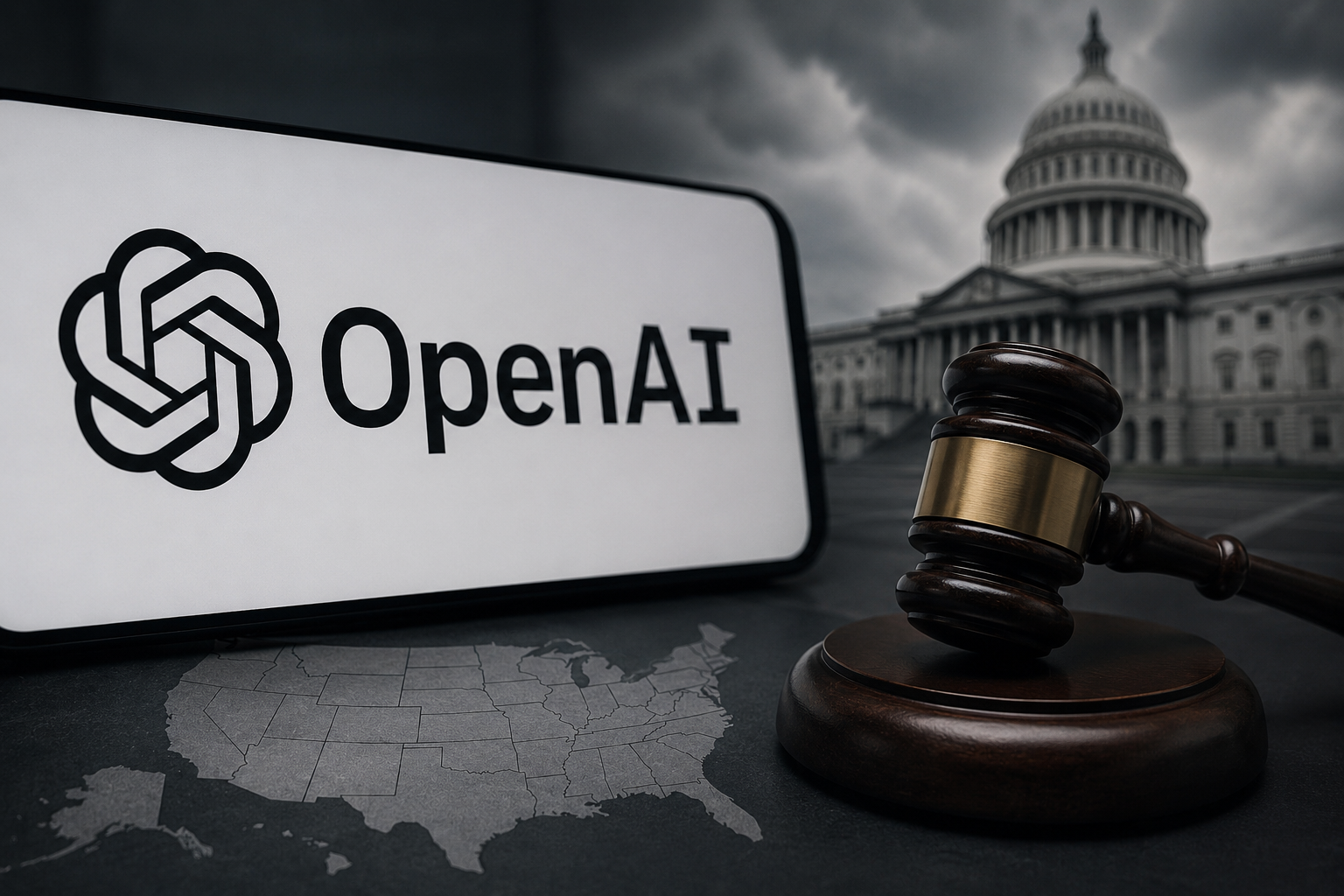
OpenAI hit with 42-state investigation days confidential IPO filing — and the timing couldn’t be more dramatic. A coalition of 42 state attorneys general just launched a sweeping probe into the AI giant’s business practices, and the tech world is still processing what that actually means.
This investigation landed just days after OpenAI quietly filed its confidential S-1 paperwork with the Securities and Exchange Commission. The company was riding high on its big nonprofit-to-for-profit transition. Now it’s staring down one of the largest coordinated state-level investigations in recent tech history. That’s a rough week by any measure.
Why 42 States Are Investigating OpenAI
Forty-two attorneys general don’t coordinate an investigation over minor concerns. That’s the first thing to understand here. Their focus reportedly centers on competitive practices, data collection, and consumer protection issues tied to OpenAI’s rapid market expansion — and specifically, the investigation examines several key areas:
- Data privacy practices — how OpenAI collects, stores, and uses consumer data to train its models
- Competitive behavior — whether OpenAI has engaged in anticompetitive tactics to dominate the AI market
- Consumer deception — claims about AI capabilities and safety that may mislead the public
- Children’s safety — protections (or the alarming lack thereof) for minors using ChatGPT and related products
- Copyright concerns — the use of copyrighted material in training datasets without proper licensing
Connecticut Attorney General William Tong is reportedly leading the coalition. His office has been vocal about tech accountability for years. Notably, this isn’t a partisan effort — both Republican and Democratic attorneys general signed on. That bipartisan buy-in is actually the most telling detail here.
The National Association of Attorneys General has increasingly coordinated multi-state tech investigations. Nevertheless, a 42-state coalition is unusually large. It signals broad consensus that OpenAI’s practices deserve serious scrutiny — not just from one political corner, but from essentially the entire country.
Why does the number matter? Because this many states acting together dramatically increases legal pressure. Companies can’t simply forum-shop or stall in a single jurisdiction. Additionally, multi-state investigations often precede enforcement actions or settlement negotiations worth billions. This playbook has unfolded before with Google and Facebook — and it rarely ends quietly.
The Confidential IPO Filing and Its Timing
OpenAI’s confidential S-1 filing with the U.S. Securities and Exchange Commission marked a significant moment. The company is reportedly seeking a valuation north of $300 billion, which would make it one of the largest tech IPOs ever attempted. That’s an audacious number even without a 42-state investigation hanging over your head.
Here’s the thing: when OpenAI hit with 42-state investigation days after its confidential IPO filing, it created a perfect storm of regulatory and financial uncertainty that no PR team can spin away.
What a confidential S-1 actually means: Under the JOBS Act, companies can file IPO paperwork privately. This lets them work through SEC review without public scrutiny. However, they must make the filing public at least 15 days before their roadshow — so the clock is ticking regardless.
The investigation creates several concrete problems for the IPO:
- Risk disclosure requirements — OpenAI must now detail the 42-state probe in its public S-1
- Valuation pressure — investors may demand a lower price given the regulatory uncertainty
- Timeline delays — legal complications could push the IPO schedule back significantly
- Governance questions — the nonprofit-to-for-profit conversion now faces additional scrutiny from multiple directions
Furthermore, potential investors are watching closely. A multi-state investigation doesn’t automatically kill an IPO — Google, Facebook, and Amazon all went public while facing regulatory challenges. But the scope of this probe is exceptional. Those earlier companies also weren’t burning cash at OpenAI’s rate.
Consequently, OpenAI’s legal team is likely working overtime right now. Balancing state demands while keeping the IPO on track is an incredibly difficult act — and it’s one they probably didn’t fully anticipate when they filed that S-1.
Meanwhile, Sam Altman has been making high-profile appearances at events like the G7. Those appearances serve dual purposes: building relationships with global policymakers and signaling confidence to potential investors despite the legal headwinds. Smart positioning — though it’s also a bit of a tell.
How This Investigation Compares to Other Major Tech Probes
Understanding the significance requires some historical context. The fact that OpenAI hit with 42-state investigation days after its confidential filing puts it in genuinely rare company. Here’s how it stacks up against other landmark tech investigations:
| Investigation | Year | States Involved | Target Company | Outcome |
|---|---|---|---|---|
| OpenAI probe | 2025 | 42 | OpenAI | Ongoing |
| Google antitrust | 2020 | 50+ (states + territories) | DOJ lawsuit, remedies pending | |
| Facebook privacy | 2019 | 47 | Meta/Facebook | $5B FTC settlement |
| Microsoft antitrust | 1998 | 20 | Microsoft | Consent decree |
| Tobacco settlement | 1998 | 46 | Major tobacco companies | $206B settlement |
| T-Mobile data breach | 2022 | 49 | T-Mobile | $350M settlement |
Notably, the Google antitrust case led by the U.S. Department of Justice resulted in a federal judge declaring Google a monopolist in search. That case reshaped how regulators approach tech dominance entirely. Similarly, the OpenAI investigation could set precedents for AI regulation across the entire country — and that’s not hyperbole.
The Facebook comparison is particularly relevant. Meta’s $5 billion FTC settlement seemed massive at the time. However, it barely dented the company’s market cap because Meta was already enormously profitable. OpenAI’s situation is fundamentally different. The company hasn’t gone public yet — a large settlement or consent decree could alter its IPO trajectory before it even gets there.
Here’s the real kicker, though. Previous major tech investigations targeted established, profitable companies. OpenAI is still burning cash at an extraordinary rate — reports suggest the company spends over $5 billion annually on compute costs alone. A costly legal battle therefore adds serious financial strain at the worst possible moment. That’s a detail worth sitting with.
Broader Implications for the AI Industry
The ripple effects extend far beyond OpenAI. When OpenAI hit with 42-state investigation days after its confidential IPO filing, every AI company in Silicon Valley took notice — and it’d be surprising if a few general counsels didn’t immediately schedule emergency meetings.
This probe could establish regulatory frameworks that govern the entire industry. Full stop.
The competitive picture is shifting. OpenAI’s competitors — Anthropic, Google DeepMind, Meta AI, and Mistral — are watching carefully. Although they might benefit from OpenAI’s legal troubles short-term, they know similar scrutiny could target them next. Nobody in this industry has perfectly clean hands when it comes to training data.
The investigation touches on issues common across the AI industry:
- Training data practices — nearly every large language model uses web-scraped data in some form
- Safety claims — all major AI companies make bold promises about alignment and safety that are difficult to verify
- Market dominance — the “winner-take-all” dynamics of AI platforms concern regulators across the board
- Transparency — closed-source models face ongoing questions about accountability that won’t go away
Importantly, this investigation arrives alongside growing federal interest in AI regulation. The Federal Trade Commission has already signaled its intent to scrutinize AI companies more aggressively. State-level action consequently adds another layer of pressure that no company can simply lobby away.
But what about open-source AI? Companies like Meta, which released Llama models openly, may face different regulatory treatment. Open-source approaches offer more transparency and therefore might satisfy some regulatory concerns around accountability. Conversely — and this is something genuinely underappreciated — open-source models raise their own serious safety questions about potential misuse that regulators haven’t fully grappled with yet.
The European Union’s AI Act already classifies AI systems by risk level. The U.S. has taken a more fragmented approach so far. This 42-state investigation could push Congress toward comprehensive federal legislation — or alternatively, produce a patchwork of state-level regulations that make compliance a nightmare for every AI company operating at scale. Neither outcome is particularly clean.
For startups building on OpenAI’s API, the investigation creates real uncertainty. If OpenAI faces restrictions on data practices or model deployment, downstream businesses get caught in the crossfire. Smart founders are already diversifying their AI provider relationships. If you haven’t started doing that, now’s the time.
What OpenAI’s Response Reveals About Its Strategy
OpenAI’s public response has been measured but revealing. The company has stressed its commitment to safety and responsible development. Nevertheless, its actions tell a more complicated story — and it’s worth watching what companies do, not just what they say.
The nonprofit conversion controversy is central here. OpenAI’s transition from a nonprofit to a for-profit benefit corporation has drawn criticism from multiple angles. The original nonprofit mission stressed developing AI “for the benefit of humanity.” Critics argue the for-profit structure quietly puts shareholder returns ahead of that public good. Specifically, attorneys general want to know whether OpenAI’s nonprofit assets were properly valued during the conversion.
Sam Altman has pushed back on those characterizations. He’s argued that the for-profit structure enables the massive capital raises needed for frontier AI research — and there’s genuine truth to that. Training the latest models costs hundreds of millions of dollars per run. That’s not spin; it’s math.
Additionally, OpenAI has been building relationships with policymakers worldwide. Altman’s G7 appearance wasn’t coincidental — the company is actively positioning itself as a responsible partner in AI governance. That story becomes considerably harder to maintain under a 42-state investigation, however. The optics are just rough.
Legal preparation signals are worth noting. Reports suggest OpenAI has significantly expanded its legal team in recent months, hiring former government officials and experienced regulatory attorneys. This buildup suggests OpenAI may have anticipated heightened scrutiny — possibly even before the investigation was formally announced. In retrospect, it makes complete sense.
The company’s lobbying spending has also increased dramatically. According to OpenSecrets, tech industry lobbying spending has reached record levels, and OpenAI is contributing significantly to that trend.
And here’s what’s particularly interesting: OpenAI could have delayed its IPO filing until after addressing the investigation. Instead, it pushed forward. That decision signals urgency — perhaps driven by investor timelines, competitive pressure from Anthropic’s own fundraising, or simply a calculated bet that they can manage both tracks at once. Bold move. We’ll see if it pays off.
What Happens Next in the Investigation
The path forward is uncertain but consequential. Now that OpenAI hit with 42-state investigation days after its confidential filing, several distinct scenarios could unfold — and honestly, most of them involve pain for the company in some form.
Scenario 1: Settlement. The most likely outcome is a negotiated settlement. OpenAI agrees to specific practice changes, pays a financial penalty, and moves forward. Most multi-state tech investigations conclude this way — the Facebook and T-Mobile cases both followed this pattern. It’s messy, but survivable.
Scenario 2: Consent decree. A more restrictive outcome would involve court-supervised changes to OpenAI’s business practices. Think mandatory transparency reports, independent auditing, or specific restrictions on data collection. Moreover, this kind of ongoing oversight creates a compliance burden that follows the company for years.
Scenario 3: Litigation. If negotiations fail, states could file lawsuits. This is the most disruptive scenario — prolonged litigation creates ongoing uncertainty for investors and could significantly delay or derail the IPO. Nobody wants this outcome, including the states.
Scenario 4: Federal preemption. Congress could pass federal AI legislation that supersedes state-level action. Some industry observers believe this is OpenAI’s best-case scenario, since federal regulation might be more predictable than managing 42 separate state regulators at once. Fair warning though: federal legislation moves slowly, and OpenAI needs resolution faster than Congress typically operates.
Key milestones worth watching:
- Document production deadlines — states will demand internal communications and data practices documentation, and that process gets uncomfortable fast
- SEC review timeline — the confidential S-1 review process typically takes 3–6 months
- Congressional hearings — expect lawmakers to use this investigation as leverage for federal AI bills
- Competitor responses — other AI companies may proactively adjust their practices to avoid similar scrutiny
The investigation also intersects with ongoing copyright lawsuits. The New York Times and other publishers have sued OpenAI over training data usage. State attorneys general may coordinate with those plaintiffs or use similar legal theories. That’s a lot of legal fronts to fight at once.
Conclusion
The story of OpenAI hit with 42-state investigation days confidential IPO filing represents a genuine turning point for the AI industry. It’s the clearest signal yet that regulators aren’t going to let AI companies operate without accountability — regardless of how transformative the technology is.
For tech professionals and investors, here are actionable next steps:
- Monitor SEC filings — watch for OpenAI’s public S-1, which must disclose the investigation’s scope and potential financial impact
- Diversify AI dependencies — if your business relies heavily on OpenAI’s API, start evaluating alternatives from Anthropic, Google, or open-source options now, not later
- Track state AG announcements — follow the lead states’ press releases for investigation updates as they develop
- Review your own data practices — if you’re building AI products, the standards emerging from this probe will likely become industry benchmarks whether you like it or not
- Stay informed on federal legislation — congressional responses to the investigation could reshape the entire regulatory picture faster than most people expect
Bottom line: OpenAI hit with 42-state investigation days after its confidential IPO filing, and that doesn’t necessarily doom the company. Tech giants have survived worse. But it fundamentally changes the conversation around AI governance, corporate accountability, and the balance between innovation and regulation. Consequently, the outcomes here will shape how AI companies operate for a long time to come. Pay close attention to this one.
FAQ
What exactly triggered the 42-state investigation into OpenAI?
The investigation stems from concerns about OpenAI’s data collection practices, competitive behavior, and consumer protection issues. Attorneys general from 42 states coordinated the probe. Although no single event triggered it, the timing coincided with OpenAI’s nonprofit-to-for-profit conversion and its confidential IPO filing. The combination of rapid market dominance and structural changes raised red flags for regulators across the country.
How does the investigation affect OpenAI’s IPO plans?
The investigation creates significant complications. OpenAI must disclose the probe in its public S-1 filing. Consequently, potential investors will factor regulatory risk into their valuation assessments. However, the IPO isn’t necessarily dead — many major tech companies have gone public while facing investigations. The key question is whether OpenAI can contain the legal uncertainty enough to maintain its target valuation above $300 billion.
What could OpenAI face as penalties or consequences?
Potential outcomes range from financial settlements to court-supervised consent decrees. Based on precedent, a financial penalty could reach billions of dollars. Furthermore, OpenAI might face mandatory changes to its data practices, transparency requirements, or restrictions on certain business activities. The most severe scenario would involve prolonged litigation that delays the IPO and drains resources.
Why did so many states join this investigation?
The 42-state coalition reflects bipartisan concern about AI’s societal impact. Attorneys general from both parties signed on. Specifically, issues like children’s safety, data privacy, and fair competition cut across party lines. Additionally, the National Conference of State Legislatures has tracked growing state-level interest in AI regulation. Multi-state coalitions also give individual states more leverage than acting alone.
How does this compare to investigations of Google or Facebook?
The OpenAI probe is comparable in scale to the Google and Facebook investigations. Notably, the Facebook privacy investigation involved 47 states and resulted in a $5 billion settlement. The Google antitrust case involved all 50 states plus territories. OpenAI’s investigation is smaller in state count but arguably more significant because it targets a pre-IPO company. That means the investigation could shape OpenAI’s corporate structure before it even becomes a public company.
What should AI developers and startups do in response?
Developers should take three immediate steps. First, audit your own data collection and training practices against emerging regulatory standards. Second, diversify your AI infrastructure so you’re not solely dependent on OpenAI’s platform. Third, document your AI safety and transparency measures proactively. The standards established by this investigation will likely become baseline expectations for the entire industry — and being ahead of those requirements gives you a genuine competitive advantage.
References
Keep reading
Here are the latest posts from the blog.
When Trump adviser David Sacks revealed the trigger discovery behind new AI safety concerns, the tech world paid very close attention. Sacks disclosed on X that Fable 5 — the…

Any overview of modern AI robotics from first principles has to start with perception. Before a robot can walk, grasp, or move through a crowded warehouse, it needs to actual…

Mechanistic interpretability science looking inside an AI’s brain isn’t just an academic curiosity anymore. It’s become essential — and honestly, it’s overdue. As AI models g…