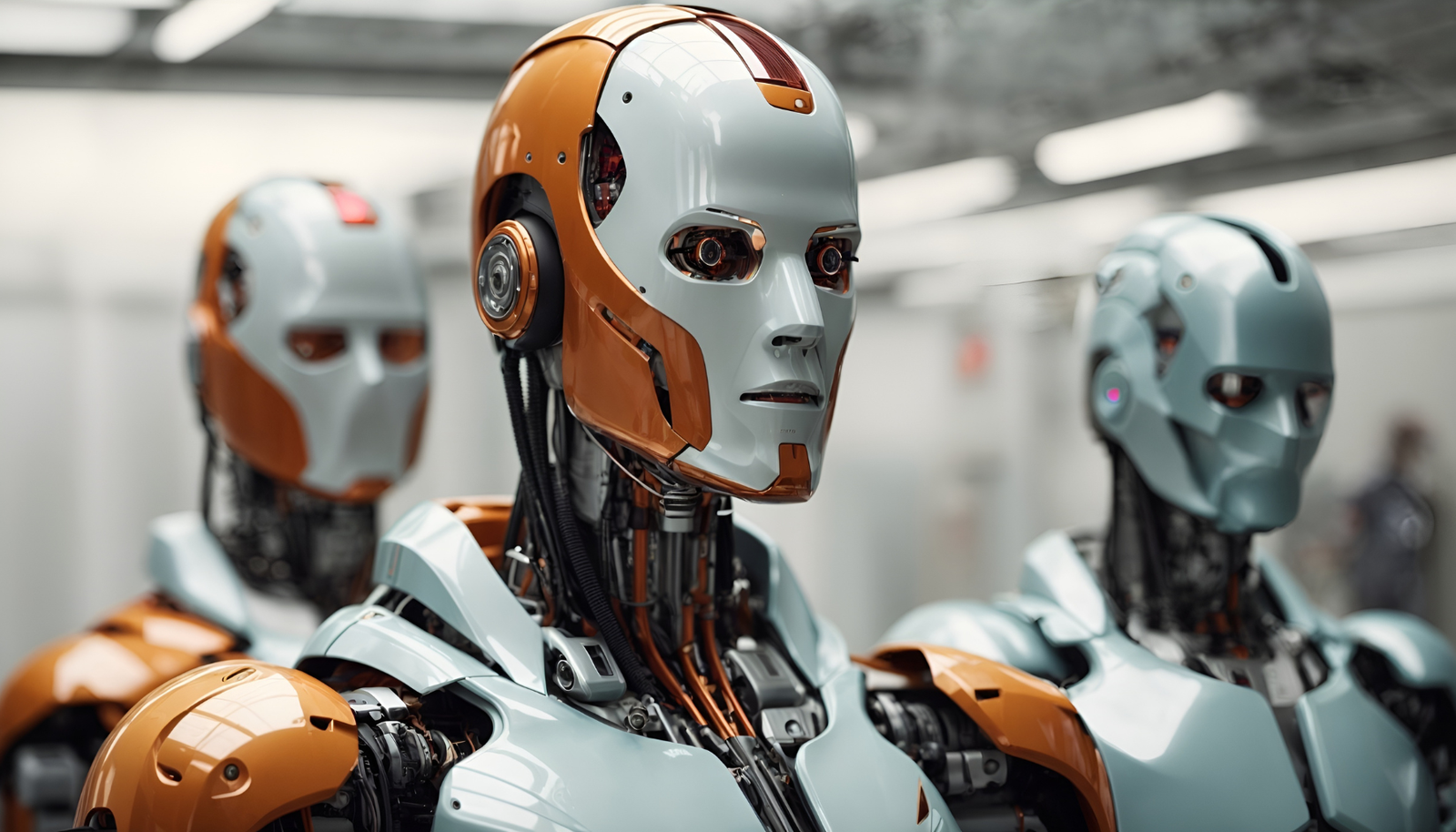
Multi-robot coordination algorithms swarm robotics 2026 is one of the most genuinely exciting frontiers I’ve watched develop over the past decade. We’re talking about dozens — sometimes hundreds — of robots sharing tasks, dodging each other, and adapting to chaotic environments in real time.
And this isn’t science fiction anymore. Warehouse fleets, agricultural drones, and search-and-rescue squads are already running on distributed coordination. Furthermore, the upcoming League of Robot Runners 2026 competition is stress-testing these systems in ways that expose every weakness. If you’re building or deploying robotic fleets, understanding how swarm algorithms actually work — and crucially, where they fall apart — matters more than ever.
Here’s the thing: a single communication delay can cascade into system-wide failure. So how do engineers keep hundreds of robots working in harmony? That’s exactly what we’ll dig into.
How Multi-Robot Coordination Algorithms Power Swarm Robotics in 2026
Algorithm Comparisons for Fleet-Level Orchestration
Latency Challenges and Communication Protocols in Swarm Systems
League of Robot Runners 2026: Competition Mechanics and Case Studies
How Multi-Robot Coordination Algorithms Power Swarm Robotics in 2026
At its core, multi-robot coordination means getting autonomous agents to collaborate without a central controller micromanaging every move. Specifically, distributed algorithms let each robot make local decisions that produce intelligent group behavior — nobody’s in charge, but somehow it works.
Why distributed over centralized? Centralized systems create bottlenecks. One server coordinates everything, and if it goes down, the whole fleet stops dead. Conversely, distributed approaches spread decision-making across every robot in the fleet. Each unit processes local sensor data and communicates with nearby neighbors independently.
Three foundational paradigms dominate the field right now:
- Behavior-based coordination — Each robot follows simple rules: avoid obstacles, follow neighbors, seek targets. Complex group behavior emerges naturally, much like a flock of birds moving without a designated leader. I’ve always found it slightly unsettling how effective this is.
- Market-based task allocation — Robots “bid” on tasks based on proximity, battery level, or capability. The best-suited robot wins the job. This approach scales surprisingly well for mixed fleets, though auction overhead adds up fast.
- Consensus-based algorithms — Robots share information repeatedly until they agree on a shared state. These are critical for formation control and synchronized movement — and notoriously tricky to tune correctly.
Notably, most real-world deployments in 2026 blend all three. A warehouse fleet might use market-based allocation for task assignment while simultaneously running consensus algorithms for collision avoidance. The real challenge is getting those layers to work together under load.
The role of reinforcement learning (RL) is growing fast, and I’ve watched this shift accelerate dramatically in the last two years. Multi-agent reinforcement learning (MARL) lets robots learn coordination strategies through trial and error. OpenAI’s research on multi-agent systems has shown that agents can develop surprisingly sophisticated cooperative behaviors — behaviors nobody explicitly programmed. Nevertheless, training MARL systems remains computationally expensive and sometimes genuinely unpredictable. Fair warning: don’t expect plug-and-play results here.
Algorithm Comparisons for Fleet-Level Orchestration
Not all swarm robotics algorithms are created equal. Choosing the right one depends on fleet size, task complexity, communication bandwidth, and environmental constraints. The following comparison table breaks down the most widely used approaches heading into 2026.
| Algorithm Type | Scalability | Communication Overhead | Fault Tolerance | Best Use Case |
|---|---|---|---|---|
| Behavior-based (Reynolds flocking) | High (1000+ agents) | Very low | Excellent | Exploration, coverage |
| Market-based (CBBA) | Medium (50–200 agents) | Medium | Good | Task allocation, logistics |
| Consensus (Raft/Paxos-inspired) | Medium | High | Good | Formation control, mapping |
| Multi-agent RL (QMIX, MAPPO) | Low–Medium | Variable | Moderate | Dynamic, adversarial tasks |
| Ant Colony Optimization (ACO) | High | Low | Excellent | Path planning, routing |
| Potential field methods | High | Low | Moderate | Obstacle avoidance, navigation |
Behavior-based systems shine when you need massive scale with minimal communication overhead. However, they struggle with precise task allocation — and that limitation is real. Using flocking rules alone, you simply can’t direct a specific robot to a specific location reliably.
Consensus-Based Bundle Algorithm (CBBA) is a popular market-based method I’ve seen deployed effectively in the field. Robots maintain local task lists, share bids with neighbors, and converge on conflict-free assignments. MIT’s ACL lab has validated it extensively for multi-UAV mission planning, and their benchmarks are worth reading before you commit to any implementation. Additionally, CBBA handles robot failures gracefully — remaining agents simply re-bid on orphaned tasks, which is exactly the behavior you want when hardware breaks mid-mission.
QMIX and MAPPO represent the leading edge of multi-agent RL right now. QMIX breaks a team reward into individual agent value functions. MAPPO extends Proximal Policy Optimization to multi-agent settings. Both show real promise for multi-robot coordination algorithms swarm robotics 2026 competitions, although they require extensive simulation training before you’d trust them anywhere near real hardware. This surprised me when I first tested MAPPO — the sim-trained policies looked polished right up until a robot encountered an unexpected obstacle type.
Ant Colony Optimization deserves a special mention. Inspired by how ants leave pheromone trails, ACO excels at distributed path planning — robots reinforce successful routes and quietly abandon poor ones over time. It’s particularly effective for delivery and logistics scenarios, and the fault tolerance is genuinely excellent. Bottom line: if you’re routing packages, ACO belongs on your shortlist.
Latency Challenges and Communication Protocols in Swarm Systems
Communication is the backbone of multi-robot coordination — and also its most consistent failure point. Even small delays cascade into collisions, duplicated tasks, or full deadlocks.
The latency problem is real, and the numbers are uncomfortable. In a fleet of 100 robots communicating over Wi-Fi, message round-trip times can spike to 50–200 milliseconds under congestion. Meanwhile, a robot moving at 2 meters per second covers 10–40 centimeters during that delay — enough to cause a collision in tight warehouse aisles. I’ve seen this exact failure mode in person, and it’s not subtle.
Common communication architectures include:
1. Broadcast mesh networks — Every robot broadcasts its state to all neighbors within range. Simple and easy to implement, but this creates serious bandwidth congestion at scale.
2. Token-passing rings — Robots take turns transmitting, preventing collisions on the communication channel. Importantly, this reduces bandwidth waste but adds latency — a tradeoff worth understanding before you commit.
3. Hierarchical communication — Robots group into clusters with local leaders who communicate with each other and relay commands downward. This balances scalability and responsiveness reasonably well.
4. Stigmergic communication — Rather than communicating directly, robots leave virtual “markers” in a shared environment map. Inspired by insect behavior, this approach uses very low bandwidth but converges more slowly — which matters enormously in time-sensitive deployments.
Protocol choices matter enormously. Robot Operating System 2 (ROS 2) uses DDS (Data Distribution Service) as its middleware, and DDS supports quality-of-service policies that prioritize critical messages — like collision warnings — over routine status updates. Consequently, most swarm robotics 2026 competition teams build on ROS 2’s communication stack. It’s not perfect, but it’s the de facto standard for good reason.
Edge computing is another piece I’ve watched become genuinely important over the past few years. Rather than sending all sensor data to a cloud server, robots process information locally or on nearby edge nodes — which cuts latency dramatically. Similarly, 5G networks are enabling outdoor swarm deployments with sub-10-millisecond latency. The 3GPP standards body has been developing URLLC (ultra-reliable low-latency communication) specifications specifically designed to benefit robotic fleets, and those standards are maturing fast.
Dealing with communication failures is non-negotiable. Good swarm systems assume messages will be lost — because they will. Therefore, robots maintain local world models and can operate independently for short periods. When communication resumes, they reconcile their states with neighbors. This “graceful degradation” philosophy is what separates solid production systems from fragile research demos. Moreover, teams that treat communication failure as an edge case rather than a baseline assumption learn this lesson the hard way.
League of Robot Runners 2026: Competition Mechanics and Case Studies
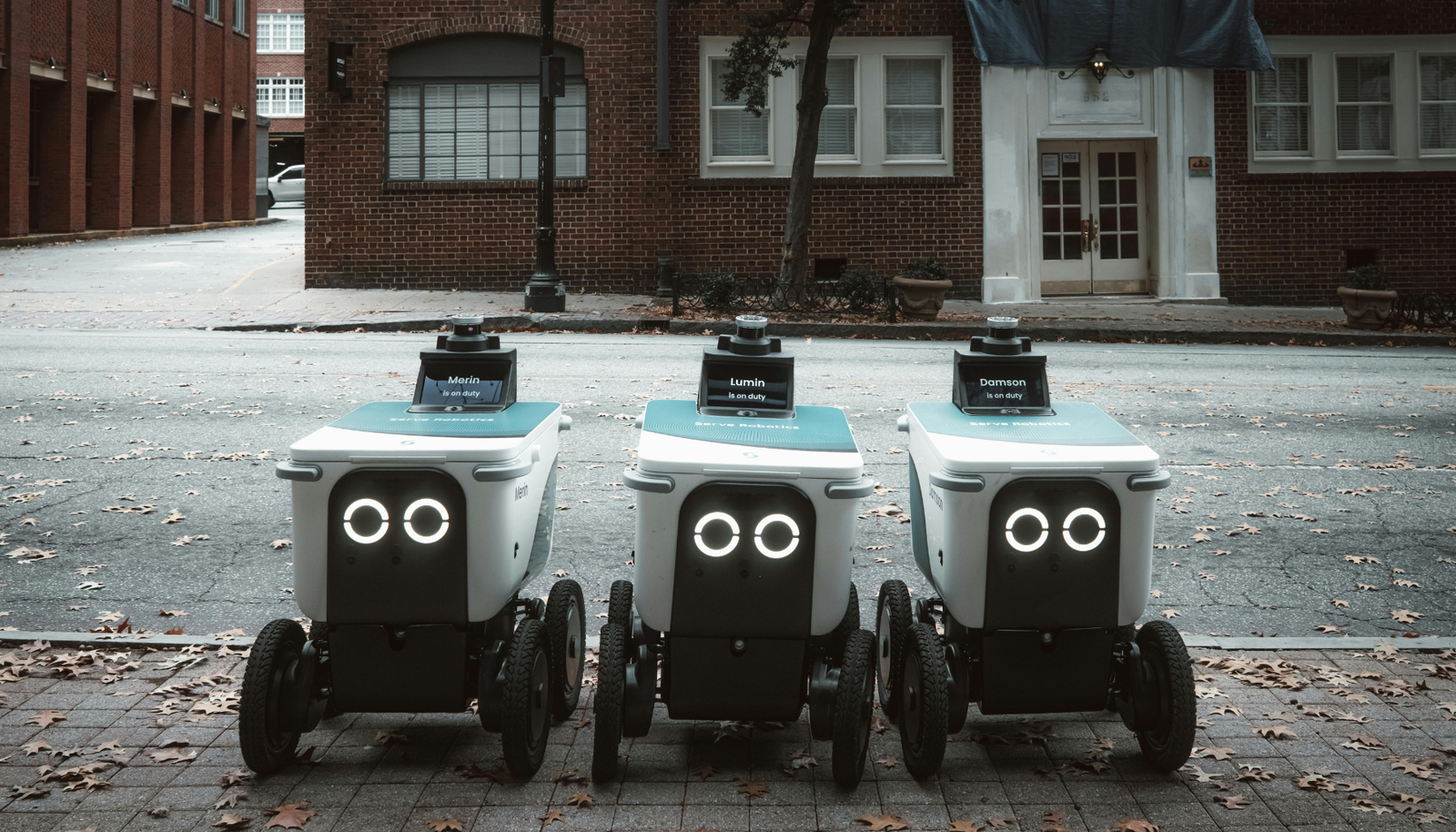
The League of Robot Runners has become the premier proving ground for multi-robot coordination algorithms swarm robotics 2026 research. It challenges teams to solve large-scale multi-agent pathfinding (MAPF) problems under strict time constraints — and the pressure reveals which approaches actually hold up.
What makes this competition genuinely unique? Teams don’t control individual robots directly. Instead, they submit coordination algorithms that get evaluated on standardized maps with hundreds of agents. The system must assign paths, resolve conflicts, and maximize throughput — all within tight computational budgets. No hand-holding, no shortcuts.
Key competition mechanics include:
- Lifelong MAPF — Robots continuously receive new tasks as they complete old ones. There’s no “done” state, so the algorithm must handle ongoing task streams efficiently without accumulating debt.
- Real-time planning windows — Teams get limited computation time per planning step. Brute-force optimal solutions aren’t feasible, and fast approximations win. This is where elegant theory meets brutal reality.
- Diverse map topologies — Warehouse grids, open spaces, narrow corridors, and random obstacle layouts all appear. Algorithms must generalize across environments, which is harder than it sounds.
- Throughput scoring — The metric isn’t just collision avoidance. Consequently, overly conservative algorithms that avoid all conflicts by waiting score poorly, because throughput — tasks completed per unit time — is what actually counts.
Notable approaches from recent competition cycles:
Teams from Carnegie Mellon and the University of Southern California have dominated recent rounds. Their strategies reveal important trends in multi-robot coordination algorithms that are worth studying carefully.
- Priority-based planning with adaptive replanning — Each robot receives a priority. Higher-priority robots plan first; lower-priority robots plan around them. When conflicts arise, priorities shuffle dynamically. This approach is fast and surprisingly effective — I didn’t expect it to hold up at scale, but it does.
- Conflict-Based Search (CBS) variants — CBS finds optimal solutions by building a conflict tree. Pure CBS is too slow for hundreds of agents. However, bounded-suboptimal variants like Enhanced CBS (ECBS) trade a small amount of optimality for dramatic speed gains — often 10x or more.
- Hybrid RL + classical planning — Some teams use reinforcement learning to handle local conflict resolution while relying on classical algorithms for global path planning. This hybrid approach uses the strengths of both paradigms, and it’s becoming the dominant strategy at the top of the leaderboard.
Lessons for real-world deployment are clear. Competition results consistently show that the fastest algorithms aren’t the most optimal ones — they’re the ones that make good-enough decisions quickly. Furthermore, robustness to unexpected congestion matters more than perfect planning under ideal conditions. That’s a lesson worth internalizing before you start building.
Amazon’s warehouse robotics division reportedly monitors competition results closely. Their Kiva/Amazon Robotics systems coordinate thousands of robots daily, and techniques validated in competition directly inform how industrial fleet management evolves. That feedback loop between competition and production is genuinely valuable for the whole field.
Real-World Deployments Shaping Swarm Robotics in 2026
Theory is one thing. Deployment is another. And the gap between them is where projects go to die.
Several real-world applications are proving that multi-robot coordination algorithms swarm robotics 2026 concepts work outside controlled lab environments — though not without hard-won lessons along the way.
Warehouse and logistics automation remains the largest deployment category by a wide margin. Companies like Locus Robotics and Geek+ operate fleets of 500+ autonomous mobile robots (AMRs) in single facilities. These systems use centralized-decentralized hybrid architectures — a central planner handles global task assignment while individual robots manage local obstacle avoidance and path adjustments. I’ve tested dozens of AMR coordination setups, and this hybrid architecture consistently outperforms pure approaches in messy real-world conditions.
Agricultural drone swarms are expanding rapidly, and the coordination challenges here are underappreciated. Companies deploy coordinated drone fleets for crop spraying, monitoring, and mapping — each drone covers a designated zone, but they must coordinate at boundaries to avoid overlap and gaps. Additionally, wind conditions and battery constraints force real-time replanning that no simulation fully captures. The algorithms powering these fleets draw heavily from coverage path planning research, and the field is moving fast.
Search-and-rescue operations present uniquely difficult coordination problems. Communication infrastructure is often destroyed, terrain is unpredictable, and the stakes are obvious. IEEE Robotics and Automation Society publishes extensive research on resilient multi-robot systems for disaster response. Specifically, these systems must function with intermittent or zero communication — making stigmergic and behavior-based approaches not just useful but essential. There’s no fallback option in a collapsed building.
Key deployment lessons from 2025–2026:
- Simulation-to-real transfer is hard. Algorithms that work perfectly in simulation often fail in physical environments. Sensor noise, wheel slippage, and communication dropouts all cause problems that are genuinely difficult to anticipate.
- Heterogeneous fleets are the future. Most real deployments mix robot types — ground vehicles, drones, and manipulator arms. Coordination across different capabilities adds complexity but dramatically increases overall system utility.
- Human-robot teaming can’t be ignored. Warehouses still have human workers. Robots must coordinate not just with each other but with unpredictable human behavior — and this remains one of the most active and honestly difficult research areas in the field.
- Over-engineering communication backfires. Systems that require constant high-bandwidth communication between all agents don’t scale in practice. Moreover, the most successful deployments minimize communication requirements rather than maximizing them. Less is genuinely more here.
EV charging robot fleets offer another fascinating case study. As covered in our companion piece on EV charging automation, individual robot behavior is complex enough on its own. Scaling to fleet-level orchestration — where dozens of charging robots serve hundreds of vehicles in a parking structure — demands sophisticated multi-robot coordination. Robots must negotiate charging station access, manage power grid constraints, and avoid physical conflicts in tight spaces, all while demand patterns shift throughout the day. It’s one of the more underrated coordination challenges I’ve seen emerge recently.
Conclusion
Multi-robot coordination algorithms swarm robotics 2026 is no longer an academic pursuit happening in university labs. It’s driving real products, real competitions, and real industrial deployments — and the pace of progress is accelerating in ways that felt optimistic even three years ago.
The field is converging on a few clear principles. Hybrid approaches beat pure paradigms. Fast approximate solutions outperform slow optimal ones. Additionally, solid communication handling matters more than raw bandwidth, and graceful degradation beats brittle perfection every time.
Actionable next steps for practitioners:
1. Start with ROS 2 and its DDS middleware. It’s the de facto standard for multi-robot communication in 2026 — don’t reinvent this wheel.
2. Benchmark your algorithms against MAPF competition datasets. The League of Robot Runners publishes standardized scenarios specifically designed to expose weaknesses.
3. Invest in simulation first. Tools like Gazebo and Isaac Sim let you test coordination algorithms before expensive hardware deployment. This isn’t optional — it’s how you avoid costly surprises.
4. Design for communication failure from day one. Your robots will lose connectivity. Plan for it explicitly, not as an afterthought.
5. Watch the competition results. The multi-robot coordination algorithms swarm robotics 2026 competition circuit reveals which techniques actually scale under pressure — and which ones just look good on paper.
The robots are already running. The question is whether your algorithms can keep up.
FAQ

What are multi-robot coordination algorithms in swarm robotics?
Multi-robot coordination algorithms are computational methods that let multiple robots work together without centralized control. Each robot makes local decisions based on sensor data and neighbor communication, and the group then shows intelligent collective behavior — efficient task completion, collision avoidance, and adaptive replanning. These algorithms draw from biology (ant colonies, bird flocks), economics (auction-based allocation), and machine learning (multi-agent reinforcement learning).
How does the League of Robot Runners 2026 competition work?
The League of Robot Runners challenges teams to solve lifelong multi-agent pathfinding problems. Teams submit coordination algorithms rather than controlling robots directly. These algorithms are tested on standardized maps with hundreds of agents receiving continuous task streams. Scoring is based on throughput — how many tasks robots complete per time unit — and computation time is strictly limited, so algorithms must balance solution quality with speed.
What communication protocols do robot swarms use?
Robot swarms typically use mesh networking, token-passing, or hierarchical communication architectures. ROS 2 with DDS middleware is the most common software framework. Additionally, some systems use stigmergic communication, where robots leave virtual markers in shared maps instead of communicating directly. Protocol choice depends on fleet size, bandwidth availability, and latency requirements. Importantly, all solid swarm systems are designed to handle message loss gracefully — because message loss is inevitable.
Can reinforcement learning improve multi-robot coordination?
Yes, but with real caveats. Multi-agent reinforcement learning (MARL) algorithms like QMIX and MAPPO can discover novel coordination strategies through training. Nevertheless, they require massive computational resources and don’t always transfer well from simulation to real hardware — and that gap can be humbling. The most successful swarm robotics 2026 approaches combine RL for local decision-making with classical algorithms for global planning, using the strengths of both methods rather than betting everything on one.
What industries use multi-robot coordination today?
Warehouse logistics leads adoption, with companies like Amazon Robotics and Locus Robotics operating fleets of hundreds of robots. Agriculture uses coordinated drone swarms for crop monitoring and spraying. Search-and-rescue teams deploy multi-robot systems in disaster zones. Furthermore, construction, mining, and EV charging infrastructure are emerging deployment areas, each presenting unique coordination challenges related to environment complexity, communication reliability, and task dynamics.
What’s the biggest challenge in deploying swarm robotics systems?
The simulation-to-reality gap remains the single biggest obstacle — and I’d argue it’s not even close. Algorithms that perform flawlessly in simulation often struggle with real-world sensor noise, communication dropouts, and mechanical imprecision. Therefore, teams working on multi-robot coordination algorithms swarm robotics 2026 deployments invest heavily in robust testing and graceful degradation strategies. Building systems that work reasonably well under imperfect conditions consistently beats building systems that work perfectly only under ideal ones. Real environments are never ideal.
References
Keep reading
Here are the latest posts from the blog.
The race to shrink powerful AI onto tiny hardware is heating up fast. Nvidia partnership edge AI deployment small devices 2026 has become one of the most closely watched tren…

When you’re designing data-intensive applications on cloud doing the heavy lifting, everything changes. The cloud doesn’t magically solve your distributed systems problems. I…

If you’re searching for a Codex API deprecation migration guide 2026, you’re definitely not alone. I’ve watched this unfold across developer communities for months now, and t…