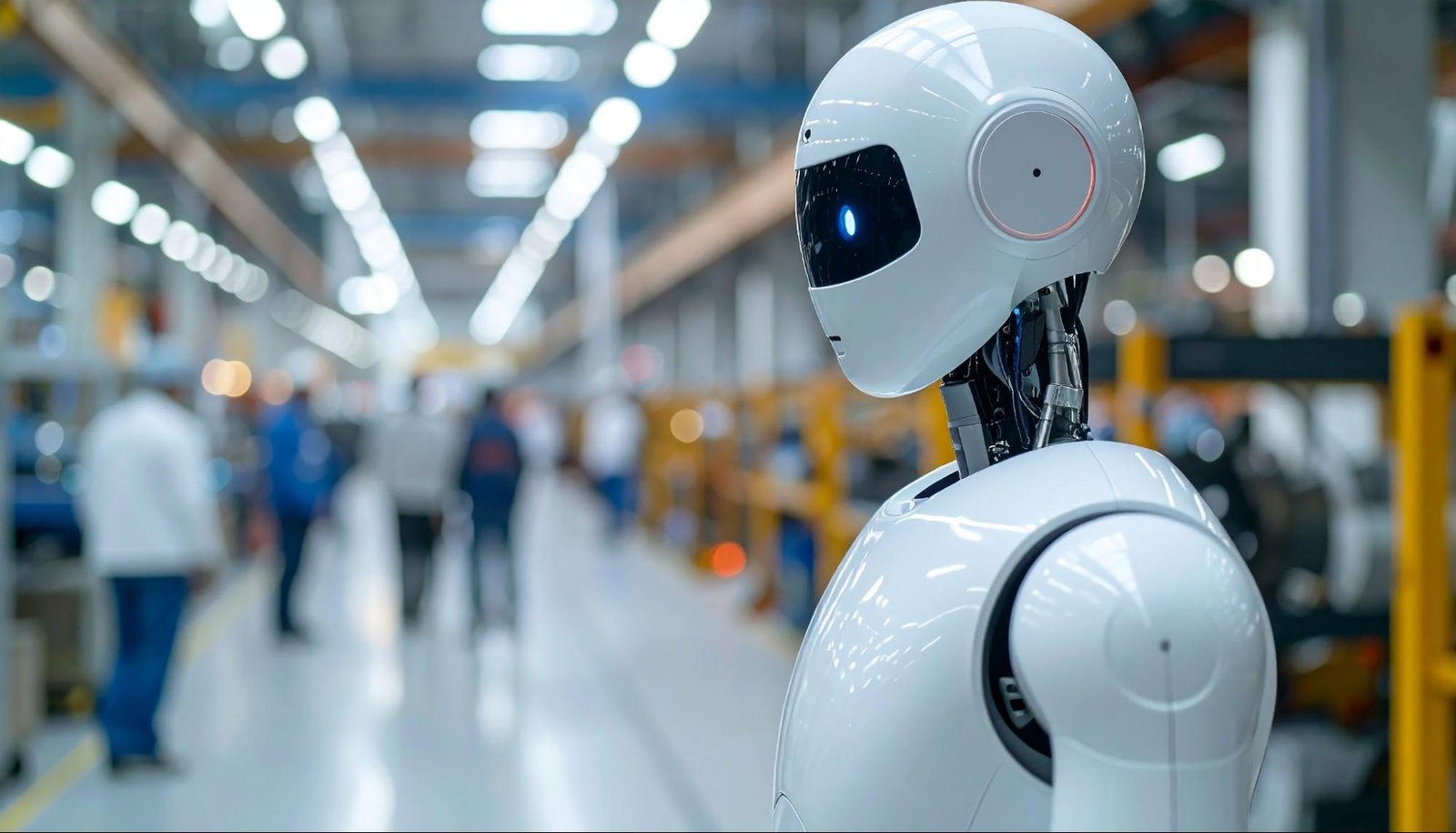
The headlines make it sound simple. Boston Dynamics shows off backflips. Tesla shows Optimus folding clothes. But humanoid robot adoption barriers enterprise 2026 tells a quite different tale on actual manufacturing floors — and the gap between demo reel and real-world implementation isn’t just wide. It’s growing.
Most corporate pilots started between 2024 and 2026 have failed to grow. They’ve stalled, pivoted or quietly died. The causes are not just technical show stoppers. They are a nasty, pricey mix of cost overruns, integration difficulties, staff pushback and regulatory ambiguity. I’ve been monitoring industrial automation for 10 years, and haven’t seen a hype cycle this far removed from implementation reality since early collaborative robots. Let me tell you exactly what is wrong.
The Cost Problem Nobody Wants to Talk About
Every honest discussion of what is stopping enterprises adopting human-like robots in 2026 brings up money. Specifically, the sort of money most manufacturers never accounted for – and frankly, never saw coming.
The hardware is just the start of the expense. One humanoid device from firms like Agility Robotics or Apptronik might go between $50,000 to $150,000. That’s the list price. The actual cost is in everything else:
- Custom integration work: $200K–$500K per deployment site
- Service contracts (ongoing): 15-25% of hardware cost each annum
- Retrofitting of facilities: floors, power supply systems, safety barriers
- Training and change management: Weeks of lost work
- Insurance premiums are on the rise: Carriers still lack basic plans
So a “pilot program” with five humanoid units can easily exceed $2 million in year one. Meanwhile, traditional industrial robots — FANUC or ABB fixed-arm systems — cost a fraction of that for similar output. I’ve spoken with CFOs who couldn’t help but giggle when they saw the detailed breakdown of costs.
ROI timeframe is tough. Most company finance teams want payback in 18 to 24 months. Humanoid deployments seldom have favorable ROI until year four in 2026. Proven automated solutions, meanwhile, generate results far faster—and without the drama.
The leasing models are immature beyond that. The financing structures of industrial robot arms are well established, but there is no standardized computation for the residual value of humanoid robots. Leasing firms can’t price something with confidence that could be obsolete in 36 months.” They either don’t do it or they factor in so much risk that the deal goes apart regardless.
| Cost Factor | Traditional Industrial Robot | Humanoid Robot (2026) |
|---|---|---|
| Unit price | $25,000–$80,000 | $50,000–$150,000 |
| Integration cost | $30,000–$100,000 | $200,000–$500,000 |
| Annual maintenance | 8–12% of unit cost | 15–25% of unit cost |
| Expected ROI timeline | 12–18 months | 36–48+ months |
| Insurance availability | Standard policies | Case-by-case underwriting |
| Financing/leasing options | Mature market | Nascent, limited |
That table says it all. The economics simply don’t work for most use cases yet — and that’s the core reason enterprise adoption barriers for humanoid robots remain stubbornly high heading into the back half of the decade.
Integration Complexity and the Factory Floor Reality
Technical demos are performed in a controlled setting. The factory is not a controlled environment. They’re chaotic, messy, noisy and full of old systems that don’t want to play along with the latest robots.
Humanoid robot pilots are silently killed by software integration. Most manufacturing facilities run a patchwork of technologies – decades-old programmable logic controllers (PLCs) sitting next to sophisticated Manufacturing Execution technologies (MES). And making a humanoid robot properly communicate with all of them is quite tough. Fair warning, if your squad is underestimating this section, you’re already screwed.
And it’s these integration difficulties that really hinder deployments specifically:
- Protocol mismatches – Humanoid robots often operate on ROS 2 (Robot Operating System). Legacy factory equipment supports OPC-UA, Modbus or custom protocols. To connect them, you need proprietary middleware, which takes months to design and test.
- Real-time coordination failures – Humanoid robots must coordinate with the speed of conveyors, other machinery and human workers. Even a 50-millisecond latency means cascading difficulties.
- Environmental sensing gaps – Factory floors are subjected to dust, vibration, temperature changes, and electromagnetic interference. Sensors that operate flawlessly in the lab soon deteriorate.
- Brittleness of mapping and navigation – Humanoids must navigate through changing environments, unlike fixed robots. One misplaced pallet can shut down the entire operation.
And the impediments to humanoid robot adoption that the enterprise 2026 pilots continue to uncover aren’t just barriers to getting the robot to function. It’s about getting it to work reliably enough to justify the huge disruption of rolling it out.
The downtime stats of early deployments are frightening. Hyundai’s partnership with Boston Dynamics Atlas in automobile manufacturing contexts reveals humanoid systems require much more unscheduled maintenance stops than standard automation. Exact numbers are secret, but industry analysts say humanoid pilot programs incur 3-5x the downtime of similar fixed-automation cells. That was a surprise when I first looked into the numbers – even allowing for early-stage immaturity, that discrepancy is huge.
And, every integration demands specialized talent. Finding robotics engineers with expertise in both humanoid locomotion systems and traditional industrial controllers is exceedingly difficult. There is a small talent pool that companies compete for , driving consultancy costs above $ 300 / hour . And at those rates, sometimes you are waiting months to get an opening.
The outcome? Projects scoped for six months last eighteen. Budgets explode. Executive sponsors get frustrated. And the pilot quietly gets shelved — as they typically do.
Workforce Resistance and the Human Factor
“You can’t just drop a humanoid robot into a workforce without dealing with the humans that are already there. But many company projects to use humanoid robots in 2026 have been treating labor integration as an afterthought. That’s not a mistake, that’s a pilot killer.
There is a real, understandable fear of job loss. When workers witness a human-shaped robot appear on the production floor, the message is clear: you’re being replaced. It’s not an illogical anxiety. That’s a perfectly logical way to view what happened, and pretending otherwise does no one any favors.
The unions have reacted quickly. Unions like the United Auto Workers (UAW) have attempted to insert contract wording limiting the use of humanoid robots unless companies agree to retrain their workforces. Several 2025-2026 collective bargaining agreements now include explicit language about robotic displacement schedules. That’s a big development, and a lot of enterprise planners didn’t see it coming.”
The resistance makes itself known in predictable ways:
- Passive non-cooperation with integrating robot teams
- More grievance filings during pilot programs
- Intentional workflow modifications that degrade robot efficiency
- Increased absenteeism and turnover in impacted departments
- PR campaigns targeting plans for company automation
And the opposition is not just in unionized contexts, which is important. Even non-union shops say morale takes a big hit when humanoid robots arrive. And here is the thing: the human form factor makes it worse. A robotic arm really doesn’t seem like a substitute. A walking, two-armed humanoid surely does. I’ve heard this straight from plant managers who were blindsided by it.
The situation is worsened by training gaps. “There’s a lot of preparation for workers being asked to work alongside humanoid robots. They need to know the safety measures, the handoff processes and the emergency stops, Most of the 2026 pilot programs set aside two to three days of training. Experts suggest two to three weeks minimum. That disparity alone is responsible for many failures.
In a similar vein, intermediate managers may lack the expertise to manage hybrid human-robot teams. Supervisors, trained in traditional production procedures, don’t know how to improve workflows with humanoid labor. That creates a leadership vacuum that hurts the whole deployment, and it’s not the kind of problem that gets put in any vendor’s presentation deck.
That said, the enterprise barriers to the deployment of humanoid robots are not purely technical. The human aspect is often the difference between a successful pilot and a costly failure. Neglect your workforce at your peril.
Regulatory Gaps and Safety Standards That Don’t Exist Yet
Here’s a problem that doesn’t get nearly enough attention: the regulatory framework for humanoid robots in workplaces barely exists. And what does exist wasn’t designed for machines that walk among humans.
Current safety standards weren’t built for humanoids. The International Organization for Standardization (ISO) maintains ISO 10218 for industrial robots and ISO/TS 15066 for collaborative robots (cobots). Neither standard adequately addresses humanoid-specific risks. Walking robots that share space with humans present unique hazards that simply weren’t anticipated when these frameworks were written:
- Fall risks — A 150-pound humanoid robot that loses balance becomes a projectile
- Unpredictable movement paths — Unlike fixed robots with defined work envelopes, humanoids roam
- Pinch and crush points — Articulated hands and arms create hazard zones that change constantly
- Emergency stop complexity — Stopping a walking robot mid-stride can cause it to topple
Notably, OSHA hasn’t issued specific guidance for humanoid robot workplace deployments. Companies deploying these systems are essentially self-certifying their safety protocols. That creates enormous liability exposure — and any enterprise attorney worth their retainer will tell you the same thing.
The insurance industry is struggling to keep up. Underwriters don’t have actuarial data for humanoid robot incidents. Therefore, they either refuse coverage, charge prohibitive premiums, or write policies with exclusions so broad they’re nearly useless. I’ve spoken with risk managers at two separate manufacturers who couldn’t get a straight answer from their insurers for months.
Furthermore, the humanoid robot adoption barriers enterprise 2026 picture includes international regulatory fragmentation. A deployment approved in the United States might not meet European Machinery Directive requirements. Companies operating globally face a compliance maze with no clear path through it — and that uncertainty alone is enough to freeze procurement decisions.
Liability questions remain unanswered. When a humanoid robot injures a worker, who’s responsible? The manufacturer, the integrator, the employer, or the software provider? Current product liability law doesn’t cleanly address multi-party robotic systems. Until courts establish precedent or legislators act, enterprises face unquantifiable legal risk. That’s not a situation most boards are comfortable with.
Although several standards bodies have working groups focused on humanoid-specific safety, published standards are likely two to four years away. That leaves 2026 deployers in a regulatory no-man’s-land — and that’s the operational reality.
Lessons from 2026 Pilot Programs That Failed
Real-world case studies reveal patterns. The humanoid robot adoption barriers that enterprises face in 2026 aren’t random. They’re predictable — and often preventable, if you know what to look for.
Pattern 1: Scope creep kills pilots. Companies start with a focused use case — say, material transport between stations. Then executives see the humanoid’s dexterity and pile on tasks. Suddenly the robot needs to pick parts, inspect quality, and load pallets. Each added task multiplies integration complexity exponentially. I’ve seen this happen more than once, and it’s painful every time.
Pattern 2: Underestimating environmental variability. A logistics company piloting humanoid robots in a warehouse discovered that seasonal temperature changes cut battery performance by 30%. Summer heat reduced operating time from eight hours to under six. Nobody modeled for that. Heads up: environmental edge cases will find you even if you don’t go looking for them.
Pattern 3: Ignoring the “last 10%” problem. Getting a humanoid robot to handle 90% of a task is genuinely impressive. Getting it to handle the remaining 10% — the edge cases, exceptions, and anomalies — often costs more than the first 90% combined. Alternatively, companies assign human workers to handle exceptions, which undermines the labor-saving rationale entirely. That’s the real kicker, and nobody talks about it enough.
Pattern 4: Vendor lock-in and dependency. Early adopters report that humanoid robot manufacturers maintain tight control over software stacks. Customization requires vendor involvement at premium rates. When the vendor’s priorities shift — and they will — the enterprise customer gets left behind with limited recourse.
Key takeaways from failed pilots include:
- Start with a single, well-defined task and resist scope expansion no matter how tempting
- Model for worst-case environmental conditions, not comfortable averages
- Budget 40% more than initial estimates for integration — seriously, 40%
- Negotiate software source code access or open API guarantees before signing anything
- Plan workforce transition strategies before the robot arrives, not after
- Set clear success metrics and kill criteria upfront so failed experiments end quickly
These lessons show that humanoid robot adoption barriers in enterprise settings during 2026 are as much about organizational readiness as technological capability. The robots aren’t always the problem.
What Needs to Change Before Adoption Accelerates
The obstacles are there. But they’re not permanent — and a number of factors might materially alter the calculus for enterprise humanoid robot adoption after 2026.
Cost savings at scale of manufacture. Companies such as Tesla are banking that mass production will bring down the cost of humanoid units to under $20,000. At that pricing range, ROI timelines shrink considerably. But large production requires proven demand—a classic chicken-and-egg conundrum the industry hasn’t yet solved.
Standardized integration frameworks. The robotics industry requires plug-and-play interoperability standards. Picture a human-like robot that can plug into any factory’s systems as readily as a USB device connects to a computer. We’re not even close to that today. But there is real progress going on with open source middleware projects and that is something to watch attentively.
Clarity on Regulation. Almost immediately, published safety guidelines for humanoid working robots would remove a large source of ambiguity. Insurance items would come next. Then, they could plan for the costs of compliance properly – which is all most of them really need to move forward.
Models of workforce cooperation. The successful companies will be using the deployment of humanoids as a workforce augmentation plan, not a replacement strategy. That implies real retraining programs, clear communications and shared productivity gains. It’s probably a must, not just a nice-to-have.
Improved dependability measures. In the meantime, MTBF for humanoid systems should reach industrial robot levels. Humanoid MTBF is now on the order of hundreds of hours. Industrial robots number in the tens of thousands. For significant enterprise deployments, closing that gap is a must.
But none of this is going to happen all at once. Realistic timescales indicate that impediments to the adoption of humanoid robots will remain significant for enterprise installations through at least 2028. Get ready for it.
Conclusion
The 2026 scenario for the workplace humanoid robot adoption obstacles is a sharp dichotomy between technology possibility and deployment realities. For most use scenarios, the costs are exorbitant. Unprepared organizations are overwhelmed by the complexity of integration. Workforce resistance derails even well-financed pilots. And on top of that, regulatory frameworks haven’t caught up with the technology — and that final point is moving slower than anyone in the industry wants to accept.
Actionable next steps for enterprise leaders exploring humanoid deployments:
- Conduct a ruthlessly honest cost-benefit analysis including all hidden expenditures including integration, training, insurance, facility improvements and ongoing maintenance
- Begin with the simplest use case possible and establish ROI before expanding scope
- Get your team involved early with open communication and real retraining promises
- Demand open APIs and interoperability assurances from makers of humanoid robots before signing a deal
- Monitor regulatory trends through ISO working groups and OSHA guidance updates
- Establish explicit kill criteria for pilot programs to ensure that failed studies are terminated swiftly, rather than consuming resources endlessly
The humanoid robot revolution is coming – I really believe that. But the only way to be prepared when the economics, legislation, and technology eventually meet is to recognize and honestly confront these enterprise adoption impediments. And if there is one thing the history of industrial automation has taught us, it is that convergence will come faster than skeptics think and slower than believers want.
FAQ
How much does a humanoid robot deployment actually cost in 2026?
Total first-year costs for a small pilot program typically range from $1.5 million to $3 million. This includes hardware, integration, facility modifications, training, and insurance. The unit price of the robot itself — usually $50,000 to $150,000 — represents only a fraction of the total investment. Humanoid robot adoption barriers around cost are primarily driven by these hidden expenses rather than the sticker price. Most organizations don’t realize this until they’re already committed.
Why do humanoid robot pilots fail more often than traditional automation projects?
Humanoid robots introduce complexity that fixed automation simply doesn’t. They move through dynamic environments, interact with unpredictable human coworkers, and need integration with legacy systems across multiple protocols. Additionally, the technology is less mature — mean time between failures is significantly lower than established industrial robots. These factors combine to create failure rates that industry observers estimate at 60–70% for enterprise pilot programs in 2026. That’s a sobering number.
What safety standards apply to humanoid robots in the workplace?
Currently, no published safety standard specifically addresses humanoid robots in workplace settings. ISO 10218 covers industrial robots, and ISO/TS 15066 covers collaborative robots. However, neither adequately addresses humanoid-specific risks like falls, unpredictable locomotion paths, or dynamic workspace sharing. New standards are in development but likely won’t be published before 2028. This regulatory gap is one of the most significant humanoid robot adoption barriers enterprises face — and one of the least discussed.
How are labor unions responding to humanoid robot deployments?
Labor unions have responded assertively. Organizations like the UAW have negotiated contract language requiring advance notice of robotic deployments, workforce retraining guarantees, and limits on the pace of automation. Importantly, union resistance isn’t purely obstructionist. Many unions support automation that improves safety — they oppose automation that eliminates jobs without transition support. Companies that engage unions as partners rather than obstacles consistently report smoother deployments. That’s not a coincidence.
Can humanoid robots work alongside humans safely right now?
In limited, carefully controlled scenarios — yes. Broad, general-purpose collaboration, however, remains genuinely risky. The absence of specific safety standards means companies self-certify their safety protocols, which creates real liability exposure. Furthermore, humanoid robots lack the reliability track record that gives safety engineers confidence. Most successful 2026 deployments maintain physical separation between humanoid robots and human workers for the majority of operations — which, notably, limits the collaborative potential that supposedly justifies the humanoid form factor in the first place.
When will humanoid robot adoption barriers decrease enough for mainstream enterprise use?
Most industry analysts project that meaningful mainstream adoption won’t begin before 2029–2031. This timeline depends on several converging factors: unit costs dropping below $25,000, published safety standards from ISO, reliable MTBF exceeding 5,000 hours, and standardized integration frameworks. Although technical progress is genuinely accelerating, the non-technical barriers — workforce readiness, regulatory clarity, and insurance availability — will likely set the actual pace of enterprise humanoid robot adoption beyond 2026. The technology will probably be ready before the ecosystem around it is.
References
Keep reading
Here are the latest posts from the blog.

Wiz cloud security compliance automation Anthropic API 2026 is one of those convergences that actually deserves the hype. Two serious players, one genuinely painful problem —…

IBM quantum computing AI model training enterprise applications 2026 might be the most consequential shift in enterprise AI since the GPU cluster became standard infrastructu…
OpenClaw for sales using local first AI agents represents a fundamental shift in how sales teams deploy artificial intelligence. Instead of routing every interaction through…