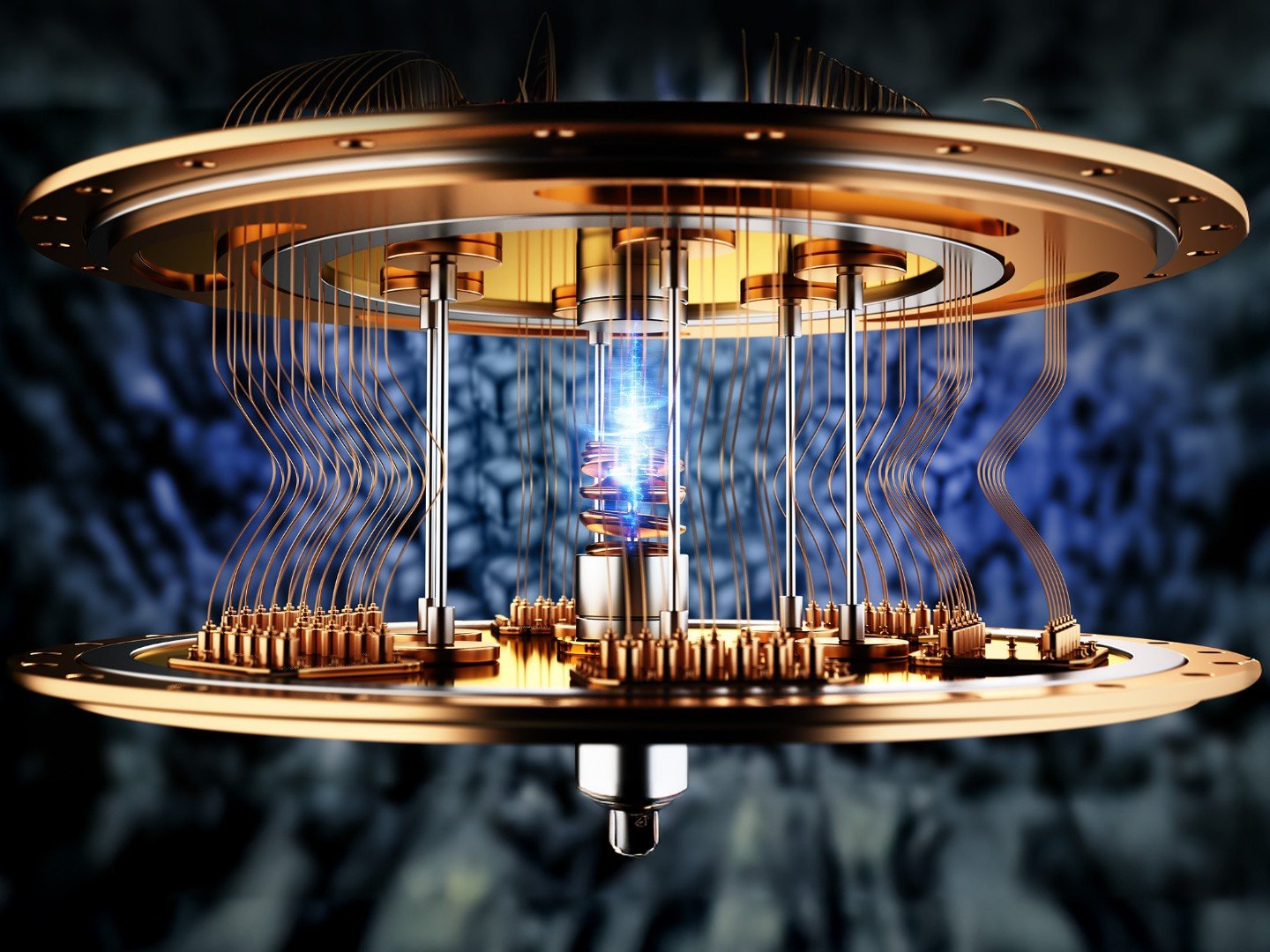
An important milestone has now been passed in the attempt to simulate quantum systems on classical hardware. Quantum computing simulation of classical supercomputers 2026: it is no longer a theoretical exercise but a real fact. Europe’s JUPITER supercomputer has successfully reproduced 50-qubit quantum circuits, and the repercussions are more than most people grasp.
This is a breakthrough that matters to anyone in IT. It highlights the vast latent potential in conventional supercomputers. It also gives researchers a critical validation tool for quantum algorithms before true quantum hardware arrives that will be matured sufficiently to be helpful.
But how does a classical machine replicate quantum behavior? And why does that matter now?
Why Classical Machines Are Simulating Quantum Computers in 2026
Inside JUPITER: The Architecture Behind the 50-Qubit Breakthrough
The Technical Mechanics of Quantum Simulation on Classical Hardware
How JUPITER Compares to Other Quantum Simulation Efforts
Limitations, Future Directions, and the Road to 100 Qubits
Why Classical Machines Are Simulating Quantum Computers in 2026
Quantum computers give a spectacular speed for some issues. But today’s quantum gear is noisy, error-prone and eye-wateringly expensive to access. So researchers need trustworthy techniques to test quantum algorithms — and traditional simulation is a beautiful fit.
In 2026, the simulation of quantum computing on classical supercomputers has numerous important purposes:
- Algorithm validation: Test your quantum code before you waste time on limited, expensive quantum hardware
- Error benchmarking: Benchmarking noisy quantum results against noiseless classical simulations to find where errors occur
- Education and development: Train engineers who don’t have access to real quantum devices (which is most engineers, honestly)
- Hardware design: Simulate future qubit architectures before manufacture begins
Importantly, classical simulation also provides a competitive bench-mark. That is, if a conventional machine can provide the same output as a quantum computer, then that quantum computer has not really gained “quantum advantage.” It keeps the field honest. And boy, does it need it.
The National Institute of Standards and Technology (NIST) actively monitors these benchmarks. Their work serves to set the limits of when quantum systems are really better than classical counterparts, so there is real rigour behind the claims.
Simultaneously, the cost equation is very much in favor of classical simulation for many activities. A 40-qubit simulation on a supercomputer costs a fraction of the time to book IBM’s or Google’s quantum computers. So, quantum computing simulation conventional supercomputers 2026 is the practical choice for most research teams today — not a consolation prize, but a conscious strategy.
Inside JUPITER: The Architecture Behind the 50-Qubit Breakthrough
JUPITER (Joint Undertaking Pioneer for Innovative and Transformative Exascale Research) is located at the Jülich Supercomputing Centre in Germany. It’s Europe’s first exascale supercomputer, capable of completing more than one quintillion calculations per second – that’s 10^18 operations. Writing it out doesn’t really give you a sense of how enormous it is, but trust me, it’s staggering.
JUPITER achieves quantum simulation by relying on three architectural pillars:
- Massive parallelism – JUPITER leverages hundreds of NVIDIA GH200 Grace Hopper Superchips. Each chip combines an ARM-based CPU with a fast GPU, allowing the system to calculate quantum states on thousands of processors simultaneously. It’s a really smart pairing.
- Huge memory requirements – Simulating 50 qubits involves storing 2^50 complex numbers, or about 1 petabyte of state vector data. JUPITER’s unified memory pool does this and then some – an almost ludicrous sentence to write.
- High-bandwidth interconnects – Quantum simulation requires constant connection between processors. JUPITER employs both NVLink from NVIDIA and HPE’s Slingshot networking to move data at incredible rates, as a bottleneck here would destroy the whole effort.
For instance, the 50-bit-qubit simulation uses a technique known as full state vector simulation. The computer stores all possible quantum states in memory and then performs quantum gate operations as matrix multiplications over the full vector. It’s elegant in theory. In practice, it’s one of the most demanding workloads you can throw at a machine.
The Jülich Supercomputing Centre revealed precise specs on JUPITER’s capabilities, confirming peak performance above 1 exaflop. Worth bookmarking if you want to dive deep on the technical specs.
Plus JUPITER doesn’t work alone. Software frameworks like Google’s Cirq and IBM’s Qiskit give the quantum circuit descriptions. These get transformed into traditional linear algebra operations that JUPITER’s hardware then executes. The software layer matters as much as the iron.
The memory wall is the real kicker. Every additional qubit doubles the required memory. Simulating 50 qubits demands around 1,000 times more memory than simulating 40 qubits. That exponential growth is why classical simulation encounters hard limits — and why JUPITER’s breakthrough at 50 qubits is so genuinely astounding rather than simply incrementally fascinating.
The Technical Mechanics of Quantum Simulation on Classical Hardware
In order to understand quantum computing simulation traditional supercomputers 2026, we need to understand a few key ideas. Fair warning: the math goes swiftly into uncomfortable territory, but the intuition is manageable.
Qubits vs classical bits. A classical bit can be either 0 or 1. A qubit can be in a superposition—a weighted mixture of both states at the same time. To simulate this classically you have to keep track of the probability amplitudes for all conceivable combinations of states. For n qubits you need 2^n complex numbers. In practice, that scales out like this:
| Qubits | State Vector Size | Approximate Memory Needed |
|---|---|---|
| 20 | ~1 million entries | ~16 MB |
| 30 | ~1 billion entries | ~16 GB |
| 40 | ~1 trillion entries | ~16 TB |
| 50 | ~1 quadrillion entries | ~16 PB |
| 60 | ~1 quintillion entries | ~16 EB |
This table clearly illustrates the central difficulty. But it also explains why 50 qubits is such a big milestone – just look at that rise from 40 to 50. That’s not a step forward, that’s a cliff.
There are three major simulation approaches:
- State vector simulation – Keeps track of the whole quantum state. Most accurate; also most memory-hungry. The memory specs are important, as this is JUPITER’s main technique.
- Tensor network simulation – Splits the quantum circuit into smaller connected tensors. “Uses less memory for certain circuit types. However, it performs very poorly on highly entangled circuits, which are generally the most intriguing ones.
- Stabilizer simulation – Very efficient for a particular class of quantum circuits called Clifford circuits. It is quick yet it cannot perform universal quantum computation. It’s a useful tool for specialists. It’s not a general solution.
Crucially, each approach includes genuine trade-offs between accuracy, speed and memory. Researchers typically use hybrid approaches, for example tensor networks for shallow circuits and state vector methods for deep, highly entangled, ones. There is no one “best” way, simply judgment calls sensitive to context.
Gate operations are matrix multiplication. In the case of the Hadamard and CNOT gates, the classical simulator multiplies the state vector by the associated unitary matrix. These matrices are astronomically big for a 50-qubit machine. JUPITER spreads these multiplications across its GPU array – which, let’s face it, is pretty much what GPUs were born to do.
The GPU architecture is hugely important here. “NVIDIA’s tensor cores are built for the dense matrix math needed for quantum simulation. This is why quantum computing simulation classical supercomputers 2026 are highly tilted towards GPU accelerated systems like JUPITER vs CPU alone machines . And why the hardware choices aren ‘t arbitrary .
This is achieved with the NVIDIA cuQuantum SDK, which offers optimized libraries to accelerate state vector simulations and tensor network simulations on NVIDIA GPUs. Furthermore, cuQuantum has become somewhat of a de facto standard, with most of the major quantum simulation frameworks now supporting it.
How JUPITER Compares to Other Quantum Simulation Efforts
In 2026, JUPITER is not the only player in quantum computing simulation on classical supercomputers. There are a number of other systems in significant contention in this arena. But JUPITER’s exascale capabilities give it an edge – at least for now.
Competitors and their achievements:
- Frontier (Oak Ridge National Laboratory, USA) – First exascale system in the USA. It is simulated up to 48 qubits utilizing tensor network algorithms. Frontier employs AMD Instinct MI250X GPUs instead of the hardware used by the competitors, making apples-to-apples comparisons with the headline stats difficult.
- Fugaku (RIKEN, Japan) – While not exascale by the usual FLOPS definition, Fugaku’s ARM-based architecture has shown surprisingly good performance on some quantum simulation workloads. It’s particularly good at memory bound problems, which is a handy niche.
- Aurora (Argonne National Laboratory, USA) – Intel’s exascale contender using Ponte Vecchio GPUs. Aurora is aimed at quantum-classical hybrid workflows, in particular for combining real quantum computers with classical simulation backends. It’s an ambitious approach and the results will be worth watching closely.
- Summit (Oak Ridge, USA) – 49-qubit simulation demonstrated in 2019, older but It proved the notion and now JUPITER has extended it in a meaningful way. Credit where credit is due.
| System | Location | Peak Performance | Max Qubits Simulated | GPU Architecture |
|---|---|---|---|---|
| JUPITER | Germany | 1+ exaflop | 50 | NVIDIA GH200 |
| Frontier | USA | 1.2 exaflops | 48 | AMD MI250X |
| Fugaku | Japan | 537 petaflops | 45 | ARM (CPU-only) |
| Aurora | USA | 2 exaflops | 47 (estimated) | Intel Ponte Vecchio |
Also, you have accessible options through cloud-based quantum simulators such asAmazon Braket and Microsoft Azure Quantum. These services allow developers to execute smaller simulations without needing to use a supercomputer. But they can’t compete with the qubit counts that specialist supercomputers get to. So they cater to a different crowd altogether.
The competing picture shows something significant. 2026 quantum computing simulation classical supercomputers is not just an academic exercise; it’s a crucial national objective. This capability is a big spend for the US, EU, Japan and China. And that, by the way, is no coincidence.
Some researchers, however, say that classical simulation resources would be better used constructing real quantum technology. This is not a done deal and it still shapes financing decisions around the world. Both sides have their points.
Limitations, Future Directions, and the Road to 100 Qubits
JUPITER’s remarkable 50-qubit feat has clear physical boundaries for classical quantum simulation. Engineering willpower alone will not overcome exponential memory scaling. That so, there are other potential avenues to explore — and the area is advancing quicker than most people realize.
Limitations of classical supercomputer simulation of quantum computing in 2026:
- Memory ceiling – Even exascale computers cannot hold the state vector for 60+ qubits. The amount of memory required is greater than any supercomputer can supply now or in the foreseeable future. This is not an issue of the hour. It is a problem of the heart.
- Time complexity – Simulating deep quantum circuits with a large number of gate operations becomes progressively slower with increasing qubit counts. On JUPITER, a 50-qubit circuit with 1000 gate layers can take days. Days of exascale compute time. Not cheap.
- Entanglement barriers – Highly entangled states are difficult to compress with tensor networks and other approaches. This makes memory-saving shortcuts less effective when you need them most.
- Energy costs – JUPITER requires about 20 megawatts of power. Running multi-day simulations at this scale is not inexpensive or environmentally trivial. But that’s a serious consideration, not a footnote.
Where the field is going:
- Approximate simulation – Instead of recording every quantum state accurately, researchers trade minor levels of accuracy for substantial memory savings. That may bring practical simulation to 60+ qubits. This trade-off is acceptable in many application circumstances.
- Hybrid quantum-classical workflows – Use genuine quantum computers for the most difficult parts of a computation and mimic the remainder conventionally. This method pushes both technologies further. It is also underestimated as a short-term strategy.
- Next generation hardware – Zettascale computers (1,000x faster than exascale) are being designed for the early 2030s. At that scale, they might be able to mimic 55-60 qubits with full state vectors but the energy and cost problems are more intense.
- Algorithm-specific simulation – Instead of simulating generic quantum circuits, researchers simulate specific algorithms such as VQE (Variational Quantum Eigensolver) or QAOA (Quantum Approximate Optimization Algorithm). These generally have structure that is exploitable, which makes them much more tractable traditionally.
Importantly, the U.S. Department of Energy funds a number of research programs directed at these specific difficulties. Quantum simulation is clearly listed in their roadmap as a priority use for future supercomputers — therefore the investment pipeline is real.
Also, the crossover point continues moving. Classical simulation has improved, and quantum computers require bigger qubit counts and lower error rates to provide a real benefit. In fact, that shifting goalpost is good for the whole field. It compels the creators of quantum technology to construct better computers rather than crowing about triumph too early.
So the quantum computing simulation classical supercomputers 2026 aren’t competing with quantum computing, they’re speeding it faster. All classical simulations confirm quantum conclusions, find flaws and drive hardware progress. It’s a cooperative partnership, not a combative one.
Practical Implications for Developers and Organizations
So what does that really imply for you?
For a developer, researcher or technology leader, quantum computing simulation classical supercomputers 2026 has direct practical relevance, not future, theoretical importance. And now.
For Software Devs:
- Begin learning quantum programming frameworks today. Qiskit, Cirq, and PennyLane all run on conventional simulators, so you don’t need quantum gear to get started. There is really no reason to wait.
- For minor tests (sub 30 qubits), use cloud based simulators. AWS Braket, Azure Quantum and IBM Quantum all have free tiers that are more than adequate to get you started.
- Know the limitations. So your local laptop can mimic maybe 25-28 qubits, then you need cloud or HPC resources. Knowing where that line is saves a lot of frustration.
For research institutions:
- Submit a proposal to use a supercomputer. Both the EuroHPC Joint Undertaking and US national labs have competitive access schemes. The inconvenience in the application procedure is worth the access.
- Favor hybrid workflows. Most fruitful study right now is a blend of classical simulation, access to quantum technology. And that’s where the most intriguing results are coming from.
- Rigorously benchmark. Classical simulation results are used for ground truth validation of quantum investigations. This field is very adept at separating credible quantum research from marketing.
To corporate technology leaders:
- No waiting for quantum maturity… Classical quantum simulation gives your teams the ability to acquire real quantum expertise today, and that skill builds over time.
- Evaluate quantum-ready algorithms in areas such as optimization, materials science, and drug development. First simulate them traditionally – it’s faster, cheaper, and you’ll learn a lot about whether quantum is even the correct instrument for your task.
- See the crossover between classical and quantum in your area. There’s a lot of variance depending on the sort of problem and so the time schedule looks extremely different for logistics vs. pharma research.
Or, you could want to look into working with academic institutions that do have supercomputers. Many universities are keen to partner with industry on quantum simulation initiatives. They receive real world challenges and you get computational access. Usually a simple layout.
Bottom line: quantum computing simulation on classical supercomputers in 2026 provides organizations a feasible on-ramp to the quantum future. Waiting for optimal quantum hardware leaves you behind competitors who began to acquire expertise years ago.
Conclusion
Quantum computing simulating classical supercomputers 2026 is a real turning moment of the history of computer science. JUPITER’s 50-qubit accomplishment shows that classical devices are still potent, expanding tools for quantum research — not legacy technology waiting to be replaced. Also, it demonstrates that the worlds of classical and quantum computing are not enemies. They are partners, and that framing counts.
The technical mechanics are hard yet comprehensible. State vector simulation. Tensor networks. Linear algebra on GPU. That’s how we can do it. In the meantime, the exponential memory wall guarantees that actual quantum computers will eventually be better than classical simulators, and that’s okay. That is the point.
Here are your next steps to take action on:
- Try out quantum simulation frameworks such as Qiskit or Cirq on your own hardware – now, not later
- For larger simulations, you can request access to the cloud or HPC through AWS Braket or national lab initiatives.
- For the most recent benchmarks, see JUPITER’s published research from the Jülich Supercomputing Centre.
- Build quantum literacy in your engineering teams before quantum hardware goes popular and the talent market gets brutal
The future of computing is neither classical nor quantum. It’s classical, it’s quantum, it’s functioning together. JUPITER’s success at mimicking quantum computing on classical supercomputers is beginning to make that future seem not just possible, but far sooner than many people anticipate.
FAQ
What is quantum computing simulation on classical supercomputers?
It’s the process of using traditional supercomputers to mimic quantum computer behavior. Specifically, classical machines store and manipulate mathematical representations of quantum states, then apply quantum gate operations as matrix multiplications across those representations. This lets researchers test and validate quantum algorithms without needing actual quantum hardware — which remains scarce, expensive, and error-prone in 2026.
Why can’t classical computers simulate more than about 50 qubits?
The limitation comes from exponential memory scaling — and it’s brutal. Each additional qubit doubles the memory requirement. Simulating 50 qubits already needs approximately 16 petabytes of memory. Simulating 60 qubits would need 16 exabytes — more than any current or planned supercomputer can provide. Consequently, there’s a hard ceiling that engineering creativity alone can’t overcome. It’s a physics problem, not an engineering one.
How does JUPITER’s quantum simulation compare to actual quantum computers?
JUPITER produces perfect, noise-free results for quantum circuits up to 50 qubits. Conversely, today’s quantum computers introduce errors due to decoherence and gate imperfections — sometimes significant ones. However, quantum computers can handle problems with 100+ qubits that no classical machine can simulate. The trade-off is accuracy versus scale, and right now both approaches have clear domains where they win.
What software tools are used for quantum computing simulation classical supercomputers 2026?
The most common frameworks include IBM’s Qiskit, Google’s Cirq, Xanadu’s PennyLane, and NVIDIA’s cuQuantum SDK. These tools translate quantum circuit descriptions into classical linear algebra operations that hardware like JUPITER can execute. Additionally, specialized simulators like quimb and ITensor handle tensor network approaches for more memory-efficient simulation of specific circuit types.
Is quantum computing simulation useful for businesses today?
Absolutely — and it’s underused. Businesses can use classical quantum simulation to evaluate quantum algorithms for their specific problems right now, without waiting for quantum hardware to mature. Industries like pharmaceuticals, finance, logistics, and materials science already run meaningful quantum simulations. Importantly, this lets organizations build genuine quantum expertise and identify high-value use cases before the hardware catches up and competition intensifies.
Will classical quantum simulation become obsolete when quantum computers improve?
Not entirely — and probably not even mostly. Classical simulation will always serve as a validation and benchmarking tool, because researchers need clean, verifiable results to evaluate noisy quantum hardware. Nevertheless, the role will shift over time. As quantum computers grow more powerful and reliable, classical simulation will focus increasingly on smaller subsystems, error analysis, and algorithm development rather than full circuit simulation. It evolves rather than disappears.
References
Keep reading
Here are the latest posts from the blog.

The Unity AI Suite delivers game developer machine learning 2026 and has become the industry’s most talked about toolkit—and honestly, for once, that reputation is well earne…

The trend is clear. AI follows the J-curve where ROI is coming but not yet reached for most organizations. Companies are spending billions on AI projects, returns fall before…
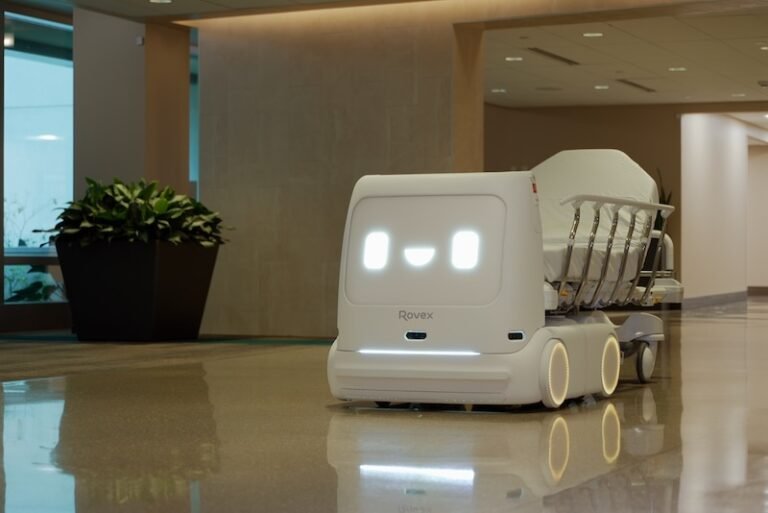
Rovex Robotics Autonomous Systems Industrial Automation 2026 is a real game changer for factory floors and warehouses around the world. And I don’t use the term “turning poin…