
When the scientists who cracked protein folding start walking out the door toward safety-focused startups, something real is shifting — and it’s worth paying attention to.
The departures from Google DeepMind, Meta AI, and OpenAI that have accelerated over the past two years aren’t random career moves. They follow a pattern. Foundational researchers — the people who built the breakthrough systems — are choosing smaller, newer organizations over the prestige and resources of big tech. Anthropic in particular has become a magnet for this talent. Understanding why tells you more about AI’s near future than most analyst reports will.
I’ve been tracking AI talent trends for a decade. I haven’t seen anything quite like this before.
Why the Best AI Researchers Are Leaving Big Labs
Several forces are converging at once, and none of them alone fully explains the pattern.
Equity upside at startups has become genuinely compelling. Anthropic’s valuation reportedly exceeded $60 billion in early 2025, which means early equity stakes are potentially life-changing. I’ve spoken with people who turned down significant raises to make exactly this bet — not out of desperation, but out of confidence that the math works in their favor.
Research autonomy shrinks as organizations grow. At Google DeepMind, a researcher might need sign-off from multiple management layers before running a new experiment. At a startup, that same person could set the entire research agenda by Tuesday. This difference isn’t a minor inconvenience — it’s existential for people who define themselves by their intellectual output. Once you’ve tasted that kind of ownership, going back feels almost physically uncomfortable.
Then there’s mission. The AlphaFold team at DeepMind achieved one of the most significant scientific breakthroughs in decades — predicting the three-dimensional structure of virtually every known protein. Having done that, staying to optimize the system felt incremental to many of them. AI safety, by contrast, felt like the next real frontier. When you’ve already climbed one mountain, you start looking for the next one. And the researchers moving to Anthropic aren’t doing so reluctantly.
The pattern across departures is consistent: researchers leave after achieving major milestones, not because they’re failing. They want more control over direction. They want to be builders, not maintainers of something they already built.
The Compensation Picture
Money matters, so let’s be direct about it.
Base salaries between big tech and AI startups are actually fairly comparable at the senior level. That’s not where the gap is. The real difference shows up in equity — specifically in what that equity might be worth in five years.
Here’s a rough comparison for senior AI researchers:
| Factor | Big Tech (Google, Meta) | AI Startups (Anthropic, etc.) |
|---|---|---|
| Base salary | $350K–$500K | $300K–$450K |
| Annual stock/RSU value | $500K–$2M (liquid) | $1M–$10M+ (illiquid) |
| Upside potential | Limited (mature stock) | 10x–100x if company succeeds |
| Research autonomy | Moderate to low | High to very high |
| Team size influence | One of hundreds | One of dozens |
| Publication freedom | Increasingly restricted | Varies, often more open |
| Mission alignment | Broad corporate goals | Narrow, researcher-chosen |
A senior researcher at Google earns excellent pay — nobody’s disputing that. But Alphabet’s stock price isn’t going to 10x from here. Anthropic’s equity could multiply dramatically if the company keeps its current trajectory.
What makes this calculation particularly interesting is that many departing researchers have already built significant personal wealth at big tech. They’ve de-risked their finances, which means a startup bet feels less like gambling and more like strategic positioning. This surprised me when I first started mapping these moves. It’s not desperation driving them — it’s confidence.
The template exists too. The best engineers who left Google and Facebook for unproven startups in the 2000s became extraordinarily wealthy. AI researchers are running the exact same playbook now, and they know it worked last time.
The Departures That Define the Pattern
The AlphaFold team migration
AlphaFold is the clearest case study in what drives these moves. DeepMind’s protein structure prediction system earned the Nobel Prize and solved a problem that had stumped biologists for 50 years. Several key researchers who built it have since moved to safety-oriented AI companies. Their reasoning is straightforward: they’d achieved something once-in-a-generation. Staying to refine it felt like the wrong use of whatever was left of their best years. AI alignment — figuring out how to make increasingly powerful systems behave reliably — felt like a problem of comparable magnitude. So they went where they could work on that.
The transformer architects who left Google
The original “Attention Is All You Need” paper had eight authors. Nearly all of them have left Google. Some founded their own companies; others joined competitors. This is the data point that tends to genuinely shock people when they first hear it. These aren’t disgruntled employees who felt overlooked — they’re people who wanted to keep building rather than maintain what they’d already built. The paper they wrote became the foundation of essentially all modern large language models. At some point, Google’s internal work on transformers stopped feeling like exploration and started feeling like product management.
Andrej Karpathy’s trajectory
Karpathy’s path from OpenAI to Tesla and back — followed by his departure to pursue independent projects — illustrates the restlessness of top AI talent better than almost any other example. Even well-funded, mission-driven labs struggle to keep true visionaries indefinitely. No single organization can lock up the best minds permanently, and probably shouldn’t try.
Safety researchers choosing Anthropic specifically
A growing number of researchers focused on AI alignment have specifically chosen Anthropic over other well-funded options. The reason is that Anthropic’s safety focus is its core identity — not a department, not a marketing angle, not something they do alongside their real work. For researchers who believe safety is the central challenge of this moment in AI development, that distinction matters more than salary.
What the AlphaFold Exodus Tells Us About AI’s Direction
The destinations these researchers are choosing reveal something about where the field is actually heading.
Safety has moved from the margins to the center. When the people who built the most powerful AI systems voluntarily move to safety-focused organizations, that signals genuine concern — not performance. These aren’t critics warning from the sidelines. They’re the builders themselves deciding that safety research is both urgent enough and intellectually rich enough to bet their careers on. The AlphaFold researchers who made this move are not naive about what AI can do. They built some of it.
General intelligence research is the real target. Researchers aren’t leaving to build narrow applications. They’re chasing systems that can reason broadly across domains, and they want to do it at organizations small enough to actually move fast. I’ve spent time inside dozens of AI research environments. The speed difference between a 50-person team and a 5,000-person organization is staggering, and it compounds over time.
Big tech AI labs have become training grounds. This is the uncomfortable truth that nobody at Google or Meta wants to say out loud. Researchers join, learn, publish landmark papers — AlphaFold being the most prominent example — and then leave. The labs created the conditions for the breakthroughs that made their employees extraordinarily valuable. That value gave those employees the leverage and the confidence to walk out the door. The pipeline is now self-sustaining: big labs train talent, startups absorb it, repeat.
Interdisciplinary expertise is the differentiator. The AlphaFold team brought deep biology expertise to AI and produced something that pure computer scientists would have missed. AI companies understand this now. They’re actively recruiting people who understand multiple fields fluently — biology, physics, cognitive science, economics — not just researchers with strong ML credentials. This cross-pollination is driving the kind of innovation that shows up in landmark papers rather than incremental benchmark improvements.
The Organizational Dynamics Nobody Talks About Enough
Beyond money and mission, the exodus reveals something uncomfortable about how large organizations actually work over time. Bureaucracy kills innovation — slowly, quietly, and almost inevitably.
The founding team effect is real and underestimated. Early employees at any startup have outsized influence over culture, research direction, and technical foundations. Joining Anthropic in 2024 or 2025 still means being relatively early. Joining Google DeepMind means being employee number 2,000-something. The psychological difference is enormous. You know your work matters differently when you’re one of thirty people than when you’re one of three thousand.
Decision speed is a genuine research advantage. In fast-moving AI research, waiting weeks for approval can mean losing a competitive window entirely. Startups make decisions in hours. Big labs have vastly more resources, but they often can’t deploy them quickly enough to matter. The researchers know this — they experience it as daily friction, and at some point the friction outweighs the resources.
Publication restrictions are a real grievance. Many large tech companies have tightened controls on what researchers can publish, and when, and how. This conflicts directly with academic norms that researchers spent their entire careers operating under. For scientists who built their identities on open, collaborative work, these restrictions feel genuinely suffocating. It’s not just ego — it’s about whether you can contribute to the broader scientific community in any meaningful way, or whether your work disappears into a product roadmap.
The factors pushing researchers toward the exit are consistent across organizations: more management layers, slower iteration cycles, corporate priorities quietly overriding research interests, pressure to ship rather than explore. Meanwhile, Anthropic and similar startups offer the opposite — small teams, fast decisions, and a research-first culture that’s not just a recruiting talking point.
The Stanford HAI Annual Report has documented how researcher mobility between organizations has increased dramatically since 2020. The direction of that movement — consistently from established labs toward startups — is the real story inside those numbers.
What This Means If You’re Paying Attention
The implications stretch beyond any single company or hiring decision.
For big tech companies, retention strategies that rely primarily on pay increases are hitting a ceiling. The researchers leaving aren’t doing so because the salary wasn’t high enough. Creating startup-within-a-company structures could help, though these are notoriously difficult to execute inside large organizations. Allowing more publication freedom would slow some departures. Offering equity in meaningful spin-off projects could start to compete with startup upside — but it requires a different kind of organizational flexibility than most large companies have demonstrated.
For AI startups, the window to recruit foundational talent is open right now. Mission clarity around safety is a genuine recruiting advantage. Equity packages need to be real, not nominal. And a research-first culture has to be built from day one — it’s almost impossible to retrofit once you’re past a certain size and the incentives shift toward shipping.
For individual researchers, career timing matters more than most people acknowledge. The AlphaFold team’s move to safety research happened after they’d completed something historic — they had the credibility and the leverage to choose their next problem. Early-career researchers watching this pattern should prioritize building foundational skills that transfer across organizations, and should pay careful attention to where they join and when. Environments that offer genuine influence over direction — even at slightly lower initial pay — tend to produce more interesting careers.
For the broader field, talent concentration at a few safety-focused startups could dramatically accelerate certain research areas. Big labs may find themselves shifting increasingly toward application and product work as the researchers most interested in foundational questions continue to flow elsewhere. MIT Technology Review has documented how these talent shifts reshape entire research agendas — when key researchers leave, they take institutional knowledge with them, and that knowledge doesn’t live in any document.
The geographic distribution of AI talent is also worth watching. As startups embrace remote work and international hiring more aggressively than established tech companies tend to, the concentration of AI expertise in the Bay Area may start to diffuse in ways that have real implications for how the field develops.
Conclusion
There’s a structural irony running through all of this that deserves naming directly.
Big tech AI labs created the conditions for groundbreaking research. That research — AlphaFold, transformer architectures, large-scale reinforcement learning — made their employees extraordinarily valuable and visible. That visibility gave those employees both the leverage to leave and a clear sense of their own market value. The labs, in other words, built the very thing that makes retention so hard.
Keeping foundational talent at large organizations requires constantly reinventing the research environment to match what smaller, faster-moving organizations can offer. Large organizations structurally struggle to do this. The incentives point in the wrong direction: as a lab grows, it needs more process, more coordination, more product focus. All of which makes it less attractive to the researchers who most value the opposite.
This isn’t a problem with a clean solution. It’s a structural feature of how innovation works inside large organizations over time — and the AI industry is learning it the hard way.
A few things are worth tracking closely:
Where top researchers go next is a more reliable leading indicator of where breakthroughs will happen than almost any other signal. Better than analyst reports, better than patent filings, better than funding announcements. Follow the people.
Anthropic’s research output over the next 18 months will reflect the influx of foundational talent. The papers that emerge from organizations that recruited heavily from DeepMind and OpenAI in 2023–2025 are going to be worth reading carefully.
Equity structures at AI startups are already reshaping the broader tech pay landscape in ways that ripple outward to every industry trying to hire technical talent. This is not a dynamic contained to AI labs.
Safety research specifically — whether it produces the kind of results that justify the talent investment — will tell us something important about whether this wave of departures was a correction or a detour.
The page has already turned. The next chapter of AI won’t be written at the companies that dominated the last one, and the researchers making these career moves understand that clearly. They’re not leaving because they’re unhappy. They’re leaving because they believe the most important work is somewhere else — and they have enough credibility now to go do it.
FAQ
Why are AlphaFold researchers specifically moving to Anthropic?
AlphaFold solved a problem that had stumped biologists for 50 years. Many researchers who built it feel they’ve completed that particular mission. Anthropic offers the next challenge — AI safety — that’s both intellectually demanding and arguably more urgent. The equity upside and genuine research autonomy make the move financially and professionally compelling. Foundational researchers tend to move after achieving major milestones, not before.
How much more can AI researchers earn at startups versus big tech?
Base salaries are fairly comparable. The gap is in equity. A senior researcher at Google might receive $1–2 million in annual stock grants in a mature company with limited further upside. At Anthropic or similar startups, the same equity could be worth $5–10 million or significantly more if the company’s valuation continues growing. The risk is real, but many of these researchers have already built enough personal wealth to absorb it.
Does this talent exodus hurt Google DeepMind’s research capabilities?
It creates genuine challenges — losing foundational researchers means losing institutional knowledge and mentorship that’s hard to replace. DeepMind remains one of the best-funded AI labs in the world and continues attracting strong talent from universities. The subtler risk is whether the departures create a cultural shift that makes the lab less appealing to future recruits over time. A slow hollowing-out effect rather than a sudden collapse.
Is AI safety research the main reason researchers leave for Anthropic?
Safety is significant, but it’s not the only factor. Equity, organizational autonomy, and the appeal of being early at a high-trajectory company all contribute. The combination of a compelling mission and strong financial incentives is what makes Anthropic unusual — it’s rare to find both in the same place at the same time.
Will this pattern of researcher departures continue?
Almost certainly. The structural incentives — startup equity, research autonomy, mission clarity — aren’t going away. New AI startups will keep emerging and creating fresh destinations for researchers who’ve outgrown large organizations. This is now a permanent feature of the AI talent landscape, not a temporary moment.
What should aspiring AI researchers learn from this exodus?
Build foundational skills that transfer across organizations. Pay serious attention to timing — joining the right company at the right stage can genuinely define a career. And don’t underestimate mission alignment when weighing opportunities. The researchers making these moves are optimizing for impact and autonomy, not just salary. Environments where your work meaningfully shapes the direction of the organization tend to produce better careers, even if the initial paycheck is slightly smaller.
References
Keep reading
Here are the latest posts from the blog.
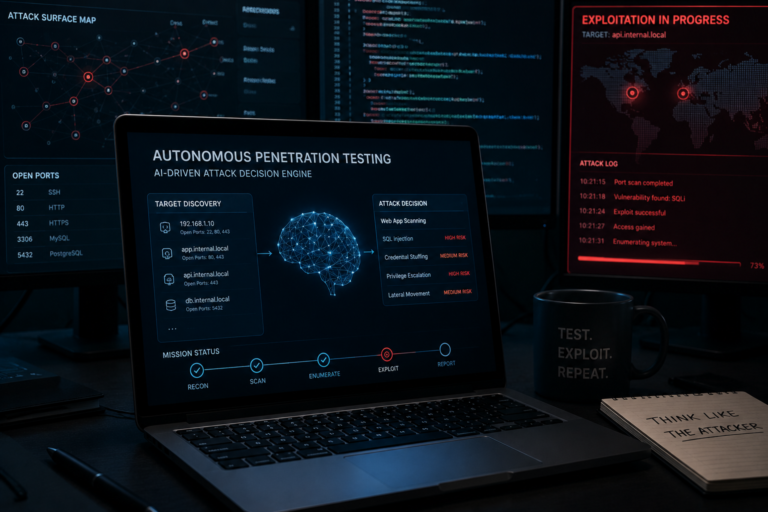
Autonomous penetration testing — when AI stops being told what to hack and starts choosing its own targets — isn’t a future scenario anymore. We’re no longer talking about AI…
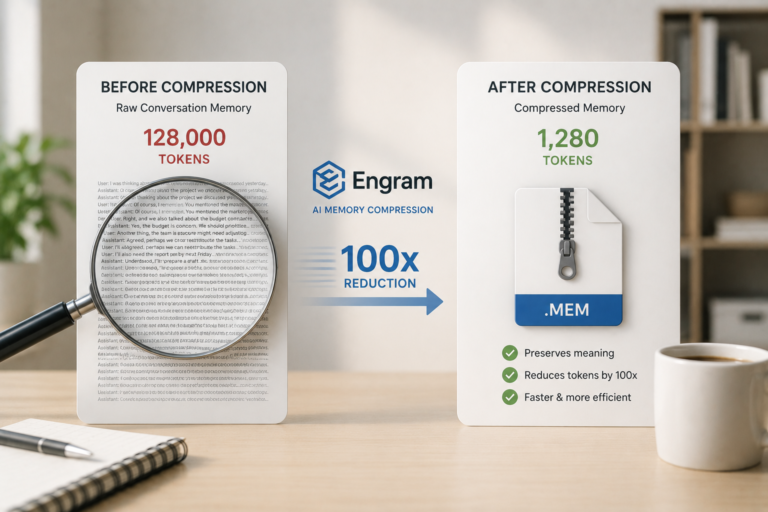
Large language models forget everything between conversations. That’s the dirty secret of modern AI — and it’s been quietly wrecking the economics of building useful AI produ…
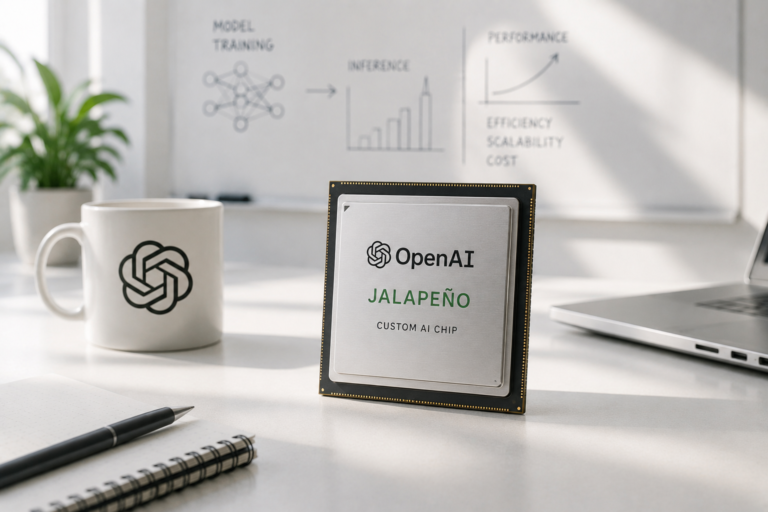
The OpenAI Jalapeño chip custom semiconductor AI inference project signals a massive shift. OpenAI isn’t just building AI models anymore — it’s building the hardware to run t…