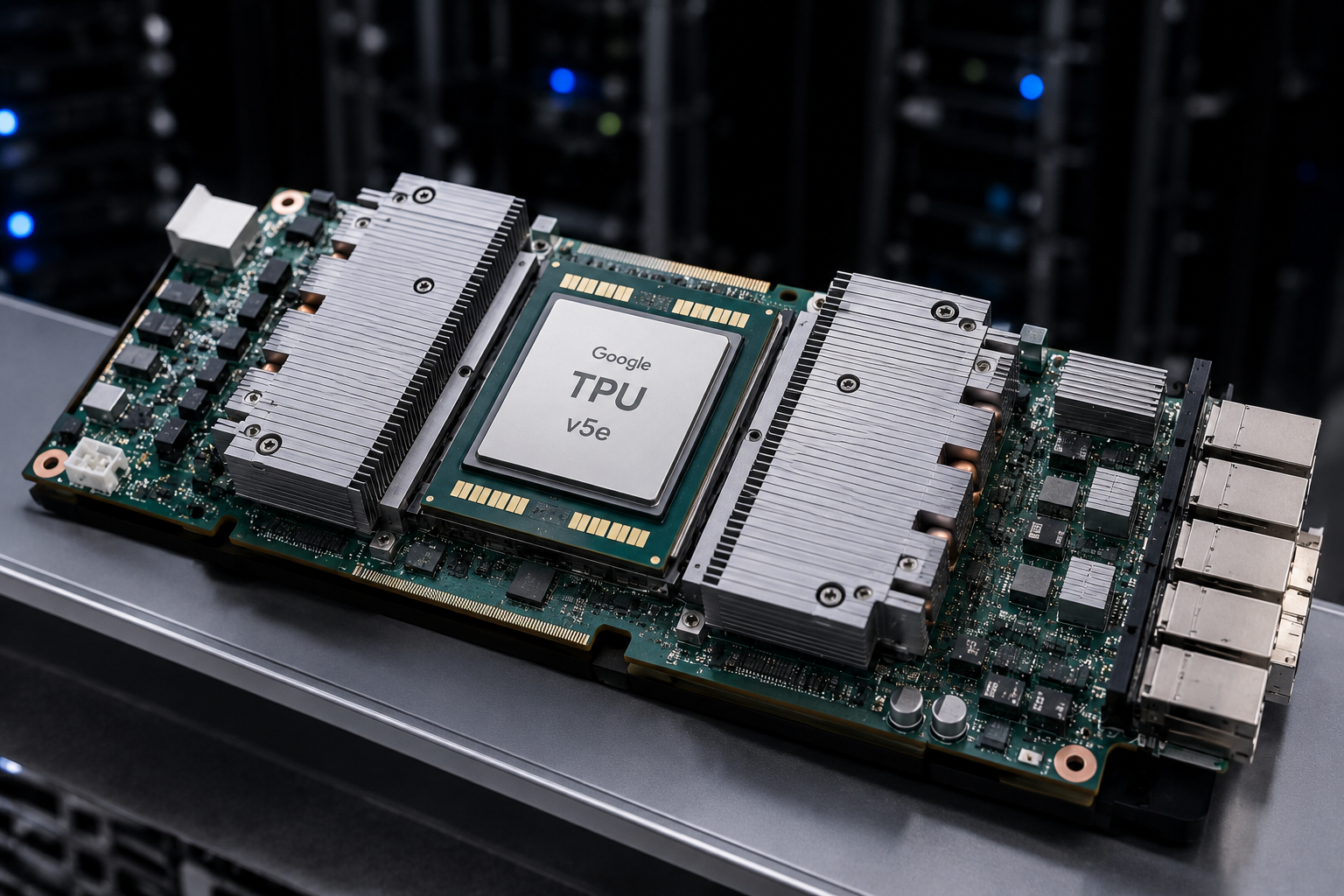
Google’s TPU partnership with Anthropic raises a capacity-planning question: how should a cloud provider balance customer commitments with its own research needs? The partnership is public; a claim that Anthropic has caused Google researchers to queue for chips needs separate operational evidence.
This isn’t just a funny headline worth a chuckle and a scroll-past. Underneath the Google TPUs Anthropic story lies a genuinely interesting story about token economics, inference costs, and why custom silicon matters more than ever. Once you understand the business logic, Google’s decision makes a lot more sense than it first appears.
The Google TPUs Anthropic relationship connects directly to bigger questions about AI pricing, cache optimization, and what it actually costs to serve billions of tokens every single day.
Key Takeaways on Google TPU Anthropic
- Anthropic’s Google Cloud partnership includes TPU capacity; the public announcements do not establish the claimed investment condition.
- Anthropic uses Google TPUs alongside Amazon Trainium and NVIDIA GPUs, rather than choosing one platform exclusively.
- AI model pricing and workload cost depends on the selected model and request mix; cache savings are not a universal 167X ratio.
- Public announcements do not establish Google research delays caused by Anthropic’s allocation.
- Future capacity and software efficiency may change allocation options; announced capacity is not the same as delivered availability.
Why Google TPU Anthropic Uses Makes Economic Sense
How Google TPUs Fit Anthropic’s Compute Mix
Google TPU Anthropic and the Real Economics of Serving Claude
How Google TPU Anthropic Uses Affect Google’s Own Research
What Google TPU Anthropic Means for Cloud Competition
Conclusion: What Google TPU Anthropic Reveals About AI Infrastructure
Why Google TPU Anthropic Uses Makes Economic Sense
Anthropic announced its Google Cloud partnership in February 2023, saying it would use GPU and TPU clusters to train, scale and deploy its AI systems. Google’s November 2023 expansion announcement specifically added TPU v5e for inference. The public announcements establish a compute partnership; they do not establish that TPU use was a condition of Google’s investment.
Selling TPU capacity generates cloud revenue. Google Cloud reported $8.41 billion in Q3 2023 revenue; that historical figure does not isolate revenue attributable to Anthropic. Separately, Anthropic describes a multi-platform compute strategy using Google TPUs, Amazon Trainium and NVIDIA GPUs. TPU use should not be described as an exclusive replacement for those other platforms.
Using a cloud platform can create migration costs through software, data placement and operational processes. Their size depends on the workload. Anthropic’s disclosed use of multiple providers means this partnership should not be treated as proof that it cannot move or distribute workloads.
The Business Logic Behind Google TPUs Anthropic Runs On
A provider serving both external customers and internal research teams must plan for their combined demand. Whether these jobs contend for the same pool depends on capacity, reservations and scheduling policy; the announcements do not disclose that allocation.
Consider a hypothetical researcher requesting a large training reservation. If an overlapping reservation exhausts the same pool, the job may have to wait or move. This is a capacity-planning example, not evidence of a particular Google or Anthropic scheduling incident.
A capacity conflict is a plausible scenario when several large training jobs need the same resources. The public partnership announcements do not establish actual wait times for Google’s internal teams or attribute specific delays to Anthropic.
How Google TPUs Fit Anthropic’s Compute Mix
Latency, cost per token and total cost of ownership are useful criteria for evaluating TPUs. They explain what a hardware assessment should measure, but the public announcements do not disclose Anthropic’s internal comparison or a single decisive factor.
Inference latency measures how quickly a system produces tokens. Accelerator comparisons should specify the model, batch size, precision and latency target; a chip’s theoretical throughput alone does not establish serving performance.
Compare cost per completed request at the required latency and quality, rather than assuming a fixed TPU-over-GPU ranking. Hardware variant, cluster size, software and contract pricing can change the result. The table below is a comparison checklist, not a benchmark of Anthropic’s deployment.
Why Availability Matters Alongside Performance
Availability, usable performance, software and workload shape all matter when comparing accelerator capacity. The public partnership announcements do not establish a single decisive reason for Anthropic’s allocation across chips. Its continued use of multiple platforms is the verified fact; the tradeoff analysis here should not be presented as an exclusive TPU-over-GPU decision.
Power consumption contributes to serving cost. Assess it against useful tokens or completed requests under the same workload and latency constraints; no comparable power-per-token measurements for this deployment are supplied here.
Volume commitments may affect commercial pricing, but the announcements do not disclose the effective price Anthropic pays per TPU-hour. A claim that its TPU pricing necessarily undercuts an equivalent GPU service would require that evidence.
Total cost also includes networking, storage, software and migration effort. Google Cloud integration may matter for a particular deployment, but it does not by itself establish Anthropic’s total-cost advantage over other platforms.
Table: scroll sideways to view all columns when needed.
| Metric | TPU v5e (Google Cloud) | NVIDIA A100 (Comparable) | NVIDIA H100 (Premium) |
|---|---|---|---|
| Inference throughput | Workload-dependent | Workload-dependent | Workload-dependent |
| Cost per chip-hour | Workload-dependent | Workload-dependent | Workload-dependent |
| Power efficiency | Workload-dependent | Workload-dependent | Workload-dependent |
| Memory bandwidth | 819 GB/s | 2 TB/s | 3.35 TB/s |
| Availability for large clusters | Depends on quota, reservation and contract | Depends on provider and reservation | Depends on provider and reservation |
Google TPU Anthropic and the Real Economics of Serving Claude
LLM serving combines input processing, output generation, memory and other operating costs. API prices describe what customers pay; they do not disclose a provider’s underlying margin or the hardware cost of each request.
Input, output, cache writes and cache reads are separate billing categories. Compare the same model and workload, including new output tokens, before calculating any saving.
Prompt caching reuses an eligible input prefix; it does not serve a previously generated answer. The earlier 167X statement was not a valid universal cache-saving claim. Consult Anthropic’s prompt-caching documentation for model-specific rates and conditions.
The Cache Pricing Gap Behind Google TPUs Anthropic Serving
Repeated system instructions can benefit from prompt caching when they meet the provider’s requirements. Batching is a separate technique whose throughput and latency tradeoffs should be measured on the actual workload.
For a cost estimate, separate cache-write tokens, cache-read tokens, uncached input and output, then apply the relevant rates. A lower bill for repeated input does not establish how many physical TPU-hours become available elsewhere.
Speculative decoding uses a smaller model to predict likely tokens, then the full model verifies them, meaningfully speeding up generation without adding chips. Quantization runs models at reduced precision, like INT8 instead of FP32, cutting memory usage and improving throughput — TPUs handle quantized workloads efficiently, which matters a lot at this scale.
More efficient inference can reduce compute needed for a given workload. Whether this releases capacity for another customer or an internal team depends on the provider’s allocation agreements and operating policy.
Anthropic’s October 2025 announcement described an expansion worth tens of billions of dollars, with up to one million TPUs and capacity expected online in 2026. Its April 2026 announcement described further Google/Broadcom capacity beginning in 2027. These are announced plans, not a disclosed measure of Google’s revenue recognized from Anthropic or internal research delays. 2025 announcement; 2026 expansion.
How Google TPU Anthropic Uses Affect Google’s Own Research
Google’s internal research and external cloud customers both need compute. A customer commitment alone does not show that either group lost access, since new capacity and separate reservations can also serve demand.
In a constrained shared pool, scheduling conflicts could delay training or experiments. Establishing that this happened to Google’s teams would require evidence about actual reservations, wait times and utilization, which the cited announcements do not provide.
Product teams, research projects and contracted customer workloads can have different priorities. Their relative allocation at Google is not established here; the capacity-planning discussion should be read as a scenario analysis.
Unpredictable compute access could create recruitment and retention problems. No evidence presented here establishes that particular Google researchers left because Anthropic displaced their workloads.
Similar allocation questions can arise for other providers that both develop models and supply customer compute. Investment figures alone do not show how those providers allocate hardware or whether particular teams experience delays.
Capacity Planning Questions for Google and Anthropic
Capacity planning must account for procurement, power, facilities and deployment lead times. The partnership announcements do not disclose a manufacturing schedule that would allow a precise forecast of when a particular internal queue will clear.
Scheduling, reservations and preemptible capacity are possible tools for managing utilization. The cited public announcements do not disclose Google’s internal job priorities or show that Google can reclaim Anthropic’s capacity when its workloads dip.
Additional capacity may reduce contention, but announced construction and future capacity are not the same as capacity currently available to a given team. Check the relevant availability dates and contract terms.
What Google TPU Anthropic Means for Cloud Competition
The Google TPUs Anthropic story reveals something deeper about AI infrastructure right now. Custom silicon is becoming a strategic weapon. Cloud partnerships are reshaping competitive dynamics, and the economics of AI serving will determine which companies are still standing in five years.
Custom silicon matters more than ever. Google’s TPUs, Amazon’s Trainium and Inferentia chips, and Meta’s MTIA accelerators all represent major bets on custom hardware, since general-purpose Nvidia GPUs are expensive and supply-constrained. Custom chips can be optimized for specific workloads and manufactured independently.
GPU and custom-accelerator options should be compared against delivered capacity, software compatibility and workload performance. Anthropic’s disclosed multi-platform approach does not establish that one chip family was unavailable or categorically unsuitable.
Table: scroll sideways to view all columns when needed.
| Cloud Provider | AI Partner | Investment | Hardware Used | Queuing Impact |
|---|---|---|---|---|
| Google Cloud | Anthropic | Cloud expansion announced October 2025; not an equity-investment comparison | Google TPUs | Not established by cited operational evidence |
| AWS | Anthropic | Investment and cloud commitments are different measures | Trainium, Inferentia | Not established by cited operational evidence |
| Microsoft Azure | OpenAI | Investment and cloud commitments are different measures | NVIDIA GPUs | Not established by cited operational evidence |
| Oracle Cloud | xAI | Earlier $10B claim not established here | Do not infer allocation from an unverified deal | Not established by cited operational evidence |
How Google TPU Anthropic Compares to Other Cloud AI Deals
Cloud partnerships can combine investment, service commitments and infrastructure planning. These arrangements differ by agreement, so the presence of an investment should not be treated as proof of a particular cloud-consumption obligation.
Investment commitments, cloud-service contracts and infrastructure agreements are different measures. The figures above cannot establish which provider has the greatest internal queuing impact; that would require comparable operational data, which these announcements do not supply.
The general planning risk is a mismatch between committed demand and usable capacity. Whether a provider currently has that mismatch, and which customers are affected, requires operational evidence beyond a partnership announcement.
Moving a suitable workload onto a device could change its demand for cloud inference. The effect depends on model capability, device limits and usage; it does not establish relief for an unverified Google research queue.
Conclusion: What Google TPU Anthropic Reveals About AI Infrastructure
The TPU partnership is a way for Google to commercialize its infrastructure. Whether the associated capacity commitments help or hinder particular internal projects cannot be inferred from the deal size alone.
The partnership illustrates why buyers should examine hardware availability, workload economics and contract scope together. It does not show that TPUs won every Claude workload or displaced all other accelerators.
For an AI application, compare total request cost, measured latency and quality across suitable providers. Include cache behavior, output length, retries and reservation terms. Maintain a capacity fallback where the application’s reliability requirements justify it.
Treat capacity availability as an operating assumption to monitor, rather than a permanent shortage or a guaranteed future surplus. Revisit the comparison when actual prices, contracts or delivered capacity change.
FAQ About Google TPU Anthropic
Do the Announcements Establish a Google Research Queue?
Anthropic has publicly announced substantial TPU capacity commitments. Those announcements establish the partnership, but do not establish the article’s earlier claim that Google’s researchers are directly waiting behind Anthropic for the same hardware.
How Much Did Google Invest in Anthropic?
Google’s partnership with Anthropic combines investment, compute supply and model distribution. The UK Competition and Markets Authority’s 2024 decision describes the compute and Vertex AI distribution arrangements as non-exclusive. Anthropic also uses other providers, including AWS; the public evidence does not support treating the Google arrangement as an exclusive TPU requirement.
What Makes TPUs Better Than GPUs for Serving Claude?
Anthropic’s disclosed strategy uses TPUs, Trainium and NVIDIA GPUs. Capacity, cost and workload fit can inform a hardware comparison, but the cited announcements do not support saying H100s were categorically impractical for Anthropic. See the primary multi-platform statement above.
Is There a Universal Cache-Pricing Saving?
There is no universal 167X cache-saving ratio. Prompt caching reuses eligible input prefixes while output generation remains separately billed. Use the documented rates for the selected model and include cache writes, uncached input and output in the total.
What Could Additional Capacity Change?
Additional delivered capacity and more efficient inference could reduce contention in a shared pool. This article does not establish the existence, size or duration of a Google research queue attributable to Anthropic, so it cannot predict when such a queue would clear.
How Does Google TPUs Anthropic Affect Gemini Development?
Competition for a constrained pool could affect scheduling in principle. The cited sources do not establish delays to Gemini, Google’s internal priority rules or a causal link to Anthropic’s reservations. Those claims require separate operational evidence.
Keep reading
Here are the latest posts from the blog.

Colorado AI Act compliance one month in — has anything actually changed? Every product team, compliance officer, and in-house counsel I’ve talked to lately is asking exactly…

Apple Amazon AI spending is the real story hiding behind today’s earnings reports, and the answer might genuinely surprise you. Both giants report today, and investors are wr…

Should every AI lab run an AI jailbreak bug bounty program the way traditional software companies handle security bounties? That question is genuinely splitting the AI safety…