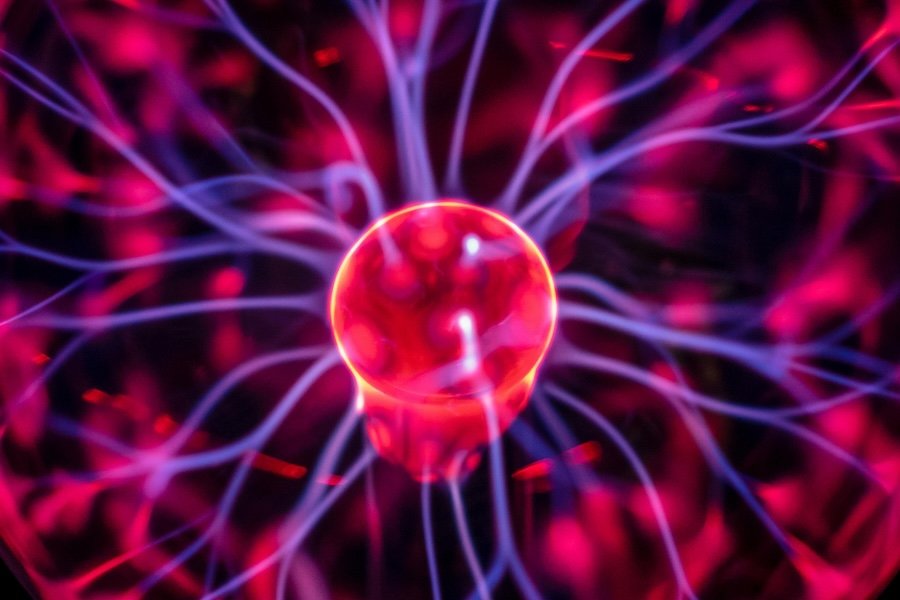
AI discovers new physics in plasma, the fourth state of matter, and scholars around the world are watching closely. Now, machine learning algorithms are discovering novel plasma characteristics that were utterly missed by decades of traditional simulations. This is not hype – it’s a paradigm change in our understanding of the most common form of observable matter in the universe.
And plasma accounts for about 99% of the visible universe. It ignites stars, lightning and fusion reactors. But plasma modeling has always been brutally tough. The plasma equations are nonlinear, chaotic and expensive to compute. Now AI is cutting through that complexity – and to be honest, the discoveries are actually startling even to the physicists doing the experiments.
How AI Discovers New Physics in Plasma Research
Traditional plasma physics uses magnetohydrodynamic (MHD) simulations solving fluid equations on millions of grid points. They are powerful but very slow One high-fidelity simulation can take weeks on supercomputers—weeks. These models also rely on embedded assumptions that restrict what they can fundamentally find. If it isn’t in the equation, it won’t be in the simulation.
AI finds new physics in plasma’s fourth stage by looking at the problem in an entirely new way. Machine learning models don’t start with preconceptions about what plasma *should* do. They learn directly from data, instead. In particular, neural networks trained on experimental data and simulation outputs uncover patterns that humans did not program into their models to begin with.
Leading approaches powering advances today include:
- Physics informed neural networks (PINNs) include established physical laws into its architecture but are still open to anomalies – the best of both worlds
- Graph neural networks for plasma particle interactions at scales existing approaches can’t reach
- Reinforcement learning agents can optimize plasma confinement on-the-fly in live fusion studies.
- Generative models forecast unknown plasma configurations and instabilities before they happen
Importantly, DeepMind’s collaboration with the Swiss Plasma Center demonstrated that AI can regulate the form of the plasma within a tokamak reactor. That work demonstrated that AI wasn’t just monitoring plasma, it was managing it in real time. And that conclusion really took me by surprise. I’ve been following a lot of AI-meets-physics research over the years.
At the same time, scientists at the Princeton Plasma Physics Laboratory are utilizing machine learning to examine diagnostic data from fusion experiments. Their models find plasma instability warning indications, or disruption precursors, faster than any human physicist could. That difference in speed is not trivial; it is the difference that changes what is experimentally possible.
Exotic Plasma Behaviors Traditional Simulations Miss
The point is that traditional simulations are limited by the equations they solve. Anything not covered by those equations stays hidden, not because it isn’t there, but because nobody created a door for it. When AI finds novel physics in plasma’s fourth state, it often finds phenomena that existing theories never predicted. That’s hardly a small footnote. That’s all there is to it.
Turbulent transport anomalies are one big field of discovery. Energy and particle transport in fusion devices is caused by plasma turbulence . Conventional models anticipated some transport rates with acceptable confidence. But the AI models trained on experimental data detected discrepancies repeatedly. Those differences suggested previously unknown micro-instabilities at scales between ion and electron gyroradii — a range that traditional techniques effectively skipped over.
Machine learning has also uncovered surprising similarities in plasma edge behavior. The plasma edge, where hot plasma touches the reactor wall, is notoriously difficult to simulate, even in perfect circumstances. AI systems analysing data from the ITER project have found edge localised mode (ELM) patterns which are not covered by any known theory. Fair warning: This is the kind of finding that sounds spectacular in a news release, but needs years of follow-up work to properly validate.
Other strange behaviors AI has uncovered:
- Non-Maxwellian velocity distributions surviving much longer than kinetic theory predicts
- Magnetic self-organization in turbulent plasma not generated by traditional MHD equations
- New pathways for cross-scale energy cascades to transmit energy between multiple spatial scales
- Anomalous resistivity spikes associated to various magnetic field configurations
So plasma physicists are updating their basic theories. And these are not modest tweaks around the edges – they show that our theoretical understanding of plasma has major blind spots. And those blind areas matter immensely for practical applications like fusion energy and space weather prediction. You can’t engineer around a problem you don’t aware exists.
Similar AI algorithms have been employed at NASA’s Goddard Space Flight Center on solar wind plasma data. Their simulations revealed links between the dynamics of the solar plasma and geomagnetic storms completely ignored by existing analysis techniques. I was shocked to see that solar plasma and fusion reactor research are separately coming up with remarkably comparable AI-driven conclusions — that parallel surprised me when I first went into it.
Methodology, Datasets, and the Reproducibility Challenge
To understand how AI may uncover novel physics in plasma, the fourth state of matter, we need to take a closer look at the process. And frankly, this is where the plot thickens – in ways that matter for anyone putting AI to work in high-stakes settings.
The plasma AI research data sources are classified into three groups:
- Experimental diagnostics – Thomson scattering, interferometry, spectroscopy and magnetic probe measurements on devices such as tokamaks and stellarators
- High- fidelity simulations – Gyrokinetic algorithms such as GENE and particle-in-cell simulations that produce synthetic training data
- Hybrid datasets – mixtures of experimental and simulated data (typically complemented with physics based limitations)
Below is a comparison of traditional simulation methods vs. AI-augmented methods, with respect to key metrics:
| Metric | Traditional MHD Simulation | AI-Augmented Analysis | Hybrid AI + Physics Models |
|---|---|---|---|
| Computation time | Days to weeks | Minutes to hours | Hours to days |
| Spatial resolution | Limited by grid size | Adaptive, data-driven | Multi-scale capable |
| Discovery potential | Constrained by equations | High (pattern-based) | Highest (guided discovery) |
| Interpretability | Full (equation-based) | Low (black box) | Moderate |
| Data requirements | Minimal | Very high | Moderate |
| Reproducibility | Excellent | Challenging | Improving |
The real kicker here is the “Low (black box)” interpretability rating for AI-augmented analysis. That’s the core tension of the whole field.
But repeatability is a big problem — and it’s not reported enough in the frantic press that this study usually generates. Deep learning models do not give explanations for why they have found a given behavior to be novel, which presents substantial challenges for other researchers trying to test findings independently. The challenges are in particular:
- Model opacity – Deep learning models do not explain why a specific action is identified as novel
- Data access – Most plasma experiments create private data that cannot be freely distributed
- Computational expense – Retraining large models is very costly in terms of GPU resources (think hundreds of thousands of dollars at scale)
- Hyperparameter sensitivity – Small changes in training setup lead to dramatically different results
So the plasma physics community is working on standard benchmarks. The International Atomic Energy Agency (IAEA) has begun to coordinate data-sharing programs dedicated to fusion research. The purpose of these efforts is to make AI-driven discoveries verifiable and trustworthy – which is, significantly, the only way this research achieves lasting legitimacy.
The repeatability barrier in plasma AI is virtually exactly the same as the problems in enterprise AI implementation. Whether in physics research or in commercial operations, organizations using AI for mission essential applications face the same challenges of validation, transparency, and trust. I’ve seen corporations skip this step and pay for it later. Don’t.
Real ROI: From Lab Discovery to Practical Impact
The practical value comes when you think about what really happens after AI finds new physics in the fourth stage of plasma. These are not just scholarly results, lying dormant in journals. These have direct, quantifiable consequences for fusion energy schedules, semiconductor fabrication and space weather prediction.
The most impact application is in fusion energy acceleration. AI is now part of every significant fusion effort in some form. The SPARC reactor project at MIT applies machine learning to enhance the performance of the plasma. AI insights into plasma instabilities could cut years off the road to commercial fusion power. That is billions of dollars of potential energy market worth, not in theory but in reality.
Another area with immediate rewards is semiconductor plasma processing. Plasma etching and deposition are two crucial processes in the semiconductor fabrication process. Improved AI models that more accurately predict plasma activity in processing chambers lead to improved yields and fewer faulty chips. A 1-2% gain in plasma process control provides massive ROI for semiconductor fabs who are already spending billions on equipment. I’ve heard a lot of AI-in-manufacturing claims over the years and this one delivers.
In a similar way, AI plasma findings directly contribute to space weather prediction. Events of solar plasma can destroy satellites, interrupt communications and imperil power grids. More realistic AI simulations of the Sun’s plasma dynamics allow for earlier and more accurate warnings. Thereby the industries reliant on satellite infrastructure – telecommunications, GPS-based logistics, financial trading – all gain in easily quantifiable ways.
The insights from plasma AI research for enterprise application are extensive:
- Start with domain expertise: The most successful plasma AI projects are the ones that combine machine learning engineers and experienced plasma physicists, not just one or the other
- Invest in data infrastructure: Good plasma data with good labels is worth more than a bigger model
- Develop interpretability tools: Researchers who can explain AI findings to hesitant peers accelerate uptake considerably
- Plan for validation: Allocate budget time and resources to independently verify AI-generated discoveries before acting on them
The Future of AI-Driven Plasma Science
Where does this field go from here? The trajectory indicates that AI finding new physics in the fourth stage of plasma will accelerate considerably in the next several years. Several converging developments make this likely—and worth watching.
There are foundational models for physics coming out right now. Just as huge language models have altered natural language processing, researchers are developing large models trained on several fields of physics. These models would allow knowledge to be transferred between plasma applications. A model trained on tokamak data could give insights applicable to astrophysical plasmas and vice versa. The possibilities for cross-pollination here are really fascinating.
AI is being embedded in real-time at a rapid clip. Currently, AI plasma analysis is generally performed post-experiment. But more and more AI systems will work during trials, altering parameters on the fly, depending on actual observations. This closed loop strategy can open up totally new experimental circumstances that human operators would never try. Not because they are afraid, but because the parameter space is too large to investigate manually.
And someday, quantum computing could give plasma AI a boost. Quantum computers will be brilliant at imitating quantum systems. At its most basic level, plasma is about quantum interactions between charged particles. Practical quantum benefits for plasma modeling are still years away – and anyone saying differently is overselling it – but early hybrid quantum-classical techniques show real potential.
There is also real promise for multi-agent AI systems. Imagine groups of specialized AI agents, instead of one giant model: one to analyze magnetic field data, one to analyze particle distributions, and a third to coordinate between them to find cross-domain patterns. That’s how human research teams truly work, but at machine speed. That’s a significant difference.
Plus, the open science movement is gaining traction in this field. More and more plasma research organizations are sharing their datasets, model architectures, and training processes. The U.S. Department of Energy’s Office of Science has financed various open data initiatives in the field of plasma physics. More data access will not only make AI-driven plasma discovery available to a wider range of researchers, but will also accelerate the verification the field desperately requires.
Others believe the major advancements will come from new AI architectures altogether. Current neural networks suffer from genuine limits in capturing physical symmetry and conservation rules. Novel designs tailored to physics applications could be much better at recognizing truly new events. The architecture question remains open
Conclusion
The narrative of how AI is discovering new physics in plasma, the fourth state of matter, is still unfolding. But the first chapters are outstanding. Machine learning models are uncovering novel plasma phenomena that have eluded standard simulations for decades — and these discoveries have real-world ramifications for fusion energy, semiconductor manufacturing and space weather prediction. I’ve done a lot of “AI changes everything” tales in the 10 years I’ve been doing this. This one got the reciepts.
Plasma AI is a captivating case study for technology leaders and enterprise decision makers. It demonstrates that the most value of AI is frequently not in automating existing operations, but in surfacing what we didn’t know we were missing. The technique issues — reproducibility, interpretability, data availability — are the same challenges faced by every enterprise trying to use AI at scale. Not unique to physics, in particular. They’re all-encompassing.
If this is relevant to your job, here are some concrete next steps:
- Follow the Research – Read articles from Princeton Plasma Physics Laboratory, MIT’s Plasma Science and Fusion Center and DeepMind’s physics partnerships
- Look at your own data – See if AI can find hidden insights in your organization’s scientific or operational data
- Support mixed techniques – The most successful plasma AI is a fusion of machine learning and domain expertise, not an either/or.
- Prioritize Reproducibility – Validate frameworks before applying AI to high-stakes findings / decisions
This isn’t just a headline about AI finding new physics in the fourth state of plasma. It’s evidence that we’re nearing an era where AI would augment human scientific capacity in ways that would have appeared preposterous a decade ago. The fourth state of matter is telling us something fundamental – and so worth listening to – about the fourth wave of computers.
FAQ
What is plasma, and why is it called the fourth state of matter?
Plasma is a superheated gas where atoms lose their electrons, creating a mix of charged particles — ions and free electrons — that behave in ways solid, liquid, and gas simply don’t. Scientists call it the fourth state of matter because it exists beyond those three familiar phases. You encounter plasma in lightning, neon signs, and the sun. Notably, it makes up the vast majority of visible matter in the universe, which makes understanding it somewhat important.
How exactly does AI discover new physics in plasma research?
AI discovers new physics in plasma’s fourth state by training machine learning models on experimental and simulation data, then letting those models surface patterns that traditional equations don’t predict. Specifically, techniques like physics-informed neural networks and graph neural networks spot subtle behaviors across massive datasets that human analysts would never flag manually. Human physicists then investigate these AI-flagged anomalies to determine whether they represent genuinely new physics — or a quirk in the training data. That verification step matters enormously.
What specific plasma discoveries has AI made so far?
AI has identified several previously unknown plasma phenomena, including anomalous turbulent transport mechanisms, unexpected self-organizing magnetic structures, and non-standard particle velocity distributions that persist longer than theory says they should. Furthermore, AI systems have discovered new precursor signals for plasma disruptions in fusion reactors. DeepMind’s work showed AI-controlled plasma shaping in a tokamak — a result that genuinely shifted what the community thought was possible. Each discovery challenges or extends existing theoretical models in ways that take years to fully unpack.
Can AI-discovered plasma physics be trusted and reproduced?
Reproducibility remains a significant challenge — and anyone who tells you otherwise is glossing over a real problem. However, the plasma physics community is actively addressing it. Standardized benchmarks, open datasets, and shared model architectures are improving verification. The IAEA and U.S. Department of Energy are funding data-sharing initiatives specifically to close this gap. Importantly, the most credible AI discoveries are those validated through independent experiments, not just computational reproduction on the same hardware.
How does AI in plasma research relate to fusion energy progress?
AI is speeding up fusion energy development in multiple concrete ways. It optimizes plasma confinement, predicts and prevents disruptions, and discovers new operating conditions that human researchers wouldn’t have known to look for. When AI discovers new physics in plasma’s fourth state, those insights directly improve reactor design and performance. Projects like ITER and SPARC rely heavily on AI-augmented analysis. Consequently, AI could realistically shorten the timeline to commercial fusion power by years — and in an energy context, years translate to enormous economic and environmental value.
What skills do researchers need to work in AI-driven plasma physics?
This field demands a genuine hybrid skill set, and there’s no shortcut around that. Researchers need strong foundations in plasma physics or a closely related discipline. Additionally, they need proficiency in machine learning frameworks like PyTorch or TensorFlow, because the tools matter as much as the concepts. Data engineering skills matter too, since plasma experiments generate enormous, messy datasets that don’t clean themselves. Nevertheless, the field is open to motivated learners from either background — the best teams combine both, rather than expecting one person to do everything.
References
Keep reading
Here are the latest posts from the blog.
Something weird is happening all across corporate America these days. AI Psychosis – The phenomena of firms reducing workers quicker than artificial intelligence can truly me…
IBM pledges $5B to open-source security AI efforts, and honestly, this is one of the largest corporate expenditures I’ve ever seen on software supply chain protection. This a…

The OpenClaw rogue AI safety concerns containment protocols 2026 debate is no longer speculative. It’s critical – and frankly, long overdue. OpenClaw, the open-source autonom…