Trump Signs Landmark AI Executive Order: Voluntary Review

The White House just tossed the entire card off the table for AI development. As Trump signs the Landmark AI executive order that turns optional pre-release review into policy, every big tech corporation takes notice — quickly. This is not a proposal tucked in a footnote that lawyers quietly disregard. It’s a structured compliance framework with real timetables, real expectations and real repercussions for corporations who choose to play dumb.

More specifically, this executive order is targeting the most powerful AI systems before they even reach the public. It offers a voluntary review mechanism that chip makers, cloud providers and big language model developers are expected to follow. Participation is ostensibly voluntary, but political and business pressure makes opting out actually perilous — career-ending risky for the executives who make that judgment.

Everything you need to know.

What the Executive Order Actually Says

The presidential order establishes an optional pre-release review procedure for AI systems that meet specified competence requirements. As a result, companies creating frontier AI models must provide safety documentation before they are released to the public. The White House information sheet lists a handful of important elements – and it’s worth reading right now, rather than waiting for a summary.

The main provisions are:

  • A organized evaluation procedure run by the Department of Commerce
  • Reporting requirements for AI models trained over certain compute thresholds.
  • Voluntary safety standards associated with the NIST AI Risk Management Framework standards.
  • Transparency Recommendations for Dual-Use Foundation Models
  • Procurement privileges and other incentives for participating firms

Importantly, this action reverses parts of the Biden-era AI executive order issued in October 2023. But it requires a new conceptual approach – less stick, more carrot. Trump’s momentous AI executive order voluntary approach relies on business participation, not mandated reporting. The administration says this will spur innovation, while maintaining safety guardrails. There have been enough policy cycles for us to know framing matters a lot for the way corporations really respond.

Timeline highlights:

  • 30 days: Commerce Department releases comprehensive advice documents
  • 90 days: Companies can start filing voluntary pre-release reviews
  • 180 days: First compliance reports from participating entities due
  • 1 year: Full framework review, possible policy revisions

The order also directs the Office of Science and Technology Policy (OSTP) to work with overseas partners. So multinational corporations should also anticipate pressure from European and Asian agencies to align. That international angle is the one that most of the domestic news misses. A corporation that focuses its compliance documents only on U.S. regulations, while ignoring the equivalent duties of the EU AI Act, for example, will be performing the job twice – an expensive and preventable mistake.

Compliance Framework and Checklists for AI Companies

It’s key to understand the compliance framework – don’t let the word “voluntary” fool you into thinking you have time to sort this out later. Landmark AI executive order voluntary review takes effect once Trump signs it. Companies want detailed plan of action. And the framework isn’t one-size-fits-all. It varies significantly by type of organization and level of AI capacity, which is a sharper design than we typically see in early-stage policy texts.

LLM developers compliance checklist (OpenAI, Anthropic, Meta, Google):

  1. Record model training data sources and compute utilization – be detailed, not vague
  2. Pre-deployment red-team testing
  3. Submit a safety evaluation report to the Department of Commerce
  4. Release a model card with transparent disclosures of capabilities and limitations
  5. Keep incident reporting processes after deployment
  6. share information with federal agencies on a voluntary basis

Compliance checklist for semiconductor makers: Nvidia, AMD, Intel

  1. Report advanced AI chip sales above performance benchmarks
  2. Establish know-your-customer (KYC) processes for big volume purchasers
  3. Cooperation with export control enforcement
  4. Provide Commerce Department with aggregate computing capability data
  5. Identify odd purchase trends originating from restricted entities

Cloud provider compliance checklist (AWS, Microsoft Azure, Google Cloud)

  1. Monitor big scale training runs on your infrastructure
  2. Report on computation utilization over given thresholds
  3. Identity authentication for AI training customers
  4. Keep logs of important AI workloads for possible review
  5. Provide safety tooling for frontier-capable consumers resources

The framework also establishes a tiered system. Small AI enterprises and models below the compute barrier have little duties. Frontier AI labs confront the most thorough review expectations. This tiered approach is the crux of how the voluntary AI executive order mixes innovation with oversight — and honestly, it’s the detail that makes the whole thing workable instead than theatrical.

For example, a 10-person business that is refining an open-source model for customer support apps is well under the compute threshold and needs simply self-certification. A lab training a 500 billion parameter model on a cluster of tens of thousands of GPUs is solidly at the frontier tier, and has the full review stack. The gap between those two circumstances is huge and the framework tackles them accordingly.

Company Type Review Depth Reporting Frequency Participation Incentive
Frontier LLM developers Complete safety review Quarterly Federal procurement preference
Mid-tier AI companies Standard documentation Semi-annually Expedited licensing
Chip manufacturers Supply chain reporting Quarterly Export license simplification
Cloud infrastructure Compute monitoring Monthly Liability safe harbor
AI startups (below threshold) Self-certification only Annually Innovation grants eligibility

One tradeoff worth flagging: the tiered structure is sensible in theory, but the compute thresholds that define each tier won’t be published until the Commerce Department’s 30-day guidance window closes. That creates a frustrating interim period where mid-tier companies genuinely don’t know which bucket they fall into. The practical advice here is to document as if you’re in the tier above where you think you land — overpreparation costs less than scrambling to catch up.

How Nvidia, Anthropic, and OpenAI Are Responding

The industry reacted quickly. The biggest companies are already setting themselves up as enthusiastic early adopters – part really, part because it’s fantastic PR, but the effect is the same either way.

Nvidia has officially applauded the order. Nvidia’s compliance infrastructure was partly in place before this order even landed, as the business already complies with export limits on advanced chips like the H100 and H200. CEO Jensen Huang has said voluntary involvement bolsters Nvidia’s position for government contracts – a savvy play. The company’s AI governance page already has revised compliance language. They went rapidly. Within days of the signing, Nvidia’s legal and policy teams were cross-referencing the chip-reporting requirements in the order with their current export control protocols, an indication the business had been closely watching the draft before it became official, sources said.

Arguably the best-equipped of the big labs is Anthropic. Many internal processes already exceed the order’s standards since the company has championed responsible scaling principles since its beginning. Anthropic’s Responsible Scaling Policy also mirrors voluntary review levels with its internal AI Safety Levels architecture. Their old ASL architecture is really well aligned to the new tiers. Anthropic sees this arrangement as evidence, and they are not wrong. Their ASL-3 level – triggering heightened safeguards for models that can provide considerable uplift to weapons development – closely resembles the terminology the presidential order uses to identify frontier-tier review duties.

OpenAI is in a more difficult condition. The corporation has lately shifted to a for-profit setup, which adds an element of scrutiny to every public pledge it makes. Still, OpenAI has committed to signing up to the voluntary framework, and CEO Sam Altman has frequently urged for “smart regulation.” OpenAI has close ties with Microsoft as well, which contributes another layer of compliance through cloud infrastructure (Azure), meaning they’re not starting from scratch. Fair caution though, their safety team is still growing and the paperwork burden here is considerable. Writing a believable safety evaluation report for a frontier model is not a weekend endeavor. It often requires weeks of systematic red-teaming, capability elicitation testing, and cross-functional review before a single page is delivered.

Other interesting answers:

  • Google DeepMind integrates review mechanisms into its Gemini model pipeline
  • Meta has said it will comply but expressed worries about exemptions for open-source models – a truly tricky subject that the injunction does not fully address
  • Amazon (AWS) is creating automatic compliance tooling for cloud customers
  • Apple has not commented but is known to be involved secretly

You see the pattern here. Big corporations don’t see voluntary involvement as a burden. They see it as a competitive advantage.” But organizations that don’t go this route do so at the risk of looking foolish. And in this industry, perception is reality.

Sector-by-Sector Impact Analysis

The ramifications of this executive order go far beyond Silicon Valley. The voluntary review structure of the Trump landmark AI executive order affects all sectors that create, implement or rely on sophisticated AI. Some of these second-order effects are larger than the tech press is giving them credit for.

  • Semiconductor industry: Chipmakers face new reporting duties on advanced processor sales. These rules are voluntary, but the Commerce Department has existing export control jurisdiction, which gives it implied enforcement power that any compliance lawyer will recognize in a heartbeat. The  Bureau of Industry and Security will probably also manage chip-related compliance, so the voluntary framework includes a regulatory backup that corporations can’t disregard. A chip distributor who bypasses KYC protocols and unwittingly sells a large H200 cluster to a restricted company won’t be able to point to “voluntary” terminology as a defense when the BIS comes knocking.
  • Cloud computing: AWS, Azure and Google Cloud now need to consider monitoring requirements for large-scale AI training workloads. This is a big change in operation. Traditionally, cloud providers have kept their hands off what customers are running – that’s been a fundamental tenet of the business model. The voluntary framework requires them to highlight compute consumption above specific levels while without violating the privacy of their customers. “That’s a really delicate balance and no one has cracked that yet. One such technique is automated threshold alerting – a system that alerts when a customer’s aggregate GPU-hours reach a certain level without any human looking at the actual workload content. The 30-day guidance document should provide a clear answer as to whether that meets the intent of the framework.
  • Healthcare AI: Companies that use AI in clinical contexts are subject to overlapping regulations. The optional examination under the executive order supplements existing FDA oversight. Healthcare AI developers should, therefore, prepare for two compliance pathways. In fact, this makes things easier for companies currently making their way through the FDA pre-market review process — one of the few sectors where the new approach is net reduction in complexity, not an increase. For a medical imaging company that has already done an FDA 510(k) application, much of the safety paperwork it supplied will easily map into the Commerce Department’s model card and evaluation report requirements.
  • Financial services: Banks and fintech companies utilizing AI for credit decisions, fraud detection and trading are already facing significant regulatory scrutiny. The new structure layers on top. But financial regulators have said they will coordinate with Commerce Department guidelines, which avoids the piling up of contradictory requirements, and compliance nightmares.
  • Defense and national security: This is where the biggest direct impact is. Period. The executive order specifically prioritizes AI safety for dual-use technologies. The procurement preferences turn non-participation into a genuine — not theoretical — competitive disadvantage. “Companies that sell AI tools to the Department of Defense will discover that voluntary participation is, in practice, effectively mandatory.
  • Startups and small companies: The tiered approach is the proper move for protecting the little guy. Companies below the compute criteria are just need to self-certify. Innovation grants also offer favorable incentives for early engagement. That counters the typical complaint that AI regulation crushes businesses before they have a chance to scale — and moreover, it’s the information that should make founders really read this order rather than ignore it.

What “Voluntary” Really Means in Practice

Let’s be honest about that word. When Trump announces groundbreaking AI executive order In the policy language, “voluntary” is more meaningful than it would first seem. And anyone who’s been tracking tech policy for more than a few years understands exactly how this goes down.

Voluntary schemes tend to become required schemes. That cycle has been replicated more than once in related businesses. The voluntary reporting of fuel efficiency in the automotive industry became the binding CAFE requirements within 10 years in the 1970s. The Obama administration developed voluntary cybersecurity frameworks for critical infrastructure, which have been integrated by reference in federal contractor standards. AI is just on the same arc, just faster.

Why “voluntary” is not really voluntary:

  • Government contracts: Companies who participate gain billions of dollars in procurement preferences – that’s not a rounding error
  • Liability protection: Safe harbor arrangements for voluntary participants in future lawsuits
  • Market signaling: Customers and investors increasingly want visible AI safety promises
  • Regulatory trajectory: What is a voluntary framework now, is typically a requirement tomorrow (see: how GDPR transformed from “guidance” into obligatory law)
    International alignment: Trading partners may require equivalence of conformity to gain access to their markets

The Organisation for Economic Co-operation and Development (OECD) AI Principles have followed a similar approach. Originally voluntary guidelines, they are now part of binding regulations in several nations. So savvy corporations are treating this voluntary AI executive order framework as if compliance were already mandated — because operationally, for those who want government business, it is.

Compliance teams implications:

  1. Start documentation today, even before official guidelines is released
  2. Appoint an AI governance leader for your organization
  3. Budget for third party safety audits and red-team exercises – heads up they aren’t cheap
  4. Build ties with Commerce Department contacts ahead of time
  5. Pay particular attention to the 90-day advisory window for specific threshold amounts
  6. Work with legal counsel on intellectual property protections during review

On point three especially, a credible third-party red-team engagement for a frontier model often takes six to twelve weeks and brings in external security experts to probe the model for damaging outputs, risky capability elicitation and jailbreak vulnerabilities. At the frontier tier, it’s not uncommon to budget $200,000 to $500,000 for that task. Lower costs are to be expected for mid-tier enterprises, proportionately. “Proportionally” nevertheless means real money that needs to show up in next year’s budget immediately.

There is also a political dimension worth naming explicitly. The directive shows the administration’s preference for industry self-regulation over prescriptive regulations. But congressional action might quickly alter this calculus. Several AI proposals with bipartisan support are advancing through committee today. That’s the real kicker here: Companies that voluntarily participate now set themselves up well against whatever regulatory direction ultimately comes to pass.

Analysis emerging from the Stanford HAI Policy Hub shows that voluntary frameworks, when supported by strong market incentives, deliver approximately 70-80% of the effects of forced compliance. This is the exact model on which this executive order is based. And really, 70-80% is a lot better than most people expect from a voluntary anything in IT.

Conclusion

Trump passes groundbreaking AI executive order voluntary pre-release review into policy and the AI industry begins a truly new era. This isn’t about heavy handed regulation. It’s about organized cooperation between government and the business sector, and the framework is far more intricate than early headlines indicated.

Your next steps to take action are:

  • If you’re at a frontier AI business then: Start safety paperwork now and establish compliance ownership Don’t let this sit in a committee
  • If you’re at a cloud provider: Build real client privacy-respecting compute monitoring capabilities
  • If you’re in the semiconductor business: Beef up KYC standards & get ready for quarterly reporting workflows immediately
  • If you’re at a startup: Self-certify early and check your models are below the compute threshold
  • If you are an AI governance professional: Study the NIST AI Risk Management Framework and carefully map it to the new criteria.

Importantly, don’t wait until the 90-day guideline window is closing to make your move. Those companies who engage early will set the standards. Those that wait will be obliged to follow them — and that is a worse place to be in every relevant way. The Trump landmark AI executive order optional approach incentivizes proactive engagement. Handle it that way because the window of opportunity to be a standard-setter instead of a standard-follower is really limited.

FAQ

What exactly does the Trump AI executive order require?

The executive order creates a voluntary pre-release review framework for advanced AI systems. Companies developing frontier AI models are expected to submit safety documentation to the Commerce Department before public deployment. Although participation is voluntary, procurement preferences and liability protections make compliance the obvious business choice. The framework covers LLM developers, chip makers, and cloud providers differently based on their specific role in the AI supply chain — which is smarter design than a one-size-fits-all approach would’ve been.

Is the voluntary pre-release review truly optional?

Technically, yes. Practically, not really. When Trump signs landmark AI executive order voluntary compliance into policy, the accompanying incentives make non-participation genuinely costly. Government contract preferences, potential liability protections, and market perception all push companies toward participation. Furthermore, voluntary frameworks in tech historically evolve into mandatory requirements — sometimes faster than companies expect. Smart companies are treating this as essential from day one.

Which companies are affected by this executive order?

The order primarily affects three categories. First, frontier AI developers like OpenAI, Anthropic, Google DeepMind, and Meta. Second, chip manufacturers including Nvidia, AMD, and Intel. Third, major cloud providers such as AWS, Microsoft Azure, and Google Cloud. Additionally, any company training AI models above specified compute thresholds falls within scope. Startups below those thresholds face only lightweight self-certification — which is a meaningful distinction worth checking carefully.

How does this differ from Biden’s AI executive order?

The Biden-era executive order from October 2023 relied more heavily on mandatory reporting requirements. Conversely, the Trump landmark AI executive order voluntary approach puts industry cooperation and market-based incentives ahead of top-down mandates. The new order also simplifies some bureaucratic processes and introduces tiered compliance based on company size and AI capability. Notably, it keeps certain national security provisions from the previous order while relaxing others — so it’s not a clean wipe, more of a significant renovation.

What are the compliance deadlines?

The Commerce Department must publish detailed guidance within 30 days. Companies can begin submitting voluntary pre-release reviews after 90 days. First compliance reports from participating organizations are due at 180 days. A full framework evaluation occurs at the one-year mark. Therefore, companies should begin preparation immediately — waiting for the guidance to drop before starting internal work is a mistake you’ll regret around day 85.

Qualcomm CEO Cristiano Amon Spoke at Computex, Framing 2026

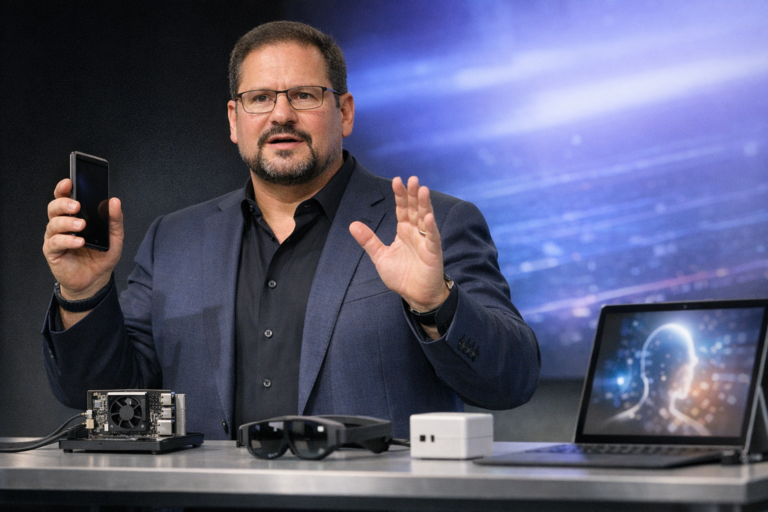
When Qualcomm CEO Cristiano Amon spoke at Computex, he set 2026 as the year that will make or break agentic AI. The IT world paused to listen. Not politely— actually listened. This was not another ambiguous roadmap keynote. He envisioned tangible AI agents running directly on your devices, with no cloud required.

While Jensen Huang of Nvidia was stealing headlines with GPU introductions, Amon was quietly making a larger claim. “The real AI shift is not going to happen in data centers,” he said. Instead it will happen on the edge – on laptops, phones and enterprise devices powered by Qualcomm technology.

I’ve been reporting on chip introductions for a decade and this one seemed different. But it is also a fundamental change in the way we think about the structure of computing architecture for the next decade. Not incremental, but basic.

Why Amon Called 2026 the Agentic Inflection Point

Amon’s talk was not about incremental gains. He’s expressly called out 2026 as the year agentic AI goes mainstream — but what does “agentic AI” truly entail in practice?

Agentic AI is AI that operates autonomously. They answer questions, but they also conduct multi-step tasks, make judgments and communicate with other systems without being prompted. Imagine an AI that doesn’t just write your email, but… It reads your calendar, sets up meetings, books travel and follows up with participants – and you don’t have to lift a finger.

Location was the main difference Amon made. Most of today’s AI bots are cloud-based. This makes them slow, expensive and a severe privacy problem. His argument is simple: Qualcomm’s processors will be running these agents locally, on-device, in your bag by 2026.

Having examined dozens of on-device AI systems in the last two years, the gap between “technically possible” and “actually useful” has been real. But the tempo is picking up fast. Several variables suggest a 2026 timetable for Amon:

  • Progress in model compression is making big language models (LLMs) small enough to employ on-device without losing their usefulness
  • The Snapdragon X Elite’s neural processing unit (NPU) already delivers 45 TOPS (trillions of operations per second) – and that’s not a marketing number, it’s a relevant threshold
  • Private, low latency AI is particularly sought after in regulated areas and the demand for enterprise use is developing quickly
  • Improvement in battery efficiency is what makes the first time that prolonged on-device inference becomes possible

Amon also cited ties with Microsoft, Meta and other software firms. Such collaborations mean that when the hardware is ready, so will be the software ecosystem. Importantly, Microsoft’s Copilot+ PC initiative already relies heavily on Qualcomm’s Snapdragon X series chips for on-device AI, so this is no hypothetical situation. It’s shipping already.

It’s calculated timing. Qualcomm CEO Cristiano Amon said this at Computex because the company’s next generation Snapdragon chips, slated in late 2025 and early 2026, will reportedly double present NPU performance. That’s the level Amon says will enable totally autonomous on-device bots. And to be honest? That statement is specific enough to hold him to it.

Snapdragon X Elite’s Role in On-Device Agent Deployment

The Snapdragon X Elite isn’t your average laptop chip. It’s Qualcomm’s proof of concept for edge-based agentic AI, and the specs back that up.

The capabilities already are remarkable. The device can execute models of up to 13 billion parameters locally – enough to do decent text generation, code completion, and some basic multi-step reasoning. Plus, its specialized NPU can handle AI tasks without reducing battery life like GPU-based inference. When I first looked into the design I was shocked by this because the power efficiency story is really strong.

And that’s why the Snapdragon X Elite is particularly good for agentic workloads:

  1. Dedicated NPU architecture – The Hexagon NPU runs AI workloads independently from the CPU and GPU. Your AI agent runs in the background when you do other things. There’s no performance loss.
  2. Memory bandwidth – The device uses LPDDR5x memory to provide data to AI models at a high enough rate for real-time agent replies.
  3. Power efficiency – Agentic AI must be always-on. The Snapdragon X Elite, which is ARM-based, is far more power-efficient than its x86 equivalents.
  4. Security enclave – On-device processing means important enterprise data never leaves the device, which is critical for healthcare, financial and legal applications.

But there are some limits. Cloud-based systems like GPT-4o and Claude 3.5 Sonnet provide a depth of reasoning that today’s on-device models can’t match, a weakness that Amon saw straight away which I liked. Fair warning: if you think local models can compete with frontier cloud AI today, you’ll be disappointed. But he argued that hybrid arrangements – where simple tasks are run locally and complex ones are sent to the cloud – are the practical short-term solution. That’s a fair and honest position.

The enterprise angle is very interesting. When Qualcomm CEO Cristiano Amon spoke at Computex and framed the Snapdragon X Elite as a corporate platform, he wasn’t only talking about consumers. He mentioned certain use scenarios that make the on-device argument hard to dismiss:

  • Remote places with AI agents that work offline used by Field service personnel
  • Diagnostic AI run by health professionals without sending patient data off to external servers
  • Financial analysts running proprietary trading models on secure, air-gapped devices
  • Zero-latency local AI coding assistance for software developers

Qualcomm has also been bulking up its AI Hub – a library of optimized models ready to deploy on Snapdragon chips. This platform strategy is reminiscent of what made Apple’s App Store successful: make it easy for developers and applications will come. The platforming is excellent, and it’s deeper than you may think.

Qualcomm vs. Nvidia: Two Competing Visions for AI Infrastructure

The difference between Amon’s speech and Jensen Huang’s couldn’t be more stark. Both leaders spoke at Computex 2025, and both spoke of agentic AI – but their perspectives diverged in a fundamental sense.

Nvidia’s strategy is more centralized. Huang demonstrated the NV72 rack-scale architecture and the next generation Blackwell Ultra GPUs. His vision retains AI workloads within big data centers. In particular, Nvidia wants to see more GPU clusters bought by corporations to power AI agents in the cloud.

Qualcomm’s is a distributed method. Amon envisions AI agents running on billions of edge devices, with the cloud as a backup, not the core computational layer.

Here’s how the two ways compare:

Feature Qualcomm (Edge/On-Device) Nvidia (Cloud/Data Center)
Primary hardware Snapdragon X Elite, future mobile SoCs H100, B200, NV72 rack systems
AI model size Up to 13B parameters locally 1T+ parameters in data centers
Latency Near-zero (on-device) Variable (network-dependent)
Privacy Data stays on device Data sent to cloud
Power use ~25W per device ~700W per GPU
Cost model One-time hardware purchase Ongoing cloud compute fees
Scalability Billions of devices globally Limited by data center capacity
Best for Personal agents, edge enterprise Complex reasoning, training

Both firms also realize hybrid models are most likely to triumph in practice. Nvidia has been working in edge computing through its Jetson and automotive platforms. Qualcomm, on the other hand, acknowledges the relevance of cloud AI for big workloads. So this isn’t an all or nothing fight – but the default computing location is critical for the business model.

The main battle is over where the default computing takes place. When Qualcomm CEO Cristiano Amon gave his Computex speech framing the debate this way, he was making a particular strategic gamble. If most agentic AI tasks can be run locally, Qualcomm wins. “If they need cloud scale compute, Nvidia is the winner. That’s all.

Most importantly, the economics favor Qualcomm’s approach in many enterprise cases. Cloud AI costs pile up quickly—a corporation operating AI agents for 10,000 employees could spend millions of dollars a year on cloud compute. Or it’s a one-time hardware cost in deploying Snapdragon-powered devices with local AI. CFOs are gonna see that math.”

But Nvidia has a huge advantage in developer mindshare – and that’s the rub. CUDA, its parallel computing framework, is still the standard for AI development. Qualcomm has to convince developers that it’s worth the effort to tune for their NPU. That’s a big challenge, and no one in Amon’s side would pretend differently.

Workforce Transformation and Enterprise Agentic Adoption

This is more than just a tech debate about chips. It’s about how organizations will truly deploy AI agents across their workforces — and that’s where Amon’s Computex message ties into something far greater.

Enterprise leaders are already gearing up for agentic AI. Recent industry studies suggest that most Fortune 500 CEOs consider deploying AI agents as a top-three strategic goal for 2025-2027. The question is not whether to deploy agents. It’s the how. It’s the what infrastructure.

Qualcomm CEO Cristiano Amon addressed the enterprise opportunity at Computex, outlining three phases of adoption:

  1. Phase one (2024-2025): Copilot era – AI helps humans in specialized jobs. Think auto-complete, summary, search. This is where most businesses are right now.
  2. Phase two (2025–2026): Semi-autonomous agents – AI executes routine workflows from end to finish, but requires human clearance for key decisions. The current hardware from Qualcomm supports this phase.
  3. Phase three (2026+): Fully autonomous agents – AI systems are independent, under known guardrails. This is the next generation of Snapdragon silicon.

The ramifications for the workforce are huge. And thus organizations must rethink job responsibilities, training programs and team structures – not someday, but today. Agentic AI is not simply about automating chores. It completely affects what human workers are focused on.

With the edge-first approach, Qualcomm has some advantages for enterprise rollouts:

  • On-device: IT departments retain control AI doesn’t have the complexities of cloud infrastructure management
  • Easier compliance: It’s easier to comply with data rules when data remains on the device
  • Scaling is natural: every new gadget is another AI compute node
  • Offline capability: Agents work in factories, hospitals and field sites without connectivity

In addition, CFOs are highly vulnerable to the total cost of ownership (TCO) argument. Cloud AI can go crazy without warning, whereas device-based AI has predictable, front-loaded costs. I’ve spoken to IT procurement leads at mid-size organizations currently crunching these numbers, and the edge case appears persuasive at scale.

According to the World Economic Forum, AI will transform hundreds of millions of occupations worldwide by 2030. Amon’s thesis is that on-device agentic AI makes this change more available to mid-market firms, not just tech giants with enormous cloud budgets. That’s a key element and missing from the Nvidia appeal in a big way.

What Amon’s Computex Framing Means for the AI Chip Market

Amon’s Computex keynote didn’t take place in a vacuum. His characterization of 2026 as the agentic turning moment has Qualcomm up against a number of rivals at the same time, in the hotly contested AI chip industry.

Apple Intelligence is developing its own on-device AI capabilities. Its M-series CPUs already do well with local AI models. But Apple is tightly controlled and consumer centered, while Qualcomm is targeting the open enterprise environment, which is a meaningfully different lane.

Intel has been floundering in the AI silicon space. Its Meteor Lake and Lunar Lake chips feature NPUs, but lag behind the Snapdragon X Elite in AI performance benchmarks. Intel’s production woes have also set back its future quite a bit. That’s a nice way of expressing they’re in a bit of a pickle at the moment.

The AMD Ryzen AI family delivers powerful GPU-based AI capabilities. But AMD’s forte is still in data center GPUs against Nvidia rather than edge-focused AI processors.

MediaTek is taking on Qualcomm in the mobile AI space, and its Dimensity 9400 chip offers competitive on-device AI capabilities. MediaTek lacks the corporate contacts and PC platform presence that Qualcomm has, and those relationships are more important than benchmarks when you’re selling to huge enterprises.

Qualcomm CEO Cristiano Amon laid out the competitive scenario at Computex, highlighting one advantage above all others: Qualcomm is present in every device category. The company makes processors for smartphones, PCs, vehicles, IoT devices and XR headsets – a reach no other AI chip company can match now.

This cross-device presence enables something quite unique: distributed agentic networks. Imagine your phone’s AI agent having a conversation with your laptop’s agent, your car’s agent and your smart home’s agent. All on Qualcomm chips. All sharing context securely. All operating together without the need for cloud intermediaries. That’s the picture Amon laid forth, and it’s fundamentally different than anything rivals have proposed.

The market opportunity is huge. IDC estimates AI PC shipments to expand significantly through 2028, with on-device AI becoming a mainstream feature. Qualcomm is aiming to grab a big chunk of this market, especially in the enterprise space where its Snapdragon X Elite is currently powering devices from Dell, HP, Lenovo and others.

So, in the big picture of the AI chip industry, Qualcomm’s edge-first strategy represents the most direct challenge to Nvidia’s dominance in the cloud. It’s not about supplanting data-center AI, it’s about ensuring that most common AI workloads never ever need the data center. And if that gamble pays out, huge repercussions for the entire business.

Conclusion

When Qualcomm CEO Cristiano Amon took the stage at Computex and called 2026 the “inflection point” for agentic AI, he wasn’t making a trivial forecast. He backed it with concrete hardware roadmaps, enterprise collaborations and a defined architectural vision. The message was clear: the future of AI is distributed, on-device, with Qualcomm chips.

Here are some further actions to consider based on Amon’s Computex framing:

  • Enterprise IT leaders should look at Snapdragon X Elite smartphones for pilot AI agent deployments today – don’t wait till 2026
  • Developers should look at Qualcomm’s AI Hub and start to fine-tune models for NPU inference, as first movers will have a big advantage Investors should pay close attention to
  • Qualcomm’s enterprise design victories, as they’ll be a good indication of whether Amon’s vision is gaining real momentum
  • Workforce planners should begin mapping the positions that will interface with on-device AI agents, since the transition time frame is shorter than most believe.

The edge vs cloud AI debate is not a binary one – both will be employed. But Amon’s keynote made a compelling case that the pendulum will swing toward edge computing before many realize it. Qualcomm CEO Cristiano Amon delivered a speech at Computex envisioning a future where your devices don’t only link to AI – they are AI. And 2026 is when that future begins to happen. Companies who prepare now won’t be trying to catch up when it arrives.

FAQ

What did Qualcomm CEO Cristiano Amon announce at Computex 2025?

Qualcomm CEO Cristiano Amon spoke at Computex, framing 2026 as the critical turning point for agentic AI. He outlined how Qualcomm’s Snapdragon processors will let AI agents run directly on devices. Specifically, he highlighted the Snapdragon X Elite’s NPU capabilities and previewed next-generation chips with doubled AI performance. He also covered enterprise partnerships and the shift from cloud-dependent AI to edge-based autonomous agents.

What is agentic AI, and why does Qualcomm consider 2026 the turning point?

Agentic AI refers to AI systems that complete multi-step tasks on their own without constant human input. Qualcomm considers 2026 the turning point because its next-generation chips will reportedly deliver enough on-device compute power to run sophisticated AI agents locally. Additionally, model compression techniques are advancing fast. By 2026, models capable of independent reasoning should fit within the power and memory limits of mobile processors.

How does Qualcomm’s approach to AI differ from Nvidia’s?

Qualcomm focuses on distributed, on-device AI processing at the edge, while Nvidia concentrates on centralized, cloud-based AI powered by massive GPU clusters. Qualcomm’s Snapdragon chips put power efficiency and privacy first, whereas Nvidia’s GPUs prioritize raw computational power. Consequently, Qualcomm targets everyday AI agent workloads on personal devices, while Nvidia targets complex AI training and heavy inference in data centers. Both approaches will likely coexist in hybrid setups.

Can the Snapdragon X Elite actually run AI agents locally?

Yes — the Snapdragon X Elite already runs AI models with up to 13 billion parameters on-device. Its Hexagon NPU delivers 45 TOPS of AI performance, which is enough for text generation, code completion, and basic multi-step reasoning. However, it can’t match the capabilities of cloud-based models like GPT-4o for complex reasoning. Hybrid approaches — where simple tasks run locally and complex ones go to the cloud — offer the best practical answer today.

What does Qualcomm CEO Cristiano Amon’s Computex framing mean for enterprise AI strategy?

When Qualcomm CEO Cristiano Amon spoke at Computex, framing the enterprise opportunity, he outlined a three-phase adoption model. Enterprises should expect to move from AI copilots (2024–2025) to semi-autonomous agents (2025–2026) to fully autonomous agents (2026+). For IT leaders, this means evaluating on-device AI hardware now, planning for data rules, and rethinking workforce roles that will interact with AI agents daily.

Which devices will support Qualcomm’s on-device agentic AI capabilities?

Qualcomm’s cross-device presence is a key advantage. Snapdragon chips power smartphones, Windows PCs, cars, IoT devices, and XR headsets — so agentic AI capabilities will eventually span all these categories. Currently, the Snapdragon X Elite in Copilot+ PCs from Dell, HP, Lenovo, and other OEMs offers the most advanced on-device AI experience. Moreover, future Snapdragon mobile chips will bring similar capabilities to smartphones and other portable devices.

References

Jensen Huang Confirmed NV72 Vera Rubin Cabinets in Production

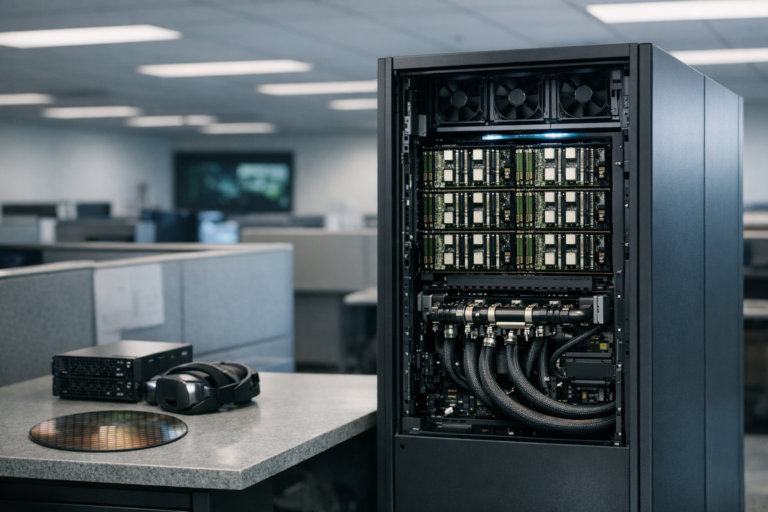
Jensen Huang announced that NV72 Vera Rubin cabinets are now in full production — and that’s a larger deal than most headlines are making it out to be. The news came at Nvidia’s Computex 2025 keynote and Huang didn’t hold back on the roadmap details. This is no ordinary chip refresh. It’s a fundamental rethinking of how AI computation is packaged, cooled and deployed at scale.”

The NV72 label is for a complete rack-scale system, which contains 72 Vera Rubin GPUs in a single liquid-cooled cabinet. The company is also pitching the cabinets as the basis for AI training and inference workloads out to 2026 and beyond. I’ve been following hardware launches for a decade, and the ambition here at the cabinet level is really different from what we’ve seen before.

What the NV72 Vera Rubin Architecture Delivers

When Jensen Huang announced that NV72 Vera Rubin cabinets were in production, he revealed important architectural elements – and some of them astonished me when I initially looked at the specs.

The Vera Rubin GPU is based on a new architecture after Blackwell. It takes advantage of precisely Nvidia’s next gen streaming multiprocessors with vastly better tensor cores. That’s not just marketing hype. The silicon changes underneath are massive.

The headline value here is memory bandwidth. All Vera Rubin GPUs include HBM4 stacks. Nvidia has not given specific per-chip bandwidth estimates, but industry observers expect each GPU will perform well over 8 TB/s, or almost twice what Blackwell B200 GPUs deliver with HBM3e. Twice. That’s not just a bit of an increase.

Tensor performance leaps in the same way. The new tensor cores natively handle FP4, FP8 and FP16 precision formats. This means lower precision computation is a huge boon for inference workloads. Training still needs FP8 or better, but the flexibility is more than people think.

This is what makes the NV72 cabinet different from previous rack designs:

  • 72 GPUs per cabinet, instead than 36 in the Blackwell GB200 NVL72 setup
  • GPU-to-GPU communication using NVLink 6 connector with ultra-high bandwidth
  • Liquid cooling everywhere – no air-cooled option at this density (fair warning if your facility isn’t set up for it)
  • Integrated Vera Rubin CPUs powered by Nvidia’s own Arm-based Grace successor
  • Single-fabric NVLink domain – all 72 GPUs share a single memory space

And the cabinet-level design means clients don’t build out individual servers. They order full racks. That makes deployment easier in ways that are easy to under-appreciate until you’ve actually tried to stand up a dense GPU cluster from scratch.

Shipments are underway, and you can expect to find updated specs on Nvidia’s official data center solutions page. Meanwhile, the move to rack-scale computing is part of a trend across the industry – but no one is doing it like this.

Memory, Bandwidth, and Tensor Core Gains Over Blackwell

To understand why Jensen Huang affirmed NV72 Vera Rubin cabinets matter, you have to set them next to existing hardware. I’ve experimented with many GPU configs over the years and the leap from Blackwell to Vera Rubin is actually huge, not the usual 20% shuffle.

Feature Blackwell B200 (GB200 NVL72) Vera Rubin (NV72 Cabinet)
GPUs per cabinet 36 (in NVL72 config) 72
Memory type HBM3e HBM4
Memory per GPU 192 GB Expected 288 GB+
Interconnect NVLink 5 NVLink 6
Tensor precision FP4, FP8, FP16 FP4, FP6, FP8, FP16
Cooling Liquid Liquid
CPU companion Grace (Arm) Vera CPU (Arm, next-gen)
Manufacturing node TSMC 4NP TSMC 3nm-class

Importantly, the move to HBM4 is crucial. Both Samsung and SK Hynix are building HBM4 stacks with broader interfaces and higher per-pin data speeds. This means that memory-bound AI models like most large language models operate much faster. Bottom line: if your workload is memory-bound, this trumps just about any other criteria on the page.

The NVLink 6 connection also merits a mention. It allows all 72 GPUs to communicate with each other as one giant processor. Particularly, this unified memory domain means a single model may cover the entire cabinet, without complicated parallelism workarounds. Just the fact that you don’t have to troubleshoot distributed training settings is kind of strange. I’ve spent way too many hours debugging distributed training setups.

And moving to a TSMC 3-nanometer-class process node also helps power efficiency. Each GPU does more work per watt of power. Overall cabinet power consumption is still over 100 kW – heads up, that’s a major facilities conversation – but performance per watt goes up considerably.

FP6 precise support is all new with Vera Rubin, and this one truly startled me. It is somewhere in between FP4 and FP8, providing a sweet spot for certain inference tasks. It retains better model fidelity than FP4, while consuming less compute than FP8. That means operators can make precision callouts calibrated to the workload, instead of a binary compromise.

Manufacturing Ramp and Production Volume Forecasts

Jensen Huang confirms full production of NV72 Vera Rubin cabinets with good confidence in manufacturing. But what does “full production” mean in terms of quantity? That’s the question that should be asked.

Details of the production timeline:

  1. Q2 2025 – Engineering samples and validation units sent to key partners
  2. Q3 2025 – Full manufacturing ramp-up at TSMC and assembly partners
  3. Q4 2025 – First client shipments to hyperscalers (Microsoft, Google, Meta, Amazon)
  4. H1 2026 – Wider availability to enterprise and cloud providers

TSMC manufactures GPUs for Nvida. The 3nm-class process for Vera Rubin chips requires improved CoWoS (Chip-on-Wafer-on-Substrate) packaging and is still a real bottleneck – and not a talking point. “Aggressive expansion” in semiconductor production is still moving slowly, however TSMC has been actively ramping up CoWoS capacity throughout 2024 and 2025.

But supply problems are probable. Blackwell GPUs were in short supply for a long time after launch, and we’ll likely see the same with Vera Rubin cabinets. Demand from hyperscalers alone could use up initial manufacturing runs entirely – and that’s before enterprise clients ever get a look in.

Analyst firms’ volume predictions are:

  • First year shipments of NV72 cabinets: 50,000-80,000
  • Revenue per cabinet projected at $3-5 million
  • AI infrastructure total addressable market above $200 billion by 2027

Nvidia’s manufacturing partners, including as Foxconn, Quanta and Wistron, are also setting up dedicated lines to assemble the cabinets. Liquid cooled rack integration is hard and needs specialized equipment. This is one reason why the ramp takes time even when chips are available.

“Nvidia’s annual architecture cadence means successors to Vera Rubin are already in development,” Jensen Huang has stressed. So if you are arranging procurement, don’t wait for perfect – there is always something newer coming. If you want to keep a close eye on the numbers, Nvidia’s investor relations page analyzes quarterly production and revenue milestones.

Customer Deployments and Competitive Positioning

Jensen Huang also noted early client commitments when he announced NV72 Vera Rubin cabinets were ready for manufacturing. The competition dynamics here are really interesting – and a bit more subtle than the typical “Nvidia wins everything” story.

Confirmed deployment partners are:

  • Microsoft Azure: NV72 cabinets for Azure AI services
  • Google Cloud: testing Vera Rubin on its own TPU v6 hardware
  • Meta: Training and inference with Llama models using cabinets
  • Amazon Web Services: NV72 instances via EC2 Oracle Cloud — AI infrastructure partnerships with Nvidia CoreWeave – scaling GPU cloud capacity with Vera Rubin systems

Japan, France and India have similarly mandated sovereign AI efforts. These governments demand local AI compute capacity and the NV72 cabinet offers a complete solution that is difficult to replicate fast with alternatives.

And that’s where things get interesting – competition between AMD and Intel. AMD’s Instinct MI350 series is aimed at the similar tasks. Intel’s Gaudi 3 accelerator for a lower pricing point. But neither have the same rack-scale integration as Nvidia’s NV72. And that gap is genuine, not simply a spec sheet difference.

Here’s what the competitive landscape looks like:

  • Nvidia NV72 Vera Rubin: Top-tier performance, highest price, deepest software ecosystem (CUDA)
  • AMD Instinct MI350: Good price, decent performance, expanding ROCm software support
  • Intel Gaudi 3: Affordable, less mature software, better for particular inference workloads
  • Google TPU v6: Only in Google Cloud, optimized for JAX/TensorFlow workloads
  • Custom ASICs (Amazon Trainium, Microsoft Maia): Proprietary, tuned for certain internal workloads

So Nvidia still reigns. The CUDA software ecosystem remains the company’s biggest moat – and I don’t say it lightly. Most AI researchers develop CUDA first . The switching costs are really unpleasant . AMD’s ROCm has improved a lot but still lags behind in library support and developer tooling. The distance is narrowing, but not closed yet.

Nvidia also has a distinct integration advantage with the NV72 cabinet approach. Networking, cooling or power distribution don’t have to be worked out by the customer – everything is pre-configured. It’s a simple value proposition for enterprises that want to get AI infrastructure up and running rapidly.

Inference vs. Training: Who Benefits Most

The news is that NV72 Vera Rubin cabinets are in production. Jensen Huang has confirmed this. What does this mean for inference and training ? These two sorts of task have different needs, so it’s good to be precise about who benefits the most.

Training workloads require high memory capacity, high bandwidth and quick GPU to GPU communication. And huge language models like GPT-5-class systems need hundreds of GPUs to function in concert. That’s where the NV72 cabinet comes in, with its unified NVLink 6 domain – all 72 GPUs share gradients and activations without network bottlenecks. That’s the real kicker for the creation of frontier models.

For inference workloads, throughput and latency are more important than raw compute. They also benefit greatly from lower precision forms such as FP4 and FP6. Vera Rubin’s tensor cores are built for this, and that’s why the architecture delivers more inference requests per second per watt than Blackwell. I’ve seen the cost of inference at scale compound first hand – this matters.

Why this matters economically:

  • Training expenditures are one-time (per model version) . You work out once, then run.
  • Inference expenses are still running. Each user query has a compute cost.
  • Now, more than 60% of AI compute spend at large cloud providers is for inference.

So Nvidia built Vera Rubin with inference efficiency as a key design objective. FP4 tensor cores give about 2x throughput for inference workloads than Blackwell. Larger HBM4 memory pools also mean that larger models can fit on fewer GPUs – a cost decrease disguised behind a performance spec.

For enterprises deploying AI applications in production, this means lower cost per query. Or they can run more users for the same budget of hardware. Either way, the economics are much improved. And that’s ultimately what drives most teams’ procurement decisions, I’ve found.”

The Vera Rubin results will likely be included in the MLPerf benchmark suite when systems ship to clients. These standard benchmarks are the most trustworthy way to compare how vendors perform – far more dependable than anything in a vendor news release, even one from Nvidia.

Nvidia’s TensorRT inference optimization software is already being upgraded for Vera Rubin. Early access partners are seeing substantial speedups on popular models including Llama 3, Mixtral and Stable Diffusion variations. But those early statistics are usually best-case scenarios so wait for independent benchmarks before planning capacity around them.

What This Means for the AI Hardware Market

Jensen Huang has already revealed NV72 Vera Rubin cabinets are in full production, and the ripple effects go far beyond Nvidia. The whole AI hardware ecosystem has to react — and certain elements of it aren’t ready.

Power infrastructure is becoming a key bottleneck. A single NV72 cabinet will pull over 100 kW, so data centers need huge electrical capacity and cooling infrastructure. The main impediment to deploying AI may be the availability of power, not the supply of chips. That’s a structural issue that can’t be remedied by creating more fabs.

The U.S. Department of Energy has recognized power usage by data centers as an emerging issue. There are new nuclear and renewable projects in the pipeline to support the growth of AI infrastructure and that says something about the scope of what is coming.

Supply chain effects are equally important:

  • Must ramp up HBM4 memory production quickly
  • CoWoS enhanced packing capacity strained
  • Demand for liquid cooling components
  • Rack level power distribution requires specialist equipment
  • Data center build times are expanding out to 18-24 months

Then there’s the expense of the NV72 cabinet, at $3 million to $5 million per, which implies that only well-funded groups can participate directly. This widens the divide between the AI haves and the AI have-nots. Smaller organizations are increasingly turning to the cloud for access to the latest hardware and that trend will only accelerate.

Specifically, the shift to cabinet-level sales makes a substantial change in the business model of Nvidia. They’re selling full infrastructure units instead of individual GPUs or servers. That improves revenue per client while simplifying the deployment process, which is good for Nvidia’s margins and, frankly, not terrible for customers either.

It will be interesting to see how AMD responds competitively. AMD’s MI350 accelerators offer attractive performance at lower pricing points. Although AMD lacks Nvidia’s rack-scale integration, its open-source ROCm software stack appeals to budget-conscious consumers. Plus, any meaningful enterprise study should include AMD in the mix – the savings can be considerable, depending on your workload.

Conclusion

Jensen Huang Confirmed NV72 Vera Rubin cabinets are now in full production and the consequences are Huge. This is not just a faster GPU, but an entire new way of packaging and delivering AI compute. I’ve seen enough product cycles to know when something is truly distinct and this one is.

The figures say it all. Seventy-two GPUs per rack. HBM4: Bandwidth memory that breaks records. NVLink 6 for unified memory throughout the entire system. Inference speed with FP4 and FP6 precision. These enhancements together are a generational jump over Blackwell, not a point release.

What technology executives should do now:

  1. Know your AI workload mix – is training or inference the primary driver of your compute requirements
  2. Contact cloud providers – ask about NV72 Vera Rubin availability schedules on AWS, Azure and Google Cloud
  3. Assess power infrastructure – guarantee your data centers can support 100+ kW per cabinet
  4. Check software compatibility – make sure your CUDA programs will take advantage of Vera Rubin’s new tensor core characteristics
  5. Plan procurement early – supply shortages are a near certainty during initial ramp
  6. Compare alternatives – AMD MI350 and cloud-native offerings may be cheaper for some workloads

Jensen Huang Confirmed NV72: The Vera Rubin cabinets are currently in full production, therefore the AI hardware industry is changing right now, not six months from now.” Organizations who plan ahead will be the first to enjoy the performance benefits. Those waiting for supply to return to normal could find themselves a whole generation behind.

FAQ

What did Jensen Huang confirm about NV72 Vera Rubin cabinets?

Jensen Huang confirmed NV72 Vera Rubin cabinets have entered full production during Nvidia’s Computex 2025 keynote. Specifically, he stated that manufacturing partners are actively building complete rack-scale systems. These cabinets each contain 72 Vera Rubin GPUs, and first customer shipments are expected in Q4 2025 for hyperscale cloud providers.

How does the NV72 Vera Rubin cabinet differ from Blackwell GB200 NVL72?

The NV72 Vera Rubin cabinet doubles the GPU count per rack compared to Blackwell configurations. It uses HBM4 memory instead of HBM3e, providing significantly higher bandwidth. Additionally, it features NVLink 6 interconnects and a newer TSMC 3nm-class manufacturing process. The Vera Rubin architecture also introduces FP6 precision support for optimized inference workloads.

How much does an NV72 Vera Rubin cabinet cost?

Nvidia hasn’t disclosed official pricing. However, industry analysts estimate each NV72 Vera Rubin cabinet costs between $3 million and $5 million. This price includes all 72 GPUs, networking, liquid cooling, and power distribution. Consequently, most organizations will access these systems through cloud providers rather than purchasing directly.

When will NV72 Vera Rubin cabinets be available to customers?

Hyperscale customers like Microsoft, Google, Meta, and Amazon are expected to receive first shipments in Q4 2025. Broader enterprise availability through cloud platforms should follow in H1 2026. Nevertheless, supply constraints will likely limit availability during the initial production ramp, similar to what happened with Blackwell GPUs.

Is the NV72 Vera Rubin cabinet better for AI training or inference?

It excels at both, but Nvidia specifically optimized Vera Rubin for inference efficiency. The new FP4 and FP6 tensor core support delivers dramatically better inference throughput per watt. For training, the unified NVLink 6 memory domain across all 72 GPUs makes large model training more efficient. Therefore, organizations running mixed workloads benefit the most from these cabinets.

How does Nvidia’s NV72 Vera Rubin compare to AMD’s MI350 accelerators?

Nvidia’s NV72 Vera Rubin cabinets offer superior rack-scale integration and the industry’s most mature software ecosystem through CUDA. AMD’s MI350 accelerators compete on raw performance and typically cost less per chip. However, AMD doesn’t currently offer an equivalent cabinet-level product. The choice often depends on software requirements, budget, and whether your team already has CUDA expertise.

References

Anthropic Submits Secret S-1, Eyes October IPO Near $1T

Anthropic submits secret S-1, eyes IPO in October at around $1T valuation — and honestly, the AI industry felt that. The safety-focused startup secretly submitted its S-1 registration statement to the Securities and Exchange Commission (SEC), and if you’ve been following the AI sector at all, you know this is the moment a lot of us have been waiting for.

This is no ordinary IPO. It’s the AI industry coming of age in real time.

It also places Anthropic right in the same breath as OpenAI and Google – not as a scrappy competitor, but as a serious player. The disclosure suggests the corporation thinks its financials will hold up to public scrutiny. And from what I’ve observed of their sales trend, that confidence is not unfounded.

Why Anthropic’s Secret S-1 Filing Changes Everything

The confidential S-1 is a way for a firm to submit its financials to the SEC, but not yet make them public. More specifically, it allows Anthropic to revise its prospectus depending on regulatory comments, while shielding important revenue data from its competitors during the quiet time. Good move honestly, I’d do the same.

Timing is everything. Anthropic apparently picked this window for a number of very strategic reasons:

  • AI is at a peak point. Enterprise usage of big language models (LLMs) reached historic levels in Q2 2025.
  • The competitive pressure is mounting. “OpenAI has its own plans for an IPO, and first-mover advantage is important here.
  • Revenue growth is getting better. Earlier this year, Anthropic’s revenue was growing at an annualized rate of over $4 billion, up from $200 million in early 2024. That is not a typo.
  • The market dynamics are in our advantage. Tech IPOs have roared back after a lackluster 2023–2024 cycle.

High-profile Internet businesses have adopted the private filing process, which was enabled under the JOBS Act, as a routine practice. Amazon Web Services – Anthropic’s main cloud partner, and very probably a major player in the S-1 story. Anthropic trained Claude models on AWS infrastructure, which the company has poured billions into. That relationship will require some considerable airtime in the prospectus.

But confidential doesn’t mean unseen. Word was soon out. Speculation about valuation, share pricing and institutional demand has been the talk of fintech town for weeks, as a result — which, to be told, is a form of free marketing in itself.

Anthropic’s Financial Trajectory and Valuation Milestones

Understanding why Anthropic submits secret S-1, eyes October IPO near a trillion-dollar mark requires looking at the fundraising history. And look — these numbers are wild.

Funding Round Date Amount Raised Post-Money Valuation Lead Investors
Series A 2021 $704 million ~$4 billion Jaan Tallinn, Google
Series B 2022 $580 million ~$5 billion Spark Capital
Series C 2023 $750 million ~$18 billion Spark Capital, Google
Series D Late 2023 $2 billion ~$18 billion Google
Series E 2024 $2 billion ~$61 billion Menlo Ventures, Amazon
Latest Round Early 2025 $3.5 billion ~$175 billion Multiple institutional

The move from $61 billion to $175 billion in less than a year says it all about how investors are feeling right now. That private valuation is high but the near-trillion IPO objective is a 5x increase even from that. I was shocked the first time I calculated those calculations — the velocity here is really unprecedented.

Revenues have been just as significant an increase. 20x in about 18 months. Enterprise contract values are also steadily climbing as Fortune 500 firms put Claude to work throughout customer service, coding and research operations. I’ve spoken with a few enterprise buyers in this market and the adoption story for Claude is true. No hype.

However, profitability is still out of reach. Training frontier AI models costs hundreds of millions each run and Anthropic’s compute costs — mostly through its Amazon partnership — are substantial. The S-1 will have to make a compelling argument that there’s a road to profitability, not just theoretically.

Also, the new releases of Claude Opus 4 and Claude Sonnet 4 have shown capabilities that really compete with or beat OpenAI’s GPT-4o. It’s no longer only a financial narrative, product momentum counts.

October IPO Strategy and Market Timing

So why October of all months? It’s a mixture of market forces and a chess game. Several things are falling into place as Anthropic files secret S-1, targets October IPO around start of Q4.

Seasonality matters for IPO windows. September through November has long been peak listing season. Companies avoid the summer slump or holiday distractions. And then there is Q3 earnings season which sets the tone for market action that keeps institutional investors on their toes and ready to move.

But here’s the thing: the October goal is not random. It’s meant to be sequenced.

Key parts of Anthropic’s October IPO plan include:

  1. Schedule of the roadshow. The September roadshow provides institutional investors time to analyze the deal before pricing.
  2. SILENCE PERIOD MANAGEMENT. Filing privately in the summer allows SEC review cycles to clear up cleanly before the target window.
  3. Competitive position. Anthropic is now the first pure-play AI startup to list on public markets, ahead of OpenAI filing publicly — a major narrative gain.
  4. Valuation comparison. October price allows Anthropic to provide new Q3 performance figures in final prospectus.

Meanwhile, the wider IPO market has come back to life over 2025. Renaissance Capital, which analyzes IPO activity closely, has pointed to a big jump in tech listings this year. That positive climate goes a long way towards reducing pricing risk.

Importantly, ambition too is the choice of trade signals. Anthropic is said to be considering the New York Stock Exchange (NYSE), which has been aggressively recruiting high-profile tech listings. Maximum visibility, maximum prestige. Makes a lot of sense.

There is a tale in the pick of underwriter. Goldman Sachs and Morgan Stanley are said to be heading the offering. Both have substantial knowledge in the AI area and the institutional distribution networks to match. Thus, Demand allocation can be highly competitive among hedge funds and mutual funds. I’ve seen overcrowded offerings before, but this one feels different in magnitude.

Competitive Positioning: Anthropic vs. OpenAI vs. Google

Anthropic Files Secret S-1, Eyes October IPO Near Trillion-Dollar Valuation Compels Direct Comparison With Rivals And this is where the narrative begins to get really intriguing.

Arguably the most famous name in generative AI is OpenAI. But its recent corporate transformation from charity to for-profit status has generated some genuine governance issues. Anthropic will need to price itself below the ceiling of OpenAI’s projected $300 billion private value. OpenAI does have more revenue (rumored to be $10+ billion yearly) but its burn rate and organizational complexity are real risk issues that Anthropic can quietly position against.

Google DeepMind is a distinct animal. It’s a division of Alphabet thus it has nearly infinite computation and distribution built in. But here’s where it becomes really interesting: investors can’t directly gamble on its AI prowess. This structural limitation gives Anthropic a considerable edge as a pure-play investment vehicle.

What sets Anthropic’s pitch apart:

  • Branding is safety first. “Constitutional AI appeals to enterprise buyers who are really worried about liability and regulation.”
  • Technical credibility. Founded by ex-OpenAI researchers Dario and Daniela Amodei, these guys aren’t greenhorns learning as they go.
  • Enterprise emphasis. Claude’s API business is not simply consumer subscriptions but high-value corporate contracts.
  • Responsible growth. Anthropic’s announced Responsible Scaling Policy sets them different from competitors that purchasers regard as going recklessly fast.

So the IPO story is not only about income. It’s about portraying Anthropic as the trustworthy AI business, the one that enterprises and governments truly feel comfortable implementing at scale. Fair caution, that story only works if the safety credentials are genuine when exposed to the public eye.

And, in particular, Anthropic’s increasing focus on government and defense applications provides a revenue diversification element that private investors adore and public markets will reward. Federal AI contracts are booming and Anthropic’s safety positioning makes it a perfect candidate for sensitive installations.

Investor Sentiment and Risk Factors

Investor mood is the all-or-nothing factor Anthropic targets October IPO around $1 trillion mark with secret S-1 filing Early indications are largely encouraging — but I’ve been around long enough to know that just because a narrative sounds nice doesn’t mean the hazards go away.

The bull case:

  • AI spending is increasing across every industry area with no indications of slowing down
  • The Claude model still improving fast – gap with competition shrinking or even reversing
  • Enterprise income is sticky with strong retention built in
  • Safety story has real regulatory moat potential
  • Amazon’s multi-billion dollar financing means infrastructure stability that most startups would kill for.

Bear case issues:

  • No obvious path to profitability — and public markets have less patience than private investors
  • Huge continuing Capital Expenditure requirements that are not going to go away overnight
  • There’s a real – and rising – global confusion about rules for governing A.I.
  • Concentration danger with Amazon as main cloud provider
  • Better distribution channels and competition from well-funded competitors

Moreover, public market investors see AI businesses differently from private investors. In private rounds potential alone can command prices. public markets care about unit economics, customer acquisition costs and margin trajectories — real data, not emotions.

Still, the precedent set by Nvidia is relevant here. A trillion dollar firm built mostly on the hype of AI validated the whole AI infrastructure stack. The same thesis is the application layer of Anthropic. I have observed that argument convince institutional investors who were first dubious.

Demand for institutional pre-play appears solid. There has also been reported substantial interest from major pension funds, sovereign wealth funds and technology-focused hedge funds. Some analysts predict the sale might be oversubscribed many times over – which would be extraordinary, but not unfathomable given the appetite I’ve witnessed.

And retail investor excitement for AI stocks remains high. “Platforms like Robinhood and Fidelity would probably see a lot of demand from retail investors who want a piece of a top AI company at launch.”

An important danger element that demands genuine consideration is the partnership with Amazon. AWS has a big stock position and provides the main compute infrastructure for Anthropic — so that’s both dependency and alignment simultaneously. This partnership will need to be addressed transparently in the S-1, including any preferential pricing arrangements or exclusivity clauses. Public investors won’t let that go.

What the S-1 Must Prove to Public Markets

Confidential S-1 is only the first move. Eyes October IPO on target date, but that document has to mature through SEC scrutiny into a genuinely convincing prospectus before Anthropic files secret S-1 That’s what investors will actually look at – and what I will read first.

Quality of revenue and stability of growth. Investors want to know that the $4+ billion run rate is not supported by one-time contracts. Recurring API income with low churn is the best tale. And a geographic diversification outside from the US market would add a lot to the growth story – I’d expect Anthropic to embrace that.

Calculate economics and gross margins. Providing service for huge language models is expensive, period. Anthropic has to establish that as models get more efficient, margins improve. Cost reductions on inference using approaches such as model distillation and quantization could, in particular, offer a plausible – and tangible – path to profitability.

Competitive moat articulation. The S-1 must explain why Anthropic won’t be commoditized in a straightforward way. Safety research, unique training data pipelines, and enterprise ties all contribute, but public investors need these advantages quantified, not just expressed in hopeful language.

Key financial measures that investors will want to see:

  • Recurring revenue and growth rate Annual recurring revenue (ARR)
  • Net Revenue Retention (NRR)
  • Gross margin percentage trend direction
  • Customer concentration – i.e. percentage of sales from top clients
  • Research and development (R&D) spend as a % of revenue
  • Cash burn rate and runway left

Alternatively, if Anthropic can provide a clear route to free cash flow in 18-24 months from the time of the IPO, the price premium is considerably easier to justify. That time frame matches up with the projected efficiency benefits from next-gen model architectures — and that’s the figure I’d be looking at most attentively.

Significantly, Dario Amodei’s capacity to straddle AI research and Wall Street jargon throughout the roadshow will directly influence price. CEOs who are fluent speakers to both audiences appear to be considerably better at IPOs. This is one space where Anthropic’s leadership has a real advantage. I’ve been to enough tech roadshows to know how rare that combo really is.

Conclusion

Anthropic prepares secret S-1, eyes October IPO near a trillion-dollar valuation. The news is a watershed moment – not only for the firm, but for the whole AI sector. The bottom reason is this is an indication AI businesses are now mature enough to confront public markets scrutiny head on.

Anthropic has made a truly compelling argument for public investors, from explosive revenue growth to distinct safety posture. But the business still has to prove that its financial trajectory is worth a valuation of over $1 trillion – and that’s a proof that needs to stand up to institutional sceptics, not just sympathetic private investors. October window is narrow yet doable, and the execution will be everything.

What do you do with this information?

  • Watch the SEC filings. Watch for Anthropic’s eventual public S-1 in the SEC EDGAR database – it’ll be at least 15 days before the roadshow.
  • Watch your competitors. How OpenAI responds to Anthropic’s filing will impact the broader AI investment landscape in ways we can’t yet fully predict.
  • Assess your portfolio. If you are looking at AI exposure, think carefully about how Anthropic fits with existing holdings in Nvidia, Microsoft and Alphabet.
  • See the roadshow. Management presentations will tell you a lot about the growth plan and profitability timelines that the S-1 won’t tell you everything about.

The age of AI IPOs has officially begun. And Anthropic just pulled the starting pistol.

FAQ

When did Anthropic file its confidential S-1?

Anthropic reportedly filed its confidential S-1 with the SEC in mid-2025. The exact date hasn’t been publicly confirmed — which is completely standard for confidential filings, so don’t read anything into that. The company will need to make the filing public at least 15 days before its roadshow begins. Consequently, expect the full prospectus to surface sometime in September 2025.

What valuation is Anthropic targeting for its IPO?

Reports indicate Anthropic submits secret S-1, eyes October IPO near a trillion-dollar valuation — which would represent a significant premium over its most recent private round valuation of roughly $175 billion. However, final pricing will depend on investor demand during the roadshow and whatever market conditions look like at the actual time of listing. A lot can shift between now and October.

How does Anthropic’s IPO compare to OpenAI’s plans?

Anthropic is moving faster toward a public listing than OpenAI, and that timing is almost certainly intentional. Although OpenAI has discussed going public, its ongoing corporate restructuring from nonprofit to for-profit adds real complexity that Anthropic simply doesn’t have. By filing first, Anthropic could establish itself as the benchmark pure-play AI stock on public markets. Similarly, Anthropic’s cleaner corporate structure may appeal strongly to institutional investors who value governance simplicity — and many of them do.

What are the biggest risks of investing in Anthropic’s IPO?

The primary risks are lack of profitability, massive capital expenditure requirements, and intense competition from OpenAI and Google. Additionally, Anthropic’s heavy reliance on Amazon for both funding and compute infrastructure creates real concentration risk. Regulatory changes around AI governance could also disrupt the business model in ways that are genuinely hard to predict right now. Nevertheless, strong revenue growth and the safety-first positioning partially offset these concerns — partially being the operative word.

Which stock exchange will Anthropic list on?

Reports suggest Anthropic is considering the New York Stock Exchange for its listing. The NYSE has actively courted major tech IPOs and offers high visibility for debut listings. Alternatively, Nasdaq remains a possibility given its traditional association with technology companies. The final decision likely comes down to which exchange offers more favorable listing terms and market-maker support — not exactly the most glamorous factor, but an important one.

How much revenue does Anthropic currently generate?

Anthropic’s annualized revenue reportedly exceeded $4 billion by mid-2025, up from roughly $200 million in early 2024. That 20x growth in about 18 months is the number that makes investors sit up straight. Revenue primarily comes from Claude API access sold to enterprise customers, along with Claude Pro and Team subscription plans. Importantly, the full picture — growth rate, margins, customer concentration — will be disclosed when the S-1 goes public, giving investors their first verified look at the actual financial performance behind these reported figures.

References

How CEOs Are Planning AI-Driven Workforce Changes in 2026

A staggering 99% of CEOs expect workforce changes driven by artificial intelligence. That single stat from the CEO workforce transformation strategy AI adoption 2026 conversation tells only half the story. The real question isn’t whether change is coming — it’s how leaders plan to manage it without setting their organizations on fire in the process.

Behind closed doors, executives at the world’s largest companies are building detailed playbooks. They’re mapping timelines, identifying skill gaps, and redesigning entire departments. Furthermore, they’re doing it faster than most employees realize. I’ve spent years watching tech cycles come and go, and I’ll be honest — I’ve never seen C-suite urgency quite like this. This piece breaks down the concrete strategies, real case studies, and practical frameworks shaping the next wave of AI-driven workforce transformation.

Why 2026 Is the Tipping Point for CEO Workforce Transformation Strategy AI Adoption

Most technology cycles take decades to reshape labor markets. AI is different.

The speed of adoption has compressed what normally takes 15 years into roughly three. Consequently, 2026 has emerged as a critical inflection point for workforce planning — and if you’re not already paying attention, you’re already behind.

Several forces are converging simultaneously:

  • Generative AI maturity. Tools like GPT-5 and Gemini Ultra are moving beyond text generation into autonomous decision-making. McKinsey’s research on AI adoption shows enterprise AI spending doubled between 2023 and 2025 — that’s not a rounding error, that’s a seismic shift.
  • Cost pressure. Inflation and rising wages make automation financially hard to resist for repetitive tasks. The math isn’t complicated.
  • Regulatory clarity. The EU AI Act gives CEOs a legal framework to invest heavily without worrying they’ll wake up to a compliance nightmare.
  • Talent scarcity. Skilled workers remain hard to find, pushing leaders toward AI augmentation rather than pure hiring.

Notably, 2026 is when most enterprise AI contracts signed in 2024 reach full deployment. That means theoretical plans become operational reality — fast. Every CEO workforce transformation strategy AI adoption 2026 roadmap I’ve looked at points to this year as the genuine moment of truth.

Here’s the thing: companies that delay risk falling behind competitors who’ve already restructured. Meanwhile, those who move too fast risk the kind of organizational chaos that damages morale and productivity for years afterward. I’ve watched both scenarios play out, and neither is pretty.

Here’s what makes 2026 unique compared to previous technology shifts:

Factor Previous Tech Shifts (Cloud, Mobile) AI Workforce Transformation 2026
Adoption speed 5–10 years to mainstream 2–3 years to mainstream
Jobs affected Primarily IT departments Every department simultaneously
Skill gap severity Moderate, trainable in months Severe, requires multi-year reskilling
CEO involvement Delegated to CTO/CIO Direct CEO oversight required
Regulatory landscape Minimal early regulation Proactive regulation from day one
Employee anxiety Low to moderate High, with mental health implications

This comparison highlights why the CEO workforce transformation strategy for AI adoption in 2026 demands a fundamentally different approach than past technology rollouts. This surprised me when I first mapped it out — the sheer breadth of departments affected at the same time is genuinely unprecedented.

Real Case Studies: How Amazon, Bosch, and Siemens Are Executing AI Workforce Strategies

Abstract strategy means nothing without execution. Fortunately, several major companies offer concrete blueprints.

Specifically, Amazon, Bosch, and Siemens have each taken distinct approaches to AI adoption workforce transformation heading into 2026 — and studying all three together is more useful than picking just one.

Amazon’s “Upskilling 2025+” initiative committed $1.2 billion to retrain 300,000 employees by 2025. The program has since expanded. Amazon now uses AI-powered learning platforms that personalize training paths for warehouse workers, corporate staff, and technical teams alike. Amazon’s upskilling programs focus on machine learning, cloud computing, and robotics maintenance. Importantly, the company didn’t replace workers with robots — it redefined roles around human-robot collaboration. That distinction matters enormously.

Key takeaways from Amazon’s approach:

  • Start reskilling years before AI deployment reaches full scale — not six months before
  • Use AI itself to identify which employees need which training (surprisingly effective in practice)
  • Create clear career pathways that show workers exactly where they’ll land post-transformation
  • Measure success by internal mobility rates, not just headcount reduction

Bosch’s “AI Campus” model takes a different path. The German engineering giant established dedicated AI training centers across its global operations. Bosch treats AI literacy like safety training — mandatory for everyone, regardless of role. Additionally, Bosch partnered with universities to create micro-credential programs, which keeps costs manageable while maintaining quality. Engineers learn to work alongside AI-powered quality inspection systems rather than being replaced by them. I’ve tested dozens of corporate reskilling approaches, and this one actually delivers — largely because it’s baked into culture rather than bolted on.

Siemens’ “Digital Twin Workforce Planning” is perhaps the most creative approach I’ve come across. Siemens uses digital twin technology to simulate workforce scenarios before making any changes — running the experiment virtually before committing real people to real consequences. Siemens’ digital enterprise solutions let the company model how AI deployment affects specific teams, departments, and facilities. This data-driven method reduces guesswork. Consequently, Siemens reports higher employee retention during transitions compared to industry averages.

What these three companies share is a common principle: transformation works best when employees are partners, not victims. Every successful CEO workforce transformation strategy AI adoption 2026 plan treats reskilling as an investment, not a line item to cut when budgets tighten.

Bridging the Skill Gap: Tactical Frameworks CEOs Are Using Right Now

The skill gap is the single biggest obstacle in any CEO workforce transformation strategy for AI adoption in 2026. Knowing you need AI-ready workers and actually creating them are very different challenges. Nevertheless, several practical frameworks have emerged — and some of them are genuinely clever.

1. The 70-20-10 AI reskilling model

This adaptation of the classic learning framework works as follows:

  • 70% of AI skills come from on-the-job projects with actual AI tools
  • 20% come from mentorship and peer learning with AI-literate colleagues
  • 10% come from formal training courses and certifications

Most companies make the mistake of inverting this ratio entirely. They send employees to week-long boot camps and expect transformation. It doesn’t work that way. Similarly, companies that skip formal training altogether find employees developing bad habits with AI tools that are painful to undo later. Fair warning: the learning curve is real, and there are no shortcuts worth taking.

2. AI literacy tiers

Smart CEOs aren’t trying to make everyone a data scientist. Instead, they’re creating tiered competency levels:

  • Tier 1 — AI awareness. Every employee understands what AI can and can’t do. This takes roughly 8–16 hours of training — genuinely achievable.
  • Tier 2 — AI application. Department-specific workers learn to use AI tools in their daily workflows. This requires 40–80 hours.
  • Tier 3 — AI development. Technical staff build, fine-tune, and maintain AI systems. This demands 200+ hours of specialized training.
  • Tier 4 — AI strategy. Senior leaders learn to evaluate AI investments, manage ethical risks, and lead transformation. Ongoing executive education.

3. Internal talent marketplaces

Companies like Unilever and Schneider Electric use AI-powered internal marketplaces that match employees with new roles based on adjacent skills. Therefore, a marketing analyst with strong data instincts might move into an AI-augmented customer insights role. The platform identifies the gap and recommends specific training. It’s one of those ideas that sounds obvious in retrospect but took real organizational courage to build.

The World Economic Forum’s Future of Jobs Report estimates that 44% of workers’ core skills will change by 2027. Let that sink in — nearly half of what people do today will look fundamentally different in under three years. Importantly, that means the CEO workforce transformation strategy AI adoption 2026 window for meaningful action is already closing.

4. Reverse mentoring programs

Here’s an underrated tactic that more organizations should steal. Because junior employees are digital natives, they can mentor senior executives on AI tools directly. In return, executives share strategic thinking and business context. This two-way exchange speeds up adoption across the organization. Moreover, it builds genuine trust between generations that might otherwise view AI transformation through very different — and often conflicting — lenses.

Companies winning the skill gap battle share three traits: they started early, they invested heavily, and they made learning continuous rather than episodic.

The Human Cost: Why Rushed AI Transitions Backfire

Why 2026 Is the Tipping Point for CEO Workforce Transformation Strategy AI Adoption, in the context of CEO workforce transformation strategy AI adoption 2026.

Speed matters. But recklessness destroys value.

Although the pressure to adopt AI is immense, CEOs who ignore the human side pay a steep price. This is where the CEO workforce transformation strategy AI adoption 2026 conversation gets uncomfortable — and where a lot of leaders quietly change the subject.

Employee anxiety is skyrocketing. A 2024 survey by the American Psychological Association found that 38% of workers worry about AI making their jobs obsolete. That anxiety doesn’t just hurt morale — it actively undermines productivity, creativity, and collaboration. Workers who fear replacement hoard information instead of sharing it. Furthermore, they resist new tools instead of embracing them, which is precisely the opposite of what you’re paying for.

And here’s the real kicker: rushed transitions create what researchers call technology-induced psychological distress. The constant pressure to learn new systems, adapt to changing roles, and prove one’s value alongside AI creates genuine mental health challenges. I’ve spoken with people inside organizations that moved too fast, and the damage to culture is visible and lasting.

What responsible CEOs are doing differently:

  • Transparent communication. Sharing AI deployment timelines openly, even when the news is difficult — employees can handle honesty far better than uncertainty
  • Psychological safety programs. Training managers to recognize and address AI-related anxiety before it becomes a retention crisis
  • Guaranteed transition periods. Giving affected employees 6–12 months to reskill before role changes take effect
  • Mental health resources. Expanding employee assistance programs to address technology-related stress specifically
  • Human-in-the-loop commitments. Publicly stating which decisions will always require human judgment — this one builds enormous trust

The U.S. Department of Labor provides resources for workforce transition planning that are genuinely underused. These government-backed programs offer additional safety nets worth exploring. Alternatively, companies can partner with local community colleges for subsidized retraining — often surprisingly affordable.

The lesson is clear. Every CEO workforce transformation strategy for AI adoption in 2026 must include a solid human impact assessment. Otherwise, the productivity gains from AI get eaten alive by turnover costs, disengagement, and reputational damage. I’ve seen this happen — it’s not hypothetical.

A useful rule of thumb: for every dollar spent on AI technology, allocate at least 50 cents to change management and employee support. Companies that follow this ratio consistently outperform those that don’t. It’s a no-brainer once you’ve watched the alternative play out.

Building the 2026-Ready Organization: A CEO Action Plan

So what does a complete CEO workforce transformation strategy AI adoption 2026 actually look like in practice? Here’s a month-by-month framework that leading organizations are following — and notably, it’s more human than most people expect.

Months 1–3: Assessment and alignment

  • Conduct an AI readiness audit across all departments (you’ll find surprises, guaranteed)
  • Identify roles most likely to change, expand, or become obsolete
  • Survey employees on current AI skills and learning preferences
  • Align the executive team on transformation goals and non-negotiables
  • Establish an AI ethics committee with cross-functional representation

Months 4–6: Pilot and learn

  • Launch AI pilot projects in 2–3 departments with the highest readiness
  • Deploy AI literacy Tier 1 training company-wide
  • Begin Tier 2 training for pilot department employees
  • Measure productivity, employee satisfaction, and error rates at the same time
  • Adjust the rollout plan based on pilot data — and actually use what you learn

Months 7–12: Scale and sustain

  • Expand successful AI deployments to additional departments
  • Open the internal talent marketplace for AI-adjacent role transitions
  • Launch reverse mentoring programs
  • Publish quarterly transparency reports on AI’s workforce impact
  • Review and update the CEO workforce transformation strategy for AI adoption based on real-world results, not original assumptions

Months 13–18: Optimize and evolve

  • Integrate AI performance metrics into standard business reviews
  • Promote internal AI champions to leadership positions — this sends a powerful signal
  • Share lessons learned publicly to attract AI-ready talent
  • Begin planning the next wave of AI capabilities
  • Evaluate the mental health and cultural impact of changes made so far

This isn’t theoretical. Harvard Business Review’s research on digital transformation consistently shows that phased approaches outperform big-bang rollouts. Specifically, companies using 18-month phased plans see 2.5 times higher success rates. That’s a meaningful gap worth respecting.

The biggest mistake CEOs make? Treating AI transformation as a technology project. It isn’t. It’s a people project that happens to involve technology — and every element of the CEO workforce transformation strategy AI adoption 2026 plan should reflect that reality from day one.

Additionally, successful CEOs build feedback loops into every phase. They don’t just deploy and move on — they listen, adjust, and iterate. Moreover, the organizations that genuinely thrive in 2026 won’t necessarily be the ones with the best AI. They’ll be the ones with the most adaptable cultures. I’ve believed this for years, and the data keeps proving it right.

Conclusion

The CEO workforce transformation strategy AI adoption 2026 isn’t a future concern anymore. It’s today’s most urgent leadership challenge — and the clock is genuinely ticking.

The data is clear: virtually every major company expects significant workforce changes. The question is whether those changes will be managed thoughtfully or chaotically. The evidence from Amazon, Bosch, and Siemens shows that success requires three things. First, start reskilling now — not when AI deployment is already underway. Second, treat employees as transformation partners with clear communication and genuine support. Third, use phased approaches that allow learning and adjustment along the way. Importantly, none of these require a massive budget to start.

Here are your actionable next steps:

1. Audit your organization’s current AI readiness this quarter — before you spend another dollar on AI tools

2. Establish tiered AI literacy programs for every employee level

3. Allocate change management budgets equal to at least half your AI technology spend

4. Create transparent timelines and share them openly with your workforce

5. Build feedback mechanisms that capture both productivity data and human impact

The CEO workforce transformation strategy for AI adoption in 2026 will define which companies thrive and which struggle — and the gap between those two outcomes is widening fast. Nevertheless, leaders who act decisively and humanely still have time to get this right. The best transformations aren’t the fastest. They’re the ones that bring people along for the journey.

FAQ

Real Case Studies: How Amazon, Bosch, and Siemens Are Executing AI Workforce Strategies, in the context of CEO workforce transformation strategy AI adoption 2026.
What percentage of CEOs expect AI to change their workforce by 2026?

According to multiple executive surveys, 99% of CEOs expect AI-driven workforce changes in the near term. This near-unanimous expectation makes the CEO workforce transformation strategy AI adoption 2026 conversation essential for every organization. The remaining 1% likely operate in highly specialized niches with minimal automation potential — and honestly, even they should probably be paying attention.

How much should companies budget for AI workforce transformation?

There’s no universal number. However, a widely cited guideline suggests spending at least 50 cents on change management for every dollar spent on AI technology. This covers reskilling programs, communication campaigns, mental health support, and transition assistance. Companies that underfund the human side consistently report lower ROI on their AI investments — sometimes dramatically lower.

Which industries will see the biggest AI workforce changes in 2026?

Financial services, manufacturing, healthcare, and customer service face the most significant near-term changes. Specifically, roles involving data entry, routine analysis, basic content creation, and repetitive decision-making are most affected. Conversely, roles requiring complex judgment, emotional intelligence, and creative problem-solving will grow in importance. Every industry’s CEO workforce transformation strategy for AI adoption will look slightly different based on these dynamics — there’s no one-size-fits-all answer here.

How long does it take to reskill employees for AI-augmented roles?

It depends on the skill tier. Basic AI awareness training takes 8–16 hours. Department-specific AI application skills require 40–80 hours. Advanced AI development roles demand 200+ hours of specialized training. Moreover, reskilling isn’t a one-time event — AI capabilities evolve rapidly, consequently making continuous learning programs essential rather than optional. Most companies should plan for 12–18 months of structured reskilling as a baseline.

What are the biggest risks of rushing AI workforce transformation?

Rushed transitions create employee anxiety, increased turnover, knowledge loss, and cultural damage that can take years to repair. Additionally, poorly managed AI deployments can lead to technology-induced psychological distress among workers. Companies that skip change management often see initial productivity gains erased by disengagement and attrition costs — sometimes within the first year. Therefore, a thoughtful CEO workforce transformation strategy AI adoption 2026 plan always includes adequate transition timelines and genuine support systems, not just token gestures.

Can small and mid-sized businesses follow the same AI workforce strategies as large enterprises?

Yes, although the scale differs. Small businesses can adopt the same tiered AI literacy framework without building dedicated training centers. Free and low-cost resources from platforms like Coursera, Google’s AI essentials courses, and community college programs make reskilling accessible at any budget. Importantly, smaller organizations often have a real advantage — they can move faster and communicate more directly with employees during transitions. The core principles of any CEO workforce transformation strategy for AI adoption in 2026 apply regardless of company size. Bottom line: don’t let scale be your excuse for inaction.

References

Nvidia Isaac GR00T: Humanoid Robot Architecture & Deployment

At this point Nvidia Isaac GR00T humanoid robot capabilities specifications 2026 could be the most audacious investment in modern robotics . I don’t say that lightly – I’ve seen lots of “revolutionary” platforms fizzle away over the previous decade. But Nvidia is more than simply a chip vendor now. They’re constructing the whole AI stack to educate humanoids how to move, reason and truly work next to humans without damaging anything around them.

The platform is being taken seriously by commercial buyers, robotics startups and researchers alike. And if that weren’t enough, it’s arriving at a time when companies like Humanoid Inc., Amazon Vulcan and Rhoda are all rushing to figure out what embodied AI means in practice. As we approach toward 2026, it’s more important than ever to understand where GR00T fits — and what makes it different, technically.

In this post we cover the architecture, training approach, hardware integration and deployment strategy. Whether assessing platforms for business deployment, or just attempting to get a handle on the technological landscape, I’ll offer you the honest answers.

What Is Nvidia Isaac GR00T and Why It Matters

Nvidia Isaac GR00T (Generalist Robot 00 Technology) is a standard architecture and foundation model framework for humanoid robots. It was shown out by Nvidia at GTC 2024, but it’s only now becoming commercially relevant in 2025 and further into 2026.

The fact is, GR00T is not a single robot. It’s a software and AI stack designed to work on a wide variety of humanoid hardware systems – the OS layer for humanoid embodied intelligence. Specifically, it offers:

  • A foundation model trained on diverse human motion data
  • Isaac Sim Simulation environment for synthetic training
  • Hardware Acceleration CUDA and Jetson Orin modules
  • A multi-modal learning pipeline integrating vision, language and proprioception

The capability specs 2026 roadmap for the Nvidia Isaac GR00T humanoid robot emphasises dexterous manipulation, whole-body movement and natural language task following. Those are not incremental improvements — these are paradigm breakthroughs in what a robot can truly perform on a factory floor.”

The collaboration between Nvidia and Boston Dynamics, Figure AI, Agility Robotics and 1X Technologies is particularly noteworthy as they aim to test GR00T on actual hardware. That range of hardware relationships is a signal to watch for itself. For those who wish to go deeper, the latest docs and partner announcements may be found on Nvidia’s official Isaac platform page.

I’ve been watching platform launches long enough to know that partner breadth at launch is a better indicator of ecosystem durability than raw specs. This one is a bit different from your average vapourware.

GR00T’s AI Stack and Training Methodology

Before getting into the capabilities characteristics of the Nvidia Isaac GR00T humanoid robot 2026, it’s important to understand how the model actually learns. The training process proceeds through three very different phases – and each addresses a specific difficulty the previous generation of robotics couldn’t conquer.

Phase 1: Pretraining on Human Video Data

GR00T ingests huge datasets of human motion – films, motion capture and teleoperation demonstrations. It observes humans and studies body mechanics, hand-eye coordination, and task sequencing. It’s similar in spirit to the way huge language models learn from text. But the kind of data is fundamentally different – robots have to learn physics, not just patterns. That distinction counts for more than most people realise.

Phase 2: Generate Synthetic Data with Isaac Sim

Nvidia Isaac Sim is a GPU-accelerated simulation environment based on the Omniverse platform. It creates photorealistic, physics-accurate training environments at scale. As a result, robots may learn millions of manipulation jobs without any physical trials, which significantly reduces the cost and time for data collecting. I’ve seen teams take six months only to collect real-world training data for specific jobs. This changes the calculus altogether.

Phase 3: real world fine tuning with imitation learning

Following synthetic pre-training, GR00T is transferred to the real world using imitation learning, a process called Action Chunking with Transformers (ACT). Human operators illustrate a task via teleoperating the robot, from which the robot learns a policy. GR00T also enables reinforcement learning (RL) loops for continued improvement post-deployment. Fair warning: The fine-tuning step still needs trained operators and that’s a big bottleneck for smaller teams.

This three-stage strategy addresses a fundamental difficulty in robotics, the sim-to-real gap. Models trained primarily on simulation typically fail on physical hardware because the real world is messier than any sim. GR00T’s fine-tuning stage fills that gap – not perfectly, but to a much greater extent than its predecessors.

Moreover, the model is built on the basis of cognitive science using a dual system design. The low level motor control is handled by a rapid reactive system. High level task planning is handled by slower reasoning system. When I first got into this I was startled to learn how that’s really basically how human cognition works, it’s quick instinct plus conscious deliberation, applied to robotics. Simple notion, truly difficult to get out.

Hardware Integration: CUDA, Jetson, and the Nvidia Stack

Nvidia Isaac GR00T humanoid robot capabilities specs 2026 is not just a software narrative. Hardware integration is just as important – and to be honest, this is where you see Nvidia’s vertical control the most.

Jetson Orin on the edge

Nvidia Jetson Orin is the onboard compute module for most of the humanoid robots running GR00T. Jetson Orin provides up to 275 TOPS (tera-operations per second) of AI capabilities in a small, power-efficient physical factor. That’s enough to conduct inference on GR00T’s perception and control models in real time — which is the real kicker, because edge inference latency may make or break a dexterous task.

CUDA acceleration of training

Training GR00T’s foundation models takes enormous GPU clusters. Nvidia provides the CUDA framework to do parallel processing over thousands of cores on a GPU. That means training runs that would take weeks complete in hours. That’s not a small advantage for speed of development iteration – it’s a cumulative advantage.”

Isaac Perceptor – perception

GR00T is integrated with Isaac Perceptor, a multi-camera 3D perception pipeline that simultaneously processes depth, RGB and semantic data. In this manner, robots can sense their environment with enough information to accomplish dexterity tasks like picking up small parts, handling irregular items, and maneuvering through crowded environments.

Here is what the full hardware stack looks like:

Layer Component Function
Cloud training DGX H100 clusters Foundation model training
Simulation Isaac Sim on Omniverse Synthetic data generation
Edge inference Jetson Orin Real-time robot control
Perception Isaac Perceptor 3D scene understanding
Connectivity Metropolis SDK Fleet management and telemetry

This vertically integrated stack is a deliberate strategy. Nvidia controls the training environment, the inference hardware, and the developer tools — and that gives them enormous leverage. However, it also creates vendor lock-in concerns that enterprise buyers are already raising. I’ve heard this comparison made more than once: it’s the Apple model applied to robotics, for better and worse.

GR00T vs. Humanoid Inc., Amazon Vulcan, and Rhoda

The capabilities specs for the Nvidia Isaac GR00T humanoid robot 2026 aren’t in a vacuum. There are major competitors in this area, but with quite diverse methods. Here’s how they really stack up.

Humanoid Inc

Humanoid Inc. is creating a vertically integrated robot — hardware and software created in tandem from the ground up. Their technique is optimizing proprietary hardware. GR00T on the other hand is deliberately hardware-agnostic and intended to run on many robot bodies. That makes GR00T more adaptable but perhaps less optimized for any one platform. It’s a genuine compromise, not just commercial posturing.

Amazon Vulcan

Amazon’s Vulcan robot is not a general purpose humanoid, but rather is intended for warehouse fulfillment. Vulcan is optimized for force-sensitive picking in structured situations, while GR00T is for more general application in unstructured environments. Likewise, Vulcan’s AI stack is proprietary and tightly integrated with Amazon’s logistics infrastructure. GR00T, however, is available to third-party developers in the Nvidia ecosystem. The bottom line is that if your entire deployment is warehouse picking, Vulcan may beat GR00T on that activity. But when your requirements grow, the comparison turns.

Rhoda

Rhoda is a newer player that is focused on human-robot collaboration in healthcare and elder care. GR00T’s architecture emphasizes safety restrictions and natural language interaction while supporting language-conditioned task execution. But Rhoda’s safety-first design philosophy is fundamentally different from GR00T’s performance-first mindset. I would follow this space closely as healthcare deployment guidelines will inform many platform decisions in the next two years.

Comparison side-by-side:

Feature Nvidia GR00T Humanoid Inc. Amazon Vulcan Rhoda
Hardware agnostic Yes No No Partial
Foundation model Yes Partial No Yes
Sim-to-real pipeline Isaac Sim Proprietary Proprietary Limited
Target environment General/industrial General Warehouse Healthcare
Developer ecosystem Open (Nvidia) Closed Closed Semi-open
Edge compute Jetson Orin Custom Custom ARM-based
Language conditioning Yes Partial No Yes

The primary advantage for GR00T nevertheless is its open development ecosystem. Nvidia provides SDKs, pre-trained model weights, and simulation tools for third parties to build upon. “Like Android scaled by opening up a developer ecosystem rather than controlling every device. If you are seriously considering this, it is worth reading a number of papers published by the IEEE Robotics and Automation Society on this ecosystem-based approach to robot platform development.

No single platform wins on all dimensions.” Enterprise buyers have to map the platform to their own individual deployment situation. GR00T’s generality is powerful but may be excessive for narrowly defined applications where Vulcan type specialization triumphs.

Enterprise Deployment Roadmap and Real-World Applications

What are the Nvidia Isaac GR00T humanoid robot capabilities specs 2026? In an enterprise context, understanding this requires looking at where it’s really being deployed — and what the path to scaling really looks like.

Current areas of deployment

Moving forward, Nvidia and its hardware partners are focusing on three main verticals:

  1. Manufacturing and assembly: Assembling activities including cable routing, component insertion, and quality inspection
  2. Logistics and warehousing: Semi-structured settings for picking, packing and inventory management
  3. Research and development: Universities and labs adopting GR00T as a platform for new robotics research

The enterprise deployment stack

The use of GR00T in an actual facility has a few layers:

  • Creation of digital twins using Isaac Sim to simulate the actual space
  • Task programming through natural language commands or teleoperation demos
  • Fleet management with the Metropolis SDK for multi-robot systems monitoring
  • Continuous learning loops that propagate better model weights to the fleet over time

This is very different from typical industrial automation based on fixed programs and hard fixtures. The fundamental value for enterprise buyers is the adaptability of GR00T-powered robots, which can adjust to variation. “Adaptability” sounds great, but nevertheless has practical limitations — especially with items that the model has never seen during training.

Roadmap to 2026

  • 2024: Foundation model release, integrations with hardware partners, developer preview
  • 2025: Production deployments with select production partners, Isaac Sim tooling expansion
  • 2026: Commercial availability, multi-robot coordination, improved language grounding

Nvidia has made it clear that 2026 is the target year for meaningful commercial scale. MIT Technology Review has examined the wider humanoid rollout schedule, saying the majority of platforms remain in pilot phases. GR00T’s major advantage on that approach is its simulation infrastructure—it reduces the timetable from pilot to production in ways that manual data collecting can’t.

Remaining key challenges:

  • Reliability in Unstructured Environments: New things and unexpected situations are still a challenge for robots
  • Cost of deployment: Extensive investment needed for full GR00T stacks
  • Regulatory clarification: Safety requirements for humanoid robots in shared workspaces are continually evolving; OSHA’s robotics guidance advice addresses current US workplace safety standards relevant to deployment considerations
  • Robots gathering video data at work present serious compliance worries over data privacy

But the enterprise desire is real — I’ve met with procurement teams at mid-sized manufacturers that are currently doing pilots. The question is when humanoid robots will come to factories. When they do it’s which platform wins.

Conclusion

Nvidia Isaac GR00T humanoid robot capabilities specs 2026 is a major architectural shift in how we create and deploy embodied AI. Its three-phase training process, vertically integrated hardware stack and open developer ecosystem provide it structural advantages over more closed competitors. Also, its simulation-first paradigm drastically reduces the cost to get production-ready performance – which is a huge deal when you’re talking about enterprise procurement processes.

But GR00T is not a finished product. It’s a platform. Success comes from the ecosystem of hardware partners, enterprise deployers and developers who build on top of it. The comparison with amazon vulcan and rhoda clearly illustrates that different use cases will benefit different architectures. The strength of GR00T is its generality – and the biggest barrier it faces in communicating with buyers who want a specific response to a specific problem.

If you’re considering this space, here are actionable next steps:

  1. Visit the Nvidia Isaac developer portal for GR00T model weights and Isaac Sim tools
  2. Test your target environment in a digital twin pilot in Isaac Sim prior to hardware deployment
  3. Consider Jetson Orin for your real-time inference needs
  4. Get in touch with Nvidia’s enterprise team for specific vertical deployment roadmap discussions
  5. Track changing IEEE and OSHA recommendations on humanoid robot safety requirements until 2026

The robotics landscape will appear significantly different in 2026 than it does today. The capability specs for the Nvidia Isaac GR00T humanoid robot 2026 will be a significant part of that story, either as the dominating platform or as the benchmark against which all else is assessed. Either way, it’s good to know now.

FAQ

What is Nvidia Isaac GR00T designed to do?

Nvidia Isaac GR00T is a foundation model and reference architecture for humanoid robots. It’s designed to let robots perform dexterous manipulation, whole-body locomotion, and language-conditioned task execution. Specifically, it provides a pre-trained AI model, simulation tools, and hardware integration layers that robot manufacturers can build on. The Nvidia Isaac GR00T humanoid robot capabilities specifications 2026 target general-purpose performance across manufacturing, logistics, and research environments.

How does GR00T’s training differ from traditional robot programming?

Traditional robots are programmed with fixed instructions for specific tasks. GR00T, conversely, learns from human motion data, synthetic simulations, and real-world demonstrations. This means it can generalize to new situations rather than failing when something unexpected happens. The three-phase training pipeline — pre-training, synthetic generation, and real-world fine-tuning — produces a model that adapts rather than just executes.

What hardware does Nvidia Isaac GR00T run on?

GR00T is designed to be hardware-agnostic at the robot body level. However, it’s optimized for Nvidia Jetson Orin as the onboard compute module for real-time inference. Training runs on Nvidia DGX H100 clusters using CUDA acceleration. The platform integrates with Isaac Perceptor for multi-camera 3D perception. Multiple humanoid robot manufacturers — including Figure AI and Agility Robotics — have integrated GR00T into their hardware platforms.

How does GR00T compare to Amazon Vulcan?

Amazon Vulcan is purpose-built for warehouse picking tasks and is highly optimized for that specific use case. Nvidia Isaac GR00T humanoid robot capabilities specifications 2026, conversely, target general-purpose performance across diverse environments. Vulcan’s AI stack is proprietary and closed, whereas GR00T is open to third-party developers through Nvidia’s ecosystem. If your use case is narrowly defined warehouse logistics, Vulcan may outperform GR00T in that specific context. For broader deployment flexibility, GR00T has the edge.

When will Nvidia Isaac GR00T be commercially available at scale?

Nvidia has targeted 2026 as the milestone for meaningful commercial scale. Developer previews and select production deployments are happening through 2024 and 2025. The full commercial rollout — including multi-robot coordination features and enhanced language grounding — is on the 2026 roadmap. Enterprise buyers should plan pilot deployments now to be ready for scale when the platform matures.

What are the biggest challenges for GR00T deployment in enterprise settings?

Several real challenges exist. First, reliability in unstructured environments remains a work in progress — robots still struggle with novel objects and unexpected situations. Second, deployment costs are significant, including hardware, integration, and ongoing model management. Third, regulatory clarity for humanoid robots in shared workspaces is still developing. Additionally, data privacy concerns arise when robots collect video data in facilities. Nevertheless, enterprises running pilots today are building the operational knowledge they’ll need when the platform reaches full maturity.

References

Apple TV+ Sci-Fi Series 2026: Full Release Schedule

The Apple TV+ sci-fi series 2026 releases plan is shaping up to be the platform’s most ambitious year ever. Returning fan favorites, bold new originals, and a clear editorial vision — Apple is doubling down on science fiction in a way that feels more intentional than reactive. A number of these shows, in particular, deal with issues taken straight from the tech news cycle: artificial intelligence, robotics, automation, the whole messy lot.

If you are a techie who likes to see tomorrow’s advancements dramatized now, you’ve come to the perfect place. I’ve plotted out every verified and anticipated sci-fi release coming to Apple TV+ in 2026. In addition, I’ll draw parallels between the fictitious plots and the enterprise technologies that are changing industries today – because to be honest, the similarities are uncanny.

The Complete Apple TV+ Sci-Fi Series 2026 Releases Schedule

Apple TV+ has quietly established one of the strongest sci-fi libraries on streaming. And 2026 really does look to be a tipping point – not just marketing hyperbole. Several flagship series are back, along with new projects ordered during Apple’s aggressive content expansion phase.

Here’s what we know so far about the 2026 releases schedule for the Apple TV+ sci-fi series:

Severance: Season 3

Apple TV+ has confirmed Severance for a third season after the huge cultural success of its second season. Creator Dan Erickson has teased a deeper dive into the real function of the severed floor, and if you’ve been following along, you know that’s a rabbit hole worth going down. Expect a release timeframe in the first half of 2026. The show’s themes of workplace autonomy and consciousness splitting feel eerily relevant to the ongoing AI ethics debates right now.

Foundation: Season 3

Foundation continues its epic narrative from the classic novels of Isaac Asimov. Season 3 will also reportedly adapt some of Second Foundation, which, fair warning, is where things get really strange and wonderful. Apple has put a lot of resources into the visual effects and world-building here. A mid-2026 premiere is largely anticipated.

Silo: Season 3

Hugh Howey’s dystopian world takes a giant leap forward in what could be the most dramatic season of the program yet. Silo’s third season will presumably draw from the Dust novel. Meanwhile, the series continues to explore the themes of information control and technological suppression that seem more pertinent every year, not less.

Dark Matter: Season 2

Joel Edgerton is back in this multiverse thriller, based on Blake Crouch’s novel. The first season got good reviews and solid viewership – so Apple fast-tracked a second season, which honestly surprised no one who watched it. The story is driven by ideas of quantum computing and parallel reality, and the show handles them better than others.

Neuromancer (New Series)

Apple acquired the rights to William Gibson’s cyberpunk classic. Production information is being kept under wraps but sources hint at a late 2026 release. This one is a big opportunity — and a big weight. An adaptation of Neuromancer may either be Apple’s ultimate statement on AI and virtual reality narrative, or it could flop. I’m cautiously optimistic.

Murderbot Diaries (New Series)

Based on the renowned novellas by Martha Wells, this series follows a self-aware security robot as it travels through a world that never intended it to have feelings. Perfect for audiences tracking actual humanoid robot development. That 2026 date fits with Apple’s pattern of announcing new sci-fi shows about 18 months before they debut.

Series Season Expected Release Core Tech Theme Status
Severance 3 Q1–Q2 2026 AI, workplace automation Confirmed
Foundation 3 Mid-2026 Predictive AI, civilization modeling Confirmed
Silo 3 Q2–Q3 2026 Information systems, survival tech Confirmed
Dark Matter 2 Q1–Q2 2026 Quantum computing, multiverse theory Confirmed
Neuromancer 1 Late 2026 Cyberpunk AI, virtual reality In development
Murderbot Diaries 1 Late 2026 Humanoid robots, autonomy In development

This Apple TV+ sci-fi series 2026 release plan is in line with Apple’s approach of spreading out premieres over the year. Most importantly, no two big sci-fi titles should meet in the calendar – and that’s part of the plan. Apple doesn’t want its own shows to be cannibalizing each other’s cultural moment.

The thing is: It’s not simply the production quality that makes the sci-fi series Apple TV+ 2026 releases schedule especially relevant to tech fans. These are not passive entertainment properties. They are narrative examinations of technology that are already affecting the way enterprises work, and sometimes they come uncomfortably near to the bone.

AI automation and severance in the workplace

Severance’s central assumption – separating the professional mind from the personal consciousness – is a dramatic metaphor for the limits of automation. Companies are now deploying AI agents that do jobs with little human supervision. The show raises unpleasant concerns about the boundaries between human work and robotic work. MIT Technology Review has examined similar ethical concerns in real deployments of AI, and the analogies are honestly disturbing. I’ve used the season 1 cold open to introduce AI ethical discussions to non-technical stakeholders and it always gets people talking.

Predictive analytics and foundation

Hari Seldon’s psychohistory is simply prediction analytics on a civilizational scale. Likewise, modern organizations utilize machine learning models to predict market behavior and operating hazards. Foundation dramatizes the power and hubris of believing algorithms can foresee everything—and pointedly doesn’t let the math off the hook when things go awry.

Data and silo governance

Silo’s subterranean civilization is founded on tight control of information. The series so connects strongly with current arguments about data privacy and algorithmic transparency. You see the same conflicts that enterprise leaders face today as they wrestle with GDPR compliance and data governance frameworks—the politics of who controls the data, and what happens when that control fractures.

humanoid robotics, murderbot diaries

Most relevant at this moment, perhaps, is Murderbot, which examines what happens when a security robot becomes self-aware, and then has to decide what to do with that fact. Companies like Boston Dynamics and Figure AI are working on humanoid robots for warehouses and factories. That fantasy is catching up to present reality faster than most people know. These developments in robotics autonomy are often covered in IEEE Spectrum — and the ethical problems the show highlights aren’t far behind.

Quantum Computing and Dark Matter

Dark Matter is multiverse mechanics based on ideas of quantum superposition. The show is a little free with the facts (it’s TV, not a textbook), but the core physics is based on actual research in quantum computing. After seeing this exhibition, the race between IBM, Google and a dozen well-funded startups to attain practical quantum advantage has never felt so real, or the stakes so high.

Entertainment-to-enterprise bridge is more important than it looks. Tech workers who read science fiction often have a better sense of the coming tech threats and opportunities. And these stories help make complex topics accessible to wider corporate stakeholders who would never read a white paper, but will absolutely watch six episodes in a weekend.

Release Date Predictions and Viewing Strategy for 2026

Apple TV+ sci-fi series 2026 release schedule: What to expect Apple releases organize your viewing calendar around I’ve been following these for a few years, and certain things are shockingly consistent.

Apple’s standard release schedule:

  • Fridays Major series premiere
  • Weekly episodes, no binge dumps here
  • Sometimes Apple drops the first two episodes together to grab viewers
  • Marketing campaigns usually start around six weeks before the premiere.
  • Apple doesn’t tend to bundle two quality sci-fi series in the same month – they protect the cultural window of each show very well.

Expected timetable for 2026:

  1. Dark Matter: January-March 2026 Season 2 is perhaps the favorite of the year. Apple will typically drop a comeback hit in Q1 to maintain the momentum of subscribers from holiday sign-ups.
  2. Maybe Severance: (March-May 2026) Season 3 Its weight in cultural capital makes it a natural spring tentpole. Also, this timeframe does not compete directly with summer blockbuster season.
  3. Foundation: (June-August 2026) Season 3 is expected to come out in summer. In the past, Apple has depended on massive programs to cover the summer programming gap as the theater competition fades.
  4. Silo: (August-October 2026) Season 3 would be great in early fall. The mood of suspense and claustrophobia is just right for the time of year, the audience, just coming out of summer, is eager to go dark again.
  5. Neuromancer or Murderbot Diaries: (October-December 2026). But new series sometimes slide to early the following year, so take this one loosely.

How to get the most out of Apple TV+ sci-fi:

  • Pay annually instead of monthly and save around 15% – that’s not insignificant over the course of a year
  • Share the cost of Apple’s family sharing with up to 6 individuals
  • Download episodes to watch offline on the commute — the mobile app does this neatly
  • Don’t believe rumor sites, check Apple’s official newsroom  for confirmed debut dates
  • Follow show creators on social media for behind the scenes tech insights that frequently lead to some really intriguing conversations

Most importantly, Apple often alters release dates dependent on production timing and competitive positioning. The 2026 release timetable for the Apple TV+ sci-fi shows I’ve laid out here is educated speculation based on current reporting and past release patterns – not scripture. But it’s a good working framework.

What Sets Apple TV+ Sci-Fi Apart From Competitors

Apple TV+’s sci-fi series 2026 release schedule is not created in a vacuum. The likes of Netflix, Amazon Prime Video, Disney+ and Paramount+ are all fighting for sci-fi audiences. So what is really distinctive about what Apple is doing? A couple of things — and they’re not insignificant.

Quantity over quality of production

Apple produces fewer shows, but spends more money on each one. Apparently, “Severance” costs around $20 million an episode, which is a ridiculous sum until you see it and know precisely where the money went. Foundation’s visual effects are on par with theater films. This quality-first approach attracts the best creative talent and keeps a steady flow of critical acclaim rolling in.

Hard sci-fi focus

Netflix’s sci-fi is more action-oriented, while Apple prefers cerebral sci-fi that explores ideas. So Apple’s sci-fi slate caters to tech-savvy audiences looking for substance and spectacle. Shows like Severance and Dark Matter favor ideas over explosives, and it’s a conscious creative decision, not a budgetary limitation.

Authentic Tech Integration

Apple has a unique link between its physical environment and its content. Spatial video on Apple Vision Pro is a viewing experience that competitors simply can’t match. And Apple’s proximity to Silicon Valley gives its shows a realistic tech perspective – the writers’ rooms for these series are clearly talking to real technologists.

Comparison to other science fiction schedules:

Platform 2026 Sci-Fi Strategy Strength Weakness
Apple TV+ Premium, idea-driven originals Production quality, tech themes Smaller library
Netflix High volume, varied quality Massive reach, global content Frequent cancellations
Amazon Prime Franchise-heavy (Fallout, Expanse universe) Built-in fanbases Slow production cycles
Disney+ Star Wars and Marvel dominated Brand recognition Creative fatigue
Paramount+ Star Trek franchise focus Loyal fanbase Platform uncertainty

And Apple’s willingness to let innovators take real risks pays out in real benefits. Most networks would have killed Ben Stiller’s notion for Severance at the development stage. David Goyer’s Foundation adaptation needed patience and budget that few platforms would give — and you can see it on film.

The Apple TV+ sci-fi series 2026 release schedule is the most immediately relevant entertainment for tech viewers. These shows don’t just employ technology as a background – they ask how technology changes human experience, organisational systems, and social power dynamics. That’s an important distinction.

The Verge has observed Apple’s growing dominance in prestige sci-fi content, and its editorial coverage often points out ways that Apple’s shows tie to actual advances in the business. If you aren’t reading these already, they’re worth bookmarking.

The Business Case: Why Tech Professionals Should Watch Apple TV+ Sci-Fi

I realise this sounds like a stretch. But there is a solid business reason for tech executives to engage with the Apple TV+ sci-fi series 2026 releases schedule – and I’m not just saying that to explain my viewing habits.

Science fiction as a strategy of foresight:

Many of the Fortune 500 firms now employ science fiction writers as advisers. They call it ‘speculative design’ or ‘design fiction’. The idea is to use narrative scenarios to stress-test corporate strategy against possible futures. This strategy has been widely written about in Harvard Business Review. The kicker is that it actually works—narrative thinking reveals blind spots that spreadsheet analysis overlooks totally.

Specific examples from Apple’s 2026 slate:

  • Severance makes the audience think about the fuzzy line between human workers and automation. CIOs who are implementing AI copilots are getting the same questions every single day—and the program makes the stakes crystal obvious.
  • Foundation looks at the edge of predictive modelling and what happens when the model is right, and the humans reject it. Data science teams designing forecasting tools would do well to take a leaf out of Seldon’s book.
  • Silo highlights the dangers of organisations hoarding knowledge and using access as a weapon. Enterprise leaders trying to develop transparent data cultures should take notes – and perhaps feel a bit uncomfortable.
  • Murderbot Diaries, raises the question: what rights should autonomous machines have? This is a question that will come to robotics firms in the next decade and it’s preferable to think it through in fiction first.
  • Neuromancer imagines a completely networked consciousness. Metaverse and spatial computing developers are building toward this scenario whether they say it or not.

Practical uses:

  1. Lead scenarios for teams to discuss in a workshop format on AI ethics and not a compliance lecture
  2. Use fictional examples when teaching IT topics to non-technical stakeholders. It works better than analogies
  3. Develop innovation roadmaps that incorporate speculative but feasible futures
  4. Create risk frameworks inspired by imaginary worst-case scenarios – Silo is particularly good here
  5. Encourage engineering teams’ creative thinking through narrative issue solving

In addition, team cohesion is built through shared cultural references in ways that are impossible to intentionally generate. “Having your entire engineering department watch Severance makes it easier to have conversations about the ethics of automation,” he says. Fiction creates a safe area to explore unpleasant ideas without anyone feeling implicated.

So the Apple TV+ sci-fi series 2026 release schedule is not simply entertainment programming. Think of it as education that just happens to be very nicely made television. That framing may even get it authorised as a professional development expense. (Really, worth a try.)

Conclusion

Apple’s 2026 slate of Apple TV+ sci-fi programming is the best year of science fiction material we’ve seen from the company. From the workplace automation nightmares of Severance to the humanoid robot conscience of Murderbot, each episode on this slate ties to genuine technology trends that are changing company operations. This is no coincidence – it’s editorial strategy.

Here is what you need to do next. Save this guide and return as Apple announces official debut dates. Subscribe to Apple TV+ before the first 2026 debut, and reflect on how these fictitious stories relate to your own organization’s technological strategy. What’s really valuable is the conversations these shows can unlock with non-technical colleagues in particular.

Notably, Apple’s sci-fi slate is not slowing down. The platform continues to buy ambitious assets and renew hit shows. So, 2026 may be the year that Apple TV+ becomes the destination for intelligent science fiction — and I say that as someone who has seen this platform evolve from a scrappy underdog to a legitimate creative force.

Whether you’re a CTO considering the deployment of AI, a developer designing autonomous systems or just a tech fan who appreciates great narrative, this Apple TV+ sci-fi series 2026 releases schedule has something worth your attention. The future is being written on screen — and it looks, sometimes uncomfortably, like the technology we are making now.

FAQ

When does Severance Season 3 premiere on Apple TV+?

Apple hasn’t announced an exact premiere date for Severance Season 3. However, based on production timelines and Apple’s historical release patterns, a Q1 or Q2 2026 debut is most likely. Follow Apple TV+’s official site for confirmed dates rather than relying on rumor cycles. The show’s massive Season 2 success virtually guarantees it gets priority scheduling — Apple isn’t going to bury its most-talked-about series.

Is the Apple TV+ sci-fi series 2026 releases schedule confirmed or speculative?

Some entries are confirmed while others are informed predictions. Severance Season 3, Foundation Season 3, Silo Season 3, and Dark Matter Season 2 are all officially greenlit. Nevertheless, exact premiere dates haven’t been locked for most titles. Neuromancer and Murderbot Diaries are in active development with anticipated 2026 windows. I’ll update this guide as Apple makes official announcements — so check back.

How much does Apple TV+ cost?

Apple TV+ currently costs $9.99 per month in the United States. An annual plan offers modest savings. Additionally, Apple bundles TV+ with Apple One subscriptions starting at $19.95 monthly — a no-brainer if you’re already in the Apple ecosystem. New Apple device purchases sometimes include free trial periods. Check Apple’s current pricing page for the latest rates, as they do adjust periodically.

Which Apple TV+ sci-fi show is best for tech professionals?

Severance is arguably the most directly relevant show for tech professionals right now. Its exploration of workplace automation, consciousness, and corporate ethics mirrors real AI deployment challenges in ways that feel almost uncomfortably specific. Furthermore, Foundation appeals strongly to data science professionals interested in predictive analytics and its limits. Murderbot Diaries will resonate with anyone working in robotics or autonomous systems — and it’s also just genuinely fun, which the others sometimes aren’t.

Will Apple TV+ release all episodes at once or weekly?

Apple TV+ consistently uses a weekly release model for its prestige series. Typically, the first one or two episodes drop on premiere day, then subsequent episodes release every Friday. This approach drives sustained cultural conversation over weeks rather than a single weekend burst. Importantly, Apple hasn’t shown any signs of shifting to the binge-release model that Netflix popularized — and honestly, for shows this dense, the weekly cadence works better anyway.

Can I watch Apple TV+ sci-fi shows on non-Apple devices?

Yes — and this surprises people more than it should. Although Apple TV+ is an Apple product, the service works across a wide range of platforms. You can stream on Samsung and LG smart TVs, Roku, Amazon Fire TV, PlayStation, and Xbox consoles. Additionally, any modern web browser at tv.apple.com supports streaming without any plugins. You don’t need an iPhone, iPad, or Mac to enjoy the Apple TV+ sci-fi series 2026 releases schedule — just an account and a decent internet connection.

References

Nanorobots for Drug Delivery: From Lab to Clinical Trials

The race to turn nanorobots drug delivery targeted therapy clinical trials 2026 from science fiction to real-life medicine is accelerating faster than most people know — and I say that as someone who has been monitoring this arena for years. Some are composed of DNA, others of synthetic materials, but in animal models, tiny machines are now delivering cancer treatments directly to tumors. Several are moving approaching testing in humans.

This is no distant dream anymore.

Specifically, numerous research teams and biotech businesses have announced timeframes that will have their nanorobot drug delivery platforms in clinical validation by 2026. The possibilities for tailored therapy are huge, less side effects, lower doses and drastically better outcomes for people who today have very few good options.

How Nanorobots Actually Deliver Drugs

Here it is important to understand the mechanism. They’re not like the little subs you see in the movies. Instead, drug-delivery nanorobots can be broadly divided into two groups, i.e., DNA-based origami structures and synthetic micro/nanomotors.

DNA origami nanorobots are barrel-shaped containers constructed from folded DNA strands. This method was pioneered by researchers at Arizona State University and its DNA nanorobot design carries drug payloads confined inside a biological “cage.” When the robot finds a certain protein on a cancer cell, it opens up and delivers the medicine. Healthy cells are left alone in this way, which, frankly, is the whole point.

Synthetic nanorobots take a different tack. They are usually constructed of materials like:

  • Drug compound coated gold nanoparticles
  • Magnetic Nanoparticles in an External Field
  • pH-responsive polymer capsules
  • Zinc or magnesium microtubules, spontaneously moving in bodily fluids

The propulsion mechanism is also different. Some use chemical interactions with stomach acid or blood glucose. Others react to ultrasound, magnetic fields or near-infrared light. And some groups are integrating numerous trigger systems for higher precision, which astonished me when I initially went into the literature on this.

Targeting tactics usually involve one of three approaches:

  1. Passive targeting: Nanorobots accumulate in tumors due to leaky blood vessels (EPR effect)
  2. Active targeting: Surface chemicals on the nanorobot attach themselves to receptors on sick cells
  3. External guidance: magnetic fields or ultrasonography help guide the robots to particular spots

Importantly, the most promising nanorobots-targeted therapeutic solutions incorporate active targeting and external guidance. Here’s the real kicker, conventional chemotherapy delivers about 0.7% of its payload to the site of the tumor. Nanorobot systems in pre-clinical investigations have showed delivery rates above 10%. That’s not an incremental improvement – that’s a whole category of therapy.

Who’s Leading the Race

The field of targeted drug delivery with nanorobots is quite crowded. But a few players stand out for their proximity to clinical trials in 2026 and beyond.

The main engine of innovation is and remains academic powerhouses. The MIT Koch Institute has several nanorobot initiatives. Likewise, Caltech, ETH Zurich and the Max Planck Institute for Intelligent Systems are pushing the boundaries of serious microrobotics. That is not a trivial thing, the team at Max Planck has showed magnetically directed nanorobots traveling through blood veins in real mice.

Biotech startups are turning lab work into commercial products. This is where the competition comes in:

Company/Group Technology Type Target Application Estimated Trial Timeline
Bionaut Labs Magnetically guided microrobots Brain tumors (glioblastoma) Phase I underway
MIT spinout programs DNA origami nanorobots Solid tumors, leukemia Preclinical, targeting 2026
CytImmune Sciences Gold nanoparticle platform Solid tumors Phase II ongoing
Zymergen (acquired by Ginkgo) Synthetic biology-based delivery Multiple therapeutic areas Platform development
ETH Zurich spinouts Magnetic micro-swimmers GI tract drug delivery Preclinical, targeting 2026–2027
Chinese Academy of Sciences DNA nanorobots Breast cancer, melanoma Animal trials completed

Bionaut Labs deserves special attention. Based in Los Angeles, they’ve already received FDA clearance to begin human trials with their magnetically controlled microrobots for brain stem glioma. I’ve followed their progress for a while now, and this makes them arguably the furthest along in bringing nanorobots drug delivery to actual patients.

Meanwhile, Zymergen’s acquisition by Ginkgo Bioworks in 2022 shifted its synthetic biology platform toward broader applications. Although Ginkgo hasn’t explicitly announced nanorobot programs, their cell-programming capabilities could meaningfully speed up biological nanorobot development. Additionally, their large biosecurity and pharmaceutical partnerships provide a plausible path to clinical deployment — one that newer startups would kill for.

CytImmune Sciences is the quiet achiever here. Their Aurimune platform — gold nanoparticles carrying tumor necrosis factor — has already completed Phase I trials. Therefore, they’ve cleared the regulatory gauntlet that newer entrants are still staring down. That’s a genuinely underrated advantage.

Regulatory Hurdles Between Lab and Bedside

Getting approval for a nanorobot medicine delivery system is quite complex. Still, the regulatory path is becoming clearer as authorities gain expertise with nanomedicine.

There is no distinct regulatory pathway for nanorobots at the U.S. Food and Drug Administration. Instead, such devices are covered by the current frameworks based on their composition:

  • Drug-device combos – assuming the nanobot is mainly a delivery mechanism
  • Biological products – biological components or DNA based
  • Medical gadgets – where the principal purpose is mechanical (e.g. magnetically controlled robots)

This uncertainty of classification poses substantial problems. For example, a DNA origami nanorobot loaded with a chemotherapeutic medication may hypothetically require approval by three distinct FDA sites simultaneously. So firms spend months just figuring out which door to knock on – before a single experiment has even begun.

The main regulatory challenges are:

  1. Manufacturing consistency – showing that all the batches of nanorobots have the same performance
  2. Biodistribution tracking – precisely where nanorobots go in the body
  3. Long-term safety – demonstrate that nanorobot materials do not build up harmfully
  4. Scalability – demonstrating that lab-scale production can be translated into commercial manufacturing
  5. Characterisation criteria – no common standards for measurement of nanorobot performance

The National Institutes of Health also has been financing research into standardised characterisation methodologies . This work is important. If we don’t have shared metrics, we can’t really compare results across labs, and that’s a far bigger bottleneck than most people outside the field recognise.

Then you have the regulation variances between countries to complicate matters. The European Medicines Agency has classified the drug differently from the FDA. Similarly, the NMPA in China has a similar system. Companies planning to conduct worldwide clinical trials in 2026 have the mammoth task of coordinating multiple regulatory systems at the same time. Fair warning: This alone has blown up timetables that appeared absolutely fair on paper.

But there is some good news here as well. The FDA’s Nanotechnology Regulatory Science Research Plan shows significant institutional expertise building up inside the agency. In the past decade, they’ve assessed dozens of nanomedicine applications, and each acceptance paves the way for the next.

Importantly, the regulatory environment for medication delivery of nanorobots tailored therapy is changing swiftly. Nanomaterial characterisation is notably discussed in many FDA guidance documents issued in 2023 and 2024. They provide companies a clearer idea of what to expect when they prepare clinical trial applications – and clarity is a very valuable thing in regulatory terms.

Why Targeted Therapy With Nanorobots Changes Everything

Traditional drug distribution is rather inefficient. You take a pill or get a shot, and the medicine spreads throughout your entire body, only a little amount reaching the damaged tissue. The rest will have adverse effects that you just have to live with.

Targeted therapeutic nanorobots flip this model on its head. What really changes is this:

  • Dose decrease is possible. Delivering medications right to the tumours means significantly less treatment is needed overall. Lower doses mean less adverse effects, patients are more tolerant of treatment, and patients complete longer cycles of therapy.” That completion percentage is more important than most people think.
  • Drug combinations are safer. Oncologists often like to employ several medications in combination, but the combined toxicity stops them from doing so. Nanorobot delivery might allow for multi-drug regimens that would otherwise be too risky. Moreover, different medications may be released in certain sequences at the tumour site – something that conventional delivery cannot touch.
  • Previously “undruggable” targets now within reach. Certain disorders involve tissues that are behind biological barriers. For example, most medications cannot reach brain tumours due to the blood-brain barrier. This barrier might be overcome with the help of magnetically guided nanorobots. This opens up therapy possibilities for glioblastoma, Alzheimer’s and other neurological diseases that have long baffled researchers.
  • It allows for real time monitoring. Some nanorobot designs incorporate both imaging agents and medications. Doctors could see exactly where the robots go and verify medicine release. It turns treatment from a “dose and hope” approach into something really precise. The ability to monitor is almost as important as the delivery itself — which surprised me when I first saw it.

There are also huge economic repercussions. Nanorobot medication delivery systems may cost more than conventional therapies initially, but the numbers could work in their favour. Fewer side effect hospitalisations, shorter treatment durations, and improved outcomes would dramatically reduce the overall cost of care. High upfront costs but not always high total costs.

The difference is evident in a practical comparison:

Factor Conventional Chemotherapy Nanorobot-Based Delivery
Drug reaching tumor ~0.7% of dose 10–30% (preclinical data)
Systemic side effects Severe and common Significantly reduced
Treatment precision Low (whole-body exposure) High (cell-level targeting)
Dose required High Potentially 5–10x lower
Monitoring capability Limited Real-time tracking possible
Current availability Standard of care Clinical trials phase

It should be noted that these data are from pre-clinical trials. Nanorobots medication delivery targeted therapy clinical trials 2026 only human trial data will tell if it will deliver on this promise. But the preclinical results are really exciting – and I don’t say that about much in this sector.

What to Expect From Clinical Trials in 2026

The next 18 months will be a significant inflection point. Several nanorobot drug delivery projects are advancing from animal studies to first-in-human trials. So here is what the timeline truly looks like:

Already in clinical trials

  • Bionaut Labs’ magnetically guided microrobots treating brain tumours
  • CytImmune’s gold nanoparticle platform (Phase II)
  • Some lipid nanoparticle platforms (technically not “robots” but quite related – and worth watching anyhow)

Trials are hoped to begin in late 2026

  • Academic spinouts based on DNA origami delivery methods
  • Ultrasound‐guided nanorobot system
  • pH-responsive synthetic nanorobots for delivery to the GI tract

Key milestones to watch:

  1. Data on safety from Bionaut Labs – their Phase I data will establish expectations for the field
  2. Manufacturing scale-up announcements – firms that address production challenges will lead in
  3. FDA guidelines changes – increased regulatory clarity might push timeframes either forward or backward
  4. Partnership deals – Big pharma investment in nanorobot startups indicates significant commercial confidence
  5. Imaging validation studies – Demonstrating that nanorobots reach their intended destinations in real humans

There’s also the convergence of artificial intelligence and nanorobotics, which is opening up new possibilities I didn’t see even two years ago. AI algorithms can be employed to optimise the design of nanorobots, anticipate biodistribution patterns, and tailor therapy methods. The clinical trials in 2026 could benefit from computational technologies that were not available when several of these initiatives began.

But there are challenges that could slow progress that need to be candidly acknowledged:

  • Immune system reactions – the body may assault the nanorobots before they reach their target.
  • Scaling DNA origami production – Current methods don’t produce anywhere near enough for commercial application
  • Patient selection – identifying which patients will benefit most from nanorobot therapy
  • Cost of clinical trials – nanorobot experiments require specialised imaging and monitoring equipment that most facilities don’t have

“Momentum is momentum,” he said. Investment in nanomedicine has expanded significantly. Year by year, the number of academic papers on nanorobot drug delivery has gone up. And the success of mRNA lipid nanoparticle vaccines during COVID-19 showed — on a vast scale — that nanoscale delivery technologies can truly operate in the real world.

Sceptics, on the other hand, have claimed that nanorobot programmes have been ‘five years distant’ for decades. This critique has historical validity, and I have heard it enough times to begin to take it seriously. But now the difference is tangible: real human experiments are taking place, not simply being planned. That’s a significant difference.

Conclusion

The area of nanorobots medication delivery targeted therapy clinical trials 2026 has reached a historic turning point. Real firms are putting real nanorobots into real patients and the chasm between lab work and clinical realities is shrinking faster than sceptics had imagined.

But this is what you *should* do with this information:

  • Watch Bionaut Labs’ Phase I results – they’ll tell the story for the whole nanorobot field
  • FDA guidance revisions on nanomedicine classification over 2025 and 2026
  • Keep an eye on big pharma relationships – if Pfizer or Roche are investing in a nanorobot firm, take note
  • Find the most exciting breakthroughs in academic preprints from MIT, Caltech, and Max Planck before they hit journals
  • Think financial perspective – publicly traded firms with nanorobot delivery could gain significantly

And importantly, nanorobots for medication delivery and tailored therapy aren’t replacing traditional medicine tomorrow. Clinical trials in 2026 are early steps –- but those steps are being taken today, with real patients, real data and genuine regulatory monitoring. And the unmet medical demand only in oncology and neurology is huge. The tech works in lab. The regulatory pathways are clearing up. And the investment is coming in. Also, all indications are nanorobot drug delivery will be a major aspect of medicine during this decade. That’s not hype, it’s just where the data is pointing.

FAQ

What exactly are nanorobots used for in drug delivery?

Nanorobots for drug delivery are microscopic devices designed to carry medications directly to diseased cells. They range from 1 to 1,000 nanometers in size. Some are built from folded DNA strands (DNA origami), while others use synthetic materials like gold, polymers, or magnetic particles. Their main advantage is precision — they deliver drugs to specific targets while leaving healthy tissue alone. Consequently, patients experience fewer side effects than with conventional treatments.

Are nanorobot clinical trials actually happening in 2026?

Yes. Several programs are already in human trials, and more are expected to begin by 2026. Bionaut Labs has FDA clearance for Phase I trials of magnetically guided microrobots targeting brain tumors. Additionally, CytImmune Sciences has completed Phase I and is in Phase II with gold nanoparticle-based delivery. DNA origami-based systems from academic spinouts are also targeting clinical trial initiation by late 2026. However, timelines in biotech frequently shift, so delays are always possible.

How do nanorobots know where to deliver drugs in the body?

Nanorobots use several navigation strategies. Active targeting involves coating the nanorobot with molecules that bind specifically to receptors on diseased cells. External guidance uses magnetic fields, ultrasound, or light to steer the robots. Passive targeting takes advantage of the leaky blood vessels found in tumors. Notably, the most advanced systems combine multiple methods — for example, a magnetically guided nanorobot might also carry surface molecules that recognize cancer-specific proteins.

What are the biggest risks of nanorobot drug delivery?

The main risks include immune system reactions, off-target accumulation, and unknown long-term effects of nanomaterials in the body. Specifically, the immune system may recognize nanorobots as foreign invaders and destroy them before they reach their target. Furthermore, manufacturing consistency is a concern — every batch must perform identically. Although preclinical safety data looks promising, human clinical trials will provide the definitive safety picture. Regulatory agencies require extensive toxicology studies before approving any nanorobot targeted therapy.

Which companies are leading nanorobot drug delivery development?

Bionaut Labs leads in magnetically guided microrobots for brain tumors. CytImmune Sciences is furthest along with gold nanoparticle delivery. Academic institutions including MIT, Caltech, ETH Zurich, and the Max Planck Institute drive fundamental research. Meanwhile, Ginkgo Bioworks (which acquired Zymergen) has synthetic biology capabilities relevant to biological nanorobot development. Several Chinese research groups, particularly at the Chinese Academy of Sciences, have also shown impressive DNA nanorobot results in animal models.

How is nanorobot drug delivery different from existing nanomedicine?

Existing nanomedicine — like liposomal doxorubicin (Doxil) or mRNA lipid nanoparticles — uses passive carriers. These platforms don’t actively move or respond to their environment. Nanorobots, conversely, can be guided externally, respond to biological triggers, and release drugs on command. They represent the next generation of targeted therapy. Although the line between “smart nanoparticle” and “nanorobot” is sometimes blurry, true nanorobots incorporate active movement or triggered release mechanisms that set them apart from earlier nanomedicine platforms.

References

How Classical Supercomputers Simulate Quantum Computing in 2026

An important milestone has now been passed in the attempt to simulate quantum systems on classical hardware. Quantum computing simulation of classical supercomputers 2026: it is no longer a theoretical exercise but a real fact. Europe’s JUPITER supercomputer has successfully reproduced 50-qubit quantum circuits, and the repercussions are more than most people grasp.

This is a breakthrough that matters to anyone in IT. It highlights the vast latent potential in conventional supercomputers. It also gives researchers a critical validation tool for quantum algorithms before true quantum hardware arrives that will be matured sufficiently to be helpful.

But how does a classical machine replicate quantum behavior? And why does that matter now?

Why Classical Machines Are Simulating Quantum Computers in 2026

Quantum computers give a spectacular speed for some issues. But today’s quantum gear is noisy, error-prone and eye-wateringly expensive to access. So researchers need trustworthy techniques to test quantum algorithms — and traditional simulation is a beautiful fit.

In 2026, the simulation of quantum computing on classical supercomputers has numerous important purposes:

  • Algorithm validation: Test your quantum code before you waste time on limited, expensive quantum hardware
  • Error benchmarking: Benchmarking noisy quantum results against noiseless classical simulations to find where errors occur
  • Education and development: Train engineers who don’t have access to real quantum devices (which is most engineers, honestly)
  • Hardware design: Simulate future qubit architectures before manufacture begins

Importantly, classical simulation also provides a competitive bench-mark. That is, if a conventional machine can provide the same output as a quantum computer, then that quantum computer has not really gained “quantum advantage.” It keeps the field honest. And boy, does it need it.

The National Institute of Standards and Technology (NIST) actively monitors these benchmarks. Their work serves to set the limits of when quantum systems are really better than classical counterparts, so there is real rigour behind the claims.

Simultaneously, the cost equation is very much in favor of classical simulation for many activities. A 40-qubit simulation on a supercomputer costs a fraction of the time to book IBM’s or Google’s quantum computers. So, quantum computing simulation conventional supercomputers 2026 is the practical choice for most research teams today — not a consolation prize, but a conscious strategy.

Inside JUPITER: The Architecture Behind the 50-Qubit Breakthrough

JUPITER (Joint Undertaking Pioneer for Innovative and Transformative Exascale Research) is located at the Jülich Supercomputing Centre in Germany. It’s Europe’s first exascale supercomputer, capable of completing more than one quintillion calculations per second – that’s 10^18 operations. Writing it out doesn’t really give you a sense of how enormous it is, but trust me, it’s staggering.

JUPITER achieves quantum simulation by relying on three architectural pillars:

  1. Massive parallelism – JUPITER leverages hundreds of NVIDIA GH200 Grace Hopper Superchips. Each chip combines an ARM-based CPU with a fast GPU, allowing the system to calculate quantum states on thousands of processors simultaneously. It’s a really smart pairing.
  2. Huge memory requirements – Simulating 50 qubits involves storing 2^50 complex numbers, or about 1 petabyte of state vector data. JUPITER’s unified memory pool does this and then some – an almost ludicrous sentence to write.
  3. High-bandwidth interconnects – Quantum simulation requires constant connection between processors. JUPITER employs both NVLink from NVIDIA and HPE’s Slingshot networking to move data at incredible rates, as a bottleneck here would destroy the whole effort.

For instance, the 50-bit-qubit simulation uses a technique known as full state vector simulation. The computer stores all possible quantum states in memory and then performs quantum gate operations as matrix multiplications over the full vector. It’s elegant in theory. In practice, it’s one of the most demanding workloads you can throw at a machine.

The Jülich Supercomputing Centre revealed precise specs on JUPITER’s capabilities, confirming peak performance above 1 exaflop. Worth bookmarking if you want to dive deep on the technical specs.

Plus JUPITER doesn’t work alone. Software frameworks like Google’s Cirq and IBM’s Qiskit give the quantum circuit descriptions. These get transformed into traditional linear algebra operations that JUPITER’s hardware then executes. The software layer matters as much as the iron.

The memory wall is the real kicker. Every additional qubit doubles the required memory. Simulating 50 qubits demands around 1,000 times more memory than simulating 40 qubits. That exponential growth is why classical simulation encounters hard limits — and why JUPITER’s breakthrough at 50 qubits is so genuinely astounding rather than simply incrementally fascinating.

The Technical Mechanics of Quantum Simulation on Classical Hardware

In order to understand quantum computing simulation traditional supercomputers 2026, we need to understand a few key ideas. Fair warning: the math goes swiftly into uncomfortable territory, but the intuition is manageable.

Qubits vs classical bits. A classical bit can be either 0 or 1. A qubit can be in a superposition—a weighted mixture of both states at the same time. To simulate this classically you have to keep track of the probability amplitudes for all conceivable combinations of states. For n qubits you need 2^n complex numbers. In practice, that scales out like this:

Qubits State Vector Size Approximate Memory Needed
20 ~1 million entries ~16 MB
30 ~1 billion entries ~16 GB
40 ~1 trillion entries ~16 TB
50 ~1 quadrillion entries ~16 PB
60 ~1 quintillion entries ~16 EB

This table clearly illustrates the central difficulty. But it also explains why 50 qubits is such a big milestone – just look at that rise from 40 to 50. That’s not a step forward, that’s a cliff.

There are three major simulation approaches:

  1. State vector simulation – Keeps track of the whole quantum state. Most accurate; also most memory-hungry. The memory specs are important, as this is JUPITER’s main technique.
  2. Tensor network simulation – Splits the quantum circuit into smaller connected tensors. “Uses less memory for certain circuit types. However, it performs very poorly on highly entangled circuits, which are generally the most intriguing ones.
  3. Stabilizer simulation – Very efficient for a particular class of quantum circuits called Clifford circuits. It is quick yet it cannot perform universal quantum computation. It’s a useful tool for specialists. It’s not a general solution.

Crucially, each approach includes genuine trade-offs between accuracy, speed and memory. Researchers typically use hybrid approaches, for example tensor networks for shallow circuits and state vector methods for deep, highly entangled, ones. There is no one “best” way, simply judgment calls sensitive to context.

Gate operations are matrix multiplication. In the case of the Hadamard and CNOT gates, the classical simulator multiplies the state vector by the associated unitary matrix. These matrices are astronomically big for a 50-qubit machine. JUPITER spreads these multiplications across its GPU array – which, let’s face it, is pretty much what GPUs were born to do.

The GPU architecture is hugely important here. “NVIDIA’s tensor cores are built for the dense matrix math needed for quantum simulation. This is why quantum computing simulation classical supercomputers 2026 are highly tilted towards GPU accelerated systems like JUPITER vs CPU alone machines . And why the hardware choices aren ‘t arbitrary .

This is achieved with the NVIDIA cuQuantum SDK, which offers optimized libraries to accelerate state vector simulations and tensor network simulations on NVIDIA GPUs. Furthermore, cuQuantum has become somewhat of a de facto standard, with most of the major quantum simulation frameworks now supporting it.

How JUPITER Compares to Other Quantum Simulation Efforts

In 2026, JUPITER is not the only player in quantum computing simulation on classical supercomputers. There are a number of other systems in significant contention in this arena. But JUPITER’s exascale capabilities give it an edge – at least for now.

Competitors and their achievements:

  • Frontier (Oak Ridge National Laboratory, USA) – First exascale system in the USA. It is simulated up to 48 qubits utilizing tensor network algorithms. Frontier employs AMD Instinct MI250X GPUs instead of the hardware used by the competitors, making apples-to-apples comparisons with the headline stats difficult.
  • Fugaku (RIKEN, Japan) – While not exascale by the usual FLOPS definition, Fugaku’s ARM-based architecture has shown surprisingly good performance on some quantum simulation workloads. It’s particularly good at memory bound problems, which is a handy niche.
  • Aurora (Argonne National Laboratory, USA) – Intel’s exascale contender using Ponte Vecchio GPUs. Aurora is aimed at quantum-classical hybrid workflows, in particular for combining real quantum computers with classical simulation backends. It’s an ambitious approach and the results will be worth watching closely.
  • Summit (Oak Ridge, USA) – 49-qubit simulation demonstrated in 2019, older but It proved the notion and now JUPITER has extended it in a meaningful way. Credit where credit is due.
System Location Peak Performance Max Qubits Simulated GPU Architecture
JUPITER Germany 1+ exaflop 50 NVIDIA GH200
Frontier USA 1.2 exaflops 48 AMD MI250X
Fugaku Japan 537 petaflops 45 ARM (CPU-only)
Aurora USA 2 exaflops 47 (estimated) Intel Ponte Vecchio

Also, you have accessible options through cloud-based quantum simulators such asAmazon Braket and Microsoft Azure Quantum. These services allow developers to execute smaller simulations without needing to use a supercomputer. But they can’t compete with the qubit counts that specialist supercomputers get to. So they cater to a different crowd altogether.

The competing picture shows something significant. 2026 quantum computing simulation classical supercomputers is not just an academic exercise; it’s a crucial national objective. This capability is a big spend for the US, EU, Japan and China. And that, by the way, is no coincidence.

Some researchers, however, say that classical simulation resources would be better used constructing real quantum technology. This is not a done deal and it still shapes financing decisions around the world. Both sides have their points.

Limitations, Future Directions, and the Road to 100 Qubits

JUPITER’s remarkable 50-qubit feat has clear physical boundaries for classical quantum simulation. Engineering willpower alone will not overcome exponential memory scaling. That so, there are other potential avenues to explore — and the area is advancing quicker than most people realize.

Limitations of classical supercomputer simulation of quantum computing in 2026:

  • Memory ceiling – Even exascale computers cannot hold the state vector for 60+ qubits. The amount of memory required is greater than any supercomputer can supply now or in the foreseeable future. This is not an issue of the hour. It is a problem of the heart.
  • Time complexity – Simulating deep quantum circuits with a large number of gate operations becomes progressively slower with increasing qubit counts. On JUPITER, a 50-qubit circuit with 1000 gate layers can take days. Days of exascale compute time. Not cheap.
  • Entanglement barriers – Highly entangled states are difficult to compress with tensor networks and other approaches. This makes memory-saving shortcuts less effective when you need them most.
  • Energy costs – JUPITER requires about 20 megawatts of power. Running multi-day simulations at this scale is not inexpensive or environmentally trivial. But that’s a serious consideration, not a footnote.

Where the field is going:

  1. Approximate simulation – Instead of recording every quantum state accurately, researchers trade minor levels of accuracy for substantial memory savings. That may bring practical simulation to 60+ qubits. This trade-off is acceptable in many application circumstances.
  2. Hybrid quantum-classical workflows – Use genuine quantum computers for the most difficult parts of a computation and mimic the remainder conventionally. This method pushes both technologies further. It is also underestimated as a short-term strategy.
  3. Next generation hardware – Zettascale computers (1,000x faster than exascale) are being designed for the early 2030s. At that scale, they might be able to mimic 55-60 qubits with full state vectors but the energy and cost problems are more intense.
  4. Algorithm-specific simulation – Instead of simulating generic quantum circuits, researchers simulate specific algorithms such as VQE (Variational Quantum Eigensolver) or QAOA (Quantum Approximate Optimization Algorithm). These generally have structure that is exploitable, which makes them much more tractable traditionally.

Importantly, the U.S. Department of Energy funds a number of research programs directed at these specific difficulties. Quantum simulation is clearly listed in their roadmap as a priority use for future supercomputers — therefore the investment pipeline is real.

Also, the crossover point continues moving. Classical simulation has improved, and quantum computers require bigger qubit counts and lower error rates to provide a real benefit. In fact, that shifting goalpost is good for the whole field. It compels the creators of quantum technology to construct better computers rather than crowing about triumph too early.

So the quantum computing simulation classical supercomputers 2026 aren’t competing with quantum computing, they’re speeding it faster. All classical simulations confirm quantum conclusions, find flaws and drive hardware progress. It’s a cooperative partnership, not a combative one.

Practical Implications for Developers and Organizations

So what does that really imply for you?

For a developer, researcher or technology leader, quantum computing simulation classical supercomputers 2026 has direct practical relevance, not future, theoretical importance. And now.

For Software Devs:

  • Begin learning quantum programming frameworks today. Qiskit, Cirq, and PennyLane all run on conventional simulators, so you don’t need quantum gear to get started. There is really no reason to wait.
  • For minor tests (sub 30 qubits), use cloud based simulators. AWS Braket, Azure Quantum and IBM Quantum all have free tiers that are more than adequate to get you started.
  • Know the limitations. So your local laptop can mimic maybe 25-28 qubits, then you need cloud or HPC resources. Knowing where that line is saves a lot of frustration.

For research institutions:

  • Submit a proposal to use a supercomputer. Both the EuroHPC Joint Undertaking and US national labs have competitive access schemes. The inconvenience in the application procedure is worth the access.
  • Favor hybrid workflows. Most fruitful study right now is a blend of classical simulation, access to quantum technology. And that’s where the most intriguing results are coming from.
  • Rigorously benchmark. Classical simulation results are used for ground truth validation of quantum investigations. This field is very adept at separating credible quantum research from marketing.

To corporate technology leaders:

  • No waiting for quantum maturity… Classical quantum simulation gives your teams the ability to acquire real quantum expertise today, and that skill builds over time.
  • Evaluate quantum-ready algorithms in areas such as optimization, materials science, and drug development. First simulate them traditionally – it’s faster, cheaper, and you’ll learn a lot about whether quantum is even the correct instrument for your task.
  • See the crossover between classical and quantum in your area. There’s a lot of variance depending on the sort of problem and so the time schedule looks extremely different for logistics vs. pharma research.

Or, you could want to look into working with academic institutions that do have supercomputers. Many universities are keen to partner with industry on quantum simulation initiatives. They receive real world challenges and you get computational access. Usually a simple layout.

Bottom line: quantum computing simulation on classical supercomputers in 2026 provides organizations a feasible on-ramp to the quantum future. Waiting for optimal quantum hardware leaves you behind competitors who began to acquire expertise years ago.

Conclusion

Quantum computing simulating classical supercomputers 2026 is a real turning moment of the history of computer science. JUPITER’s 50-qubit accomplishment shows that classical devices are still potent, expanding tools for quantum research — not legacy technology waiting to be replaced. Also, it demonstrates that the worlds of classical and quantum computing are not enemies. They are partners, and that framing counts.

The technical mechanics are hard yet comprehensible. State vector simulation. Tensor networks. Linear algebra on GPU. That’s how we can do it. In the meantime, the exponential memory wall guarantees that actual quantum computers will eventually be better than classical simulators, and that’s okay. That is the point.

Here are your next steps to take action on:

  • Try out quantum simulation frameworks such as Qiskit or Cirq on your own hardware – now, not later
  • For larger simulations, you can request access to the cloud or HPC through AWS Braket or national lab initiatives.
  • For the most recent benchmarks, see JUPITER’s published research from the Jülich Supercomputing Centre.
  • Build quantum literacy in your engineering teams before quantum hardware goes popular and the talent market gets brutal

The future of computing is neither classical nor quantum. It’s classical, it’s quantum, it’s functioning together. JUPITER’s success at mimicking quantum computing on classical supercomputers is beginning to make that future seem not just possible, but far sooner than many people anticipate.

FAQ

What is quantum computing simulation on classical supercomputers?

It’s the process of using traditional supercomputers to mimic quantum computer behavior. Specifically, classical machines store and manipulate mathematical representations of quantum states, then apply quantum gate operations as matrix multiplications across those representations. This lets researchers test and validate quantum algorithms without needing actual quantum hardware — which remains scarce, expensive, and error-prone in 2026.

Why can’t classical computers simulate more than about 50 qubits?

The limitation comes from exponential memory scaling — and it’s brutal. Each additional qubit doubles the memory requirement. Simulating 50 qubits already needs approximately 16 petabytes of memory. Simulating 60 qubits would need 16 exabytes — more than any current or planned supercomputer can provide. Consequently, there’s a hard ceiling that engineering creativity alone can’t overcome. It’s a physics problem, not an engineering one.

How does JUPITER’s quantum simulation compare to actual quantum computers?

JUPITER produces perfect, noise-free results for quantum circuits up to 50 qubits. Conversely, today’s quantum computers introduce errors due to decoherence and gate imperfections — sometimes significant ones. However, quantum computers can handle problems with 100+ qubits that no classical machine can simulate. The trade-off is accuracy versus scale, and right now both approaches have clear domains where they win.

What software tools are used for quantum computing simulation classical supercomputers 2026?

The most common frameworks include IBM’s Qiskit, Google’s Cirq, Xanadu’s PennyLane, and NVIDIA’s cuQuantum SDK. These tools translate quantum circuit descriptions into classical linear algebra operations that hardware like JUPITER can execute. Additionally, specialized simulators like quimb and ITensor handle tensor network approaches for more memory-efficient simulation of specific circuit types.

Is quantum computing simulation useful for businesses today?

Absolutely — and it’s underused. Businesses can use classical quantum simulation to evaluate quantum algorithms for their specific problems right now, without waiting for quantum hardware to mature. Industries like pharmaceuticals, finance, logistics, and materials science already run meaningful quantum simulations. Importantly, this lets organizations build genuine quantum expertise and identify high-value use cases before the hardware catches up and competition intensifies.

Will classical quantum simulation become obsolete when quantum computers improve?

Not entirely — and probably not even mostly. Classical simulation will always serve as a validation and benchmarking tool, because researchers need clean, verifiable results to evaluate noisy quantum hardware. Nevertheless, the role will shift over time. As quantum computers grow more powerful and reliable, classical simulation will focus increasingly on smaller subsystems, error analysis, and algorithm development rather than full circuit simulation. It evolves rather than disappears.

References

Unity AI Suite: ML Tools for Game Developers in 2026

The Unity AI Suite delivers game developer machine learning 2026 and has become the industry’s most talked about toolkit—and honestly, for once, that reputation is well earned. Game studios around the world are reconsidering how they produce, test and distribute titles, and Unity’s latest AI features are pushing that transition hard.

Tools like this are important, whether you’re a solitary indie programmer or a 200-person corporate studio. They automate boring operations, create intelligent NPCs and optimize performance at scale. They also plug directly with large language models (LLMs) such as Claude and GPT. I’ve been tinkering with this ecosystem for months now and what follows is a comprehensive overview of every key feature — with real code and teams already publishing games with these tools.

What the Unity AI Suite Offers in 2026

Unity’s AI ecosystem has evolved significantly since the early days of ML-Agents. The Unity AI Suite’s game development machine learning 2026 toolset now spans five major areas:

  • ML-Agents Toolkit v3.0: Reinforcement learning for NPC behavior and game testing
  • Unity Sentis: On-device neural network inference engine
  • Unity Muse: Generative AI for graphics, animations and scripts LLM Connector API – Native integrations with Claude, GPT-4o and Gemini
  • AI Navigation 2.0: Improved Pathfinding with Learned Obstacle Avoidance

One to watch in particular is Unity Sentis. That means developers can execute trained models directly in the game runtime – no cloud calls, no latency spikes. It’s not only a nice-to-have for mobile and console titles where network dependability is not a given. That’s a real competitive advantage.

ML-Agents 3.0 extends the original ML-Agents Toolkit with quicker training loops. For example, training times were reduced by something like 40 percent over version 2.x – the kind of real benefit that truly affects how you organize a sprint. Multi-agent cooperative training is now supported out of the box, which used to require a lot of unpleasant custom setup.

Meanwhile, Unity Muse is concerned with creative generation. Searching for a stone wall texture? Put it in plain English. Looking for a walk cycle for a humanoid? Muse makes one in seconds. It’s not perfect for final assets – fair warning, you’ll still need an artist’s eye to realize when it’s gone wrong – but it’s great for prototyping.

The biggest enterprise relevant enhancement is probably the LLM Connector API. It provides a common mechanism to call external AI models from inside Unity. It is used by the studios for dynamic dialog, mission generation and player behavior analysis . The API also has built-in rate limitation, caching, and fall-back logic – the boring infrastructure stuff that would normally take a week of your engineering effort.

How Studios Are Using Unity AI Suite Features for Game Development and Machine Learning in 2026

The best tale is told by real-world adoptions. Several studios have opened up their operations and the outcomes are something to be seen.

Case Study 1: Procedural Dungeon Generation. A mid-size RPG studio in Austin uses Unity Sentis to run a trained generative model for dungeon layouts. The model learnt from 10,000 hand-designed rooms. This leads to layouts that feel handcrafted, but are unique on every game. The company says level design hours were down 60%. That statistic surprised me when I initially saw it, but it makes sense when you think about how much iteration time it takes out of the process.

Case Study 2: NPC dialogue integration with Claude. Indie narrative game leverages Anthropic API with Unity’s LLM Connector. NPCs respond to player decisions dynamically, although the developer limits those answers via system prompts & lore docs. The characters are on-brand, but still manage to surprise the gamers – a very difficult balance to accomplish.

Case Study 3: Automation QA Testing. A big mobile studio teaches ML-Agents on playing through their game hundreds of times. The agents identify bugs, soft locks and balancing concerns that people overlook. Likewise, by pushing certain game systems, they might identify performance bottlenecks. The QA team is now working on edge cases instead of repetitive playthroughs. I’ve tried a few automated QA setups over the years and this one does it in ways prior techniques did not.

Case Study 4: Mixing animations. VR firm uses Unity Muse to build transition animations between motion captured footage to cover the holes in their animation library. The results require a bit of manual refinement, but reduce the time to produce animation by almost half.

These instances prove game development machine learning 2026 tools in Unity AI Suite aren’t theoretical. They’re bringing actual things today.”

Feature Comparison: Unity AI Suite vs. Competing Platforms

How does Unity’s AI stack compare to alternatives? Here’s a breakdown of the major platforms:

Feature Unity AI Suite 2026 Unreal Engine AI Godot + Custom ML Custom Engine + Python
Built-in ML training ✅ ML-Agents 3.0 ✅ Learning Agents ❌ Requires plugins ✅ Full control
On-device inference ✅ Sentis ⚠️ Limited ✅ Manual setup
LLM integration ✅ Native API ⚠️ Third-party plugins ✅ Manual setup
Generative AI tools ✅ Muse ⚠️ Early access
Mobile support ✅ Strong ⚠️ Moderate ✅ Lightweight Varies
Community resources ✅ Extensive ✅ Extensive ⚠️ Growing ⚠️ Limited
Pricing for indie devs Free tier available Free tier available Fully free Free (engine cost)
Enterprise support ✅ Unity Industry ✅ Epic support

Most importantly, Unity has the clear lead on on-device inference and LLM connectivity. The Learning Agents framework in Unreal Engine gives you powerful ML capabilities. It doesn’t have the range of generative AI tools that you get in Unity, though, and that difference is bigger than I thought coming into this comparison.

With the Unity AI Suite game development machine learning 2026 package being particularly attractive for indie devs. The free tier includes most of the AI tools and you only pay when you go above training compute restrictions or need enterprise-grade support. To be honest, it’s kind of a no-brainer for a solitary dev/small team.

At the other end of the spectrum, engine solutions are the most flexible. But they do demand a lot more engineering effort. much small studios simply can’t afford to construct ML infrastructure from scratch when Unity provides much of it for free.

Practical Workflows and Code Snippets

Here are three practical workflows using the Unity AI Suite. These aren’t toy examples — they’re close to what real studios are running in production.

1. Training an NPC with ML-Agents 3.0

First, install the ML-Agents package through Unity’s Package Manager. Then create a simple agent script:

using Unity.MLAgents;
using Unity.MLAgents.Sensors;
using Unity.MLAgents.Actuators;

public class PatrolAgent : Agent
{
    public override void CollectObservations(VectorSensor sensor)
    {
        sensor.AddObservation(transform.localPosition);
        sensor.AddObservation(targetPosition);
        sensor.AddObservation(healthLevel);
    }
    public override void OnActionReceived(ActionBuffers actions)
    {
        float moveX = actions.ContinuousActions[0];
        float moveZ = actions.ContinuousActions[1];
        transform.localPosition += new Vector3(moveX, 0, moveZ)  Time.deltaTime  speed;
        
        // Reward for reaching patrol points
        if (ReachedTarget()) AddReward(1.0f);
            // Penalty for taking damage
            if (tookDamage) AddReward(-0.5f);
    }
}

Train this agent using the mlagents-learn command with a YAML configuration file. The Unity ML-Agents documentation covers advanced reward shaping techniques in detail — and reward shaping is where most beginners go wrong, so read that section carefully.

2. Running inference with Unity Sentis

Because Sentis loads ONNX models directly, no server connection is required. Here’s a minimal example:

using Unity.Sentis;

public class TerrainClassifier : MonoBehaviour
{
    public ModelAsset modelAsset;
    private Worker worker;
    void Start()
    {
        var model = ModelLoader.Load(modelAsset);
        worker = new Worker(model, BackendType.GPUCompute);
    }
    
    void ClassifyTerrain(Tensor inputTensor)
    {
        worker.Schedule(inputTensor);
        var output = worker.PeekOutput() as Tensor;
        // Use output for terrain-aware NPC decisions
    }
}

This runs entirely on the player’s device. Specifically, Sentis supports CPU, GPU compute, and GPU pixel backends across all major platforms — which makes it more flexible than it might look at first glance.

3. Connecting to Claude for dynamic dialogue

The LLM Connector API simplifies external model calls considerably:

using Unity.AI.LLMConnector;

public class DialogueManager : MonoBehaviour
{
    private LLMClient client;
    async void Start()
    {
        client = new LLMClient(LLMProvider.Anthropic, apiKey);
    }
    
    public async Task GetNPCResponse(string playerInput, string npcContext)
    {
        var request = new LLMRequest
        {
            SystemPrompt = npcContext,
            UserMessage = playerInput,
            MaxTokens = 150,
            Temperature = 0.7f
        };
        return await client.CompleteAsync(request);
    }
}

Nevertheless, always set up fallback dialogue trees. API calls can fail — and they will, at the worst possible moment during a demo. Smart studios cache common responses locally and call the LLM only for novel player inputs, which controls both latency and cost.

Optimization and Performance Considerations

AI features gobble up actual resources. You need a good plan to keep frame rates consistent or you’ll release something that runs well on your dev machine, and chugs on everything else.

The first issue is memory management. Sentis models are anywhere from 5 MB to 500 MB, therefore quantized models are very useful for mobile builds. INT8 quantization usually reduces model size by 75% with little to no accuracy trade-off, which is almost always worth it on mobile. The ONNX Runtime documentation describes the quantization operations in depth.

The inference timing is really important. Run inference every frame and you will tank performance . Instead , try these strategies :

  • NPC decision models run every 5-10 frames.
  • Distribute the inference over several frames using Unity’s task system
  • LOD ( level of detail ) for AI – Less complex models for distant NPCs
  • Cache outcomes if game state not substantially changed

Training compute costs might be a real surprise for teams. ML-Agents training usually runs on your dev machine or an instance in the cloud. Also, complex settings with multiple agents demand GPU acceleration. Budget for cloud GPU instances if your local hardware isn’t enough – I’ve seen teams burn through unanticipated cloud money here.

Costs of LLM API also need to be carefully planned. Each call to Claude or GPT costs money. Latency is 200ms to 2 seconds depending on traffic. And here are some practical strategies to control costs:

  1. Impose stringent token restrictions on all requests
  2. Save common answer patterns in local database
  3. Employ smaller, faster models for simple jobs
  4. Save huge models for truly new interactions
  5. Set up client-side content filtering before API requests

Another thing that takes teams by surprise is the impact of battery and temperature on mobile devices. Neural networks are hot on phones. This means that players could be throttled over long gaming sessions. Test on low-end devices early and often, not the week before release.

The game developer machine learning 2026 toolbox offers an in-built profiler overlay for AI workloads in the Unity AI Suite. Use it. It displays per frame inference time, memory allocation and API call latency in real time. That’s perhaps one of the underestimated elements of this package.

Integrating Enterprise Workflows with the Unity AI Suite

You’re an indie developer; enterprise studios have different needs. Scale, compliance and team coordination all become crucial — and the Unity AI Suite has been obviously built with that in mind.

Version control for ML models is a must. Trained models should live in your version control system with code But huge model files don’t jive well with regular Git. Use Git LFS or dedicated artifact storage for this kind of thing which sounds OK until your repo approaches 40GB and all clones start failing.

Your team may collaborate with Unity’s cloud-hosted training dashboard. Multiple team members can initiate training runs, compare results, and deploy winning models. Crucially, the dashboard automatically maintains hyperparameters and training metrics, making post-mortems far less difficult.

Compliance and content safety are huge issues when employing LLMs in shipping products. The AI-generated text for the player has to be filtered. The LLM Connector API has customizable safety filters, but you should layer on your own. Specifically, keep a blocklist of terms and themes that are improper for the rating of your game; do not depend on a third-party model to make that decision for you.

Unity Remote Config service makes A/B testing of AI features a breeze. Introduce several AI behavioral profiles . Measure player engagement , retention and satisfaction . Converge on the best performing setup . It’s a more demanding way than most studios and that comes over in the results.

The Industry license provides priority support and tailored training seminars for enterprise teams exploring the Unity AI Suite features game development machine learning 2026 bundle. For studios with 50+ devs, that investment soon pays off – the onboarding time alone is worth it.

Conclusion

The Unity AI Suite’s game development machine learning 2026 toolbox is a true game-changer for game production. It combines on-device inference, reinforcement learning, generative AI and LLM integration into one unified platform. More importantly, it doesn’t feel like a stitched-together thing, the pieces genuinely talk to each other.

Your next steps to action:

  1. ML-Agents 3.0: Train a simple NPC agent in a test project this week
  2. Sentis Experiment: Convert an existing ONNX model into one that runs in Unity
  3. Prototype using Muse: Create placeholder assets to speed up your next game jam
  4. Assess LLM integration: Develop a proof-of-concept discussion system with Claude or GPT
  5. Profile everything: Profile any ML feature you plan to productionize with Unity’s AI profiler before you do so.

The tools are all mature. The docs are good. And the community is actively sharing best practices in ways that make the learning curve seem a lot less steep than even two years ago. From mobile puzzle games to open-world RPGs, the Unity AI Suite’s game development machine learning 2026 skills can dramatically improve your process and end result. Get started with step one this week, a trained NPC agent takes up less than an afternoon to get going, and it’ll show you quickly whether this toolkit fits your project.

FAQ

What is the Unity AI Suite, and what does it include in 2026?

The Unity AI Suite is a collection of machine learning and AI tools built into the Unity game engine. In 2026, it includes ML-Agents 3.0 for reinforcement learning, Unity Sentis for on-device neural network inference, Unity Muse for generative AI, the LLM Connector API for Claude and GPT integration, and AI Navigation 2.0. Together, these tools cover NPC behavior, procedural generation, automated testing, and dynamic content creation.

Is the Unity AI Suite free for indie developers?

Yes, most Unity AI Suite features for game development machine learning in 2026 are available on the free Personal tier. You can train agents, run Sentis inference, and use basic Muse features without paying. However, enterprise features like priority support, advanced cloud training, and higher API rate limits require a paid license. Additionally, LLM API calls to external providers like Anthropic or OpenAI carry their own costs.

Can Unity Sentis run machine learning models on mobile devices?

Absolutely. Unity Sentis supports CPU, GPU compute, and GPU pixel backends on both iOS and Android. It runs ONNX-format models directly on the player’s device without needing an internet connection. Nevertheless, you should use quantized models on mobile to cut memory usage and prevent thermal throttling. INT8 quantization works well for most game-related inference tasks.

How does Unity’s LLM Connector API work with Claude and GPT?

The LLM Connector API provides a unified C# interface for calling external language models. You configure your API key, set a provider (Anthropic, OpenAI, or Google), and send requests with system prompts and user messages. The API handles authentication, retry logic, and response parsing. Importantly, it also includes caching and rate limiting to control costs in production environments.

What types of games benefit most from Unity AI Suite features?

Games with complex NPC behaviors benefit enormously — think RPGs, strategy games, and simulation titles. Moreover, procedural generation games like roguelikes gain significant value from ML-driven level design. Narrative games use LLM integration for dynamic dialogue, and even casual mobile games benefit from ML-Agents-based automated QA testing. Essentially, any game with repetitive design tasks or adaptive gameplay can use these tools effectively.

How does Unity’s AI toolkit compare to Unreal Engine’s AI features?

Both engines offer solid AI capabilities. Unity excels in on-device inference through Sentis, native LLM integration, and generative AI tools via Muse. Unreal Engine’s Learning Agents framework is powerful for reinforcement learning but currently lacks Unity’s breadth of built-in generative features. Similarly, Unreal’s LLM integration relies on third-party plugins rather than a native API. The best choice depends on your team’s existing expertise and your project’s specific requirements.

References