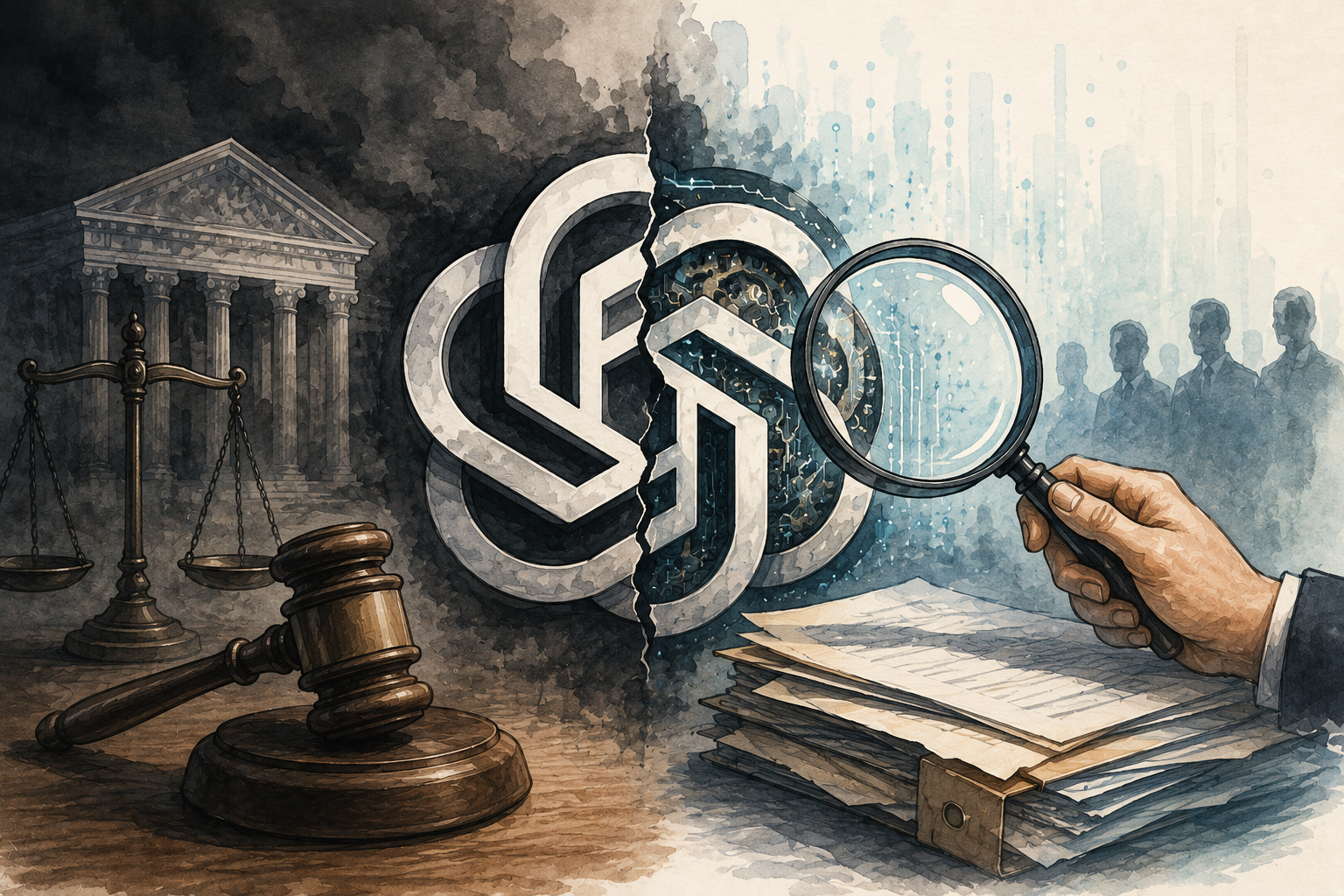
OpenAI NYT Lawsuit: Why OpenAI May Be Forced to Reveal Its Training Secrets
I’ve spent the better part of a decade writing about tech legal battles, and most of them follow a predictable script: two companies argue about money, a settlement gets announced on a Friday afternoon, everyone moves on. The OpenAI NYT lawsuit isn’t following that script. What started as a copyright dispute over training data has turned into something closer to a referendum on whether AI companies get to keep their most important decisions hidden from view.
The latest flashpoint is a sanctions motion the New York Times filed after growing frustrated with how OpenAI has handled discovery, the part of a lawsuit where both sides are legally obligated to hand over relevant evidence. On paper, that sounds like a procedural squabble. In practice, it might be the closest anyone has come to forcing an AI lab to open up its training pipeline and show exactly what’s inside.
That’s worth sitting with for a second. Every major AI company publishes research papers about architecture, scaling laws, and benchmark scores. Almost none of them will tell you, in plain terms, what actually went into the training set. The Times lawsuit is trying to pry that door open, and the sanctions motion is the crowbar.
OpenAI NYT Lawsuit: How we got here
The Times filed its original copyright suit against OpenAI and Microsoft back in late 2023, arguing that OpenAI trained its models on Times journalism without permission or payment. That much has been public for a while. What’s changed is the discovery phase, which has turned genuinely contentious.
The Times says OpenAI has been dragging things out: delaying document production, over-redacting what it does hand over, and resisting requests the paper considers directly relevant to proving infringement. Specifically, the Times wants records showing which Times articles ended up in training datasets, how that content was sourced and processed, internal conversations about copyright exposure, and technical documentation describing how the training pipeline actually works.
OpenAI’s response is that some of these requests are too broad, and that certain technical details deserve trade secret protection because they reveal proprietary methods a competitor could exploit. That’s not a frivolous argument on its face. Companies routinely fight to keep engineering details confidential in litigation, and courts routinely grant some protection when the concern is genuine.
But the Times isn’t buying it, at least not entirely. Its position is that OpenAI’s redactions and delays go well beyond ordinary trade secret caution and start to look like an attempt to keep a jury from ever seeing evidence that copyrighted material was knowingly used. Courts don’t love that kind of behavior. Judges have real tools for punishing discovery abuse, ranging from monetary sanctions to adverse inference instructions, where a jury is told it may assume the withheld evidence would have hurt the party that hid it. In the worst case, a court can even enter default judgment against a party that stonewalls badly enough.
That’s the backdrop that makes this sanctions motion worth watching closely, even if you have zero interest in the underlying copyright question.
If the court sides with the Times and orders broader production, a few things could surface that the industry has managed to keep quiet until now.
The first is sourcing. Did OpenAI scrape Times content directly, pull it in through a broader web crawl like Common Crawl, or license it through some intermediary that maybe didn’t have the rights to license it? Those are very different stories, legally and reputationally.
The second is the filtering process. Someone, somewhere, made decisions about what content got included in training runs and what got excluded. Discovery could reveal who made those calls and what criteria they used, which is the kind of internal decision-making that almost never sees daylight.
Third, and probably the most damaging if it exists, is evidence of internal awareness. Did people inside OpenAI know they were using copyrighted material without a license, and did anyone raise concerns about it before the lawsuit was filed? Internal emails and Slack messages have sunk companies in far less complicated cases than this one.
Fourth is scale: how much Times content actually made it into the training data, and across how many model generations. A single instance of scraped content is one story. Systematic, repeated ingestion across multiple model releases is a very different one.
Even if some of this gets filed under seal, a meaningful chunk tends to surface anyway once it becomes part of judicial opinions or gets referenced in later motions. Full secrecy is hard to maintain once material formally enters a court record.
Why this case won’t stay contained to OpenAI
Part of what makes this particular discovery dispute worth tracking is that it’s not happening in isolation. Getty Images has a similar fight going with Stability AI. A group of authors, including Sarah Silverman, sued Meta over comparable claims. Music publishers have gone after AI music generation tools using overlapping legal theories. Every one of these cases eventually runs into the same wall: plaintiffs need to know what’s in the training data to prove their claims, and defendants would very much prefer they didn’t.
Whatever discovery standard the court sets in the OpenAI NYT lawsuit becomes a reference point for all of those other cases. If the judge decides that training data composition isn’t shielded by trade secret protection once copyright infringement is alleged, that reasoning gets cited immediately in briefs filed elsewhere. If the judge instead sides with OpenAI and keeps the disclosure narrow, other defendants will lean on that ruling too. Either direction, the precedent travels.
There’s also a regulatory dimension that’s easy to miss if you’re only following the litigation. The EU’s AI Act already imposes training data transparency requirements on systems it classifies as high-risk. In the US, proposals like the AI DISCLOSE Act point toward similar obligations, though nothing has passed yet. Legislation like that tends to move slowly, partly because lawmakers lack a concrete factual record to point to. A court-ordered disclosure in a case this high-profile could hand regulators exactly the kind of factual foundation that speeds up that process. Litigation, in other words, can end up doing some of the work regulation hasn’t gotten around to.
This isn’t the first time discovery has forced tech’s hand
It’s worth remembering that courts have done this before. The Microsoft antitrust case in the late 1990s produced internal emails that shaped public understanding of the company’s conduct far more than any regulatory report could have. Google’s antitrust litigation has surfaced internal communications about search default deals that regulators had been trying to get at for years through other means. In both cases, the actual regulatory outcome mattered less than the fact that discovery pulled internal decision-making out into the open, where journalists, competitors, and lawmakers could all see it at the same time.
The OpenAI NYT lawsuit could follow that same pattern. Even a partial disclosure, filed under a protective order and only partially unsealed, tends to leak into public understanding through court filings, expert testimony, and reporting on the case. Once something becomes part of a judicial record, keeping it fully contained gets much harder, even when a company would clearly prefer otherwise. That’s part of why this sanctions motion carries weight well beyond the dollar amount at stake in the underlying copyright claims.
The part nobody talks about in OpenAI NYT Lawsuit: benchmark integrity
Here’s a connection that doesn’t get made often enough, even by people who cover this space closely: the same opacity that makes copyright enforcement hard is also the reason AI benchmark scores are so unreliable.
Benchmark contamination happens when test data ends up inside a model’s training set, which inflates its performance on that benchmark without actually reflecting a real capability gain. Researchers, including several at Hugging Face, have flagged contamination concerns across a number of widely cited benchmarks. The root problem is the same one driving the OpenAI NYT lawsuit: nobody outside a handful of people at these companies actually knows what’s in the training data. Not outside researchers, not regulators, not the journalists or authors whose work might be in there.
If discovery in this case forces better documentation of training data provenance, that has a use well beyond the courtroom. Detailed provenance records would make it a lot harder for contamination to sneak into benchmarks undetected. They’d make it easier for outside researchers to actually reproduce claimed results instead of taking a leaderboard score on faith. They’d give compliance teams something concrete to point to as regulations tighten. And they’d give the public a reason to trust these systems that isn’t just a company’s own marketing copy.
Voluntary commitments haven’t gotten the industry there. OpenAI, Google, and Anthropic have all signed various AI safety pledges over the past few years, and none of them has published a complete inventory of what went into their models’ training data. That’s not a knock on any one company specifically; it’s just what happens when disclosure is optional and competitive pressure is real. A court order doesn’t have that problem. It doesn’t ask nicely.
There’s a practical wrinkle worth mentioning here too. Companies that never built proper data governance systems are in a genuinely rough spot in a case like this, because you can’t produce a document in discovery that was never created. Companies that did invest in tracking licenses, sourcing decisions, and provenance are in a much better position; they can respond to a document request without scrambling. That gap is probably why data governance infrastructure has quietly become a bigger priority across the industry over the last year or so, and this lawsuit is accelerating that shift regardless of how the sanctions motion is ultimately decided.
OpenAI NYT Lawsuit: Three ways this could go
The court hasn’t ruled on the sanctions motion yet, and the range of outcomes matters, because they’re not just different in degree, they point toward genuinely different futures for the industry.
The most consequential outcome would be the court granting the motion in full. That could mean adverse inference instructions telling the jury to assume the worst about whatever OpenAI withheld, plus an order compelling production of the disputed documents. If that happens, expect legal teams at every major AI lab to be pulled into emergency meetings within days, not because they’re necessarily exposed the same way, but because nobody wants to be the next company caught flat-footed by a similar order.
A more likely middle outcome is partial sanctions: some penalty, combined with an order to comply on specific categories of documents while trade secret claims hold up on others. That still sets meaningful precedent, just with more breathing room for defendants than a full grant would allow. A fair number of people who follow this litigation closely think this is roughly where things land.
The third possibility is that the court denies the motion outright, finding OpenAI’s discovery responses adequate. That would be a real setback for the Times’ broader strategy, though even a denial produces a written opinion that clarifies what courts expect in AI-related discovery disputes going forward. Those opinions tend to get cited constantly in the next round of similar fights, so a loss here doesn’t necessarily mean the issue goes away.
Whatever happens, the sanctions motion has already shifted behavior behind the scenes. Legal teams at AI companies are reportedly reviewing data retention policies with outside counsel right now, not waiting for a ruling to prompt it. Investors have also started factoring training-data legal exposure into how they evaluate AI companies, in a way that wasn’t really happening eighteen months ago.
What this means if you’re actually building or investing in AI
If you work at an AI company, the practical move is to audit your training data documentation now, not after a subpoena arrives. That means knowing where your data came from, whether licensing terms cover the way it’s being used, and whether your internal records could survive a discovery request without embarrassing anyone.
If you’re building a startup, this is worth baking in from day one rather than retrofitting later. Provenance tracking is a lot cheaper to build into a pipeline from the start than to reconstruct after the fact once a dataset has already been used across several model versions.
If you’re a content creator or publisher, this case is worth tracking directly, since the discovery standards it sets will likely shape how enforceable your own claims are if you ever end up in a similar dispute.
If you’re an investor, training data legal exposure deserves a spot in standard due diligence now, the same way you’d check a company’s IP portfolio or its cap table. That means asking direct questions about where a portfolio company’s training data came from, whether licensing agreements actually cover the use case the model is being deployed for, and whether the company could produce a coherent data provenance record if it were ever asked to in litigation. A “we don’t really track that” answer is itself useful information.
And if you work in policy, the factual record being built through this discovery fight is exactly the kind of concrete material that turns vague proposals into workable rules. Regulators drafting disclosure requirements have mostly been working from public statements and academic estimates rather than actual internal documentation. A court record, even a partially sealed one, gives them something closer to ground truth to legislate against.
Compliance and legal teams inside AI companies, meanwhile, shouldn’t wait for a ruling before acting. Reviewing data retention policies, tightening documentation around licensing decisions, and getting ahead of questions litigation counsel is likely to ask eventually all cost far less now than they will once a subpoena is already sitting on someone’s desk.
The Conclusion of OpenAI NYT Lawsuit
The OpenAI NYT lawsuit was never really just about one newspaper and one company. It’s become a test of whether the AI industry can keep operating behind a wall of “that’s proprietary” while also asking the public, regulators, and journalists to trust that what’s happening behind that wall is fine. The sanctions motion won’t resolve that tension by itself, but it’s forcing a court to weigh in on questions the industry has mostly managed to avoid answering directly.
Courts move slower than headlines, and this case is far from over. But the discovery fight has already done something that a decade of academic papers and voluntary pledges hasn’t managed: it’s put a judge in a position to decide whether “trust us” is actually good enough. I’ll be following the filings as they come.
FAQ
What is the sanctions motion in the OpenAI NYT lawsuit about?
It’s a request asking the court to penalize OpenAI for allegedly failing to meet its discovery obligations, specifically around producing documents on how Times content was used in training data. Possible sanctions range from fines to adverse inference instructions to, in extreme cases, default judgment.
Why is OpenAI resisting these discovery requests?
OpenAI NYT Lawsuit: OpenAI argues some requests are overly broad and that certain technical details are protected trade secrets. The Times argues those objections are being used to shield evidence of infringement rather than to protect genuinely sensitive competitive information.
Could this affect other AI copyright cases?
Yes. Cases involving Getty Images, a group of authors including Sarah Silverman, and several music publishers all hinge on similar questions about training data transparency, and whatever discovery framework emerges here is likely to get cited in those disputes too.
How does this connect to benchmark contamination?
Both problems trace back to the same root cause: training data composition isn’t disclosed, so nobody outside these companies can independently verify what a model was trained on, whether that’s for copyright purposes or for checking whether benchmark scores are actually clean.
Keep reading
Here are the latest posts from the blog.

When Fable 5 went dark for 19 days, a lot of people in this industry had the same uncomfortable realization at roughly the same time. It wasn’t really about the outage itself…
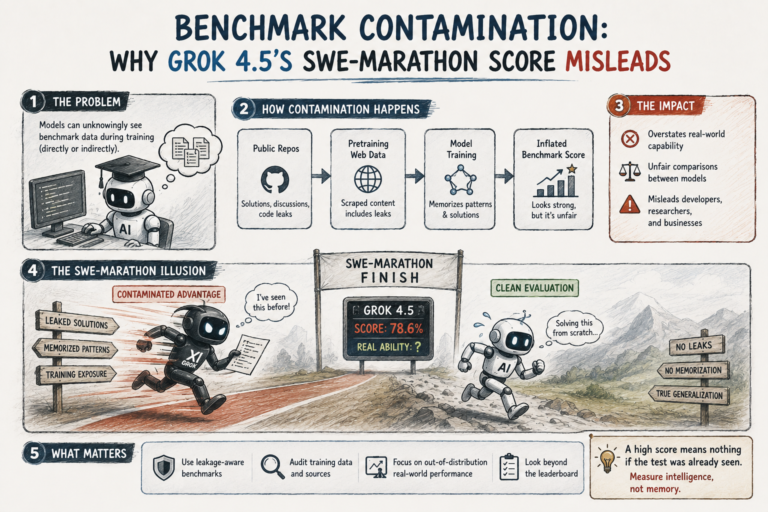
Benchmark contamination is one of the most pressing problems in AI evaluation today — and it’s been flying under the radar for too long. When we dig into benchmark contaminat…
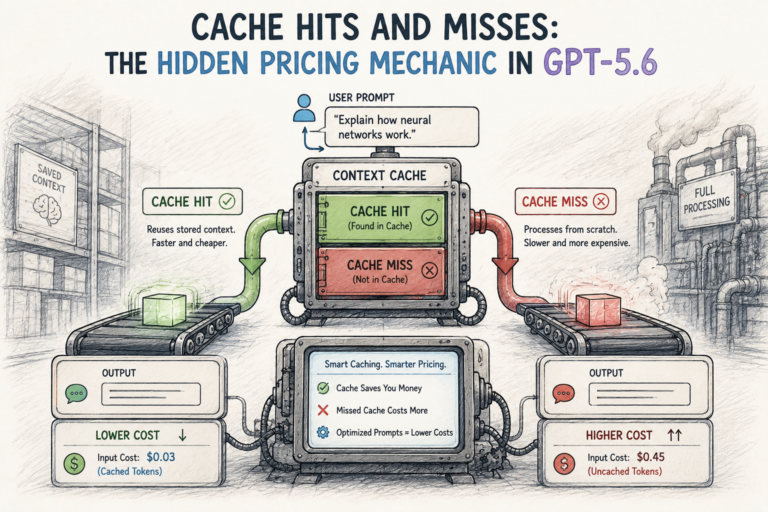
The cache hits cache misses hidden pricing mechanic is quietly reshaping how developers budget for AI — and most teams are completely missing it. If you’re running GPT-5.6 in…