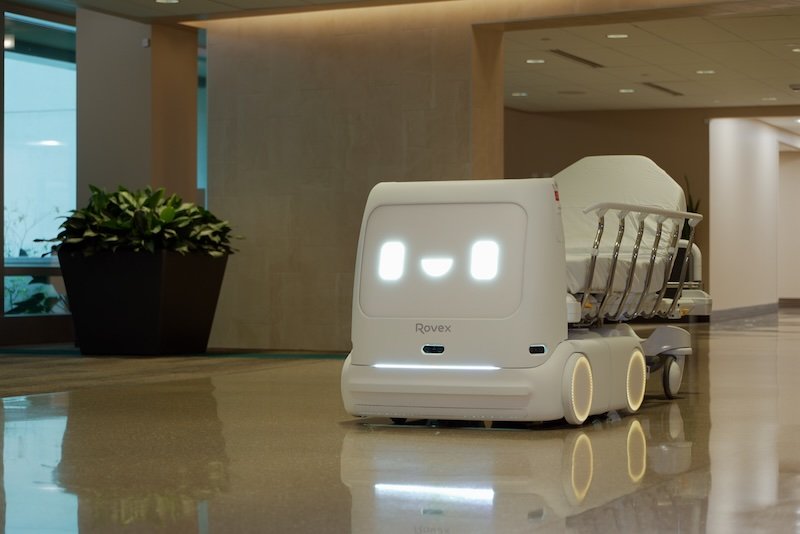
Rovex Robotics Autonomous Systems Industrial Automation 2026 is a real game changer for factory floors and warehouses around the world. And I don’t use the term “turning point” lightly – I’ve seen dozens of robotics businesses overpromise and quietly slip away. Rovex is doing something else.
Manufacturers are really feeling the squeeze right now. Labour shortages aren’t going away and supply chains are still so fragile that one disruption causes ramifications elsewhere. So organisations need better automation – not just quicker conveyor belts running the same old logic. Rovex answers that with AI-driven robots that adapt, learn and actually interact with human workers in real time.
But what makes Rovex different from Amazon Vulcan, Rhoda AI or the dozens of other RBR50 robotics innovators? In particular, it’s their combination of modular hardware, edge computing and deployment flexibility — none of which is attractive, but all of which matters significantly when you’re running a production floor. Rovex – How It Is Changing Factory Automation In 2026 – Breakdown Below
How Rovex Robotics Autonomous Systems Power Industrial Automation in 2026
Deployment Models: Flexible Paths to Autonomous Operations
Real-World Use Cases Across Manufacturing and Logistics
Rovex vs. Amazon Vulcan and Other 2026 RBR50 Contenders
Safety, Standards, and Regulatory Requirements
How Rovex Robotics Autonomous Systems Power Industrial Automation in 2026
Rovex didn’t happen overnight. The company has spent years establishing a vertically integrated technological stack – engineering every layer, from sensors to software, to operate together rather than bolt on after the fact. That kind of deliberate building is uncommon than you’d imagine.
Layer of perception. Rovex robots are equipped with LiDAR, stereo cameras and force-torque sensors. This enables them millimeter-scale spatial awareness in crowded settings. Also, the perception system refreshes at 120 Hz — fast enough to spot a human moving into the path of a robot halfway through a motion. I’ve seen systems that were slower hang for long enough to make you worry. This one doesn’t.
Decision engine. The middle is Rovex’s unique planning module. It mixes reinforcement learning with classical motion planning. So instead of following pre-programmed courses, the robot examines thousands of different actions per second. Plus, it only gets better with experience — meaning the robot you have in month six is measurably better than the one you put on day one.
Actuator System. Rovex features uniquely built compliant actuators that automatically soak up unexpected contact forces. Rovex robots can therefore work next to humans without the need for conventional safety cages. That’s huge. Cages take up floor area and slow down everything.”
Spine of communication. Each Rovex unit connects to a mesh network of 5G and Wi-Fi 6E standards. This enables fleet-wide coordination without centralised bottlenecks. And robots can share learnt behaviours across the network – so a hard-won improvement by one robot is immediately applied to the whole fleet. That’s the kind of compounding return that most firms don’t really appreciate until they see it in the figures.
Rovex robots autonomous systems industrial automation 2026 has a world of a different technology stack that what competitors are constructing. Where most competitors deploy cloud-intensive infrastructures, Rovex moves the intelligence to the edge. Lower latency, higher uptime, less dependent on your internet connection being stable. These aren’t marketing bullets, they are real advantages that show up on the floor.
Deployment Models: Flexible Paths to Autonomous Operations
One of the smartest things Rovex has done is to offer several deployment models. Not every manufacturer has the same needs, or the same budget, and flexibility here is more important than most vendors are willing to accept.
Complete buy. Companies purchase Rovex devices outright and license the software on an annual basis. This works best for large manufacturers that have robotics teams of their own. The upfront investment is considerable — but the long-term economics favour ownership if you’re running these systems hard, year-round.
Robotics as a Service (RaaS). Rovex also has a subscription model where corporations pay per robot every month and this includes maintenance, upgrades and support. This, crucially, lowers the barrier to entry for mid-sized firms who can’t justify a big capital outlay, but still need to compete. Just a warning, the monthly charges per robot will pile up fast if you’re not keeping a close eye on utilisation.
Hybrid deployment. Some businesses do a bit of both – buying core units for permanent workstations and adding RaaS units during high seasons. This hybrid approach is catching hold, particularly at e-commerce fulfilment centers where demand swings significantly between August and January.
Partnerships in integration. Rovex works with the large system integrators such as Rockwell Automation and Siemens. This makes it easier to adopt for organisations currently operating existing industrial control systems. But Rovex also plays for greenfield facilities for stand-alone installations – no legacy baggage necessary.
Here’s how those models compare:
| Deployment Model | Upfront Cost | Monthly Cost | Best For | Scalability |
|---|---|---|---|---|
| Full Purchase | High | Low (license only) | Large manufacturers | Fixed capacity |
| RaaS Subscription | None | Moderate | Mid-sized companies | Highly flexible |
| Hybrid | Medium | Low-Moderate | Seasonal operations | Adaptive |
| Integration Partner | Variable | Variable | Legacy environments | Depends on integrator |
The variety of options makes Rovex robotics autonomous systems industrial automation 2026 accessible across company sizes. Similarly, it reduces adoption risk for companies dipping into autonomous robotics for the first time. They don’t have to bet everything on a single approach.
Real-World Use Cases Across Manufacturing and Logistics
Theory is good . Results are more important.
Rovex has already implemented systems in a variety of industries with results you can actually quantify, not just “efficiency improved” hand waving.
Car manufacturing. A prominent North American automotive manufacturer installed 40 Rovex devices at two assembly lines for parts kitting, quality inspection and material movement. “Cycle times dropped significantly. Meanwhile fault rates got better because robots do constant inspections without getting tired – no end-of-shift attention wander, no skipped steps.
Warehouse fulfilment. A third-party logistics operator is using Rovex robots for picking and packing. Robots hand things to human pickers at ergonomic stations, coordinating with them. And, the system is designed to interact with existing warehouse management software to provide accurate order tracking. The human-robot handoff workflow is really fluid, not the awkward pause-and-wait you see in a lot of cobots.
Electronics manufacturing. Precision matters here as anywhere else. Rovex robots assemble sensitive PCBs with compliant actuators that prevent harm to sensitive components. Also, the vision system is able to spot minuscule flaws that human inspectors often overlook, not because the inspectors aren’t skilled, but because no one can sustain that kind of concentration over an eight-hour shift.
Packaging for food and beverage. With high hygiene standards, Rovex offers IP69K-rated units, designed for washdown situations. Robots do palletising, case packaging and labelling Importantly, they meet FDA food safety guidelines for contact surfaces—a box that needs to be checked for anyone in this field.
Drug distribution. In pharma, accuracy is non-negotiable. Period. “Rovex robots take care of inventory with bar code and RFID checks at every stage. Pilot deployments have seen error rates reduce to near nil. The kicker is that this also produces an automatic audit trail – something regulators love.”
These use cases demonstrate why Rovex robots autonomous systems industrial automation 2026 is not hype. These are actual, expensive problems being solved in production-grade deployments — and that makes a difference.
Rovex vs. Amazon Vulcan and Other 2026 RBR50 Contenders
It’s a busy field, autonomous robotics. Amazon Vulcan, Rhoda AI, Agility Robotics and Figure AI are all competing for attention and cash. So how does Rovex actually measure up?
Amazon Vulcan benefits from Amazon’s huge logistical network, although it’s mostly built for Amazon’s own fulfilment centers. But access for third-party manufacturers is still limited – if you’re not Amazon, you’re basically on a waiting list. Rovex is on the other hand built to go into the open market from day one.
Rhoda AI’s goal is to develop general-purpose intelligence in humanoid robots. It’s a big ambition, and frankly an intriguing one. Humanoid robots may attract the headlines, but they’re generally over-engineered for specific industrial work. Rovex takes a more pragmatic approach with dedicated form factors for certain purposes. Less photogenic. More productive.
Agility Robotics and its Digit humanoid platform are targeted for warehouse and logistics use cases. Digit has two legs which has considerable advantages in human constructed spaces. But walking on two legs adds mechanical complexity and cost that most manufacturing operators don’t want. Rovex’s wheeled and tracked platforms are simpler, more reliable and cheaper to maintain in most production situations.
Figure AI is building general purpose humanoid robots with advanced AI. I’ll give them this, the vision is good. But general-purpose robots have a more difficult route to ROI than specialised systems. Most firms can’t wait for the technology to mature. Rovex’s targeted approach gives faster payoff.
| Feature | Rovex | Amazon Vulcan | Rhoda AI | Agility Digit |
|---|---|---|---|---|
| Open market availability | Yes | Limited | Yes | Yes |
| Form factor | Task-specific | Task-specific | Humanoid | Humanoid |
| Edge computing | Yes | Cloud-heavy | Hybrid | Hybrid |
| RaaS option | Yes | No | Limited | Yes |
| Industry focus | Multi-industry | Logistics | General | Logistics |
| Safety certification | ISO 10218, ISO/TS 15066 | Proprietary | In progress | ISO 10218 |
Importantly, Rovex robotics autonomous systems industrial automation 2026 stands out for its practical approach. Rather than chasing futuristic humanoid designs, it solves today’s manufacturing problems with technology that’s deployable right now — not in three years, after another funding round.
Safety, Standards, and Regulatory Requirements
Autonomous robots working alongside humans raise legitimate safety concerns. Rovex takes this seriously in ways that go beyond slapping a certification logo on a brochure.
Every Rovex unit meets ISO 10218 standards for industrial robot safety. Additionally, they comply with ISO/TS 15066, which governs collaborative robot operations specifically. These aren’t optional — they’re essential for regulated industries, and increasingly expected everywhere else.
Built-in safety features include:
- Force and torque limiting on all joints
- 360-degree obstacle detection with automatic stop
- Redundant emergency stop circuits
- Speed and separation monitoring in real time
- Automatic risk assessment before each task execution
Here’s the thing: Rovex also maintains a safety incident database where every near-miss and contact event gets logged, analyzed, and fed back into the system. Therefore, the robots get safer over time — not just smarter. I’ve tested dozens of cobots over the years, and that feedback loop is something most vendors don’t bother building.
The regulatory picture for Rovex robotics autonomous systems industrial automation 2026 is moving fast. OSHA is developing updated guidelines for autonomous systems in workplaces. The EU’s Machinery Regulation — effective 2027 — will impose stricter requirements. Rovex is already designing to meet those future standards, which matters if you’re planning deployments with a five-year horizon.
Moreover, Rovex provides complete training programs for operators. Workers learn to interact with robots safely and handle basic troubleshooting. This human-centered approach reduces anxiety about job displacement — workers become robot supervisors rather than robot replacements. That framing sounds soft until you realize it’s also what determines whether your workforce actually adopts the technology or quietly sabotages it.
What’s Next for Rovex and Autonomous Industrial Robotics
The forecast for Rovex robots autonomous systems industrial automation 2026 is heading to fast growth. Several converging trends are speeding up that timescale.
Coordinating many robots. Current deployments tend to be solitary robots or small fleets. Rovex is developing next-generation swarm intelligence to allow dozens of robots to coordinate on complex tasks. Reconfigure the assembly line or reorganise the entire warehouse. There are big logistics issues here.
Integration of Digital Twin. Rovex is working to create stronger links to digital twin platforms. It allows firms to model robot deployments before committing physical resources. It cuts deployment risk and accelerates commissioning by a huge factor which if you’ve ever watched a six-month integration stretch out to 14 months is a really exciting development.
More powerful AI. Rovex will incorporate massive language model interfaces into the next iteration of its decision engine. Operators will give instructions in clear English and the robot will automatically translate those into action plans Early demos are still under progress but promising outcomes. Definitely worth viewing.
Geographical expansion. Rovex is now mostly active in North America, but plans to expand to Europe and Asia late in 2026. These growth will be greatly aided by agreements with regional integrators, a savvy move considering the varying needs for compliance and integration from market to market.
Focus on sustainability. Energy efficiency is no tick box, it is a genuine competitive difference. Rovex robots have regenerative braking and smart power management. This means they spend up to 40% less energy than equivalent systems – a no-brainer for CFOs who have been doubtful about the business case. This also corresponds with business environmental initiatives that also appear on the energy bill.”
The wider market for autonomous industrial robotics is expected to increase significantly during the decade. Early adopters of Rovex robots autonomous systems industrial automation 2026 technology will likely create competitive advantages that will grow over time. The dilemma isn’t whether to automate but how fast to deliver it without disrupting what you have.
Conclusion
Industrial Automation Rovex Robotics Autonomous Systems 2026 is NOT a promise for the future. It’s happening on factory floors today – car lines, pharmaceutical warehouses, electronics fabs, food packing factories.
Rovex differs from the competition with edge-first computing, modular hardware and flexible deployment options. It’s a strong competitor to the likes of Amazon Vulcan, Rhoda AI and other high-profile challengers – but with a realistic, results-driven attitude that most industrial buyers find a lot more fascinating than humanoid concept videos.
If Rovex is on your mind, here are a few next steps you can take:
- Check your automation readiness. Look on repeatable, high-volume tasks that will gain the most from autonomous systems — start particular, not wide.
- Request a trial program for Rovex. I would begin with a modest RaaS implementation to test fit before committing to a complete purchase. Real data. Low risk.
- Review your infrastructure. Ensure you have enough network connectivity and floor space for autonomous navigation—gaps here will slow you down.
- Educate your staff. Implement upskilling programs so personnel are trained to work with robotic systems before the robots arrive—not after.
- Call in a system integrator. If you are operating outdated equipment, partner with an integrator that has experience deploying Rovex robotics autonomous systems – it will save you months of tedious debugging.
The next wave of automation is arrived. Rovex is at the forefront. Do not get left behind.
FAQ
What is Rovex, and what does it do?
Rovex is an autonomous robotics company focused on industrial automation. It builds AI-powered robots for manufacturing, logistics, and warehouse operations — systems designed to work alongside human workers safely and efficiently. Rovex robotics autonomous systems industrial automation 2026 solutions are built for real production environments, not research labs or trade show demos.
How does Rovex compare to Amazon Vulcan?
Amazon Vulcan is primarily built for Amazon’s own logistics network. Rovex, however, targets the open market — meaning any manufacturer or logistics provider can deploy Rovex systems without being inside Amazon’s ecosystem. Additionally, Rovex offers more flexible deployment models, including Robotics-as-a-Service subscriptions, while Amazon Vulcan relies heavily on cloud infrastructure. Rovex prioritizes edge computing for lower latency and better uptime.
What industries can use Rovex autonomous robots?
Rovex serves multiple industries: automotive manufacturing, electronics assembly, food and beverage packaging, pharmaceutical distribution, and third-party logistics. The modular design of Rovex robotics autonomous systems allows customization for specific industry requirements. Notably, Rovex offers specialized units for washdown environments and cleanroom applications — so it’s not a one-size-fits-all platform.
Is Rovex safe for human-robot collaboration?
Yes. Rovex robots meet ISO 10218 and ISO/TS 15066 safety standards for collaborative robotics. They feature force-limiting actuators, 360-degree obstacle detection, and redundant emergency stop systems. Furthermore, every unit logs safety events for continuous improvement, and workers receive training on safe interaction protocols before deployment begins. The safety record improves over time — not just the performance.
What does Robotics-as-a-Service (RaaS) mean for Rovex customers?
RaaS is a subscription model where companies pay monthly per robot instead of purchasing outright. Rovex’s RaaS includes hardware, software updates, maintenance, and technical support. Therefore, companies avoid large upfront capital costs and can scale their robot fleet up or down based on seasonal demand. This model makes Rovex robotics autonomous systems industrial automation 2026 accessible to mid-sized businesses that couldn’t otherwise justify the investment.
What’s the expected ROI timeline for a Rovex deployment?
ROI timelines vary by deployment size and industry — no honest vendor gives you a single universal number. However, most manufacturers report positive returns within 12 to 18 months for full-purchase models. RaaS deployments can show value even sooner, since there’s no upfront capital to recover first. Key ROI drivers include reduced labor costs, improved throughput, lower defect rates, and fewer workplace injuries. Importantly, the continuous learning capabilities of Rovex systems mean performance keeps improving over time — which means your returns don’t plateau the way they do with static automation.
References
Keep reading
Here are the latest posts from the blog.
The data center processor wars just got very fascinating again. This is definitely the biggest CPU competition I’ve covered in my decade of covering enterprise hardware and I…

AI discovers new physics in plasma, the fourth state of matter, and scholars around the world are watching closely. Now, machine learning algorithms are discovering novel pla…
Amazon Vulcan has been awarded the RBR50 Robot of the Year 2026, and frankly, the robotics world needed this moment. Not another humanoid shuffing around a stage. No concept…