Introduction
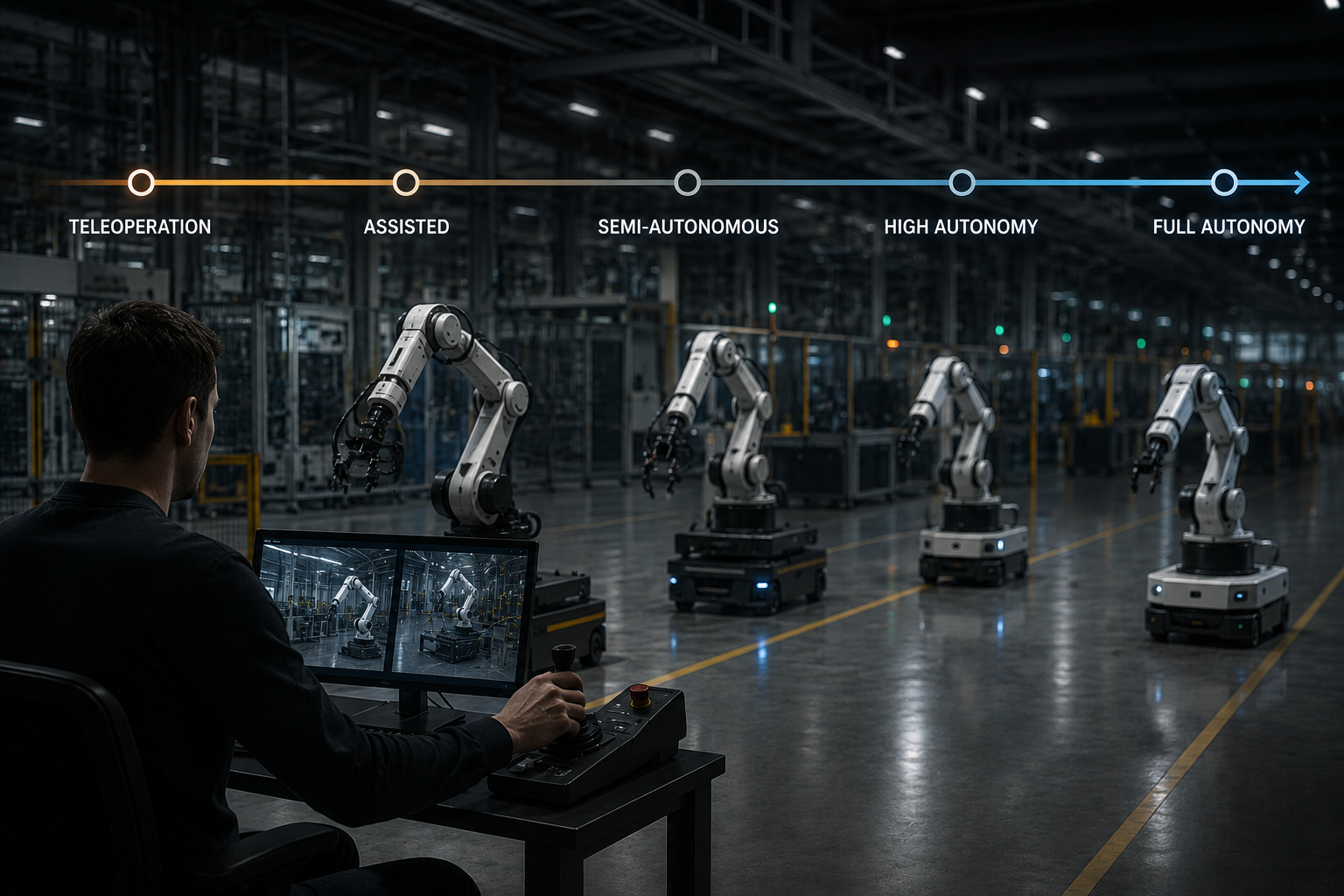
Choosing between teleoperation and full autonomy spectrum robotics can dramatically impact your workflow. Whether you’re new to this or seasoned, this guide will help you as we approach 2026. As technology continues to evolve, understanding the nuances between these two approaches becomes increasingly crucial. The choice you make can influence not just your immediate operational efficiency but also your long-term strategic capabilities.
The decision between teleoperation and full autonomy is akin to choosing between flexibility and efficiency. In today’s rapidly changing technological landscape, making the right choice can be the difference between leading the pack and playing catch-up. With advancements in AI and machine learning, both teleoperation and full autonomy offer unique benefits that can be tailored to fit specific industry needs. This guide will delve deep into these options, providing insights and practical tips to help you make an informed decision.
Understanding Teleoperation
Teleoperation involves the remote control of robots by a human operator. This method provides the advantage of human judgment and adaptability, which can be crucial in complex or unpredictable environments. Imagine a scenario in a hazardous environment, such as a nuclear plant or an underwater exploration site. Here, teleoperation allows human operators to manage robots from a safe distance, ensuring both safety and precision.
Consider a scenario in the medical field: a surgeon performing a complex procedure in a remote rural hospital. Through teleoperation, the surgeon can control robotic arms with precision, performing intricate surgeries that would otherwise require the patient to travel to a distant city. This not only saves time and resources but also democratizes access to high-quality medical care.
Teleoperation is also highly valuable in sectors like space exploration. When robots are sent to explore planets or asteroids, the unpredictable nature of these environments makes human judgment indispensable. Operators on Earth can guide robots to collect samples or conduct experiments, adjusting for unforeseen obstacles or opportunities as they arise.
Exploring Full Autonomy
On the other hand, full autonomy allows robots to perform tasks without human intervention. These systems use sophisticated algorithms and machine learning to make decisions on the fly. For example, in a warehouse setting, fully autonomous robots can manage inventory, navigate aisles, and even optimize routes for efficiency, all without human input. This can significantly reduce labor costs and increase productivity.
In agriculture, autonomous drones equipped with sensors and cameras can scout large fields, monitor crop health, and even apply fertilizers or pesticides with pinpoint accuracy. This level of autonomy not only increases crop yields but also reduces the environmental impact by minimizing the overuse of chemicals.
Another striking example can be found in the automotive industry. Autonomous vehicles are becoming more prevalent, with the potential to revolutionize transportation. These vehicles can navigate traffic, adhere to road rules, and even communicate with other vehicles to optimize traffic flow, all while reducing the risk of human error.
Why This Matters
We’re experiencing a significant shift in teleoperation vs full autonomy spectrum robotics. The tools are faster and more capable—yesterday’s solutions might falter against today’s advancements. Pinpointing what truly adds value can save you time and money. I’ve tried a lot of these, and some are real game-changers. The impact of choosing the right approach can be seen across various sectors, from manufacturing and healthcare to logistics and beyond.
Real-World Implications
Consider the healthcare industry, where robotic surgery is becoming increasingly prevalent. Teleoperated surgical robots allow surgeons to perform delicate procedures with high precision, often from remote locations. This not only expands access to expert care but also improves patient outcomes. Conversely, autonomous robotic systems in hospitals can handle logistics tasks such as delivering medications and transporting linens, freeing up staff to focus on patient care.
In the logistics industry, autonomous delivery robots are changing the game. These robots can navigate city streets to deliver packages directly to customers’ doors, significantly speeding up delivery times and reducing the need for human couriers. This shift not only enhances efficiency but also reduces the carbon footprint associated with traditional delivery methods.
Economic Considerations
The economic implications are also significant. Investing in the right robotic systems can lead to substantial cost savings. For instance, autonomous robots in manufacturing can operate around the clock, increasing production without the need for additional shifts. This reduces labor costs and increases output, providing a competitive advantage in the market.
For small businesses, the initial cost of investing in robotics might seem daunting, but the long-term savings and efficiencies often outweigh these upfront expenses. By automating repetitive tasks, businesses can reallocate human resources to more strategic roles, driving innovation and growth.
In the agricultural sector, the use of autonomous machinery can lead to better resource management, reducing waste and increasing profitability. Farmers can optimize the use of water, fertilizers, and pesticides, leading to more sustainable and cost-effective farming practices.
Step-by-Step Implementation
1. Define your goals — Figure out what success looks like for you. What’s your ultimate aim? Are you looking to increase efficiency, reduce costs, or improve safety? Clearly defining your objectives will guide your decision-making process.
Consider a manufacturing company aiming to increase productivity. Their goal might be to reduce production time by 20% within a year. By defining this goal, they can tailor their approach to either teleoperation or full autonomy, ensuring that their chosen method aligns with their strategic objectives.
2. Evaluate options — Don’t rush in. Test at least three different tools or approaches. Thankfully, most platforms offer trials. Look for features that align with your goals, such as ease of integration, scalability, and support services.
For example, a logistics company might explore different autonomous vehicle platforms. They would evaluate each option based on factors like route optimization capabilities, integration with existing systems, and customer support. This thorough evaluation ensures that they select the best tool for their unique needs.
3. Build your workflow — Choose the best elements and turn them into a smooth process. Don’t forget to document each step. This documentation will be invaluable for training new team members and troubleshooting any issues that arise.
In a healthcare setting, a hospital implementing robotic logistics systems would document each step of the medication delivery process. This ensures that all staff understand the system’s operation, reducing errors and improving patient care.
Practical Tips
- Pilot Projects: Start with a small-scale pilot project to test the waters. This allows you to assess the technology’s impact and make necessary adjustments before full-scale implementation.
A retail company might start by automating a single warehouse location, monitoring the effects on inventory management and order fulfillment before expanding to additional sites.
- Feedback Loops: Establish feedback loops with your team to continuously gather insights and improve processes. This will help in identifying any bottlenecks or areas for improvement.
In a tech company, regular team meetings to discuss the performance of teleoperated systems can provide valuable insights. Team members might suggest improvements or highlight issues, driving continuous enhancement of the system.
Comparison Table
| Approach | Speed | Quality | Cost | Best For |
|---|---|---|---|---|
| Manual | Slow | High control | Free | Small projects |
| AI-Assisted | Fast | Good with editing | $20-50/mo | Scale operations |
| Fully Automated | Fastest | Needs review | $50-200/mo | High volume |
| Hybrid | Moderate | Best balance | $30-80/mo | Most teams |
Detailed Analysis
- Manual: Ideal for projects where precision and control are paramount, but time is not a constraint. Consider a small art restoration project where each detail must be meticulously handled.
For example, in a bespoke furniture workshop, artisans might prefer manual methods to ensure each piece meets exacting standards of craftsmanship and quality.
- AI-Assisted: Best for operations that need speed but retain a human touch, such as content creation or customer service automation.
A marketing agency might use AI-assisted tools to generate content quickly, allowing human editors to add the final touches and ensure brand consistency.
- Fully Automated: Perfect for high-volume tasks like data processing or large-scale manufacturing where speed is critical, but occasional human review ensures quality.
In a financial institution, automated systems can process thousands of transactions per second, with human oversight to manage exceptions or unusual patterns.
- Hybrid: Offers a balanced approach, combining human oversight with automation. Useful in environments like financial services, where regulatory compliance and speed are both critical.
A hybrid approach in a law firm might involve automated document review with human lawyers providing the final assessment, ensuring both efficiency and compliance with legal standards.
Common Mistakes to Avoid
- Jumping in without research: Understand the capabilities and limitations of each system. Research and due diligence can prevent costly mistakes.
A startup might rush to implement the latest technology without fully understanding its integration requirements, leading to disruptions and inefficiencies.
- Relying solely on one tool without knowing its limits: Diversify your toolkit to cover different needs and scenarios.
An e-commerce company might initially rely solely on automated customer service bots, only to find that complex queries require human intervention. Balancing automation with human support can improve customer satisfaction.
- Prioritizing speed over quality: Fast solutions are tempting, but they can compromise quality. Balance is key.
In software development, rushing to deploy new features without adequate testing can lead to bugs and customer dissatisfaction. A balanced approach ensures robust and reliable software.
- Not adjusting based on feedback: Continuous improvement should be part of your strategy. Use feedback to refine and enhance your processes.
A manufacturing plant might gather employee feedback on automated systems, using it to tweak processes and improve efficiency.
Tradeoffs to Consider
- Cost vs. Benefit: While automation can reduce labor costs, initial investments can be high. Consider the long-term savings and productivity gains against upfront costs.
A large corporation might invest heavily in robotics, anticipating that the long-term reduction in labor costs and increased efficiency will outweigh the initial expense.
- Flexibility vs. Control: Teleoperation offers more control and flexibility, while full autonomy can handle repetitive tasks efficiently. Evaluate which is more important for your specific needs.
In a research lab, teleoperation might be preferred for experiments requiring precise control, while full autonomy could be used for routine data collection tasks.
Conclusion
Maximizing the benefits of teleoperation vs full autonomy spectrum robotics involves choosing the right tools, maintaining a steady workflow, and adapting based on results. Start small, measure your outcomes, and scale what works. For further insights, check out this resource. Additionally, explore this article for more on automation trends. For a deeper dive into robotics, visit this link. Make informed decisions and optimize your processes for success.
Future Outlook
As we move closer to 2026, the landscape of robotics will continue to evolve. Staying informed about the latest trends and technologies will be critical. Innovations in AI, machine learning, and sensor technology will further blur the lines between teleoperation and full autonomy, offering even more sophisticated and capable solutions. Keeping an eye on these developments will ensure that your operations remain competitive and cutting-edge.
The future promises advancements such as enhanced AI algorithms that learn from minimal data, making autonomous systems even more adaptive and efficient. Teleoperation might integrate more seamlessly with virtual reality, providing operators with immersive control experiences. These innovations will not only redefine industry standards but also open new possibilities for businesses willing to embrace the future of robotics.
Further reading
Authoritative external references (each link opens in a new tab):
- Google Search Central: SEO fundamentals
- web.dev: Learn web development
- MDN Web Docs
- W3C Web Standards
- NIST Cybersecurity
FAQ
What is the best way to get started with teleoperation vs full autonomy spectrum robotics?
Start with a small pilot project. Test one approach thoroughly before committing fully. This allows you to identify potential challenges and address them early on. Engage with vendors to understand their support and training offerings, which can be crucial during the initial phase.
A company looking to implement teleoperated drones for inspection tasks might begin with a single site, evaluating performance and gathering data to inform broader deployment.
How much does teleoperation vs full autonomy spectrum robotics typically cost?
Expect costs from free (manual) to $200+/month for enterprise solutions. Most find the sweet spot at $20-50/month. Consider not just the subscription fees but also the costs associated with training, maintenance, and upgrades.
In an educational setting, schools might invest in teleoperation systems for remote learning, factoring in costs for equipment, software licenses, and ongoing support.
Is teleoperation vs full autonomy spectrum robotics worth the investment?
For most, yes. The time saved usually offsets the cost in the first month—trust me, I’ve done the math. However, the value extends beyond just time savings. Enhanced accuracy, improved safety, and the ability to scale operations are significant benefits that can justify the investment.
In the construction industry, autonomous machinery can increase safety by performing dangerous tasks, reducing the risk of accidents and associated costs.
How long does it take to see results with teleoperation vs full autonomy spectrum robotics?
You’ll notice changes in 1-2 weeks. But allow a month for significant improvements. This timeline can vary based on the complexity of your operations and the level of integration required.
A logistics firm implementing autonomous sorting systems might see immediate improvements in package handling times, with full operational efficiency achieved within a month.
What are the alternatives?
Manual methods, outsourcing, and other platforms are available too. The best choice depends on your need for speed and quality. Manual methods offer control, outsourcing can bring expertise, and alternative platforms might provide unique features or cost advantages.
A business might outsource specific tasks, such as customer support, to third-party providers with specialized expertise, balancing cost and quality.
Can beginners use teleoperation vs full autonomy spectrum robotics effectively?
Absolutely. Modern tools are quite beginner-friendly. Start simple and build your skills over time. Many platforms offer extensive resources and community support to help new users get up to speed quickly.
In a tech startup, new employees might use intuitive teleoperation interfaces to manage robotic systems, with training resources available to enhance their proficiency.
References
Keep reading
Here are the latest posts from the blog.

Cybercriminals are accelerating ransomware attacks educational technology providers isn’t just a headline anymore. It’s a full-blown crisis — and it’s happening right now, ac…

Model routing defaults why Google quietly swapped your AI model is a topic that’s finally getting the attention it deserves. If you’ve noticed your AI responses feeling a lit…

Engineers at Northwestern University took a striking step toward something that used to live exclusively in science fiction. They 3D-printed artificial neurons capable of act…