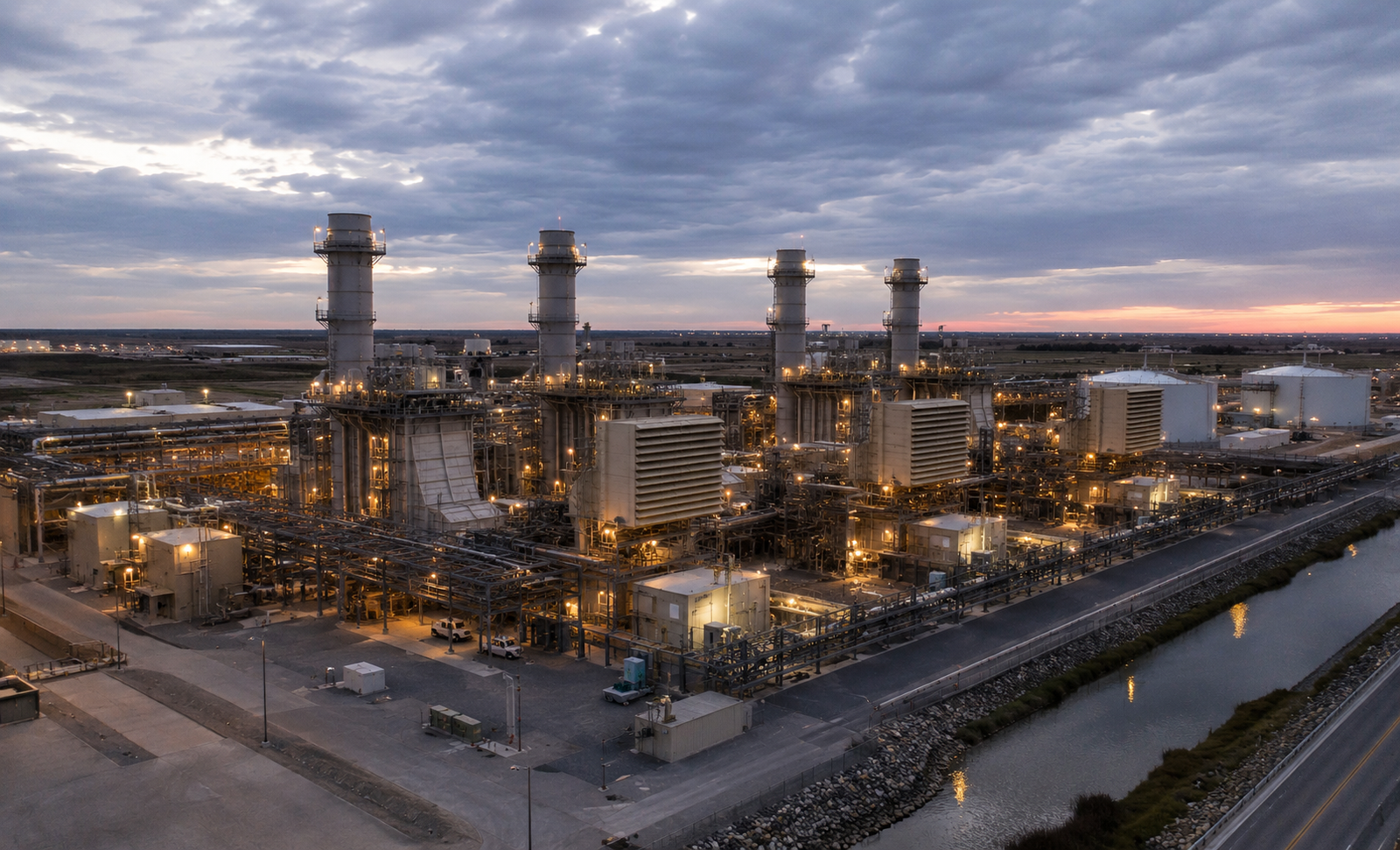
Microsoft just made one of the boldest energy bets in tech history. The first major project is Kilby, a 2.67-gigawatt gas-fired plant in West Texas — built specifically to power a massive data centre. This isn’t some token renewable energy credit purchase. It’s a dedicated, industrial-scale gas plant designed to feed AI workloads directly.
The deal locks Microsoft into a 20-year power purchase agreement (PPA). Two decades of committed gas-fired electricity flowing into servers running Azure, Copilot, and OpenAI’s models. Furthermore, it signals a dramatic shift in how hyperscalers think about energy security — one that’s going to make a lot of sustainability officers very uncomfortable.
Why does this matter? Because it reshapes the competitive dynamics among Microsoft, Amazon Web Services (AWS), and Google Cloud. It also raises some genuinely hard questions about carbon commitments that don’t have clean answers.
Why Microsoft Chose Gas Power for the Kilby Plant
The AI boom created an energy crisis nobody fully anticipated.
Training large language models requires staggering amounts of electricity. A single GPT-4 training run reportedly consumed enough power to light thousands of homes for a year. Consequently, hyperscalers can no longer just lean on the existing grid and hope for the best.
The first major project, Kilby, at 2.67-gigawatt gas capacity, solves a very specific problem. Renewable sources like wind and solar are intermittent — they don’t produce power 24/7. Gas-fired plants, however, deliver consistent baseload power regardless of whether the sun’s shining or the wind’s blowing. I’ve watched this tension play out across dozens of infrastructure announcements over the past decade, and Microsoft’s decision here isn’t surprising — it’s just the most explicit anyone’s been about it.
West Texas offers several strategic advantages:
- Abundant natural gas supply from the Permian Basin, one of the world’s most productive oil and gas regions
- Relatively cheap land for both the power plant and the adjacent data centre campus
- Existing pipeline infrastructure that meaningfully reduces construction costs
- Favorable state regulations under the Electric Reliability Council of Texas (ERCOT) framework
- Distance from population centres, which reduces land-use conflicts — and frankly, political headaches
Notably, Texas operates its own independent power grid. That gives Microsoft more flexibility in structuring direct power arrangements. The ERCOT market allows behind-the-meter configurations that simply aren’t possible in most other states — and that’s a bigger deal than it sounds.
Microsoft’s choice also reflects a pragmatic calculation. Although the company pledged to become carbon negative by 2030, its actual emissions have risen sharply. According to Microsoft’s 2024 Sustainability Report, Scope 3 emissions jumped roughly 30% year over year. The AI infrastructure buildout is the primary driver. So the company faces a real tension: it needs reliable power now, and clean alternatives at this scale aren’t ready yet. Gas becomes the bridge fuel — imperfect, but available right now.
The Economics Behind the 20-Year Power Purchase Agreement
A 20-year PPA is extraordinarily long by industry standards. Most corporate PPAs run 10 to 15 years. Microsoft’s commitment to the first major project Kilby 2.67-gigawatt gas facility signals deep confidence in sustained AI demand — which is either visionary or audacious, depending on how the next decade plays out.
How the economics work:
1. Fixed pricing stability — Microsoft locks in a predictable cost per megawatt-hour, hedging against volatile wholesale electricity prices
2. Dedicated capacity — The Kilby plant isn’t selling power to the open market; it functions essentially as a captive power station for Microsoft’s data centre
3. Capital cost sharing — The PPA structure lets the plant developer bear upfront construction costs, while Microsoft guarantees the revenue stream
4. Operational alignment — Plant output can scale to match data centre load profiles, reducing waste
The financial scale here is enormous. A 2.67-gigawatt plant operating at typical capacity factors could generate over 18 terawatt-hours annually. At current Texas wholesale rates, that represents billions of dollars across the contract’s lifetime. Additionally, the PPA likely includes provisions for carbon capture readiness. Microsoft has invested heavily in carbon capture, use, and storage (CCUS) technologies. The Kilby plant may therefore be designed to accept CCUS equipment once the technology matures commercially. Whether that actually happens on schedule is a separate, thornier question.
Cost comparison: gas versus alternatives at scale
| Power Source | Capacity Factor | Levelized Cost ($/MWh) | 24/7 Availability | Construction Timeline |
|---|---|---|---|---|
| Natural gas (combined cycle) | 85–90% | $45–75 | Yes | 2–3 years |
| Solar + battery storage | 25–35% (effective) | $55–90 | Partial | 1–2 years |
| Onshore wind | 30–45% | $30–60 | No | 2–3 years |
| Nuclear (new build) | 90–93% | $130–200+ | Yes | 8–15 years |
| Nuclear (SMR, projected) | 90%+ | $80–130 (estimated) | Yes | 5–8 years |
Look at that table for a moment. Specifically, no other source combines a high capacity factor, reasonable cost, and fast construction timelines. Nuclear would be ideal for baseload — and I genuinely wish that column looked better — but new plants take a decade or more to build. Microsoft can’t wait that long.
The first major project Kilby 2.67-gigawatt gas plant can likely come online within three years. That timing aligns with Microsoft’s aggressive data centre expansion roadmap through 2027 and beyond. In the AI infrastructure race, three years feels like a lifetime — in the best possible way.
How Kilby Compares to AWS and Google Power Strategies
Microsoft isn’t the only hyperscaler scrambling for power. However, each company has taken a meaningfully different approach. The first major project, Kilby, a 2.67-gigawatt gas-fired facility represents the most aggressive direct fossil fuel commitment among the big three — and that’s worth sitting with for a moment.
Amazon Web Services (AWS) has pursued a diversified strategy. The company signed multiple nuclear PPAs, including deals with Talen Energy’s Susquehanna nuclear plant in Pennsylvania. AWS also invested in small modular reactor (SMR) companies. Meanwhile, it continues buying large amounts of renewable energy credits. It’s a hedge-everything approach — more cautious, but arguably more defensible.
Google has taken perhaps the most ambitious clean energy stance. The company announced a goal of running on 24/7 carbon-free energy by 2030 and signed a landmark deal with Kairos Power for SMR-generated electricity. Nevertheless, Google’s actual data centre power still relies heavily on grid electricity, which includes fossil fuels. So the gap between aspiration and reality is narrower for Microsoft than Google’s PR would suggest.
Hyperscaler power strategy comparison:
| Company | Primary Strategy | Largest Single Deal | Fossil Fuel Commitment | Carbon Pledge |
|---|---|---|---|---|
| Microsoft | Gas PPA (Kilby) | 2.67 GW gas plant, 20-year PPA | Highest among big three | Carbon negative by 2030 |
| AWS | Nuclear + renewables | ~960 MW nuclear PPA | Moderate (indirect) | Net-zero carbon by 2040 |
| SMR + 24/7 CFE | SMR deal with Kairos Power | Lowest (direct) | 24/7 carbon-free by 2030 |
Microsoft’s approach with the first major project Kilby 2.67-gigawatt gas deal is the most pragmatic — it puts reliability and speed ahead of carbon optics. Conversely, Google’s SMR bet carries higher risk but could prove transformative if the technology actually delivers on its promise.
There’s also a competitive dimension beyond energy sourcing. Enterprise buyers running AI inference on Azure may face uncomfortable questions about gas-fired power. Importantly, this could influence procurement decisions for sustainability-conscious organizations — and that’s a real business risk Microsoft is apparently willing to accept.
AWS occupies a middle ground. Nuclear provides clean baseload power, but existing nuclear plants have finite capacity. Similarly, AWS’s renewable portfolio is large but doesn’t solve the intermittency problem alone. No single strategy here is obviously right. They’re all bets on an uncertain future.
Environmental Trade-Offs and the Carbon Negative Pledge
The tension between Microsoft’s sustainability commitments and the first major project Kilby 2.67-gigawatt gas plant is hard to ignore. Believe me, I’ve tried.
The company promised to be carbon negative by 2030. Building a massive gas plant set to operate for 20 years complicates that narrative considerably. The carbon math is challenging:
- A 2.67 GW combined-cycle gas plant emits roughly 5 to 8 million metric tons of CO2 annually at full capacity
- Microsoft’s total reported emissions in 2023 were approximately 15.4 million metric tons
- The Kilby plant alone could add 30–50% to Microsoft’s current carbon footprint
Therefore, Microsoft will likely rely on carbon offsets and future CCUS technology to reconcile these numbers. The company has already committed over $1 billion to its Climate Innovation Fund, targeting direct air capture and geological carbon storage. Nevertheless, environmental groups have criticized the approach — and honestly, some of that criticism lands. Offsets remain controversial. Many offset projects have overstated their actual carbon removal, and CCUS at power plant scale remains commercially unproven in most applications.
But there’s a counterargument worth considering. If Microsoft didn’t build dedicated gas capacity, it would draw more power from the ERCOT grid — which still relies heavily on natural gas anyway. A purpose-built combined-cycle plant runs more efficiently than older peaker plants on the grid. Because of that, the net emissions impact might be smaller than it first appears. Furthermore, the first major project Kilby 2.67-gigawatt gas facility could use advanced turbine technology. Modern combined-cycle gas turbines from manufacturers like GE Vernova and Siemens Energy achieve thermal efficiencies above 60%. Older grid plants often run below 45%. That’s not nothing.
Bottom line: Microsoft is betting that AI’s economic value justifies short-term carbon increases, and that carbon removal technology will catch up before the 2030 deadline. That’s a risky wager. It’s also a calculated one — and I’m not sure I’d make a different call in their position.
What the Kilby Deal Means for the Broader Data Centre Industry
The first major project Kilby 2.67-gigawatt gas plant isn’t just a Microsoft story.
It’s a signal for the entire data centre industry. Power availability has become the single biggest constraint on AI infrastructure growth — and this deal makes that constraint visible in a way no press release or earnings call has managed to.
Key industry implications:
- Power as competitive moat — Companies that secure dedicated power sources gain a structural advantage. Colocation providers without power guarantees will struggle to attract hyperscale tenants
- Grid strain acceleration — The U.S. Department of Energy has flagged data centre electricity demand as a growing concern. Dedicated plants like Kilby reduce grid dependency but also divert capital from grid improvements
- Real estate repricing — Land near reliable power sources now commands premium prices. West Texas property values near the Kilby site will likely increase, and moreover, this effect will ripple outward to other regions
- Regulatory scrutiny — State and federal regulators may impose new requirements on data centre power procurement. Air quality permits for large gas plants face growing opposition
- Supply chain pressure — Gas turbine manufacturers already face multi-year backlogs. The Kilby project will further tighten supply, consequently making it harder for smaller players to compete
The deal establishes a template. Other hyperscalers and large enterprises will study the first major project Kilby 2.67-gigawatt gas PPA structure carefully. Expect similar announcements from Meta, Oracle, and potentially Apple within the next 18 months — I’d put money on it.
The data centre industry consumed roughly 4% of U.S. electricity in 2023. Projections from Goldman Sachs Research suggest that figure could reach 8% by 2030. Securing dedicated power isn’t optional anymore — it’s existential. Although some industry observers view gas plants as a step backward, the practical reality is clear: renewables alone can’t meet AI’s power appetite at the required reliability levels. The Kilby deal acknowledges this reality head-on, which is more honesty than we usually get from Big Tech.
What to watch for next:
1. Whether Microsoft announces additional gas-fired projects beyond Kilby
2. How quickly CCUS retrofits become viable at combined-cycle plants
3. Whether AWS or Google respond with their own dedicated fossil fuel PPAs
4. Regulatory reactions from the EPA and Texas Commission on Environmental Quality
5. Impact on Microsoft’s ESG ratings and institutional investor sentiment
Conclusion
The first major project, Kilby, a 2.67-gigawatt gas-fired plant in West Texas marks a turning point for tech infrastructure. Microsoft has chosen reliability and speed over carbon purity — and however you feel about that choice, it’s an honest one.
This deal tells us several important things at once. AI workloads demand unprecedented amounts of dedicated power. Renewables can’t fill the gap alone, at least not yet. Hyperscalers are consequently willing to make controversial energy bets to hold their competitive edge. And notably, the companies best positioned to win the AI race are the ones willing to make uncomfortable infrastructure decisions.
The first major project Kilby 2.67-gigawatt gas PPA sets a precedent that others will follow — similarly structured deals are already being drafted, I’d wager. The power industry and the tech industry are merging in ways we haven’t seen before, and that convergence is only accelerating.
Actionable takeaways for technology leaders:
- Monitor your cloud provider’s energy strategy — it directly affects long-term pricing and sustainability reporting
- Factor power availability into data centre site selection if you operate your own infrastructure
- Track carbon disclosure changes — Microsoft’s emissions reporting will evolve as Kilby comes online
- Evaluate hybrid power approaches that combine gas baseload with renewable supplements
- Engage with procurement teams to understand how your cloud workloads map to specific power sources
The Kilby project isn’t the last of its kind. It’s the first. And that distinction matters enormously for anyone building or consuming AI infrastructure — including, almost certainly, you.
FAQ
What is the Kilby project and why is it significant?
The first major project Kilby 2.67-gigawatt gas plant is a dedicated gas-fired power station in West Texas, tied to a Microsoft data centre through a 20-year PPA. Its significance lies in being the largest known dedicated fossil fuel power commitment by a major tech company for data centre operations. The sheer scale — 2.67 gigawatts — makes it comparable to power plants that serve entire cities. Importantly, it’s a direct commitment, not an offset or a credit purchase.
How does the 20-year power purchase agreement work?
A PPA is a contract between a power generator and a buyer. Microsoft agrees to purchase electricity from the Kilby plant at set rates for 20 years, while the plant developer finances and builds the facility. Microsoft guarantees the revenue by committing to buy the output. This structure reduces financial risk for both parties — specifically, Microsoft gets price stability while the developer gets guaranteed demand. It’s a straightforward arrangement when both sides need certainty.
Does the Kilby gas plant contradict Microsoft’s carbon negative pledge?
It creates significant tension — there’s no honest way to spin that differently. Microsoft committed to becoming carbon negative by 2030. However, the first major project Kilby 2.67-gigawatt gas facility will produce millions of tons of CO2 annually. Microsoft plans to offset these emissions through carbon removal technologies and its Climate Innovation Fund. Whether those offsets will fully compensate remains genuinely uncertain. The company is essentially betting on future technology to resolve present-day contradictions — and that’s a bet that could go badly wrong.
How does Kilby compare to what AWS and Google are doing for power?
AWS has focused on nuclear PPAs and renewable energy purchases. Google has pursued small modular reactors and 24/7 carbon-free energy goals. Microsoft’s Kilby deal is the most direct fossil fuel commitment among the three. Although all hyperscalers face the same power challenge, their strategies reflect different risk tolerances and timeline assumptions. Microsoft prioritized speed and reliability. Google and AWS are taking longer-term bets on cleaner alternatives. Neither approach is obviously superior — they’re just different gambles.
Why was West Texas chosen for the Kilby plant location?
West Texas offers a unique combination of advantages. The Permian Basin provides abundant, low-cost natural gas, and existing pipeline infrastructure reduces construction complexity. Land costs are relatively low compared to other regions. Additionally, Texas operates its own independent power grid through ERCOT, giving Microsoft more flexibility in structuring direct power arrangements. The remote location also minimizes community opposition — which, fair warning, is a factor that gets underestimated in these infrastructure decisions until it suddenly isn’t.
What impact will the first major project Kilby 2.67-gigawatt gas plant have on electricity prices?
The direct impact on consumer electricity prices should be minimal. Because the Kilby plant operates as a dedicated facility for Microsoft rather than a merchant plant selling to the open market, its effect on retail rates stays limited. However, the broader trend of hyperscalers building dedicated power plants could tighten natural gas supply and turbine equipment availability. Consequently, this may indirectly push up costs for other power projects. Regulators and grid operators are watching these developments closely — and that scrutiny is only going to intensify.
References
Keep reading
Here are the latest posts from the blog.
When sparse attention explained how DeepSeek runs trillion-parameter models hit the AI community, jaws dropped. A model that massive should demand enormous compute. Yet DeepS…

Amazon Web Services just made its boldest move yet. AWS launches $1B AI deployment unit engineers directly into customer operations, fundamentally changing how enterprises ad…
A supply chain risk designation national security tool sounds like something buried in a government PDF nobody reads. It isn’t. It’s one of the most powerful weapons the U.S.…