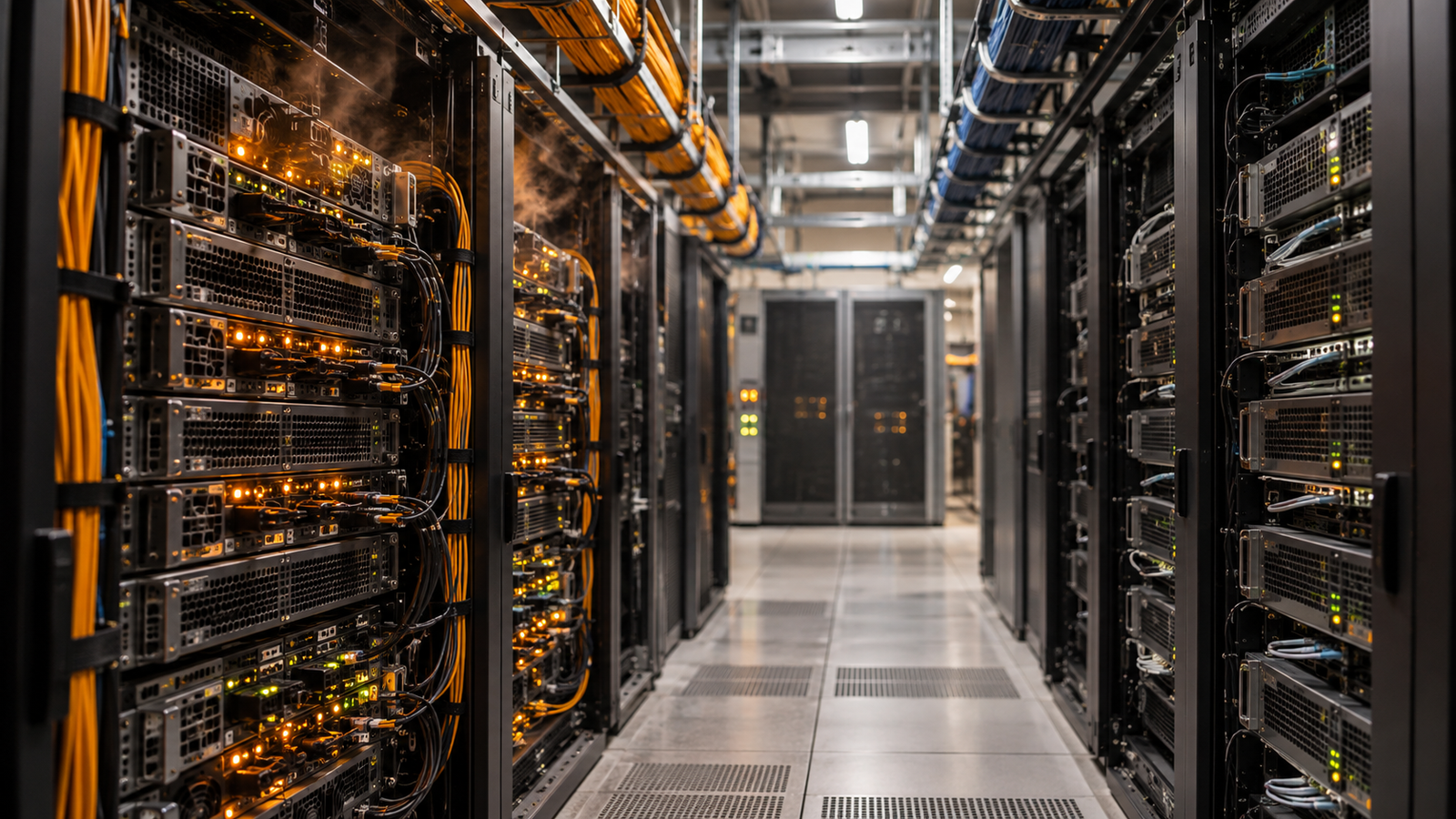
If you are building an AI infrastructure budget for 2027, one line item just moved from the forecasting column to the contracts column. Micron told investors on September 30 that it has completed agreements covering the vast majority of its calendar 2027 HBM bit supply, at significant year-over-year price increases.
Read that twice, because it says two different things. The quantity question for a large share of next year’s high-bandwidth memory is settled. So is the price, and the price went up.
For anyone modelling accelerator costs, that is a strange kind of good news. Uncertainty is expensive — it forces contingency, it delays commitments, it makes the finance conversation harder. Removing it is worth something. But the uncertainty is being removed at a level above where most 2026 budgets assumed it would land, and the memory line in an AI server bill of materials is large enough that the difference shows up in cost per token.
This is not a Micron earnings recap. The question worth working through is narrower: with most of 2027’s HBM already spoken for at known prices, what can an infrastructure buyer now treat as fixed, and what is still genuinely open?
Key takeaways
- Micron CEO Sanjay Mehrotra said the company has completed agreements for the vast majority of its calendar 2027 HBM bit supply, with significant year-over-year price increases that are narrowing the gross-margin gap between HBM and conventional DRAM.
- The fiscal Q4 numbers behind that statement: revenue of $54.2 billion, gross margin of 87.0%, non-GAAP EPS of $33.42, and full-year revenue of $133.2 billion, up 256%.
- Fiscal Q4 DRAM revenue rose 27% sequentially to $39.8 billion, but bit shipments grew only in the mid-single digits while average selling prices rose in the high teens. Revenue growth is coming from price, not volume.
- Contracted pricing reduces budget variance without reducing cost. The planning problem changes shape rather than going away.
- Micron is working with NVIDIA on what it calls the industry’s first custom HBM4E implementation, NVHBM, for next-generation GPUs and NVLink Fusion platforms — a development that cuts against the assumption that HBM is becoming more substitutable.
- The bear case is real but mostly concerns 2028 and beyond: additional qualified supply, yield improvements and capacity additions take time to reach volume.
Quick Navigation
- The Number Infrastructure Buyers Should Actually Read
- Why HBM Pricing 2027 Is Not a Commodity Memory Question
- Revenue Growth Is Not Capacity Growth
- What the 2027 Contracts Actually Lock In
- What HBM Pricing 2027 Still Leaves Open
- How HBM Pricing 2027 Lands in AI Server Economics
- The Bear Case Against the HBM Pricing 2027 Thesis
- What to Change in a 2027 Budget
- A Procurement Checklist
- FAQ
The Number Infrastructure Buyers Should Actually Read
The headline numbers from Micron’s fiscal fourth quarter are striking, and almost none of them change how you budget.
Table: scroll sideways to view all columns when needed.
| Metric | Fiscal Q4 2026 | Context |
|---|---|---|
| Revenue | $54.2bn | Up 31% sequentially, up 379% year over year |
| Gross margin | 87.0% | Up 210 basis points sequentially |
| Non-GAAP EPS | $33.42 | Up 33% sequentially |
| DRAM revenue | $39.8bn | 73% of company revenue, up 27% sequentially |
| Full-year revenue | $133.2bn | Up 256%, with DRAM alone above $100bn |
Those are results. The sentence that matters for planning is a forward one, from Mehrotra’s prepared remarks: Micron has completed agreements for the vast majority of its calendar 2027 HBM bit supply, with significant price increases year over year, narrowing the gross-margin gap with conventional DRAM.
On the call he put it more bluntly, noting that 2026 HBM prices were negotiated with customers the previous year, that a large part of the 2027 volume is already sold out, and that 2027 prices are much higher than 2026’s.
Four different things get confused in coverage of this, and separating them is the whole basis for using the information:
- Reported financial results describe a quarter that closed in early September. They are history.
- Contracted pricing is what Micron and its customers have agreed for future delivery. This is the forward-looking part, and it is what the 2027 statement refers to.
- Current market pricing is where memory trades today, which can move independently of either.
- Future supply conditions are what capacity, yield and qualification produce over the next two years.
The September results do not tell you what HBM costs today. The contracting statement tells you something more useful: that a large share of next year’s supply has a price attached already, and that the price was set in a market where suppliers had the leverage.
Why HBM Pricing 2027 Is Not a Commodity Memory Question
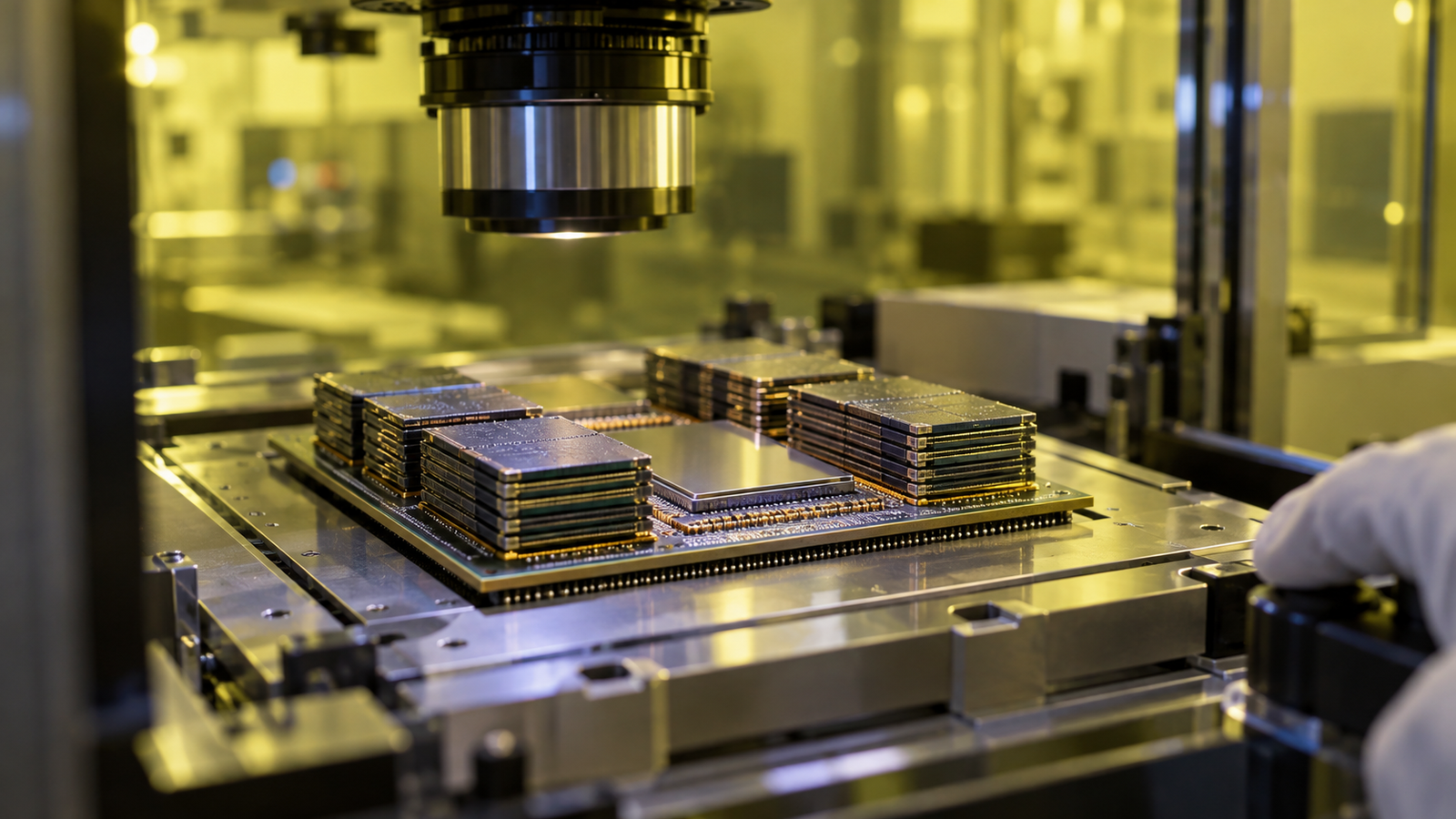
High-bandwidth memory is DRAM stacked vertically, connected by through-silicon vias, and packaged next to the processor on the same substrate. The point is bandwidth: an accelerator generating tokens reads weights and cache continuously, and the memory path, not the arithmetic, usually sets the pace.
That physical arrangement is why HBM does not price like the DRAM in a laptop.
- It consumes disproportionate wafer capacity. Stacked dies with TSV structures use substantially more silicon per usable gigabyte than standard DRAM, so every HBM bit displaces several conventional ones. Industry analysts have consistently described HBM wafer intensity as multiples of DDR5, which is why the AI build-out has pulled supply away from commodity memory.
- It is packaging-constrained, not just fab-constrained. HBM needs advanced packaging to attach to the accelerator. Capacity at that stage is a separate bottleneck with its own lead times.
- Yields are harder. Stacking twelve or sixteen dies and having the result work is a different manufacturing problem from producing one good die.
- Supply is qualified, not fungible. An accelerator vendor validates a specific supplier’s specific product for a specific platform. You cannot substitute an unqualified part because the price is better. Qualification has historically taken quarters, and missing a window has cost suppliers entire product cycles.
- It sells on long-term agreements. Because of all of the above, HBM is contracted ahead rather than bought on spot. That is the mechanism behind the 2027 statement, and it is also why HBM prices are stickier in both directions than commodity DRAM.
The practical implication: HBM behaves less like a commodity input and more like a negotiated, capacity-reserved component — closer to how you would buy fab capacity than how you would buy RAM. We worked through the cost side of this in our breakdown of AI memory costs.
Revenue Growth Is Not Capacity Growth
The DRAM figures are where the pricing environment becomes visible, and they are worth reading carefully rather than celebrating.
Fiscal Q4 DRAM revenue was $39.8 billion, up 27% sequentially. Over the same period, bit shipments rose only in the mid-single-digit percentage range while average selling prices rose in the high teens.
That decomposition is the story. Roughly a fifth of the sequential revenue growth came from selling more bits; the rest came from charging more for them.
- For a supplier, that is pricing power — demand exceeding available supply, with customers accepting higher prices rather than going without.
- For a buyer, it means the thing you are budgeting for is not getting more plentiful. Capacity grew slowly. Price did the work.
Two cautions about how far to push this. These are sequential, quarter-over-quarter figures for DRAM overall, not HBM specifically, and Micron does not break out HBM revenue separately. And one quarter’s price-volume split does not establish a trend — though Micron’s own guidance for the following quarter, revenue of about $61.5 billion with gross margin near 86%, suggests the company does not expect the environment to normalise immediately.
The useful inference for planning: if supply were expanding quickly, suppliers would be competing on volume. They are not. That is consistent with the capacity picture the rest of the industry has described, and it is the context in which 2027 contracts were negotiated.
What the 2027 Contracts Actually Lock In
The important distinction is between price uncertainty and high but contracted pricing. They feel similar on a spreadsheet and behave completely differently in a planning cycle.
Uncertainty costs you optionality. You hold contingency, you defer commitments, you build scenarios, and you argue with finance about a range rather than a number. Contracted pricing costs you money — but it costs a known amount, on a known schedule, which is a materially easier object to plan around.

What is now more knowable:
- A large share of 2027 HBM volume has a buyer and a price
- Micron’s exposure to spot volatility for that volume is reduced, and so is its customers’
- The direction of travel is established: 2027 pricing is above 2026 pricing, by the supplier’s own description
- The margin structure is converging, with HBM’s gross-margin gap to conventional DRAM narrowing
What this does not tell you:
- The actual price. “Significant increases” is a characterisation, not a number, and the contracts are private.
- Which customers hold the allocation. “Sold out” says nothing about who holds it.
- What is left. “Vast majority” implies a remainder, unquantified.
- What the other two suppliers agreed. SK hynix and Samsung negotiate separately.
For an infrastructure buyer the implication splits by position. If you have a long-term agreement, your 2027 memory cost is largely a known quantity and the planning problem is a budget problem. If you are buying through an OEM or a cloud provider, your exposure is to their contracts, with a margin on top. If you are hoping to buy into the remainder, you are competing for the leftover in a market the supplier describes as largely committed.
What HBM Pricing 2027 Still Leaves Open
Contracted does not mean settled. Four variables stay live.
- Allocation versus commitment. A contract for bits is not a guarantee of delivery schedule or configuration. Capacity per accelerator and stack height can change what a given bit commitment actually equips.
- Generation mix. HBM3E, HBM4 and HBM4E coexist across platforms. Which generation your accelerators require affects both price and availability, and the generations are not interchangeable.
- Qualification outcomes. Supplier share on a given platform depends on qualification, which continues to move. Third-party reports on HBM4 allocations have conflicted repeatedly through 2026 — some placing Micron at roughly a fifth of NVIDIA’s HBM4 allocation, others describing it as excluded from initial Rubin builds. These are supply-chain research claims, not company disclosures, and should be treated as contested.
- Everything downstream of the chip. Packaging capacity, server assembly, power availability and data-centre readiness all sit between a contracted bit and a running accelerator. A fixed memory price does not fix a delivery date.
How HBM Pricing 2027 Lands in AI Server Economics
Memory does not determine accelerator economics on its own. It is one input among several, and the honest version of this section is about where in the chain it shows up.
- In the bill of materials. HBM is one of the largest single cost components in an AI accelerator module, alongside the logic die and the packaging. A higher contracted memory price raises the module cost, which raises the server cost, which raises what a rack costs to stand up. None of the other components get cheaper to compensate.
- In depreciation. A more expensive asset depreciated over the same period produces a higher capital charge per hour. That flows into every internal rate and every build-versus-rent comparison, as we worked through in our piece on accelerator depreciation.
- In cost per unit of useful work. This is where it either hurts or does not. A higher hourly cost divided by more useful output per hour can net out flat. Memory capacity and bandwidth are also what let a model fit, batch larger and serve longer contexts — so the expensive component is the one buying the throughput. Whether the trade is favourable depends almost entirely on utilisation, which we examined in our analysis of accelerator utilisation.
- In cloud pricing. Providers facing higher input costs either absorb them, pass them through, or change instance mix. All three have happened in previous cycles. For anyone renting rather than building, the exposure is indirect and lagged, but it is not absent.
The analytical point worth holding onto: a contracted higher memory price makes the capital side of the equation more predictable and more expensive, while leaving the output side entirely in the operator’s hands. Two organisations buying identical hardware at identical contracted prices can still end up with cost per token that differs by multiples, because utilisation and serving efficiency are not contracted by anyone.
The Bear Case Against the HBM Pricing 2027 Thesis
Every memory cycle in history has ended with oversupply. Assuming this one is different is how people lost money in 2018. Here is what could weaken the pricing picture, with an honest view of the timing.
- More qualified suppliers. Three vendors compete in HBM, and their relative positions keep moving. Samsung’s qualification progress at NVIDIA has been the single most-watched variable in this market for two years, and a stronger Samsung position would give buyers a third credible source at the top of the stack. Reports on HBM4 allocation have conflicted enough through 2026 that nobody outside the negotiations should be confident about share.
- Capacity additions. Every supplier is investing heavily. HBM capacity added in 2026 arrives through 2027 and 2028.
- Yield improvements. A yield gain is effective capacity at no additional capital cost, and stacking yields improve as processes mature. This is the quietest and often the fastest source of supply growth.
- HBM4 and HBM4E transitions. Generational transitions redistribute share. A supplier that executes well on a new generation can gain allocation quickly; one that stumbles loses a cycle.
- Demand normalisation. The demand side assumes continued aggressive AI infrastructure spending. Hyperscaler capex plans are revised more often than they are announced.
- Alternative architectures. Approaches that reduce memory pressure per unit of output — better quantisation, more efficient attention, memory-efficient serving — reduce how much HBM a given workload requires.
Now the counterargument, which is the more interesting half.
Micron’s collaboration with NVIDIA on NVHBM, described as the industry’s first custom HBM4E implementation for next-generation GPUs and NVLink Fusion platforms, points the other way. Custom memory designed for a specific platform is harder to second-source than a standard part. If the industry moves toward platform-specific HBM, the thing that normally ends a memory cycle — commoditisation and substitution — gets harder, not easier. Switching costs rise, qualification becomes more bespoke, and pricing power persists longer than the capacity numbers alone would suggest.
There is also the structural change in how this market transacts. Long-term agreements covering a large share of volume dampen the spot-price dynamics that historically turned a supply increase into a price collapse within a quarter. Contracts do not prevent a downturn; they delay and smooth it.
Which force wins is not knowable from here, and anyone claiming otherwise is guessing. What can be said with reasonable confidence is about timing: capacity, yield and qualification all operate on multi-quarter cycles, and 2027’s supply is already largely committed. A meaningful loosening is a 2028 question.
What to Change in a 2027 Budget
The practical shift is from modelling a range to negotiating a number, and from arguing about memory cost to arguing about memory-cost-per-unit-of-output.
What can now be budgeted with more confidence:
Table: scroll sideways to view all columns when needed.
| Item | Why it firmed up |
|---|---|
| Direction of HBM pricing into 2027 | The supplier has stated significant year-over-year increases |
| Availability of contracted volume | Most of Micron’s 2027 bits are committed, which also means allocated |
| Supplier margin posture | The HBM-to-DRAM margin gap is narrowing, so discounting is unlikely |
| Memory as a share of accelerator cost | Rising, not falling, for the next cycle |
What stays uncertain, and should keep a contingency line:
Table: scroll sideways to view all columns when needed.
| Item | Why it is still open |
|---|---|
| Your actual unit price | Contracts are private and vary by customer and volume |
| Generation and configuration | Capacity per accelerator and stack height affect total cost |
| Supplier share on your platform | Qualification outcomes continue to move |
| Delivery timing | Packaging, assembly and data-centre readiness are separate constraints |
| 2028 and beyond | Capacity additions and yield gains land after the contracted window |
Three budgeting moves follow from that split.
- Model memory as a contracted input, not a market input. If you buy at scale, that means getting a number into the agreement rather than carrying a range. If you buy through an OEM or cloud, it means asking what their exposure is and when their agreements renew.
- Stop assuming memory cost declines. The decades-long reflex that memory gets cheaper per bit does not apply to a supply-constrained component inside a capacity-limited manufacturing chain. Budgets built on an assumed annual decline are the ones that break.
- Shift the optimisation target. If the input price is fixed and rising, the remaining lever is output per unit of hardware. Utilisation, batching efficiency and serving architecture now carry more of the cost-reduction burden than procurement does.
A Procurement Checklist
Twelve questions worth having answers to before a 2027 plan is signed off.
- What is our contracted HBM price, and through what date?
- What volume is committed, and what are the penalties on both sides for missing it?
- Which HBM generation do our target accelerators require, and is that supply separately contracted?
- How much memory capacity per accelerator do our workloads actually need?
- Which suppliers are qualified on our platform, and what happens if one slips?
- What share of our accelerator BOM is memory, at contracted prices?
- Is packaging capacity a constraint on our delivery schedule, separately from chip supply?
- What depreciation period are we applying, and does it match how long the hardware stays competitive?
- What utilisation are we assuming, and what does cost per token look like at 50% of it?
- What are our power and cooling constraints, and do they bind before memory does?
- If we rent rather than buy, when do our provider’s input contracts renew?
- What is our exposure in 2028, when the contracted window closes?
Question 9 is the one that decides whether the higher contracted price actually hurts. A memory cost increase absorbed by better utilisation is an accounting event. The same increase on an under-utilised fleet is a budget problem.
FAQ
What will HBM pricing 2027 look like?
Higher than 2026, by the supplier’s own account. Micron said on September 30, 2026 that it had completed agreements for the vast majority of its calendar 2027 HBM bit supply with significant year-over-year price increases. The actual contract prices are private, and no credible public source provides a specific 2027 price, so treat any precise figure you see with suspicion.
Why is HBM so expensive?
Because it consumes far more wafer per usable gigabyte than standard DRAM, requires stacking many dies with through-silicon vias at yields that are harder to achieve, and depends on advanced packaging capacity that is itself constrained. It is also qualified per platform rather than interchangeable, which limits competitive pressure.
Why are HBM prices rising?
Demand from AI accelerators is growing faster than qualified supply. Micron’s fiscal Q4 figures illustrate the environment: DRAM revenue rose 27% sequentially while bit shipments grew only mid-single digits and prices rose in the high teens.
How do HBM contracts affect AI server costs?
They convert a variable input into a fixed one at a higher level. Memory is among the largest components in an accelerator’s bill of materials, so a contracted increase raises server cost, capital charge per hour and the floor under cost per token — predictably rather than unpredictably.
Who supplies HBM for AI accelerators?
Three companies: SK hynix, Samsung and Micron. Share depends on qualification at accelerator vendors, and it shifts by generation. Public reporting on HBM4 allocations has been inconsistent through 2026, so supplier share should be treated as contested rather than settled.
Can HBM prices fall in 2027?
For supply already under contract, the price is agreed and falling spot prices would not change it. Broader softening would need capacity additions, yield improvements or demand normalisation to arrive at volume — and those operate on multi-quarter cycles, which makes 2028 the more plausible window.
How does HBM affect GPU economics?
It is one input among several, and it works both ways. More memory capacity and bandwidth cost more and also let a model fit on fewer devices, run larger batches and serve longer contexts. Whether the higher price hurts depends mostly on utilisation.
What should AI infrastructure buyers budget for HBM?
Use your own contracted price if you have one, or ask your OEM or cloud provider about theirs. Do not budget an annual per-bit price decline for this component, and keep a contingency line for generation, configuration and delivery timing, which remain open even where price does not.
Keep reading
Here are the latest posts from the blog.
HBM Pricing 2027: What Locked Contracts Fix in Your Budget
NVIDIA Open Agent Safety Platform: What It Covers
AI Accelerator Depreciation: The Assumption Nobody Audits