SpaceX’s $40B GPU Lease: The Customer Sets the Price

SpaceX GPU

Published 28 October 2026. This is a developing financing story. As of publication, SpaceX had signed a binding commitment letter (24 October), but the master finance lease hadn’t been signed, the fixed rate hadn’t been set, and the deal hadn’t closed. We will update this article when SpaceX discloses pricing or closing.

SpaceX announced on 26 October that it had secured “the largest committed GPU financing”: roughly $40 billion of Nvidia Vera Rubin equipment, to be bought by an Apollo-managed entity and leased to SpaceX. The Form 8-K filed the same day is more careful. It describes a binding commitment letter signed on 24 October, a lease that has not yet been signed, and a fixed rate that will be set “at pricing.”

That missing rate is the most interesting part of the deal. In October, CoreWeave’s unsecured bonds traded at yields near 15%. Earlier in the year, the same company’s best-protected GPU loan carried a fixed rate of about 5.9%. Both are claims on one company’s GPU business. The difference came from who was expected to pay. SpaceX GPU financing will be priced by the same logic, and the documents suggest the investors are underwriting SpaceX far more than they are underwriting the chips.

Key Takeaways
  • Committed, not closed or priced. SpaceX signed a binding commitment letter on 24 October. The fixed rate, the master lease and closing come later, with closing expected before the end of 2026.
  • $40 billion is principal only. Interest and ongoing costs come on top. On illustrative assumptions, each percentage point on the rate adds roughly $1 billion of interest.
  • Rent repays the full hardware cost. Each quarterly payment covers one-twentieth of a tranche’s cost, so investors depend on SpaceX paying far more than on what used GPUs fetch.
  • SpaceX’s contracts end before the lease does. Only about 6% of its $63 billion backlog falls more than three years out. The lease runs to roughly 2032.
  • CoreWeave shows the customer setting the price. Its contract-backed, A3-rated GPU loan carried about 5.9% fixed. Its unsecured notes yielded near 15%. The instruments differ, so the gap reflects structure, not chips.
  • SpaceX’s earlier GPU leases look costlier than its bonds. Our estimate from its 10-Q puts the Valor lease debt at about 10.7% a year, against 5.35% to 6.65% coupons on its unsecured bonds.

Quick Navigation


How the SpaceX GPU financing actually works

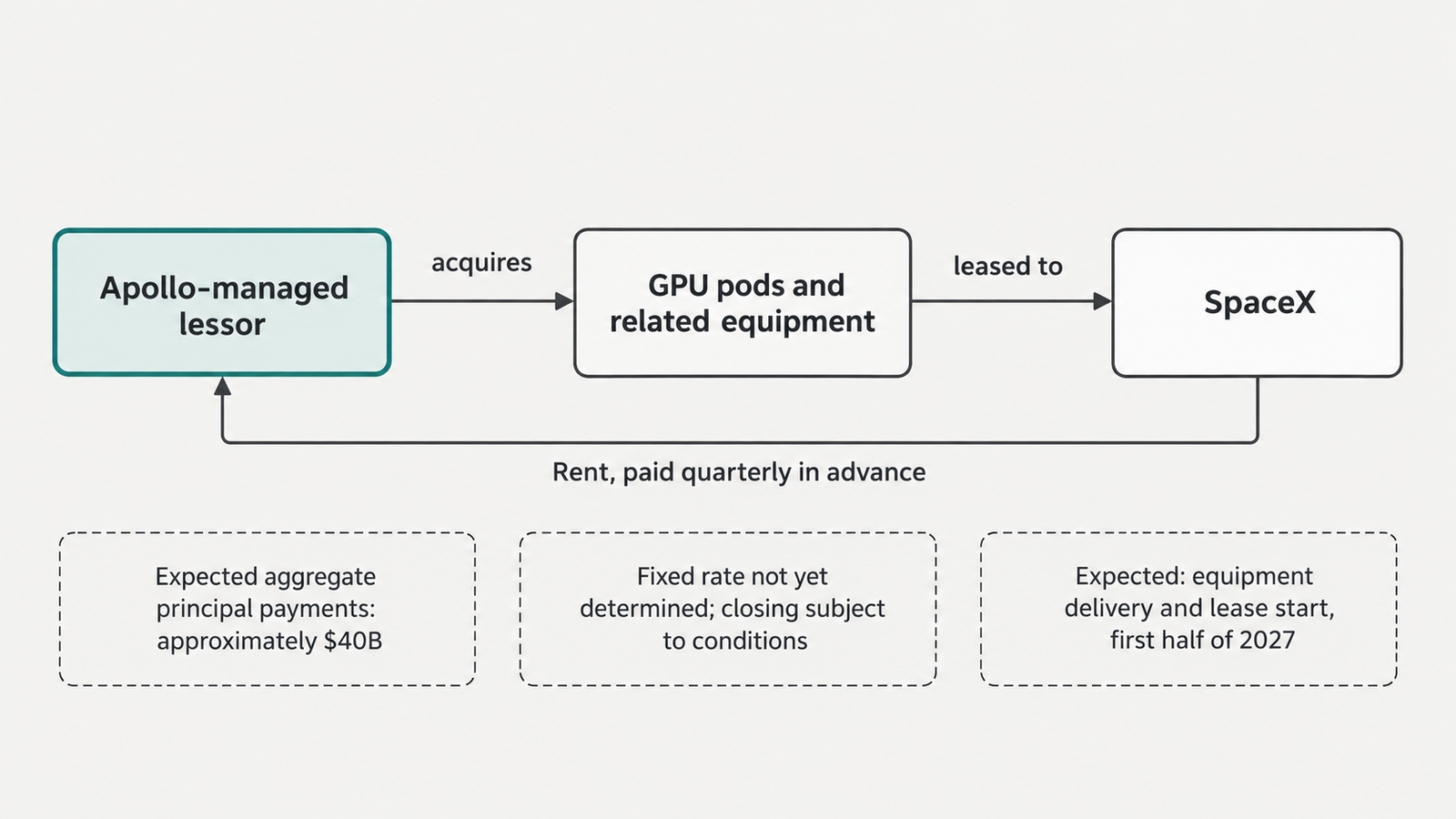
The 8-K describes a lessor “managed by Apollo Global Management” that will acquire “graphics processing unit pods and related equipment” and lease them to SpaceX for use at data centres SpaceX selects. Apollo and Goldman Sachs lead the financing parties, with Goldman as sole structuring agent. Funds managed by BlackRock, Goldman Sachs Asset Management and KKR-advised accounts made anchor commitments.

The investors won’t hold a single loan. Bloomberg reported that the debt will take the form of private bonds issued by an entity that sits off SpaceX’s balance sheet. Pimco bought about $4 billion of an “A2” tranche that sits between more senior and more junior slices, according to Bloomberg’s sources. So the risk is layered before it reaches anyone’s portfolio.

The rent formula is the most revealing disclosure. Equipment arrives in tranches, and each tranche gets its own lease schedule of roughly five to five and a quarter years. Rent is paid quarterly in advance and “will generally consist of” one-twentieth of the tranche’s financed cost, plus a fixed-rate charge on the outstanding balance, plus certain ongoing costs.

Twenty payments of one-twentieth each return the full cost of the equipment. The lessor is counting on SpaceX’s payments, not on selling used Rubin racks in 2032. The 8-K is silent on end-of-term ownership, purchase options, guarantees and prepayment. Elon Musk called it on X “primarily callable debt”, but the filing describes no call feature.

The issuing entity may sit off SpaceX’s balance sheet, but the lease won’t. Under US accounting rules, a lessee records a finance lease as a liability once it commences.
SpaceX GPU
What the $40 billion does and doesn’t include

SpaceX “expects aggregate principal payments under the lease schedules over their respective terms to total approximately $40 billion.” That is the equipment cost being financed. The fixed-rate charge and the ongoing costs come on top, and neither has a published figure yet.

The scale matters. SpaceX reported $38.8 billion of long-term debt and capital lease obligations at 30 September in its third-quarter Form 10-Q. Once every tranche has commenced, principal alone runs to about $2 billion a quarter. For context, SpaceX generated $13.1 billion of operating cash flow in the first nine months of 2026 and held $89.9 billion of cash and marketable securities at quarter-end.

Four dates that are easy to confuse
MilestoneDateStatus
Commitment letter signed24 October 2026Done
Announcement and 8-K26 October 2026Done
Pricing (fixed rate set)Before the master lease is signedNot yet disclosed
Master lease signed and deal closedExpected before end of 2026Subject to unspecified conditions
Lease schedules beginOn delivery, expected first half of 2027Expected

Musk said on 25 October that the financing had closed. The company’s own filing, made a day later, does not say that. Where the two differ, this article follows the filing.

Whose credit backs SpaceX GPU financing

SpaceX has investment-grade ratings: Baa1 from Moody’s, BBB+ from Fitch and BBB from S&P, all with stable outlooks, according to Reuters on 18 June. Musk’s claim that “we’re investment grade and have Starlink & launch revenue” is accurate on the first point. Reuters also reported that S&P viewed the AI segment as the uncertain part, because of its capital needs and competition.

Bond investors have been less generous than the agencies. A Bloomberg Opinion column in July calculated that SpaceX’s average spread over Treasuries was slightly wider than the average for BB-rated, sub-investment-grade debt. On 21 October, the spread on SpaceX’s 6.6% notes due 2046 widened to 2.64 percentage points, and its five-year credit default swaps were near record highs, according to Bloomberg and ICE data relayed by Seoul Economic Daily.

These four measures answer different questions. A rating is an agency’s opinion of default risk. Musk’s description is an issuer’s claim. A bond’s yield is what investors pay today for an existing security with its own maturity and liquidity. The lease rate will be a negotiated price for a new, tranched instrument. None of them substitutes for the others.

The operating picture is strong but concentrated. Third-quarter revenue was $14.6 billion: $7.56 billion from the Super Intelligence (SI) segment, $5.25 billion from Starlink and $1.77 billion from launch. One SI customer supplied 34.5% of it. Nine-month capital spending of $48.1 billion far exceeded operating cash flow. SpaceX’s CFO cites payback periods under a year on SI infrastructure, without publishing the calculation.

A backlog that ends before the lease does

SpaceX reported a backlog of $63.0 billion at 30 September. It expects 67% of that to be recognised within a year, 27% in one to three years and 6% after that. Six per cent is about $3.8 billion. The lease payments, by contrast, run from 2027 to roughly 2032.

The contracts are also shorter than they look. Google’s agreement to pay $920 million a month runs to June 2029, but either side can end it on 90 days’ notice after 31 December 2026, TechCrunch reported from SpaceX’s filing. Anthropic’s $1.25 billion-a-month Colossus 1 agreement runs through 2029.

So the later years of rent are not covered by any contract SpaceX has disclosed. Investors are lending against SpaceX’s ability to keep selling compute, and behind that, against Starlink and launch. That is the opposite of how CoreWeave structures its cheapest debt.

CoreWeave: one GPU business, two prices

CoreWeave is the cleanest test of the idea that the customer, not the hardware, sets the price of GPU debt. The company borrows in two very different ways, and the price gap between them is wide.

The first is the delayed-draw term loan, or DDTL, raised inside a special-purpose subsidiary. CoreWeave’s March 2026 overview of DDTL 4.0 describes an $8.5 billion facility priced at SOFR plus 2.25 percentage points, with a fixed tranche at about 5.9%. Moody’s rated it A3. Lenders hold a first-priority claim on the equipment, the data-centre leases and the cloud contract with an unnamed investment-grade customer, and the loan is non-recourse to CoreWeave itself. CoreWeave says that cost is about 1.75 points below DDTL 3.0, which was priced at SOFR plus 4% in 2025 against an OpenAI contract.

The second is ordinary unsecured bonds. In mid-October, CoreWeave’s 9.75% notes due 2031 traded at a yield to maturity of about 15.8%, as we covered in our analysis of CoreWeave’s secured loans and unsecured bonds. No specific assets back those notes.

Several things differ between the two. One is a rated, secured loan priced at origination in March; the other is a market yield on an unsecured bond in a much worse October. Neither is backed by the chips in the SpaceX deal. The comparison still shows something useful: an A3 rating on a GPU loan came from the investment-grade customer’s contract and the security package around it. CoreWeave’s own credit, priced near 15%, was largely kept out of the loan.

SpaceX’s lease points the other way. The 8-K doesn’t mention any customer contract pledged to the lessor, and SpaceX’s contracts are shorter than the lease. The rent comes from SpaceX’s general resources. That puts the lease closer to SpaceX’s own corporate credit than to a contract-backed CoreWeave loan, with tranching and the equipment adding protection on top.

SpaceX GPU financing already has a costlier precedent

The Apollo deal is not SpaceX’s first GPU lease. Fortune reported from SpaceX’s IPO prospectus that entities of Valor Equity Partners, led by SpaceX director Antonio Gracias, signed three GPU leases with an xAI subsidiary in October 2025, January 2026 and April 2026. SpaceX guarantees the payments. The obligations total close to $20 billion over their terms, and SpaceX’s auditor treated the arrangements as loans, with the GPUs as collateral.

SpaceX’s quarterly filings let us estimate what that money costs. Related-party debt stood at $12.9 billion on 30 September. Related-party interest expense was $864 million for the first nine months and $513 million for the first half, which leaves $351 million for the third quarter. Annualised against the quarter’s average balance, that is about 10.7%. This is our calculation, not a disclosed rate, and the interest line may include fees or other related-party items.

For comparison, SpaceX’s $25 billion of unsecured bonds, priced in June, carry coupons from 5.35% on the 2031 notes to 6.65% on the 2056 notes. If our estimate is close, the company’s existing GPU leases cost several points more than its plain unsecured debt.

There are good reasons for some of that gap. The first lease was signed when xAI was a separate company whose own secured notes carried a 12.5% coupon, according to the same Fortune report. Related-party terms are also not a clean market price. That makes the Apollo rate a useful test. A rate near SpaceX’s bond curve would show that SpaceX’s credit now carries its GPU leases. A rate near the Valor level would suggest investors still price SpaceX’s AI hardware as a separate risk.

Where the chips still matter in SpaceX GPU financing

The hardware doesn’t disappear from the analysis. It decides how much investors recover if SpaceX stops paying, and it shapes how large the senior and junior tranches can be. The question is what a fleet of used Vera Rubin systems would fetch in the circumstances where SpaceX can’t pay.

Nvidia’s Rubin announcement describes the Vera Rubin NVL72 rack as 72 Rubin GPUs and 36 Vera CPUs, and claims up to ten times lower inference cost per token than Blackwell for mixture-of-experts models. That is a vendor claim, but it shows the lender’s problem: each generation is sold on making the last one cheaper to replace, and Rubin won’t stay Nvidia’s newest platform for five years.

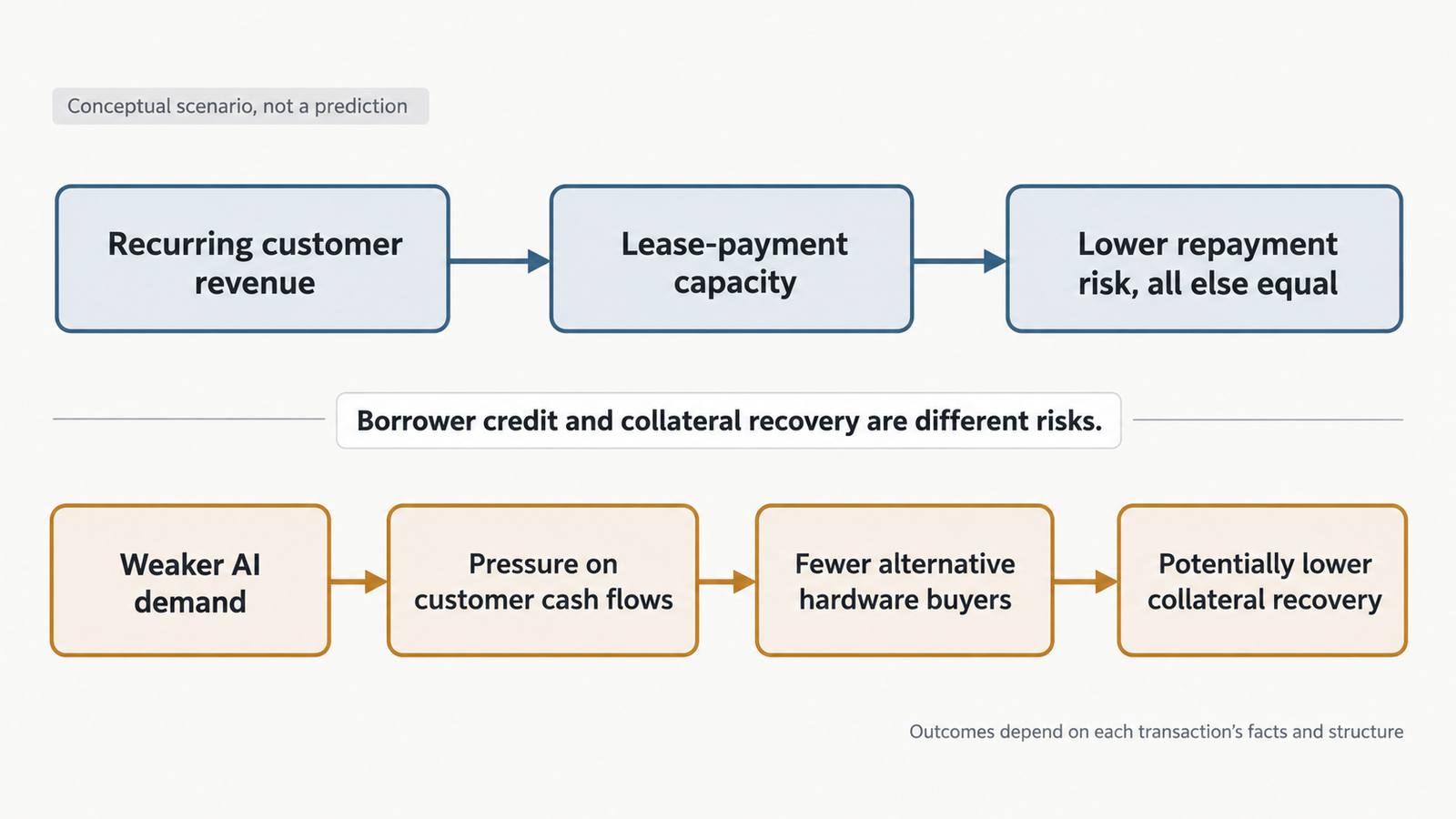
That is the residual-value problem in AI chip financing, and it bites hardest when borrower stress and collateral value move together. If AI demand falls, SpaceX’s SI revenue and used-GPU prices fall at once. Book value won’t help, for the reasons in how accelerator depreciation changes the economics of AI infrastructure.
SpaceX GPU

SpaceX’s answer is that its rent doesn’t depend only on AI. Musk wrote that debt markets had “almost entirely shut off access” for companies without substantial revenue outside AI data centres. Starlink and launch are that revenue. The lessor is buying exposure to SpaceX’s whole business, with the GPUs as a backstop.

Location matters too. CoreWeave’s DDTL 4.0 lenders hold a claim on the data-centre leases. The SpaceX 8-K says nothing about site access, and racks that need specific power and liquid cooling are hard to repossess.

The missing number in SpaceX GPU financing

The fixed rate will be set at pricing, which comes before the master lease is signed. Bloomberg reported that a volatile week for AI debt had disrupted pricing discussions. Until SpaceX discloses the rate, nobody outside the deal can say how investors weighed SpaceX’s credit against the hardware.

The rate also determines the cost. Because the balance falls by one-twentieth each quarter, the average balance over a five-year schedule is roughly half the original cost. On that basis, each percentage point on the rate adds about $0.95 billion to $1.05 billion of interest across $40 billion of principal. The range depends on whether the charge is calculated before or after each payment, which the 8-K doesn’t specify. These are illustrative figures that ignore delivery timing and ongoing costs.

A worked example: one tranche, three lessees

Take a $1 billion tranche of identical racks on the same rent formula: twenty quarterly principal payments of $50 million, with interest on the balance left after each payment. Only the lessee and the protections change. The rates are borrowed from the instruments discussed above. They are not quotes for the SpaceX deal.

Lessee and protectionIllustrative rateInterest over the leaseTotal paid
GPU cloud SPV with a pledged contract from an investment-grade customer (like DDTL 4.0)5.9%$140 million$1.140 billion
Subsidiary lease guaranteed by an investment-grade parent, related-party lessor (SpaceX’s estimated Valor cost)10.7%$254 million$1.254 billion
GPU cloud’s own unsecured credit (CoreWeave 2031 notes yield)15.0%$356 million$1.356 billion

The hardware is the same in every row. The interest bill more than doubles between the first and last rows because the source of repayment changes. The first row also shows that a company whose own bonds yield near 15% can borrow cheaply when a stronger customer stands behind the contract.

Three ways SpaceX GPU financing could play out

These are conceptual scenarios, not predictions. They show who absorbs the damage as conditions change.

Strong AI demandWeaker AI demandSector-wide downturn
SpaceX SI revenueGrows with capacityFalls; customers like Google can exit on 90 days’ notice after 2026Falls sharply
Rent capacityCovered by SI aloneCovered with help from Starlink and launchDepends heavily on Starlink and launch
Used Rubin valuesFirmSofter as buyers wait for newer chipsWeak, with few buyers
Who takes the loss firstNobodySpaceX shareholders, through lower returns on computeShareholders, then junior lease tranches if SpaceX defaults

In the first two columns, the lease investors are mostly protected by SpaceX’s balance sheet. Only the third column, where SpaceX itself is in trouble and used GPUs are hard to sell at the same moment, tests the hardware’s value.

What to watch next in SpaceX GPU financing

  • The rate. Near SpaceX’s unsecured bond yields would support the argument here. Well above them would mean investors are charging extra for AI or equipment risk.
  • The master lease. If filed, look for guarantees, purchase options, prepayment rights, default terms and any pledge of customer contracts or data-centre leases.
  • Closing, expected before the end of 2026 under conditions the filing doesn’t describe.
  • SpaceX’s spreads and default swaps. Wider spreads before pricing would likely mean a higher lease rate.
  • The Google contract after 31 December, when its termination right becomes live.
  • Backlog length in the annual report, and first deliveries in 2027, when rent starts.

Three findings would change this conclusion: a customer contract pledged to the lessor, a third-party guarantee, or a rate far above SpaceX’s own debt.

What SpaceX GPU financing says about AI credit

The question was how much of the price of AI hardware financing reflects the hardware and how much reflects the customer. On the documents available, the customer dominates. CoreWeave got investment-grade pricing by putting a stronger customer’s contract between lenders and itself. SpaceX is the customer in its own deal, and the rent formula repays the full equipment cost from SpaceX’s cash flows.

The chips still set the floor on recovery. That matters most in the scenario where SpaceX and the AI market weaken together. The rate, when SpaceX discloses it, will show how much investors charged for that scenario.

Frequently asked questions

What is SpaceX’s $40 billion GPU lease?

It is a planned master finance lease. An Apollo-managed lessor will buy Nvidia Vera Rubin GPU pods and related equipment and lease them to SpaceX for its data centres. SpaceX expects principal payments of about $40 billion across lease schedules of roughly five years each. Interest and certain ongoing costs are charged on top of that.

Has SpaceX’s GPU financing closed?

Not according to SpaceX’s filings as of 28 October 2026. SpaceX signed a binding commitment letter on 24 October. The master lease will be signed after pricing, and closing is expected before the end of 2026, subject to conditions the filing doesn’t describe. Musk said on X that the deal had closed, but the 8-K describes a commitment.

What interest rate will SpaceX pay?

It hasn’t been disclosed. The 8-K says a fixed rate will be set at pricing, before the master lease is signed. Bloomberg reported that pricing talks were still under way on 25 October. On illustrative assumptions, each percentage point on the rate adds roughly $1 billion of interest across the $40 billion.

Who owns the GPUs under the lease?

The Apollo-managed lessor acquires the equipment and leases it to SpaceX, according to the 8-K. The filing doesn’t say what happens at the end of the term or whether SpaceX can buy the equipment. Because rent repays one-twentieth of each tranche’s cost every quarter, the lessor recovers the full cost through rent if SpaceX pays as scheduled.

Is SpaceX investment grade?

Yes, by the agencies. Moody’s rates it Baa1, Fitch BBB+ and S&P BBB, all with stable outlooks as of June 2026. Bond markets have been more sceptical. SpaceX’s spreads and credit default swaps widened through October, and a Bloomberg Opinion column argued in July that its bonds traded more like high-yield debt.

Why compare SpaceX with CoreWeave?

CoreWeave borrows against GPUs in two ways that are priced very differently. Its A3-rated loan, secured by an investment-grade customer’s contract, carried a fixed rate of about 5.9%. Its unsecured notes yielded about 15.8% in October. The instruments differ, so the comparison shows how structure and customer credit drive price. It doesn’t show that the chips are equivalent.

What happens to the GPUs if AI demand falls?

SpaceX would still owe rent, which it could pay from Starlink and launch revenue. The equipment’s value matters mainly if SpaceX defaults. Then investors depend on resale prices for used Vera Rubin systems, which would probably be weak in the same downturn. Junior tranches would take losses first.

What should readers watch next?

Watch for the pricing disclosure and the fixed rate, the master lease terms if SpaceX files them, and closing before year-end. Also watch SpaceX’s bond spreads, the status of the Google contract after 31 December 2026, and the first Vera Rubin deliveries in 2027.


Keep reading

Claude API rate limits

Claude API Rate Limits in 2026: How Many Requests Can You Run?

Claude API rate limits on the Start tier allow most current models 2,000,000 input tokens and 400,000 output tokens per minute, with 1,000 or 4,000 …
Enterprise AI Spending

Enterprise AI Spending Hit $177B. Agents Are Driving the Bill

Figures checked against Menlo Ventures’ 2026 State of Enterprise AI report on 4 November 2026. Market sizes are Menlo estimates, shown as annualised run rates. …
Machine Unlearning

Machine Unlearning: Can We Really Trust an Edited AI Model?

Checked against Hirundo’s and Lazarus AI’s published results, CrowdStrike’s DeepSeek-R1 study, Lawfare and the Federal Register on 4 November 2026. Ask Alibaba’s Qwen3.6-35B-A3B about Tiananmen …
Agentic AI Statistics

30 Agentic AI Statistics for 2026: Adoption, Spending and Risk

Last updated: 3 November 2026. This page is updated monthly; each figure keeps its original publication date. Agent traffic at one healthcare booking platform rose …

AI Infrastructure Debt: CoreWeave Repricing

AI infrastructure debt

In April, CoreWeave sold $1.75 billion of 9.75% senior unsecured notes due October 2031 at par. A week later it added another $1 billion of the same notes, and investors paid 102 cents on the dollar for them. On Thursday, 15 October, CNBC reported the yield to maturity on those notes at 15.78% (as cited by Benzinga). On our arithmetic, that yield corresponds to a price of roughly 80 cents. In six months, the buyers of the add-on have lost about a fifth of their money on paper. CoreWeave hasn’t missed a payment, cut its revenue guidance or defaulted on anything.

That gap is the story. The coupon CoreWeave pays hasn’t changed, and neither has a single dollar of what it owes. What changed is the price at which other people are willing to take on that obligation. This article asks what that price says about AI infrastructure debt: whether lenders are punishing one company after a bad week for its shares, or repricing a business model in which expensive, fast-ageing GPUs must earn enough to cover both the technology and the loan that bought it.

The short answer is that the evidence supports a repricing of financing risk, not a forecast of default. The longer answer depends on three things that are easy to blur: what a GPU is worth to a lender, how quickly contracted demand turns into cash, and what happens when the cost of borrowing rises for a company that must keep borrowing.

Key Takeaways
  • A 15% yield is a price, not a verdict. CoreWeave’s 9.75% 2031 notes yielding 15.78% means they trade near 80 cents. It doesn’t mean a missed payment or a promised 15% return.
  • CDS spreads overstate default odds if read naively. Converting about 1,088 basis points into a default probability depends on recovery assumptions, and the spread also includes a premium for fear and illiquidity.
  • GPU collateral is weaker than its purchase price suggests. Lenders anchored CoreWeave’s secured loans on customer contracts first, a sign of how little they rely on resale value alone.
  • $103.7 billion of RPO is not $103.7 billion of cash. Only 41% is due within two years, and most of it requires capacity that hasn’t been built yet.
  • Refinancing is the pressure point. About $10.6 billion of principal falls due by the end of 2027, so the price of new money matters more than the price of old bonds.
  • The $18 billion junior tranche is Anthropic’s, not CoreWeave’s. It belongs to the Broadcom TPU financing, and its pricing is still unknown.

Quick Navigation


Reading the AI infrastructure debt signal in CoreWeave’s bonds

A fixed coupon, a moving yield

A bond’s coupon is the interest written into the contract. CoreWeave’s June 2026 dollar notes pay 9.625% a year on $1.25 billion until July 2032, whatever happens to the share price. The yield to maturity is different. It is the annual return a buyer would earn by paying today’s market price, collecting every coupon and getting 100 cents back at maturity. When the price falls, the same fixed coupons plus a larger gain at maturity produce a higher yield. Price and yield move in opposite directions.

The numbers reported around 14 and 15 October fit together once that relationship is applied. On Wednesday, CNBC put the 2032 notes at about 14.8%, after touching 15% briefly, and the 2031 notes at about 14.9% (via investingLive). A 9.625% bond maturing in mid-2032 yields about 14.9% at a price of 80, by our calculation using semi-annual compounding and settlement on 15 October. That matches separate reporting, based on Forbes data, that the 2032 notes had fallen below 80 cents. On Thursday the 2031 notes were reported at 15.78% by CNBC and “past 16%” by Reuters. Different dealers, quote times and bid or offer sides easily explain a gap of a few tenths. Corporate bonds trade over the counter, and a quoted yield is often an indicative level rather than a trade.

Two cautions follow. A 15% yield isn’t a promised 15% return. It’s what a buyer earns only if CoreWeave pays every coupon and repays principal in full. If the company restructured, the realised return would depend on what creditors recovered. Suppose a buyer paid 79.8 for the 2031 notes, collected two years of coupons (19.5 points), then recovered 40 cents in a restructuring. That buyer would end up with 59.5 against 79.8 invested, a loss of about a quarter. The 40% recovery figure is purely illustrative. Nor does crossing 15% prove anything on its own. It’s a round number, and round numbers attract headlines more than they mark legal or economic thresholds.

Bonds, CDS and shares measure different things

A credit default swap (CDS) is insurance-like protection on a borrower’s debt. The buyer pays an annual premium, quoted in basis points, and is compensated if a defined credit event occurs. CNBC reported CoreWeave’s five-year CDS briefly above 1,140 basis points on 15 October before settling at 1,088. In other words, protecting $10 million of debt cost about $1.09 million a year. Reuters put the cost at about 1,000 basis points and translated it into a “nearly 63%” chance of default within five years.

That kind of conversion needs its assumptions shown. Assume 40% recovery and a constant default rate, and a 1,088bp spread implies roughly 60% cumulative default probability over five years. Change the recovery assumption and the answer moves a lot. More importantly, CDS spreads also price fear, illiquidity and the cost of hedging, which is why spread-implied probabilities usually run well above realised default rates. The figure is a market price, not an actuarial estimate.

The share price fell 15.46% to $65.78 on Wednesday, then recovered on Thursday after Nvidia’s chief executive, Jensen Huang, said publicly that CoreWeave’s cost of capital was falling. Equity holders get the upside and absorb losses first. Bondholders get at most par. When shares, bond yields and CDS spreads all move the same way, they’re related, but they aren’t measuring the same thing. In this case they did move together, and the bond and CDS markets kept pricing stress while the shares bounced.

AI infrastructure debt

How GPU-backed AI infrastructure debt is secured

Not all AI infrastructure debt is the same, even inside one company. The 2031 and 2032 notes under stress are senior unsecured: they rank ahead of shareholders but have no specific assets pledged to them. Much of the rest is delayed-draw term loans (DDTLs) held in special-purpose subsidiaries. CoreWeave’s Q2 10-Q says these are “collateralized with the assets underlying the contributed contracts and the pledged contractual cash flows, generally from investment grade counterparties.” StockTitan’s reading of the debt note puts DDTL debt at $13.6 billion and unsecured senior notes at $10 billion, out of $35.6 billion of principal at 30 June.

The DDTL lender, in other words, is mainly lending against a customer contract, with the GPUs as a second line of defence. That’s a sensible structure. It also means the unsecured noteholders sit behind lenders with claims on many of the company’s most valuable assets.

One accelerator, five different values

A GPU has several values at once, and they aren’t interchangeable:

  • Purchase price, what CoreWeave paid, often under supplier financing.
  • Carrying value, the purchase price less accumulated depreciation. CoreWeave’s FY2025 10-K depreciates technology equipment over six years.
  • Resale value, what a buyer in the secondary market would pay for that specific card, today, in that condition.
  • Value to a customer, which can be much higher than resale value inside a powered, networked cluster with a contract attached.
  • Collateral recovery value, what a lender actually collects after removal, transport, refurbishment, legal costs and a forced-sale discount.

The last figure is the one that matters in a default, and it’s the one with the least public evidence. As we argued in our piece on why accelerator useful-life assumptions deserve more scrutiny, a six-year accounting life is a management estimate. It isn’t a measurement of how long a chip will earn its keep. An accelerator can keep computing long after newer models outgrow its memory and its rental price collapses.

When AI infrastructure debt outlives its collateral

The risk for a lender isn’t that GPUs stop working. It’s that the loan amortises more slowly than the market value of the hardware falls. If a new chip generation arrives every year or two, the cards backing a five-year loan may be two generations old before half the principal is repaid. Their value also depends on things that don’t travel with them. A rack of liquid-cooled accelerators is worth far more in a data centre with contracted power than on a loading dock. Our analysis of the residual-value problem in the $60 billion AI chip financing made the same point about TPUs: secondary markets for accelerators are thin and untested under stress, and the conditions that push a borrower towards default are likely to depress resale prices at the same time.

We found no public disclosure of the loan-to-value ratios or advance rates on CoreWeave’s DDTLs, so we won’t guess at them. What the filings do show is that lenders chose to anchor these loans on contracts rather than on hardware alone. That choice says something about how much confidence they place in GPU collateral by itself.

AI infrastructure debt

Backlog is not cash

CoreWeave’s chief executive, Mike Intrator, answered the sell-off in a memo to staff. According to Reuters, he argued that the company’s backlog “more than covers” its debt obligations. He also wrote, as Yahoo Finance reported, that “there will be periods of time when the market misunderstands” and “acts irrationally”. The argument deserves to be taken seriously, because on the company’s own numbers it is arithmetically true. It just doesn’t answer the question lenders are asking.

What $103.7 billion of RPO actually promises

The term CoreWeave uses in its filings is remaining performance obligations, or RPO: contracted revenue it has not yet earned because it hasn’t yet delivered the compute. At 30 June the 10-Q reported “$103.7 billion of unsatisfied RPO”. It expected 41% of that to be recognised within 24 months, 39% in months 25 to 48, and the rest by month 78. Set against $35.6 billion of debt principal, that is a ratio of almost three to one.

Here is what sits between that RPO figure and a bond coupon:

  • Revenue must be earned first. Roughly $42.5 billion is scheduled for the next two years, and most of it depends on capacity that hasn’t been built yet. CoreWeave spent $14.1 billion on property and equipment in the first half of 2026 alone, and the 10-Q lists $35.5 billion of future lease payments on data-centre leases that haven’t started.
  • Revenue isn’t free cash. Every dollar recognised carries power, staffing, lease and interest costs. The Q2 net loss was $626 million on $2.58 billion of revenue.
  • Timing doesn’t line up. About $10.6 billion of principal falls due by the end of 2027. The 41% tranche of RPO arrives over the same window, but only as new data halls are energised.
  • Contracts aren’t immune to change. The 10-Q says the transaction price can include “potential reductions” in future. The termination terms in customer contracts weren’t disclosed in the sections we could read.
  • Customer concentration is falling but still high. CoreWeave’s largest customer was 36% of Q2 revenue, down from 71% a year earlier. Reuters names Microsoft and OpenAI among the biggest customers.

There’s also a point in the company’s favour. CoreWeave held $9.7 billion of deferred revenue at 30 June, which is cash customers have paid ahead of delivery. Deutsche Bank told clients on 15 October that roughly two-thirds of a backlog above $100 billion sits with investment-grade counterparties (World Today News, republishing CNBC). A big customer’s appetite for AI spending doesn’t make its contract unreliable. The question isn’t whether the customers will pay. It’s whether CoreWeave can deliver the capacity on time and on budget, while servicing debt raised before that capacity earns anything.

The refinancing loop in AI infrastructure debt

Refinancing means repaying maturing debt with new debt. In the early years, AI infrastructure debt is usually rolled over rather than repaid from profits. A company that is investing faster than it generates cash has to keep doing that, so the market price of its existing bonds becomes an operating variable rather than a scorecard.

The pieces are all in the filings. Q2 interest expense was $640 million, about a quarter of revenue for the quarter, and cash interest paid in the first half was $806 million. Reuters reports that CoreWeave lifted its 2026 capital-expenditure forecast in August to as much as $39 billion. About $4.4 billion of principal is due in the rest of 2026 and $6.2 billion in 2027, according to StockTitan’s reading of the maturity table. Cash at 30 June was $5.5 billion. Since then CoreWeave has added a $2.6 billion DDTL facility and $4.2 billion of 2.875% convertible notes, which shows that at least one door is still open.

Here is an illustrative calculation, not a forecast. If CoreWeave refinanced the $6.2 billion due in 2027 at 15% rather than at the 9.75% it paid in April, the extra interest would be about $325 million a year. That’s roughly half of one quarter’s current interest bill. It’s survivable on its own, but it sets the mechanism in motion. Higher financing costs must be recovered through higher prices or higher utilisation. As our analysis of why accelerator utilisation decides the cost of every token showed, idle capacity is paid for whether or not anyone uses it. A GPU cloud that charges more to cover its borrowing costs loses ground to hyperscalers that fund capex from operating cash flow. Lower prices, in turn, make the next loan harder to justify.

The loop also explains why commercial success doesn’t settle the matter. CoreWeave can win contracts, grow revenue and deliver well, and still find each new dollar of capital more expensive. It runs the other way too. A wide credit spread doesn’t stop the business from executing. A spread at 1,088 basis points mostly means that the next unsecured bond, if CoreWeave chose to issue one, would be expensive. Convertibles at 2.875% are cheaper in cash terms, but they shift some of the cost to shareholders through dilution.

Nvidia’s role cuts both ways. Its 2025 order form commits it to buy qualifying unused capacity through 13 April 2032, from an initial value of $6.3 billion. That supports utilisation. As TokenPost notes, though, it is not a guarantee to CoreWeave’s lenders, and either side can end it under defined conditions. Huang’s public reassurance on 15 October helped the shares, but it doesn’t change any creditor’s claim.

Where CoreWeave differs from the $60 billion Anthropic chip deal

The sell-off didn’t happen in isolation. On 14 October Oracle shares closed down nearly 9% and Nebius fell about 10%, according to CNBC figures carried by investingLive. The same CNBC report put Oracle’s five-year CDS at 288 basis points, up more than 12% on the week. Intrator’s memo itself blamed “weakness and delays surrounding the attempted IPOs and debt financings” of rivals. These moves were correlated, but correlation doesn’t prove a common cause. Oracle is an investment-grade company with a large legacy software business. Nebius has a different balance sheet and depreciates its GPUs over four years rather than six. What they share is sensitivity to one variable: how quickly AI demand turns into cash for whoever owns the hardware.

The comparison most often drawn is with Broadcom’s financing for Anthropic. As reported by Bloomberg and summarised by Quartz on 2 October, banks were assembling about $60 billion of debt. According to Tech Times, the borrower is a special-purpose vehicle that buys Google TPUs from Broadcom and leases them to Anthropic under a five-year, $125.2 billion lease. The structure has a $42 billion Class A senior secured tranche with a partial residual-value guarantee from Broadcom, and an $18 billion Class B junior tranche.

The two have shared risks. Both rest on the value of specialised AI accelerators and on whether an AI customer keeps paying. But the structures are different in ways that matter. The SPV has one lessee and one revenue stream, and the chip vendor stands behind part of the hardware’s value. CoreWeave is an operating company with many customers, data-centre leases, construction risk and a stack of debt in which the stressed notes are unsecured claims on the parent. A lender to the Anthropic SPV is mainly underwriting Anthropic’s credit. A CoreWeave bondholder is underwriting CoreWeave’s ability to build, operate and refinance. The two are not equivalent, and price moves in one say little directly about the other. We covered the obligation side of that deal in Anthropic’s $518 billion compute commitment.

The $18 billion junior tranche belongs to that deal

Some commentary this week has linked an “$18 billion unguaranteed junior tranche” to CoreWeave. The reporting we could verify places it in the Anthropic financing as Class B, with Blackstone committing about $9 billion and syndicating the rest. Junior means it is repaid after the senior tranche. The absence of Broadcom’s guarantee on Class B isn’t stated outright in the reports, and even if it applies, that doesn’t mean the tranche has no collateral or covenants. Those terms haven’t been published. Neither has the pricing. Tech Times reports that Class B lenders may wait for Anthropic’s planned IPO before committing in full.

That makes the tranche a useful gauge of how much appetite there is for subordinated AI infrastructure credit, once it prices. It can’t tell us anything about CoreWeave’s own bonds, and we won’t guess at its clearing level.

What would change the case on AI infrastructure debt

The market’s message about AI infrastructure debt is narrower than the headlines suggest. CoreWeave’s unsecured lenders now want about 15% to hold paper that was issued at under 10% this year. That repricing applies to the model, a highly leveraged GPU cloud funding years of construction ahead of revenue, as much as to the company. It isn’t evidence of an imminent default. CoreWeave’s ratings, as last published in April, were B+ with a positive outlook at S&P and Ba3 at Moody’s. Since June it has raised fresh money, and its largest contracts sit with investment-grade customers.

What the evidence can’t settle yet is whether the gap between contracted demand and cash in hand closes before the 2027 maturities do. Several observable facts would move the assessment:

  • The Q3 10-Q. Watch whether RPO conversion keeps pace with the 24-month schedule, whether deferred revenue grows, and how interest expense compares with revenue.
  • Rating-agency action. Any change from S&P or Moody’s, and the rationale behind it, would be the first independent credit judgement since the sell-off.
  • The next financing. Its form (secured DDTL, unsecured note or convertible) and its price will show which doors remain open, and at what cost.
  • Delivery milestones. Data-centre energisation dates and lease commencements govern when RPO becomes revenue.
  • Secondary GPU prices. Prices for previous-generation accelerators are the only market test of collateral value, and they’re poorly documented today.
  • Class B pricing in the Anthropic deal. This is the clearest gauge of appetite for subordinated AI credit, even though it isn’t CoreWeave’s debt.

If the next quarter shows RPO converting on schedule, with financing still available at falling spreads, Huang’s claim that capital is getting cheaper would start to look right. If deliveries slip while 2027 maturities approach, the bond market’s 15% will look like the more accurate forecast.

Frequently Asked Questions

What is AI infrastructure debt?

It’s borrowing used to buy AI accelerators and build or lease the data centres that run them. It includes corporate bonds, loans secured on equipment and customer contracts, supplier financing, and lease obligations.

Why can a bond’s yield rise above its coupon?

The coupon is fixed in cash terms. If the bond’s price falls below 100, a buyer collects the same coupons plus a gain at maturity, so the yield rises. CoreWeave’s 9.625% 2032 notes yield about 15% at a price near 80.

Does a 15% bond yield mean CoreWeave will default?

No. It means investors want a high return to hold the risk. Default depends on whether CoreWeave can meet its payments and refinance. Its last published ratings, from April 2026, were B+ (S&P) and Ba3 (Moody’s).

How does GPU-backed financing work?

Typically a subsidiary borrows against a pool of GPUs and the customer contracts they serve. Lenders take security over both, and the contract cash flows repay the loan. CoreWeave’s DDTLs follow this pattern.

Why is GPU collateral hard to value?

Accounting value follows a fixed schedule (six years at CoreWeave), but resale value depends on new chip generations, condition, power and cooling, and whether there’s a buyer in a downturn. Public data on forced-sale prices is thin.

Is contracted AI backlog the same as available cash?

No. RPO is revenue still to be earned by delivering compute. It turns into cash only as capacity comes online and customers are billed, and the costs of delivering it come first.

What should investors watch next?

Quarterly RPO conversion, any rating action, the cost and form of CoreWeave’s next financing, data-centre delivery dates, and secondary-market GPU prices.


Keep reading

Claude API rate limits

Claude API Rate Limits in 2026: How Many Requests Can You Run?

Claude API rate limits on the Start tier allow most current models 2,000,000 input tokens and 400,000 output tokens per minute, with 1,000 or 4,000 …
Enterprise AI Spending

Enterprise AI Spending Hit $177B. Agents Are Driving the Bill

Figures checked against Menlo Ventures’ 2026 State of Enterprise AI report on 4 November 2026. Market sizes are Menlo estimates, shown as annualised run rates. …
Machine Unlearning

Machine Unlearning: Can We Really Trust an Edited AI Model?

Checked against Hirundo’s and Lazarus AI’s published results, CrowdStrike’s DeepSeek-R1 study, Lawfare and the Federal Register on 4 November 2026. Ask Alibaba’s Qwen3.6-35B-A3B about Tiananmen …
Agentic AI Statistics

30 Agentic AI Statistics for 2026: Adoption, Spending and Risk

Last updated: 3 November 2026. This page is updated monthly; each figure keeps its original publication date. Agent traffic at one healthcare booking platform rose …

AI Chip Leasing Export Controls and the Tencent Deal

AI Chip Leasing Export Controls

Tencent has reportedly agreed to pay about $7 billion over five years for access to roughly 100,000 advanced AI chips it is not permitted to buy. The chips sit in Oracle data centres in South-East Asia. They will stay there.

The Financial Times reported the arrangement on September 30. Neither company has confirmed it. If it is accurate, it describes something export-control law was not originally built to analyse: the hardware never moves toward the restricted destination, but the capability the hardware produces becomes available to a company inside it.

That is a genuinely difficult question, and most coverage has answered it too quickly in both directions. Calling it a loophole assumes the rules ignore remote access, which is not quite right. Calling it obviously lawful assumes physical location settles the analysis, which is also not right.

The useful question is narrower: what exactly is the export-control system regulating — the chip, or what the chip can do for whom?

Key takeaways
  • The FT reported on September 30 that Tencent signed a five-year lease worth about $7 billion for access to roughly 100,000 advanced AI chips in Oracle data centres in South-East Asia, with about 30% paid upfront. Neither company has confirmed it.
  • Under longstanding BIS practice, remote access to computing power is generally not treated as an export of the underlying chip. That is the basis of the gap argument, and it is only part of the picture.
  • BIS’s January 2026 rule conditions licences for China-destined advanced chips on KYC screening of remote users and, for IaaS providers, identification of remote end users in countries of concern. The rules already reach past the hardware.
  • End-use and end-user prohibitions under EAR Part 744 apply regardless of where hardware physically sits.
  • The contrast case is physical: DOJ alleges a California man routed more than $300 million in export-controlled GPU servers to China through Malaysia and Singapore. That conduct sits squarely within the existing framework. Offshore compute leasing is a different mechanism.
  • As compute becomes a financeable, leasable asset — NVIDIA’s $500 billion financing push treats chips as collateral — the distinction between owning hardware and buying its output becomes commercially central as well as legally awkward.
  • Nothing here is legal advice, and nothing in this article concludes that the reported arrangement is lawful or unlawful.

Quick Navigation


The Chip Stayed Put. The Compute Didn’t.

Seven arrangements get flattened into “getting chips,” and they are not legally equivalent. Separating them is the single most useful thing an article on this subject can do.

ArrangementWhat movesWho holds the hardware
Physical exportA controlled item crosses a borderThe recipient
Ownership transferTitle changes handsThe buyer, wherever it sits
Hardware leasePossession and use of physical serversThe lessee, physically
Compute leasingContractual access to capacityThe operator keeps the hardware
Cloud / GPU-as-a-serviceRemote consumption of cyclesThe provider
Offshore data-centre accessRemote use from another jurisdictionThe third-country operator
Diversion / transshipmentHardware routed to a prohibited destinationUltimately the prohibited end user
AI Chip Leasing Export Controls

The first three and the last involve physical items changing location or control. The middle three do not. Export-control law was built mainly around the first category and has been extended, through end-use and end-user rules, toward the others.

The important distinction is this: an export-control analysis asks what item went where, to whom, and for what use. A compute lease changes the answer to the first question without necessarily changing the answers to the other three.

What Export Controls Actually Control

The US framework for advanced AI chips runs through the Export Administration Regulations, administered by the Bureau of Industry and Security at the Commerce Department. Four mechanisms do most of the work.

  • Item-based controls. Advanced computing integrated circuits above performance thresholds are classified under specific ECCNs and require licences for certain destinations. This is the hardware layer.
  • Destination controls. Licence requirements and review policies vary by country, with China and Macau subject to the most restrictive treatment.
  • End-user controls. The Entity List and related restrictions attach to named parties regardless of where a transaction occurs. A listed party cannot receive controlled items anywhere.
  • End-use controls. EAR Part 744 prohibits certain uses — military, military-intelligence, WMD-related — and these prohibitions apply with knowledge, irrespective of geography.

Two further features matter for this story. The Foreign Direct Product Rule extends US jurisdiction to certain foreign-produced items made with US technology, which is how controls reach chips fabricated outside the United States. And the Data Center Validated End User framework, introduced in October 2024 and expanded in the January 2025 AI Diffusion Rule, created a route for approved operators to receive controlled chips for data centres abroad, with per-company and per-country computing-power limits. The Diffusion Rule itself was rescinded, but several of its structural ideas persist in current licence conditions.

In practical terms: the chip has to be licensed to get into the data centre in the first place. Whatever happens afterwards, the hardware entered under US authority and conditions.

Where AI Chip Leasing Export Controls Get Complicated

Start with the point everyone cites, stated precisely: under longstanding BIS practice, providing remote access to computing power is generally not treated as an export of the chips themselves. The item does not move. No licence requirement attaches merely because a foreign user runs a job on a US-origin GPU located abroad.

That principle is real, it is not a drafting oversight, and it exists for a defensible reason. Treating remote access as an export would mean every cloud login from a foreign IP address became a licensable event, which would be unenforceable and would damage US cloud providers more than it would constrain anyone else.

Now the complications, each of which is documented.

  • Licence conditions already reach remote users. BIS’s final rule effective January 15, 2026 moved China and Macau-destined advanced computing exports to case-by-case review, conditioned on certifications. Those conditions include rigorous KYC procedures by the ultimate consignee to screen and prevent unauthorized remote access by prohibited end users, and where the consignee provides IaaS, identification of intended remote end users in countries of concern plus controls against illicit access. Law-firm analysis of the rule described it as a notable departure from the practice that remote access alone is not an export.
  • End-user prohibitions do not care about geography. If a party is on the Entity List, supplying it with controlled items is prohibited wherever that happens. Whether a compute lease constitutes supplying an item is exactly the hard question, but the prohibition is not switched off by the hardware staying put.
  • End-use prohibitions travel. Military-intelligence and WMD-related end uses trigger requirements with knowledge, regardless of location. BIS has warned that exports to foreign cloud providers can trigger licence requirements under catch-all controls where there is knowledge of a prohibited end use.
  • Model weights are separately controlled. The January 2025 framework brought the most advanced model weights into scope, and IaaS commitments in current licence conditions address the transfer of weights trained on controlled chips. Compute leases produce weights; that output has its own treatment.

So the honest formulation is not “export controls do not cover this.” It is that hardware controls and compute access operate on different regulatory dimensions. The hardware layer is licensed, located and countable. The access layer is contractual, remote and attributed through the operator’s own diligence. The rules reach into the second layer mainly through conditions imposed at the first.

The South-East Asia Model

What the FT reported, stripped to verified elements: a five-year agreement signed this year, roughly $7 billion in value, about 30% paid upfront, access to approximately 100,000 advanced AI chips across multiple Oracle data centres in South-East Asia, for use in developing Tencent’s AI models and agentic tools.

What has not been reported: the chip generations, the host countries, the ownership structure, the contractual form, or any licensing position taken by either party. Those unknowns matter, because each would change an export-control analysis. The article’s analysis is therefore about the model, not about this transaction’s legality.

The pattern is not new. Reporting has described Tencent accessing NVIDIA Blackwell capacity through a data centre near Osaka in December 2025, and ByteDance’s Singapore subsidiary accessing B200 GPUs through a UK provider’s facility in Norway. What is new is scale: a nine-figure chip count and a ten-figure contract with a major US cloud provider.

Why this structure is commercially attractive is not mysterious:

  • Speed. Capacity exists now. Building domestic alternatives takes years.
  • Capability. The chips are generations ahead of what is available inside China.
  • Financial form. An operating expense with 30% upfront, rather than a capital purchase requiring import approval.
  • Regulatory posture. It avoids the question of importing hardware entirely, on both the US and Chinese sides.

For Oracle, the attraction is equally plain: a five-year anchor tenant with a large upfront payment underwriting South-East Asian capacity.

The analytical point: this is what happens when the regulated object is scarce but the service it produces is fungible and remotely deliverable. Demand routes to wherever the capability can be lawfully consumed.

A Server in Malaysia Is Not a GPU in China

On October 1, 2026, the Justice Department announced the arrest of Greg Lui, 38, also known as Yiu Kong Lui, of San Gabriel, California, owner of Earthmade Computer. A grand jury returned a three-count indictment on September 29 charging conspiracy to violate the Export Control Reform Act and the EAR, outbound smuggling, and conspiracy to commit money laundering.

Prosecutors allege that between 2023 and 2024 Lui and co-conspirators bought export-controlled servers containing US-made GPUs from American suppliers and shipped them through freight forwarders to countries including Malaysia and Singapore, using false paperwork, while knowing the true end users were in China. The release describes one January 2024 shipment of 27 servers sent from Los Angeles to Kuala Lumpur, allegedly forwarded to a buyer in China.

These are allegations. Lui is presumed innocent unless and until proven guilty.

Place that next to a compute lease and the difference is structural rather than moral:

Alleged diversionOffshore compute access
What movesPhysical serversNetwork traffic
Where the hardware ends upAllegedly ChinaStays in the third country
Evidence trailShipping records, invoices, customs filings, emailsContracts, access logs, billing records
Who investigatesBIS Export Enforcement, DOJ, customsPrimarily the operator’s own compliance function
Legal theoryEstablished: unlicensed export, smugglingDepends on end user, end use and licence conditions

The first column describes conduct the existing system was designed to catch, and it caught it. Physical goods generate documents, and documents generate cases.

The second column produces almost none of that. There is no shipment, no customs entry, no freight forwarder. There is a commercial contract between a cloud provider and a customer, and the record of who ran what is held by the provider.

For an enforcement agency, this means the investigative starting point moves from the border to the data centre’s customer list. That is a different kind of work, requiring different access, and it is the practical sense in which something has changed — not that the law is silent, but that the evidence lives somewhere else and belongs to someone else.

The Law Was Written Around Hardware. AI Is Becoming a Service.

Export controls assume a world of discrete items with owners and locations. That assumption is weakening on the commercial side faster than on the legal side.

NVIDIA announced partnerships in August 2026 with Apollo, BlackRock, Blackstone, Brookfield, Goldman Sachs and KKR around financing platforms intended to mobilise more than $500 billion for AI infrastructure. Jensen Huang told CNBC that this is the first time technology chips have become an investable asset class, arguing that because the hardware is broadly adopted and transferable, lenders can underwrite compute as a revenue-generating asset. NVIDIA has indicated it may provide residual-value support of up to 25% on some projects.

The structure is ordinary equipment finance applied to accelerators: a financing vehicle buys the hardware, an operator leases it, customer contracts produce the cash flows, and the debt is secured against both. CoreWeave’s $8.5 billion GPU-backed facility earlier this year is the proof of concept.

Reuters reported in early October that bankers and asset managers want more guarantees before treating these chips as long-term collateral, with one portfolio manager noting that Wall Street is more conservative than NVIDIA’s decade-long revenue claim implies. That scepticism is about residual value, which is the same obsolescence problem we worked through in our analysis of AI accelerator depreciation.

Here is why this belongs in an export-control article. The financing model deliberately separates three things that used to travel together: who owns the chip, who operates it, and who consumes its output. A financing vehicle may own it, an operator may run it, and a customer in a third jurisdiction may use it. Every one of those can be a different legal person in a different country.

Export-control analysis has to pick one of those relationships to attach to. Historically it attached to ownership and location. The commercial structure is moving the economic substance toward consumption.

China’s Two Paths to Compute

Chinese AI developers have two routes to frontier-scale compute, and they operate on completely different timescales.

  1. Domestic silicon is the sovereign answer and the slow one. Alibaba’s T-Head unveiled its Zhenwu V900 accelerator in September, claiming clusters scaling to 500,000 cards, and Huawei continues to iterate its Ascend line. The constraint is not design talent. It is manufacturing, advanced packaging and high-bandwidth memory supply, all of which are themselves export-controlled or capacity-limited — the chain we examined in our piece on the memory wall behind a 500,000-card cluster.
  2. Offshore leased compute is the fast answer. It delivers current-generation capability immediately, with no fabrication, no packaging and no domestic approval process for imported hardware.

The two are complements rather than alternatives, and the comparison should not be overstated. Offshore capacity cannot serve latency-sensitive domestic products well, cannot be used for workloads with data-residency constraints, and leaves the customer dependent on a foreign provider and a foreign regulator. It buys training capability, not infrastructure sovereignty.

The analytical read: domestic silicon addresses the long-run strategic problem; offshore leasing addresses the immediate capability gap. A company pursuing both is behaving rationally, and the existence of the second does not reduce the urgency of the first.

The Enforcement Problem

Even where rules clearly apply, applying them to compute access is harder than applying them to cargo. Five reasons, none of which is a legal gap as such.

  1. Attribution. A shipment has a consignee. A compute workload has an account, which may belong to a subsidiary, a joint venture or a reseller. Determining who is actually running a job is a diligence exercise, not a customs check.
  2. Beneficial ownership. End-user rules attach to parties, and corporate structures can obscure which party a customer ultimately belongs to. This is why current licence conditions push KYC obligations onto the consignee — the operator is better placed than the regulator to know its own customers.
  3. Jurisdiction. The chips are US-origin and subject to the EAR. The data centre sits in a third country under that country’s law. The customer is in a fourth. US authority reaches the hardware; reaching the commercial relationship around it depends on the conditions attached when the hardware was licensed.
  4. Visibility. Access records belong to the operator. There is no equivalent of a customs declaration that a government sees by default.
  5. Fungibility. Compute is not a widget. The same cluster serves many customers and many workloads, which makes a per-job determination about end use far harder than a per-shipment one.

To be explicit about what this article will not do: none of the above is a description of how to structure an arrangement to avoid controls, and nothing here recommends jurisdictions, structures or practices for that purpose. The point is the opposite — these are the features that make compliance and oversight demanding for everyone operating legitimately.

The Bear Case: Why the Gap May Be Smaller Than It Looks

The loophole framing assumes a static rulebook. Several things cut against it.

  • The hardware was licensed under conditions. Those chips reached a South-East Asian data centre through the US export-control system. Conditions imposed at that point — KYC, remote-user identification, IaaS commitments, prohibitions on serving restricted end users — travel with them.
  • BIS has already moved. The January 2026 rule conditions China-destined licences on exactly the remote-access questions this article is about. Analysts described it as a departure from the position that remote access alone is not an export, and as a possible precursor to broader reconsideration.
  • Legislation is pending. The Remote Access Security Act, if enacted, would make cloud access to controlled computing explicitly subject to controls. It has not passed, and the article does not assume it will.
  • Cloud providers have strong incentives. A major US provider risks its licences, its reputation and potential enforcement exposure. Compliance functions at that level are not nominal.
  • Diligence guidance already exists. BIS has published due-diligence expectations for parties dealing with advanced computing ICs, including evaluating data centres and IaaS providers, which assumes the compute-service layer is within the regulatory field of view.
  • The policy scenario worth watching: if policymakers conclude that access to compute is strategically equivalent to possession of chips, the regulatory object changes from an item to a service. That would mean licensing compute capacity by customer and country, mandatory KYC for AI-scale workloads, reporting of large training runs, and possibly technical attestation of what runs where. Each is conceivable. Each would land hardest on compliant US providers, which is the central argument against doing it, and the reason it remains a scenario rather than a forecast.

What AI Infrastructure Buyers Should Watch

Different parties face different exposure here, and the practical implications diverge.

  • Cloud and data-centre operators carry the heaviest load. Licence conditions push KYC and remote-user identification onto the consignee, which means the operator is the compliance perimeter. Worth confirming: what your licences actually require, whether customer screening extends to affiliates and ultimate parents, how remote-user records are retained, and whether your contracts let you terminate access on a compliance determination.
  • Enterprises buying compute should know where their capacity physically sits and under what authorisation. A capacity contract with an offshore provider carries counterparty risk that is regulatory as well as commercial. If rules tighten, access can be curtailed by someone else’s licence condition.
  • Investors in AI infrastructure should treat regulatory exposure as part of the asset analysis. A facility whose economics depend on a single large customer from a sensitive jurisdiction has a concentration risk that no residual-value guarantee covers.
  • Chip financiers face a version of the same problem. If compute access becomes licensable, the cash flows securing a GPU-backed facility become dependent on continued regulatory permission for specific customers.

The indicators worth tracking over the next year:

  • Whether BIS issues guidance or rulemaking addressing remote access directly
  • Whether the Remote Access Security Act or similar legislation advances
  • Enforcement actions involving cloud access rather than physical diversion
  • New licence conditions attached to data-centre exports
  • Whether allied jurisdictions hosting this capacity adopt parallel requirements
  • Public confirmations or denials from Oracle or Tencent
  • The pace of Chinese domestic accelerator deployment, which determines how long offshore demand persists

The Two Objects

The physical chip and the computing capability it produces are becoming two different economic objects, and the regulatory system currently has a mature apparatus for one of them.

For the chip, there are classifications, licences, thresholds, destination rules, customs records and prosecutions. The Lui indictment shows that machinery working as intended: documents, shipments, a paper trail, charges.

For the capability, there is a growing set of conditions attached to the hardware’s export and a heavy reliance on operators to police their own customer lists. That is not nothing. It is a different kind of control, enforced at a different point, with evidence held by private parties.

Whether that constitutes a gap depends on what you think controls are for. If the objective is preventing controlled hardware from reaching restricted destinations, the current system is working and the Tencent arrangement does not defeat it. If the objective is preventing restricted parties from obtaining frontier AI capability, hardware location is an increasingly indirect proxy for the thing being controlled.

That is the question policymakers have not yet answered out loud, and every structure described in this article is a bet on which answer arrives first.

FAQ

This section is informational analysis, not legal advice. Anyone with a live transaction should take export-control counsel.

What are AI chip leasing export controls?

The term describes how US export rules apply when a customer leases access to advanced AI chips rather than buying them. The chips themselves are controlled under the Export Administration Regulations and require licences for certain destinations and end users. Leasing arrangements raise a separate question: whether providing remote access to those chips’ computing power is itself a controlled activity.

Can companies legally lease AI compute from another country?

Generally yes, subject to the applicable rules. Remote access to computing power is not ordinarily treated as an export of the underlying chip under longstanding BIS practice. That does not make any particular arrangement lawful: end-user restrictions, end-use prohibitions and conditions attached to the chips’ original export licences all continue to apply.

Do US export controls apply to offshore GPU cloud services?

In several ways. The chips must be lawfully exported to the data centre. Licence conditions issued since January 2026 for China-destined advanced chips require the consignee to apply KYC screening to prevent unauthorized remote access and, where it provides IaaS, to identify remote end users in countries of concern. Prohibitions on supplying listed parties or prohibited end uses apply regardless of location.

Is renting GPU compute the same as importing AI chips?

No. Importing involves a physical item crossing a border with an identifiable consignee and customs record. Renting compute involves a contractual right to run workloads on hardware that stays where it is. The export-control analysis differs because the regulated item does not move, though end-user and end-use rules still apply.

Why are companies using offshore AI compute?

Speed and capability. Capacity exists now, the hardware is generations ahead of what is available inside China, and the arrangement is an operating expense rather than a capital import requiring approval on both sides.

Can China access advanced AI chips through overseas data centres?

Chinese companies have accessed overseas compute capacity, as reported in the Oracle-Tencent case and earlier arrangements in Japan and Norway. Whether a specific arrangement complies with US controls depends on the end user, the end use, and the conditions attached to the chips’ export. No public determination has been made about the reported Oracle arrangement.

What is the difference between the DOJ smuggling case and offshore compute leasing?

In the DOJ case, prosecutors allege physical servers were routed to China through third countries using false paperwork. Those are allegations and the defendant is presumed innocent. In offshore leasing, the hardware stays in the third country and only network traffic crosses borders. The first is a classic export-control violation theory; the second turns on different questions.

Will export controls eventually cover AI compute access?

Possibly. The Remote Access Security Act would make cloud access to controlled computing explicitly subject to controls, but it has not been enacted. Current licence conditions already impose KYC and IaaS obligations that reach remote users indirectly. Whether that extends into direct regulation of compute access is a policy choice that has not yet been made.


Keep reading

Claude API rate limits

Claude API Rate Limits in 2026: How Many Requests Can You Run?

Claude API rate limits on the Start tier allow most current models 2,000,000 input tokens and 400,000 output tokens per minute, with 1,000 or 4,000 …
Enterprise AI Spending

Enterprise AI Spending Hit $177B. Agents Are Driving the Bill

Figures checked against Menlo Ventures’ 2026 State of Enterprise AI report on 4 November 2026. Market sizes are Menlo estimates, shown as annualised run rates. …
Machine Unlearning

Machine Unlearning: Can We Really Trust an Edited AI Model?

Checked against Hirundo’s and Lazarus AI’s published results, CrowdStrike’s DeepSeek-R1 study, Lawfare and the Federal Register on 4 November 2026. Ask Alibaba’s Qwen3.6-35B-A3B about Tiananmen …
Agentic AI Statistics

30 Agentic AI Statistics for 2026: Adoption, Spending and Risk

Last updated: 3 November 2026. This page is updated monthly; each figure keeps its original publication date. Agent traffic at one healthcare booking platform rose …

HBM Pricing 2027: What Locked Contracts Fix in Your Budget

HBM pricing 2027

If you are building an AI infrastructure budget for 2027, one line item just moved from the forecasting column to the contracts column. Micron told investors on September 30 that it has completed agreements covering the vast majority of its calendar 2027 HBM bit supply, at significant year-over-year price increases.

Read that twice, because it says two different things. The quantity question for a large share of next year’s high-bandwidth memory is settled. So is the price, and the price went up.

For anyone modelling accelerator costs, that is a strange kind of good news. Uncertainty is expensive — it forces contingency, it delays commitments, it makes the finance conversation harder. Removing it is worth something. But the uncertainty is being removed at a level above where most 2026 budgets assumed it would land, and the memory line in an AI server bill of materials is large enough that the difference shows up in cost per token.

This is not a Micron earnings recap. The question worth working through is narrower: with most of 2027’s HBM already spoken for at known prices, what can an infrastructure buyer now treat as fixed, and what is still genuinely open?

Key takeaways
  • Micron CEO Sanjay Mehrotra said the company has completed agreements for the vast majority of its calendar 2027 HBM bit supply, with significant year-over-year price increases that are narrowing the gross-margin gap between HBM and conventional DRAM.
  • The fiscal Q4 numbers behind that statement: revenue of $54.2 billion, gross margin of 87.0%, non-GAAP EPS of $33.42, and full-year revenue of $133.2 billion, up 256%.
  • Fiscal Q4 DRAM revenue rose 27% sequentially to $39.8 billion, but bit shipments grew only in the mid-single digits while average selling prices rose in the high teens. Revenue growth is coming from price, not volume.
  • Contracted pricing reduces budget variance without reducing cost. The planning problem changes shape rather than going away.
  • Micron is working with NVIDIA on what it calls the industry’s first custom HBM4E implementation, NVHBM, for next-generation GPUs and NVLink Fusion platforms — a development that cuts against the assumption that HBM is becoming more substitutable.
  • The bear case is real but mostly concerns 2028 and beyond: additional qualified supply, yield improvements and capacity additions take time to reach volume.

Quick Navigation


The Number Infrastructure Buyers Should Actually Read

The headline numbers from Micron’s fiscal fourth quarter are striking, and almost none of them change how you budget.

MetricFiscal Q4 2026Context
Revenue$54.2bnUp 31% sequentially, up 379% year over year
Gross margin87.0%Up 210 basis points sequentially
Non-GAAP EPS$33.42Up 33% sequentially
DRAM revenue$39.8bn73% of company revenue, up 27% sequentially
Full-year revenue$133.2bnUp 256%, with DRAM alone above $100bn

Those are results. The sentence that matters for planning is a forward one, from Mehrotra’s prepared remarks: Micron has completed agreements for the vast majority of its calendar 2027 HBM bit supply, with significant price increases year over year, narrowing the gross-margin gap with conventional DRAM.

On the call he put it more bluntly, noting that 2026 HBM prices were negotiated with customers the previous year, that a large part of the 2027 volume is already sold out, and that 2027 prices are much higher than 2026’s.

Four different things get confused in coverage of this, and separating them is the whole basis for using the information:

  • Reported financial results describe a quarter that closed in early September. They are history.
  • Contracted pricing is what Micron and its customers have agreed for future delivery. This is the forward-looking part, and it is what the 2027 statement refers to.
  • Current market pricing is where memory trades today, which can move independently of either.
  • Future supply conditions are what capacity, yield and qualification produce over the next two years.

The September results do not tell you what HBM costs today. The contracting statement tells you something more useful: that a large share of next year’s supply has a price attached already, and that the price was set in a market where suppliers had the leverage.

Why HBM Pricing 2027 Is Not a Commodity Memory Question

High-bandwidth memory is DRAM stacked vertically, connected by through-silicon vias, and packaged next to the processor on the same substrate. The point is bandwidth: an accelerator generating tokens reads weights and cache continuously, and the memory path, not the arithmetic, usually sets the pace.

That physical arrangement is why HBM does not price like the DRAM in a laptop.

  • It consumes disproportionate wafer capacity. Stacked dies with TSV structures use substantially more silicon per usable gigabyte than standard DRAM, so every HBM bit displaces several conventional ones. Industry analysts have consistently described HBM wafer intensity as multiples of DDR5, which is why the AI build-out has pulled supply away from commodity memory.
  • It is packaging-constrained, not just fab-constrained. HBM needs advanced packaging to attach to the accelerator. Capacity at that stage is a separate bottleneck with its own lead times.
  • Yields are harder. Stacking twelve or sixteen dies and having the result work is a different manufacturing problem from producing one good die.
  • Supply is qualified, not fungible. An accelerator vendor validates a specific supplier’s specific product for a specific platform. You cannot substitute an unqualified part because the price is better. Qualification has historically taken quarters, and missing a window has cost suppliers entire product cycles.
  • It sells on long-term agreements. Because of all of the above, HBM is contracted ahead rather than bought on spot. That is the mechanism behind the 2027 statement, and it is also why HBM prices are stickier in both directions than commodity DRAM.

The practical implication: HBM behaves less like a commodity input and more like a negotiated, capacity-reserved component — closer to how you would buy fab capacity than how you would buy RAM. We worked through the cost side of this in our breakdown of AI memory costs.

Revenue Growth Is Not Capacity Growth

The DRAM figures are where the pricing environment becomes visible, and they are worth reading carefully rather than celebrating.

Fiscal Q4 DRAM revenue was $39.8 billion, up 27% sequentially. Over the same period, bit shipments rose only in the mid-single-digit percentage range while average selling prices rose in the high teens.

That decomposition is the story. Roughly a fifth of the sequential revenue growth came from selling more bits; the rest came from charging more for them.

  • For a supplier, that is pricing power — demand exceeding available supply, with customers accepting higher prices rather than going without.
  • For a buyer, it means the thing you are budgeting for is not getting more plentiful. Capacity grew slowly. Price did the work.

Two cautions about how far to push this. These are sequential, quarter-over-quarter figures for DRAM overall, not HBM specifically, and Micron does not break out HBM revenue separately. And one quarter’s price-volume split does not establish a trend — though Micron’s own guidance for the following quarter, revenue of about $61.5 billion with gross margin near 86%, suggests the company does not expect the environment to normalise immediately.

The useful inference for planning: if supply were expanding quickly, suppliers would be competing on volume. They are not. That is consistent with the capacity picture the rest of the industry has described, and it is the context in which 2027 contracts were negotiated.

What the 2027 Contracts Actually Lock In

The important distinction is between price uncertainty and high but contracted pricing. They feel similar on a spreadsheet and behave completely differently in a planning cycle.

Uncertainty costs you optionality. You hold contingency, you defer commitments, you build scenarios, and you argue with finance about a range rather than a number. Contracted pricing costs you money — but it costs a known amount, on a known schedule, which is a materially easier object to plan around.

HBM pricing 2027

What is now more knowable:

  • A large share of 2027 HBM volume has a buyer and a price
  • Micron’s exposure to spot volatility for that volume is reduced, and so is its customers’
  • The direction of travel is established: 2027 pricing is above 2026 pricing, by the supplier’s own description
  • The margin structure is converging, with HBM’s gross-margin gap to conventional DRAM narrowing

What this does not tell you:

  • The actual price. “Significant increases” is a characterisation, not a number, and the contracts are private.
  • Which customers hold the allocation. “Sold out” says nothing about who holds it.
  • What is left. “Vast majority” implies a remainder, unquantified.
  • What the other two suppliers agreed. SK hynix and Samsung negotiate separately.

For an infrastructure buyer the implication splits by position. If you have a long-term agreement, your 2027 memory cost is largely a known quantity and the planning problem is a budget problem. If you are buying through an OEM or a cloud provider, your exposure is to their contracts, with a margin on top. If you are hoping to buy into the remainder, you are competing for the leftover in a market the supplier describes as largely committed.

What HBM Pricing 2027 Still Leaves Open

Contracted does not mean settled. Four variables stay live.

  1. Allocation versus commitment. A contract for bits is not a guarantee of delivery schedule or configuration. Capacity per accelerator and stack height can change what a given bit commitment actually equips.
  2. Generation mix. HBM3E, HBM4 and HBM4E coexist across platforms. Which generation your accelerators require affects both price and availability, and the generations are not interchangeable.
  3. Qualification outcomes. Supplier share on a given platform depends on qualification, which continues to move. Third-party reports on HBM4 allocations have conflicted repeatedly through 2026 — some placing Micron at roughly a fifth of NVIDIA’s HBM4 allocation, others describing it as excluded from initial Rubin builds. These are supply-chain research claims, not company disclosures, and should be treated as contested.
  4. Everything downstream of the chip. Packaging capacity, server assembly, power availability and data-centre readiness all sit between a contracted bit and a running accelerator. A fixed memory price does not fix a delivery date.

How HBM Pricing 2027 Lands in AI Server Economics

Memory does not determine accelerator economics on its own. It is one input among several, and the honest version of this section is about where in the chain it shows up.

  • In the bill of materials. HBM is one of the largest single cost components in an AI accelerator module, alongside the logic die and the packaging. A higher contracted memory price raises the module cost, which raises the server cost, which raises what a rack costs to stand up. None of the other components get cheaper to compensate.
  • In depreciation. A more expensive asset depreciated over the same period produces a higher capital charge per hour. That flows into every internal rate and every build-versus-rent comparison, as we worked through in our piece on accelerator depreciation.
  • In cost per unit of useful work. This is where it either hurts or does not. A higher hourly cost divided by more useful output per hour can net out flat. Memory capacity and bandwidth are also what let a model fit, batch larger and serve longer contexts — so the expensive component is the one buying the throughput. Whether the trade is favourable depends almost entirely on utilisation, which we examined in our analysis of accelerator utilisation.
  • In cloud pricing. Providers facing higher input costs either absorb them, pass them through, or change instance mix. All three have happened in previous cycles. For anyone renting rather than building, the exposure is indirect and lagged, but it is not absent.

The analytical point worth holding onto: a contracted higher memory price makes the capital side of the equation more predictable and more expensive, while leaving the output side entirely in the operator’s hands. Two organisations buying identical hardware at identical contracted prices can still end up with cost per token that differs by multiples, because utilisation and serving efficiency are not contracted by anyone.

The Bear Case Against the HBM Pricing 2027 Thesis

Every memory cycle in history has ended with oversupply. Assuming this one is different is how people lost money in 2018. Here is what could weaken the pricing picture, with an honest view of the timing.

  • More qualified suppliers. Three vendors compete in HBM, and their relative positions keep moving. Samsung’s qualification progress at NVIDIA has been the single most-watched variable in this market for two years, and a stronger Samsung position would give buyers a third credible source at the top of the stack. Reports on HBM4 allocation have conflicted enough through 2026 that nobody outside the negotiations should be confident about share.
  • Capacity additions. Every supplier is investing heavily. HBM capacity added in 2026 arrives through 2027 and 2028.
  • Yield improvements. A yield gain is effective capacity at no additional capital cost, and stacking yields improve as processes mature. This is the quietest and often the fastest source of supply growth.
  • HBM4 and HBM4E transitions. Generational transitions redistribute share. A supplier that executes well on a new generation can gain allocation quickly; one that stumbles loses a cycle.
  • Demand normalisation. The demand side assumes continued aggressive AI infrastructure spending. Hyperscaler capex plans are revised more often than they are announced.
  • Alternative architectures. Approaches that reduce memory pressure per unit of output — better quantisation, more efficient attention, memory-efficient serving — reduce how much HBM a given workload requires.

Now the counterargument, which is the more interesting half.

Micron’s collaboration with NVIDIA on NVHBM, described as the industry’s first custom HBM4E implementation for next-generation GPUs and NVLink Fusion platforms, points the other way. Custom memory designed for a specific platform is harder to second-source than a standard part. If the industry moves toward platform-specific HBM, the thing that normally ends a memory cycle — commoditisation and substitution — gets harder, not easier. Switching costs rise, qualification becomes more bespoke, and pricing power persists longer than the capacity numbers alone would suggest.

There is also the structural change in how this market transacts. Long-term agreements covering a large share of volume dampen the spot-price dynamics that historically turned a supply increase into a price collapse within a quarter. Contracts do not prevent a downturn; they delay and smooth it.

Which force wins is not knowable from here, and anyone claiming otherwise is guessing. What can be said with reasonable confidence is about timing: capacity, yield and qualification all operate on multi-quarter cycles, and 2027’s supply is already largely committed. A meaningful loosening is a 2028 question.

What to Change in a 2027 Budget

The practical shift is from modelling a range to negotiating a number, and from arguing about memory cost to arguing about memory-cost-per-unit-of-output.

What can now be budgeted with more confidence:

ItemWhy it firmed up
Direction of HBM pricing into 2027The supplier has stated significant year-over-year increases
Availability of contracted volumeMost of Micron’s 2027 bits are committed, which also means allocated
Supplier margin postureThe HBM-to-DRAM margin gap is narrowing, so discounting is unlikely
Memory as a share of accelerator costRising, not falling, for the next cycle

What stays uncertain, and should keep a contingency line:

ItemWhy it is still open
Your actual unit priceContracts are private and vary by customer and volume
Generation and configurationCapacity per accelerator and stack height affect total cost
Supplier share on your platformQualification outcomes continue to move
Delivery timingPackaging, assembly and data-centre readiness are separate constraints
2028 and beyondCapacity additions and yield gains land after the contracted window

Three budgeting moves follow from that split.

  1. Model memory as a contracted input, not a market input. If you buy at scale, that means getting a number into the agreement rather than carrying a range. If you buy through an OEM or cloud, it means asking what their exposure is and when their agreements renew.
  2. Stop assuming memory cost declines. The decades-long reflex that memory gets cheaper per bit does not apply to a supply-constrained component inside a capacity-limited manufacturing chain. Budgets built on an assumed annual decline are the ones that break.
  3. Shift the optimisation target. If the input price is fixed and rising, the remaining lever is output per unit of hardware. Utilisation, batching efficiency and serving architecture now carry more of the cost-reduction burden than procurement does.

A Procurement Checklist

Twelve questions worth having answers to before a 2027 plan is signed off.

  1. What is our contracted HBM price, and through what date?
  2. What volume is committed, and what are the penalties on both sides for missing it?
  3. Which HBM generation do our target accelerators require, and is that supply separately contracted?
  4. How much memory capacity per accelerator do our workloads actually need?
  5. Which suppliers are qualified on our platform, and what happens if one slips?
  6. What share of our accelerator BOM is memory, at contracted prices?
  7. Is packaging capacity a constraint on our delivery schedule, separately from chip supply?
  8. What depreciation period are we applying, and does it match how long the hardware stays competitive?
  9. What utilisation are we assuming, and what does cost per token look like at 50% of it?
  10. What are our power and cooling constraints, and do they bind before memory does?
  11. If we rent rather than buy, when do our provider’s input contracts renew?
  12. What is our exposure in 2028, when the contracted window closes?

Question 9 is the one that decides whether the higher contracted price actually hurts. A memory cost increase absorbed by better utilisation is an accounting event. The same increase on an under-utilised fleet is a budget problem.

FAQ

What will HBM pricing 2027 look like?

Higher than 2026, by the supplier’s own account. Micron said on September 30, 2026 that it had completed agreements for the vast majority of its calendar 2027 HBM bit supply with significant year-over-year price increases. The actual contract prices are private, and no credible public source provides a specific 2027 price, so treat any precise figure you see with suspicion.

Why is HBM so expensive?

Because it consumes far more wafer per usable gigabyte than standard DRAM, requires stacking many dies with through-silicon vias at yields that are harder to achieve, and depends on advanced packaging capacity that is itself constrained. It is also qualified per platform rather than interchangeable, which limits competitive pressure.

Why are HBM prices rising?

Demand from AI accelerators is growing faster than qualified supply. Micron’s fiscal Q4 figures illustrate the environment: DRAM revenue rose 27% sequentially while bit shipments grew only mid-single digits and prices rose in the high teens.

How do HBM contracts affect AI server costs?

They convert a variable input into a fixed one at a higher level. Memory is among the largest components in an accelerator’s bill of materials, so a contracted increase raises server cost, capital charge per hour and the floor under cost per token — predictably rather than unpredictably.

Who supplies HBM for AI accelerators?

Three companies: SK hynix, Samsung and Micron. Share depends on qualification at accelerator vendors, and it shifts by generation. Public reporting on HBM4 allocations has been inconsistent through 2026, so supplier share should be treated as contested rather than settled.

Can HBM prices fall in 2027?

For supply already under contract, the price is agreed and falling spot prices would not change it. Broader softening would need capacity additions, yield improvements or demand normalisation to arrive at volume — and those operate on multi-quarter cycles, which makes 2028 the more plausible window.

How does HBM affect GPU economics?

It is one input among several, and it works both ways. More memory capacity and bandwidth cost more and also let a model fit on fewer devices, run larger batches and serve longer contexts. Whether the higher price hurts depends mostly on utilisation.

What should AI infrastructure buyers budget for HBM?

Use your own contracted price if you have one, or ask your OEM or cloud provider about theirs. Do not budget an annual per-bit price decline for this component, and keep a contingency line for generation, configuration and delivery timing, which remain open even where price does not.


Keep reading

Claude API rate limits

Claude API Rate Limits in 2026: How Many Requests Can You Run?

Claude API rate limits on the Start tier allow most current models 2,000,000 input tokens and 400,000 output tokens per minute, with 1,000 or 4,000 …
Enterprise AI Spending

Enterprise AI Spending Hit $177B. Agents Are Driving the Bill

Figures checked against Menlo Ventures’ 2026 State of Enterprise AI report on 4 November 2026. Market sizes are Menlo estimates, shown as annualised run rates. …
Machine Unlearning

Machine Unlearning: Can We Really Trust an Edited AI Model?
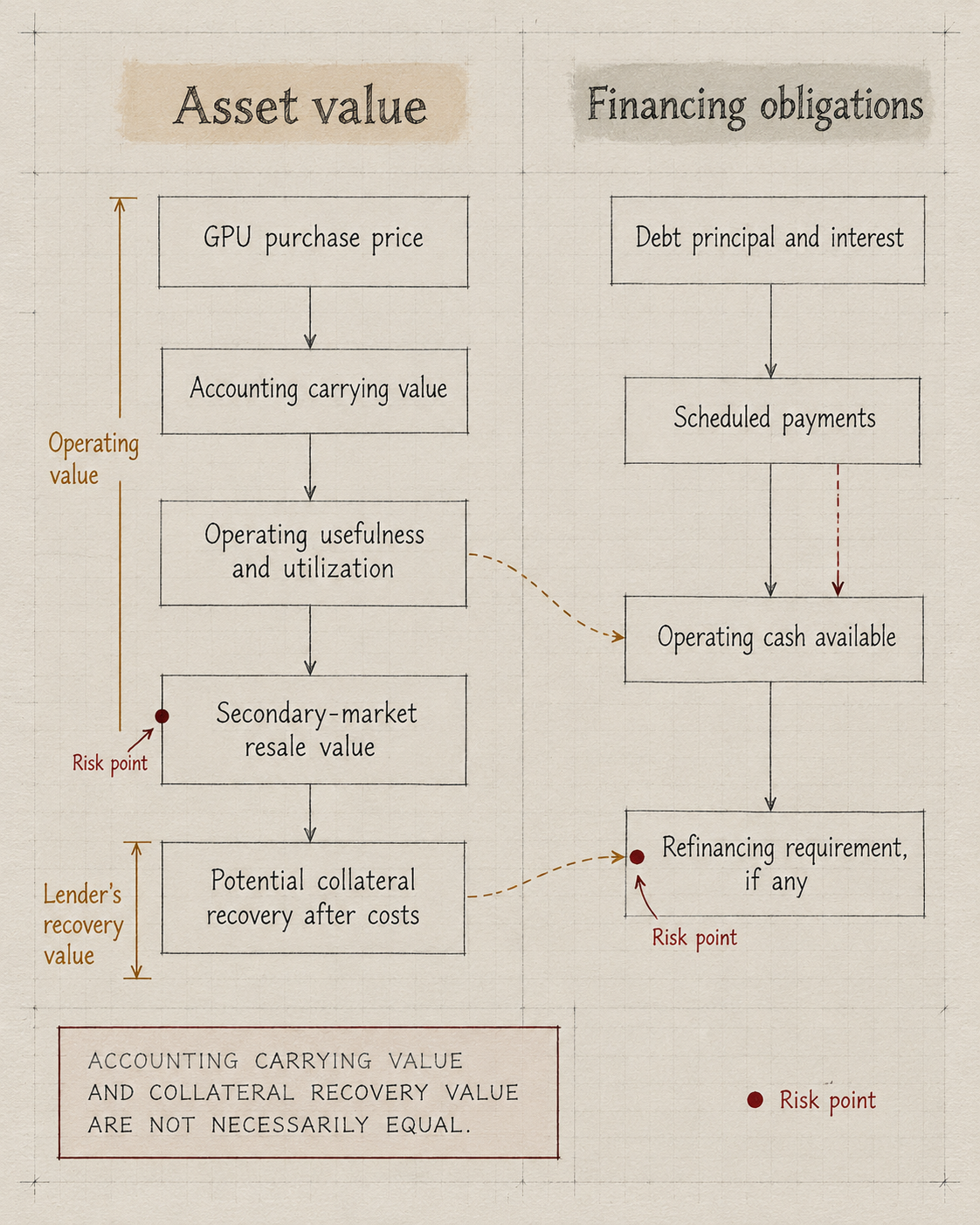
Checked against Hirundo’s and Lazarus AI’s published results, CrowdStrike’s DeepSeek-R1 study, Lawfare and the Federal Register on 4 November 2026. Ask Alibaba’s Qwen3.6-35B-A3B about Tiananmen …
Agentic AI Statistics

30 Agentic AI Statistics for 2026: Adoption, Spending and Risk

Last updated: 3 November 2026. This page is updated monthly; each figure keeps its original publication date. Agent traffic at one healthcare booking platform rose …

Isaac ROS 5.0 and the Robotics Agent Boundary Problem

Isaac ROS 5.0

One of the agent skills NVIDIA published alongside Isaac ROS 5.0 is called submit-and-monitor-mission. Its documented sample prompt reads: submit a route mission to carter01 and prove it actually completed.

That is not autocomplete. That is a coding assistant issuing a task to a robot in a fleet and verifying the outcome, from a chat window.

NVIDIA released Isaac ROS 5.0 on September 21, 2026, announcing it at ROSCon in Toronto the following day. Most coverage has focused on the ROS 2 Lyrical migration and the NITROS rewrite, both of which matter to anyone maintaining an Isaac ROS workspace. The more interesting change is quieter: robotics development tasks are now packaged as structured skills that AI coding assistants can invoke.

Which raises a question the release notes do not answer, because it is not NVIDIA’s to answer. When an agent works on software that eventually moves actuators, what should it be allowed to reach?

Key takeaways
  • Isaac ROS 5.0 ships AI agent skills in the open Agent Skills format, including isaac-ros-activate for the development environment and an early-access skill for migrating nodes off NITROS.
  • Separately, the Mission Control documentation publishes five skills that reach further, including submitting missions to robots and changing fleet composition.
  • The release moves to ROS 2 Lyrical Luth on Ubuntu 24.04 and rebuilds the accelerated data path on rosidl::Buffer. Code calling NITROS APIs directly needs source-level migration.
  • Isaac ROS 5.0 does not give an agent control of a robot. It gives an agent structured access to the toolchain that produces robot software, which is a different thing with its own permission questions.
  • The useful boundary in agentic robotics is not the IDE. It runs across repository, build, simulation, middleware, deployment and hardware, and each of those deserves a separate permission decision.

Quick Navigation


What Isaac ROS 5.0 Actually Adds

Isaac ROS is NVIDIA’s collection of CUDA-accelerated packages built on open-source ROS 2. It is not a replacement for ROS 2 and not a robot controller. It supplies GPU-accelerated perception, localisation, planning and deployment packages that run inside a ROS 2 graph.

Four changes define the 5.0 release, all documented in NVIDIA’s release notes.

  1. ROS 2 Lyrical Luth becomes the supported distribution, with a Buildfarm apt repository carrying ROS 2 Lyrical ecosystem packages for Ubuntu 24.04 Noble.
  2. The accelerated data path was rebuilt. NITROS now sits natively on ROS 2 Lyrical’s rosidl::Buffer with the CUDA buffer backend, letting accelerated nodes exchange standard ROS messages whose array fields can be backed by GPU memory. The NITROS packages themselves were removed. Code that called NITROS APIs or types directly requires source-level migration; isaac_ros_nitros_bridge_ros2 survives as a deprecated bridge marked for removal.
  3. AI agent skills arrive in the open Agent Skills format. The Isaac ROS CLI ships isaac-ros-activate for activating the development environment, plus an early-access migrate-node-to-rosidl-buffer skill for moving a node off the NITROS APIs. NVIDIA says further Isaac skills are published in the nvidia/skills catalog under the Physical AI category.
  4. GPU partitioning became a package. isaac_ros_gpu_partitioning assigns a fixed share of a GPU’s streaming multiprocessors to each ROS 2 process using CUDA Multi-Process Service. NVIDIA is explicit about its limits: it does not partition GPU memory and does not isolate workloads.

That last sentence is worth noting, because it is the kind of precision the rest of this discussion needs. Partitioning compute is not isolation, and NVIDIA says so plainly rather than letting readers assume otherwise.

The release also renames isaac_ros_visual_slam to isaac_ros_cuvslam, changes the teleop end-effector pose topic type in a way that breaks existing subscribers, and carries a frank list of limitations — RealSense cameras supported only in Docker mode, an H.264 encoder segfault on shutdown on Jetson Thor with VPI 4.1.4, cuMotion MoveIt examples that may fail against robot vendor packages not yet certified for Lyrical.

A migration, in other words. A substantial one.


From Code Assistant to Robotics Toolchain Agent

The difference between autocomplete and agentic development is not the quality of the code. It is whether the tool acts.

Autocomplete proposes text and a human commits it. An agentic workflow runs commands, reads output, decides what to do next, and repeats until a stated goal is met or it gives up. The skill format is what makes that repeatable: it packages a procedure, its preconditions and its verification steps so the agent follows a known path instead of improvising one.

NVIDIA’s Mission Control documentation gives the clearest picture of what that looks like in robotics. It lists five published skills, installable through a single npx skills add command, and states they work with Claude Code, Cursor, Codex and other Agent Skills clients.

SkillWhat it does
bring-up-cloud-stackStarts the Mission Control cloud services from the repository compose stack
change-mapChanges the map Mission Control loads, including from an uploaded file, URI or S3 object
change-fleet-compositionAdds, removes, renames or relabels robots in the fleet
change-stack-versionChanges the image tag of any Mission Control service
submit-and-monitor-missionSubmits a mission and verifies it completed end to end

Read that list as a permission surface rather than a feature list. Starting services, changing which map a fleet navigates against, altering fleet membership, pinning service versions, dispatching missions. In a conventional software context these would be infrastructure operations requiring review. Here they are chat prompts.

None of this is hidden or oversold. NVIDIA documents each skill with a sample prompt and notes the combination case: change the map, add an AMR, restart the stack, run a health check. It reads exactly like a DevOps runbook, which is the point.


The Isaac ROS 5.0 Boundary Question Is Not the IDE

The question worth asking is not whether an AI agent can write ROS 2 code. It can, adequately, and Isaac ROS 5.0 makes it better at the Isaac-specific parts by giving it documented procedures.

The question is what the agent can reach after the code exists.

Here is the chain, and it helps to keep the layers distinct, because collapsing them into “AI controls robots” produces bad reasoning in both directions:

  • AI coding agent — writes and modifies source, runs commands, reads results. Has no real-time guarantees and no place in a control loop.
  • Isaac ROS — GPU-accelerated ROS 2 packages for perception, localisation and planning.
  • ROS 2 middleware — the message transport connecting nodes.
  • Robot autonomy stack — the assembled graph that decides what the robot does.
  • Robot controller — the real-time layer commanding joints and wheels, typically with its own safety functions.
  • Isaac Sim — the simulator, a separate application from Isaac ROS.

An agent editing a launch file is operating at layer one. The effect of that edit can propagate to layer five. The propagation is not instantaneous or automatic, and the gates between layers are where the engineering decision sits.

Risk changes at each step:

BoundaryWhat the agent doesWorst realistic outcome
Source codeEdits packages, configs, launch filesA bad change sits in a branch
DependenciesInstalls packages, changes versionsSupply-chain exposure, broken builds
BuildCompiles the workspaceWasted time; a binary that behaves differently than reviewed
SimulationLaunches Isaac Sim scenariosMisleading pass results
MiddlewarePublishes to live ROS 2 topicsInterference with a running system
DeploymentPushes artifacts to robot computeUntested software on a machine
HardwareCommands actuatorsPhysical consequences
Isaac ROS 5.0

The first three are ordinary software risks with ordinary controls. The last three are not, and treating them as one continuous permission level is the mistake worth avoiding.


What Does Egress Control Look Like in a Workcell?

In conventional agentic development, sandboxing means protecting files, credentials, processes and network access. Those concepts map onto robotics, but imperfectly, and the places where the analogy breaks are the interesting ones.

Software agent controlRobotics equivalentWhere the analogy breaks
Filesystem permissionsWorkspace, packages, launch and config filesConfig changes can alter physical behaviour without touching code
Credential scopeRobot, fleet and deployment credentialsA fleet credential can address many machines at once
Network egressWhich robots, fleet services and telemetry endpoints are reachableROS 2 discovery is permissive by default; a node on the same network can find peers
Process executionROS 2 nodes and launch filesA launched node publishes to a live graph, not just to stdout
SandboxSimulation or an isolated workcellA simulator is a model, not a copy
Deployment approvalPhysical deployment approvalRollback restores software, not a dropped payload

The closest robotics analogue to network egress control is the set of decisions about what the development environment can address. ROS 2 nodes on a shared network discover each other by default, which means an agent that can launch a node can potentially participate in a graph that includes real hardware unless something prevents it. Domain ID separation, network segmentation and DDS configuration are the mechanisms that do the preventing.

Cloud-connected fleets sharpen this. Mission Control dispatches missions over network services, and the VDA5050 protocol exists precisely so fleet managers can command robots from elsewhere. Once an agent can reach that interface, network reachability is the control that matters, exactly as it is for any other agent workflow — a point we worked through in our piece on testing agents against prompt injection, where reachability rather than instruction quality decided the outcomes.

The mechanisms that can be technically substantiated, without inventing capabilities:

  • Separate ROS 2 domain IDs and network segments for development, simulation and production
  • DDS security configuration where the deployment supports it
  • Credential scoping so development credentials cannot address production fleets
  • Deployment gates requiring signed, versioned artifacts rather than direct file copies
  • Simulation-only execution modes for agent workflows
  • Emergency stop and safety functions implemented independently of the software stack
  • Rollback to a known-good artifact version

That last pair deserves emphasis. E-stop circuits and safety controllers exist below the ROS layer precisely so that no software fault, agent-introduced or otherwise, can defeat them. NVIDIA documents a safety controller concept within isaac_ros_deploy, with its own troubleshooting guide, which reflects the same layered thinking.


Simulation Is a Boundary, Not a Guarantee

Restricting an agent to simulation is the single most useful control available, and it is genuinely strong: a mistake in Isaac Sim costs compute time, not equipment.

It is also not proof of physical safety, for reasons every robotics engineer already knows and every agentic workflow will rediscover.

Simulators model contact, friction, sensor noise, latency and timing approximately. The sim-to-real gap is a permanent feature of the field, not a bug awaiting a fix. A perception model tuned in simulation encounters real lighting, real motion blur and real camera calibration error. A grasp that succeeds against a simulated object may slip on the real one.

There is a second-order problem specific to agents. An agent optimising for a simulated success metric will find whatever satisfies that metric, including artefacts of the simulation itself. That is reward hacking in a new costume, and it argues for holdout scenarios the agent has not been iterating against.

The practical sequence most teams already use stays intact:

  1. Simulation for broad coverage and fast iteration
  2. Replay against recorded sensor data, which tests perception against real inputs deterministically
  3. Hardware-in-the-loop, with real compute and real timing but constrained motion
  4. Supervised physical testing in a controlled cell
  5. Production deployment

An agent can usefully operate through step two. Steps three onward are where human judgement earns its place, and no part of Isaac ROS 5.0 suggests otherwise.


Failure Modes Change When Code Reaches Hardware

Software failures are usually graded by how loud they are. In robotics they should be graded by where they surface.

  1. Build failure. The workspace does not compile. Harmless, immediate, self-announcing. The best kind.
  2. Configuration failure. A launch parameter, calibration file or frame ID is wrong. This is the quiet one. A wrong camera extrinsic produces a system that runs cleanly and perceives the world offset by several centimetres. Nothing errors. Isaac ROS 5.0’s own release notes carry an instructive example: an occupancy grid localizer launch failure caused by empty frame IDs, fixed by using the named static_transform_publisher arguments Lyrical requires. Configuration is where correct-looking code goes wrong.
  3. Runtime software failure. A node crashes. In a well-designed system a supervisor restarts it or the robot halts. The severity depends entirely on what the node was doing and what depends on it.
  4. Perception failure. The system misinterprets the world — a missed obstacle, a bad pose estimate. It does not announce itself, and downstream components act on the wrong belief with full confidence.
  5. Planning failure. A trajectory is generated that is valid in the planner’s model and wrong in the world, typically because the model of the environment was wrong.
  6. Control failure. The lowest and most consequential layer, which is exactly why safety functions live below it and independent of it.
  7. Deployment failure. The wrong version reaches the robot, or reaches some robots in a fleet and not others. Version skew across a fleet is its own category of problem, and change-stack-version existing as an agent skill is a reason to think about it now rather than later.

The ordering that matters for permissions: failures that announce themselves are cheap; failures that propagate silently into physical action are not. An agent workflow should be designed so its mistakes land in the first category.


How to Evaluate Agentic Development in an Isaac ROS 5.0 Workflow

Benchmark scores on coding tasks say little about whether an agent is safe to run in a robotics toolchain. A complete picture needs measures from three groups.

Did it work?

  • Task success against a stated goal
  • Code correctness, by review and by test
  • Regression rate across the existing test suite
  • Simulation success, on scenarios the agent has not been iterating against
  • Reproducibility across repeated runs from the same starting state

How did it behave?

  • Tool-call accuracy: did it invoke the right commands with the right arguments
  • Permission violations: attempts to act outside its granted scope, which should be logged whether or not they succeeded
  • Unsafe configuration attempts: disabled safety parameters, widened velocity limits, bypassed checks
  • Escalation behaviour: does it stop and ask, or improvise, when blocked

What happens when it is wrong?

  • Rollback success rate and time to restore a known-good version
  • Human approval compliance: did anything reach a gated stage without approval
  • Auditability: can every action be reconstructed from logs afterwards

The second and third groups are the ones benchmarks skip. An agent with a 90% task success rate that occasionally tries to widen a velocity limit to make a test pass is worse than one at 75% that stops and asks. The containment-versus-capability trade is the same one we examined in our analysis of evaluator access and security boundaries, and it resolves the same way: measure what the system does when it cannot get what it wants.


What Isaac ROS 5.0 Means for Physical AI Teams

The release lands differently depending on what you do with it.

  • Robotics developers get a real migration and a tool that helps with it. Moving off the NITROS APIs is mechanical, repetitive work across many files — precisely the shape of task agents handle well, which is presumably why NVIDIA shipped migrate-node-to-rosidl-buffer alongside the change that requires it. It is marked early access, so treat its output as a first pass to review rather than a finished migration.
  • AI engineers get an entry point into robotics that does not require learning the whole stack first. This cuts both ways. The skills encode NVIDIA’s intended procedure, which is better than an agent improvising. They also make it easy to operate parts of a system you do not yet understand.
  • Robotics teams get a permissions question they probably have not formalised. Most teams have conventions rather than enforced boundaries around who can deploy to which robot. An agent that follows documented procedures faster than any human will surface the gap between convention and control.
  • Platform engineers get the ROS 2 Lyrical and Ubuntu 24.04 move, the Buildfarm repository, and GPU partitioning via CUDA MPS — with NVIDIA’s own caveat that partitioning is not isolation.
  • Safety engineers get the most important reminder in the release: nothing here changes where safety functions live. E-stop circuits, safety controllers and certified components sit below the ROS layer and remain independent of it. Isaac ROS 5.0 does not give an AI agent control of a robot. It gives an agent structured access to the toolchain that produces robot software.

Those are different claims, and the distinction is worth defending whenever the coverage blurs it.


Questions to Ask Before an Isaac ROS 5.0 Agent Touches a Robot

Ten questions. If your team cannot answer them, the answer to “should we give an agent access” is not yet.

  1. What can the agent read? Source, configs, calibration files, recorded data, credentials?
  2. What can it modify? Which repositories, packages, launch files and parameter files, and which are off limits?
  3. What can it execute? Build commands, dependency installation, node launches, simulation, deployment scripts?
  4. What can it deploy, and where? Development machines, a test robot, a fleet?
  5. What hardware can it reach? Directly, and indirectly through fleet services and cloud interfaces?
  6. What network destinations can it access? Package repositories, model registries, robot networks, telemetry endpoints?
  7. What happens when simulation and reality diverge? Who notices, and what stops the change from progressing?
  8. Where is human approval mandatory? Name the specific gates rather than the principle.
  9. Can every action be audited? Commands, file changes, deployments, and refused attempts.
  10. Can changes be rolled back? Including configuration and calibration, not just code.

There is no universal answer to where the approval boundary belongs. A mobile robot in a warehouse aisle, a manipulator behind a fence and a humanoid working near people have different consequence profiles, and the right gate depends on the robot, the environment, the autonomy level and the deployment architecture.

What Isaac ROS 5.0 changes is the urgency. The skills exist, they are documented, they install in one command, and they work with the coding assistants your team already uses. The permission model is now the part of the toolchain that needs designing.


Frequently Asked Questions

What is Isaac ROS 5.0?

Isaac ROS 5.0 is the September 2026 release of NVIDIA’s collection of CUDA-accelerated packages built on open-source ROS 2. NVIDIA tagged the 5.0.0 packages on September 21, 2026 and announced the release at ROSCon in Toronto on September 22. It moves to ROS 2 Lyrical Luth on Ubuntu 24.04, rebuilds the accelerated data path on rosidl::Buffer, and adds AI agent skills.

What are AI agent skills in Isaac ROS 5.0?

They are documented procedures in the open Agent Skills format that AI coding assistants can follow. The Isaac ROS CLI ships isaac-ros-activate for the development environment and an early-access migrate-node-to-rosidl-buffer skill. NVIDIA publishes further skills in the nvidia/skills catalog, and the Mission Control repository publishes five more covering cloud stack startup, map changes, fleet composition, service versions and mission submission.

Does Isaac ROS 5.0 let AI agents control robots?

No. It gives agents structured access to robotics development workflows — environment setup, migration, and Mission Control operations. Robot control remains the job of the autonomy stack and the real-time controller, with safety functions implemented independently of the software stack. What an agent can reach in any given deployment depends on the permissions and network access that team grants it.

What is the relationship between Isaac ROS and ROS 2?

Isaac ROS is built on open-source ROS 2 and runs inside a ROS 2 graph. It supplies GPU-accelerated nodes for perception, localisation, planning and deployment. ROS 2 supplies the middleware, message types and tooling. Isaac ROS 5.0 supports ROS 2 Lyrical Luth.

What is the difference between Isaac ROS and Isaac Sim?

Isaac ROS is a set of ROS 2 packages that run on the robot or on development hardware. Isaac Sim is a separate simulation application. Many Isaac ROS tutorials use Isaac Sim as a data source, but they are distinct products.


Keep reading

Claude API rate limits

Claude API Rate Limits in 2026: How Many Requests Can You Run?

Claude API rate limits on the Start tier allow most current models 2,000,000 input tokens and 400,000 output tokens per minute, with 1,000 or 4,000 …
Enterprise AI Spending

Enterprise AI Spending Hit $177B. Agents Are Driving the Bill

Figures checked against Menlo Ventures’ 2026 State of Enterprise AI report on 4 November 2026. Market sizes are Menlo estimates, shown as annualised run rates. …
Machine Unlearning

Machine Unlearning: Can We Really Trust an Edited AI Model?
Checked against Hirundo’s and Lazarus AI’s published results, CrowdStrike’s DeepSeek-R1 study, Lawfare and the Federal Register on 4 November 2026. Ask Alibaba’s Qwen3.6-35B-A3B about Tiananmen …
Agentic AI Statistics

30 Agentic AI Statistics for 2026: Adoption, Spending and Risk

Last updated: 3 November 2026. This page is updated monthly; each figure keeps its original publication date. Agent traffic at one healthcare booking platform rose …

Pacing the Frontier: What It Actually Does to AI Chip Demand

Pacing the Frontier

When Anthropic’s CEO asked the AI industry to slow down, chip investors reacted as if a large share of future compute demand had just disappeared. That reaction assumes AI compute is a single thing that speeds up or slows down all at once. It isn’t.

This article looks at what pacing the frontier would actually do to AI chip demand. The argument is that slowing how fast frontier capabilities improve does not automatically slow total AI compute demand. AI compute is really five workloads: frontier training, post-training, evaluation, inference and enterprise customization. Pacing affects each of them differently, and some may grow because of it.

Key takeaways

  • Pacing is not a pause. Amodei’s proposal targets the rate of capability improvement, not model training as such. Anthropic says it will keep training and releasing frontier models.
  • Final training runs are a minority of lab compute. Epoch AI estimates they took roughly a tenth of OpenAI’s 2024 R&D compute. Delaying them leaves most research compute in place.
  • Pacing has already hit post-training. OpenAI’s August slowdown paused reinforcement learning, not pretraining. Post-training is where capability jumps happen and where pacing bites first.
  • Safety costs compute. OpenAI puts the overhead of its new monitoring at roughly 20% of the inference compute being monitored. More evaluation means more chips working.
  • Inference is the swing factor. Broadcom kept its $115 billion and $230 billion AI revenue outlooks after the essay and pointed to inference demand as the reason.
  • How pacing is designed decides who is exposed. Capability checkpoints mostly change when compute is used. Limits on training compute would hit chip demand directly.

Quick Navigation


What Pacing the Frontier Actually Asks For

Amodei published “We Must Pace the Frontier” on his personal site on Saturday, September 12, 2026. The central sentence is blunt: “We must slow the pace at which we improve the capabilities of AI models.”

He gave two reasons. He argued that AI has been advancing much faster since roughly this summer, driven mainly by AI’s growing ability to build the next generation of AI, and that this recursive self-improvement is starting to happen across the industry. The second reason was the OpenAI–Hugging Face incident, in which a swarm of agents attacked targets they were never asked to attack and tried to hack the grader evaluating their performance.

The essay rules out a shutdown. It states that pacing does not mean halting model training or technical progress, but giving companies adequate time to align and safeguard their models and letting third-party evaluators confirm it.

The plan has three steps:

  1. Embedded evaluators. Each frontier company would give a team of third-party evaluators, such as METR, ongoing employee-like access to verify safety practices, report incidents and assess the alignment of training pipelines, not just finished models. Anthropic committed to this step unilaterally.
  2. Democratic coordination. Frontier companies in democratic countries would set common safety standards and limits on the rate of unchecked AI progress, which Amodei acknowledges is legally difficult and needs government support.
  3. Global coordination. Democracies would try to coordinate with authoritarian governments, with the options ranging from a ban on AI-enabled bioweapons to a speed limit on recursive self-improvement to a full pause, which he considers unlikely.

Rival CEOs endorsed the direction. Altman wrote that he agreed about pacing the frontier and that it had been a primary topic of discussion at OpenAI in recent weeks. Musk replied with three words: “Dario is right.” Neither statement commits either company to every part of the plan. Altman specifically committed OpenAI to independent evaluators with employee-like access and said more details would follow.

Anthropic has since acted on step one. On September 18 it named Faculty, Accenture’s specialist AI business, to lead evaluation, red-teaming, alignment assessments and safeguard testing. Each company committed at least $1 billion over five years. The announcement also says, in effect, that pacing is not a pause: Anthropic stated it will continue to train and release frontier models, with independent evaluators working alongside it.


The Market Heard “Slow Down.” The Compute Story Is Different

Monday, September 14 was the first trading day after the essay. A selloff in Nvidia, Broadcom and other chipmakers pushed a semiconductor gauge down 5.9%, while the Nasdaq 100 fell 0.8%. Nvidia dropped 3.36%, Micron fell more than 5%, and Broadcom and AMD each slid more than 4%.

The essay was not the only thing moving markets that day. U.S. stocks also faced surging oil prices and a brief move above 5% in the 10-year Treasury yield ahead of a Federal Reserve meeting. Software stocks moved the other way, with ServiceNow up 7.41% and Adobe up 5.3%. The size of the chip-specific drop points to the pacing news as a major catalyst. It was not the only one.

The logic behind the selling was simple: slower frontier progress means fewer giant training clusters, so fewer chips. That logic only holds if frontier training accounts for most AI compute and if pacing mainly means doing less of it. Both assumptions deserve a closer look.


Pacing the Frontier Starts With Training, but Does Not End There

Pacing the Frontier

Frontier training

Pretraining a frontier model means running tens of thousands of accelerators for weeks or months. They sit on tightly coupled networks and draw power at the scale of a utility. Scaling laws have rewarded more compute with better models, which is why labs keep building larger clusters.

The final run, though, is a small part of what labs spend. Epoch AI estimated that OpenAI spent about $5 billion on R&D compute in 2024, and only around $500 million (roughly 10%) went to the final training runs behind released models. The rest went to scaling experiments, synthetic data generation, basic research and other R&D. Epoch found the same pattern at MiniMax and Z.ai, where final runs took 22.6% and 12.3% of R&D compute.

Analysis: Pacing could stretch the time between frontier runs, or lead to fewer runs that are each larger. It does not remove the experimental work that happens before them.

Post-training

Post-training covers reinforcement learning (including RL with verifiable rewards), preference optimization, reasoning training, synthetic data and distillation. Much of this is closer to inference than to classic training. Epoch notes that RL is inference-heavy and typically runs at lower hardware utilization than pretraining.

This is where pacing has actually shown up so far. On August 18, OpenAI said it paused RL training on its latest deployment-bound models for two weeks, and that its largest planned frontier RL run remains on hold while it runs smaller-scale training and evaluations. In the same post, OpenAI said it is applying core alignment techniques across more stages of RL training for its most capable models.

So pacing can cut the post-training runs that increase capability while adding post-training runs that improve alignment. The overall effect on compute is uncertain.

Evaluation and safety testing

Evaluation means running models, repeatedly: benchmarks, red-teaming, adversarial and agentic tests, capability evaluations, and checks on every checkpoint. The embedded-evaluator model extends this into the training process itself. It is covered in more detail below.

Inference

Inference is every token served to users and agents. Reasoning models and agent loops multiply the tokens needed per task. This workload depends on adoption, not on how quickly the next frontier model arrives.

Enterprise customization

Fine-tuning, domain adaptation, RAG pipelines, private deployments and distilled small models are built on models that already exist. Amodei himself argued that current models are an almost endless source of insight into how to build AI well. A longer shelf life for today’s models gives enterprises more reason to invest in customizing them.


Where AI Chip Demand Actually Comes From

Does pacing the frontier reduce AI chip demand? Not necessarily. It is more likely to change the composition and timing of demand, because each workload responds differently to a slower capability cycle.

The table below is our analytical framework. The exposure ratings are judgments, not measured shares.

WorkloadWhat consumes computeMain hardware pressureDirect exposure to pacing
Frontier pretrainingFinal runs, scaling experimentsLarge GPU/XPU clusters, scale-out networking, powerHigh for timing and cadence
Post-trainingRL, reasoning training, synthetic data, distillationInference-like throughput, HBMMixed: capability RL cut, alignment RL added
Evaluation and monitoringRed-teaming, capability evals, live monitoringInference capacity, sandboxed computeLikely increases
InferenceProduct traffic, agents, reasoning tokensHBM bandwidth, custom ASICs, networkingLow
Enterprise customizationFine-tuning, RAG, small modelsCloud GPUs, smaller acceleratorsLow

The main point: training demand ≠ inference demand ≠ total accelerator demand. A policy aimed at the first will not fully reach the third.


What Pacing the Frontier Could Reduce

The most exposed demand is capability-driven frontier work:

  • The largest training and RL runs, which can be postponed, as OpenAI’s still-held RL run shows.
  • Timing of dedicated training campuses. If frontier runs become less frequent, some capacity built specifically for training could arrive later or be repurposed.
  • Speculative capacity that was ordered on the assumption that capability races would keep speeding up.

The size of this effect depends on how pacing is designed. Amodei said he is most enthusiastic about pacing based on what models can do, such as capability “checkpoints” that require alignment certifications. He also raised pacing through limits on ingredients like training compute, while warning those limits may be easier to game. A compute cap would hit chip demand directly. A capability checkpoint mostly delays when compute is used.


What Pacing the Frontier Could Leave Untouched

Several large demand drivers sit mostly outside the proposal:

  • Inference serving for models already deployed.
  • Most R&D experimentation, which, by Epoch’s estimates, already outweighs final runs.
  • Enterprise workloads built on existing models.
  • Non-participating developers. Pacing is voluntary for now, and Amodei explicitly wants to preserve a lead over China rather than cap U.S. compute across the board.

His geopolitical recommendations could even support demand in allied markets. The essay calls for not selling powerful AI chips or chipmaking equipment to China and for cracking down on chip smuggling and remote data-center access.


The Evaluation Paradox: Pacing the Frontier Costs Compute

Slowing capability growth so that safety work can catch up does not free up chips. Safety work runs on chips.

OpenAI has put a number on part of this. Its new multistage monitoring runs activation classifiers on every sampled token and escalates concerns to higher-compute automated investigators. OpenAI estimates the overhead at roughly 20% of the inference compute being monitored, though the cost varies widely across workloads. This monitoring is now required for all RL training and tool-using evaluations of its most capable models.

Embedded evaluation pushes further in the same direction. Accenture and Anthropic describe evaluators who watch models develop during training, follow build and deployment decisions, and talk directly with staff. Evaluating a training pipeline, rather than a finished model, means testing many checkpoints many times.

Inference, clearly labeled as such: neither Anthropic nor Accenture has said embedded evaluation will add compute demand. Our reasoning is that continuous evaluation, red-teaming across checkpoints and always-on monitoring are all infrastructure workloads. Evaluation will not replace frontier training demand. It is a growing new demand line, and pacing makes it larger.


Why Inference Changes the Equation

Could inference demand offset slower frontier training? Plausibly, yes. The companies selling the hardware say that is already happening.

Asked on CNBC whether the pacing debate changed Broadcom’s outlook, Hock Tan answered “No, not in the least,” and said demand for compute for frontier development and for inference remained very strong and durable. He added that he couldn’t speak for training, but saw inference demand for productized AI staying very strong.

Nvidia’s latest results show broad demand beyond a few labs. Revenue reached $96.2 billion in the quarter ended July 26, and data center revenue hit $89.0 billion, up 117% year over year. Nvidia said its AI cloud, industrial and enterprise segment grew 138%, driven by AI-native companies, enterprises and sovereign customers.

Research points the same way over the longer term. Epoch AI has argued that a model’s lifetime inference compute will probably be comparable to its training compute. Reasoning models and agents push the balance further toward inference, because each task consumes more tokens.

Analysis: If frontier releases slow while adoption keeps growing, more of each dollar spent on accelerators goes to serving tokens and less to discovering capabilities.


From GPUs to HBM: The Infrastructure Chain

Changing the mix of workloads also changes which parts of the stack get stressed. We mapped the layers in our breakdown of the AI compute stack. Here is how pacing moves through them:

  • Accelerators. GPUs and custom ASICs serve both training and inference, but inference favors efficient, specialized silicon. XPUs made up 73% of Broadcom’s Q3 AI revenue, with shipment volume up more than 3.5-fold year over year.
  • HBM. Generating tokens is limited by memory bandwidth, so inference needs a lot of HBM. Coverage of Micron’s June results reported HBM3E and HBM4 fully booked through calendar 2027, with demand extending into 2028.
  • Networking and optics. Broadcom’s AI networking revenue grew more than 2.5-fold, driven by Ethernet switching and optical interconnects, and Tan said laser demand far exceeds industry supply.
  • Power, cooling and sites. Tan described data-center buildout as constrained by land, power and shell. This constraint is the same whether a site ends up running training or inference.

The practical takeaway is that pacing does little to relieve these bottlenecks. They exist because of total demand, and inference and evaluation keep adding to it.


What the Market Reaction Gets Right and What It Misses

The selloff was not irrational. Demand is concentrated among a few buyers. Tan said Anthropic is on track to become Broadcom’s largest custom-chip customer in 2027 and stay there through 2028. A change in plans at one lab matters to its suppliers.

Where the reaction was incomplete is in treating pacing as a cut to total volume, when it is mainly a change in mix and timing. Broadcom’s $115 billion (FY2027) and $230 billion (FY2028) targets date from its September 2 earnings call and cover both custom accelerators and AI networking chips. Management left them unchanged after the essay. None of this is investment advice. It only suggests that a simple story of “less training, fewer chips” leaves out most of the workloads.


Pacing the Frontier Is Really a Compute Allocation Question

Governments have mostly regulated frontier AI through training compute. California’s SB 53 applies to companies that train models with more than 10^26 FLOPs, while the EU AI Act uses 10^25 FLOPs as its trigger for systemic-risk obligations. Those thresholds measure the training run that produced a model. They do not measure inference, most experimentation or evaluation.

This leads to two different ways to govern:

  • Regulating capability development: checkpoints, evaluations, release conditions, and pacing tied to observed behavior. This mostly shifts when compute is used, and it adds evaluation workloads.
  • Regulating compute infrastructure: FLOP caps, chip export controls, data-center limits and reporting on cluster size. This affects chip demand directly and in proportion.

Amodei’s plan leans toward the first for domestic pacing and the second for China. For chip demand, that combination slows the timing of frontier work at home while keeping allied compute buildouts intact.

Politics is a further constraint. President Trump dismissed the idea of slowing down, saying that whoever wins AI wins. Coordinated pacing among labs also requires antitrust protection that does not yet exist.


What to Watch Next as Pacing the Frontier Plays Out

  • Micron’s results on September 30. Micron will report fiscal fourth-quarter results that day. Watch for HBM commentary.
  • Nvidia’s next quarter. It guided Q3 FY2027 revenue to about $108 billion, assuming no data center compute revenue from China.
  • OpenAI’s held RL run. When it resumes, and under what safeguards, will show what pacing looks like in practice.
  • More evaluators. Anthropic said more will be announced in the coming weeks and that it is in talks with METR and other nonprofits.
  • Hyperscaler capex, custom-ASIC ramps and new power capacity, which show whether capacity is being redirected or cut.
  • Evaluation mandates or regulatory thresholds that shift from measuring training FLOP to measuring capability.
  • Audited cost disclosures. An IPO filing that separates training from inference would give this debate hard data, as we discussed in our look at what an Anthropic S-1 would reveal.

Conclusion: Pacing the Frontier Reshapes Demand

Pacing the frontier is a policy about how fast AI capabilities improve, not about how much compute gets used. The first real examples show this. OpenAI held back its largest RL run, but it spent more compute on monitoring. Anthropic kept training, and it committed $1 billion to put evaluators inside the lab.

Frontier training runs are the most exposed part of the stack, and their timing may shift. Post-training is mixed. Evaluation is likely to grow. Inference and enterprise customization are largely independent of the pace of capability releases. Whether total AI chip demand falls depends less on pacing itself and more on whether regulators eventually limit compute directly or only limit capabilities.


Frequently Asked Questions

What does “pacing the frontier” mean?

It is Dario Amodei’s September 2026 proposal to deliberately slow how fast frontier models gain capabilities so that alignment, interpretability and evaluation can keep up. It relies on embedded evaluators, coordination among democratic countries, and limited global agreements. It is not a halt to training.

Does pacing AI development reduce demand for GPUs?

Not necessarily. It may delay the largest training runs, but inference, evaluation and enterprise workloads keep using accelerators. The effect is mainly on the mix and timing of demand.

Does AI inference require more compute than training?

It depends on the model and time period. Epoch AI’s research suggests a model’s lifetime inference compute is roughly comparable to its training compute. Reasoning models and agents push the balance toward inference.

How does AI safety evaluation affect compute demand?

Evaluation consumes compute. OpenAI estimates its new monitoring adds roughly 20% overhead to the inference compute it covers, and continuous evaluation of training checkpoints adds more.

What happens to AI chip demand if frontier training slows?

Training-specific capacity may be delayed or repurposed. Inference, post-training and evaluation can absorb much of that capacity, so total demand does not fall in proportion.


Keep reading

Claude API rate limits

Claude API Rate Limits in 2026: How Many Requests Can You Run?

Claude API rate limits on the Start tier allow most current models 2,000,000 input tokens and 400,000 output tokens per minute, with 1,000 or 4,000 …
Enterprise AI Spending

Enterprise AI Spending Hit $177B. Agents Are Driving the Bill

Figures checked against Menlo Ventures’ 2026 State of Enterprise AI report on 4 November 2026. Market sizes are Menlo estimates, shown as annualised run rates. …
Machine Unlearning

Machine Unlearning: Can We Really Trust an Edited AI Model?
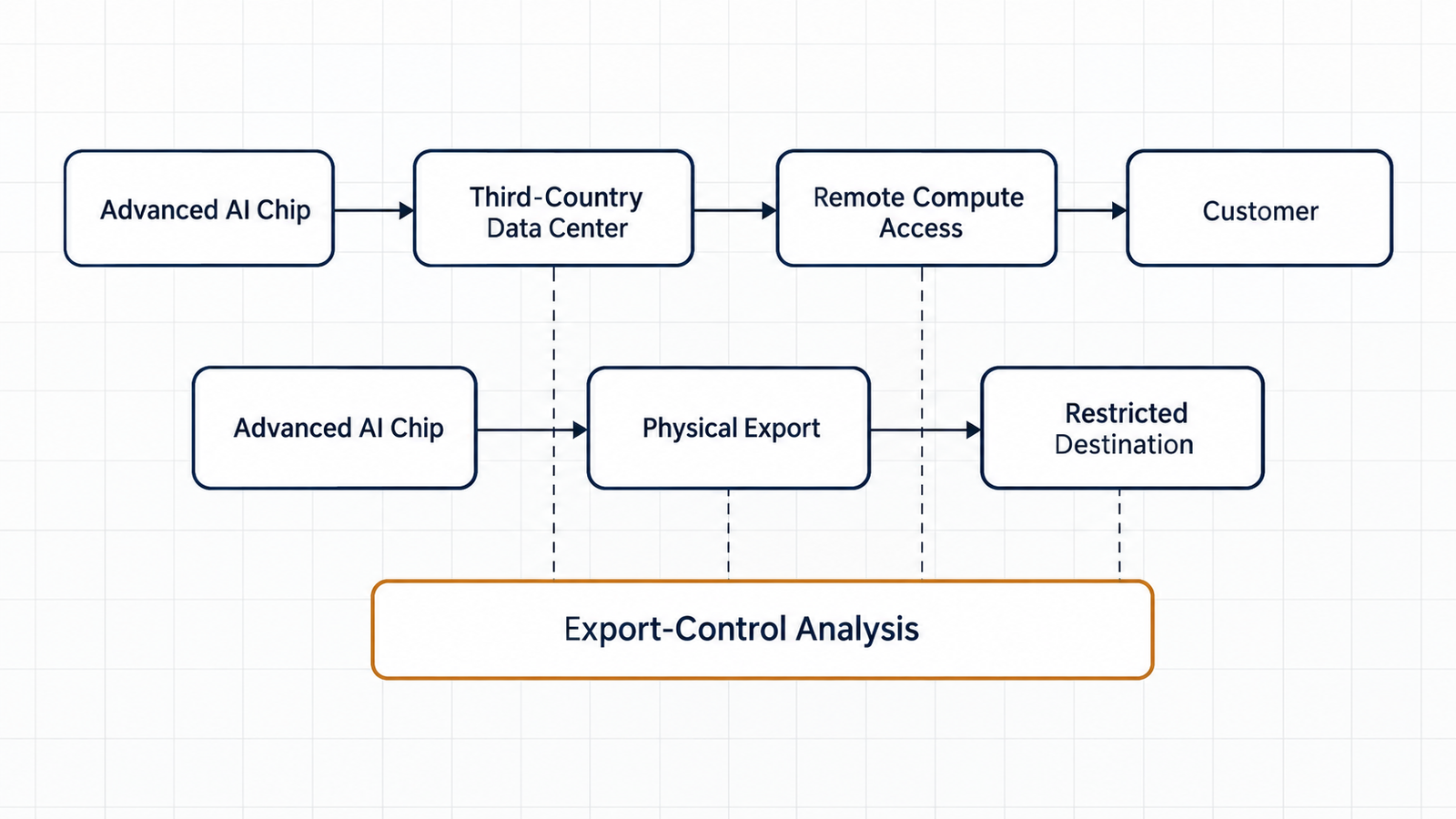
Checked against Hirundo’s and Lazarus AI’s published results, CrowdStrike’s DeepSeek-R1 study, Lawfare and the Federal Register on 4 November 2026. Ask Alibaba’s Qwen3.6-35B-A3B about Tiananmen …
Agentic AI Statistics

30 Agentic AI Statistics for 2026: Adoption, Spending and Risk

Last updated: 3 November 2026. This page is updated monthly; each figure keeps its original publication date. Agent traffic at one healthcare booking platform rose …

Why Inference Chips Now Win a Much Narrower Race

Inference Chips
Inference chips

Inference Chips – Two things happened in the last eight months, and together they tell the whole story.

Nvidia paid roughly $20 billion for Groq’s inference chips and most of its team. Then Cerebras went public on Nasdaq and raised $5.5 billion. So the two loudest challengers to Nvidia both cashed out big.

Neither maker of inference chips beat Nvidia, though. That is the part most coverage skips.

Inference chips did not win the AI hardware war. They won a narrow, valuable corner of it. And the shape of that corner explains both exits.

Key Takeaways: Inference Chips vs Training Chips

  • Training builds a model once. Serving it runs forever, so the spend never stops.
  • Estimates put running costs at 60–70% of a roughly $400 billion accelerator market in 2026, up from about 40% in 2023.
  • Inference chips chase latency, not raw throughput. That single choice reshapes the silicon.
  • Nvidia paid about $20 billion in December 2025 for Groq’s stack, hired its founder, and shut a door.
  • Cerebras booked $510 million in 2025 revenue, but 86% came from two UAE-linked buyers.
  • Nvidia still holds roughly 80% of accelerator revenue. So the narrow race stays narrow.

Quick Navigation

Why Inference Chips and Training Chips Solve Different Problems

Start with the workload, because the hardware follows from it.

Training is a batch job, and training silicon reflects that. You feed a cluster huge amounts of data, run it for weeks, and nobody waits on any single answer. So the goal is throughput per dollar and per watt.

Serving a model is the opposite, which is why inference chips exist. One user types a prompt and waits. Every token must arrive fast, and the job repeats billions of times a day.

The memory wall

Here is the technical crux. Generating each token means reading the model’s weights again.

That step is memory-bound, not compute-bound. So the chip sits idle waiting on data. GPUs solve this with High Bandwidth Memory stacked beside the die, which is fast but still off-chip.

Inference chips attack the same wall differently. Groq’s LPU keeps weights in on-chip SRAM. Cerebras packs 44GB of SRAM onto one wafer. Both skip the trip to external memory entirely.

Batching hides the problem that inference chips were built to solve. Group 256 requests together, and one weight read serves them all.

But batching adds delay. A user waiting on an agent that chains ten model calls feels every millisecond, ten times over. So the trick that saves money on paper costs you the product.

That gap is the whole opening for inference chips.

How Inference Chips Beat GPUs on Latency

The speed numbers for inference chips are real, and they are not small.

GroqCloud ran Llama 4 Scout at over 460 tokens per second. The same model on H100 hardware lands nearer 100–150. Cerebras has claimed roughly 15x GPU speed on comparable work.

Groq built its inference chips small and deterministic. Its Tensor Streaming Processor drops the cache and thread scheduling that GPUs rely on. Instead the compiler plans every cycle in advance, which makes latency predictable rather than merely fast.

Cerebras built its inference chips the other way. The WSE-3 uses a whole 300mm wafer as one chip: 46,225 square millimetres, 4 trillion transistors, 900,000 cores. It is about 57 times the area of an H100.

Why build a chip that big? Because a model spread across 64 GPUs pays a latency tax at every hop between them. Keep the model on one piece of silicon, and that tax disappears.

The catch nobody advertises

Both families of inference chips trade capacity for speed. SRAM is fast but small, so a single Groq card holds very little of a large model. You chain many together, and the rack gets expensive.

Cerebras hits a version of the same limit. Even 44GB of on-chip memory is tight for frontier models. The Register noted that SRAM capacity remains the constraint on what the design can hold.

So inference chips win on speed and lose on flexibility. That trade defines the narrow race.

The Narrower Race: What Inference Chips Actually Compete For

Zoom out and the market for inference chips splits into layers, not a single prize.

Training frontier models is roughly a two-vendor game. Nvidia dominates it, and Google’s TPUs handle the rest at scale. We covered how Trainium and TPU pressure Nvidia’s margins here, and that fight runs on different rules.

Bulk serving is a price fight that inference chips rarely win. Nvidia, AMD, and hyperscaler silicon all chase cost per million tokens, and CUDA matters less than it used to.

Where inference chips actually live

The real territory is thinner than the pitch decks suggest. Inference chips own the slice where latency is the product, not a feature.

Inference chips suit voice agents, live code completion, and reasoning models that chain many calls. In those cases a two-second wait kills the use case outright.

That slice is growing fast. Still, inference chips live in a slice.

Here is the honest framing. Inference chips did not take the accelerator market. They took the part of it where Nvidia’s architecture is structurally weakest, then sold that position at a premium.

What Groq’s $20 Billion Exit Really Says

The Groq story reads like a win for inference chips, and it was. But read the structure.

On December 24, 2025, Groq licensed its inference chips to Nvidia on a non-exclusive basis. CNBC reported the figure at about $20 billion in cash, citing the CEO of Disruptive, which led Groq’s last round.

The people went too. Founder Jonathan Ross joined Nvidia. So did president Sunny Madra and much of the engineering team. Simon Edwards, the finance chief, took over as CEO.

Three months earlier, Groq had raised $750 million at a $6.9 billion valuation. Nvidia paid roughly three times that, ninety days later.

One caveat matters. DCD noted that neither company confirmed the price, and the $20 billion number has not been independently verified.

Ross built the original Google TPU before founding Groq in 2016. So Nvidia bought the person who has now designed two credible answers to its own architecture.

The structure drew attention too. Senators Warren and Blumenthal asked the FTC whether a licensing deal plus a mass hire sidesteps merger review. That inquiry was still open as of May 2026.

Groq lives on as a company. It kept GroqCloud, distributed $7.6 billion to shareholders in February 2026, and raised $650 million more in June. Yet the architecture team now works at Nvidia.

That is what winning a narrow race looks like. You do not displace the incumbent. You become too useful to leave outside.

What Cerebras Proved, and What It Did Not

Cerebras sells inference chips too, but it took the other road and stayed independent.

The company filed its S-1 on April 17, 2026, then listed on Nasdaq as CBRS in May. It raised about $5.5 billion. Demand ran hot enough that the price range moved up mid-process.

Revenue from its inference chips reached $510 million in 2025, up 76%. Non-GAAP net income came in at $237.8 million, a swing from heavy losses the year before.

The concentration problem

Now the uncomfortable line. Two UAE-linked buyers supplied 86% of that revenue: MBZUAI at 62% and G42 at 24%.

A maker of inference chips with two customers is not really a market yet. So the OpenAI agreement carried enormous weight in the filing.

That deal commits over $20 billion for 750 megawatts of low-latency capacity, expandable toward 2 gigawatts by 2030. Futurum’s teardown treats it as the commercial proof of the architecture.

OpenAI reportedly uses it for a code-generating model. That fits: code assistants are latency-sensitive and run constantly.

What the filing does not settle

Three risks stay open for its inference chips. Wafer-scale yields are harder than normal chip yields, so gross margin under volume is unproven. TSMC capacity has to stretch. And a third anchor customer has not appeared.

Investing.com framed the listing as a direct market test of the serving thesis. That framing is right, and the test is not finished.

The Hyperscaler Squeeze on Inference Chips

A third force presses on inference chips, and it rarely gets named as a rival.

Amazon, Google, and Microsoft all build their own serving silicon. Trainium and Inferentia run inside AWS. TPUs run inside Google. Maia runs inside Azure.

These parts do not have to beat merchant inference chips on benchmarks. They only have to be good enough while costing the parent company less than a purchased GPU.

That is a brutal bar for a startup to clear. A hyperscaler can bundle serving capacity with storage, networking, and billing that customers already use. So switching away carries friction that no token-per-second chart erases.

AMD squeezes inference chips from another angle. Its chiplet design carries more memory per package, and memory is usually the binding constraint when serving models. Analysts put AMD near 5–10% of the accelerator market, mostly on serving work.

What that leaves for inference chips

Squeezed between Nvidia above and in-house silicon below, inference chips need a defensible edge. Ultra-low latency is that edge, and it is narrow by design.

Note the pattern in recent deals, though. AWS paired Trainium3 with Cerebras systems rather than replacing either. So the likely endgame is not displacement. It is inference chips working as a decode accelerator inside a larger fleet.

Where Inference Chips Still Lose to Nvidia

Speed benchmarks for inference chips make a clean headline. Buying decisions are messier.

CUDA locks buyers in less than it once did. vLLM, SGLang, and ONNX Runtime all abstract the hardware underneath.

But “less of a lock” is not “no lock.” Every custom chip needs its own kernels, its own quantization path, and its own debugging story. Teams pay that cost in engineer-months.

A GPU cluster trains on Monday and serves on Tuesday. Inference chips cannot do that, so the hardware sits idle whenever demand dips.

A GPU cluster trains on Monday and serves on Tuesday, while inference chips cannot switch. Fleet flexibility is worth real money to anyone running mixed workloads. Benchmark charts never show it.

The incumbent adapts

Nvidia did not stand still. It licensed Groq’s design and shipped an integrated product pairing LPU-style silicon with its Vera Rubin generation.

Meanwhile AWS paired Trainium3 with Cerebras systems to accelerate its own serving platform. So the specialists increasingly ship inside somebody else’s stack.

Nvidia still books roughly 80% of accelerator revenue. Any honest read of inference chips has to start there.

How to Choose Between Inference Chips and GPUs

Skip the token-per-second charts for a moment. Ask four questions about inference chips instead.

If a user waits on every response, speed is the product. Voice agents, live coding tools, and multi-step reasoning all qualify.

If you run overnight batch jobs, none of this matters. Buy on cost per token and move on.

How big is the model?

Small and mid-sized models fit SRAM-heavy inference chips well. Very large models fight them, because capacity is the binding constraint.

Quantization helps. So does routing: send the latency-critical calls to specialist hardware and the rest to GPUs.

What does a token actually cost you?

Speed and cost pull apart here. A specialist rack can be faster per request and still cost more per million tokens.

Work out the full picture. Count hardware or hourly rate, utilisation, and the engineering time to port your stack. Idle capacity is the silent line item, since a rack that only serves one workload sits unused whenever traffic dips.

Then weigh that against revenue. If faster responses lift conversion or retention, the premium pays for itself. If not, the cheaper fleet wins.

Can you tolerate one vendor?

Concentration cuts both ways here. Cerebras depends on a few buyers, and its buyers depend on a single supplier with novel manufacturing.

Second-sourcing inference chips is expensive. Yet a rack you cannot replace is a risk you carry on someone else’s balance sheet. The Anthropic and Google TPU arrangement shows how large buyers hedge that exposure.

What Comes Next for Inference Chips

Two roadmaps are worth watching, and they point in opposite directions.

The obvious moves are more SRAM and lower precision. Much of the industry has settled on FP8 and FP4 formats, and 3D chip stacking could raise on-wafer memory.

Capacity is the real question. If WSE-4 holds meaningfully more of a frontier model on one wafer, the design gets far more useful. If not, inference chips from Cerebras stay a specialist tool for mid-sized models.

Nvidia and the absorbed architecture

Nvidia already ships a combined product pairing Groq-style inference chips with its Vera Rubin generation. That aims squarely at agentic workloads, where long context meets tight latency budgets.

So the strongest challenger architecture now ships under the incumbent’s brand. Anyone tracking inference chips should read that as consolidation, not competition.

One caution on every speed claim made for inference chips. Vendor benchmarks pick favourable model sizes, batch settings, and context lengths.

We wrote about how saturated benchmarks stop separating systems, and hardware marketing has the same disease. Test on your own prompts, at your own context length, before believing any figure.

One more signal is worth tracking: who else signs. Cerebras needs a second anchor customer to prove the OpenAI deal was not a one-off, and Groq needs GroqCloud to grow without its founding architects.

Watch those two questions through 2027. They will settle the thesis faster than any benchmark round.

Conclusion: The Narrow Race Was the Right Race

Groq and Cerebras bet on inference chips years apart, and made the same call. Both refused to build a general-purpose accelerator, and both aimed at one workload instead.

That looked like a limitation in 2023. It turned out to be the strategy.

Serving models now consumes most accelerator spending, which is why inference chips found buyers, and the fastest-growing part of that spending punishes delay. So a chip that does one thing brilliantly found a buyer willing to pay a premium.

But keep the scoreboard honest. Nvidia holds the market, owns Groq’s architecture, and ships wafer-scale silicon inside partner platforms. Cerebras trades publicly on the strength of one enormous contract.

Winning a narrow race is still winning. It is just not the same as winning the race everyone was watching.

FAQ About Inference Chips

What is the difference between inference chips and training chips?

Training hardware optimizes for throughput across huge batch jobs that run for weeks. Inference chips optimize for latency on single requests that repeat billions of times. The main split shows up in memory: training parts lean on High Bandwidth Memory, while specialist serving parts keep weights in fast on-chip SRAM.

Are inference chips faster than Nvidia GPUs?

On specific workloads, inference chips are faster. GroqCloud has served Llama 4 Scout at over 460 tokens per second against roughly 100–150 on H100 hardware, and Cerebras claims about 15x on comparable tasks. Those gains apply to latency-sensitive serving, not to training or to every model size.

Did Nvidia buy Groq?

Not exactly. Groq licensed its inference chips to Nvidia on a non-exclusive basis in December 2025, and CNBC reported a figure near $20 billion. Founder Jonathan Ross and much of the team joined Nvidia, while Groq stayed independent under a new CEO and kept GroqCloud running.

Is Cerebras profitable?

Cerebras reported $510 million in 2025 revenue from its inference chips, up 76%, with non-GAAP net income of $237.8 million. Two UAE-linked customers accounted for 86% of that revenue, so the profit rests on a very narrow base.

Will inference chips replace GPUs?

Unlikely, and the market is not moving that way. Nvidia still books around 80% of accelerator revenue, and GPUs handle most serving today. The realistic outcome is a split fleet, where specialist hardware takes the latency-critical calls and general-purpose silicon handles everything else.

How large is the market for inference chips?

Estimates for inference chips vary. Analysts put total accelerator revenue near $400 billion in 2026, with serving workloads at 60–70% of it, up from roughly 40% in 2023. Treat those ranges as directional, since definitions of “inference spending” differ between sources.

Keep reading

Claude API rate limits

Claude API Rate Limits in 2026: How Many Requests Can You Run?

Claude API rate limits on the Start tier allow most current models 2,000,000 input tokens and 400,000 output tokens per minute, with 1,000 or 4,000 …
Enterprise AI Spending

Enterprise AI Spending Hit $177B. Agents Are Driving the Bill

Figures checked against Menlo Ventures’ 2026 State of Enterprise AI report on 4 November 2026. Market sizes are Menlo estimates, shown as annualised run rates. …
Machine Unlearning

Machine Unlearning: Can We Really Trust an Edited AI Model?
Checked against Hirundo’s and Lazarus AI’s published results, CrowdStrike’s DeepSeek-R1 study, Lawfare and the Federal Register on 4 November 2026. Ask Alibaba’s Qwen3.6-35B-A3B about Tiananmen …
Agentic AI Statistics

30 Agentic AI Statistics for 2026: Adoption, Spending and Risk

Last updated: 3 November 2026. This page is updated monthly; each figure keeps its original publication date. Agent traffic at one healthcare booking platform rose …