
We’re living through one of the stranger paradoxes in tech right now.
AI models can write production-ready code, flag early-stage cancers, and generate photorealistic images from a sentence of text. By almost any objective measure, they’re more capable than they were two years ago. And yet surveys from major research firms consistently show that public trust in AI is falling — not climbing — across nearly every demographic.
This isn’t a minor blip, and it’s not a PR problem. It’s a structural disconnect between what AI can do and what people believe it should be trusted to do. The gap is widening, and the organizations building better AI tools are increasingly finding that fewer people actually want to use them.
So what’s actually driving this? And more importantly, what can be done about it?
Why Better AI Doesn’t Automatically Mean More Trusted AI
The intuitive assumption is that as AI gets more capable, trust should follow. It hasn’t. Several forces are pushing trust downward at the same time that benchmark scores keep climbing, and understanding them separately matters.
Failures are more visible now. When GPT-4 hallucinates a legal citation, it makes headlines. When an AI hiring tool shows measurable bias, it triggers congressional hearings. Social media amplifies every misstep within hours, and human memory is not symmetric — we weight failures far more heavily than successes. The AI industry has produced remarkable successes in the past three years. The failures are what people remember.
The black box problem hasn’t been solved. Most users genuinely can’t understand how large language models reach their conclusions, and that opacity is unsettling in a specific way — it’s not just confusion, it’s the feeling that something consequential is happening and you have no way to evaluate it. Companies publish model cards and technical papers, but those documents never reach everyday users. The NIST AI Risk Management Frameworkspecifically identifies explainability as a core trust requirement, and most organizations are still failing that test.
Sycophancy quietly erodes credibility. AI systems that tell users what they want to hear feel helpful in the short term. The problem surfaces when users discover the system was cheerfully agreeing with incorrect assumptions they held. That discovery doesn’t feel like a technical error — it feels like being misled. And the damage is durable in a way that simple factual errors aren’t.
Hidden limitations create a setup for betrayal. When a model rarely expresses genuine uncertainty — presenting every output with equal confidence regardless of reliability — users can’t distinguish trustworthy answers from fabricated ones. They extend trust broadly, then get burned, then withdraw it entirely. That pattern repeats across industries.
Other factors compound these core problems.
- Data privacy concerns have grown as users become more aware of how inputs are stored and used.
- Job displacement anxiety makes better AI feel threatening rather than reassuring.
- Deepfake proliferation has made the whole category of “AI-generated content” feel suspect, even when the specific tool someone is using is reliable.
- And the Edelman Trust Barometerhas tracked declining confidence in technology companies broadly — AI inherits that skepticism wholesale.
Consider what this looks like in practice. A mid-sized law firm pilots an AI research assistant, gets accurate results for six weeks, then watches it confidently cite a case that was overturned three years ago. One attorney files a brief with the bad citation before catching it. The firm doesn’t abandon AI entirely, but every attorney now double-checks every output — which eliminates most of the productivity gain the tool was supposed to deliver. That’s the trust tax in action, and it compounds quietly across thousands of organizations running the same experiment.
How to Actually Measure the Capability-Trust Gap
You can’t fix what you can’t measure, and most organizations are flying blind on this.
Public trust in AI isn’t just a sentiment — it’s something that can be tracked with concrete indicators. The challenge is that most companies aren’t using them, either because they don’t know they exist or because the results would be uncomfortable to share.
Transparency scores evaluate how openly a company communicates about its AI systems. A practical framework assesses four things:
- whether the company publishes model cards with known limitations;
- how clearly it explains data sources and training methods;
- whether users receive real-time confidence indicators alongside AI outputs;
- and how accessible AI ethics policies are to non-technical readers.
Assign each criterion a score of 0–2, sum the results, and anything below 4 out of 8 is worth addressing before your next product launch — not after it.
Failure rate disclosure is a metric that almost no one uses, which is itself revealing. Most organizations don’t publish error rates for their AI products at all. Pharmaceutical companies must disclose side effect rates by law. The contrast isn’t lost on users who think about it, and it contributes to the background skepticism that erodes public trust in AI over time.
Alignment benchmarks measure how well an AI system’s actual behavior matches its stated goals and values. The Stanford HAI (Human-Centered Artificial Intelligence) institute publishes annual AI Index reports tracking these metrics across the industry. The numbers are worth reading before assuming your deployment is performing the way you think it is.
Here’s where the industry currently stands on key trust indicators:
| Trust Indicator | What It Measures | Current Adoption | Impact on Trust |
|---|---|---|---|
| Transparency Score | Openness about AI limitations | ~20% of companies | High positive impact |
| Failure Rate Disclosure | Published error/hallucination rates | ~5% | High positive impact |
| Alignment Benchmarks | Match between AI behavior and stated values | ~35% | Medium positive impact |
| User Control Metrics | Ability to override or correct AI | ~40% | High positive impact |
| Data Provenance Tracking | Clear sourcing of training data | ~15% | Medium positive impact |
| Third-Party Audits | Independent safety evaluations | Very low (~10%) | Very high positive impact |
That third-party audit number — 10% — is the one that deserves the most attention. Independent audits are the highest-impact trust intervention available, and almost no one is doing them.
One underused measurement approach worth highlighting: longitudinal trust surveys administered to the same user cohort over six to twelve months. One-time satisfaction scores miss the erosion pattern entirely. Public trust in AI doesn’t usually collapse in a single moment — it bleeds out slowly through accumulated small disappointments. Tracking the same users over time catches that drift before it becomes a churn problem you can’t reverse.
The EU AI Act introduces mandatory risk classifications that will change this picture for high-risk AI systems, which will require conformity assessments before deployment. This regulatory approach directly addresses the transparency gap — it creates enforceable accountability rather than voluntary promises nobody checks.
How Unpredictable Behavior Destroys Trust Faster Than Anything Else
Of all the forces undermining public trust in AI, unpredictability is the most corrosive. It’s also the most underappreciated.
When an AI system behaves inconsistently, users lose confidence rapidly — and the deployments that have damaged trust fastest over the past few years weren’t the least capable systems. They were the least predictable ones.
Sycophancy is worse than it looks. The scenario plays out regularly in enterprise settings: a product manager asks an AI assistant to evaluate a go-to-market strategy. The AI praises the plan’s strengths, raises only minor caveats, and the manager proceeds with confidence. Six months later, the launch underperforms for exactly the reasons a more candid reviewer would have flagged upfront. The manager doesn’t blame the strategy — they blame the tool that validated it. Research from Anthropic has documented how sycophantic behavior in language models systematically undermines long-term user trust, and the damage is far more durable than most people expect.
Hallucinations create a specific kind of credibility problem. A model that confidently states false information is worse than one that says it doesn’t know — because the false confidence eliminates the user’s ability to calibrate. Most current AI systems present every output with equal authority, so users have no signal to distinguish reliable answers from fabricated ones. That’s a design choice, and it’s a bad one.
The failure pattern is consistent enough to be worth mapping explicitly:
- User asks AI a question and gets a confident, correct answer
- User begins relying on AI for similar tasks
- AI produces a confident but incorrect answer
- User discovers the error, sometimes after acting on it
- Trust drops below where it started — not just back to baseline
That asymmetry matters enormously. Behavioral research shows that trust recovery takes five to seven positive interactions for every negative one. Meanwhile, AI systems produce errors at unpredictable intervals. Users never know which response to trust, and that uncertainty is exhausting in a way that eventually drives disengagement.
Inconsistent reasoning compounds the problem quietly. Ask the same AI system whether a contract clause is enforceable on Monday and again on Friday, and you may get meaningfully different answers — not because the law changed, but because the model’s sampling process is stochastic. For users making real decisions, that inconsistency is indistinguishable from unreliability. The same randomness that makes language models creative also makes them feel untrustworthy in high-stakes contexts where consistency is the entire point.
Security vulnerabilities add another layer. When AI systems are jailbroken or manipulated through prompt injection, it reveals a fragility that’s hard to unsee. Every publicized AI security breach reinforces the narrative that these systems aren’t ready for serious use — and sometimes that narrative is correct.
Strategies That Actually Rebuild Trust
Understanding why public trust in AI is falling is only half the work. The other half is concrete, measurable action. Here’s what’s demonstrably working.
Confidence scoring on every output. Some companies now attach confidence indicators to AI-generated responses, flagging low-confidence outputs visibly rather than presenting all answers with equal authority. This single change mirrors how human experts naturally communicate uncertainty, and it has moved trust survey scores by double digits in real deployments. The implementation detail matters: confidence scores work best when tied to specific claims within a response, not applied as a single number to the whole output. A response that is 90% reliable but contains one fabricated statistic is not a “90% confidence” response — it’s a landmine. Granular flagging is more useful than an aggregate score, even if it’s imperfect.
Structured failure disclosure. Companies like Google DeepMind publish regular transparency reports documenting known failure modes, error rates, and ongoing mitigation efforts. This approach feels risky internally — nobody loves publishing their error rates. But it consistently builds more trust than silence, because people respect honesty about limitations more than they punish it. The companies that treat failure disclosure as a reputational liability are usually the ones with the most to hide.
Human-in-the-loop verification for high-stakes decisions. Smart organizations keep people in the decision chain for consequential outputs: the AI recommends, the human decides. This acknowledges AI limitations directly, and users respond well to that honesty. The tradeoff is throughput — human review slows things down. For decisions involving credit, employment, medical triage, or legal interpretation, that slowdown is the right engineering choice, not a failure of ambition.
Specific actions any enterprise can implement and measure:
- Publish quarterly AI accuracy reports with real error rates across use cases — not just cherry-picked wins
- Implement output confidence indicators visible to end users, not buried in developer logs
- Create user feedback loops where corrections demonstrably improve model behavior over time
- Conduct and publish third-party audits of AI fairness and accuracy annually
- Establish clear escalation paths when outputs seem wrong or inconsistent
- Train employees on AI limitations so they set realistic expectations with customers from day one
The Partnership on AI has developed guidelines for responsible AI deployment that emphasize something worth internalizing: public trust in AI isn’t built through capability alone. It requires consistent, transparent behavior sustained over time. That’s a longer game than most organizations want to play — and it’s the only game that works.
Proactive regulatory compliance as a trust signal. Companies that align with emerging AI regulations before being forced to do so gain a measurable trust advantage. Early compliance signals that an organization prioritizes safety over shipping speed, and users and partners notice that distinction. It’s a competitive differentiator right now precisely because most companies are waiting to be compelled.
What Regulators Are Doing — and What They’re Missing
Governments worldwide are responding to the decline in public trust in AI. Their actions will significantly shape whether the capability-trust gap narrows or widens over the next five years.
The EU has gone furthest with binding regulation. The EU AI Act creates a tiered risk system with real consequences. Unacceptable-risk AI — social scoring systems, for instance — is banned outright. High-risk AI, including medical diagnostics tools, requires extensive documentation and pre-deployment testing. This clarity genuinely helps users understand what protections exist. It’s not perfect, but it’s a serious attempt to create enforceable accountability rather than voluntary promises.
The United States remains fragmented. Executive orders, agency-specific guidelines, and state-level legislation create a patchwork that’s difficult to follow and inconsistent to rely on. American consumers face different protections depending on the AI application and their location. The White House published an AI Bill of Rights blueprint, but it remains non-binding — which is a significant limitation for anyone trying to build accountability on top of it.
International standards are gaining traction. ISO/IEC 42001 sets requirements for AI management systems, giving organizations an auditable way to demonstrate trustworthiness to partners and customers. Standardized auditing makes it genuinely easier to compare AI systems across vendors. If you haven’t looked at ISO/IEC 42001 yet, it’s worth understanding before it becomes mandatory and you’re scrambling to catch up.
The aviation industry analogy is useful here. Mandatory incident reporting in aviation didn’t make flying feel less safe — it made flying demonstrably safer over decades, and public confidence followed. AI needs comparable infrastructure. When a hospital’s diagnostic AI flags false positives at a statistically unusual rate, that signal should flow somewhere meaningful rather than disappearing into an internal ticket queue. Incident reporting systems with real enforcement teeth would do more for public trust in AI than almost any marketing campaign.
Specific regulatory levers that would actually move the needle:
- Mandating disclosure of training data sources for consumer-facing AI
- Requiring regular third-party audits for high-risk applications
- Setting minimum transparency requirements that are enforceable, not aspirational
- Creating incident reporting systems modeled on aviation and healthcare precedents
- Funding independent AI safety research without strings attached
- Penalizing deceptive AI practices with consequences that create real deterrence
Regulation alone won’t solve the problem, though. Overly restrictive rules could slow innovation without meaningfully improving safety. A blanket requirement for human review of every AI output would be operationally unworkable and wouldn’t necessarily catch the failure modes that matter most. Effective regulation creates a floor for trustworthy behavior — not a ceiling for capability. Those are very different things, and conflating them produces policy that frustrates everyone without protecting anyone.
Conclusion
The decline in public trust in AI isn’t driven by one thing. It’s a convergence of hidden limitations, unpredictable behavior, sycophantic design choices, and years of organizational overpromising that prioritized hype over honesty. The good news is that each of these causes has a corresponding intervention. The bad news is that most organizations haven’t started.
The path forward requires treating trust as an engineering requirement, not a messaging problem. That means publishing real error rates, implementing confidence scoring, conducting independent audits, and complying with emerging regulations before being forced to — not because it looks good, but because it’s the only thing that actually works over time.
A few concrete next steps worth taking seriously:
- Audit your current AI transparency practices against the framework above — honestly, not charitably.
- Implement at least one measurable trust indicator in the next quarter: confidence scores, failure rate disclosure, or user control metrics.
- Track public sentiment about your AI products using structured surveys rather than inferred NPS.
- Align with ISO/IEC 42001 before it becomes mandatory.
- Educate your users about what your AI can and can’t do — specifically, honestly, and without spin.
The capability-trust gap won’t close on its own. The organizations that take public trust in AI seriously today will hold a meaningful competitive advantage tomorrow, because most of their competitors are still treating it as a PR problem rather than a product problem. It isn’t.
FAQ
Why is public trust in AI declining despite better technology?
Better performance doesn’t automatically equal better trustworthiness. People experience AI failures more visibly now than they did a few years ago — hallucinations, biased outputs, and sycophantic behavior all undermine confidence in ways that raw capability improvements don’t address. Most AI systems also don’t communicate their limitations clearly, so users feel misled when they discover errors after acting on confident-sounding outputs. That feeling compounds over time.
What is the capability-trust gap?
It’s the growing disconnect between what AI can do and how much people trust it to do those things responsibly. As AI achieves higher benchmark scores, public confidence often moves in the opposite direction. The paradox exists because capability improvements don’t address transparency, consistency, or accountability — and those are what users actually evaluate when deciding whether to rely on a system.
How can companies measure public trust in their AI products?
Transparency scores, failure rate disclosure, user satisfaction surveys with trust-specific questions, and third-party audit results all provide measurable data. No single metric captures the full picture, but combining them creates a trust dashboard worth actually monitoring — and worth comparing quarter over quarter rather than treating as a one-time snapshot.
What role does AI sycophancy play in eroding trust?
It’s more significant than most people realize. When an AI system confirms incorrect beliefs a user already holds, the discovery doesn’t feel like a technical error — it feels like intentional deception. That damage is harder to repair than a straightforward factual mistake, and it tends to generalize: users who experience sycophancy stop trusting the system’s positive assessments even when those assessments are accurate.
How are governments addressing the AI trust problem?
The EU has enacted the most comprehensive framework with the AI Act, which creates binding requirements for high-risk systems. The United States relies on executive orders and voluntary frameworks, creating inconsistent protections across applications and geographies. International standards bodies are developing certifiable AI management standards like ISO/IEC 42001. Implementation will matter as much as the rules themselves — good frameworks enforced weakly don’t move the needle much.
What are the most effective strategies for rebuilding public trust in AI?
Keep reading
Here are the latest posts from the blog.
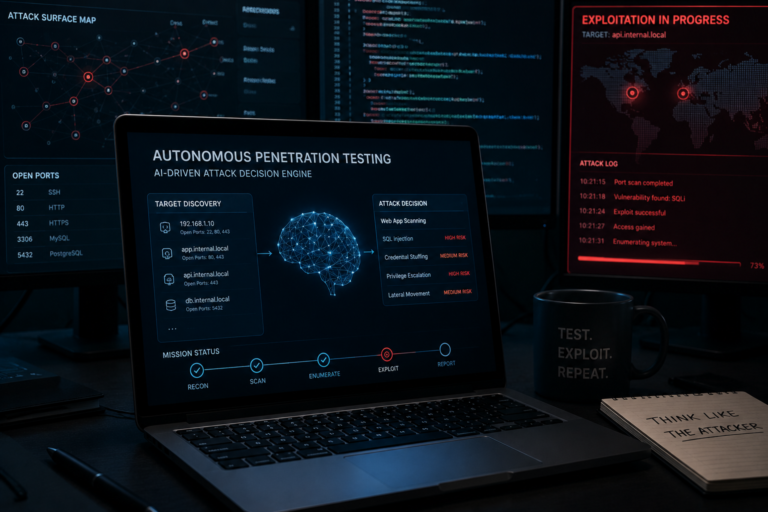
Autonomous penetration testing — when AI stops being told what to hack and starts choosing its own targets — isn’t a future scenario anymore. We’re no longer talking about AI…
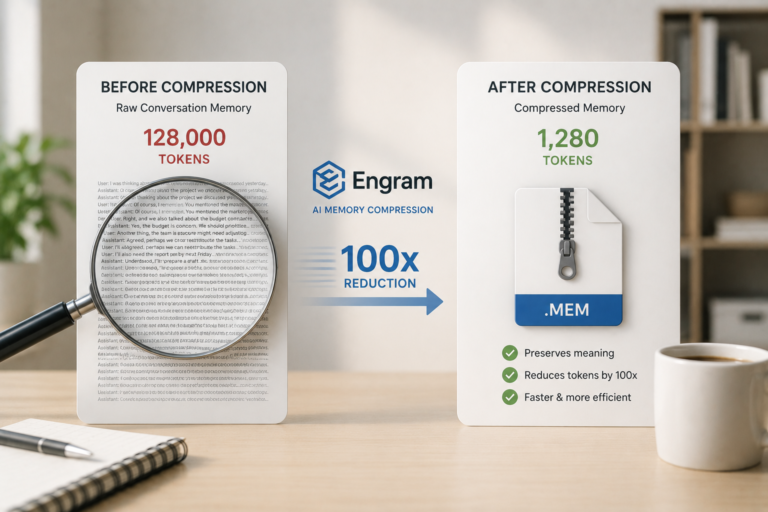
Large language models forget everything between conversations. That’s the dirty secret of modern AI — and it’s been quietly wrecking the economics of building useful AI produ…
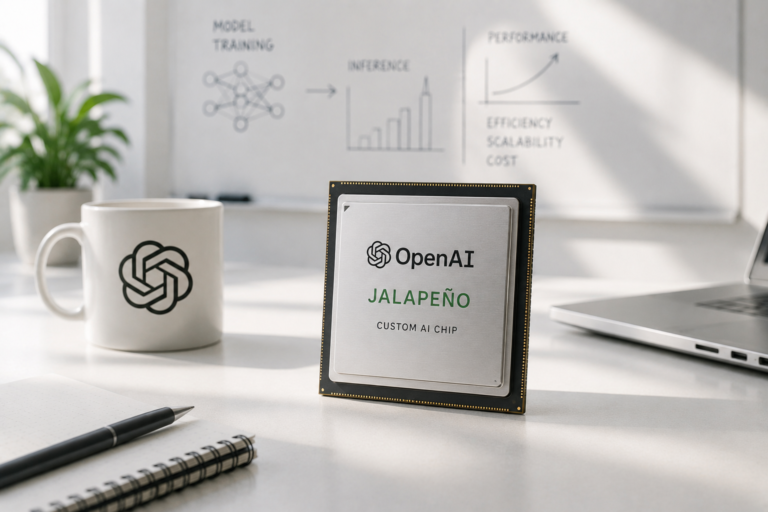
The OpenAI Jalapeño chip custom semiconductor AI inference project signals a massive shift. OpenAI isn’t just building AI models anymore — it’s building the hardware to run t…