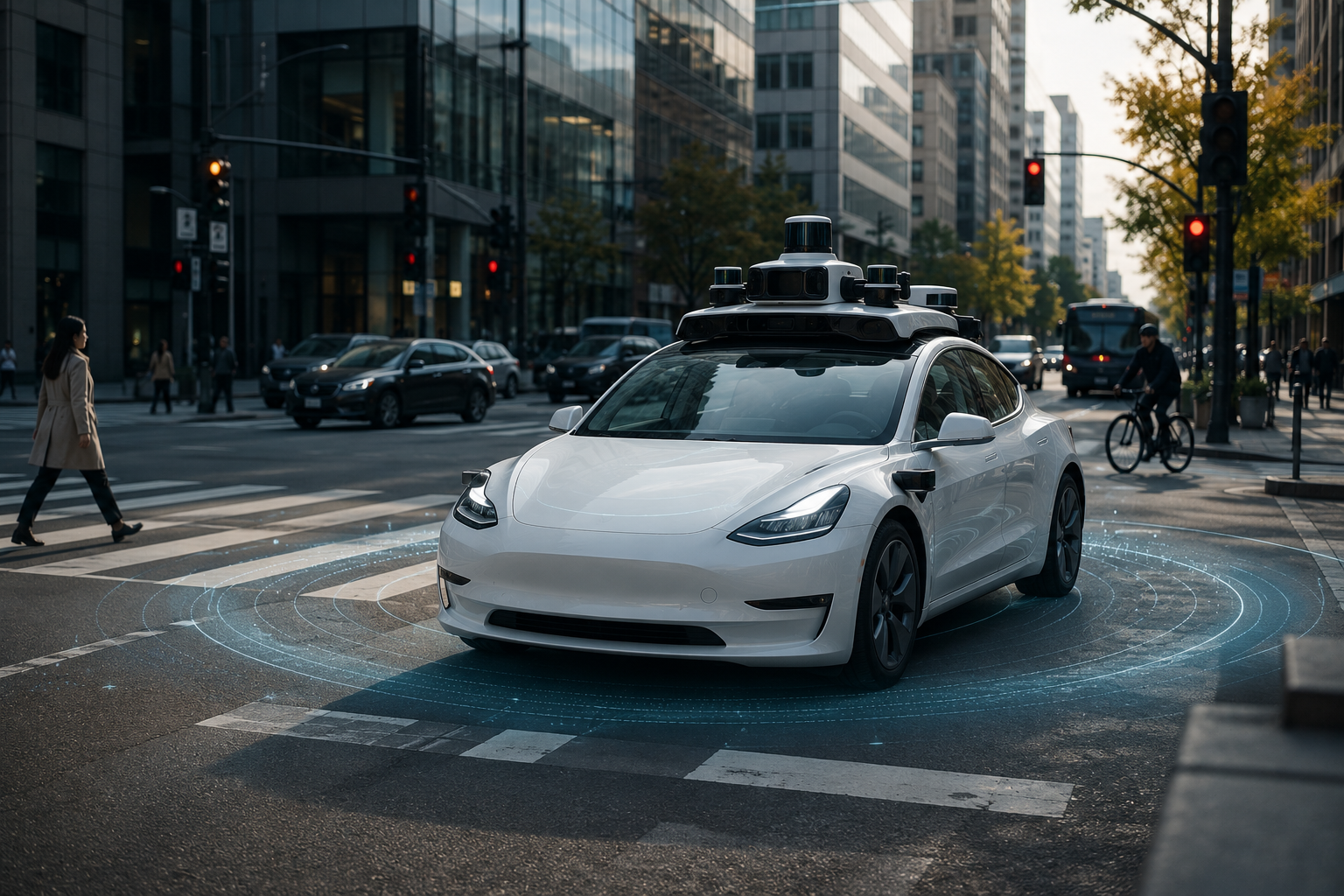
Autonomous vehicle AI safety standards regulations 2024 are moving faster than most people realize — and I mean that literally, not as a throwaway opener. Self-driving cars aren’t science fiction anymore. They’re running real streets, carrying real passengers, and operating under genuine legal frameworks that didn’t exist five years ago.
Waymo recently expanded into London. Cruise faced serious setbacks in San Francisco. Meanwhile, regulators worldwide are racing to build guardrails around this technology. Understanding the compliance and safety infrastructure behind these deployments matters enormously — it determines which companies succeed and which get pulled off the road.
Why Autonomous Vehicle AI Safety Standards Matter Now
Safety isn’t optional for self-driving cars. It’s the entire foundation.
Without solid autonomous vehicle AI safety standards regulations 2024, public trust evaporates overnight. I’ve watched this play out repeatedly — one high-profile accident can set an entire industry back years. We saw exactly that with Cruise in 2023, and the ripple effects are still visible today.
The stakes are genuinely high. AVs make thousands of decisions per second — interpreting sensor data, predicting pedestrian behavior, and handling complex intersections that would stress out a seasoned human driver. Consequently, the AI systems powering these vehicles need rigorous validation before they touch public roads. No shortcuts. No “we’ll fix it in a patch.”
Notably, 2024 has been a watershed year. Here’s what actually shifted things:
- NHTSA updated its AV testing framework to include more specific safety benchmarks
- The European Union finalized portions of its AI Act covering high-risk AI systems, including autonomous driving
- China put new national standards in place for Level 4 autonomous driving
- The UK created a dedicated regulatory pathway for self-driving vehicles
Furthermore, insurance frameworks are catching up — and honestly, this surprised me when I first dug into it. Underwriters now require specific safety certifications before covering AV operators. That creates a powerful market incentive for compliance that goes way beyond regulatory pressure alone. Follow the money, and you’ll understand why companies are suddenly taking certification seriously.
The National Highway Traffic Safety Administration (NHTSA) has been particularly active. Their Standing General Order requires AV companies to report crashes involving automated driving systems. This data feeds directly into evolving autonomous vehicle AI safety standards regulations 2024 frameworks — and it’s producing genuinely useful patterns for regulators to act on.
Key Regulatory Frameworks Governing AV AI Safety in 2024
Multiple regulatory bodies now oversee autonomous driving, and they don’t always agree. Nevertheless, several core frameworks have emerged as industry benchmarks. Fair warning: there are a lot of acronyms ahead, but they’re worth knowing.
- ISO 21448 (SOTIF): The Safety of the Intended Functionality standard addresses something counterintuitive — situations where the AI works exactly as designed but still produces unsafe outcomes. Specifically, it covers sensor limitations, algorithm edge cases, and environmental ambiguity. Think of it as the “it technically worked, but someone still got hurt” standard.
- ISO 26262: This functional safety standard for road vehicles has been around since 2011. However, its latest updates address AI-specific failure modes and define Automotive Safety Integrity Levels (ASILs) that classify risk severity. It’s the baseline most automotive engineers already know cold.
- UL 4600: Developed by Underwriters Laboratories, this one specifically targets autonomous product safety. Here’s the thing: it doesn’t prescribe specific technical solutions. Instead, it requires companies to build complete safety cases — essentially, prove your whole system is safe, not just individual components.
- EU AI Act (High-Risk Classification): The European Union’s AI Act classifies autonomous driving AI as high-risk. Consequently, AV operators in Europe must meet strict transparency, testing, and documentation requirements. This isn’t voluntary guidance — it’s law.
- UNECE WP.29 Regulations: The United Nations Economic Commission for Europe established automated lane-keeping system regulations that apply across multiple countries at once. Notably, this is one of the few places where international alignment is actually working.
Here’s how these frameworks compare:
| Framework | Scope | Geographic Reach | AI-Specific? | Mandatory? |
|---|---|---|---|---|
| ISO 21448 (SOTIF) | Intended functionality safety | Global | Partially | Voluntary (often required by OEMs) |
| ISO 26262 | Functional safety | Global | Updated for AI | Voluntary (industry standard) |
| UL 4600 | Full autonomous safety case | Primarily US | Yes | Voluntary |
| EU AI Act | High-risk AI systems | European Union | Yes | Mandatory |
| UNECE WP.29 | Vehicle automation levels | 60+ countries | Partially | Mandatory in signatory nations |
| NHTSA Framework | AV testing and deployment | United States | Partially | Mandatory reporting |
Additionally, state-level regulations in the US create a genuine patchwork. California, Arizona, Texas, and Florida each have distinct permitting processes — and California alone has revised its AV rules three times in two years. This fragmentation complicates nationwide deployment under autonomous vehicle AI safety standards regulations 2024 compliance, and it’s one of the industry’s most persistent headaches.
How Companies Earn Safety Certification for Real-World Deployment
Getting a self-driving car from prototype to public road is a massive compliance effort. It’s not linear — it’s iterative, expensive, and incredibly detailed. I’ve talked to engineers at two different AV companies, and both used the word “humbling” without being prompted.
Simulation testing comes first. Companies like Waymo run billions of simulated miles before physical testing begins. Waymo’s safety methodology documents their multi-layered approach — they test against thousands of scenario variations, including rare edge cases that might occur once in millions of real-world miles. Waymo logged over 20 billion simulated miles before their commercial launch in Phoenix. That number puts things in perspective.
Physical testing follows simulation. Closed-course testing validates what the simulation predicted. Importantly, gaps between simulated and real-world performance trigger additional development cycles. It’s not a one-and-done process — it loops back constantly.
Operational Design Domain (ODD) definition is critical. Every AV deployment specifies exactly where and when the vehicle can operate. This includes:
- Geographic boundaries (specific city zones, mapped routes)
- Weather conditions (rain, fog, snow limitations)
- Time-of-day restrictions
- Speed limits and road type constraints
- Traffic density thresholds
Moreover, the safety case documentation required by standards like UL 4600 can run thousands of pages. Companies must show they’ve identified every foreseeable risk and have a mitigation strategy for each one. It’s the kind of documentation work that makes software engineers visibly uncomfortable.
Redundancy architecture matters enormously. Modern AVs use multiple overlapping sensor systems — LiDAR, radar, cameras, and ultrasonic sensors each providing independent environmental data. If one system fails, others compensate. This redundancy is a core requirement under autonomous vehicle AI safety standards regulations 2024, not a nice-to-have.
Similarly, compute systems run in parallel. Primary and backup processors run the same driving algorithms independently, and disagreements between systems trigger conservative fallback behaviors — like pulling over safely. That’s the real strength of good redundancy design: failure modes are planned, not improvised.
Remote monitoring adds another safety layer. Most AV operators maintain 24/7 operations centers where trained specialists watch vehicle behavior in real time. They can step in when the AI hits situations outside its training. SAE International defines these human oversight levels within their automation framework — and Level 4 still assumes human backup exists somewhere in the loop.
The Infrastructure Behind AV Safety Standards in 2024
Self-driving cars don’t operate in isolation. They depend on supporting infrastructure that most people never see — and this invisible layer is just as important as the AI itself.
High-definition mapping is foundational. AVs need centimeter-accurate maps that go far beyond standard navigation data — lane markings, curb heights, traffic signal positions, permanent obstacles. Keeping them current requires continuous fleet-based surveying. One construction zone that appeared overnight can genuinely confuse an unprepared AV system.
Vehicle-to-everything (V2X) communication is growing. Although it’s not yet widely deployed, V2X technology lets AVs communicate with traffic signals, other vehicles, and road infrastructure. Several US cities have begun installing V2X-capable traffic signals, and this technology directly supports compliance with emerging autonomous vehicle AI safety standards regulations 2024 requirements. It’s early, but the direction is clear.
Connectivity requirements are strict. AVs need reliable cellular connections for remote monitoring, software updates, and incident reporting. Consequently, deployment zones must have verified network coverage. Dead spots aren’t just inconvenient — they’re genuine safety hazards that can take an entire route offline.
Cybersecurity infrastructure deserves special attention. A hacked autonomous vehicle isn’t just a data breach — it’s a weapon. Therefore, AV companies must put in place:
- End-to-end encryption for all vehicle communications
- Intrusion detection systems that watch for unusual behavior
- Secure over-the-air (OTA) update mechanisms
- Hardware security modules protecting cryptographic keys
- Regular penetration testing by independent security firms
The Cybersecurity and Infrastructure Security Agency (CISA) has published guidelines specifically addressing connected vehicle cybersecurity. These guidelines increasingly shape autonomous vehicle AI safety standards regulations 2024 requirements — and cybersecurity is still underweighted in most public discussions about AV safety.
Data storage and privacy infrastructure also plays a role. AVs collect enormous amounts of data — cameras capture pedestrians, license plates, and private property continuously. Regulations like GDPR in Europe and state privacy laws in the US govern how this data gets stored, processed, and deleted. Companies need solid data governance frameworks that satisfy both safety documentation requirements and privacy obligations at the same time. Those two goals sometimes pull in opposite directions, which is a genuine tension that doesn’t get enough attention.
Challenges and Gaps in Current AV Safety Regulations
Despite significant progress, the regulatory picture has real weaknesses. I’d rather be honest about them than pretend the framework is more complete than it is.
Standardized testing protocols don’t exist yet. There’s no universal driving test for autonomous vehicles. Each jurisdiction sets its own benchmarks — alternatively, some jurisdictions have no benchmarks at all. This inconsistency makes it nearly impossible to compare safety performance across companies or regions in any meaningful way.
Edge case coverage remains incomplete. AI systems struggle with truly novel situations — a mattress falling off a truck, a child chasing a ball into traffic from behind a parked van, construction zones with confusing temporary markings. Current autonomous vehicle AI safety standards regulations 2024 frameworks acknowledge these challenges but don’t fully solve them. That’s not a criticism; it’s an honest read of where the technology stands.
Liability frameworks are still evolving. When an AV causes an accident, who’s responsible — the manufacturer, the software developer, the fleet operator, or the passenger who chose autonomous mode? Different jurisdictions answer this differently. Nevertheless, clarity is improving. The UK’s Automated Vehicles Act 2024 places primary liability on the authorized self-driving entity. That’s a meaningful step forward.
Other persistent challenges include:
- Interoperability between different AV systems sharing the same roads
- Regulatory lag behind technological advancement — sometimes by years
- Inconsistent data-sharing requirements between companies and regulators
- Limited real-world performance data for rural and suburban environments
- Accessibility compliance for passengers with disabilities
Furthermore, the pace of AI advancement creates a moving target for regulators. Models improve continuously through machine learning. A vehicle’s driving behavior today might differ from its behavior after the next software update. Importantly, this raises real questions about whether safety certifications should apply to specific software versions or to the overall system — and nobody has a clean answer yet.
International alignment remains elusive. A vehicle approved in Arizona can’t automatically operate in Munich — the requirements differ substantially. Because companies deploying globally must satisfy dozens of overlapping and sometimes contradictory autonomous vehicle AI safety standards regulations 2024 frameworks, the compliance burden is enormous. The International Organization for Standardization continues working toward greater alignment, but progress is slow. Slower than the technology, definitely.
Conclusion
The world of autonomous vehicle AI safety standards regulations 2024 is complex, fragmented, and rapidly evolving. But — and this matters — it’s also making genuine progress. Real frameworks exist. Real certifications are being earned. Real vehicles are carrying real passengers on public roads today.
For technology professionals tracking this space, several actionable steps make sense right now:
- Follow NHTSA’s AV crash reporting data to understand real-world failure patterns as they emerge
- Monitor ISO 21448 and UL 4600 updates as they incorporate lessons from active deployments
- Track the EU AI Act’s implementation timeline for its impact on high-risk AI systems including autonomous driving
- Watch state-level regulatory developments in California, Arizona, and Texas as early signals for national policy
- Evaluate cybersecurity standards alongside driving safety standards — they’re increasingly inseparable
Bottom line: the companies that master autonomous vehicle AI safety standards regulations 2024 compliance won’t just avoid regulatory trouble. They’ll earn the public trust that ultimately determines commercial success. Safety certification isn’t a checkbox exercise — it’s the competitive moat that separates viable AV companies from those that flame out spectacularly.
As Waymo expands into London and other companies push into new markets, the governance and compliance layer behind autonomous driving will only grow more important. Understanding these systems isn’t optional anymore. It’s essential for anyone working in AI, transportation, or technology policy.
FAQ
What are the most important autonomous vehicle AI safety standards in 2024?
The most critical standards include ISO 21448 (SOTIF) for intended functionality safety, ISO 26262 for functional safety, and UL 4600 for complete autonomous product safety cases. Additionally, the EU AI Act now classifies autonomous driving AI as high-risk, imposing mandatory compliance requirements across Europe. In the US, NHTSA’s reporting requirements and state-level permitting frameworks round out the picture. Together, these form the backbone of autonomous vehicle AI safety standards regulations 2024.
How does Waymo comply with safety regulations before deploying in new cities?
Waymo follows a multi-phase approach. They begin with extensive simulation testing — billions of virtual miles across thousands of scenarios — then move to closed-course physical testing. Before entering a new city, they map the area in centimeter-level detail. Specifically, they define a strict Operational Design Domain that spells out exactly where and under what conditions their vehicles can operate. They also work directly with local regulators, submit safety documentation, and set up remote monitoring capabilities before a single passenger-carrying trip happens.
Who is liable when an autonomous vehicle causes an accident?
Liability varies significantly by jurisdiction. In the UK, the Automated Vehicles Act 2024 places primary liability on the authorized self-driving entity — typically the company operating the vehicle. In the US, liability frameworks remain fragmented across states. Generally, the trend is moving toward holding the AV operator or manufacturer responsible rather than the passenger. However, this area of law is still actively developing under current autonomous vehicle AI safety standards regulations 2024, and it’s worth watching closely.
What role does cybersecurity play in autonomous vehicle safety?
Cybersecurity is absolutely critical — and it doesn’t get enough airtime in mainstream coverage. A compromised autonomous vehicle could be remotely controlled, disabled, or pushed into dangerous behavior. Consequently, AV companies must put in place end-to-end encryption, intrusion detection systems, secure update mechanisms, and hardware security modules. CISA has published specific guidelines for connected vehicle cybersecurity. Moreover, emerging regulations increasingly treat cybersecurity as inseparable from physical driving safety — which is exactly the right framing.
How do autonomous vehicle regulations differ between the US and Europe?
The US takes a more decentralized approach. Federal guidelines from NHTSA coexist with state-level regulations that vary widely — some states are permissive, others are highly restrictive. Conversely, Europe is moving toward a unified framework through the EU AI Act and UNECE regulations, with requirements that tend to be more specific about documentation, transparency, and human oversight. Nevertheless, both regions are working toward similar safety outcomes through genuinely different regulatory philosophies related to autonomous vehicle AI safety standards regulations 2024. Neither approach is obviously better — they’re just different bets on how to get there.
Can autonomous vehicles operate safely in bad weather?
Currently, most AV deployments restrict operations during severe weather — and that’s not a bug, it’s a feature. Heavy rain, snow, dense fog, and ice significantly degrade sensor performance. LiDAR struggles with rain and snow, while cameras lose visibility in fog. Specifically, companies define weather limitations within their Operational Design Domain — the vehicle simply won’t operate in conditions outside its validated safety envelope. Improving all-weather capability remains one of the biggest technical challenges facing the industry. Progress is real, but full all-weather autonomy isn’t here yet. Anyone claiming otherwise is overselling.
References
Keep reading
Here are the latest posts from the blog.

The open vs closed models mid 2026 state looks radically different from even twelve months ago. Performance gaps have nearly vanished. Pricing wars have broken out across the…

Every time you ask ChatGPT a question, water evaporates somewhere. That’s not hyperbole — it’s physics. AI water consumption data centers environmental impact has quietly bec…

If you’ve been searching for why Fable 5 discontinued Anthropic Claude, you’re not alone. Thousands of developers and AI enthusiasts noticed when Anthropic quietly retired it…