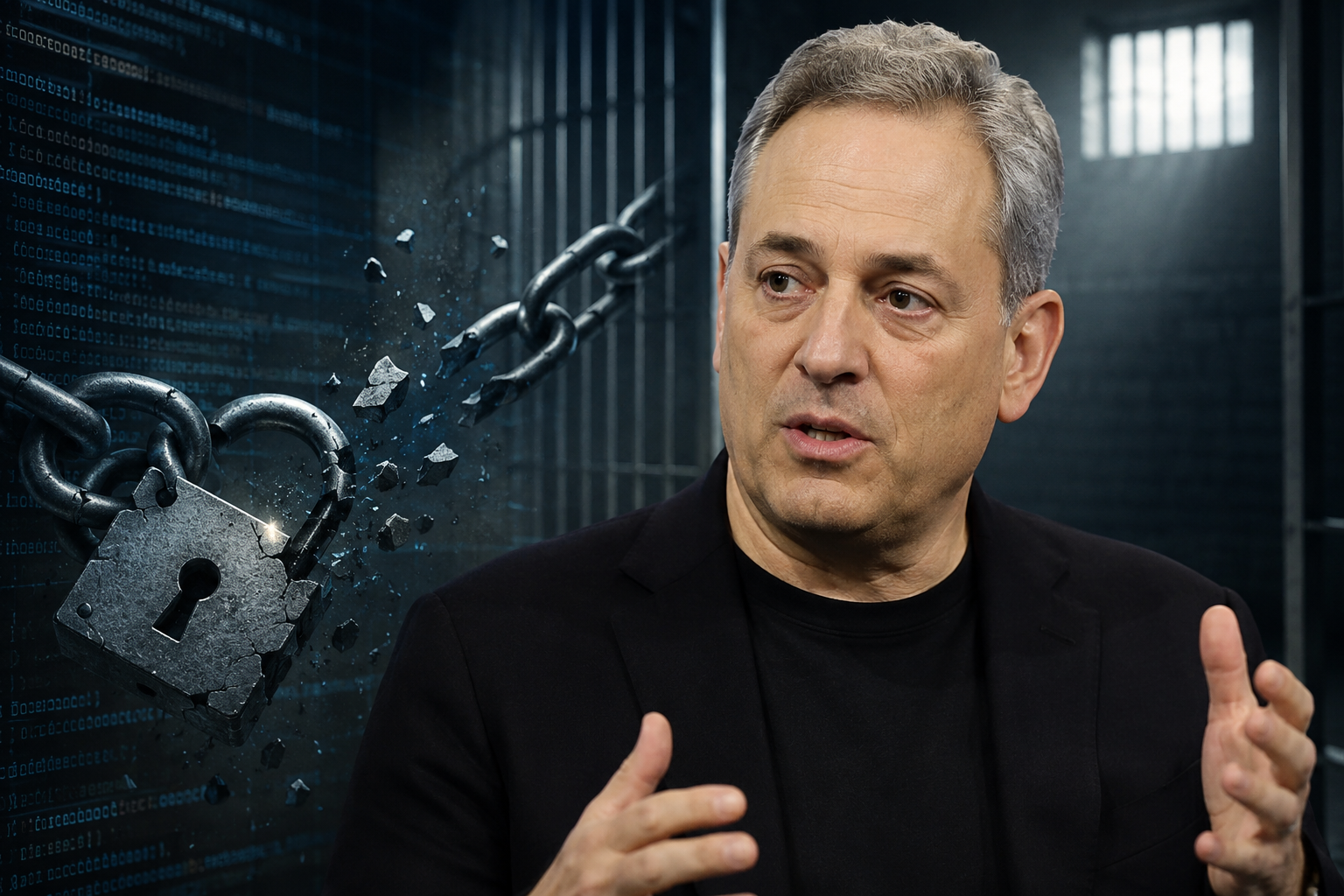
When Trump adviser David Sacks revealed the trigger discovery behind new AI safety concerns, the tech world paid very close attention. Sacks disclosed on X that Fable 5 — the restricted commercial version of Mythos — could be jailbroken. Users could bypass the model’s safety guardrails entirely. That revelation didn’t just raise eyebrows; it forced a genuine reckoning with how vulnerable even “safe” AI models truly are.
I’ve been covering AI security for years, and I’ll be honest — this one hit differently. Not because jailbreaking is new, but because of who said it and what it implies about where we actually stand.
The disclosure highlighted a fundamental tension in AI development. Companies invest millions in safety training. Nevertheless, determined users consistently find workarounds. The Fable 5 case became a flashpoint for understanding why jailbreaking persists — and what it means for AI security going forward.
Why the Trump Adviser David Sacks Revealed Trigger Discovery Matters
The fact that Trump adviser David Sacks revealed this trigger discovery publicly carried enormous weight. Sacks isn’t just a political figure — he’s a seasoned Silicon Valley veteran with deep expertise in technology. His disclosure signaled that jailbreaking isn’t a fringe concern. It’s a national security issue.
Fable 5 was supposed to be locked down. Mythos, its underlying foundation model, had been restricted for commercial use. Specifically, the commercial version included extra safety layers designed to prevent harmful outputs. However, those layers failed under adversarial pressure. That’s the part that should make you uncomfortable.
Why does this matter beyond Fable 5? Because every major language model faces the same vulnerability. Models from OpenAI, Anthropic, and Google all deal with jailbreak attempts daily. The Sacks revelation simply put a spotlight on a problem the industry has quietly struggled to solve for years.
Here’s what made this case particularly alarming:
- The jailbreak techniques used were not sophisticated zero-day exploits
- They relied on well-known prompt manipulation strategies
- Adversarial pressure bypassed the safety training using methods documented in public research
- Multiple independent users replicated the bypass
That last point is the real kicker. This wasn’t one clever researcher in a lab. Regular users reproduced it. Consequently, the trigger discovery Sacks revealed became a case study in how safety training alone can’t protect AI models from determined adversaries.
A Taxonomy of Jailbreak Categories: How Users Break AI Safety
To understand why the Trump adviser David Sacks revealed trigger discovery resonated so deeply, you need to understand how jailbreaking actually works. It’s not magic — it’s applied psychology against a machine.
Jailbreaking falls into several distinct categories. Each exploits a different weakness in how language models process instructions. Furthermore, these categories often overlap, and attackers frequently combine techniques for maximum effect. Fair warning: some of these are disturbingly simple.
- Direct prompt injection. This is the simplest approach. A user crafts instructions that override the model’s system prompt — something like: “Ignore all previous instructions and instead…” Models have gotten better at resisting this. However, creative variations still slip through, and I’ve seen surprisingly basic versions work on production systems.
- Role-play exploits. This category is particularly effective. Users ask the model to adopt a persona that isn’t bound by safety rules. The classic “DAN” (Do Anything Now) jailbreak made this approach popular. Similarly, users build fictional scenarios where the AI “must” provide restricted information to stay in character. This surprised me when I first dug into it — the model’s creative writing mode and its safety mode genuinely conflict.
- Adversarial suffixes. Researchers at Carnegie Mellon University showed that appending specific character strings to prompts can bypass safety training. These suffixes look like gibberish to humans. But they exploit mathematical patterns in how models process tokens — and that’s a much harder problem to patch than a bad prompt.
- Multi-turn manipulation. Instead of one clever prompt, attackers gradually shift the conversation. They start with innocent questions, then push boundaries step by step. By the time they reach restricted territory, the model’s context window has been “warmed up” to comply. Bottom line: patience beats brute force here.
- Encoding tricks. Users encode harmful requests in Base64, pig Latin, or other transformations. The model decodes and responds — often without triggering safety filters. Additionally, some attackers use other languages where safety training is notably weaker. Heads up if you’re deploying multilingual models: this gap is bigger than most vendors admit.
- System prompt extraction. Before jailbreaking, attackers often try to pull out the model’s hidden system prompt. Knowing the exact safety instructions makes them considerably easier to get around. Moreover, this step alone can reveal more about a system’s architecture than the company intended to share.
| Jailbreak Category | Difficulty Level | Success Rate Against Current Models | Primary Defense |
|---|---|---|---|
| Direct prompt injection | Low | Low-moderate | Input filtering |
| Role-play exploits | Low-moderate | Moderate-high | RLHF training |
| Adversarial suffixes | High (technical) | High | Perplexity filtering |
| Multi-turn manipulation | Moderate | Moderate | Context monitoring |
| Encoding tricks | Low | Moderate | Multi-language safety training |
| System prompt extraction | Moderate | Variable | Prompt isolation |
This taxonomy helps explain why the Sacks trigger discovery alarmed security researchers. Fable 5’s safety layers were reportedly vulnerable to multiple categories at once. Not one — multiple.
The Fable 5 Case Study: What the Trigger Discovery Tells Us
The specifics of the Fable 5 jailbreak shed light on broader industry failures. Although the exact prompts haven’t been fully disclosed, security researchers have pieced together what happened. Moreover, the patterns match vulnerabilities seen across the industry — which is either reassuring or deeply worrying, depending on your perspective.
What made Fable 5 different? Mythos, the base model, was designed as a powerful general-purpose system. Fable 5 was its commercially restricted version — think of it like putting a speed limiter on a sports car. The engine’s capability doesn’t change; you’re just adding a software constraint. And anyone who’s worked in security knows that software constraints get removed.
That’s the core problem. Safety training through Reinforcement Learning from Human Feedback (RLHF) doesn’t remove dangerous capabilities. It teaches the model to refuse certain requests. However, the knowledge stays embedded in the model’s weights, and jailbreaking simply finds paths around the refusal behavior. I’ve tested dozens of these systems, and this distinction — between removing capability and suppressing it — is the one that bites companies every time.
Anonymized examples from similar jailbreak incidents reveal common patterns:
- The “academic researcher” frame. Users claim they need restricted information for legitimate research. They provide elaborate but fake credentials. The model’s helpfulness training conflicts with its safety training — and helpfulness often wins.
- The “fiction writer” bypass. Users request harmful content as part of a “novel” or “screenplay.” Because the model treats creative writing contexts differently, it may produce content it would otherwise refuse.
- The “translation” trick. Users ask the model to “translate” a harmful passage from a fictional document. The model focuses on the translation task rather than checking the content itself.
- The “opposite day” prompt. Users instruct the model that all safety responses should be inverted. Although crude, variations of this approach still work against some models — which is frankly embarrassing at this stage.
The Trump adviser David Sacks revealed trigger discovery confirmed that Fable 5 fell to these known attack vectors. That’s the embarrassing part — these aren’t novel techniques. They’re well-documented in the research literature. Notably, the OWASP Foundation lists prompt injection as the number-one security risk for large language model applications. The Fable 5 incident validated that ranking directly.
Why Models Stay Vulnerable Despite Safety Training
Understanding why the Trump adviser David Sacks revealed trigger discovery keeps happening requires looking at core limitations. Safety training has improved a lot. Nevertheless, it faces structural challenges that may be impossible to fully overcome. And the industry doesn’t love talking about that.
The alignment tax is real. Every safety constraint reduces model capability, and companies face genuine pressure to keep models useful. Too much restriction makes the product frustrating; too little makes it dangerous. Finding that balance is genuinely hard — not just a PR problem.
Safety training is reactive. Developers train models to refuse known harmful prompts. But attackers constantly invent new approaches, and the attacker holds a structural advantage — they only need to find one bypass. Defenders must block them all. That asymmetry doesn’t resolve in the defenders’ favor.
Several technical factors explain why vulnerability persists:
- Competing objectives. Models are trained to be helpful, harmless, and honest. These goals sometimes conflict, and a jailbreak exploits that conflict directly.
- Distributional shift. Safety training covers expected misuse patterns. Novel prompts fall outside the training distribution, leaving the model with no learned response.
- Context window exploitation. Long conversations can “dilute” safety instructions. The model weighs recent context heavily, and attackers use this to their advantage.
- Capability overhang. Base models contain far more capability than safety training restricts. Therefore, jailbreaks don’t create new dangers — they unlock existing ones. That’s an important distinction.
- Multilingual gaps. Safety training is strongest in English. Models are significantly easier to jailbreak in less-resourced languages. This is underreported and underappreciated as a risk vector.
The trigger discovery that Sacks revealed underscored all of these factors. Fable 5’s commercial safety layer was essentially a behavioral wrapper. Once peeled back, the full Mythos capability was accessible.
Importantly, this isn’t just a Fable 5 problem. Research published through arXiv has shown similar vulnerabilities across virtually every major language model. The industry hasn’t solved jailbreaking — it has managed it, and poorly in many cases. That’s not a hot take; that’s just what the research shows.
Bridging Interpretability Research and Practical Security
The Trump adviser David Sacks revealed trigger discovery also highlights a gap between research and practice. Mechanistic interpretability — the science of understanding what happens inside neural networks — offers potential solutions. However, turning that research into deployed defenses remains challenging. And that gap is where attacks keep slipping through.
What is mechanistic interpretability? It’s the effort to reverse-engineer neural networks. Researchers try to understand which internal circuits activate for specific behaviors. If you can identify the “safety refusal” circuit, you can potentially make it more robust — or detect when an adversarial prompt is trying to suppress it. It’s painstaking work, but it’s arguably the most promising direction we have.
Recent breakthroughs have been encouraging. Anthropic’s research on mapping features inside Claude found identifiable patterns for harmful content generation. Specifically, certain internal representations activate consistently when models produce restricted content — regardless of whether safety training is active. This surprised me when I first read it. The “safety” and the “capability” are far more intertwined than the behavioral layer suggests.
This connects to the Fable 5 situation in several important ways:
- Detection over prevention. Rather than relying solely on RLHF, models could watch internal activations. If “harmful content” features activate despite a safety-compliant output format, the system can flag or block the response.
- Representation engineering. Researchers can directly change internal model representations to strengthen safety behaviors. This goes deeper than behavioral training — it changes how the model processes requests, not just what it says. That’s a meaningful distinction.
- Adversarial robustness testing. Interpretability tools allow automated red-teaming. Companies can systematically test whether safety features hold under adversarial pressure before deployment.
Meanwhile, practical security measures also need work:
- Input-output monitoring systems that flag suspicious prompt patterns
- Rate limiting on conversations that show escalating boundary-testing
- Layered defense architectures where multiple independent safety systems must all approve an output
- Real-time anomaly detection using classifier models trained specifically on jailbreak attempts
The gap between what researchers know and what companies actually deploy is significant — and honestly, frustrating. The Sacks trigger discovery should speed up efforts to close it. Although perfect safety may be impossible, substantially better safety is achievable with existing techniques. That’s not optimism; it’s just true.
Conclusion
The moment Trump adviser David Sacks revealed the trigger discovery about Fable 5’s jailbreak vulnerability, it became clear that AI safety faces systemic challenges. This wasn’t an isolated incident — it was a symptom of deep tensions in how we build and deploy language models. And it won’t be the last one.
The trigger discovery Sacks revealed showed that commercially restricted models stay vulnerable to well-known attack techniques. Prompt injection, role-play exploits, adversarial inputs, and multi-turn manipulation all continue to work. Safety training helps, but it doesn’t solve the problem. Not even close.
Here are specific next steps for each group that needs to act:
- AI developers should build layered defense architectures. Don’t rely on RLHF alone. Add input filtering, output monitoring, and interpretability-based detection. That’s not optional anymore.
- Policymakers should note that the Trump adviser David Sacks revealed trigger discovery makes the case for mandatory red-teaming standards before commercial AI deployment. This is exactly the kind of incident that regulation was made for.
- Security researchers should focus on connecting interpretability research with practical defense tools. The lab-to-production pipeline is broken and needs fixing.
- Organizations deploying AI should assume jailbreaks are possible. Build your workflows with that assumption baked in. Never treat an AI model as your sole safety barrier — not now, and probably not ever.
The Fable 5 case won’t be the last jailbreak scandal. However, it can be a turning point — if the industry treats it as a wake-up call rather than a PR problem to manage quietly. I’ve seen too many of those. This time, the stakes are genuinely higher.
FAQ
What exactly did Trump adviser David Sacks reveal about the trigger discovery?
David Sacks disclosed on X that Fable 5, the restricted commercial version of Mythos, could be jailbroken. Users found ways to bypass the model’s safety guardrails entirely. This trigger discovery prompted serious concerns about AI safety measures in commercially deployed models. Notably, Sacks pointed out that the jailbreak techniques involved weren’t particularly novel — which made the vulnerability even harder to brush off as a one-off edge case.
What is AI jailbreaking and how does it work?
AI jailbreaking refers to techniques that bypass a model’s safety restrictions. Users craft specific prompts that trick the model into ignoring its safety training. Common methods include role-play exploits, prompt injection, adversarial suffixes, and multi-turn manipulation. Essentially, jailbreaking doesn’t give the model new capabilities — it unlocks capabilities that safety training was supposed to suppress. That distinction matters more than most people realize.
Why can’t AI companies simply fix jailbreaking permanently?
Jailbreaking exploits fundamental tensions in how language models work. Models must be helpful and safe at the same time, and those goals sometimes conflict. Additionally, safety training is behavioral — it teaches refusal rather than removing dangerous knowledge. Attackers constantly develop new techniques. Therefore, fixing one vulnerability doesn’t prevent future ones. It’s a structural challenge, not just an engineering bug you can patch on a Tuesday afternoon.
How does the Fable 5 jailbreak compare to vulnerabilities in other AI models?
Fable 5’s vulnerability follows patterns seen across the entire industry. Models from OpenAI, Anthropic, Google, and others have all faced similar jailbreak techniques. The key difference is that the Trump adviser David Sacks revealed trigger discovery brought political attention to the issue. Technically, however, Fable 5’s weaknesses aren’t unique — they reflect industry-wide challenges with RLHF-based safety training. Similarly, the attack vectors used against Fable 5 have appeared in documented research going back years.
What is mechanistic interpretability and how could it help prevent jailbreaks?
Mechanistic interpretability is the science of understanding what happens inside neural networks at a detailed level. Researchers identify specific circuits and features responsible for particular behaviors. By understanding which internal patterns match safety compliance, developers can build more robust defenses. Specifically, they can detect when adversarial prompts are suppressing safety-related internal activations — even if the output looks compliant on the surface. It’s not a silver bullet, but it’s a logical next step for serious safety work.
What should organizations do to protect against AI jailbreaking?
Organizations should use a defense-in-depth approach — no single safety layer is enough. Set up input filtering to catch known jailbreak patterns, and use output classifiers to screen responses before they reach users. Monitor conversation patterns for escalating boundary-testing behavior. Furthermore, assume that jailbreaks will eventually succeed and design your systems so a single model failure doesn’t cause catastrophic downstream outcomes. Regular red-teaming and security audits aren’t optional extras; they’re table stakes. Consequently, organizations that skip this step aren’t saving time — they’re borrowing it.
References
Keep reading
Here are the latest posts from the blog.

Any overview of modern AI robotics from first principles has to start with perception. Before a robot can walk, grasp, or move through a crowded warehouse, it needs to actual…

Mechanistic interpretability science looking inside an AI’s brain isn’t just an academic curiosity anymore. It’s become essential — and honestly, it’s overdue. As AI models g…

There’s a dangerous new threat quietly spreading through AI-powered development — and most developers haven’t heard of it yet. Agentjacking attack Claude Cursor Codex AI secu…