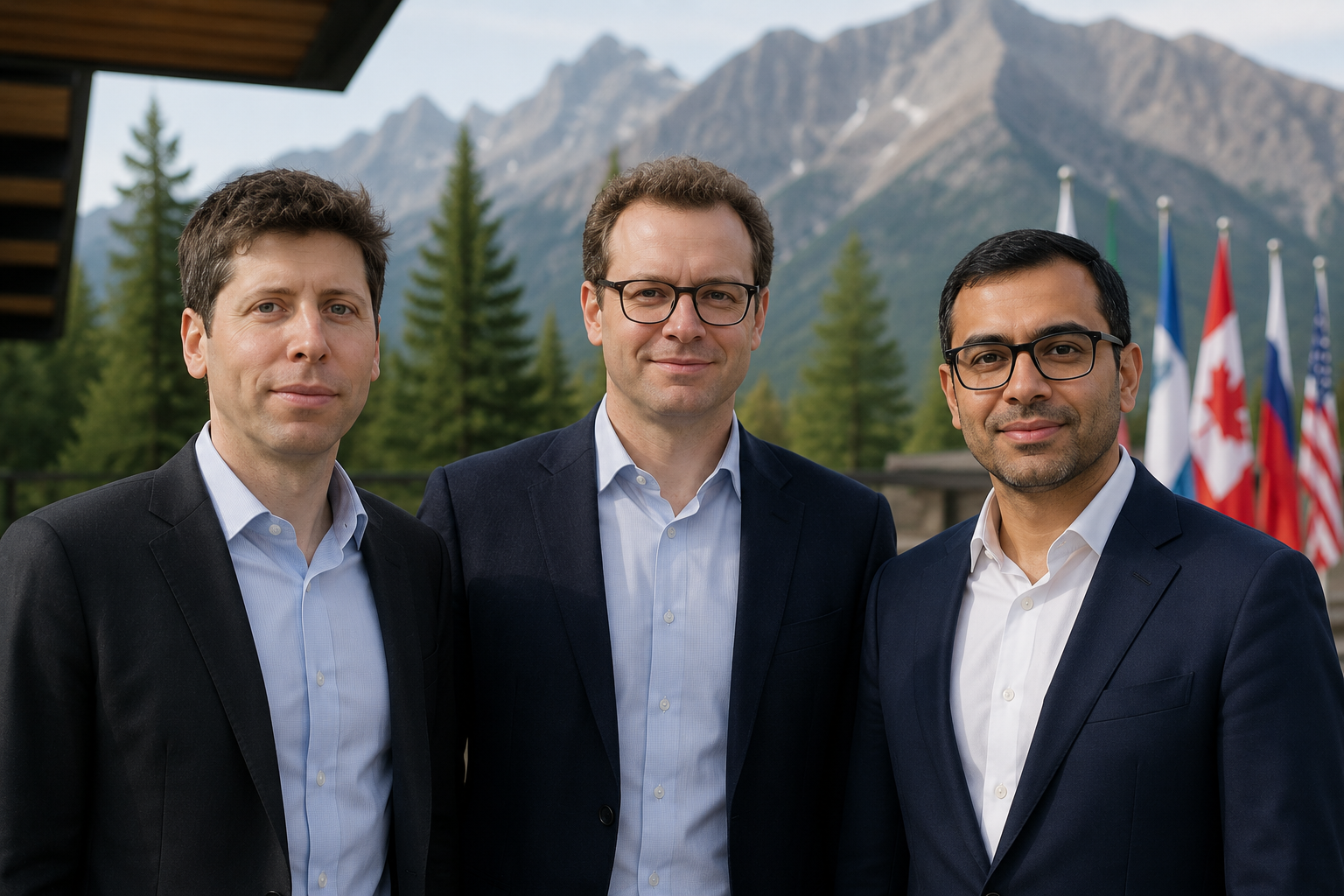
Three of the most consequential people in tech are about to walk into one of the most politically charged rooms on the planet. Sam Altman, Dario Amodei, and Demis Hassabis attending the G7 Summit in France from June 15–17 is — and I don’t use this word lightly — genuinely historic. These three run OpenAI, Anthropic, and Google DeepMind respectively, which are the organizations actually building the most powerful AI systems in existence right now.
This isn’t a panel discussion at Davos. The G7 brings together heads of state from the U.S., UK, France, Germany, Italy, Canada, and Japan. Having all three AI chiefs in the same room as those leaders signals that governments now treat AI regulation as a top-tier geopolitical priority — right alongside nuclear policy and climate change. Furthermore, it tells you something important: these companies want to be in the room where the rules get written, not just subject to whatever comes out of it.
So what does this actually mean for AI policy, the competitive dynamics, and safety frameworks going forward? Let me break it down.
Why Sam Altman, Dario Amodei, and Demis Hassabis Attending the G7 Matters
Five years ago, AI wasn’t even a footnote on the G7 agenda. However, the rapid rise of large language models changed the calculus entirely — and fast. Consequently, the G7’s official framework now treats artificial intelligence as a core policy area, sitting alongside issues that can destabilize entire governments.
The significance of Sam Altman, Dario Amodei, and Demis Hassabis attending can’t be overstated. These aren’t lobbyists or policy deputies. They’re the founders and CEOs who personally decide what capabilities get built, what safety thresholds get set, and when models get deployed.
Specifically, their presence reflects several dynamics worth understanding:
- Government recognition that private companies currently hold more functional AI power than any nation-state
- Industry willingness to engage with regulation rather than fight it from the outside
- Growing public concern about AI safety, misinformation, and job displacement — and the political pressure that creates
- Competitive pressure among nations trying to attract AI investment while maintaining some form of oversight
- The Hiroshima AI Process legacy, which the G7 launched in 2023 to establish voluntary AI governance codes
Moreover, this summit lands at a real inflection point. OpenAI is pushing hard toward AGI. Anthropic’s Claude models are gaining serious enterprise traction — I’ve watched that shift happen faster than most analysts predicted. And DeepMind keeps quietly dominating scientific AI applications in ways that don’t always make headlines but matter enormously. The stakes for getting regulation right have never been higher.
Notably, France’s role as host adds another layer here. President Macron has deliberately positioned France as Europe’s AI-friendly alternative to the stricter EU AI Act framework — courting AI companies with favorable investment terms. Having all three leaders on French soil creates diplomatic opportunities that extend well beyond the formal summit agenda. Side meetings at these events often produce more than the official sessions ever do.
The Regulatory Positions Each Leader Brings to France
Understanding what Sam Altman, Dario Amodei, and Demis Hassabis attending this summit actually means requires looking at where each of them stands on regulation. Although they lead competing companies, their approaches differ in ways that will shape whatever comes out of France.
Sam Altman and OpenAI’s position centers on proactive government engagement. Altman has testified before the U.S. Senate multiple times — more than any other AI CEO — and has explicitly called for a new regulatory agency dedicated to AI oversight. OpenAI generally supports licensing requirements for frontier models, which critics reasonably point out would benefit incumbents over smaller startups. Nevertheless, Altman has been consistent about one thing: some form of international coordination is non-negotiable at this stage.
Dario Amodei and Anthropic’s approach puts technical safety research front and center. His 2024 essay “Machines of Loving Grace” — which I’d genuinely recommend reading if you haven’t — laid out how AI could produce transformational benefits if developed responsibly. Anthropic pioneered both “constitutional AI” and Responsible Scaling Policies (RSPs). These are internal frameworks that tie deployment decisions to demonstrated safety benchmarks. Amodei tends to favor industry-led standards over heavy government mandates, and that distinction matters.
Demis Hassabis and DeepMind’s stance blends scientific credibility with corporate pragmatism. Hassabis won a Nobel Prize in Chemistry for his work on protein structure prediction through AlphaFold. That’s not a talking point — it’s genuine scientific authority that he brings to these policy conversations. He’s advocated for international AI safety institutions modeled after nuclear nonproliferation bodies. Additionally, DeepMind operates within Google’s broader corporate structure, which adds real complexity to its policy positions. That tension doesn’t disappear just because you’re at a G7 summit.
Here’s a comparison of their key regulatory stances:
| Topic | Sam Altman (OpenAI) | Dario Amodei (Anthropic) | Demis Hassabis (DeepMind) |
|---|---|---|---|
| Government licensing | Supports for frontier models | Cautiously supportive | Supports international framework |
| Safety testing | Internal + third-party audits | RSPs and constitutional AI | Scientific peer review model |
| Open source | Increasingly restrictive | Selective openness | Case-by-case basis |
| International coordination | Strong advocate | Supports voluntary codes | Favors treaty-like structures |
| AGI timeline urgency | Very high | High | Moderate to high |
| Preferred regulatory model | New dedicated agency | Industry-led standards first | IAEA-style international body |
These differences matter enormously — and they’re not just philosophical. The G7’s final communiqué will reflect compromises among these positions. Therefore, the specific language around voluntary versus mandatory frameworks will be the thing to watch closely when the document drops.
Expected Policy Outcomes From the G7 AI Discussions
With Sam Altman, Dario Amodei, and Demis Hassabis attending alongside heads of state, several concrete outcomes are on the table. The G7 has been building toward this moment since the Hiroshima AI Process established voluntary commitments in 2023 — but voluntary frameworks have a shelf life, and that shelf life is expiring.
Expansion of the Hiroshima AI Code of Conduct. The original code had 11 voluntary principles. Compliance, however, has been inconsistent — and that’s being charitable. The France summit is expected to push for stronger reporting requirements. Companies may need to disclose training compute thresholds, safety test results, and deployment safeguards. That’s a meaningful shift from “we encourage you to” toward “you need to show us.”
International AI safety testing protocols. The UK’s AI Safety Institute has been running pre-deployment testing on frontier models. Similarly, the U.S. stood up its own AI Safety Institute within NIST. The G7 may announce a coordinated testing framework that standardizes evaluations across member nations. This would directly affect how OpenAI, Anthropic, and DeepMind release future models. Fair warning: the implementation details here will be contentious.
Addressing AI and national security. Frontier models increasingly carry dual-use potential — they can assist beneficial research and weapons development, sometimes using the same underlying capabilities. Consequently, export controls on AI chips and model weights will almost certainly come up. This connects directly to ongoing tensions around China’s AI development trajectory.
Workforce transition commitments. All three AI leaders have acknowledged their technology will displace jobs — notably, none of them deny it anymore. The G7 is expected to announce joint investment in retraining programs. Specifically, member nations may commit funding toward AI literacy and workforce adaptation initiatives.
Energy and infrastructure requirements. Training frontier models burns through staggering amounts of compute. Meanwhile, data center construction is already straining power grids in Virginia, Ireland, and Singapore. The summit may address sustainable AI infrastructure, particularly nuclear energy partnerships for AI computing. It surprised me when I first saw this discussed seriously, but it’s now very much a live conversation.
Additionally, the summit’s timing lines up with several pending regulatory actions:
- The EU AI Act’s first enforcement deadlines are approaching
- The U.S. Congress is actively debating multiple AI bills
- Japan is finalizing its own AI governance framework
- Canada recently proposed its Artificial Intelligence and Data Act (AIDA)
The real kicker? The informal conversations happening around the official sessions often produce more concrete results than the scheduled agenda. That’s true of every major summit, and there’s no reason to think France will be different.
How This Summit Shapes the AI Competitive Landscape
Sam Altman, Dario Amodei, and Demis Hassabis attending the G7 together carries major competitive implications. These leaders don’t often appear at the same event — and when they do, the dynamics tell you a lot about where power actually sits in this industry.
The optics of inclusion matter more than people admit. Being invited to the G7 as an AI leader signals that governments view your company as a critical player. Notably, leaders from Meta, xAI, and Mistral weren’t reported among the primary AI invitees. That distinction reinforces — fairly or not — the perception that OpenAI, Anthropic, and DeepMind represent the current frontier.
Regulatory capture concerns are real, and they’re not unfair. Critics argue that having dominant AI companies help write the rules creates obvious conflicts of interest. Smaller AI startups and open-source advocates worry that compliance requirements will be structured in ways that favor well-resourced incumbents. Therefore, the summit’s outcomes will face serious scrutiny from the broader AI community — and they should.
Alliance formation is likely. Although these three companies compete fiercely for talent, customers, and compute, they share common interests on specific policy questions. All three want to avoid overly restrictive regulation that could slow development. All three prefer international coordination over a fragmented patchwork of national laws. Conversely, they disagree sharply on open-source model distribution and compute governance — and those disagreements won’t disappear over a nice French dinner.
The competitive dynamics break down along several lines:
- Funding and valuation: OpenAI recently raised capital at a $300 billion valuation. Anthropic has secured billions from Amazon and Google. DeepMind operates as a division of Alphabet. Each company’s financial position shapes its regulatory preferences in ways that aren’t always stated explicitly.
- Model capabilities: All three are racing toward more capable systems. Regulations that slow one company more than others could meaningfully shift the competitive balance — and everyone in that room knows it.
- Enterprise adoption: Anthropic’s Claude has gained strong enterprise traction. OpenAI dominates consumer AI. DeepMind focuses heavily on scientific applications. Different regulatory frameworks affect these market segments differently.
- Talent competition: AI researchers watch policy signals closely. I’ve talked to enough researchers to know that companies seen as genuinely safety-conscious attract stronger candidates — and the G7 appearance burnishes each leader’s reputation in exactly that regard.
Furthermore, the summit creates a unique networking environment that’s hard to copy. Government officials controlling procurement budgets, defense contracts, and research funding will all be present. The commercial opportunities embedded within these policy discussions shouldn’t be underestimated — that’s not cynicism, it’s just how these events work.
What the G7 Summit Means for Global AI Governance
The broader significance of Sam Altman, Dario Amodei, and Demis Hassabis attending extends well beyond any single policy announcement. This summit represents something more structural: a maturing, institutionalized relationship between the AI industry and international governance bodies.
The shift from voluntary to structured frameworks is underway. The Hiroshima AI Process started with voluntary commitments — a reasonable starting point. But voluntary doesn’t mean permanent. The France summit is expected to introduce accountability mechanisms including regular reporting, peer review, and consequences for non-compliance. Although cross-border enforcement remains genuinely hard, the direction of travel is unmistakable.
The China question looms over everything. China isn’t a G7 member. Nevertheless, its AI capabilities rival those of any Western company — and that gap is narrowing, not widening. The OECD’s AI Policy Observatory has documented the growing split between Western and Chinese regulatory approaches. The G7’s challenge is crafting rules that keep competitiveness intact while genuinely addressing safety concerns. That’s a hard needle to thread, and I don’t think anyone has a clean answer yet.
Developing nations want representation — and they have a point. The G7 doesn’t include India, Brazil, or most African nations, all of which will be deeply affected by AI but have limited input into the governance frameworks being built right now. Importantly, several G7 members have said they’ll push for broader inclusion in these discussions. Whether that translates into something concrete remains to be seen.
The safety versus innovation tension persists. Altman has called it a false dichotomy. Amodei argues safety research actually enables faster innovation. Hassabis points to AlphaFold as proof that responsible AI produces extraordinary results. They’re all partially right. But real tradeoffs do exist — mandatory pre-deployment testing adds time and cost, compute reporting requirements could expose competitive information, and export controls limit market access. Similarly, ignoring safety risks entirely carries its own enormous costs. Nobody has perfectly resolved this tension.
The summit also arrives during a period of rapid technical progress:
- OpenAI is reportedly developing its next-generation model series
- Anthropic recently updated Claude with meaningfully expanded capabilities
- DeepMind continues advancing Gemini across multiple modalities
- Open-source models from Meta and others are closing capability gaps faster than most expected
Consequently, any governance framework needs to account for a technology that’s moving faster than traditional regulatory processes can handle. That’s precisely why the G7 leaders invited the people actually building these systems. You can’t write sensible rules about something you don’t understand — and these three understand it better than anyone.
Conclusion
The fact that Sam Altman, Dario Amodei, and Demis Hassabis are attending the G7 Summit in France from June 15–17 is a defining moment for AI governance. It signals that artificial intelligence has moved from niche tech topic to first-order geopolitical concern. Moreover, it shows that the leaders building frontier AI systems recognize — or at least publicly accept — that international coordination is now necessary, not optional.
For anyone in the technology community, here are actionable next steps worth taking:
- Monitor the G7 communiqué — the final statement will reveal specific commitments on AI safety testing, reporting requirements, and international cooperation frameworks
- Track follow-up actions — voluntary commitments only matter if companies act on them; watch for concrete policy changes from OpenAI, Anthropic, and DeepMind in the weeks following the summit
- Engage with public comment periods — multiple nations are developing AI regulations that accept public input; your voice genuinely matters more at this stage than it will later
- Evaluate your own AI strategy — whether you’re a developer, business leader, or investor, the regulatory direction set at the G7 will affect AI adoption timelines and compliance costs in ways that are starting to become predictable
- Follow the safety research — understanding the technical safety work that Anthropic, DeepMind, and OpenAI publish helps you assess whether governance frameworks are grounded in technical reality or just political theater
Sam Altman, Dario Amodei, and Demis Hassabis attending this summit together isn’t merely symbolic. The decisions shaped during these three days in France will influence how AI develops, who controls it, and how its benefits and risks get distributed globally. Pay close attention — this is the kind of moment you’ll want to have understood in real time.
FAQ
Why are Sam Altman, Dario Amodei, and Demis Hassabis attending the G7 Summit?
These three leaders run the companies building the world’s most advanced AI systems. Governments have recognized that effective AI regulation requires direct input from the people making technical decisions about model capabilities and safety — not just policy advisors interpreting those decisions secondhand. Additionally, the G7 wants to build on the Hiroshima AI Process, which established voluntary commitments for frontier AI developers in 2023. Their attendance reflects AI’s rise to a top-tier geopolitical issue, sitting alongside climate change and economic policy rather than below them.
What specific AI policies might the G7 announce?
The summit is expected to produce expanded reporting requirements for frontier AI developers, coordinated international safety testing protocols, and updated codes of conduct with actual accountability mechanisms attached. Furthermore, discussions will likely address AI’s role in national security, workforce displacement, and the energy infrastructure demands that nobody publicly talked about two years ago. The final communiqué should include specific language on accountability that goes meaningfully beyond the original Hiroshima AI Process commitments — though how much further is the open question.
How does the G7 Summit differ from other AI governance events?
The G7 Summit carries unique weight because it brings together leaders of the world’s largest democracies with real diplomatic authority. Unlike conferences such as the AI Seoul Summit or industry events, G7 commitments translate into national policy directives. Specifically, member nations are expected to put agreed-upon frameworks into practice through their domestic regulatory processes. The combination of political leaders and AI executives at the same table creates direct negotiation opportunities that simply don’t exist elsewhere — and that directness matters.
Will the G7 Summit affect AI regulation in the United States?
Yes, although indirectly. G7 commitments inform but don’t override domestic legislation — that’s an important distinction. Nevertheless, the U.S. government typically aligns its AI policy with G7 consensus positions when they emerge. Any frameworks agreed upon in France will likely influence pending congressional AI bills and executive branch guidance. Importantly, the U.S. AI Safety Institute’s testing protocols may be updated to align with internationally coordinated standards announced at the summit.
Are there concerns about AI companies influencing their own regulation at the G7?
Absolutely — and these concerns are legitimate, not just talking points. Critics have raised real questions about regulatory capture, specifically the risk that dominant companies shape rules in ways that lock in their own positions. Smaller AI startups and open-source advocates worry that compliance requirements will create barriers to entry that only well-resourced incumbents can clear. However, proponents argue that excluding the companies actually building frontier AI from governance discussions would produce regulations that are uninformed at best and counterproductive at worst. The key, consequently, is transparency about what gets discussed and decided — and holding these companies accountable to whatever commitments emerge.
Keep reading
Here are the latest posts from the blog.
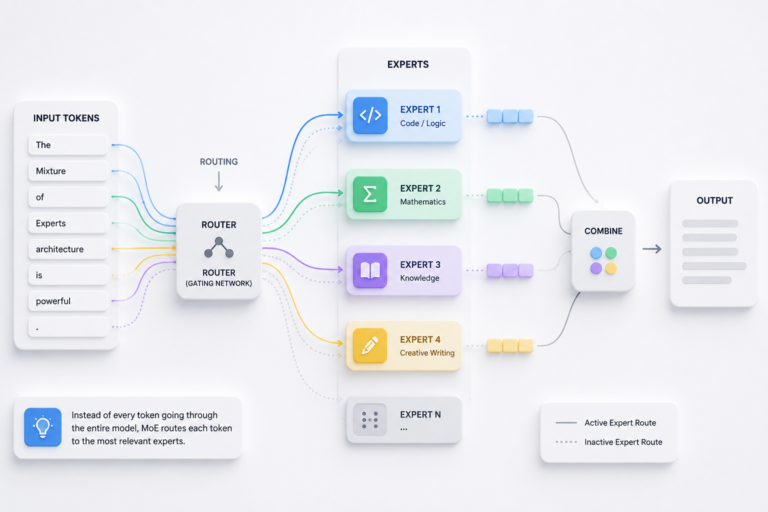
The phrase mixture of experts explained why biggest AI models aren’t monolithic often comes up in AI discussions, and there’s a good reason for that. Today’s leading AI syste…

Quantization is how AI models get smaller without getting dumber — it’s reshaping machine learning deployment. Ever wondered how a 70-billion-parameter model runs smoothly on…
Sarvam AI closing one of India’s largest private AI funding rounds isn’t just a headline worth skimming past. It’s a seismic shift in how global investors view non-Western AI…