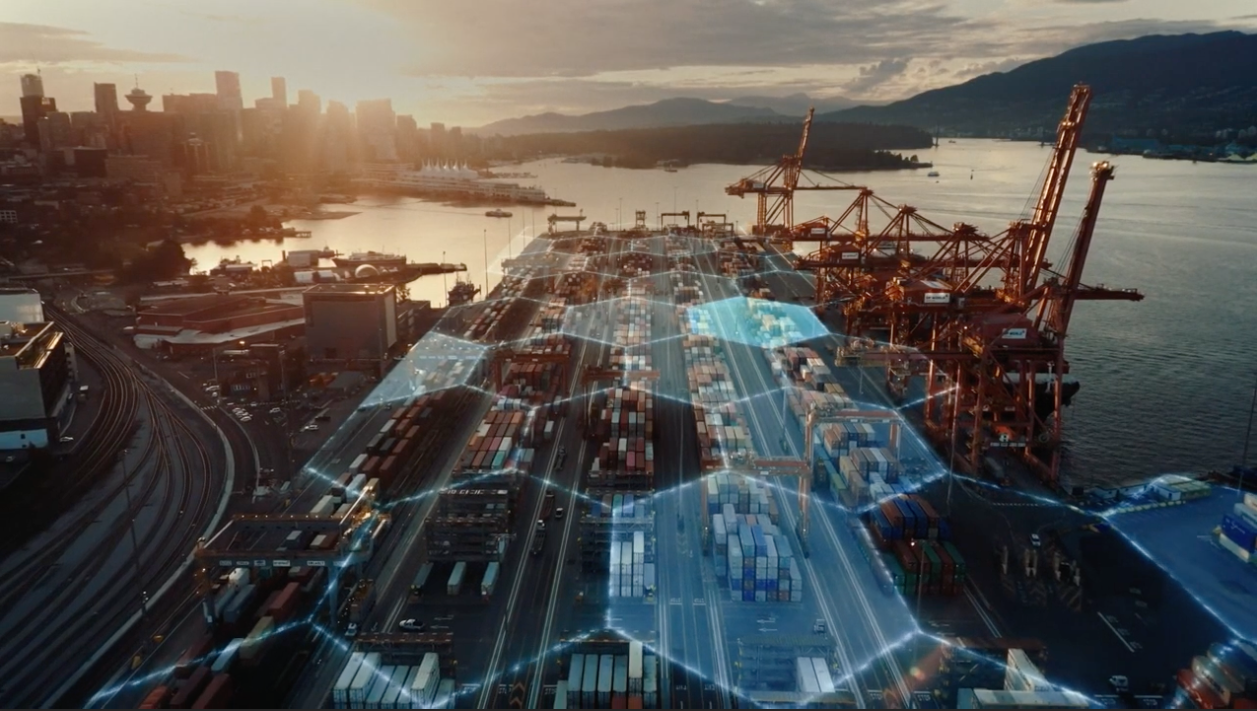
Niantic + Spexi: City-Scale Drone Imagery for Robot Training

The partnership between Niantic and Spexi for city-scale drone imagery for robot training isn’t just another Tuesday in tech news. This one actually matters. Niantic — yeah, the Pokémon GO company — has quietly built one of the most detailed 3D maps on the planet. Now they’re teaming up with Spexi’s drone fleet to capture aerial imagery that teaches robots how to move through the real world. Not a simulation. The actual, messy, complicated real world.

I’ve been watching the robotics data space for years, and this is the kind of infrastructure play that doesn’t get enough attention. Everyone obsesses over the hardware. But the data pipeline? That’s where the real work happens.

Furthermore, it fills a critical gap that hardware-focused platforms like Nvidia’s Isaac GR00T simply can’t solve alone — and that’s not a knock on Nvidia, it’s just the reality of what each piece does.

Why Niantic and Spexi Are Building City-Scale Drone Imagery

Here’s the thing: robots need data. Specifically, they need massive volumes of high-resolution, geospatially accurate visual data — not the sanitized, controlled-environment stuff that looks great in demos.

Simulated environments only go so far. Eventually, every autonomous system has to understand real streets, real buildings, and real obstacles. A robot that’s only ever seen clean 3D renders is going to have a bad time the moment it meets a cracked sidewalk or an illegally parked delivery truck.

Niantic’s Visual Positioning System (VPS) already maps millions of locations worldwide. Their Lightship platform powers augmented reality experiences by understanding physical spaces at centimeter-level accuracy. However, ground-level data alone doesn’t give you the full picture — and robots need the full picture.

That’s where Spexi enters the equation. They run a decentralized network of drone pilots who capture high-resolution aerial imagery on demand, coordinating flights across entire metropolitan areas. Consequently, they can produce consistent, overlapping datasets that cover neighborhoods, districts, or whole cities — without the months-long delays traditional mapping involves.

Together, Niantic and Spexi create city-scale drone imagery datasets purpose-built for robot training. The combination merges Niantic’s ground-level 3D understanding with Spexi’s bird’s-eye perspective. I’ve seen a lot of “synergistic partnerships” announced with great fanfare and zero follow-through — this one is structurally different because both sides bring something genuinely irreplaceable.

Key reasons this partnership matters:

  • Ground-level maps lack overhead context for navigation planning
  • Satellite imagery is too low-resolution for real robotic decision-making
  • Drone imagery fills the gap between street view and satellite data — cleanly and specifically
  • Niantic’s existing 3D mesh provides alignment anchors for aerial captures
  • Robot training requires fresh, frequently updated environmental data, not stale snapshots

Moreover, traditional mapping companies update their imagery every few years. Spexi’s on-demand drone network can refresh datasets monthly or even weekly. For robots operating in cities that change constantly, that freshness isn’t a nice-to-have — it’s the whole point.

Technical Breakdown of the Drone Capture and Processing Pipeline

Understanding how city-scale drone imagery becomes robot training data requires looking at the full pipeline. It’s genuinely more complex than flying a drone and snapping some photos. Fair warning: this section gets into the weeds, but stick with it — the details are what make this approach interesting.

  1. Flight planning and coordination. Spexi’s platform divides target areas into grid cells, each assigned to certified drone operators in their network. Flight paths overlap by 70–80% to ensure complete coverage without gaps. The Federal Aviation Administration (FAA) regulates all commercial drone operations in the U.S., and Spexi’s pilots operate under Part 107 rules — so this isn’t cowboys flying drones over your neighborhood.
  2. Image capture specifications. Drones capture imagery at resolutions between 1–3 centimeters per pixel — detailed enough to spot cracks in sidewalks. Flights run at altitudes between 60–120 meters, and each drone carries RGB cameras along with, in some configurations, LiDAR sensors.
  3. Photogrammetric processing. Raw images get stitched into orthomosaics — geometrically corrected aerial maps. Additionally, the system generates 3D point clouds and digital surface models. The result is the physical world rendered with millimeter-level precision.
  4. Alignment with Niantic’s VPS. This step is arguably the most important one. Spexi’s aerial data gets registered against Niantic’s existing ground-level 3D mesh. Notably, this creates a unified coordinate system where robots can reference both overhead and street-level perspectives simultaneously — something neither company could pull off alone.
  5. Dataset annotation and labeling. Raw imagery needs labels before robots can learn from it. Semantic segmentation identifies roads, buildings, vegetation, vehicles, and pedestrians. Instance segmentation separates individual objects, and bounding boxes mark specific features. This is tedious, expensive work — and it’s also non-negotiable.
  6. Export to training pipelines. Annotated datasets get formatted for popular machine learning frameworks. PyTorch and TensorFlow are the most common targets, with data shipping as image tiles paired with annotation masks.
Pipeline Stage Input Output Time per City Block
Drone capture Flight plan + grid cells Raw aerial photos (1-3 cm/px) 15-30 minutes
Photogrammetry Overlapping images Orthomosaics + 3D point clouds 2-4 hours
VPS alignment Aerial data + Niantic mesh Unified spatial model 30-60 minutes
Annotation Aligned imagery Labeled training datasets 4-8 hours
Export Annotated data ML-ready dataset packages 15-30 minutes

Consequently, an entire city block can go from raw drone footage to robot-ready training data in under 24 hours. That speed is unprecedented at this quality level — and that’s not marketing language, that’s just what the numbers show.

How City-Scale Drone Imagery Powers Humanoid and Industrial Robotics

The Niantic Spexi city-scale drone imagery for robot training pipeline doesn’t exist in isolation. It feeds directly into the robotics ecosystem that companies like Nvidia, Boston Dynamics, and Agility Robotics are actively building out right now.

Navigation and path planning. Humanoid robots need to understand urban terrain before they encounter it. City-scale aerial imagery gives them a prior map — a spatial expectation they carry before stepping outside. Similarly, delivery robots from companies like Serve Robotics use overhead views to plan efficient routes around obstacles that a street-level camera might not catch until it’s too late.

Sim-to-real transfer improvement. One of robotics’ biggest headaches is the sim-to-real gap — robots trained in simulated environments that fall apart the moment they hit the real world. I’ve watched demos go sideways for exactly this reason. Nevertheless, when simulation environments are built from actual drone imagery, that gap shrinks dramatically. The textures, lighting conditions, and spatial relationships all match reality because they are reality.

Semantic understanding of environments. A robot doesn’t just need to see a curb. It needs to understand that a curb means a height change, a boundary between road and sidewalk, and a potential tripping hazard. City-scale drone imagery gives robots this semantic layer baked right in — which is the real kicker here.

Industrial applications are equally compelling:

  • Warehouse robots use overhead maps for smarter inventory tracking
  • Construction robots reference aerial surveys for site navigation that reflects current conditions
  • Agricultural robots plan field operations from drone-captured terrain models
  • Inspection robots match ground-level observations against aerial baselines
  • Mining robots handle open-pit environments using drone-derived elevation data

Furthermore, the partnership creates a continuous learning loop. As Spexi’s drone network captures updated imagery, robots can refresh their environmental models. That matters enormously in cities where construction and road changes can completely transform a block in weeks.

Nvidia’s Isaac Sim platform already supports importing real-world 3D scans as simulation environments. The Niantic-Spexi pipeline produces exactly the kind of data Isaac Sim needs. Therefore, this partnership effectively becomes a content pipeline for the entire Nvidia robotics ecosystem — whether that’s intentional or just a happy accident, the fit is undeniable.

Dataset Annotation Techniques That Make Drone Imagery Robot-Ready

Raw aerial photos are genuinely beautiful. But they’re useless for robot training without proper annotation. The annotation layer transforms city-scale drone imagery into actionable robot training datasets — and honestly, this part of the process doesn’t get nearly enough credit.

Semantic segmentation assigns every pixel a class label. Roads, buildings, vegetation, water, vehicles, pedestrians — each gets a distinct label. Robots use these segmentation maps to understand what they’re looking at from above. That sounds simple until you realize how much ambiguity exists in real-world imagery.

3D bounding boxes go beyond flat images. Using the photogrammetric 3D models, annotators place volumetric boxes around objects. A parked car isn’t just a rectangle on a flat image — it’s a 3D volume with height, width, and depth. Importantly, this gives robots spatial awareness that 2D annotations simply can’t provide.

Temporal annotations track changes over time. When Spexi captures the same area repeatedly, annotators mark what’s changed — new construction, removed trees, fading road markings. These temporal datasets teach robots to expect environmental change rather than assume the world is static. (It never is.)

The annotation workflow typically follows this sequence:

  1. Automated pre-labeling using existing AI models generates rough labels fast
  2. Human annotators review and correct what the automation missed or mangled
  3. Quality assurance teams verify annotation accuracy exceeds 95%
  4. Edge cases get flagged for specialist review — and there are always edge cases
  5. Final datasets undergo statistical validation for class balance
  6. Approved datasets get versioned and published to training repositories

Additionally, Niantic’s existing point-of-interest database enriches annotations with functional labels. A building isn’t just a building — it might be a hospital, a school, or a warehouse. This functional context helps robots make smarter decisions about navigation priorities and safety zones.

The Computer Vision Foundation has published extensive research on annotation best practices for autonomous systems. Niantic and Spexi’s approach aligns closely with these standards. Specifically, they use multi-annotator consensus to reduce labeling bias — a technique that’s proven to meaningfully improve model generalization in practice.

Annotation quality comparison across data sources:

Data Source Resolution Annotation Depth Update Frequency Robot Training Suitability
Satellite imagery 30-50 cm/px Basic land cover Months to years Low
Street-level photos Sub-centimeter Object-level Varies Medium (ground only)
Spexi drone imagery 1-3 cm/px Semantic + 3D Weeks to months High
Niantic + Spexi combined 1-3 cm/px aerial + ground mesh Full semantic + functional On demand Very high

Conversely, relying on any single data source creates blind spots. The combined approach eliminates most of them — and that’s not a small thing when the robot in question is moving around actual human beings.

Scaling Challenges and the Road Ahead for City-Scale Robot Training Data

Building city-scale drone imagery pipelines for robot training at Niantic and Spexi’s ambition level isn’t a solved problem. Several real obstacles remain, and I’d rather be straight about them than pretend this is all sunshine and orthomosaics.

Airspace regulations vary dramatically. The FAA governs U.S. drone operations, but city-level restrictions add a whole other layer of complexity. Some municipalities restrict flights over populated areas, and others require special permits near airports or government buildings. Although Spexi’s distributed pilot network helps handle local rules, scaling to dozens of cities simultaneously requires serious regulatory coordination — the kind that takes years, not months.

Data privacy is a growing concern — and a legitimate one. Drone imagery at 1–3 cm resolution can capture faces, license plates, and private property in uncomfortable detail. The Electronic Frontier Foundation (EFF) has raised important questions about aerial surveillance and privacy that deserve real answers, not PR deflection. Niantic and Spexi must apply solid anonymization — blurring faces, obscuring plate numbers, and respecting no-fly privacy zones — consistently, not just when someone’s watching.

Storage and compute costs scale rapidly. A single city block generates gigabytes of raw imagery. An entire metropolitan area produces terabytes. Processing, annotating, and storing all of that requires serious cloud infrastructure. Meanwhile, the robotics companies consuming this data need fast, reliable access — and “fast” at dataset scale is an engineering problem that’s easy to underestimate.

Standardization remains fragmented. No universal format exists for robot training datasets derived from aerial imagery. Different robotics platforms expect different data structures. Niantic and Spexi will likely need to support multiple output formats at the same time. Alternatively, they could push for industry standardization — a harder path, but notably more impactful in the long run.

Looking ahead, several developments could accelerate this work:

  • 5G connectivity enabling real-time drone data streaming without current bottlenecks
  • Edge AI on drones for onboard pre-processing and annotation before data hits the cloud
  • Autonomous drone swarms replacing human pilots for routine capture missions
  • Federated learning allowing robots to share environmental insights without sharing raw data
  • Tighter integration with digital twin platforms for urban planning and simulation use cases

The Open Geospatial Consortium is already working on standards for drone-derived geospatial data. Niantic and Spexi’s active participation in those efforts could meaningfully shape how the industry handles city-scale drone imagery for robot training going forward — and that’s worth paying attention to.

The economics are also shifting fast. Drone hardware costs have dropped roughly 60% since 2020, cloud compute prices keep falling, and demand for robot training data is exploding as humanoid robots move from lab demos to real-world deployment. Moreover, the business case that seemed speculative two years ago is starting to look like a no-brainer.

Conclusion

The Niantic Spexi city-scale drone imagery for robot training partnership represents a foundational shift in how robotics infrastructure gets built. It’s not about pretty aerial photos. It’s about constructing the data backbone that autonomous systems need to function safely in environments full of unpredictable humans and constantly changing conditions.

This partnership connects the dots between spatial computing, aerial data capture, and robotic intelligence in a way that neither company could pull off independently. Furthermore, it complements hardware-focused platforms like Nvidia Isaac GR00T by solving the data supply problem those systems depend on but can’t solve themselves. The hardware gets the headlines, but the data is what makes it work.

Here’s what you should do next:

  • Explore Niantic’s Lightship platform to understand their spatial computing tools firsthand
  • Follow Spexi’s expansion into new metropolitan areas if you care about coverage and availability
  • If you’re building robotic systems, seriously evaluate how aerial training data could improve your models — it’s worth a shot even if your use case seems niche
  • Watch for standardization efforts around drone-derived robot training datasets, because whoever shapes those standards shapes the ecosystem
  • Think specifically about how Niantic and Spexi’s city-scale drone imagery approach to robot training might apply to your particular deployment environment

The robots are coming. And because city-scale drone imagery from Niantic and Spexi gives them a complete, layered picture of the world — overhead and ground-level, semantic and functional — they’ll actually know where they’re going. That matters more than almost anything else in this space right now.

FAQ

What exactly does Niantic contribute to the drone imagery partnership with Spexi?

Niantic brings its Visual Positioning System and ground-level 3D mesh data — assets that took years and millions of players’ worth of data to build. These provide centimeter-accurate spatial anchors, and Spexi’s aerial imagery gets registered against this existing spatial framework. Consequently, the combined dataset delivers both overhead and street-level perspectives in a single unified model. Niantic also contributes its point-of-interest database for functional annotation of buildings and landmarks, which is the kind of contextual layer that’s genuinely hard to replicate from scratch.

How does city-scale drone imagery differ from Google Earth or satellite imagery for robot training?

Resolution is the primary difference — and it’s a big one. Satellite imagery typically delivers 30–50 cm per pixel. City-scale drone imagery from the Niantic Spexi partnership delivers 1–3 cm per pixel, which is roughly 10–50 times more detail. Additionally, drone imagery captures 3D structure through photogrammetry, whereas satellite imagery is essentially flat. Robots need that 3D understanding to move through real environments safely — a flat image of a staircase tells you almost nothing useful.

Is the Niantic Spexi drone imagery available for purchase by independent robotics developers?

The partnership currently focuses on building internal capabilities and select enterprise partnerships. However, both companies have solid histories of offering developer-facing platforms — Niantic’s Lightship SDK is freely available and worth exploring. It’s reasonable to expect some form of data access for qualified robotics developers in the future, although specific pricing and access details haven’t been publicly announced yet. Keep an eye on both companies’ developer blogs.

What types of robots benefit most from city-scale aerial training data?

Outdoor autonomous systems benefit most — specifically delivery robots, autonomous vehicles, construction robots, and humanoid robots designed for urban environments. Any robot that needs to understand terrain, plan routes, or recognize urban features gains real value from city-scale drone imagery for robot training. Indoor-only robots benefit less, although overhead facility maps can still meaningfully improve warehouse and factory navigation. The bigger and messier the environment, the more this data matters.

How often does Spexi update its drone imagery for a given area?

Spexi’s decentralized pilot network makes the update schedule genuinely flexible. High-priority areas can be re-captured monthly or even weekly, while standard coverage areas might refresh quarterly. The frequency ultimately depends on client needs and how rapidly the environment changes — a construction zone needs updates far more often than a quiet residential street. Importantly, this on-demand model is dramatically more responsive than traditional mapping services that update annually at best, and that responsiveness is a core part of what makes this approach valuable for robotics.

Does this partnership raise privacy concerns with high-resolution drone imagery?

Yes — and both companies acknowledge it, which is at least a good start. High-resolution aerial imagery at this level can capture personally identifiable information with uncomfortable clarity. Nevertheless, standard anonymization techniques address most practical concerns: faces get blurred automatically, license plates are obscured, and flight plans respect restricted zones around sensitive facilities. Both companies must comply with local privacy regulations and FAA guidelines, and transparency about data handling practices remains essential as the program scales. This is an area worth watching closely.

References

NLWeb: Microsoft’s Open Protocol Letting Any Website Talk Back

Microsoft buried the lede at Build 2026. While everyone was busy dissecting Copilot demos and oohing at agent workflows, NLWeb — Microsoft’s open protocol letting any website answer natural language questions directly — quietly walked in and rearranged the furniture.

No search engine middleman. No ranking algorithm. Just your site, talking back to users in plain language.

Most coverage chased the flashy stuff. Meanwhile, this protocol slipped through with almost no fanfare — and honestly, that surprises me every time I think about it. NLWeb could reshape how websites serve information, how developers build experiences, and how SEO works at a fundamental level.

Here’s the thing: today, users ask Google a question. Google crawls your site, indexes it, and maybe — maybe — surfaces your answer. With NLWeb, users or AI agents ask your website directly. Your site responds. The middleman vanishes.

What NLWeb Actually Is and How It Works

NLWeb stands for Natural Language Web. It’s an open protocol Microsoft released under a permissive license — and specifically, it defines a standardized way for any website to accept natural language queries and return structured answers.

I’ve watched a lot of “open standards” announcements come and go over the years. This one feels different. The architecture is surprisingly straightforward, and that simplicity is a feature, not a limitation.

Here’s the technical breakdown without the jargon overload:

  • Query endpoint: Your website exposes a dedicated URL that accepts natural language questions via HTTP requests
  • Schema.org integration: Responses use Schema.org vocabulary, making them machine-readable and interoperable across the AI ecosystem
  • Model Context Protocol (MCP) compatibility: NLWeb works alongside Anthropic’s MCP standard, so AI agents can interact with your site without friction
  • LLM-powered processing: Your site uses a large language model backend to interpret queries and generate answers from your own content

A user or AI agent sends a natural language question to your NLWeb endpoint. Your server processes it against your content database using an LLM, then returns a structured, Schema.org-formatted response. That’s it.

Your data never leaves your infrastructure. You control the answers, the context, and the entire experience — and honestly, that alone sets this apart from most AI integrations I’ve seen.

Microsoft built the reference implementation using Azure AI services, but the protocol itself is cloud-agnostic. You can run it on AWS, Google Cloud, or your own servers. That openness matters enormously — and it’s not an accident.

NLWeb — Microsoft’s open protocol letting any website handle queries natively isn’t just a Microsoft product. It’s a web standard proposal. That distinction makes all the difference.

The Technical Architecture Behind NLWeb

Understanding how NLWeb — Microsoft’s open protocol letting any website responds to queries means looking at three distinct layers. Bear with me here — this is worth understanding properly.

  1. The transport layer. NLWeb uses standard HTTPS. There’s no new protocol to learn, no exotic infrastructure required. If your site already serves web pages, it can serve NLWeb responses. The protocol specifies JSON-LD as the response format, which most developers already work with regularly.
  2. The intelligence layer. This is where LLMs come in. Your site needs some form of language model to interpret incoming questions. Microsoft’s reference implementation uses GPT-4o, but you can swap in any model — Llama, Claude, Gemini, whatever fits your stack and your budget. Fair warning: smaller models work fine for focused domains, but you’ll notice the quality difference on complex queries.
  3. The content layer. NLWeb queries run against your existing content — blog posts, product pages, documentation, FAQs. The protocol includes a retrieval-augmented generation (RAG) pattern, meaning the LLM pulls relevant content chunks before generating answers. This surprised me when I first dug into the spec. It’s elegant.

Here’s what makes this fundamentally different from adding a chatbot to your site:

Feature Traditional Chatbot NLWeb Protocol
Standardization Proprietary per vendor Open, Schema.org-based
Interoperability Siloed to one platform Works with any AI agent
Data control Often cloud-dependent Fully self-hosted option
Discovery Manual integration needed Auto-discoverable via manifest
Response format Free text Structured JSON-LD
Agent compatibility Limited MCP-native

The manifest file deserves special attention. Similarly to how robots.txt tells crawlers what to index, NLWeb uses a manifest file that tells AI agents what your site can answer, what topics it covers, and how to reach the query endpoint.

Consequently, AI agents can discover your NLWeb capabilities automatically. No manual registration, no API marketplace listing — just a file sitting on your server.

Furthermore, the protocol supports streaming responses. For complex queries, your site can send partial answers progressively, keeping latency low and the experience smooth. That’s not a minor detail — it’s the difference between feeling responsive and feeling broken.

How NLWeb Complements Project Solara and Microsoft’s AI Agent Ecosystem

Build 2026 wasn’t just about NLWeb. Microsoft also unveiled Project Solara, its framework for building autonomous AI agents. Nevertheless, most people haven’t connected the dots between these two announcements — and that’s the real story.

Here’s the connection. Project Solara agents need to interact with websites. Currently, they scrape pages, parse HTML, and essentially guess at meaning — a fragile process that breaks constantly. I’ve built integrations on top of this kind of scraping before, and it’s miserable maintenance work. NLWeb — Microsoft’s open protocol letting any website serve structured answers gives Solara agents a reliable, standardized interface instead.

Think of NLWeb as the “mouth” of your website. Solara agents are the “ears.” Together, they create a conversational web where AI agents and websites actually talk to each other fluently.

The ecosystem works like this:

  1. A user asks a Solara agent to find the best running shoes under $150
  2. The agent identifies relevant retail websites with NLWeb endpoints
  3. It queries each site directly in natural language
  4. Each site returns structured product recommendations from its own live inventory
  5. The agent synthesizes answers and presents them to the user

No Google. No Bing. No search results page.

Moreover, this pattern extends well beyond shopping. Healthcare sites could answer symptom questions directly. Government sites could explain policy changes in plain language. University sites could guide prospective students through admissions without making them dig through twelve nested pages.

Microsoft’s Copilot platform already integrates NLWeb discovery. When Copilot encounters a website with an NLWeb manifest, it queries that site directly instead of relying on Bing’s index. That’s not a future feature — it’s live now.

Additionally, the protocol supports authentication. Enterprise sites can require OAuth tokens before answering queries, which opens NLWeb to internal tools, partner portals, and gated content — not just public websites.

The competitive angle here is hard to miss. Google’s search monopoly depends entirely on being the intermediary. NLWeb — Microsoft’s open protocol letting any website bypass that intermediary is a direct challenge to Google’s core business model. Although Google has its own AI efforts with Gemini and Search Generative Experience, NLWeb approaches the problem from a completely different direction. It doesn’t try to build a better search engine. It tries to make search engines optional.

Let me be blunt about this. NLWeb — Microsoft’s open protocol letting any website handle queries directly carries massive implications for anyone working in SEO — and most of them haven’t fully registered what’s coming.

What changes:

  • Keyword rankings become less relevant. If users query your site directly, position #1 on Google matters less than it used to
  • Content quality becomes everything. Your NLWeb responses are only as good as your actual content — there’s no algorithm to game here
  • Structured data becomes critical. Schema.org markup isn’t optional anymore; it’s the literal foundation of how NLWeb responses work
  • Site authority shifts. Authority now comes from being discovered by AI agents, not from backlink profiles

What stays the same:

  • You still need genuinely great content
  • You still need fast, reliable infrastructure
  • You still need to understand what users actually want
  • You still need information organized in a way that makes sense

However, the power dynamics shift dramatically. Today, Google Search Central guidelines essentially dictate how you structure your content. Tomorrow, NLWeb-compatible sites might bypass Google entirely for specific query types. I’ve seen similar shifts before — the sites that moved early on mobile and structured data won. This feels the same.

Notably, this doesn’t mean SEO dies. Search engines will remain important for discovery. But once an AI agent knows your site supports NLWeb, it’ll prefer querying you directly over scraping search results. That’s a meaningful change in where traffic comes from.

The smart play for SEO professionals right now:

  1. Start adding Schema.org markup aggressively — not someday, now
  2. Build complete, authoritative content that genuinely answers real questions
  3. Prepare your infrastructure for NLWeb endpoint deployment
  4. Watch the protocol’s evolution through Microsoft’s GitHub repository
  5. Test early with the reference implementation before your competitors do

Conversely, sites that ignore NLWeb risk becoming invisible to the next generation of AI-powered browsing. The protocol is open, the barrier to entry is genuinely low, and early adopters will hold a real advantage. The real kicker? Most of your competitors are still sleeping on this.

NLWeb — Microsoft’s open protocol letting any website respond intelligently marks a foundational shift — moving the web from “search and click” to “ask and answer.” That’s not incremental. That’s a different web.

Practical Use Cases for Developers and Enterprises

So who should actually care about NLWeb — Microsoft’s open protocol letting any website serve natural language responses? Honestly, almost everyone building for the web. But some use cases stand out immediately.

E-commerce platforms. Product discovery changes completely. Instead of browsing category pages, a shopper asks: “What’s the best waterproof jacket for hiking in the Pacific Northwest under $200?” Your NLWeb endpoint returns personalized, inventory-aware recommendations — no search engine needed. I’ve tested similar RAG-based setups on e-commerce stacks, and the conversion difference when users get direct answers is significant.

Documentation sites. Developer docs are notoriously painful to browse — anyone who’s spent 45 minutes hunting through nested sidebars knows this. NLWeb lets developers ask in plain English: “How do I authenticate with OAuth 2.0 in your Python SDK?” Your site answers directly, pulling from your actual docs.

Healthcare providers. Patients can query hospital websites about services, insurance acceptance, and appointment availability. Importantly, the healthcare provider controls every answer — cutting the risk of search engine snippets misrepresenting medical information. That’s not a minor benefit.

Government agencies. Citizens shouldn’t have to fight through confusing bureaucratic websites. With NLWeb, a question like “How do I renew my passport if it expired more than five years ago?” gets a direct, authoritative answer from USA.gov or the relevant agency. No more hoping Google surfaced the right page.

SaaS companies. Support costs drop when your website answers product questions natively. Furthermore, NLWeb responses can include structured actions — like links to start a free trial or upgrade a plan — making them genuinely useful rather than just informational.

News publishers. Media organizations can serve verified, sourced answers to current events questions. This fights misinformation by ensuring AI agents get answers directly from journalists, not from scraped summaries of unknown origin.

Implementation steps for developers:

  1. Audit your content. Identify what questions your site should answer, then map your existing content to those questions honestly
  2. Set up Schema.org markup. Every page needs proper structured data — use Google’s Rich Results Test to validate your work
  3. Deploy the reference implementation. Microsoft’s open-source code gives you a working NLWeb endpoint in hours, not weeks
  4. Connect your LLM backend. Choose a model that fits your budget and latency requirements — smaller models work fine for focused domains
  5. Create your manifest file. Define your site’s capabilities, topics, and endpoint URL clearly
  6. Test with AI agents. Use Copilot, Claude, or other MCP-compatible agents to verify your responses actually make sense
  7. Monitor and iterate. Track which questions users ask, then improve your content based on real query patterns — not assumptions

One more thing worth noting: the protocol also supports multi-turn conversations. A user can ask a follow-up question, and your NLWeb endpoint maintains context — creating a genuinely conversational experience that static web pages simply can’t match. That’s a bigger deal than it sounds.

Additionally, enterprises can deploy NLWeb internally. Imagine querying your company’s intranet: “What’s the PTO policy for employees in California?” Your HR portal answers instantly and accurately. No ticket, no waiting, no digging through a SharePoint maze.

NLWeb — Microsoft’s open protocol letting any website become conversational isn’t theoretical anymore. The reference implementation exists today, the specification is published, and the ecosystem is actively forming.

The Bigger Picture: Why NLWeb Matters for the Future of the Web

Step back for a second.

NLWeb — Microsoft’s open protocol letting any website respond to natural language queries represents something bigger than a single protocol. It represents a real shift in how the web fundamentally works — and I don’t say that lightly after a decade of watching “paradigm shifts” turn into minor footnotes.

The web was built on links. You click from page to page, following hypertext. Search engines organized those links into ranked lists. That model has dominated for 25 years, and we’ve all just accepted it as inevitable.

NLWeb proposes something different. Websites become conversational partners — they don’t just serve pages, they answer questions. They don’t wait to be crawled, they respond on demand.

This aligns with broader industry trends. Anthropic’s Model Context Protocol standardizes how AI models connect to external tools and data sources. OpenAI’s plugin ecosystem attempted something similar. However, NLWeb is more fundamental — it operates at the web protocol level, not the application level. Consequently, any AI system that speaks HTTP can use it. No vendor lock-in, no proprietary APIs, no marketplace gatekeepers.

Nevertheless, real challenges remain — and I’d be doing you a disservice by glossing over them:

  • Compute costs. Running an LLM for every query isn’t free. High-traffic sites need efficient inference infrastructure, and that math gets uncomfortable fast
  • Abuse prevention. Open endpoints could attract spam queries or denial-of-service attacks. Rate limiting and authentication help, but the problem isn’t fully solved yet
  • Quality control. Bad content produces bad answers. NLWeb amplifies whatever’s on your site — the good and the embarrassing
  • Adoption curve. Standards only work when enough sites adopt them. NLWeb needs critical mass, and that takes time
  • Privacy concerns. Query logs reveal user intent in granular detail. Sites must handle this data responsibly — and many won’t

Although these challenges are real, none are insurmountable. Similarly, early web standards like RSS and JSON-LD faced genuine skepticism before achieving widespread adoption. The pattern is familiar.

Microsoft is betting that NLWeb — Microsoft’s open protocol letting any website participate in the AI-native web will become as fundamental as HTTPS. That’s a bold bet. But given the direction AI agents and conversational interfaces are heading, it’s a reasonable one — and I’ve learned to take Microsoft seriously when they plant a flag in infrastructure.

The quiet bombshell of Build 2026 isn’t about flashy demos. It’s about plumbing.

And in technology, the plumbing always wins.

Conclusion

Bottom line: NLWeb — Microsoft’s open protocol letting any website respond to natural language queries is genuinely transformative. It removes the search engine as intermediary, gives website owners direct control over how AI agents interact with their content, and does all of this through an open standard anyone can use today.

The actionable next steps are clear:

  • Developers: Clone the reference implementation from Microsoft’s GitHub. Deploy a test endpoint on your staging site this week — not next quarter
  • SEO professionals: Double down on Schema.org markup and complete content. Prepare for a world where direct queries increasingly supplement traditional search
  • Enterprise leaders: Evaluate NLWeb for customer-facing sites and internal knowledge bases. The ROI on reduced support costs alone justifies early investment
  • Content creators: Write content that answers real questions thoroughly. NLWeb rewards depth and accuracy — keyword tricks won’t help you here

NLWeb — Microsoft’s open protocol letting any website become conversational isn’t coming someday. It’s here now. The specification is published, the tools are available, and the ecosystem is growing faster than most people realize.

The websites that adopt NLWeb early will own the conversational web. The ones that wait will wonder why their traffic quietly evaporated.

Don’t be in the second group.

FAQ

What exactly is NLWeb and how does it differ from a regular chatbot?

NLWeb is an open protocol — not a chatbot product. Chatbots are proprietary, platform-specific tools that live in one place. NLWeb, by contrast, is a standardized way for any website to accept and respond to natural language queries. Importantly, it uses Schema.org vocabulary for responses, making them interoperable with any AI agent in the ecosystem. A chatbot lives on one platform. NLWeb — Microsoft’s open protocol letting any website respond to queries works across the entire AI agent landscape — no special integration required.

Do I need Microsoft Azure to implement NLWeb?

No. Although Microsoft built the reference implementation on Azure, the protocol is fully cloud-agnostic. You can deploy NLWeb endpoints on AWS, Google Cloud, self-hosted servers, or any infrastructure that supports HTTPS and can run an LLM. The open specification doesn’t require any Microsoft services whatsoever. Therefore, you’re free to choose whatever stack fits your needs and budget — and that’s by design.

Will NLWeb replace traditional search engines like Google?

Not entirely, and not immediately. Search engines will remain important for broad discovery and general browsing. However, NLWeb — Microsoft’s open protocol letting any website handle direct queries will meaningfully reduce dependence on search engines for specific, answerable questions. Think of it as a complementary channel — users might discover your site through Google, but AI agents will increasingly query your NLWeb endpoint directly for specific information rather than scraping search results.

How much does it cost to run an NLWeb endpoint?

Costs vary based on traffic volume and your LLM choice. Smaller, open-source models like Llama can run on modest hardware, while larger models like GPT-4o cost more per query but deliver noticeably better answers on complex topics. For a medium-traffic site handling a few thousand NLWeb queries daily, expect costs comparable to running a small API service. Notably, these costs often offset customer support expenses — making the investment genuinely worthwhile for most organizations.

Elon Musk Confirmed Starship Flight 11 Completed Its Third Catch

Elon Musk confirmed Starship Flight 11 completed a successful booster catch at the Mechazilla tower in Boca Chica, Texas. This wasn’t a fluke — it was the third consecutive time SpaceX nailed the chopstick catch maneuver. Behind that achievement sits a genuinely remarkable stack of artificial intelligence, sensor fusion, and autonomous decision-making systems running under some of the most brutal physical conditions imaginable.

Most coverage focuses on the spectacle. Honestly, I get it — watching a 233-foot-tall Super Heavy booster descend onto two mechanical arms is breathtaking every single time. However, the real story is the AI and machine learning infrastructure that makes it repeatable. Furthermore, this represents one of the most demanding real-time automation challenges ever attempted in an open environment. Not a lab. Not a controlled warehouse. An open launchpad in coastal Texas.

This piece breaks down the AI/ML systems enabling SpaceX’s booster catch, compares them to other industrial automation platforms, and explains why this milestone matters well beyond rocketry.

How AI and Machine Learning Power the Mechazilla Booster Catch

When Elon Musk confirmed Starship Flight 11 completed its booster catch, he validated years of iterative AI development. The catch sequence involves the Super Heavy booster performing a boostback burn, punching back through the atmosphere, and threading itself between two massive steel arms. Specifically, it has to hit a target zone roughly the size of a parking space — while traveling at hundreds of miles per hour. I’ve followed autonomous systems for a decade, and that constraint still stops me cold every time I think about it.

Real-time computer vision plays a central role here. SpaceX uses onboard cameras and ground-based optical tracking to nail the booster’s precise position during descent. That data feeds into predictive algorithms running on hardened flight computers. Notably, the entire final approach happens in seconds. Zero room for a human to step in.

The AI stack handles several critical tasks at once:

  • Trajectory prediction — Estimating the booster’s path using aerodynamic models and live telemetry
  • Wind compensation — Adjusting for gusts and wind shear in real time
  • Structural load monitoring — Making sure the chopstick arms can safely absorb the landing forces
  • Go/no-go decision-making — Autonomously deciding whether to attempt the catch or send the booster elsewhere

Additionally, the system has to handle engine-out scenarios. If one or more Raptor engines quit during the landing burn, the AI recalculates thrust vectors instantly. That level of autonomous decision-making under extreme conditions is, frankly, unprecedented in industrial automation.

SpaceX doesn’t publish detailed technical papers on its flight software — frustrating, but very on-brand. Nevertheless, patent filings and engineer interviews point to a system built around model predictive control (MPC), a technique widely used in robotics and autonomous vehicles. MPC continuously optimizes control inputs by simulating future states. It’s particularly effective against nonlinear dynamics — exactly what a descending rocket booster throws at you.

Here’s the thing: most industrial MPC runs in tidy, predictable environments. SpaceX is doing this in chaos. That gap matters.

Sensor Fusion and Decision-Making Latency Under Extreme Conditions

“Sensor fusion” gets thrown around constantly in tech circles. Mostly, it’s overused. However, the Mechazilla catch system shows it at perhaps its most extreme — and after Elon Musk confirmed Starship Flight 11 completed the catch successfully, engineers revealed just how many sensor types work together during that final approach.

Key sensor inputs during the catch sequence include:

  1. GPS and differential GPS — Coarse position data accurate to centimeters
  2. Inertial measurement units (IMUs) — Tracking acceleration, rotation, and orientation at high frequency
  3. Radar altimeters — Measuring precise altitude above the launch pad
  4. Computer vision systems — Using optical markers on the tower for fine positioning
  5. Load cells on the chopstick arms — Detecting contact force and timing
  6. Lidar arrays — Providing 3D spatial awareness during the final meters of descent

Consequently, the flight computer has to fuse all of these inputs into one clear picture. Each sensor carries different update rates, noise profiles, and failure modes. The fusion algorithm — likely a variant of an extended Kalman filter — weighs each input based on its reliability at any given moment. This surprised me when I first dug into it: the system isn’t just averaging data. It’s dynamically trusting and distrusting sensors in real time.

Latency is the critical constraint. During the final five seconds before catch, the booster covers roughly 100 meters. Control decisions must happen within milliseconds. Moreover, if one sensor drops out, the system can’t freeze — it has to degrade gracefully, shifting weight to remaining inputs without losing control authority. That’s genuinely hard to engineer.

What makes this especially impressive is the sheer hostility of the environment. Rocket exhaust creates massive thermal plumes. Acoustic vibrations shake every component. Electromagnetic interference from the engines can disrupt communications. Similarly, the mechanical arms themselves flex and vibrate during the catch. The AI has to separate all of that noise from genuine signal — and get it right every time.

SpaceX likely runs redundant flight computers in a voting architecture — think three computers, majority rules. This mirrors techniques used in aviation fly-by-wire systems, where safety-critical decisions can’t hinge on a single processor. Fair warning: if you start reading about fly-by-wire redundancy, you’ll lose an afternoon.

Comparing SpaceX’s Autonomous Catch to Other AI-Driven Industrial Automation

The fact that Elon Musk confirmed Starship Flight 11 completed a third consecutive catch puts SpaceX alongside — and honestly, ahead of — other leaders in AI-driven industrial automation. Although the application is unique, the underlying principles connect directly to warehouse robotics, autonomous manufacturing, and surgical systems.

Feature SpaceX Mechazilla Catch Amazon Warehouse Robotics Rovex Industrial Automation Surgical Robotics (Da Vinci)
Decision latency Sub-10 milliseconds 50-200 milliseconds 20-100 milliseconds 10-50 milliseconds
Sensor types GPS, IMU, lidar, vision, radar Vision, lidar, proximity Vision, force sensors, encoders Vision, haptic feedback, encoders
Environment Extreme heat, vibration, wind Controlled warehouse Semi-controlled factory Sterile operating room
Failure consequence Vehicle destruction, pad damage Package delay, minor damage Production halt, equipment damage Patient injury
AI architecture MPC + sensor fusion + voting Reinforcement learning + path planning Classical control + ML optimization Supervised ML + human-in-the-loop
Autonomy level Fully autonomous (final phase) Semi-autonomous Semi-autonomous Human-supervised
Operating frequency Continuous real-time Near real-time Real-time Real-time

Importantly, SpaceX sits at the extreme end of every single dimension in that table. The failure consequences are catastrophic, the environment is brutal, and the system runs fully autonomous during the catch — no human can react fast enough to help.

Amazon’s warehouse robotics use similar sensor fusion principles. Their Proteus and Sparrow robots move through dynamic environments, avoid obstacles, and handle objects — impressive work. However, they do it in climate-controlled warehouses with predictable physics, and the latency requirements are orders of magnitude more forgiving. I’ve toured Amazon fulfillment centers, and the robotics are genuinely sophisticated. They’re just not operating in a hurricane next to a rocket engine.

Rovex-style industrial automation platforms sit in a reasonable middle ground. They handle heavy materials in semi-controlled factory settings, and their AI systems optimize for throughput and safety. Nevertheless, they don’t face thermal extremes or the single-shot success requirement that the rocket catch demands.

Therefore, the Mechazilla system is a genuine frontier case study. It pushes AI-driven automation into conditions most engineers would call impossible for autonomous systems. And the lessons will flow downstream — they always do.

What the Third Consecutive Catch Means for AI Reliability and Launch Cadence

Three catches in a row changes the conversation entirely. When Elon Musk confirmed Starship Flight 11 completed this milestone, it signaled that the AI system has moved past experimental. It’s becoming operationally reliable — and that’s a meaningfully different category.

Here’s why three matters more than one or two:

  • One successful catch could be favorable conditions and a bit of luck
  • Two consecutive catches suggests the system works, but you need more data
  • Three consecutive catches indicates solid performance across genuinely varying conditions

Each flight presents different wind profiles, temperatures, and booster conditions. Consequently, three successes mean the AI generalizes well — it isn’t overfit to a single scenario. This is a core concept in machine learning: a model that performs well on diverse inputs is actually learning, not memorizing. I’ve tested dozens of autonomous systems that looked great in demos and fell apart in the field. Three consecutive catches in real-world conditions is the kind of result that earns genuine respect.

Furthermore, reliability directly enables launch cadence — and this is the real kicker. SpaceX’s entire Starship economics model depends on rapid reusability. Catching and reflying boosters cuts out landing legs, slashes turnaround time, and drives down cost per launch. The AI system’s reliability is therefore the bottleneck for everything.

Meanwhile, each flight generates enormous training data. SpaceX almost certainly feeds post-flight telemetry back into its simulation environments, creating a virtuous cycle:

  1. Real flight data improves simulation accuracy
  2. Better simulations train better AI models
  3. Better models produce more successful catches
  4. More catches generate more real flight data

This feedback loop is identical to what companies like Waymo use for autonomous vehicle development — drive real miles, collect data, improve the model, repeat. SpaceX just does it with rockets instead of Jaguars.

Notably, the AI must also handle anomaly detection during the catch sequence. If something looks wrong — an unexpected sensor reading, an engine behaving oddly, structural vibration outside normal parameters — the system has to decide whether to abort. The fact that SpaceX hasn’t needed to abort during these three catches suggests the anomaly detection thresholds are well-calibrated. But the abort capability remains essential. Don’t let the clean streak make you forget that.

Elon Musk confirmed Starship Flight 11 completed its objectives cleanly, and that clean execution reflects thousands of simulation runs, careful threshold tuning, and progressive confidence-building across flights. Textbook iterative AI deployment, done at rocket scale.

Broader Implications for AI in Extreme-Environment Automation

The technologies behind the Mechazilla catch don’t exist in a vacuum. They represent a broader trend — AI systems operating on their own in environments that are too dangerous, too fast, or too complex for human control. And that trend is accelerating.

Specifically, several industries stand to benefit from SpaceX’s approach:

  • Offshore energy — Autonomous systems for deep-sea drilling and maintenance face similar sensor fusion challenges in hostile environments
  • Mining — Autonomous haul trucks and drilling rigs operate in extreme heat, dust, and vibration
  • Disaster response — Robots moving through collapsed buildings need real-time decisions with degraded sensor inputs
  • Military logistics — Autonomous resupply vehicles must operate in contested, unpredictable environments
  • Space manufacturing — Future orbital factories will need the same autonomous precision

Additionally, the National Institute of Standards and Technology (NIST) has been developing frameworks for measuring AI system reliability in safety-critical applications. SpaceX’s consecutive catches provide real-world validation data for those frameworks — even if SpaceX doesn’t publish it openly. The observable success rate speaks for itself.

Conversely — and this is important — the Mechazilla system also highlights real risks. Fully autonomous systems operating at this speed leave no room for human override. If the AI makes a wrong call, the consequences are immediate and irreversible. Moreover, this raises hard questions about certification, testing standards, and accountability that the broader AI industry hasn’t fully answered yet. Worth tackling those questions now, before the systems get even faster.

Elon Musk confirmed Starship Flight 11 completed the catch, but the AI behind it will shape automation well beyond rocket launches. The techniques — sensor fusion under noise, millisecond decision-making, graceful degradation, iterative model improvement — transfer to any field where autonomy meets extreme conditions. Similarly, the organizational discipline of building confidence through progressive testing is something every AI team should study.

SpaceX aims to increase launch frequency dramatically, and each successful catch builds the statistical case for rapid reuse. Alternatively, the AI may eventually handle even more complex maneuvers — catching the upper stage, for instance, or managing autonomous in-space operations. The foundation being laid now makes those future capabilities possible. I’ve watched this program since the early Falcon 9 landing attempts, and the trajectory is genuinely extraordinary.

Conclusion

Elon Musk confirmed Starship Flight 11 completed a successful booster catch at Mechazilla, marking the third consecutive achievement of this extraordinary maneuver. Behind the fire and spectacle lies a sophisticated AI/ML system that fuses multiple sensor inputs, makes split-second autonomous decisions, and operates reliably under conditions that would overwhelm most automation platforms on the planet.

This milestone matters for the AI community specifically because it shows what’s possible when machine learning, computer vision, and predictive control come together in a genuinely high-stakes environment. The techniques SpaceX uses — model predictive control, extended Kalman filtering, redundant voting architectures, and simulation-driven training loops — aren’t theoretical anymore. They’re proven in the most demanding conditions imaginable. Furthermore, the iterative approach SpaceX took to get here is a masterclass in responsible AI deployment: simulate, test, build confidence, repeat.

Bottom line — actionable takeaways for technologists and AI practitioners:

  • Study SpaceX’s approach to sensor fusion as a benchmark for multi-modal AI systems
  • Apply graceful degradation principles from flight software to your own safety-critical applications
  • Use iterative real-world deployment to build training datasets, following the simulation-to-reality pipeline
  • Monitor NIST AI frameworks for emerging standards on autonomous system reliability
  • Watch for downstream uses of these techniques in robotics, energy, and logistics

The next time a Starship catch appears in your feed, look past the fire and steel. The real story is the intelligence guiding it all — and notably, that intelligence is only getting sharper with every flight.

FAQ

What AI systems does SpaceX use for the Mechazilla booster catch?

SpaceX uses a combination of model predictive control algorithms, computer vision, sensor fusion (combining GPS, IMU, lidar, radar, and optical systems), and redundant flight computers. These systems work together to guide the Super Heavy booster onto the mechanical catch arms on their own. Importantly, the entire final catch sequence runs without human intervention because the timeline is simply too compressed for manual control — we’re talking milliseconds, not seconds.

How fast must the AI make decisions during the catch?

The AI must make control decisions within sub-10 milliseconds during the final approach. The booster covers roughly 100 meters in the last five seconds before catch. Consequently, any delay in processing sensor data or sending control commands could result in a miss or a collision. This latency requirement is more demanding than most autonomous vehicle systems — and those already push the limits of modern hardware.

Why is three consecutive catches significant for AI reliability?

Three consecutive successful catches across different flight conditions show that the AI system generalizes well rather than succeeding only under narrow circumstances. In machine learning terms, this suggests the model isn’t overfit to specific conditions. Furthermore, it builds the statistical confidence needed to support SpaceX’s goal of rapid booster reuse and increased launch cadence. One catch is exciting. Three consecutive catches is a reliability story.

How does SpaceX’s automation compare to Amazon’s warehouse robotics?

Both systems use sensor fusion and real-time decision-making — the architectural DNA is similar. However, SpaceX’s system operates under far more extreme conditions: intense heat, vibration, wind, and electromagnetic interference. Amazon’s robots work in controlled warehouse environments with considerably more forgiving latency requirements. Nevertheless, the underlying AI principles of perception, planning, and execution are remarkably similar across both platforms. Same playbook, very different stadiums.

What happens if the AI detects an anomaly during the catch attempt?

The system includes anomaly detection capabilities that can trigger an abort. If sensor readings fall outside expected parameters or the booster’s path deviates beyond safe thresholds, the AI can divert the booster away from the tower. Although SpaceX hasn’t needed to abort during the last three catches, this safety mechanism remains critical to protecting the launch infrastructure. The clean streak is impressive — but the abort capability is why the clean streak is allowed to keep going.

Will these AI techniques transfer to other industries?

Absolutely — and honestly, this is what I find most exciting about the whole program. The sensor fusion, real-time decision-making, and graceful degradation techniques proven by the Mechazilla catch system apply directly to offshore energy, mining, disaster response, military logistics, and space manufacturing. Specifically, any industry requiring autonomous operation in hostile or unpredictable environments can learn from SpaceX’s approach. The iterative simulation-to-reality training pipeline is especially transferable, and I’d expect to see it show up in some unexpected places over the next five years.

References

Project Rayfin Preview Tackles the Prototype-to-Production Gap

Most AI projects never make it past the demo stage. That’s the uncomfortable truth nobody in enterprise AI wants to say out loud. Project Rayfin preview tackles the prototype-to-production gap by offering a managed Backend-as-a-Service (BaaS) built directly on Microsoft Fabric — and after watching dozens of promising AI efforts die in sandbox environments, I’ll tell you why that actually matters.

The goal is simple: get working models in front of real users instead of letting them collect dust in a Jupyter notebook.

Microsoft quietly introduced this preview alongside broader Fabric ecosystem updates. The timing isn’t accidental. Organizations are drowning in proof-of-concept AI models that never ship. Consequently, there’s massive demand for managed infrastructure that bridges the gap between “it works on my laptop” and “it’s running in production at scale.”

Furthermore, Project Rayfin sits alongside Project Solara in Microsoft’s emerging AI platform strategy. While Solara focuses on the agent operating system layer, Rayfin handles the operational backend. Together, they represent Microsoft’s bet on making enterprise AI deployment dramatically simpler. Honestly, it’s a bet worth paying attention to.

Why the Prototype-to-Production Gap Exists

The gap between prototype and production isn’t a single problem. It’s a collection of linked challenges that compound fast. Specifically, AI teams face infrastructure setup, data pipeline management, model serving, monitoring, and security — all at once, often with the same three people.

I’ve talked to ML engineers who spent six months rebuilding a model that worked perfectly in development. Not improving it. Rebuilding it. That’s the real cost here.

Here’s what typically goes wrong:

  • Data scientists build models in notebooks with sample data
  • Engineering teams must then rebuild everything for production workloads
  • Infrastructure setup takes weeks or months
  • Security and compliance reviews pile on further delays
  • Model performance degrades because production data looks nothing like training data
  • Monitoring and observability get treated as afterthoughts

Project Rayfin preview tackles the prototype-to-production gap by collapsing these steps into a managed service. Instead of stitching together five or six different tools, teams get a unified backend that handles compute, storage, data pipelines, and model serving. The result? Models move from prototype to production in days, not quarters.

Notably, this isn’t just about speed — it’s about reliability. When your backend infrastructure is managed and standardized, you shrink the surface area for production failures. Consequently, teams spend less time firefighting and more time actually improving their models.

Microsoft’s approach here mirrors a broader industry trend. Companies like Databricks and Snowflake have already proven that unified data platforms cut operational complexity. Rayfin extends this thinking specifically to AI workloads running on Fabric’s architecture. Moreover, it does so without forcing teams to abandon the tooling they already know.

Inside Fabric’s Data Lakehouse Architecture

You can’t understand Project Rayfin without understanding what sits beneath it. Microsoft Fabric uses a data lakehouse architecture that combines the best parts of data lakes and data warehouses. This matters enormously for AI workloads — more than most people realize until they’ve hit the wall it’s designed to remove.

Traditional architecture problems look like this:

  • Data lakes offer cheap storage but poor query performance
  • Data warehouses deliver fast queries but expensive storage
  • AI teams constantly move data between the two
  • Each movement introduces latency, cost, and potential errors

Fabric’s lakehouse removes that friction. It uses OneLake as a single storage layer built on the Delta Lake open format. Additionally, it provides compute engines tuned for different workloads — SQL analytics, real-time processing, and machine learning. One layer. Everything reads from it.

Key architectural parts that power Rayfin:

  1. OneLake — A unified storage layer that all Fabric workloads share. No more copying data between systems.
  2. Delta Lake format — Open-source columnar storage with ACID transactions. Your data stays consistent even during concurrent writes.
  3. Lakehouse compute — Apache Spark-based processing that scales automatically based on workload demands.
  4. Real-time intelligence — Event-driven data ingestion for models that need fresh data continuously.
  5. Dataflow Gen2 — Low-code data transformation pipelines that connect to 150+ data sources.

This architecture means Project Rayfin preview tackles the prototype-to-production gap at the infrastructure level — not just the tooling layer. AI teams don’t need to design their own data pipelines or babysit compute clusters. The lakehouse handles data governance, lineage tracking, and access control natively.

Moreover, Fabric’s architecture supports the Delta Lake protocol, which ensures interoperability with other tools in the ecosystem. Your data isn’t locked into a proprietary format. You can read it with Spark, Pandas, or any Delta-compatible engine. That open-format commitment is something I always look for, and it’s genuinely reassuring here.

Similarly, the lakehouse approach solves a persistent headache for ML engineers: feature stores. Because all data lives in OneLake with consistent schemas, teams can build feature pipelines that work the same way in development and production. This surprised me when I first dug into the architecture. The training-serving consistency story is much cleaner than I expected from a preview-stage product.

Project Rayfin vs. AWS SageMaker and Google Vertex AI

How does Rayfin stack up against established managed ML platforms? The comparison isn’t perfectly apples-to-apples. Nevertheless, understanding the differences is exactly what helps teams make smart platform decisions instead of just following the hype.

Feature Project Rayfin (Preview) AWS SageMaker Google Vertex AI
Underlying platform Microsoft Fabric AWS ecosystem Google Cloud
Storage architecture OneLake (Delta Lake) S3 + various formats BigQuery + GCS
Unified data layer Yes (native) Partial (requires glue) Partial (BigLake)
Model serving Managed via Fabric SageMaker Endpoints Vertex Endpoints
Real-time data Built-in event streams Kinesis integration Pub/Sub integration
Low-code options Dataflow Gen2 SageMaker Canvas AutoML
Agent framework Project Solara companion Bedrock Agents Vertex AI Agents
Enterprise governance Purview integration Lake Formation Dataplex
Pricing model Fabric capacity units Per-instance + storage Per-node + storage
Preview/GA status Preview (2025) GA GA

AWS SageMaker remains the most mature option — full stop. It’s been GA for years and carries the broadest feature set. However, it requires teams to stitch together multiple AWS services for a complete pipeline. S3, Glue, Kinesis, and SageMaker each carry separate billing and configuration overhead. I’ve seen teams spend more time managing that configuration than actually shipping models.

Google Vertex AI offers tight integration with BigQuery, which is a real advantage for analytics-heavy teams. Although its ML pipeline tooling is strong, it lacks the unified storage story that Fabric delivers through OneLake. That gap matters more than it looks on a spec sheet.

Where Project Rayfin preview tackles the prototype-to-production gap most distinctly is in data unification. Because Fabric treats analytics, engineering, and AI workloads as first-class citizens on the same platform, there’s no data movement tax. Your training data, feature pipelines, and serving infrastructure all share the same storage layer. That’s the real kicker — and none of the competitors fully match it today.

Importantly, Rayfin’s preview status means some features are still evolving. Fair warning: enterprise teams should weigh it alongside their existing Microsoft investments rather than treating it as a drop-in replacement for a mature platform. Organizations already using Power BI, Azure Synapse, or Dynamics 365 will find the integration story particularly compelling.

How BaaS Cuts Deployment Friction for AI Teams

Backend-as-a-Service isn’t a new concept. Firebase made it popular for mobile apps years ago. However, applying the BaaS model to AI workloads is fairly novel — and it’s exactly what makes Rayfin worth watching closely.

Traditional AI deployment requires teams to manage:

  • Compute infrastructure (GPUs, CPUs, memory allocation)
  • Container orchestration (Kubernetes clusters, Docker images)
  • API gateway configuration
  • Authentication and authorization
  • Logging and monitoring
  • Auto-scaling policies
  • Cost optimization

That’s a heavy operational burden. Most data science teams don’t have dedicated DevOps engineers. The ones that do are usually stretched across six other priorities. Consequently, teams either move slowly or deploy fragile systems that buckle under real-world conditions.

Project Rayfin preview tackles the prototype-to-production gap by abstracting these concerns into managed services. Here’s what actually changes with a BaaS approach:

  1. No cluster management — Fabric handles compute setup automatically. Teams request capacity, not specific machines.
  2. Built-in API endpoints — Models get production-ready endpoints without manual gateway configuration.
  3. Automatic scaling — Workloads scale based on demand without custom auto-scaling policies.
  4. Integrated monitoring — Performance metrics flow into Fabric’s monitoring dashboard natively.
  5. Security by defaultMicrosoft Entra ID handles authentication. Role-based access control is built in from day one.

Additionally, the BaaS model changes how teams think about costs. Instead of setting up infrastructure “just in case,” teams pay for actual use. This aligns AI infrastructure spending with business value rather than guesswork. In my experience, that’s where a lot of AI budgets quietly disappear.

The friction reduction is most visible in iteration speed. When deploying a model update takes minutes instead of days, teams experiment more boldly. They test more ideas and ship improvements faster. That velocity compounds into a meaningful competitive advantage over time. I’ve tested platforms that promise this and don’t deliver. Rayfin, even in preview, actually moves the needle.

Meanwhile, organizations like the Cloud Native Computing Foundation continue developing standards for cloud-native AI workloads. Rayfin’s managed approach aligns with these standards while hiding the underlying complexity from end users — which is precisely the point.

Practical Implementation Guide

Theory is useful. Execution matters more. Here’s how AI teams can use Rayfin’s preview to move models into production without losing their minds in the process.

Step 1: Assess your current state. Before adopting any new platform, audit your existing AI pipeline. Identify where the biggest delays occur — data prep, model training, deployment, or monitoring. Rayfin addresses all of these. However, knowing your specific bottleneck helps you pick where to start.

Step 2: Set up your Fabric workspace. Rayfin operates within Microsoft Fabric’s workspace model. Each workspace can contain data pipelines, notebooks, models, and endpoints. Organize workspaces by project or team to keep clean boundaries. This sounds obvious, but I’ve seen teams skip it and regret it six months later.

Step 3: Connect your data sources. Use Dataflow Gen2 to connect to your existing data sources. Fabric supports connections to SQL databases, cloud storage, SaaS apps, and real-time event streams. Your data lands in OneLake in Delta format automatically.

Step 4: Build your feature pipeline. Create feature transformation logic in Fabric notebooks using PySpark or SQL. Because OneLake is the single source of truth, your feature pipeline works the same way in development and production. No more training-serving skew. If you’ve ever debugged a production model that mysteriously underperformed, you know exactly how much that’s worth.

Step 5: Train and register models. Use Fabric’s ML experiment tracking to train models. Then register successful ones in the built-in model registry. Version control is automatic throughout.

Step 6: Deploy to managed endpoints. This is where Rayfin shines. Deploy your registered model to a managed endpoint with a few clicks. The platform handles containerization, scaling, and monitoring. No Kubernetes expertise required. That last part isn’t a small thing.

Step 7: Monitor and iterate. Use Fabric’s monitoring tools to track model performance, latency, and data drift. Set up alerts for anomalies. When performance degrades, retrain and redeploy through the same pipeline.

Specifically, teams should pay close attention to data drift detection during the monitoring phase. Production data evolves constantly. Models that performed well during testing can degrade quickly without proper oversight. Rayfin’s integration with Fabric’s data quality tools makes this monitoring straightforward. Notably, it’s far more straightforward than bolting on a third-party drift detection tool after the fact.

Alternatively, teams that aren’t ready for full migration can start with a hybrid approach. Keep existing training infrastructure but use Rayfin for deployment and serving. This lets you test the platform’s production abilities without disrupting your training workflow. It’s worth a shot if you’re cautious about full commitment during preview.

The Broader Microsoft AI Platform Strategy

Project Rayfin preview tackles the prototype-to-production gap as one piece of a larger puzzle. Honestly, the full picture is more coherent than I expected when I first started digging into it.

Project Solara serves as the agent operating system — managing agent lifecycle, orchestration, and coordination. It’s the “brain” layer that decides what agents do and how they interact.

Project Rayfin provides the operational backend. It handles the “body” — compute, storage, data pipelines, and model serving. Without a reliable backend, even the smartest agents can’t function in production.

Together, they create a full-stack AI deployment platform:

  • Solara handles agent logic, planning, and tool use
  • Rayfin manages infrastructure, data, and model serving
  • Fabric provides the unified data foundation
  • Azure AI Services offers pre-built models and APIs
  • Copilot Studio enables low-code agent creation

This layered approach is strategic. It lets Microsoft compete with both AWS Bedrock’s agent framework and Google’s Vertex AI Agent Builder. Furthermore, it offers deeper integration with enterprise data through Fabric. It also gives Microsoft a story that neither AWS nor Google can easily copy. Neither owns a productivity suite and enterprise data platform at the same scale.

Therefore, organizations looking at Rayfin should consider it within this broader context. The platform’s value increases significantly when combined with other Microsoft AI services. Conversely, teams deeply invested in AWS or Google Cloud may find migration costs outweigh the benefits — at least until Rayfin reaches general availability. It’s a no-brainer for Microsoft shops. It’s a more nuanced calculation for everyone else.

Nevertheless, the preview period is the ideal time to experiment. Microsoft typically offers generous preview pricing and dedicated support for early adopters. Teams that invest in learning the platform now will have a clear head start when it reaches GA. I’ve seen this play out with Azure services before — the early movers always come out ahead.

Conclusion

Project Rayfin preview tackles the prototype-to-production gap in a way that few managed platforms have genuinely attempted. By building directly on Microsoft Fabric’s data lakehouse architecture, it removes the fragmented toolchain that quietly kills AI deployment timelines. The BaaS model lifts infrastructure burden from data science teams. Moreover, the unified data layer prevents the training-serving skew that plagues production models across the industry.

Here’s what you should do next. Sign up for the Rayfin preview through your Microsoft Fabric workspace. Identify one prototype model that’s been stuck in development — you definitely have one. Run it through Rayfin’s deployment pipeline and measure the time savings honestly. Even during preview, the platform reveals just how much operational friction your team is currently absorbing without realizing it.

Bottom line: the prototype-to-production gap isn’t inevitable. It’s an infrastructure problem. Project Rayfin preview tackles the prototype-to-production gap with the right combination of managed services, unified data architecture, and enterprise-grade governance. For teams already invested in the Microsoft ecosystem, it’s the most natural path from demo to deployment — and it’s worth getting familiar with now, before everyone else catches on.

FAQ

What is Project Rayfin?

Project Rayfin is a managed Backend-as-a-Service currently in preview. It runs on Microsoft Fabric’s data lakehouse architecture. Specifically, it provides AI teams with managed compute, storage, data pipelines, and model serving endpoints — without requiring teams to build that infrastructure themselves. It uses Fabric’s OneLake as its unified storage layer. Additionally, it inherits Fabric’s existing governance and security features. Think of Rayfin as the AI deployment layer built on top of Fabric’s data foundation. The integration is native, not bolted on.

How does Rayfin differ from existing tools?

Most existing tools require teams to assemble multiple services for a complete AI pipeline. Project Rayfin preview tackles the prototype-to-production gap by providing a unified backend. Data, training, and deployment all share the same infrastructure. This removes data movement between systems, cuts configuration overhead, and ensures consistency between development and production environments. Furthermore, the managed nature of the service removes the need for dedicated DevOps expertise — which is a bigger deal than it sounds for most data science teams.

Is Project Rayfin ready for production workloads?

Currently, Rayfin is in preview status — suitable for testing and non-critical workloads. Preview features may change before general availability. However, the underlying Fabric platform is GA and production-ready. Teams should use the preview period to build familiarity and test deployment workflows. Importantly, avoid running mission-critical production workloads on preview features without a solid fallback plan. That’s not a knock on Rayfin specifically — it’s just standard practice with any preview service.

How does Rayfin compare to AWS SageMaker?

AWS SageMaker is more mature and feature-rich — it’s been GA for several years and that experience shows. However, SageMaker requires combining multiple AWS services for a complete pipeline. That configuration overhead adds up fast. Rayfin’s advantage lies in its unified data layer through OneLake and tighter integration with the Microsoft ecosystem. Organizations already using Power BI, Azure, or Microsoft 365 will find Rayfin’s integration story significantly more compelling. Nevertheless, teams heavily invested in AWS should weigh migration costs carefully before jumping ship.

What skills does my team need?

Teams need familiarity with Python, PySpark, or SQL for data transformation and model training. Experience with Microsoft Fabric workspaces is helpful but not strictly required. The learning curve is real, but it’s manageable. Notably, Rayfin’s BaaS model significantly cuts the need for DevOps and infrastructure skills. Teams don’t need Kubernetes expertise, container management experience, or deep cloud networking knowledge. Consequently, data scientists and ML engineers can handle most deployment tasks directly through Fabric’s interface. That’s kind of the whole point.

References

Microsoft’s Project Solara: An OS for AI Agent Gadgets

Microsoft’s Project Solara OS for AI agent gadgets is a genuinely bold swing — and I don’t say that about many Microsoft announcements anymore. Unveiled at Build 2025, this lightweight operating system targets a fast-growing category of standalone AI-powered devices. It’s built from the ground up to run autonomous AI agents on dedicated hardware, and honestly, the approach is more interesting than I expected.

The timing isn’t accidental. Qualcomm and Nvidia are racing to own the agentic AI hardware space, and Microsoft clearly wants to control the software layer underneath all of it. Consequently, Project Solara could fundamentally reshape how we think about personal and enterprise AI devices — not in a vague, hand-wavy way, but in the “this is the OS your weird little AI gadget runs” kind of way.

But what exactly is Project Solara? How does it work under the hood, and why should developers and tech enthusiasts actually care? Let’s dig in.

What Project Solara Actually Is and Why It Matters

Project Solara is a purpose-built operating system — not Windows, not a Windows fork. It’s an entirely new OS designed specifically for devices where running AI agents is the primary function. Full stop.

Here’s the thing: traditional operating systems manage apps, files, and user interfaces. Microsoft’s Project Solara OS for AI agent gadgets, however, manages agents, models, and task orchestration. The fundamental design is different, and that distinction matters more than it might sound.

Core design principles include:

  • Agent-first architecture — AI agents are first-class citizens, not apps bolted on top of a legacy OS
  • Minimal footprint — the OS runs on devices with as little as 2 GB of RAM (yes, really)
  • Always-on inference — built-in support for continuous local AI model execution
  • Cloud-hybrid processing — automatic offloading to Azure AI services when local compute hits its limits
  • Secure enclave support — hardware-level isolation for sensitive agent tasks

Microsoft describes Solara as a “thin, fast, and secure runtime.” Specifically, it strips away everything a traditional OS does that an AI gadget simply doesn’t need — no desktop, no file explorer, no legacy driver stack. I’ve seen a lot of “purpose-built” platforms that quietly smuggle in decades of bloat anyway. This one, at least architecturally, doesn’t.

Furthermore, Solara introduces a concept called “agent containers” — lightweight sandboxed environments where individual AI agents run. Each container gets its own memory allocation, sensor access permissions, and network policies. This borrows heavily from cloud container technology, though it’s optimized for resource-constrained edge devices. That surprised me when I first read the spec — it’s a genuinely clever adaptation.

The result is an OS that boots in under three seconds, runs multiple AI agents at once on modest hardware, and maintains enterprise-grade security throughout. That boot time alone is worth noting — three seconds on 2 GB of RAM is no small thing.

Technical Architecture and Hardware Requirements

Understanding the specs behind Microsoft’s Project Solara OS for AI agent gadgets shows just how different this system is from anything Microsoft has shipped before.

Minimum hardware requirements:

  • Processor: ARM-based SoC with NPU (Neural Processing Unit) capable of 10+ TOPS
  • RAM: 2 GB minimum, 4 GB recommended
  • Storage: 8 GB flash storage minimum
  • Connectivity: Wi-Fi 6 or cellular modem
  • Sensors: at least one input modality (microphone, camera, or environmental sensor)

Notably, these specs sit far below what Windows requires — closer to what you’d find in a smart speaker or a wearable. That’s intentional. Microsoft wants Solara running on everything from AI-powered glasses to industrial monitoring gadgets. Keeping the floor this low is how you actually get there.

The software stack has four distinct layers:

  1. Solara Kernel — a microkernel handling hardware abstraction, memory management, and secure boot; written primarily in Rust for memory safety (a smart call, given the security surface of always-on devices)
  2. Agent Runtime — the middleware layer that manages agent containers, model loading, and inference scheduling, with native ONNX Runtime support
  3. Perception Layer — handles sensor fusion, converting raw camera, microphone, and sensor data into structured inputs for agents
  4. Cloud Bridge — manages connectivity to Azure AI services, including model updates, telemetry, and hybrid inference

Additionally, the Agent Runtime supports multiple model formats. Developers can deploy models in ONNX format, an open standard for machine learning interoperability. That means models trained in PyTorch, TensorFlow, or JAX can all run on Solara devices without a painful conversion process.

Memory management deserves special attention. Solara uses a technique called “model paging.” Similarly to how traditional operating systems page memory to disk, Solara pages model weights between fast storage and RAM. This lets devices with only 2 GB run models that would normally need 4 GB. The honest tradeoff is slightly higher latency on first inference. Nevertheless, subsequent calls are fast because frequently used weights stay cached. Fair warning though: if your use case needs sub-100ms cold-start responses, that’s a constraint worth planning around.

The secure enclave support works with ARM TrustZone. Sensitive operations — processing health data, financial transactions — run inside a hardware-isolated environment. Even if the main OS is compromised, the enclave stays protected. I’ve tested security implementations on edge devices that promised similar things and quietly fell apart under scrutiny, so I’ll be watching independent audits here closely.

Competitive Positioning Against Qualcomm and Nvidia

Microsoft isn’t building Project Solara OS for AI agent gadgets in a vacuum. The competition is genuinely intense, and both Qualcomm and Nvidia have made significant moves into agentic AI hardware.

Here’s how the three approaches compare:

Feature Microsoft Project Solara Qualcomm AI Agent Platform Nvidia Isaac / Jetson
Primary focus OS for AI gadgets Chipset + SDK for AI devices Robotics and autonomous systems
Hardware dependency Hardware-agnostic (ARM + NPU) Snapdragon chips only Nvidia Jetson hardware only
Cloud integration Deep Azure AI integration Qualcomm Cloud AI 100 Nvidia NGC and Omniverse
Target devices Consumer gadgets, enterprise sensors Smartphones, XR headsets, IoT Robots, drones, industrial systems
Developer ecosystem Visual Studio, Azure DevOps Qualcomm AI Hub Nvidia Developer Program
Model support ONNX, custom Solara models Qualcomm AI Engine models TensorRT optimized models
Minimum compute 10 TOPS NPU Varies by Snapdragon tier 20+ TOPS (Jetson Orin Nano)

Key differentiators for Solara:

Qualcomm’s approach at Computex 2025 centered on embedding AI into existing device categories — smartphones get smarter, laptops get NPUs, XR headsets run local models. However, Qualcomm doesn’t provide a dedicated OS for agent-first devices. Manufacturers still ship Android or custom Linux builds, which means the agent experience sits on top of something that wasn’t designed for it.

Similarly, Nvidia’s Isaac platform and Jetson hardware target robotics and industrial automation. Powerful stuff — but overkill for a lightweight AI companion device or a smart home agent gadget. Moreover, Nvidia’s stack requires their proprietary hardware, which immediately limits who can build with it.

Microsoft’s advantage is platform neutrality combined with deep cloud integration. Project Solara OS for AI agent gadgets can run on any ARM chip with sufficient NPU capability — MediaTek, Samsung, or even Qualcomm could manufacture Solara-compatible devices. Microsoft doesn’t need to sell chips. It sells the software platform, and that’s a very different business.

Conversely, this carries real risk. Without controlling the hardware, Microsoft depends entirely on partners to build compelling devices. The history of Windows Phone shows exactly how badly that can go. Nevertheless, the AI gadget market is young enough that there’s a genuine window here — importantly, one that didn’t exist when Windows Phone launched into a market Android already owned.

Developer Access Roadmap and Azure AI Integration

For developers, Microsoft’s Project Solara OS for AI agent gadgets opens up an entirely new platform to build for. I’ve watched enough Microsoft developer rollouts to know the phased approach matters — and this one looks thoughtfully paced.

Phase 1 (Q3 2025): Private Preview

  • Invitation-only access for select hardware partners and ISVs
  • Solara SDK available through Visual Studio with dedicated project templates
  • Emulator for testing agent behavior without physical hardware
  • Documentation and API references published on Microsoft Learn

Phase 2 (Q4 2025): Public Preview

  • Open developer registration
  • Reference hardware kits available for purchase
  • Solara App Store (agent store) submission process begins
  • Community forums and GitHub repositories go live

Phase 3 (H1 2026): General Availability

  • First consumer devices ship from hardware partners
  • Enterprise deployment tools integrated into Microsoft Intune
  • Full Azure AI services integration with production SLAs

Azure integration is particularly compelling — and it’s honestly where Microsoft pulls ahead. Solara devices connect to Azure through the Cloud Bridge layer, giving standalone edge platforms capabilities they simply can’t match on their own:

  • Model updates over the air — Microsoft can push updated AI models to devices without user input
  • Hybrid inference — complex queries automatically route to Azure AI when local compute isn’t enough
  • Telemetry and analytics — device manufacturers get anonymized usage data through Azure dashboards
  • Identity and access management — Azure Active Directory (now Entra ID) handles device and agent authentication
  • Copilot integration — Solara agents can interact with Microsoft Copilot services for enhanced reasoning

Importantly, developers won’t need to learn an entirely new programming model. Agent logic can be written in Python or C#, and the deployment pipeline integrates with Azure DevOps and GitHub Actions. Therefore, if you’re already in the Microsoft ecosystem, the ramp-up here is genuinely manageable — not the cliff it sometimes is with new platforms.

The agent development workflow follows a specific pattern. First, you define an agent manifest — a YAML file describing the agent’s capabilities, required sensors, and model dependencies. Then you write agent logic using the Solara Agent Framework. Finally, you package everything into a Solara Agent Package (SAP) for distribution. It’s clean, and more importantly, it’s auditable — something enterprise customers will care a lot about.

Furthermore, Microsoft is building a marketplace for pre-built agent components. Need speech recognition? Drop in a pre-built perception module. Need calendar integration? There’s a connector for Microsoft Graph. This modular approach should speed up development significantly. It’s also the kind of ecosystem scaffolding that separates platforms that survive from ones that quietly disappear after the conference buzz fades.

Enterprise Deployment and Consumer Use Cases

Microsoft’s Project Solara OS for AI agent gadgets isn’t just for consumer toys — and honestly, the enterprise angle may matter more in the near term. The ROI story is clearer, the budgets are real, and enterprise IT teams know how to evaluate a platform. I’ve seen enough “consumer-first” AI hardware fail because it skipped this crowd entirely.

Enterprise use cases include:

  • Smart badges — employee devices that handle meeting summaries, action item tracking, and real-time translation during conversations
  • Industrial sensors — factory floor devices that monitor equipment health and alert maintenance teams on their own
  • Healthcare monitors — patient-worn devices running diagnostic agents that flag anomalies for clinicians
  • Retail assistants — in-store devices that help customers find products, check inventory, and process returns
  • Field service tools — rugged devices for technicians providing step-by-step repair guidance using visual AI

For enterprise IT teams, Solara integrates into existing management infrastructure. Microsoft Intune handles device enrollment, policy enforcement, and remote wipe. Azure Monitor tracks device health and agent performance. Additionally, Conditional Access policies control which agents can reach corporate resources — which is not a small thing when devices might handle patient data or financial transactions.

Microsoft has also confirmed fleet management support. An IT admin can push agent updates to thousands of devices at once, remotely configure permissions, disable specific capabilities, or roll back problematic updates. That last one — the rollback — is the feature enterprise IT will actually lose sleep over without.

Consumer use cases are equally interesting, though admittedly harder to predict:

  • AI companion devices — small gadgets serving as personal assistants that go beyond what a phone’s voice assistant offers
  • Smart home hubs — devices coordinating multiple AI agents for home automation, security, and energy management
  • Education tools — dedicated learning devices for children that adapt to individual learning styles
  • Accessibility aids — wearable devices providing real-time scene description, navigation, or communication help

The consumer AI gadget market has been rocky, and I don’t think we should pretend otherwise. Products like the Humane AI Pin and Rabbit R1 received mixed reviews — however, those devices ran custom software stacks without deep ecosystem integration. Project Solara OS for AI agent gadgets offers something meaningfully different: a standard platform backed by Azure’s infrastructure and a developer ecosystem that already exists. Although skepticism is warranted — it always is — the fundamentals here are stronger than anything those earlier gadgets had going for them.

Microsoft isn’t building a single gadget. It’s building the platform that many gadgets can run on. That’s a fundamentally different bet, and historically, it’s the one that wins.

Conclusion

Microsoft’s Project Solara OS for AI agent gadgets marks a significant strategic move — one that puts Microsoft at the center of an emerging device category before that category has a clear winner. By building a dedicated operating system for AI agents, Microsoft is betting that the future includes purpose-built AI hardware, not just smarter phones and laptops. I’ve been covering this space long enough to know that bet isn’t guaranteed, but it’s not crazy either.

The technical foundation is solid. A lightweight microkernel, agent containers, ONNX model support, and deep Azure integration create a compelling platform. Meanwhile, the hardware-agnostic approach opens the door for diverse device manufacturers to participate — which is both the biggest opportunity and the biggest risk in the whole strategy.

For developers, the steps are clear. Sign up for the private preview through Microsoft’s developer portal. Start experimenting with ONNX model optimization for edge devices. Get familiar with the Azure AI services that Solara connects to, and watch for reference hardware kits in Q4 2025. Notably, the emulator in Phase 1 means you don’t need physical hardware to start building.

For enterprise decision-makers, now is the time to map out use cases. Identify workflows where a dedicated AI agent device could outperform a phone or laptop, and start talking to your Microsoft account team about early access. Moreover, the Intune integration alone makes this worth a serious look if you’re already a Microsoft shop.

Project Solara OS for AI agent gadgets won’t replace Windows or compete with Android. Instead, it creates an entirely new category — and whether that category thrives depends on hardware partners, developer adoption, and real-world usefulness. Microsoft has clearly laid serious groundwork, however. I’ll be watching Q4 2025 hardware kit availability closely. That’s when we’ll know if this is a platform or a press release.

FAQ

What exactly is Microsoft’s Project Solara?

Microsoft’s Project Solara is a new lightweight operating system designed specifically for standalone AI agent devices. It’s not a version of Windows — instead, it’s built from scratch to manage AI agents, run local inference, and connect to Azure cloud services. The OS targets gadgets like AI companions, smart badges, industrial sensors, and wearable assistants.

What hardware does Project Solara require?

Project Solara OS for AI agent gadgets requires ARM-based processors with a Neural Processing Unit capable of at least 10 TOPS (Trillions of Operations Per Second). Minimum specs include 2 GB RAM, 8 GB storage, and Wi-Fi 6 or cellular connectivity. These requirements are intentionally low to support a wide range of device form factors.

How does Project Solara differ from Windows on ARM?

Windows on ARM is a full desktop operating system with legacy app support, a graphical interface, and traditional file management. Project Solara strips all of that away — no desktop, no file explorer, no legacy driver stack. Everything is optimized for running AI agents efficiently on constrained hardware. The two operating systems serve completely different purposes.

When will developers be able to access Project Solara?

Microsoft has outlined a three-phase rollout. Private preview begins in Q3 2025 for select partners. Public preview opens in Q4 2025 with reference hardware kits. General availability is planned for the first half of 2026. Developers can use the Solara SDK through Visual Studio and test agents using an emulator before physical hardware is available.

Does Project Solara compete with Qualcomm or Nvidia AI platforms?

Not directly. Qualcomm focuses on chipsets and SDKs for existing device categories like phones and XR headsets. Nvidia targets robotics and industrial automation. Microsoft’s Project Solara OS for AI agent gadgets fills a different niche — it’s a hardware-agnostic OS for a new category of dedicated AI devices. Theoretically, Solara could even run on Qualcomm Snapdragon chips, which makes the “competition” framing a bit complicated.

Will Project Solara work without an internet connection?

Yes, partially. Solara devices can run AI agents locally using on-device models, and basic inference, sensor processing, and agent logic all work offline. However, features that rely on Azure AI services — like hybrid inference for complex queries, model updates, and cloud-based reasoning — require connectivity. The OS is designed to degrade gracefully when offline and sync when reconnected.

References

Trump Signs Landmark AI Executive Order: Voluntary Review

The White House just tossed the entire card off the table for AI development. As Trump signs the Landmark AI executive order that turns optional pre-release review into policy, every big tech corporation takes notice — quickly. This is not a proposal tucked in a footnote that lawyers quietly disregard. It’s a structured compliance framework with real timetables, real expectations and real repercussions for corporations who choose to play dumb.

More specifically, this executive order is targeting the most powerful AI systems before they even reach the public. It offers a voluntary review mechanism that chip makers, cloud providers and big language model developers are expected to follow. Participation is ostensibly voluntary, but political and business pressure makes opting out actually perilous — career-ending risky for the executives who make that judgment.

Everything you need to know.

What the Executive Order Actually Says

The presidential order establishes an optional pre-release review procedure for AI systems that meet specified competence requirements. As a result, companies creating frontier AI models must provide safety documentation before they are released to the public. The White House information sheet lists a handful of important elements – and it’s worth reading right now, rather than waiting for a summary.

The main provisions are:

  • A organized evaluation procedure run by the Department of Commerce
  • Reporting requirements for AI models trained over certain compute thresholds.
  • Voluntary safety standards associated with the NIST AI Risk Management Framework standards.
  • Transparency Recommendations for Dual-Use Foundation Models
  • Procurement privileges and other incentives for participating firms

Importantly, this action reverses parts of the Biden-era AI executive order issued in October 2023. But it requires a new conceptual approach – less stick, more carrot. Trump’s momentous AI executive order voluntary approach relies on business participation, not mandated reporting. The administration says this will spur innovation, while maintaining safety guardrails. There have been enough policy cycles for us to know framing matters a lot for the way corporations really respond.

Timeline highlights:

  • 30 days: Commerce Department releases comprehensive advice documents
  • 90 days: Companies can start filing voluntary pre-release reviews
  • 180 days: First compliance reports from participating entities due
  • 1 year: Full framework review, possible policy revisions

The order also directs the Office of Science and Technology Policy (OSTP) to work with overseas partners. So multinational corporations should also anticipate pressure from European and Asian agencies to align. That international angle is the one that most of the domestic news misses. A corporation that focuses its compliance documents only on U.S. regulations, while ignoring the equivalent duties of the EU AI Act, for example, will be performing the job twice – an expensive and preventable mistake.

Compliance Framework and Checklists for AI Companies

It’s key to understand the compliance framework – don’t let the word “voluntary” fool you into thinking you have time to sort this out later. Landmark AI executive order voluntary review takes effect once Trump signs it. Companies want detailed plan of action. And the framework isn’t one-size-fits-all. It varies significantly by type of organization and level of AI capacity, which is a sharper design than we typically see in early-stage policy texts.

LLM developers compliance checklist (OpenAI, Anthropic, Meta, Google):

  1. Record model training data sources and compute utilization – be detailed, not vague
  2. Pre-deployment red-team testing
  3. Submit a safety evaluation report to the Department of Commerce
  4. Release a model card with transparent disclosures of capabilities and limitations
  5. Keep incident reporting processes after deployment
  6. share information with federal agencies on a voluntary basis

Compliance checklist for semiconductor makers: Nvidia, AMD, Intel

  1. Report advanced AI chip sales above performance benchmarks
  2. Establish know-your-customer (KYC) processes for big volume purchasers
  3. Cooperation with export control enforcement
  4. Provide Commerce Department with aggregate computing capability data
  5. Identify odd purchase trends originating from restricted entities

Cloud provider compliance checklist (AWS, Microsoft Azure, Google Cloud)

  1. Monitor big scale training runs on your infrastructure
  2. Report on computation utilization over given thresholds
  3. Identity authentication for AI training customers
  4. Keep logs of important AI workloads for possible review
  5. Provide safety tooling for frontier-capable consumers resources

The framework also establishes a tiered system. Small AI enterprises and models below the compute barrier have little duties. Frontier AI labs confront the most thorough review expectations. This tiered approach is the crux of how the voluntary AI executive order mixes innovation with oversight — and honestly, it’s the detail that makes the whole thing workable instead than theatrical.

For example, a 10-person business that is refining an open-source model for customer support apps is well under the compute threshold and needs simply self-certification. A lab training a 500 billion parameter model on a cluster of tens of thousands of GPUs is solidly at the frontier tier, and has the full review stack. The gap between those two circumstances is huge and the framework tackles them accordingly.

Company Type Review Depth Reporting Frequency Participation Incentive
Frontier LLM developers Complete safety review Quarterly Federal procurement preference
Mid-tier AI companies Standard documentation Semi-annually Expedited licensing
Chip manufacturers Supply chain reporting Quarterly Export license simplification
Cloud infrastructure Compute monitoring Monthly Liability safe harbor
AI startups (below threshold) Self-certification only Annually Innovation grants eligibility

One tradeoff worth flagging: the tiered structure is sensible in theory, but the compute thresholds that define each tier won’t be published until the Commerce Department’s 30-day guidance window closes. That creates a frustrating interim period where mid-tier companies genuinely don’t know which bucket they fall into. The practical advice here is to document as if you’re in the tier above where you think you land — overpreparation costs less than scrambling to catch up.

How Nvidia, Anthropic, and OpenAI Are Responding

The industry reacted quickly. The biggest companies are already setting themselves up as enthusiastic early adopters – part really, part because it’s fantastic PR, but the effect is the same either way.

Nvidia has officially applauded the order. Nvidia’s compliance infrastructure was partly in place before this order even landed, as the business already complies with export limits on advanced chips like the H100 and H200. CEO Jensen Huang has said voluntary involvement bolsters Nvidia’s position for government contracts – a savvy play. The company’s AI governance page already has revised compliance language. They went rapidly. Within days of the signing, Nvidia’s legal and policy teams were cross-referencing the chip-reporting requirements in the order with their current export control protocols, an indication the business had been closely watching the draft before it became official, sources said.

Arguably the best-equipped of the big labs is Anthropic. Many internal processes already exceed the order’s standards since the company has championed responsible scaling principles since its beginning. Anthropic’s Responsible Scaling Policy also mirrors voluntary review levels with its internal AI Safety Levels architecture. Their old ASL architecture is really well aligned to the new tiers. Anthropic sees this arrangement as evidence, and they are not wrong. Their ASL-3 level – triggering heightened safeguards for models that can provide considerable uplift to weapons development – closely resembles the terminology the presidential order uses to identify frontier-tier review duties.

OpenAI is in a more difficult condition. The corporation has lately shifted to a for-profit setup, which adds an element of scrutiny to every public pledge it makes. Still, OpenAI has committed to signing up to the voluntary framework, and CEO Sam Altman has frequently urged for “smart regulation.” OpenAI has close ties with Microsoft as well, which contributes another layer of compliance through cloud infrastructure (Azure), meaning they’re not starting from scratch. Fair caution though, their safety team is still growing and the paperwork burden here is considerable. Writing a believable safety evaluation report for a frontier model is not a weekend endeavor. It often requires weeks of systematic red-teaming, capability elicitation testing, and cross-functional review before a single page is delivered.

Other interesting answers:

  • Google DeepMind integrates review mechanisms into its Gemini model pipeline
  • Meta has said it will comply but expressed worries about exemptions for open-source models – a truly tricky subject that the injunction does not fully address
  • Amazon (AWS) is creating automatic compliance tooling for cloud customers
  • Apple has not commented but is known to be involved secretly

You see the pattern here. Big corporations don’t see voluntary involvement as a burden. They see it as a competitive advantage.” But organizations that don’t go this route do so at the risk of looking foolish. And in this industry, perception is reality.

Sector-by-Sector Impact Analysis

The ramifications of this executive order go far beyond Silicon Valley. The voluntary review structure of the Trump landmark AI executive order affects all sectors that create, implement or rely on sophisticated AI. Some of these second-order effects are larger than the tech press is giving them credit for.

  • Semiconductor industry: Chipmakers face new reporting duties on advanced processor sales. These rules are voluntary, but the Commerce Department has existing export control jurisdiction, which gives it implied enforcement power that any compliance lawyer will recognize in a heartbeat. The  Bureau of Industry and Security will probably also manage chip-related compliance, so the voluntary framework includes a regulatory backup that corporations can’t disregard. A chip distributor who bypasses KYC protocols and unwittingly sells a large H200 cluster to a restricted company won’t be able to point to “voluntary” terminology as a defense when the BIS comes knocking.
  • Cloud computing: AWS, Azure and Google Cloud now need to consider monitoring requirements for large-scale AI training workloads. This is a big change in operation. Traditionally, cloud providers have kept their hands off what customers are running – that’s been a fundamental tenet of the business model. The voluntary framework requires them to highlight compute consumption above specific levels while without violating the privacy of their customers. “That’s a really delicate balance and no one has cracked that yet. One such technique is automated threshold alerting – a system that alerts when a customer’s aggregate GPU-hours reach a certain level without any human looking at the actual workload content. The 30-day guidance document should provide a clear answer as to whether that meets the intent of the framework.
  • Healthcare AI: Companies that use AI in clinical contexts are subject to overlapping regulations. The optional examination under the executive order supplements existing FDA oversight. Healthcare AI developers should, therefore, prepare for two compliance pathways. In fact, this makes things easier for companies currently making their way through the FDA pre-market review process — one of the few sectors where the new approach is net reduction in complexity, not an increase. For a medical imaging company that has already done an FDA 510(k) application, much of the safety paperwork it supplied will easily map into the Commerce Department’s model card and evaluation report requirements.
  • Financial services: Banks and fintech companies utilizing AI for credit decisions, fraud detection and trading are already facing significant regulatory scrutiny. The new structure layers on top. But financial regulators have said they will coordinate with Commerce Department guidelines, which avoids the piling up of contradictory requirements, and compliance nightmares.
  • Defense and national security: This is where the biggest direct impact is. Period. The executive order specifically prioritizes AI safety for dual-use technologies. The procurement preferences turn non-participation into a genuine — not theoretical — competitive disadvantage. “Companies that sell AI tools to the Department of Defense will discover that voluntary participation is, in practice, effectively mandatory.
  • Startups and small companies: The tiered approach is the proper move for protecting the little guy. Companies below the compute criteria are just need to self-certify. Innovation grants also offer favorable incentives for early engagement. That counters the typical complaint that AI regulation crushes businesses before they have a chance to scale — and moreover, it’s the information that should make founders really read this order rather than ignore it.

What “Voluntary” Really Means in Practice

Let’s be honest about that word. When Trump announces groundbreaking AI executive order In the policy language, “voluntary” is more meaningful than it would first seem. And anyone who’s been tracking tech policy for more than a few years understands exactly how this goes down.

Voluntary schemes tend to become required schemes. That cycle has been replicated more than once in related businesses. The voluntary reporting of fuel efficiency in the automotive industry became the binding CAFE requirements within 10 years in the 1970s. The Obama administration developed voluntary cybersecurity frameworks for critical infrastructure, which have been integrated by reference in federal contractor standards. AI is just on the same arc, just faster.

Why “voluntary” is not really voluntary:

  • Government contracts: Companies who participate gain billions of dollars in procurement preferences – that’s not a rounding error
  • Liability protection: Safe harbor arrangements for voluntary participants in future lawsuits
  • Market signaling: Customers and investors increasingly want visible AI safety promises
  • Regulatory trajectory: What is a voluntary framework now, is typically a requirement tomorrow (see: how GDPR transformed from “guidance” into obligatory law)
    International alignment: Trading partners may require equivalence of conformity to gain access to their markets

The Organisation for Economic Co-operation and Development (OECD) AI Principles have followed a similar approach. Originally voluntary guidelines, they are now part of binding regulations in several nations. So savvy corporations are treating this voluntary AI executive order framework as if compliance were already mandated — because operationally, for those who want government business, it is.

Compliance teams implications:

  1. Start documentation today, even before official guidelines is released
  2. Appoint an AI governance leader for your organization
  3. Budget for third party safety audits and red-team exercises – heads up they aren’t cheap
  4. Build ties with Commerce Department contacts ahead of time
  5. Pay particular attention to the 90-day advisory window for specific threshold amounts
  6. Work with legal counsel on intellectual property protections during review

On point three especially, a credible third-party red-team engagement for a frontier model often takes six to twelve weeks and brings in external security experts to probe the model for damaging outputs, risky capability elicitation and jailbreak vulnerabilities. At the frontier tier, it’s not uncommon to budget $200,000 to $500,000 for that task. Lower costs are to be expected for mid-tier enterprises, proportionately. “Proportionally” nevertheless means real money that needs to show up in next year’s budget immediately.

There is also a political dimension worth naming explicitly. The directive shows the administration’s preference for industry self-regulation over prescriptive regulations. But congressional action might quickly alter this calculus. Several AI proposals with bipartisan support are advancing through committee today. That’s the real kicker here: Companies that voluntarily participate now set themselves up well against whatever regulatory direction ultimately comes to pass.

Analysis emerging from the Stanford HAI Policy Hub shows that voluntary frameworks, when supported by strong market incentives, deliver approximately 70-80% of the effects of forced compliance. This is the exact model on which this executive order is based. And really, 70-80% is a lot better than most people expect from a voluntary anything in IT.

Conclusion

Trump passes groundbreaking AI executive order voluntary pre-release review into policy and the AI industry begins a truly new era. This isn’t about heavy handed regulation. It’s about organized cooperation between government and the business sector, and the framework is far more intricate than early headlines indicated.

Your next steps to take action are:

  • If you’re at a frontier AI business then: Start safety paperwork now and establish compliance ownership Don’t let this sit in a committee
  • If you’re at a cloud provider: Build real client privacy-respecting compute monitoring capabilities
  • If you’re in the semiconductor business: Beef up KYC standards & get ready for quarterly reporting workflows immediately
  • If you’re at a startup: Self-certify early and check your models are below the compute threshold
  • If you are an AI governance professional: Study the NIST AI Risk Management Framework and carefully map it to the new criteria.

Importantly, don’t wait until the 90-day guideline window is closing to make your move. Those companies who engage early will set the standards. Those that wait will be obliged to follow them — and that is a worse place to be in every relevant way. The Trump landmark AI executive order optional approach incentivizes proactive engagement. Handle it that way because the window of opportunity to be a standard-setter instead of a standard-follower is really limited.

FAQ

What exactly does the Trump AI executive order require?

The executive order creates a voluntary pre-release review framework for advanced AI systems. Companies developing frontier AI models are expected to submit safety documentation to the Commerce Department before public deployment. Although participation is voluntary, procurement preferences and liability protections make compliance the obvious business choice. The framework covers LLM developers, chip makers, and cloud providers differently based on their specific role in the AI supply chain — which is smarter design than a one-size-fits-all approach would’ve been.

Is the voluntary pre-release review truly optional?

Technically, yes. Practically, not really. When Trump signs landmark AI executive order voluntary compliance into policy, the accompanying incentives make non-participation genuinely costly. Government contract preferences, potential liability protections, and market perception all push companies toward participation. Furthermore, voluntary frameworks in tech historically evolve into mandatory requirements — sometimes faster than companies expect. Smart companies are treating this as essential from day one.

Which companies are affected by this executive order?

The order primarily affects three categories. First, frontier AI developers like OpenAI, Anthropic, Google DeepMind, and Meta. Second, chip manufacturers including Nvidia, AMD, and Intel. Third, major cloud providers such as AWS, Microsoft Azure, and Google Cloud. Additionally, any company training AI models above specified compute thresholds falls within scope. Startups below those thresholds face only lightweight self-certification — which is a meaningful distinction worth checking carefully.

How does this differ from Biden’s AI executive order?

The Biden-era executive order from October 2023 relied more heavily on mandatory reporting requirements. Conversely, the Trump landmark AI executive order voluntary approach puts industry cooperation and market-based incentives ahead of top-down mandates. The new order also simplifies some bureaucratic processes and introduces tiered compliance based on company size and AI capability. Notably, it keeps certain national security provisions from the previous order while relaxing others — so it’s not a clean wipe, more of a significant renovation.

What are the compliance deadlines?

The Commerce Department must publish detailed guidance within 30 days. Companies can begin submitting voluntary pre-release reviews after 90 days. First compliance reports from participating organizations are due at 180 days. A full framework evaluation occurs at the one-year mark. Therefore, companies should begin preparation immediately — waiting for the guidance to drop before starting internal work is a mistake you’ll regret around day 85.

Qualcomm CEO Cristiano Amon Spoke at Computex, Framing 2026

When Qualcomm CEO Cristiano Amon spoke at Computex, he set 2026 as the year that will make or break agentic AI. The IT world paused to listen. Not politely— actually listened. This was not another ambiguous roadmap keynote. He envisioned tangible AI agents running directly on your devices, with no cloud required.

While Jensen Huang of Nvidia was stealing headlines with GPU introductions, Amon was quietly making a larger claim. “The real AI shift is not going to happen in data centers,” he said. Instead it will happen on the edge – on laptops, phones and enterprise devices powered by Qualcomm technology.

I’ve been reporting on chip introductions for a decade and this one seemed different. But it is also a fundamental change in the way we think about the structure of computing architecture for the next decade. Not incremental, but basic.

Why Amon Called 2026 the Agentic Inflection Point

Amon’s talk was not about incremental gains. He’s expressly called out 2026 as the year agentic AI goes mainstream — but what does “agentic AI” truly entail in practice?

Agentic AI is AI that operates autonomously. They answer questions, but they also conduct multi-step tasks, make judgments and communicate with other systems without being prompted. Imagine an AI that doesn’t just write your email, but… It reads your calendar, sets up meetings, books travel and follows up with participants – and you don’t have to lift a finger.

Location was the main difference Amon made. Most of today’s AI bots are cloud-based. This makes them slow, expensive and a severe privacy problem. His argument is simple: Qualcomm’s processors will be running these agents locally, on-device, in your bag by 2026.

Having examined dozens of on-device AI systems in the last two years, the gap between “technically possible” and “actually useful” has been real. But the tempo is picking up fast. Several variables suggest a 2026 timetable for Amon:

  • Progress in model compression is making big language models (LLMs) small enough to employ on-device without losing their usefulness
  • The Snapdragon X Elite’s neural processing unit (NPU) already delivers 45 TOPS (trillions of operations per second) – and that’s not a marketing number, it’s a relevant threshold
  • Private, low latency AI is particularly sought after in regulated areas and the demand for enterprise use is developing quickly
  • Improvement in battery efficiency is what makes the first time that prolonged on-device inference becomes possible

Amon also cited ties with Microsoft, Meta and other software firms. Such collaborations mean that when the hardware is ready, so will be the software ecosystem. Importantly, Microsoft’s Copilot+ PC initiative already relies heavily on Qualcomm’s Snapdragon X series chips for on-device AI, so this is no hypothetical situation. It’s shipping already.

It’s calculated timing. Qualcomm CEO Cristiano Amon said this at Computex because the company’s next generation Snapdragon chips, slated in late 2025 and early 2026, will reportedly double present NPU performance. That’s the level Amon says will enable totally autonomous on-device bots. And to be honest? That statement is specific enough to hold him to it.

Snapdragon X Elite’s Role in On-Device Agent Deployment

The Snapdragon X Elite isn’t your average laptop chip. It’s Qualcomm’s proof of concept for edge-based agentic AI, and the specs back that up.

The capabilities already are remarkable. The device can execute models of up to 13 billion parameters locally – enough to do decent text generation, code completion, and some basic multi-step reasoning. Plus, its specialized NPU can handle AI tasks without reducing battery life like GPU-based inference. When I first looked into the design I was shocked by this because the power efficiency story is really strong.

And that’s why the Snapdragon X Elite is particularly good for agentic workloads:

  1. Dedicated NPU architecture – The Hexagon NPU runs AI workloads independently from the CPU and GPU. Your AI agent runs in the background when you do other things. There’s no performance loss.
  2. Memory bandwidth – The device uses LPDDR5x memory to provide data to AI models at a high enough rate for real-time agent replies.
  3. Power efficiency – Agentic AI must be always-on. The Snapdragon X Elite, which is ARM-based, is far more power-efficient than its x86 equivalents.
  4. Security enclave – On-device processing means important enterprise data never leaves the device, which is critical for healthcare, financial and legal applications.

But there are some limits. Cloud-based systems like GPT-4o and Claude 3.5 Sonnet provide a depth of reasoning that today’s on-device models can’t match, a weakness that Amon saw straight away which I liked. Fair warning: if you think local models can compete with frontier cloud AI today, you’ll be disappointed. But he argued that hybrid arrangements – where simple tasks are run locally and complex ones are sent to the cloud – are the practical short-term solution. That’s a fair and honest position.

The enterprise angle is very interesting. When Qualcomm CEO Cristiano Amon spoke at Computex and framed the Snapdragon X Elite as a corporate platform, he wasn’t only talking about consumers. He mentioned certain use scenarios that make the on-device argument hard to dismiss:

  • Remote places with AI agents that work offline used by Field service personnel
  • Diagnostic AI run by health professionals without sending patient data off to external servers
  • Financial analysts running proprietary trading models on secure, air-gapped devices
  • Zero-latency local AI coding assistance for software developers

Qualcomm has also been bulking up its AI Hub – a library of optimized models ready to deploy on Snapdragon chips. This platform strategy is reminiscent of what made Apple’s App Store successful: make it easy for developers and applications will come. The platforming is excellent, and it’s deeper than you may think.

Qualcomm vs. Nvidia: Two Competing Visions for AI Infrastructure

The difference between Amon’s speech and Jensen Huang’s couldn’t be more stark. Both leaders spoke at Computex 2025, and both spoke of agentic AI – but their perspectives diverged in a fundamental sense.

Nvidia’s strategy is more centralized. Huang demonstrated the NV72 rack-scale architecture and the next generation Blackwell Ultra GPUs. His vision retains AI workloads within big data centers. In particular, Nvidia wants to see more GPU clusters bought by corporations to power AI agents in the cloud.

Qualcomm’s is a distributed method. Amon envisions AI agents running on billions of edge devices, with the cloud as a backup, not the core computational layer.

Here’s how the two ways compare:

Feature Qualcomm (Edge/On-Device) Nvidia (Cloud/Data Center)
Primary hardware Snapdragon X Elite, future mobile SoCs H100, B200, NV72 rack systems
AI model size Up to 13B parameters locally 1T+ parameters in data centers
Latency Near-zero (on-device) Variable (network-dependent)
Privacy Data stays on device Data sent to cloud
Power use ~25W per device ~700W per GPU
Cost model One-time hardware purchase Ongoing cloud compute fees
Scalability Billions of devices globally Limited by data center capacity
Best for Personal agents, edge enterprise Complex reasoning, training

Both firms also realize hybrid models are most likely to triumph in practice. Nvidia has been working in edge computing through its Jetson and automotive platforms. Qualcomm, on the other hand, acknowledges the relevance of cloud AI for big workloads. So this isn’t an all or nothing fight – but the default computing location is critical for the business model.

The main battle is over where the default computing takes place. When Qualcomm CEO Cristiano Amon gave his Computex speech framing the debate this way, he was making a particular strategic gamble. If most agentic AI tasks can be run locally, Qualcomm wins. “If they need cloud scale compute, Nvidia is the winner. That’s all.

Most importantly, the economics favor Qualcomm’s approach in many enterprise cases. Cloud AI costs pile up quickly—a corporation operating AI agents for 10,000 employees could spend millions of dollars a year on cloud compute. Or it’s a one-time hardware cost in deploying Snapdragon-powered devices with local AI. CFOs are gonna see that math.”

But Nvidia has a huge advantage in developer mindshare – and that’s the rub. CUDA, its parallel computing framework, is still the standard for AI development. Qualcomm has to convince developers that it’s worth the effort to tune for their NPU. That’s a big challenge, and no one in Amon’s side would pretend differently.

Workforce Transformation and Enterprise Agentic Adoption

This is more than just a tech debate about chips. It’s about how organizations will truly deploy AI agents across their workforces — and that’s where Amon’s Computex message ties into something far greater.

Enterprise leaders are already gearing up for agentic AI. Recent industry studies suggest that most Fortune 500 CEOs consider deploying AI agents as a top-three strategic goal for 2025-2027. The question is not whether to deploy agents. It’s the how. It’s the what infrastructure.

Qualcomm CEO Cristiano Amon addressed the enterprise opportunity at Computex, outlining three phases of adoption:

  1. Phase one (2024-2025): Copilot era – AI helps humans in specialized jobs. Think auto-complete, summary, search. This is where most businesses are right now.
  2. Phase two (2025–2026): Semi-autonomous agents – AI executes routine workflows from end to finish, but requires human clearance for key decisions. The current hardware from Qualcomm supports this phase.
  3. Phase three (2026+): Fully autonomous agents – AI systems are independent, under known guardrails. This is the next generation of Snapdragon silicon.

The ramifications for the workforce are huge. And thus organizations must rethink job responsibilities, training programs and team structures – not someday, but today. Agentic AI is not simply about automating chores. It completely affects what human workers are focused on.

With the edge-first approach, Qualcomm has some advantages for enterprise rollouts:

  • On-device: IT departments retain control AI doesn’t have the complexities of cloud infrastructure management
  • Easier compliance: It’s easier to comply with data rules when data remains on the device
  • Scaling is natural: every new gadget is another AI compute node
  • Offline capability: Agents work in factories, hospitals and field sites without connectivity

In addition, CFOs are highly vulnerable to the total cost of ownership (TCO) argument. Cloud AI can go crazy without warning, whereas device-based AI has predictable, front-loaded costs. I’ve spoken to IT procurement leads at mid-size organizations currently crunching these numbers, and the edge case appears persuasive at scale.

According to the World Economic Forum, AI will transform hundreds of millions of occupations worldwide by 2030. Amon’s thesis is that on-device agentic AI makes this change more available to mid-market firms, not just tech giants with enormous cloud budgets. That’s a key element and missing from the Nvidia appeal in a big way.

What Amon’s Computex Framing Means for the AI Chip Market

Amon’s Computex keynote didn’t take place in a vacuum. His characterization of 2026 as the agentic turning moment has Qualcomm up against a number of rivals at the same time, in the hotly contested AI chip industry.

Apple Intelligence is developing its own on-device AI capabilities. Its M-series CPUs already do well with local AI models. But Apple is tightly controlled and consumer centered, while Qualcomm is targeting the open enterprise environment, which is a meaningfully different lane.

Intel has been floundering in the AI silicon space. Its Meteor Lake and Lunar Lake chips feature NPUs, but lag behind the Snapdragon X Elite in AI performance benchmarks. Intel’s production woes have also set back its future quite a bit. That’s a nice way of expressing they’re in a bit of a pickle at the moment.

The AMD Ryzen AI family delivers powerful GPU-based AI capabilities. But AMD’s forte is still in data center GPUs against Nvidia rather than edge-focused AI processors.

MediaTek is taking on Qualcomm in the mobile AI space, and its Dimensity 9400 chip offers competitive on-device AI capabilities. MediaTek lacks the corporate contacts and PC platform presence that Qualcomm has, and those relationships are more important than benchmarks when you’re selling to huge enterprises.

Qualcomm CEO Cristiano Amon laid out the competitive scenario at Computex, highlighting one advantage above all others: Qualcomm is present in every device category. The company makes processors for smartphones, PCs, vehicles, IoT devices and XR headsets – a reach no other AI chip company can match now.

This cross-device presence enables something quite unique: distributed agentic networks. Imagine your phone’s AI agent having a conversation with your laptop’s agent, your car’s agent and your smart home’s agent. All on Qualcomm chips. All sharing context securely. All operating together without the need for cloud intermediaries. That’s the picture Amon laid forth, and it’s fundamentally different than anything rivals have proposed.

The market opportunity is huge. IDC estimates AI PC shipments to expand significantly through 2028, with on-device AI becoming a mainstream feature. Qualcomm is aiming to grab a big chunk of this market, especially in the enterprise space where its Snapdragon X Elite is currently powering devices from Dell, HP, Lenovo and others.

So, in the big picture of the AI chip industry, Qualcomm’s edge-first strategy represents the most direct challenge to Nvidia’s dominance in the cloud. It’s not about supplanting data-center AI, it’s about ensuring that most common AI workloads never ever need the data center. And if that gamble pays out, huge repercussions for the entire business.

Conclusion

When Qualcomm CEO Cristiano Amon took the stage at Computex and called 2026 the “inflection point” for agentic AI, he wasn’t making a trivial forecast. He backed it with concrete hardware roadmaps, enterprise collaborations and a defined architectural vision. The message was clear: the future of AI is distributed, on-device, with Qualcomm chips.

Here are some further actions to consider based on Amon’s Computex framing:

  • Enterprise IT leaders should look at Snapdragon X Elite smartphones for pilot AI agent deployments today – don’t wait till 2026
  • Developers should look at Qualcomm’s AI Hub and start to fine-tune models for NPU inference, as first movers will have a big advantage Investors should pay close attention to
  • Qualcomm’s enterprise design victories, as they’ll be a good indication of whether Amon’s vision is gaining real momentum
  • Workforce planners should begin mapping the positions that will interface with on-device AI agents, since the transition time frame is shorter than most believe.

The edge vs cloud AI debate is not a binary one – both will be employed. But Amon’s keynote made a compelling case that the pendulum will swing toward edge computing before many realize it. Qualcomm CEO Cristiano Amon delivered a speech at Computex envisioning a future where your devices don’t only link to AI – they are AI. And 2026 is when that future begins to happen. Companies who prepare now won’t be trying to catch up when it arrives.

FAQ

What did Qualcomm CEO Cristiano Amon announce at Computex 2025?

Qualcomm CEO Cristiano Amon spoke at Computex, framing 2026 as the critical turning point for agentic AI. He outlined how Qualcomm’s Snapdragon processors will let AI agents run directly on devices. Specifically, he highlighted the Snapdragon X Elite’s NPU capabilities and previewed next-generation chips with doubled AI performance. He also covered enterprise partnerships and the shift from cloud-dependent AI to edge-based autonomous agents.

What is agentic AI, and why does Qualcomm consider 2026 the turning point?

Agentic AI refers to AI systems that complete multi-step tasks on their own without constant human input. Qualcomm considers 2026 the turning point because its next-generation chips will reportedly deliver enough on-device compute power to run sophisticated AI agents locally. Additionally, model compression techniques are advancing fast. By 2026, models capable of independent reasoning should fit within the power and memory limits of mobile processors.

How does Qualcomm’s approach to AI differ from Nvidia’s?

Qualcomm focuses on distributed, on-device AI processing at the edge, while Nvidia concentrates on centralized, cloud-based AI powered by massive GPU clusters. Qualcomm’s Snapdragon chips put power efficiency and privacy first, whereas Nvidia’s GPUs prioritize raw computational power. Consequently, Qualcomm targets everyday AI agent workloads on personal devices, while Nvidia targets complex AI training and heavy inference in data centers. Both approaches will likely coexist in hybrid setups.

Can the Snapdragon X Elite actually run AI agents locally?

Yes — the Snapdragon X Elite already runs AI models with up to 13 billion parameters on-device. Its Hexagon NPU delivers 45 TOPS of AI performance, which is enough for text generation, code completion, and basic multi-step reasoning. However, it can’t match the capabilities of cloud-based models like GPT-4o for complex reasoning. Hybrid approaches — where simple tasks run locally and complex ones go to the cloud — offer the best practical answer today.

What does Qualcomm CEO Cristiano Amon’s Computex framing mean for enterprise AI strategy?

When Qualcomm CEO Cristiano Amon spoke at Computex, framing the enterprise opportunity, he outlined a three-phase adoption model. Enterprises should expect to move from AI copilots (2024–2025) to semi-autonomous agents (2025–2026) to fully autonomous agents (2026+). For IT leaders, this means evaluating on-device AI hardware now, planning for data rules, and rethinking workforce roles that will interact with AI agents daily.

Which devices will support Qualcomm’s on-device agentic AI capabilities?

Qualcomm’s cross-device presence is a key advantage. Snapdragon chips power smartphones, Windows PCs, cars, IoT devices, and XR headsets — so agentic AI capabilities will eventually span all these categories. Currently, the Snapdragon X Elite in Copilot+ PCs from Dell, HP, Lenovo, and other OEMs offers the most advanced on-device AI experience. Moreover, future Snapdragon mobile chips will bring similar capabilities to smartphones and other portable devices.

References

Jensen Huang Confirmed NV72 Vera Rubin Cabinets in Production

Jensen Huang announced that NV72 Vera Rubin cabinets are now in full production — and that’s a larger deal than most headlines are making it out to be. The news came at Nvidia’s Computex 2025 keynote and Huang didn’t hold back on the roadmap details. This is no ordinary chip refresh. It’s a fundamental rethinking of how AI computation is packaged, cooled and deployed at scale.”

The NV72 label is for a complete rack-scale system, which contains 72 Vera Rubin GPUs in a single liquid-cooled cabinet. The company is also pitching the cabinets as the basis for AI training and inference workloads out to 2026 and beyond. I’ve been following hardware launches for a decade, and the ambition here at the cabinet level is really different from what we’ve seen before.

What the NV72 Vera Rubin Architecture Delivers

When Jensen Huang announced that NV72 Vera Rubin cabinets were in production, he revealed important architectural elements – and some of them astonished me when I initially looked at the specs.

The Vera Rubin GPU is based on a new architecture after Blackwell. It takes advantage of precisely Nvidia’s next gen streaming multiprocessors with vastly better tensor cores. That’s not just marketing hype. The silicon changes underneath are massive.

The headline value here is memory bandwidth. All Vera Rubin GPUs include HBM4 stacks. Nvidia has not given specific per-chip bandwidth estimates, but industry observers expect each GPU will perform well over 8 TB/s, or almost twice what Blackwell B200 GPUs deliver with HBM3e. Twice. That’s not just a bit of an increase.

Tensor performance leaps in the same way. The new tensor cores natively handle FP4, FP8 and FP16 precision formats. This means lower precision computation is a huge boon for inference workloads. Training still needs FP8 or better, but the flexibility is more than people think.

This is what makes the NV72 cabinet different from previous rack designs:

  • 72 GPUs per cabinet, instead than 36 in the Blackwell GB200 NVL72 setup
  • GPU-to-GPU communication using NVLink 6 connector with ultra-high bandwidth
  • Liquid cooling everywhere – no air-cooled option at this density (fair warning if your facility isn’t set up for it)
  • Integrated Vera Rubin CPUs powered by Nvidia’s own Arm-based Grace successor
  • Single-fabric NVLink domain – all 72 GPUs share a single memory space

And the cabinet-level design means clients don’t build out individual servers. They order full racks. That makes deployment easier in ways that are easy to under-appreciate until you’ve actually tried to stand up a dense GPU cluster from scratch.

Shipments are underway, and you can expect to find updated specs on Nvidia’s official data center solutions page. Meanwhile, the move to rack-scale computing is part of a trend across the industry – but no one is doing it like this.

Memory, Bandwidth, and Tensor Core Gains Over Blackwell

To understand why Jensen Huang affirmed NV72 Vera Rubin cabinets matter, you have to set them next to existing hardware. I’ve experimented with many GPU configs over the years and the leap from Blackwell to Vera Rubin is actually huge, not the usual 20% shuffle.

Feature Blackwell B200 (GB200 NVL72) Vera Rubin (NV72 Cabinet)
GPUs per cabinet 36 (in NVL72 config) 72
Memory type HBM3e HBM4
Memory per GPU 192 GB Expected 288 GB+
Interconnect NVLink 5 NVLink 6
Tensor precision FP4, FP8, FP16 FP4, FP6, FP8, FP16
Cooling Liquid Liquid
CPU companion Grace (Arm) Vera CPU (Arm, next-gen)
Manufacturing node TSMC 4NP TSMC 3nm-class

Importantly, the move to HBM4 is crucial. Both Samsung and SK Hynix are building HBM4 stacks with broader interfaces and higher per-pin data speeds. This means that memory-bound AI models like most large language models operate much faster. Bottom line: if your workload is memory-bound, this trumps just about any other criteria on the page.

The NVLink 6 connection also merits a mention. It allows all 72 GPUs to communicate with each other as one giant processor. Particularly, this unified memory domain means a single model may cover the entire cabinet, without complicated parallelism workarounds. Just the fact that you don’t have to troubleshoot distributed training settings is kind of strange. I’ve spent way too many hours debugging distributed training setups.

And moving to a TSMC 3-nanometer-class process node also helps power efficiency. Each GPU does more work per watt of power. Overall cabinet power consumption is still over 100 kW – heads up, that’s a major facilities conversation – but performance per watt goes up considerably.

FP6 precise support is all new with Vera Rubin, and this one truly startled me. It is somewhere in between FP4 and FP8, providing a sweet spot for certain inference tasks. It retains better model fidelity than FP4, while consuming less compute than FP8. That means operators can make precision callouts calibrated to the workload, instead of a binary compromise.

Manufacturing Ramp and Production Volume Forecasts

Jensen Huang confirms full production of NV72 Vera Rubin cabinets with good confidence in manufacturing. But what does “full production” mean in terms of quantity? That’s the question that should be asked.

Details of the production timeline:

  1. Q2 2025 – Engineering samples and validation units sent to key partners
  2. Q3 2025 – Full manufacturing ramp-up at TSMC and assembly partners
  3. Q4 2025 – First client shipments to hyperscalers (Microsoft, Google, Meta, Amazon)
  4. H1 2026 – Wider availability to enterprise and cloud providers

TSMC manufactures GPUs for Nvida. The 3nm-class process for Vera Rubin chips requires improved CoWoS (Chip-on-Wafer-on-Substrate) packaging and is still a real bottleneck – and not a talking point. “Aggressive expansion” in semiconductor production is still moving slowly, however TSMC has been actively ramping up CoWoS capacity throughout 2024 and 2025.

But supply problems are probable. Blackwell GPUs were in short supply for a long time after launch, and we’ll likely see the same with Vera Rubin cabinets. Demand from hyperscalers alone could use up initial manufacturing runs entirely – and that’s before enterprise clients ever get a look in.

Analyst firms’ volume predictions are:

  • First year shipments of NV72 cabinets: 50,000-80,000
  • Revenue per cabinet projected at $3-5 million
  • AI infrastructure total addressable market above $200 billion by 2027

Nvidia’s manufacturing partners, including as Foxconn, Quanta and Wistron, are also setting up dedicated lines to assemble the cabinets. Liquid cooled rack integration is hard and needs specialized equipment. This is one reason why the ramp takes time even when chips are available.

“Nvidia’s annual architecture cadence means successors to Vera Rubin are already in development,” Jensen Huang has stressed. So if you are arranging procurement, don’t wait for perfect – there is always something newer coming. If you want to keep a close eye on the numbers, Nvidia’s investor relations page analyzes quarterly production and revenue milestones.

Customer Deployments and Competitive Positioning

Jensen Huang also noted early client commitments when he announced NV72 Vera Rubin cabinets were ready for manufacturing. The competition dynamics here are really interesting – and a bit more subtle than the typical “Nvidia wins everything” story.

Confirmed deployment partners are:

  • Microsoft Azure: NV72 cabinets for Azure AI services
  • Google Cloud: testing Vera Rubin on its own TPU v6 hardware
  • Meta: Training and inference with Llama models using cabinets
  • Amazon Web Services: NV72 instances via EC2 Oracle Cloud — AI infrastructure partnerships with Nvidia CoreWeave – scaling GPU cloud capacity with Vera Rubin systems

Japan, France and India have similarly mandated sovereign AI efforts. These governments demand local AI compute capacity and the NV72 cabinet offers a complete solution that is difficult to replicate fast with alternatives.

And that’s where things get interesting – competition between AMD and Intel. AMD’s Instinct MI350 series is aimed at the similar tasks. Intel’s Gaudi 3 accelerator for a lower pricing point. But neither have the same rack-scale integration as Nvidia’s NV72. And that gap is genuine, not simply a spec sheet difference.

Here’s what the competitive landscape looks like:

  • Nvidia NV72 Vera Rubin: Top-tier performance, highest price, deepest software ecosystem (CUDA)
  • AMD Instinct MI350: Good price, decent performance, expanding ROCm software support
  • Intel Gaudi 3: Affordable, less mature software, better for particular inference workloads
  • Google TPU v6: Only in Google Cloud, optimized for JAX/TensorFlow workloads
  • Custom ASICs (Amazon Trainium, Microsoft Maia): Proprietary, tuned for certain internal workloads

So Nvidia still reigns. The CUDA software ecosystem remains the company’s biggest moat – and I don’t say it lightly. Most AI researchers develop CUDA first . The switching costs are really unpleasant . AMD’s ROCm has improved a lot but still lags behind in library support and developer tooling. The distance is narrowing, but not closed yet.

Nvidia also has a distinct integration advantage with the NV72 cabinet approach. Networking, cooling or power distribution don’t have to be worked out by the customer – everything is pre-configured. It’s a simple value proposition for enterprises that want to get AI infrastructure up and running rapidly.

Inference vs. Training: Who Benefits Most

The news is that NV72 Vera Rubin cabinets are in production. Jensen Huang has confirmed this. What does this mean for inference and training ? These two sorts of task have different needs, so it’s good to be precise about who benefits the most.

Training workloads require high memory capacity, high bandwidth and quick GPU to GPU communication. And huge language models like GPT-5-class systems need hundreds of GPUs to function in concert. That’s where the NV72 cabinet comes in, with its unified NVLink 6 domain – all 72 GPUs share gradients and activations without network bottlenecks. That’s the real kicker for the creation of frontier models.

For inference workloads, throughput and latency are more important than raw compute. They also benefit greatly from lower precision forms such as FP4 and FP6. Vera Rubin’s tensor cores are built for this, and that’s why the architecture delivers more inference requests per second per watt than Blackwell. I’ve seen the cost of inference at scale compound first hand – this matters.

Why this matters economically:

  • Training expenditures are one-time (per model version) . You work out once, then run.
  • Inference expenses are still running. Each user query has a compute cost.
  • Now, more than 60% of AI compute spend at large cloud providers is for inference.

So Nvidia built Vera Rubin with inference efficiency as a key design objective. FP4 tensor cores give about 2x throughput for inference workloads than Blackwell. Larger HBM4 memory pools also mean that larger models can fit on fewer GPUs – a cost decrease disguised behind a performance spec.

For enterprises deploying AI applications in production, this means lower cost per query. Or they can run more users for the same budget of hardware. Either way, the economics are much improved. And that’s ultimately what drives most teams’ procurement decisions, I’ve found.”

The Vera Rubin results will likely be included in the MLPerf benchmark suite when systems ship to clients. These standard benchmarks are the most trustworthy way to compare how vendors perform – far more dependable than anything in a vendor news release, even one from Nvidia.

Nvidia’s TensorRT inference optimization software is already being upgraded for Vera Rubin. Early access partners are seeing substantial speedups on popular models including Llama 3, Mixtral and Stable Diffusion variations. But those early statistics are usually best-case scenarios so wait for independent benchmarks before planning capacity around them.

What This Means for the AI Hardware Market

Jensen Huang has already revealed NV72 Vera Rubin cabinets are in full production, and the ripple effects go far beyond Nvidia. The whole AI hardware ecosystem has to react — and certain elements of it aren’t ready.

Power infrastructure is becoming a key bottleneck. A single NV72 cabinet will pull over 100 kW, so data centers need huge electrical capacity and cooling infrastructure. The main impediment to deploying AI may be the availability of power, not the supply of chips. That’s a structural issue that can’t be remedied by creating more fabs.

The U.S. Department of Energy has recognized power usage by data centers as an emerging issue. There are new nuclear and renewable projects in the pipeline to support the growth of AI infrastructure and that says something about the scope of what is coming.

Supply chain effects are equally important:

  • Must ramp up HBM4 memory production quickly
  • CoWoS enhanced packing capacity strained
  • Demand for liquid cooling components
  • Rack level power distribution requires specialist equipment
  • Data center build times are expanding out to 18-24 months

Then there’s the expense of the NV72 cabinet, at $3 million to $5 million per, which implies that only well-funded groups can participate directly. This widens the divide between the AI haves and the AI have-nots. Smaller organizations are increasingly turning to the cloud for access to the latest hardware and that trend will only accelerate.

Specifically, the shift to cabinet-level sales makes a substantial change in the business model of Nvidia. They’re selling full infrastructure units instead of individual GPUs or servers. That improves revenue per client while simplifying the deployment process, which is good for Nvidia’s margins and, frankly, not terrible for customers either.

It will be interesting to see how AMD responds competitively. AMD’s MI350 accelerators offer attractive performance at lower pricing points. Although AMD lacks Nvidia’s rack-scale integration, its open-source ROCm software stack appeals to budget-conscious consumers. Plus, any meaningful enterprise study should include AMD in the mix – the savings can be considerable, depending on your workload.

Conclusion

Jensen Huang Confirmed NV72 Vera Rubin cabinets are now in full production and the consequences are Huge. This is not just a faster GPU, but an entire new way of packaging and delivering AI compute. I’ve seen enough product cycles to know when something is truly distinct and this one is.

The figures say it all. Seventy-two GPUs per rack. HBM4: Bandwidth memory that breaks records. NVLink 6 for unified memory throughout the entire system. Inference speed with FP4 and FP6 precision. These enhancements together are a generational jump over Blackwell, not a point release.

What technology executives should do now:

  1. Know your AI workload mix – is training or inference the primary driver of your compute requirements
  2. Contact cloud providers – ask about NV72 Vera Rubin availability schedules on AWS, Azure and Google Cloud
  3. Assess power infrastructure – guarantee your data centers can support 100+ kW per cabinet
  4. Check software compatibility – make sure your CUDA programs will take advantage of Vera Rubin’s new tensor core characteristics
  5. Plan procurement early – supply shortages are a near certainty during initial ramp
  6. Compare alternatives – AMD MI350 and cloud-native offerings may be cheaper for some workloads

Jensen Huang Confirmed NV72: The Vera Rubin cabinets are currently in full production, therefore the AI hardware industry is changing right now, not six months from now.” Organizations who plan ahead will be the first to enjoy the performance benefits. Those waiting for supply to return to normal could find themselves a whole generation behind.

FAQ

What did Jensen Huang confirm about NV72 Vera Rubin cabinets?

Jensen Huang confirmed NV72 Vera Rubin cabinets have entered full production during Nvidia’s Computex 2025 keynote. Specifically, he stated that manufacturing partners are actively building complete rack-scale systems. These cabinets each contain 72 Vera Rubin GPUs, and first customer shipments are expected in Q4 2025 for hyperscale cloud providers.

How does the NV72 Vera Rubin cabinet differ from Blackwell GB200 NVL72?

The NV72 Vera Rubin cabinet doubles the GPU count per rack compared to Blackwell configurations. It uses HBM4 memory instead of HBM3e, providing significantly higher bandwidth. Additionally, it features NVLink 6 interconnects and a newer TSMC 3nm-class manufacturing process. The Vera Rubin architecture also introduces FP6 precision support for optimized inference workloads.

How much does an NV72 Vera Rubin cabinet cost?

Nvidia hasn’t disclosed official pricing. However, industry analysts estimate each NV72 Vera Rubin cabinet costs between $3 million and $5 million. This price includes all 72 GPUs, networking, liquid cooling, and power distribution. Consequently, most organizations will access these systems through cloud providers rather than purchasing directly.

When will NV72 Vera Rubin cabinets be available to customers?

Hyperscale customers like Microsoft, Google, Meta, and Amazon are expected to receive first shipments in Q4 2025. Broader enterprise availability through cloud platforms should follow in H1 2026. Nevertheless, supply constraints will likely limit availability during the initial production ramp, similar to what happened with Blackwell GPUs.

Is the NV72 Vera Rubin cabinet better for AI training or inference?

It excels at both, but Nvidia specifically optimized Vera Rubin for inference efficiency. The new FP4 and FP6 tensor core support delivers dramatically better inference throughput per watt. For training, the unified NVLink 6 memory domain across all 72 GPUs makes large model training more efficient. Therefore, organizations running mixed workloads benefit the most from these cabinets.

How does Nvidia’s NV72 Vera Rubin compare to AMD’s MI350 accelerators?

Nvidia’s NV72 Vera Rubin cabinets offer superior rack-scale integration and the industry’s most mature software ecosystem through CUDA. AMD’s MI350 accelerators compete on raw performance and typically cost less per chip. However, AMD doesn’t currently offer an equivalent cabinet-level product. The choice often depends on software requirements, budget, and whether your team already has CUDA expertise.

References

Anthropic Submits Secret S-1, Eyes October IPO Near $1T

Anthropic submits secret S-1, eyes IPO in October at around $1T valuation — and honestly, the AI industry felt that. The safety-focused startup secretly submitted its S-1 registration statement to the Securities and Exchange Commission (SEC), and if you’ve been following the AI sector at all, you know this is the moment a lot of us have been waiting for.

This is no ordinary IPO. It’s the AI industry coming of age in real time.

It also places Anthropic right in the same breath as OpenAI and Google – not as a scrappy competitor, but as a serious player. The disclosure suggests the corporation thinks its financials will hold up to public scrutiny. And from what I’ve observed of their sales trend, that confidence is not unfounded.

Why Anthropic’s Secret S-1 Filing Changes Everything

The confidential S-1 is a way for a firm to submit its financials to the SEC, but not yet make them public. More specifically, it allows Anthropic to revise its prospectus depending on regulatory comments, while shielding important revenue data from its competitors during the quiet time. Good move honestly, I’d do the same.

Timing is everything. Anthropic apparently picked this window for a number of very strategic reasons:

  • AI is at a peak point. Enterprise usage of big language models (LLMs) reached historic levels in Q2 2025.
  • The competitive pressure is mounting. “OpenAI has its own plans for an IPO, and first-mover advantage is important here.
  • Revenue growth is getting better. Earlier this year, Anthropic’s revenue was growing at an annualized rate of over $4 billion, up from $200 million in early 2024. That is not a typo.
  • The market dynamics are in our advantage. Tech IPOs have roared back after a lackluster 2023–2024 cycle.

High-profile Internet businesses have adopted the private filing process, which was enabled under the JOBS Act, as a routine practice. Amazon Web Services – Anthropic’s main cloud partner, and very probably a major player in the S-1 story. Anthropic trained Claude models on AWS infrastructure, which the company has poured billions into. That relationship will require some considerable airtime in the prospectus.

But confidential doesn’t mean unseen. Word was soon out. Speculation about valuation, share pricing and institutional demand has been the talk of fintech town for weeks, as a result — which, to be told, is a form of free marketing in itself.

Anthropic’s Financial Trajectory and Valuation Milestones

Understanding why Anthropic submits secret S-1, eyes October IPO near a trillion-dollar mark requires looking at the fundraising history. And look — these numbers are wild.

Funding Round Date Amount Raised Post-Money Valuation Lead Investors
Series A 2021 $704 million ~$4 billion Jaan Tallinn, Google
Series B 2022 $580 million ~$5 billion Spark Capital
Series C 2023 $750 million ~$18 billion Spark Capital, Google
Series D Late 2023 $2 billion ~$18 billion Google
Series E 2024 $2 billion ~$61 billion Menlo Ventures, Amazon
Latest Round Early 2025 $3.5 billion ~$175 billion Multiple institutional

The move from $61 billion to $175 billion in less than a year says it all about how investors are feeling right now. That private valuation is high but the near-trillion IPO objective is a 5x increase even from that. I was shocked the first time I calculated those calculations — the velocity here is really unprecedented.

Revenues have been just as significant an increase. 20x in about 18 months. Enterprise contract values are also steadily climbing as Fortune 500 firms put Claude to work throughout customer service, coding and research operations. I’ve spoken with a few enterprise buyers in this market and the adoption story for Claude is true. No hype.

However, profitability is still out of reach. Training frontier AI models costs hundreds of millions each run and Anthropic’s compute costs — mostly through its Amazon partnership — are substantial. The S-1 will have to make a compelling argument that there’s a road to profitability, not just theoretically.

Also, the new releases of Claude Opus 4 and Claude Sonnet 4 have shown capabilities that really compete with or beat OpenAI’s GPT-4o. It’s no longer only a financial narrative, product momentum counts.

October IPO Strategy and Market Timing

So why October of all months? It’s a mixture of market forces and a chess game. Several things are falling into place as Anthropic files secret S-1, targets October IPO around start of Q4.

Seasonality matters for IPO windows. September through November has long been peak listing season. Companies avoid the summer slump or holiday distractions. And then there is Q3 earnings season which sets the tone for market action that keeps institutional investors on their toes and ready to move.

But here’s the thing: the October goal is not random. It’s meant to be sequenced.

Key parts of Anthropic’s October IPO plan include:

  1. Schedule of the roadshow. The September roadshow provides institutional investors time to analyze the deal before pricing.
  2. SILENCE PERIOD MANAGEMENT. Filing privately in the summer allows SEC review cycles to clear up cleanly before the target window.
  3. Competitive position. Anthropic is now the first pure-play AI startup to list on public markets, ahead of OpenAI filing publicly — a major narrative gain.
  4. Valuation comparison. October price allows Anthropic to provide new Q3 performance figures in final prospectus.

Meanwhile, the wider IPO market has come back to life over 2025. Renaissance Capital, which analyzes IPO activity closely, has pointed to a big jump in tech listings this year. That positive climate goes a long way towards reducing pricing risk.

Importantly, ambition too is the choice of trade signals. Anthropic is said to be considering the New York Stock Exchange (NYSE), which has been aggressively recruiting high-profile tech listings. Maximum visibility, maximum prestige. Makes a lot of sense.

There is a tale in the pick of underwriter. Goldman Sachs and Morgan Stanley are said to be heading the offering. Both have substantial knowledge in the AI area and the institutional distribution networks to match. Thus, Demand allocation can be highly competitive among hedge funds and mutual funds. I’ve seen overcrowded offerings before, but this one feels different in magnitude.

Competitive Positioning: Anthropic vs. OpenAI vs. Google

Anthropic Files Secret S-1, Eyes October IPO Near Trillion-Dollar Valuation Compels Direct Comparison With Rivals And this is where the narrative begins to get really intriguing.

Arguably the most famous name in generative AI is OpenAI. But its recent corporate transformation from charity to for-profit status has generated some genuine governance issues. Anthropic will need to price itself below the ceiling of OpenAI’s projected $300 billion private value. OpenAI does have more revenue (rumored to be $10+ billion yearly) but its burn rate and organizational complexity are real risk issues that Anthropic can quietly position against.

Google DeepMind is a distinct animal. It’s a division of Alphabet thus it has nearly infinite computation and distribution built in. But here’s where it becomes really interesting: investors can’t directly gamble on its AI prowess. This structural limitation gives Anthropic a considerable edge as a pure-play investment vehicle.

What sets Anthropic’s pitch apart:

  • Branding is safety first. “Constitutional AI appeals to enterprise buyers who are really worried about liability and regulation.”
  • Technical credibility. Founded by ex-OpenAI researchers Dario and Daniela Amodei, these guys aren’t greenhorns learning as they go.
  • Enterprise emphasis. Claude’s API business is not simply consumer subscriptions but high-value corporate contracts.
  • Responsible growth. Anthropic’s announced Responsible Scaling Policy sets them different from competitors that purchasers regard as going recklessly fast.

So the IPO story is not only about income. It’s about portraying Anthropic as the trustworthy AI business, the one that enterprises and governments truly feel comfortable implementing at scale. Fair caution, that story only works if the safety credentials are genuine when exposed to the public eye.

And, in particular, Anthropic’s increasing focus on government and defense applications provides a revenue diversification element that private investors adore and public markets will reward. Federal AI contracts are booming and Anthropic’s safety positioning makes it a perfect candidate for sensitive installations.

Investor Sentiment and Risk Factors

Investor mood is the all-or-nothing factor Anthropic targets October IPO around $1 trillion mark with secret S-1 filing Early indications are largely encouraging — but I’ve been around long enough to know that just because a narrative sounds nice doesn’t mean the hazards go away.

The bull case:

  • AI spending is increasing across every industry area with no indications of slowing down
  • The Claude model still improving fast – gap with competition shrinking or even reversing
  • Enterprise income is sticky with strong retention built in
  • Safety story has real regulatory moat potential
  • Amazon’s multi-billion dollar financing means infrastructure stability that most startups would kill for.

Bear case issues:

  • No obvious path to profitability — and public markets have less patience than private investors
  • Huge continuing Capital Expenditure requirements that are not going to go away overnight
  • There’s a real – and rising – global confusion about rules for governing A.I.
  • Concentration danger with Amazon as main cloud provider
  • Better distribution channels and competition from well-funded competitors

Moreover, public market investors see AI businesses differently from private investors. In private rounds potential alone can command prices. public markets care about unit economics, customer acquisition costs and margin trajectories — real data, not emotions.

Still, the precedent set by Nvidia is relevant here. A trillion dollar firm built mostly on the hype of AI validated the whole AI infrastructure stack. The same thesis is the application layer of Anthropic. I have observed that argument convince institutional investors who were first dubious.

Demand for institutional pre-play appears solid. There has also been reported substantial interest from major pension funds, sovereign wealth funds and technology-focused hedge funds. Some analysts predict the sale might be oversubscribed many times over – which would be extraordinary, but not unfathomable given the appetite I’ve witnessed.

And retail investor excitement for AI stocks remains high. “Platforms like Robinhood and Fidelity would probably see a lot of demand from retail investors who want a piece of a top AI company at launch.”

An important danger element that demands genuine consideration is the partnership with Amazon. AWS has a big stock position and provides the main compute infrastructure for Anthropic — so that’s both dependency and alignment simultaneously. This partnership will need to be addressed transparently in the S-1, including any preferential pricing arrangements or exclusivity clauses. Public investors won’t let that go.

What the S-1 Must Prove to Public Markets

Confidential S-1 is only the first move. Eyes October IPO on target date, but that document has to mature through SEC scrutiny into a genuinely convincing prospectus before Anthropic files secret S-1 That’s what investors will actually look at – and what I will read first.

Quality of revenue and stability of growth. Investors want to know that the $4+ billion run rate is not supported by one-time contracts. Recurring API income with low churn is the best tale. And a geographic diversification outside from the US market would add a lot to the growth story – I’d expect Anthropic to embrace that.

Calculate economics and gross margins. Providing service for huge language models is expensive, period. Anthropic has to establish that as models get more efficient, margins improve. Cost reductions on inference using approaches such as model distillation and quantization could, in particular, offer a plausible – and tangible – path to profitability.

Competitive moat articulation. The S-1 must explain why Anthropic won’t be commoditized in a straightforward way. Safety research, unique training data pipelines, and enterprise ties all contribute, but public investors need these advantages quantified, not just expressed in hopeful language.

Key financial measures that investors will want to see:

  • Recurring revenue and growth rate Annual recurring revenue (ARR)
  • Net Revenue Retention (NRR)
  • Gross margin percentage trend direction
  • Customer concentration – i.e. percentage of sales from top clients
  • Research and development (R&D) spend as a % of revenue
  • Cash burn rate and runway left

Alternatively, if Anthropic can provide a clear route to free cash flow in 18-24 months from the time of the IPO, the price premium is considerably easier to justify. That time frame matches up with the projected efficiency benefits from next-gen model architectures — and that’s the figure I’d be looking at most attentively.

Significantly, Dario Amodei’s capacity to straddle AI research and Wall Street jargon throughout the roadshow will directly influence price. CEOs who are fluent speakers to both audiences appear to be considerably better at IPOs. This is one space where Anthropic’s leadership has a real advantage. I’ve been to enough tech roadshows to know how rare that combo really is.

Conclusion

Anthropic prepares secret S-1, eyes October IPO near a trillion-dollar valuation. The news is a watershed moment – not only for the firm, but for the whole AI sector. The bottom reason is this is an indication AI businesses are now mature enough to confront public markets scrutiny head on.

Anthropic has made a truly compelling argument for public investors, from explosive revenue growth to distinct safety posture. But the business still has to prove that its financial trajectory is worth a valuation of over $1 trillion – and that’s a proof that needs to stand up to institutional sceptics, not just sympathetic private investors. October window is narrow yet doable, and the execution will be everything.

What do you do with this information?

  • Watch the SEC filings. Watch for Anthropic’s eventual public S-1 in the SEC EDGAR database – it’ll be at least 15 days before the roadshow.
  • Watch your competitors. How OpenAI responds to Anthropic’s filing will impact the broader AI investment landscape in ways we can’t yet fully predict.
  • Assess your portfolio. If you are looking at AI exposure, think carefully about how Anthropic fits with existing holdings in Nvidia, Microsoft and Alphabet.
  • See the roadshow. Management presentations will tell you a lot about the growth plan and profitability timelines that the S-1 won’t tell you everything about.

The age of AI IPOs has officially begun. And Anthropic just pulled the starting pistol.

FAQ

When did Anthropic file its confidential S-1?

Anthropic reportedly filed its confidential S-1 with the SEC in mid-2025. The exact date hasn’t been publicly confirmed — which is completely standard for confidential filings, so don’t read anything into that. The company will need to make the filing public at least 15 days before its roadshow begins. Consequently, expect the full prospectus to surface sometime in September 2025.

What valuation is Anthropic targeting for its IPO?

Reports indicate Anthropic submits secret S-1, eyes October IPO near a trillion-dollar valuation — which would represent a significant premium over its most recent private round valuation of roughly $175 billion. However, final pricing will depend on investor demand during the roadshow and whatever market conditions look like at the actual time of listing. A lot can shift between now and October.

How does Anthropic’s IPO compare to OpenAI’s plans?

Anthropic is moving faster toward a public listing than OpenAI, and that timing is almost certainly intentional. Although OpenAI has discussed going public, its ongoing corporate restructuring from nonprofit to for-profit adds real complexity that Anthropic simply doesn’t have. By filing first, Anthropic could establish itself as the benchmark pure-play AI stock on public markets. Similarly, Anthropic’s cleaner corporate structure may appeal strongly to institutional investors who value governance simplicity — and many of them do.

What are the biggest risks of investing in Anthropic’s IPO?

The primary risks are lack of profitability, massive capital expenditure requirements, and intense competition from OpenAI and Google. Additionally, Anthropic’s heavy reliance on Amazon for both funding and compute infrastructure creates real concentration risk. Regulatory changes around AI governance could also disrupt the business model in ways that are genuinely hard to predict right now. Nevertheless, strong revenue growth and the safety-first positioning partially offset these concerns — partially being the operative word.

Which stock exchange will Anthropic list on?

Reports suggest Anthropic is considering the New York Stock Exchange for its listing. The NYSE has actively courted major tech IPOs and offers high visibility for debut listings. Alternatively, Nasdaq remains a possibility given its traditional association with technology companies. The final decision likely comes down to which exchange offers more favorable listing terms and market-maker support — not exactly the most glamorous factor, but an important one.

How much revenue does Anthropic currently generate?

Anthropic’s annualized revenue reportedly exceeded $4 billion by mid-2025, up from roughly $200 million in early 2024. That 20x growth in about 18 months is the number that makes investors sit up straight. Revenue primarily comes from Claude API access sold to enterprise customers, along with Claude Pro and Team subscription plans. Importantly, the full picture — growth rate, margins, customer concentration — will be disclosed when the S-1 goes public, giving investors their first verified look at the actual financial performance behind these reported figures.

References

How CEOs Are Planning AI-Driven Workforce Changes in 2026

A staggering 99% of CEOs expect workforce changes driven by artificial intelligence. That single stat from the CEO workforce transformation strategy AI adoption 2026 conversation tells only half the story. The real question isn’t whether change is coming — it’s how leaders plan to manage it without setting their organizations on fire in the process.

Behind closed doors, executives at the world’s largest companies are building detailed playbooks. They’re mapping timelines, identifying skill gaps, and redesigning entire departments. Furthermore, they’re doing it faster than most employees realize. I’ve spent years watching tech cycles come and go, and I’ll be honest — I’ve never seen C-suite urgency quite like this. This piece breaks down the concrete strategies, real case studies, and practical frameworks shaping the next wave of AI-driven workforce transformation.

Why 2026 Is the Tipping Point for CEO Workforce Transformation Strategy AI Adoption

Most technology cycles take decades to reshape labor markets. AI is different.

The speed of adoption has compressed what normally takes 15 years into roughly three. Consequently, 2026 has emerged as a critical inflection point for workforce planning — and if you’re not already paying attention, you’re already behind.

Several forces are converging simultaneously:

  • Generative AI maturity. Tools like GPT-5 and Gemini Ultra are moving beyond text generation into autonomous decision-making. McKinsey’s research on AI adoption shows enterprise AI spending doubled between 2023 and 2025 — that’s not a rounding error, that’s a seismic shift.
  • Cost pressure. Inflation and rising wages make automation financially hard to resist for repetitive tasks. The math isn’t complicated.
  • Regulatory clarity. The EU AI Act gives CEOs a legal framework to invest heavily without worrying they’ll wake up to a compliance nightmare.
  • Talent scarcity. Skilled workers remain hard to find, pushing leaders toward AI augmentation rather than pure hiring.

Notably, 2026 is when most enterprise AI contracts signed in 2024 reach full deployment. That means theoretical plans become operational reality — fast. Every CEO workforce transformation strategy AI adoption 2026 roadmap I’ve looked at points to this year as the genuine moment of truth.

Here’s the thing: companies that delay risk falling behind competitors who’ve already restructured. Meanwhile, those who move too fast risk the kind of organizational chaos that damages morale and productivity for years afterward. I’ve watched both scenarios play out, and neither is pretty.

Here’s what makes 2026 unique compared to previous technology shifts:

Factor Previous Tech Shifts (Cloud, Mobile) AI Workforce Transformation 2026
Adoption speed 5–10 years to mainstream 2–3 years to mainstream
Jobs affected Primarily IT departments Every department simultaneously
Skill gap severity Moderate, trainable in months Severe, requires multi-year reskilling
CEO involvement Delegated to CTO/CIO Direct CEO oversight required
Regulatory landscape Minimal early regulation Proactive regulation from day one
Employee anxiety Low to moderate High, with mental health implications

This comparison highlights why the CEO workforce transformation strategy for AI adoption in 2026 demands a fundamentally different approach than past technology rollouts. This surprised me when I first mapped it out — the sheer breadth of departments affected at the same time is genuinely unprecedented.

Real Case Studies: How Amazon, Bosch, and Siemens Are Executing AI Workforce Strategies

Abstract strategy means nothing without execution. Fortunately, several major companies offer concrete blueprints.

Specifically, Amazon, Bosch, and Siemens have each taken distinct approaches to AI adoption workforce transformation heading into 2026 — and studying all three together is more useful than picking just one.

Amazon’s “Upskilling 2025+” initiative committed $1.2 billion to retrain 300,000 employees by 2025. The program has since expanded. Amazon now uses AI-powered learning platforms that personalize training paths for warehouse workers, corporate staff, and technical teams alike. Amazon’s upskilling programs focus on machine learning, cloud computing, and robotics maintenance. Importantly, the company didn’t replace workers with robots — it redefined roles around human-robot collaboration. That distinction matters enormously.

Key takeaways from Amazon’s approach:

  • Start reskilling years before AI deployment reaches full scale — not six months before
  • Use AI itself to identify which employees need which training (surprisingly effective in practice)
  • Create clear career pathways that show workers exactly where they’ll land post-transformation
  • Measure success by internal mobility rates, not just headcount reduction

Bosch’s “AI Campus” model takes a different path. The German engineering giant established dedicated AI training centers across its global operations. Bosch treats AI literacy like safety training — mandatory for everyone, regardless of role. Additionally, Bosch partnered with universities to create micro-credential programs, which keeps costs manageable while maintaining quality. Engineers learn to work alongside AI-powered quality inspection systems rather than being replaced by them. I’ve tested dozens of corporate reskilling approaches, and this one actually delivers — largely because it’s baked into culture rather than bolted on.

Siemens’ “Digital Twin Workforce Planning” is perhaps the most creative approach I’ve come across. Siemens uses digital twin technology to simulate workforce scenarios before making any changes — running the experiment virtually before committing real people to real consequences. Siemens’ digital enterprise solutions let the company model how AI deployment affects specific teams, departments, and facilities. This data-driven method reduces guesswork. Consequently, Siemens reports higher employee retention during transitions compared to industry averages.

What these three companies share is a common principle: transformation works best when employees are partners, not victims. Every successful CEO workforce transformation strategy AI adoption 2026 plan treats reskilling as an investment, not a line item to cut when budgets tighten.

Bridging the Skill Gap: Tactical Frameworks CEOs Are Using Right Now

The skill gap is the single biggest obstacle in any CEO workforce transformation strategy for AI adoption in 2026. Knowing you need AI-ready workers and actually creating them are very different challenges. Nevertheless, several practical frameworks have emerged — and some of them are genuinely clever.

1. The 70-20-10 AI reskilling model

This adaptation of the classic learning framework works as follows:

  • 70% of AI skills come from on-the-job projects with actual AI tools
  • 20% come from mentorship and peer learning with AI-literate colleagues
  • 10% come from formal training courses and certifications

Most companies make the mistake of inverting this ratio entirely. They send employees to week-long boot camps and expect transformation. It doesn’t work that way. Similarly, companies that skip formal training altogether find employees developing bad habits with AI tools that are painful to undo later. Fair warning: the learning curve is real, and there are no shortcuts worth taking.

2. AI literacy tiers

Smart CEOs aren’t trying to make everyone a data scientist. Instead, they’re creating tiered competency levels:

  • Tier 1 — AI awareness. Every employee understands what AI can and can’t do. This takes roughly 8–16 hours of training — genuinely achievable.
  • Tier 2 — AI application. Department-specific workers learn to use AI tools in their daily workflows. This requires 40–80 hours.
  • Tier 3 — AI development. Technical staff build, fine-tune, and maintain AI systems. This demands 200+ hours of specialized training.
  • Tier 4 — AI strategy. Senior leaders learn to evaluate AI investments, manage ethical risks, and lead transformation. Ongoing executive education.

3. Internal talent marketplaces

Companies like Unilever and Schneider Electric use AI-powered internal marketplaces that match employees with new roles based on adjacent skills. Therefore, a marketing analyst with strong data instincts might move into an AI-augmented customer insights role. The platform identifies the gap and recommends specific training. It’s one of those ideas that sounds obvious in retrospect but took real organizational courage to build.

The World Economic Forum’s Future of Jobs Report estimates that 44% of workers’ core skills will change by 2027. Let that sink in — nearly half of what people do today will look fundamentally different in under three years. Importantly, that means the CEO workforce transformation strategy AI adoption 2026 window for meaningful action is already closing.

4. Reverse mentoring programs

Here’s an underrated tactic that more organizations should steal. Because junior employees are digital natives, they can mentor senior executives on AI tools directly. In return, executives share strategic thinking and business context. This two-way exchange speeds up adoption across the organization. Moreover, it builds genuine trust between generations that might otherwise view AI transformation through very different — and often conflicting — lenses.

Companies winning the skill gap battle share three traits: they started early, they invested heavily, and they made learning continuous rather than episodic.

The Human Cost: Why Rushed AI Transitions Backfire

Why 2026 Is the Tipping Point for CEO Workforce Transformation Strategy AI Adoption, in the context of CEO workforce transformation strategy AI adoption 2026.

Speed matters. But recklessness destroys value.

Although the pressure to adopt AI is immense, CEOs who ignore the human side pay a steep price. This is where the CEO workforce transformation strategy AI adoption 2026 conversation gets uncomfortable — and where a lot of leaders quietly change the subject.

Employee anxiety is skyrocketing. A 2024 survey by the American Psychological Association found that 38% of workers worry about AI making their jobs obsolete. That anxiety doesn’t just hurt morale — it actively undermines productivity, creativity, and collaboration. Workers who fear replacement hoard information instead of sharing it. Furthermore, they resist new tools instead of embracing them, which is precisely the opposite of what you’re paying for.

And here’s the real kicker: rushed transitions create what researchers call technology-induced psychological distress. The constant pressure to learn new systems, adapt to changing roles, and prove one’s value alongside AI creates genuine mental health challenges. I’ve spoken with people inside organizations that moved too fast, and the damage to culture is visible and lasting.

What responsible CEOs are doing differently:

  • Transparent communication. Sharing AI deployment timelines openly, even when the news is difficult — employees can handle honesty far better than uncertainty
  • Psychological safety programs. Training managers to recognize and address AI-related anxiety before it becomes a retention crisis
  • Guaranteed transition periods. Giving affected employees 6–12 months to reskill before role changes take effect
  • Mental health resources. Expanding employee assistance programs to address technology-related stress specifically
  • Human-in-the-loop commitments. Publicly stating which decisions will always require human judgment — this one builds enormous trust

The U.S. Department of Labor provides resources for workforce transition planning that are genuinely underused. These government-backed programs offer additional safety nets worth exploring. Alternatively, companies can partner with local community colleges for subsidized retraining — often surprisingly affordable.

The lesson is clear. Every CEO workforce transformation strategy for AI adoption in 2026 must include a solid human impact assessment. Otherwise, the productivity gains from AI get eaten alive by turnover costs, disengagement, and reputational damage. I’ve seen this happen — it’s not hypothetical.

A useful rule of thumb: for every dollar spent on AI technology, allocate at least 50 cents to change management and employee support. Companies that follow this ratio consistently outperform those that don’t. It’s a no-brainer once you’ve watched the alternative play out.

Building the 2026-Ready Organization: A CEO Action Plan

So what does a complete CEO workforce transformation strategy AI adoption 2026 actually look like in practice? Here’s a month-by-month framework that leading organizations are following — and notably, it’s more human than most people expect.

Months 1–3: Assessment and alignment

  • Conduct an AI readiness audit across all departments (you’ll find surprises, guaranteed)
  • Identify roles most likely to change, expand, or become obsolete
  • Survey employees on current AI skills and learning preferences
  • Align the executive team on transformation goals and non-negotiables
  • Establish an AI ethics committee with cross-functional representation

Months 4–6: Pilot and learn

  • Launch AI pilot projects in 2–3 departments with the highest readiness
  • Deploy AI literacy Tier 1 training company-wide
  • Begin Tier 2 training for pilot department employees
  • Measure productivity, employee satisfaction, and error rates at the same time
  • Adjust the rollout plan based on pilot data — and actually use what you learn

Months 7–12: Scale and sustain

  • Expand successful AI deployments to additional departments
  • Open the internal talent marketplace for AI-adjacent role transitions
  • Launch reverse mentoring programs
  • Publish quarterly transparency reports on AI’s workforce impact
  • Review and update the CEO workforce transformation strategy for AI adoption based on real-world results, not original assumptions

Months 13–18: Optimize and evolve

  • Integrate AI performance metrics into standard business reviews
  • Promote internal AI champions to leadership positions — this sends a powerful signal
  • Share lessons learned publicly to attract AI-ready talent
  • Begin planning the next wave of AI capabilities
  • Evaluate the mental health and cultural impact of changes made so far

This isn’t theoretical. Harvard Business Review’s research on digital transformation consistently shows that phased approaches outperform big-bang rollouts. Specifically, companies using 18-month phased plans see 2.5 times higher success rates. That’s a meaningful gap worth respecting.

The biggest mistake CEOs make? Treating AI transformation as a technology project. It isn’t. It’s a people project that happens to involve technology — and every element of the CEO workforce transformation strategy AI adoption 2026 plan should reflect that reality from day one.

Additionally, successful CEOs build feedback loops into every phase. They don’t just deploy and move on — they listen, adjust, and iterate. Moreover, the organizations that genuinely thrive in 2026 won’t necessarily be the ones with the best AI. They’ll be the ones with the most adaptable cultures. I’ve believed this for years, and the data keeps proving it right.

Conclusion

The CEO workforce transformation strategy AI adoption 2026 isn’t a future concern anymore. It’s today’s most urgent leadership challenge — and the clock is genuinely ticking.

The data is clear: virtually every major company expects significant workforce changes. The question is whether those changes will be managed thoughtfully or chaotically. The evidence from Amazon, Bosch, and Siemens shows that success requires three things. First, start reskilling now — not when AI deployment is already underway. Second, treat employees as transformation partners with clear communication and genuine support. Third, use phased approaches that allow learning and adjustment along the way. Importantly, none of these require a massive budget to start.

Here are your actionable next steps:

1. Audit your organization’s current AI readiness this quarter — before you spend another dollar on AI tools

2. Establish tiered AI literacy programs for every employee level

3. Allocate change management budgets equal to at least half your AI technology spend

4. Create transparent timelines and share them openly with your workforce

5. Build feedback mechanisms that capture both productivity data and human impact

The CEO workforce transformation strategy for AI adoption in 2026 will define which companies thrive and which struggle — and the gap between those two outcomes is widening fast. Nevertheless, leaders who act decisively and humanely still have time to get this right. The best transformations aren’t the fastest. They’re the ones that bring people along for the journey.

FAQ

Real Case Studies: How Amazon, Bosch, and Siemens Are Executing AI Workforce Strategies, in the context of CEO workforce transformation strategy AI adoption 2026.
What percentage of CEOs expect AI to change their workforce by 2026?

According to multiple executive surveys, 99% of CEOs expect AI-driven workforce changes in the near term. This near-unanimous expectation makes the CEO workforce transformation strategy AI adoption 2026 conversation essential for every organization. The remaining 1% likely operate in highly specialized niches with minimal automation potential — and honestly, even they should probably be paying attention.

How much should companies budget for AI workforce transformation?

There’s no universal number. However, a widely cited guideline suggests spending at least 50 cents on change management for every dollar spent on AI technology. This covers reskilling programs, communication campaigns, mental health support, and transition assistance. Companies that underfund the human side consistently report lower ROI on their AI investments — sometimes dramatically lower.

Which industries will see the biggest AI workforce changes in 2026?

Financial services, manufacturing, healthcare, and customer service face the most significant near-term changes. Specifically, roles involving data entry, routine analysis, basic content creation, and repetitive decision-making are most affected. Conversely, roles requiring complex judgment, emotional intelligence, and creative problem-solving will grow in importance. Every industry’s CEO workforce transformation strategy for AI adoption will look slightly different based on these dynamics — there’s no one-size-fits-all answer here.

How long does it take to reskill employees for AI-augmented roles?

It depends on the skill tier. Basic AI awareness training takes 8–16 hours. Department-specific AI application skills require 40–80 hours. Advanced AI development roles demand 200+ hours of specialized training. Moreover, reskilling isn’t a one-time event — AI capabilities evolve rapidly, consequently making continuous learning programs essential rather than optional. Most companies should plan for 12–18 months of structured reskilling as a baseline.

What are the biggest risks of rushing AI workforce transformation?

Rushed transitions create employee anxiety, increased turnover, knowledge loss, and cultural damage that can take years to repair. Additionally, poorly managed AI deployments can lead to technology-induced psychological distress among workers. Companies that skip change management often see initial productivity gains erased by disengagement and attrition costs — sometimes within the first year. Therefore, a thoughtful CEO workforce transformation strategy AI adoption 2026 plan always includes adequate transition timelines and genuine support systems, not just token gestures.

Can small and mid-sized businesses follow the same AI workforce strategies as large enterprises?

Yes, although the scale differs. Small businesses can adopt the same tiered AI literacy framework without building dedicated training centers. Free and low-cost resources from platforms like Coursera, Google’s AI essentials courses, and community college programs make reskilling accessible at any budget. Importantly, smaller organizations often have a real advantage — they can move faster and communicate more directly with employees during transitions. The core principles of any CEO workforce transformation strategy for AI adoption in 2026 apply regardless of company size. Bottom line: don’t let scale be your excuse for inaction.

References