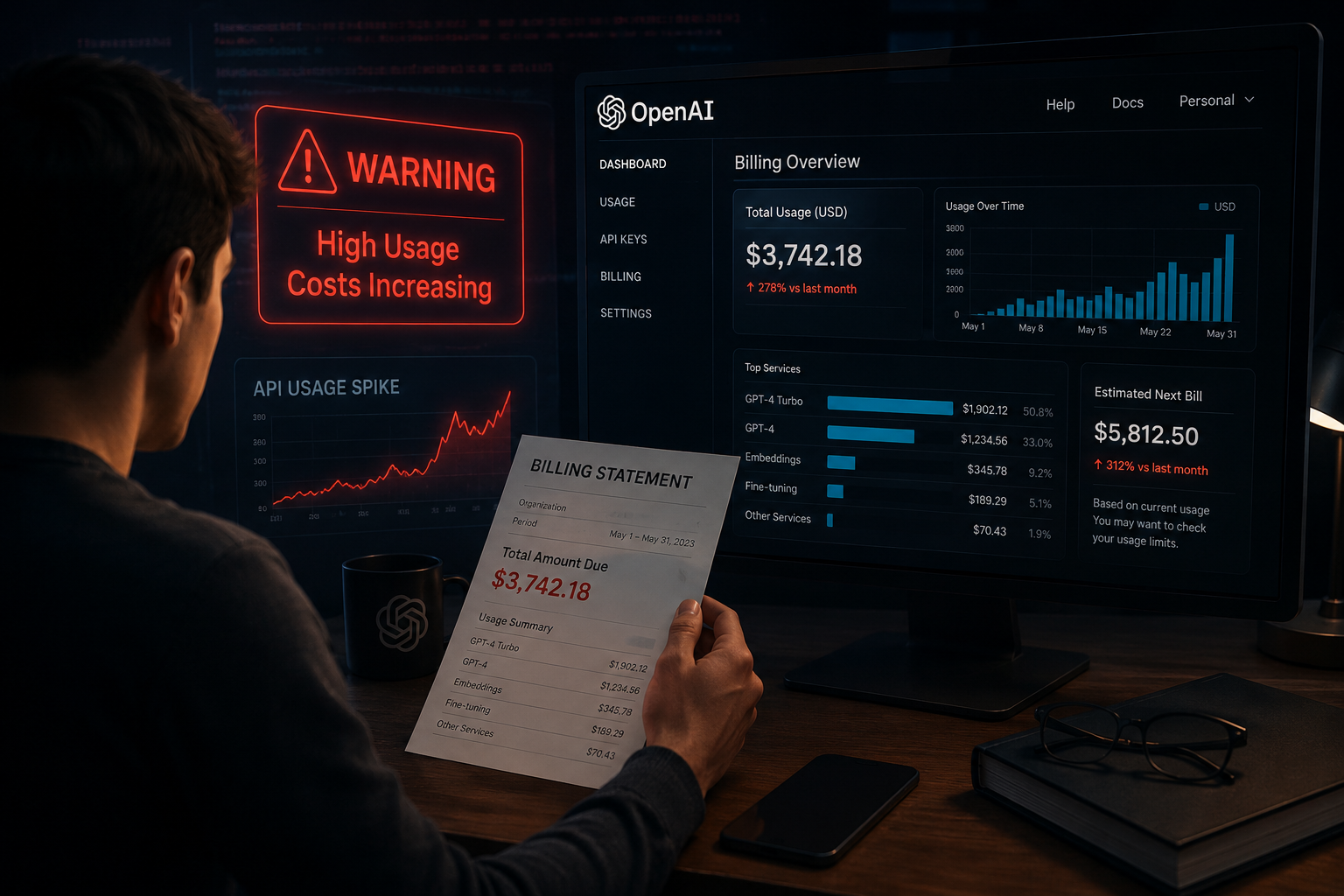
When OpenAI shipped GPT-5.6, codenamed “GPT Sol,” most of the coverage focused on benchmark scores. That missed the bigger story. What Sol actually locked in wasn’t a reasoning breakthrough — it was a pricing structure. Free users get a capable but throttled version of the model. Paying subscribers get premium inference, faster responses, and the features everyone actually wants to use. That split isn’t a minor pricing tweak. It’s an architectural decision, and it’s now the template every major AI lab is quietly copying.
The ripple effects are already visible. Anthropic’s Claude follows a strikingly similar structure. Google’s Gemini does too, wrapped in slightly different bundling. Even smaller labs racing to keep up are adopting variations of the same idea. This piece breaks down exactly how the GPT Sol model works, why it’s spreading across the entire industry so fast, what the actual revenue numbers look like across labs, and what all of this means if you’re a developer, an enterprise buyer, or just someone trying to figure out whether the free tier of any given AI product is actually worth using.
How the GPT Sol Two-Tier System Actually Works
Why Every Lab Is Copying the GPT Sol Playbook
GPT Sol vs. Claude vs. Gemini: Comparing the Numbers
How GPT Sol’s Pricing Distorts Benchmarks and Model Adoption
What GPT Sol’s Tiers Mean for Developers and Enterprises
Where GPT Sol Pricing Goes From Here
How the GPT Sol Two-Tier System Actually Works
To understand why competitors are copying this approach, it helps to see exactly how OpenAI structured it. GPT Sol’s access splits into tiers with real, meaningful capability gaps — not just marketing-page differences.
Free tier users get a base version of GPT Sol. It handles everyday tasks reasonably well, but runs on standard inference — slower processing, reduced reasoning depth, shorter context windows. Image generation is limited, and advanced tools like deep research stay locked behind the paywall entirely.
ChatGPT Plus and Pro subscribers unlock what OpenAI calls “premium inference.” In practice, that means longer context windows — up to a million tokens on the Pro tier — priority access during peak demand, extended reasoning modes with more “thinking” time, full access to deep research, code interpreter, and canvas tools, and meaningfully higher rate limits across every modality.
The gap between tiers is deliberate. Free users see what GPT Sol is capable of in principle. Paid users experience what it’s actually optimal at. To make that concrete: a free-tier user asking Sol to analyze a lengthy legal contract will hit context-window limits mid-document and get a response with noticeably shallower reasoning. A Pro subscriber running the exact same document gets the full million-token window, extended thinking time, and output that actually cites specific clauses. Same model name, meaningfully different result. That gap is the entire engine behind conversion.
OpenAI reportedly sees conversion rates between 8% and 12% moving users from free to paid GPT Sol access. Reporting has also put OpenAI past 150,000 business customers, with average revenue per user climbing steadily. At $200 a month, the Pro tier represents a significant jump over the $20 Plus tier — a 10x price increase that people are, evidently, willing to pay. None of this is accidental. It’s a carefully engineered funnel, and it’s become the reference point every other lab is now building against.
Why Every Lab Is Copying the GPT Sol Playbook
Anthropic watched OpenAI’s tiered rollout closely, and its Claude model now follows a strikingly similar structure. Free Claude users get Sonnet-level capability, while paying Claude Pro subscribers unlock Opus-tier reasoning, longer conversations, and priority access — the same shape as GPT Sol’s tiering, applied to a different product line.
Google’s Gemini ecosystem mirrors the pattern too, though the bundling makes direct comparisons genuinely confusing. Free Gemini users get the standard model through Google’s existing products. Gemini Advanced subscribers unlock Ultra-tier capability, deeper Workspace integration, and expanded context windows.
A few reasons explain why this exact structure has become so compelling to every lab building a frontier model. It solves the distribution problem — free tiers create massive user bases, and OpenAI reportedly has over 200 million weekly active users on GPT Sol alone, scale that attracts developers, enterprises, and press attention all at once. It funds enormous compute costs, since training and running frontier models runs into the billions, and tiered pricing ensures heavy users effectively subsidize their own usage. It creates real competitive moats, because once users build workflows around premium features, switching costs rise sharply — a marketing team that spends three months building a content pipeline around Sol’s canvas tools and code interpreter isn’t migrating to a competitor on a whim, and that friction is worth more to OpenAI than almost any individual feature on its own. And it generates benchmark-relevant data, since more users feeding more usage patterns back into the system accelerates future model improvement cycles.
The industry has converged on this shape with remarkable speed. Even emerging players like Mistral and Cohere have adopted variations of the same GPT Sol-style tiering. Anthropic’s reported $1.5 billion legal settlement with authors adds another layer to the picture too — content licensing costs are enormous, and tiered revenue helps labs recoup those investments. The GPT Sol model isn’t just about user experience at this point. It’s become a matter of financial survival for every lab trying to stay in the frontier-model race.
GPT Sol vs. Claude vs. Gemini: Comparing the Numbers
The real story behind GPT Sol’s influence lives in the actual numbers. Labs guard exact figures closely, but public filings, investor presentations, and credible reporting paint a reasonably clear picture of how the three biggest players compare.
| Metric | OpenAI (Sol) | Anthropic (Claude) | Google (Gemini) |
|---|---|---|---|
| Free tier users (estimated) | 200M+ weekly | 30M+ monthly | 350M+ monthly |
| Paid tier conversion rate | 8–12% | 5–8% | 3–6% |
| Entry paid tier price | $20/month | $20/month | $20/month |
| Premium tier price | $200/month | $100/month (Team) | $20/month (bundled) |
| Estimated ARPU (paid users) | $28–35/month | $22–28/month | $18–22/month |
| Enterprise tier available | Yes | Yes | Yes |
A few patterns stand out. GPT Sol leads in both conversion rate and average revenue per user, and first-mover advantage explains a meaningful chunk of that gap. Google’s lower conversion rate is a bit misleading on its own, though — its massive free user base, driven by Gemini’s integration into Search, Gmail, and Docs, means even a 3% conversion produces enormous revenue at scale. Google also bundles Gemini Advanced with Google One AI Premium, which makes direct ARPU comparisons genuinely tricky rather than apples-to-apples.
Anthropic sits in an interesting middle position, with conversion rates climbing steadily, particularly among developers and enterprise customers. Its usage-based API pricing complements the subscription tiers in a hybrid approach that adds a meaningful revenue layer on top of the base subscription — a developer building a customer-support chatbot might pay a flat Claude Pro subscription for their own research and prototyping, then layer usage-based API costs on top for actual production traffic. That combination lets Anthropic capture value at both the individual and application layer simultaneously, a structure GPT Sol’s more straightforward consumer tiering doesn’t fully replicate.
The core insight holds across all three companies, though: this tiering approach works because it aligns incentives cleanly. Users get real value at every tier, labs get both data and revenue, and investors get growth metrics they can point to. It’s not a coincidence that the same basic shape shows up everywhere — it’s simply the model that works.
How GPT Sol’s Pricing Distorts Benchmarks and Model Adoption
Here’s where the GPT Sol structure gets genuinely uncomfortable. It doesn’t just affect revenue — it changes how models compete on benchmarks and how users actually evaluate them in practice.
Because OpenAI publishes GPT Sol benchmarks reflecting premium-tier performance, and the free tier runs a meaningfully different inference setup, free users never actually experience the numbers shown in those benchmark charts. That gap is what industry observers call “benchmark shopping” — labs showcasing evaluation contexts that flatter their best-case scenario rather than the typical user’s actual experience.
This distortion matters for a few concrete reasons. Users make purchasing decisions based on published benchmarks — if GPT Sol tops a chart on MMLU or HumanEval, users reasonably assume they’ll get that performance, but free-tier users won’t. Competing labs face pressure to match premium-tier benchmark numbers, which drives an arms race in inference compute rather than pure training quality. And enterprise buyers specifically need clearer, tier-matched comparisons — a CTO evaluating Claude against GPT Sol needs numbers from equivalent access levels, not marketing headlines.
A concrete example makes the distortion tangible: a startup evaluating GPT Sol for automated code review might run a quick free-tier test, see adequate but unremarkable results, and conclude the model isn’t worth the investment. Meanwhile, a competing team running the identical evaluation on a Pro trial gets extended reasoning, higher rate limits, and noticeably sharper output. Both teams are technically evaluating “Sol,” but they’re not evaluating the same product at all — and that asymmetry quietly distorts purchasing decisions across the industry every day.
The tiered structure also creates an adoption funnel that reinforces market position over time: a user tries the free GPT Sol tier for basic tasks, hits a limitation like a rate limit or context window ceiling, upgrades to Plus for $20 a month, builds real workflows around the premium features, and eventually becomes locked in through habit and integration rather than active choice. It’s the exact same funnel SaaS companies like Slack, Dropbox, and Zoom perfected a decade ago — GPT Sol just applies proven SaaS economics to AI inference, and so far, it’s working just as well in this context as it did in that one.
What GPT Sol’s Tiers Mean for Developers and Enterprises
GPT Sol’s tiered access affects different groups in genuinely different ways.
For individual developers, the value proposition is fairly clear once you understand the tradeoffs. Free tiers work well for experimentation and learning, but production workloads need paid access — trying to run a customer-facing application on GPT Sol’s free tier is a recipe for frustrated users hitting invisible limits. A useful sequencing tip: use the free tier aggressively during prototyping to validate your core logic, then switch to a paid API tier only once you’ve confirmed the use case actually works. That order of operations can save real money during early-stage development.
For enterprise buyers, the tiered structure introduces genuine complexity worth naming directly. Evaluate GPT Sol — or any comparable model — at the tier you’ll actually use in production, not the tier featured in a sales demo. Volume discounts and enterprise agreements vary significantly between labs. Data privacy guarantees often differ meaningfully between free and paid tiers. SLA commitments typically only apply to paid tiers, which matters a great deal if uptime is business-critical. There’s also a real tradeoff in longer enterprise contracts: a 12-month enterprise deal might save 20% over monthly Plus subscriptions, but it also locks a company in before the next model generation ships — given how fast this space moves, that’s a genuine consideration rather than a footnote.
For everyday users, GPT Sol’s tiering raises a fairness question worth sitting with honestly: is it reasonable that the best AI reasoning available sits behind a $200-a-month paywall? OpenAI’s counterargument is that the free GPT Sol tier is still more capable than any model available two years ago, and that’s true. But the gap between free and premium keeps widening rather than narrowing, and that trend is worth watching closely.
There’s also an underdiscussed safety dimension here. Premium-tier GPT Sol access, with extended reasoning capabilities, undergoes additional safety testing — but the economic incentive simultaneously pushes labs to make premium features as impressive as possible, creating real tension between capability and caution. Some argue the tiered model actually improves safety on balance: revenue from paid tiers funds safety research, free tiers expose the model to diverse usage patterns that surface edge cases, and rate limits on free access naturally constrain potential misuse. Both sides of that argument have real merit, and the industry hasn’t resolved the tension either way.
Where GPT Sol Pricing Goes From Here
Looking ahead, the basic GPT Sol shape — free versus paid, standard versus premium inference — seems settled as a structural approach, but the specifics are moving fast, and the next 18 months look genuinely unpredictable for AI pricing broadly.
Price compression is coming. Competition will likely push entry-level paid tiers below $20 a month over time. Google already bundles Gemini Advanced with existing subscriptions, and Meta’s open-weight Llama models undercut the entire paid-tier concept for certain use cases. That pressure means labs will increasingly need to differentiate on features rather than raw capability numbers alone.
API pricing is likely to keep splitting further from consumer pricing. Open-source alternatives are multiplying across platforms like the Hugging Face model hub, and labs will probably keep offering consumer subscriptions and developer APIs as genuinely separate products with distinct pricing logic, widening the gap between those two tracks over time.
Vertical-specific tiers are also likely to emerge. Expect medical, legal, and financial versions of GPT Sol-style models with specialized capabilities and pricing that isn’t anchored to the familiar $20/$200 consumer range at all. A HIPAA-compliant medical reasoning tier with audit logging and EHR integrations could plausibly command $500 or more per seat per month, and enterprise health systems would likely pay it without much hesitation if the liability protection is genuinely solid.
Bundling will keep intensifying too. Microsoft folds OpenAI models into Copilot, Google folds Gemini into Workspace, and Apple integrates multiple models into Apple Intelligence. The standalone subscription model may gradually give way to platform bundling — good news for consumers who already pay for those platforms, and a real challenge for labs trying to preserve a direct relationship with their users rather than becoming an invisible layer inside someone else’s product.
Through all of that, the core template holds: two tiers, meaningful capability gaps, a conversion funnel, and ongoing revenue optimization. Every lab building a frontier model is converging on some version of this. GPT Sol didn’t invent the idea, but it’s become the reference point everyone else is measured against.
Conclusion: Final Thoughts on GPT Sol and AI Pricing
GPT Sol’s two-tier structure has moved from a single lab’s pricing strategy to an industry-wide standard in remarkably little time. Anthropic, Google, and a growing list of smaller labs have all adopted their own variations of it. The economics are simply too compelling to ignore at this point, and the pattern is close to universal across every serious frontier-model lab.
For everyday users, the practical takeaway is straightforward: evaluate any model, including GPT Sol, at the tier you’ll actually use, don’t trust benchmarks that reflect premium inference if you’re planning to stay on a free plan, and budget accordingly. The best AI capability isn’t free right now, and it won’t be anytime soon.
For developers and enterprise buyers, it’s worth auditing current AI spending against actual usage patterns. Plenty of teams pay for premium tiers they don’t fully use, while others try to stretch free tiers well past their practical limits. Finding the right tier matters as much as finding the right model.
Watch how the GPT Sol template evolves over the coming year — price compression, vertical specialization, and platform bundling will all reshape the picture considerably. The labs that run this model most effectively will capture the most value, and the users who understand its mechanics will end up making the smartest purchasing decisions. Pricing strategy sounds boring right up until it’s the thing quietly deciding who actually gets access to the most capable AI on the market.
FAQ About GPT Sol’s Two-Tier Model
What exactly is the GPT Sol two-tier access model?
It’s OpenAI’s pricing and access structure for GPT-5.6 “Sol,” splitting users into free and paid tiers with meaningful capability differences. Free users get standard inference and limited features, while paid users unlock premium inference, longer context windows, and advanced tools. This basic structure has become the reference point other AI labs are now building their own pricing around.
Why are all the major AI labs adopting the same pricing structure as GPT Sol?
This shape solves several problems at once: it builds large free user bases for data collection and brand visibility, generates revenue to cover massive compute costs, and creates switching costs that retain paying customers over time. It’s also proven SaaS economics applied to a new category — Slack and Dropbox worked this out over a decade ago, and no lab has found a meaningfully better alternative yet.
Will open-source models disrupt the GPT Sol-style tiering approach?
Open-source models from Meta’s Llama and others apply real competitive pressure, but they don’t eliminate the tiered template entirely. Running open-source models still requires compute infrastructure, and most users prefer managed services over self-hosting regardless of cost. The GPT Sol model is more likely to adapt through lower prices and better features than to disappear — open-source alternatives mostly affect the API and developer market rather than consumer subscriptions.
Keep reading
Here are the latest posts from the blog.
Elon Musk said Tesla would be selling humanoid robots to outside customers by 2025. That hasn’t happened, and every recent earnings call has leaned on the same phrase to expl…
Nvidia has owned the AI chip market for years now, and nobody’s come close to seriously threatening that position. That might be starting to change — not because of a flashy…
Illinois passed a law saying an employer’s AI can’t discriminate against candidates or employees. That part is straightforward. What isn’t straightforward is what comes next:…