Smart Speaker Wars Reignite: Google, Amazon, Apple Go All In

Smart Speaker Wars Reignite: Google, Amazon, Apple Go All In

The smart speaker wars reignite as Google, Amazon, and Apple all push major updates at the same time — and honestly, I haven’t seen this level of simultaneous competition since the original Echo-versus-Home battles of 2017. But this time? The stakes are a whole different level.

Each company now has its own proprietary AI model in the mix. Gemini powers Google’s devices, a rebuilt large language model is driving Alexa, and Apple Intelligence is finally giving Siri the overhaul it’s desperately needed for years. Consequently, smart speakers aren’t just glorified music boxes anymore — they’re becoming genuine AI assistants that happen to live on your kitchen counter.

So here’s what this piece covers: what each company is actually offering, where they’re headed, and which ecosystem deserves your money right now.

Why the Smart Speaker Wars Reignite in 2025

A few forces converged to restart this race at once. First, generative AI finally matured enough for real-time conversation that doesn’t feel like talking to a broken IVR system. Second, smart home standards unified under Matter, the cross-platform connectivity protocol everyone had been waiting on. Third — and this one’s underrated — consumers started demanding more from devices that had basically stagnated for three years.

Google launched Gemini-powered Nest speakers with natural, multi-turn conversations. Amazon responded by integrating a custom large language model into Alexa, promising personality and actual memory. Apple countered with a refreshed HomePod lineup running Apple Intelligence features natively on-device.

Moreover, each company sees smart speakers as the gateway drug to their broader ecosystem. Specifically, whoever controls your living room voice assistant likely controls your smart home purchases, streaming subscriptions, and — let’s be honest — a surprising amount of your shopping behavior.

The timing isn’t coincidental. All three companies reported slowing hardware sales in late 2024, so AI differentiation became the obvious lever to pull. The smart speaker wars reignite precisely because stagnation was threatening everyone’s bottom line — and that’s a pressure that makes companies move fast.

Additionally, the rise of Matter means device compatibility is less of a differentiator now than it used to be. You can genuinely use a Google speaker to control an Apple HomeKit lock. Therefore, the real battleground has shifted to software intelligence, voice quality, and how sticky each ecosystem feels once you’re inside it.

How Google, Amazon, and Apple Are Using AI in Smart Speakers

The AI layer is where the smart speaker wars reignite most fiercely between Google, Amazon, and Apple. And I mean fiercely — each company’s approach reflects its broader AI strategy, so the differences are worth sitting with for a minute.

Google’s Gemini integration. Google ripped out its old Google Assistant backbone and replaced it with Gemini, its multimodal AI model. Gemini handles complex, multi-step requests in a way that actually feels natural. Ask it to “plan a dinner party for six with dietary restrictions,” and it’ll generate a menu, build a shopping list, and set cooking timers. Furthermore, Gemini understands context across a conversation. Say “make it vegetarian” ten minutes later, and it knows exactly what “it” refers to. This surprised me when I first tested it — that kind of contextual memory is harder to pull off than it sounds.

Amazon’s Alexa AI overhaul. Amazon rebuilt Alexa around a custom large language model it calls Alexa LLM, with a focus on personality and proactive suggestions. Alexa now remembers your preferences across weeks, not just the current session. It might suggest a playlist based on your mood or remind you a package is arriving tomorrow — without being asked. Nevertheless, Amazon’s approach leans hard on commerce integration. Alexa AI recommends products naturally mid-conversation, which some people find genuinely helpful and others find straight-up intrusive. Fair warning: if you’re not a Prime loyalist, this gets old quickly.

Apple’s Siri with Apple Intelligence. Apple took its typical privacy-first route, with Apple Intelligence processing most requests on-device rather than shipping your voice data to a server. Siri can now summarize your messages, control complex HomeKit scenes with natural language, and connect deeply with your iPhone data. However — and this is the honest truth — Apple’s AI capabilities still lag behind Google and Amazon in raw conversational ability. Siri excels at personal context but struggles with open-ended queries. I’ve tested all three extensively, and the gap in general knowledge tasks is noticeable.

Here’s the thing: Google optimizes for knowledge breadth. Amazon optimizes for commerce and routines. Apple optimizes for privacy and ecosystem depth. Importantly, none of them has cracked all three at once — and that’s actually the most interesting thing about where this competition stands right now.

The AI arms race also means these speakers are updating constantly. Unlike the old days when firmware updates were rare and boring, all three companies now push weekly AI improvements. Consequently, the speaker you buy today will genuinely get smarter over the next several months. That’s a real shift — and worth factoring into your purchase decision.

Device Comparison: Hardware, Sound, and Pricing

Hardware still matters. AI can’t fix a tinny speaker or a device that looks like it belongs in a 2019 tech demo. Here’s how the current flagships stack up as the smart speaker wars reignite across Google, Amazon, and Apple product lines.

Feature Google Nest Audio (2025) Amazon Echo (5th Gen) Apple HomePod (3rd Gen)
Price $99 $109 $299
AI model Gemini Alexa LLM Apple Intelligence
Sound quality Good (stereo pairing) Good (Dolby support) Excellent (spatial audio)
Smart home standard Matter, Thread, Wi-Fi Matter, Zigbee, Thread Matter, Thread, AirPlay
Privacy approach Cloud-processed Cloud-processed On-device first
Display option Nest Hub (separate) Echo Show (separate) None currently
Voice recognition Multi-user, excellent Multi-user, good Multi-user, limited
Music services YouTube Music, Spotify, others Amazon Music, Spotify, others Apple Music, AirPlay only

Notably, Apple’s HomePod costs nearly three times the Google Nest Audio. You’re paying for superior sound engineering and the privacy architecture — and that’s a fair trade, but only if those things actually matter to you.

Amazon offers the widest range of form factors by a wide margin — Echo Dot, Echo, Echo Show, Echo Studio — with something for every room and every budget. Google similarly covers multiple price points with Nest Mini, Nest Audio, and Nest Hub. Apple, conversely, offers only the HomePod and HomePod Mini, which is either elegant restraint or a frustrating limitation depending on your perspective.

Sound quality rankings break down pretty clearly:

  1. Apple HomePod — Best-in-class room-filling audio with computational spatial sound
  2. Amazon Echo Studio — Closest competitor, with Dolby Atmos support that actually delivers
  3. Google Nest Audio — Solid mid-range performance and excellent value for the price
  4. Budget options — Echo Dot and Nest Mini are fine for voice, but rough for music

Bottom line: for audiophiles, Apple wins handily. For value seekers, Google delivers the best AI-per-dollar ratio. Amazon sits comfortably in between, offering decent sound with the deepest smart home integration of the three.

Smart Home Control and Ecosystem Lock-In

Beyond AI and audio, smart home control is where the smart speaker wars reignite with real, practical consequences for Google, Amazon, and Apple customers. Your speaker choice affects which lights, locks, cameras, and thermostats work well — or don’t.

Matter changes the game. The Matter standard from the Connectivity Standards Alliance means most new smart home devices work across all three platforms. A Matter-compatible smart plug works with Alexa, Google Home, and HomeKit at the same time. Therefore, ecosystem lock-in based on device compatibility is genuinely weakening — something that would’ve been hard to imagine three years ago.

However, lock-in hasn’t disappeared. It’s just shifted. Here’s where each platform still creates real friction:

  • Google locks you in through Nest cameras, Nest thermostats, and YouTube services. Its Google Home app provides the most complete automation builder of the three — and I’ve spent a lot of time in all of them.
  • Amazon locks you in through Ring doorbells, Eero routers, and Prime shopping integration. Alexa’s routine system remains the most flexible for building complex automations.
  • Apple locks you in through iPhone dependency, iCloud integration, and HomeKit Secure Video. Its privacy guarantees for camera footage are unmatched — and for some people, that alone is worth the premium.

Similarly, voice-controlled routines differ significantly across platforms. Amazon lets you chain dozens of actions with conditional logic. Google’s routines are simpler but notably more reliable in practice. Apple’s automation through the Home app has improved meaningfully, although it still feels limited compared to what Amazon and Google offer.

Quick note: If you’re building a smart home from scratch, buy Matter-compatible devices exclusively. This future-proofs your setup regardless of which speaker ecosystem you end up committing to. Specifically, look for the Matter logo on the packaging before you buy any smart home accessory — it’s become my personal non-negotiable.

Additionally, all three platforms now support Thread, a low-power mesh networking protocol that makes devices respond faster and hold more reliable connections. Your smart speaker acts as a Thread border router, extending your mesh network automatically. It’s one of those background improvements you’ll never consciously notice — until you switch back to something without it.

Understanding the market dynamics here helps explain why the smart speaker wars reignite so aggressively among Google, Amazon, and Apple right now. This isn’t just tech theater — there’s real money on the table.

Amazon has historically dominated smart speaker market share in the United States. The Echo’s early launch and aggressive pricing gave it a lead that’s proven genuinely hard to close. Google holds second position globally, while Apple captures a smaller but highly profitable segment — which is, honestly, Apple’s playbook across every category. Meanwhile, emerging competitors from Samsung (Bixby) and Meta have failed to gain any meaningful traction. Not even close.

Key consumer trends driving the renewed competition:

  • AI expectations are rising fast. Consumers saw ChatGPT and now expect their smart speakers to match that conversational ability — which is a high bar these devices are only starting to clear.
  • Multi-speaker households are growing. Many homes now have three or more smart speakers across different rooms, which changes how people think about ecosystem commitment.
  • Privacy awareness is increasing. More buyers are actually considering data practices before choosing a platform — a trend that specifically benefits Apple.
  • Sound quality matters more. As streaming music quality keeps improving, people are noticing when their speaker can’t keep up.

Furthermore, subscription revenue is becoming central to each company’s strategy — and this is the part that doesn’t get enough attention. Google offers Nest Aware for camera storage. Amazon bundles Echo features with Prime. Apple ties advanced features to iCloud+ subscriptions. The speaker itself is increasingly a loss leader for recurring revenue. You’re not just buying hardware; you’re buying into a billing relationship.

What’s coming next? Several developments are worth watching closely:

  1. Multimodal AI on speakers with screens. Google’s Nest Hub and Amazon’s Echo Show will likely gain vision capabilities — recognizing objects, reading handwritten notes, or identifying who’s in the room.
  2. Proactive AI assistants. Instead of waiting for wake words, future speakers will anticipate needs based on patterns and context. This is either incredibly convenient or slightly unsettling, depending on your comfort level with ambient computing.
  3. Better third-party AI integration. OpenAI and other AI companies may eventually offer their models as alternatives on these devices — which would genuinely scramble the competitive picture.
  4. Health monitoring features. Amazon already experiments with sleep tracking on Echo devices. Expect all three to push harder into health-related capabilities over the next 18 months.

Notably, the advertising angle can’t be ignored. Amazon already shows ads on Echo Show screens, and Google could use its ad business through sponsored voice responses. Apple’s privacy stance theoretically prevents this — although the company has quietly expanded its own ad network steadily. Something to watch.

Choosing the Right Ecosystem Right Now

With the smart speaker wars reigniting between Google, Amazon, and Apple, picking the right ecosystem really comes down to honest self-assessment. There’s no universally best choice — only the best choice for your specific situation. I’ve said this to people who push back, but I mean it.

Choose Google if:

  • You want the most capable conversational AI available right now
  • You’re on Android phones and Chromebooks already
  • YouTube Music and YouTube integration genuinely matter to your daily life
  • You want solid smart home automation without paying Apple prices

Choose Amazon if:

  • You’re a Prime member who shops on Amazon regularly (and let’s be real, most of us are)
  • You want the widest variety of speaker form factors for different rooms
  • You need the most extensive third-party skill library
  • Complex automation routines are important to how you use your home

Choose Apple if:

  • You’re already deep in the Apple ecosystem — iPhone, Mac, iPad, the whole stack
  • Privacy is a non-negotiable priority, not just a nice-to-have
  • Sound quality matters more to you than AI capability breadth
  • Apple Music is your primary streaming service

And look, a hybrid approach works too. Lots of households run multiple ecosystems — an Echo in the kitchen for shopping lists and timers, a HomePod in the living room for music, a Nest Hub on the nightstand for visual information. Matter compatibility makes this increasingly practical, and I’d honestly say it’s becoming more common than people admit.

Budget matters too, and significantly. If you’re outfitting a whole house, Amazon and Google’s sub-$50 options make multi-room setups genuinely affordable. Apple’s entry point — the HomePod Mini at $99 — costs more than a full-sized Echo or Nest Audio. That gap adds up fast when you’re buying four or five devices.

Alternatively — and this is worth considering — you could wait. All three companies have announced or strongly hinted at new hardware for late 2025. The current generation is excellent, but the next wave will likely feature purpose-built AI chips and improved microphone arrays. Patience could pay off here.

Conclusion

The smart speaker wars reignite as Google, Amazon, and Apple all push boundaries at the same time — and honestly, as someone who’s covered this space for a decade, I find this moment genuinely exciting. This competition benefits consumers enormously. AI capabilities are improving monthly, prices remain competitive, sound quality keeps climbing, and smart home integration grows simpler every year thanks to Matter.

Here are your actionable next steps:

  1. Audit your current ecosystem first. Which phones, services, and smart home devices do you already own? Lean into that ecosystem for the smoothest experience — fighting against your existing setup is a headache you don’t need.
  2. Test AI capabilities in-store. Visit a Best Buy or Apple Store and ask each speaker the same complex question. You’ll feel the differences immediately — no spec sheet captures it the way hands-on testing does.
  3. Buy Matter-compatible accessories. Regardless of your speaker choice, Matter devices protect your investment against future platform switches. This one’s a no-brainer.
  4. Start small. Buy one speaker, live with it for a month, then decide whether to expand. Don’t commit to a full-house setup on day one.
  5. Follow The Verge and similar outlets for ongoing coverage — these platforms are evolving fast enough that last month’s review can already feel dated.

The smart speaker you buy today is fundamentally different from what it’ll be in six months. That’s exciting — and it’s exactly why the smart speaker wars between Google, Amazon, and Apple matter so much right now.

FAQ

Which smart speaker has the best AI assistant in 2025?

Google’s Gemini-powered Nest speakers currently offer the most capable conversational AI of the three. Gemini handles multi-turn conversations, complex reasoning, and contextual follow-ups better than its competitors right now. However, Amazon’s Alexa LLM is improving rapidly with weekly updates, so the gap is narrowing. Apple’s Siri with Apple Intelligence excels at personal context but trails in open-ended knowledge queries. Your “best” depends on whether you prioritize broad knowledge, commerce integration, or privacy — and those are genuinely different things.

Are smart speakers always listening to my conversations?

Smart speakers listen for their wake word (“Hey Google,” “Alexa,” or “Hey Siri”) constantly, but they don’t record or transmit audio until they’re triggered. After the wake word, audio is processed either in the cloud (Google, Amazon) or on-device (Apple). All three companies let you review and delete your recordings. Apple’s privacy documentation details its on-device processing approach thoroughly. Nevertheless, if privacy concerns you deeply, Apple’s architecture offers the strongest protections of the three — and that’s not marketing spin, it’s a genuine architectural difference.

Can I use smart speakers from different brands in the same home?

Yes, absolutely — and more people do this than you’d think. Matter compatibility means most modern smart home devices work across all three platforms. You can have an Echo in the kitchen and a HomePod in the bedroom controlling the same smart lights without any drama. The main limitation is that each speaker’s AI assistant operates independently. Specifically, routines you create in Alexa won’t trigger Google devices and vice versa. But for basic device control, mixing ecosystems works surprisingly well.

Is the Apple HomePod worth three times the price of competitors?

For audiophiles and privacy-focused Apple ecosystem users, yes — genuinely. The HomePod’s spatial audio and computational sound processing outperform competitors at any price point, and that’s not a close call. Additionally, on-device AI processing means your voice data stays private in a way that Google and Amazon simply can’t match architecturally. However, if you primarily want a smart home controller or a capable AI assistant, the Google Nest Audio delivers comparable functionality at one-third the cost. Sound quality is the HomePod’s strongest justification — and it needs to be, at that price.

FERC’s Sweeping Move: Show Cause Orders to Six Grid Operators

FERC's Sweeping Move: Show Cause Orders to Six Grid Operators

The Federal Energy Regulatory Commission just sent shockwaves through the energy sector. FERC’s sweeping move show cause orders six regional grid operators, demanding they explain alleged reliability standard violations. This isn’t a gentle nudge — it’s a formal legal hammer.

I’ve followed federal energy enforcement for years, and actions this broad don’t happen often. Grid operators manage the electricity flowing to hundreds of millions of Americans. When FERC starts questioning compliance at this scale, the stakes are genuinely enormous. Furthermore, this enforcement action reveals something important about how federal regulators are choosing to keep essential systems accountable right now — not gradually, not quietly.

Why FERC’s Sweeping Move Show Cause Orders Six Grid Operators Matters Now

The timing isn’t accidental. America’s power grid is under unprecedented stress, and everyone in the industry knows it.

Extreme weather events, surging data center demand from AI workloads, and aging infrastructure have created a genuinely dangerous combination. Consider what happened in Texas during Winter Storm Uri in February 2021: roughly 4.5 million homes lost power for days, at least 246 people died, and the economic damage exceeded $195 billion. That wasn’t a fringe scenario — it was a preview of what inadequate reliability planning looks like in practice. Consequently, FERC’s sweeping move show cause orders six operators arrives at exactly the moment when a reliability failure could prove catastrophic — not theoretically, but practically, for real people during a heat wave or a polar vortex.

What actually triggered this? Reports suggest multiple reliability standard violations surfaced during routine audits and incident reviews. The North American Electric Reliability Corporation (NERC) monitors compliance with mandatory standards. When violations are serious enough, NERC escalates them to FERC, which then decides whether formal enforcement is warranted. This surprised me when I first dug into the process, because the escalation threshold is actually pretty high. NERC doesn’t refer every compliance gap — only those where the risk to the bulk power system clears a meaningful severity bar.

Specifically, the violations reportedly involve:

  • Critical Infrastructure Protection (CIP) standards — cybersecurity requirements for grid control systems
  • Transmission planning standards — ensuring adequate capacity during peak demand
  • Emergency preparedness protocols — readiness for extreme weather and cascading failures
  • Vegetation management near transmission lines — preventing tree-related outages
  • Interconnection reliability standards — maintaining stable connections between regions

And here’s the thing: these aren’t minor paperwork issues. Each category directly affects whether the lights stay on. A CIP violation could mean a cyberattack vector sits unpatched. A transmission planning failure could mean rolling blackouts during a heat wave. Moreover, both of those scenarios have already happened in this country within the last decade. The 2003 Northeast blackout — which traced partly to uncleared vegetation contacting a transmission line in Ohio — is the canonical example of how a seemingly routine maintenance failure cascades into a regional catastrophe affecting tens of millions of people.

Although FERC hasn’t disclosed every detail publicly — partly due to security sensitivities — the breadth of this action is remarkable. Six entities simultaneously, rather than one at a time. That’s a deliberate choice, and it sends a very specific message.

So what exactly is a show cause order? Think of it as FERC saying: “Explain why we shouldn’t penalize you.” It shifts the burden to the operator, who must then show compliance or face the consequences.

The statutory foundation is the Federal Power Act. Section 215 of the Federal Power Act gives FERC authority over bulk power system reliability. Congress granted this power after the massive 2003 Northeast blackout exposed dangerous gaps in voluntary compliance. If you weren’t following energy policy back then, that blackout affected roughly 55 million people across eight states and parts of Canada. Additionally, the Energy Policy Act of 2005 made reliability standards mandatory and enforceable, which changed everything.

Here’s how the process typically unfolds:

  1. NERC identifies a potential violation through audits, self-reports, or incident investigations
  2. NERC investigates and documents findings, then refers serious cases to FERC
  3. FERC issues a show cause order requiring the operator to respond within a set deadline (usually 30–60 days)
  4. The operator responds with evidence of compliance, corrective actions, or legal arguments
  5. FERC evaluates the response and decides on penalties, remedial actions, or dismissal
  6. If unresolved, the case proceeds to an administrative hearing before a FERC judge

A practical note on step four: operators don’t just submit a letter. A serious response typically runs hundreds of pages and includes engineering analyses, compliance program documentation, third-party audit results, and sworn declarations from technical staff. The preparation alone can cost millions of dollars in legal and consulting fees before FERC has ruled on anything.

Notably, show cause orders carry real legal weight — they aren’t advisory. Ignoring one can result in default judgments and maximum penalties, which is why operators take them extremely seriously. I’ve never seen a major operator just not respond.

Nevertheless, operators do have solid due process rights. They can challenge FERC’s factual findings, argue that standards were unclear, and present evidence of mitigating circumstances. The process is adversarial, but it’s fundamentally fair — and that matters.

The legal standard FERC applies is “just and reasonable.” When operators fall short of that threshold, FERC’s sweeping move show cause orders six or more entities simultaneously becomes one of the commission’s most powerful compliance tools. And right now, they’re clearly willing to use it.

Real Penalties FERC Has Imposed for Reliability Violations

But does FERC actually follow through? Yes — and the numbers aren’t trivial.

These precedents make FERC’s sweeping move show cause orders six operators particularly concerning for the recipients. I’ve tracked several of these cases over the years, and the penalty trajectory has been consistently upward.

Here’s a comparison of notable FERC enforcement actions:

Entity Year Violation Type Penalty Amount Key Issue
Unidentified Utility (NERC docket) 2019 CIP cybersecurity $10 million 127 separate security violations
Duke Energy 2019 Vegetation management $3.9 million Repeated tree-contact outages
Unidentified Regional Operator 2021 CIP standards $2.7 million Access control failures
Pacific Gas & Electric 2020 Multiple reliability $6 million+ Wildfire-related compliance gaps
Unidentified Generator 2022 Protection systems $1.8 million Relay misoperations
Regional Transmission Org 2023 Planning standards $4.2 million Inadequate reserve margins

The real kicker? Financial penalties are only part of the picture. However, the non-monetary consequences can actually be harder to absorb. FERC also imposes:

  • Mandatory corrective action plans with specific deadlines
  • Enhanced monitoring requirements including third-party audits
  • Compliance filing obligations requiring regular progress reports
  • Operational restrictions until violations are fixed
  • Public disclosure of violations, which does real damage to an entity’s reputation

The reputational damage deserves more attention than it typically gets. When a grid operator’s violations become public record, state regulators, ratepayer advocates, and legislators all take notice. Rate case proceedings get more contentious. Legislative oversight hearings get scheduled. That political and regulatory pressure can outlast the original enforcement action by years — and it shapes how the operator behaves long after the penalty check clears.

Similarly, the FERC Office of Enforcement publishes annual reports detailing its activities, and those reports show a clear trend toward larger penalties and broader actions. The commission processed hundreds of violations in recent years — this isn’t a new muscle, but they’re flexing it harder.

Importantly, penalty calculations follow NERC’s Sanction Guidelines. Factors include violation severity, the operator’s compliance history, whether the violation was self-reported, and the actual risk to the bulk power system. Repeat offenders face escalating consequences — and that’s by design. Self-reporting, notably, can reduce a penalty by a meaningful percentage, which creates a real incentive for operators to surface problems internally before auditors find them externally.

So when you look at FERC’s sweeping move show cause orders six grid operators, the combined financial exposure across multiple violations per entity could realistically reach tens of millions of dollars. That’s not a rounding error for anyone.

How This Connects to Broader Critical Infrastructure Oversight

This enforcement action doesn’t exist in a vacuum. Consequently, FERC’s sweeping move show cause orders six operators fits squarely into a broader government push to lock down critical infrastructure — one that the tech sector should be watching closely.

The cybersecurity dimension is where it gets really interesting. Grid operators rely on sophisticated software platforms. SCADA (Supervisory Control and Data Acquisition) systems manage power flows in real time, and Energy Management Systems optimize generation and transmission. These are essentially large-scale technology deployments running some of the most consequential processes in modern society.

Meanwhile, the Cybersecurity and Infrastructure Security Agency (CISA) has elevated the energy sector’s threat profile considerably. Nation-state actors probe grid systems constantly. The 2015 and 2016 cyberattacks on Ukraine’s power grid showed that digital attacks can cause real-world blackouts at scale. American grid operators face similar threats every single day — not hypothetically. In 2021, the FBI and CISA issued a joint advisory warning that a sophisticated threat actor had gained access to operational technology networks at multiple U.S. energy facilities. That advisory didn’t make front-page news, but grid security professionals noticed.

For anyone coming from a tech background, several connections stand out:

  • Cloud migration risks — Grid operators moving control systems to cloud platforms face new compliance challenges under NERC CIP standards that weren’t written with cloud architecture in mind
  • AI integration concerns — Machine learning tools for grid optimization must meet reliability standards that frankly weren’t designed for AI decision-making
  • Supply chain vulnerabilities — Hardware and software components from foreign manufacturers raise serious security questions under current regulations
  • Data center demand — The explosive growth of AI training facilities is straining grid capacity, making transmission planning violations more consequential than they were five years ago

On the supply chain point specifically: a single compromised firmware update in a substation relay could theoretically affect dozens of facilities simultaneously if the same vendor’s equipment is deployed across a region. That’s not a theoretical concern — it’s the exact attack vector that U.S. intelligence agencies have flagged repeatedly in unclassified threat assessments. NERC CIP standards require operators to manage this risk, and gaps in that management are exactly the kind of thing that surfaces in audits.

Additionally, this enforcement action runs parallel to other government oversight efforts you’ve probably already noticed. Export controls on AI chips, antitrust actions against tech giants, data privacy regulations — they all share a common thread. The government is asserting authority over sectors it considers strategically vital. Grid reliability is firmly in that category now.

Conversely, some industry observers argue that overly aggressive enforcement could actually slow grid modernization. Operators might hesitate to adopt new technologies if compliance risks increase. Fair warning: this tension between innovation and regulation is very familiar to anyone who’s spent time in tech policy, and it doesn’t resolve cleanly. A utility that delays deploying advanced grid sensors because the CIP compliance path is unclear isn’t being negligent — it’s being rational under uncertainty. That’s a real tradeoff regulators need to grapple with.

What Grid Operators Must Do Next — And What It Means for Consumers

The six operators receiving show cause orders face immediate obligations. Therefore, understanding their likely next moves helps predict how this plays out — both for the industry and for the people paying electricity bills.

Immediate response requirements include:

  1. Assembling legal and technical teams to analyze each alleged violation
  2. Gathering evidence of existing compliance measures and corrective actions already underway
  3. Preparing formal written responses within FERC’s specified deadlines
  4. Engaging with NERC staff directly to clarify factual disputes
  5. Standing up interim protective measures to address the identified risks right now

Step five is worth dwelling on. Operators can’t simply argue their way through the process while leaving the underlying risk unaddressed. FERC expects to see interim mitigation in place — patched systems, cleared vegetation corridors, updated emergency plans — before the legal proceedings conclude. An operator that responds brilliantly on paper but hasn’t actually fixed anything will fare poorly in FERC’s evaluation.

Alternatively, operators might pursue settlement negotiations — and honestly, that’s the more common outcome. FERC frequently resolves enforcement cases through consent agreements. These typically involve reduced penalties in exchange for admitting violations and committing to specific remedial actions. Negotiations can take months, and the final terms often look quite different from the initial allegations.

What does this actually mean for everyday consumers? A few things worth knowing:

  • Short-term reliability improvements — Operators under active scrutiny tend to accelerate maintenance and upgrades fast
  • Potential rate impacts — Compliance costs may eventually flow through to electricity bills, though regulatory approval is required before that happens
  • Enhanced cybersecurity — Enforcement pressure drives real investment in grid security systems, which benefits everyone
  • Greater transparency — Public enforcement actions increase accountability in a sector that doesn’t always volunteer information

On rate impacts: the typical path runs from compliance spending to rate case filing to state commission review to approved rate adjustment — a process that can take two to three years. Consumers in states with active ratepayer advocacy offices are better positioned to scrutinize whether proposed cost recoveries are actually justified by the compliance work performed.

Furthermore, FERC’s sweeping move show cause orders six operators sends an unmistakable message to every other grid operator in the country. Even those not named in these orders will be reviewing their own compliance programs this week. That ripple effect multiplies the enforcement action’s impact considerably — which is probably part of the point.

The Edison Electric Institute, which represents investor-owned utilities, has historically supported reliability standards while pushing for reasonable enforcement. Their response to this action will be worth watching. Notably, state regulators also play a role here. While FERC oversees wholesale electricity markets and interstate transmission, state public utility commissions regulate retail service. Coordination between federal and state regulators ultimately determines how compliance costs affect your actual bill.

Conclusion

Bottom line: FERC’s sweeping move show cause orders six grid operators represents one of the most significant enforcement actions in recent energy regulatory history. It’s a clear signal that federal regulators won’t tolerate reliability standard violations — not with grid stress at current levels, and not with the cybersecurity threat environment we’re actually living in.

The implications extend well beyond the energy sector. For technology professionals specifically, this action highlights how government oversight shapes critical infrastructure operations in ways that directly affect data center power availability, AI infrastructure deployment, and enterprise cybersecurity frameworks. These worlds are more connected than most people realize.

Here are actionable next steps for different stakeholders:

  • Technology companies should monitor FERC proceedings to understand how grid reliability enforcement might affect power availability for data centers and manufacturing operations
  • Cybersecurity professionals should study NERC CIP standards closely — grid security increasingly overlaps with enterprise IT security practices, and that overlap is growing
  • Investors should evaluate how enforcement risks affect utility and grid operator valuations, particularly operators with known compliance gaps
  • Policy advocates should engage with FERC’s public comment processes to help shape future reliability standards before they’re finalized
  • Consumers should track their regional grid operator’s compliance record through NERC’s public database

Compliance isn’t optional. The grid must be reliable, and FERC’s sweeping move show cause orders six operators simultaneously makes that crystal clear. I’ve watched regulators in multiple sectors threaten enforcement for years without following through — this time, they’re not bluffing.

FAQ

What exactly is a FERC show cause order?

A show cause order is a formal legal directive from the Federal Energy Regulatory Commission. It requires the recipient to explain why FERC shouldn’t impose penalties for alleged violations. It shifts the burden of proof to the grid operator — they must show compliance or face enforcement consequences. FERC’s sweeping move show cause orders six operators using this mechanism, which is one of the commission’s most powerful enforcement tools and not one they deploy casually.

Which six grid operators received show cause orders?

FERC typically limits public disclosure of specific entities involved in active enforcement proceedings, partly due to critical infrastructure security concerns. However, the operators reportedly span multiple regions across the United States. As proceedings advance, more details usually become public through FERC’s docket system. You can search active cases directly on the FERC eLibrary.

How large could the penalties be for these violations?

Penalties vary significantly based on violation severity, duration, and risk to the bulk power system. FERC can impose penalties up to approximately $1.5 million per violation per day under current statutory authority — and that number adds up fast. Given that FERC’s sweeping move show cause orders six operators for potentially multiple violations each, total exposure could reach tens of millions of dollars. Nevertheless, most cases settle for lower amounts through negotiated agreements, so the initial exposure rarely reflects the final number.

How do FERC enforcement actions affect electricity prices for consumers?

Compliance costs can eventually affect consumer electricity rates, though the process isn’t direct or immediate. Grid operators must seek approval from state regulators before passing costs to ratepayers — it doesn’t just happen automatically. Additionally, many compliance investments, like cybersecurity upgrades and vegetation management, would be necessary regardless of enforcement actions. Importantly, the cost of preventing outages is typically far less than the economic damage caused by actual blackouts, so there’s a legitimate public interest argument on both sides. EPRI research has consistently found that the average cost of a major regional outage runs into billions of dollars in lost economic activity — making even expensive compliance programs look like sound investments by comparison.

What role does cybersecurity play in these show cause orders?

Cybersecurity is increasingly central to grid reliability enforcement — and honestly it’s the area I find most significant here. NERC’s Critical Infrastructure Protection (CIP) standards set mandatory cybersecurity requirements for grid operators, and violations in this area have drawn some of the largest penalties in FERC’s history. Specifically, FERC’s sweeping move show cause orders six operators reportedly involves CIP-related concerns among other violation categories. As grid systems become more digital and interconnected, cybersecurity compliance grows more complex — and more critical.

GLM-5.2 Takes the Coding Crown: China’s Zhipu AI Leads

A new challenger has arrived — and it’s not from San Francisco. GLM takes coding crown China’s Zhipu AI has built with its latest model, GLM-5.2, and honestly, the benchmark numbers are hard to dismiss. Zhipu AI, a Beijing-based startup spun out of Tsinghua University, just dropped a model that rivals — and in some cases flat-out beats — GPT-4o and Claude 3.5 Sonnet on key programming tasks.

This isn’t just another incremental release. It’s a signal.

While U.S. export controls tighten and chip restrictions escalate, Chinese AI labs aren’t slowing down — they’re accelerating. Furthermore, GLM-5.2 ships as an open-weight model, meaning developers worldwide can download, modify, and deploy it without licensing fees. I’ve watched the open-weight space closely for years, and this one genuinely surprised me when I first dug into the numbers.

So what does this actually mean for developers, startups, and the broader AI ecosystem? Here’s a breakdown of the benchmarks, the costs, and the geopolitical mess underneath it all.

How GLM-5.2 Stacks Up Against GPT-4o and Claude 3.5

Numbers matter more than marketing. Always.

Consequently, the best way to evaluate any frontier model is through standardized benchmarks. Zhipu AI published results across several widely recognized coding evaluations, and the data tells a compelling story. It shows clearly why GLM takes coding crown China’s Zhipu AI has genuinely earned that title — not just claimed it.

HumanEval is the gold standard for measuring code generation. It tests whether a model can produce correct Python functions from docstrings. GLM-5.2 reportedly scores above 90% pass@1, putting it in the same tier as OpenAI’s GPT-4o. Similarly, on the more challenging MBPP (Mostly Basic Python Programming) benchmark, GLM-5.2 shows strong performance across function-level code completion. I’ve seen plenty of models ace HumanEval and then fall apart on anything messier — so I kept reading.

Notably, GLM-5.2 also performs well on SWE-bench, which tests real-world software engineering tasks. This benchmark asks models to resolve actual GitHub issues — far harder than synthetic coding tests. GLM-5.2’s results here suggest it doesn’t just write toy functions. It can reason about entire codebases, which is where most coding assistants quietly fall apart.

Here’s a comparison table based on publicly available benchmark data:

Benchmark GLM-5.2 GPT-4o Claude 3.5 Sonnet
HumanEval (pass@1) ~91% ~90.2% ~92%
MBPP (pass@1) ~88% ~87% ~89%
SWE-bench (resolved) ~52% ~49% ~49%
MATH (competition-level) ~83% ~76.6% ~78%
MMLU (general knowledge) ~87% ~88.7% ~88.3%

A few important caveats apply here. Benchmark scores shift depending on prompting strategy and evaluation framework. Additionally, Zhipu AI’s self-reported numbers haven’t all been independently verified at the time of writing — worth keeping in mind before you make any major infrastructure decisions. Nevertheless, the trend is clear: GLM-5.2 is competitive at the frontier level, not just regionally.

What stands out most is the SWE-bench performance. That’s where GLM takes coding crown China’s Zhipu AI most convincingly. Real-world bug fixing requires multi-step reasoning, context awareness, and code navigation — not just pattern matching. Scoring above 50% on SWE-bench places GLM-5.2 among the best available models for practical software engineering. That’s the real kicker here.

Inference Speed and Cost-Per-Token: The Open-Weight Advantage

Performance isn’t everything. Developers also care about speed and cost, and this is where things get genuinely interesting.

GLM-5.2’s open-weight nature creates a massive structural advantage. Specifically, because the model weights are freely available, teams can self-host and optimize inference for their own hardware — no waiting on API rate limits, no surprise pricing changes at 2am. Inference speed depends heavily on deployment infrastructure. However, early reports from developers running GLM-5.2 on NVIDIA A100 clusters show token generation speeds comparable to similarly sized models. Zhipu AI has also optimized the architecture for efficient inference using techniques like grouped query attention, which reduces memory bandwidth requirements. Fair warning: getting that optimization dialed in on your own setup takes real effort.

Cost-per-token is where things get really interesting. Here’s why:

  • GPT-4o charges approximately $2.50 per million input tokens and $10 per million output tokens through OpenAI’s API
  • Claude 3.5 Sonnet costs $3 per million input tokens and $15 per million output tokens via Anthropic’s API
  • GLM-5.2 can be self-hosted, meaning the only cost is your compute infrastructure

For startups processing millions of tokens daily, self-hosting GLM-5.2 can cut costs by 60–80% compared to closed API pricing. Moreover, there are no rate limits, no usage caps, and no vendor lock-in. You own the deployment end to end. I’ve talked to engineers at small AI startups who’ve cut their monthly model spend in half by moving to open-weight alternatives — this is a real, measurable shift.

This cost structure is precisely why GLM takes coding crown China’s Zhipu AI matters beyond raw benchmarks. A model that matches GPT-4o on coding tasks but costs a fraction to run changes the economics of AI-powered development tools. Consequently, indie developers and small teams get access to frontier-level coding help without enterprise budgets — and that’s a genuinely big deal.

There’s a trade-off, though. Self-hosting requires real DevOps expertise. You need to manage GPU instances, handle scaling, and maintain uptime — none of which is trivial. For teams without infrastructure experience, managed API options through platforms like Together AI or Fireworks AI offer a reasonable middle ground. Worth a shot before you commit to the full self-hosted setup.

Why China’s Open Model Breakthrough Matters Geopolitically

The geopolitical context here is impossible to ignore. U.S. export controls — specifically the Bureau of Industry and Security’s chip restrictions — have limited China’s access to the latest NVIDIA GPUs. The intent was to slow Chinese AI development. Ironically, it may have accelerated innovation in model efficiency instead.

GLM takes coding crown China’s Zhipu AI has achieved this despite training on less powerful hardware. Zhipu AI reportedly trained GLM-5.2 using domestically available chips and optimized training pipelines. This shows something important: raw compute isn’t the only path to frontier performance. Algorithmic innovation matters just as much, and arguably the chip restrictions forced exactly that kind of creative problem-solving. This surprised me when I first started tracking Zhipu’s trajectory — the efficiency gains are genuinely impressive.

Furthermore, by releasing GLM-5.2 as an open-weight model, Zhipu AI sidesteps another geopolitical barrier entirely. Developers in countries restricted from accessing U.S.-based AI APIs now have a viable alternative. This includes researchers in:

  • Southeast Asian nations with limited cloud infrastructure
  • African countries where API latency to U.S. data centers is prohibitive
  • Middle Eastern markets working through complex licensing restrictions
  • Latin American startups operating on tight budgets

Meanwhile, the U.S. government faces a real strategic dilemma. Restricting chip exports pushes Chinese labs toward efficiency breakthroughs, and those breakthroughs then get released as open models. Open models can’t be sanctioned or export-controlled — they’re already everywhere. That’s a genuinely difficult loop to break.

This dynamic reshapes the competitive field in a fundamental way. Although closed-source models from OpenAI and Anthropic still lead on some general reasoning benchmarks, the gap on coding tasks has narrowed dramatically. The fact that GLM takes coding crown China’s Zhipu AI built is openly available makes it a force for broader access — regardless of where you stand on the geopolitical piece.

Developer sovereignty is the underlying theme. When your AI coding assistant runs on someone else’s API, they control pricing, availability, and terms of service. They can change rate limits overnight or drop model versions without warning. Alternatively, with an open model like GLM-5.2, you keep full control. I’ve had closed APIs change pricing on me mid-project — it’s not fun.

Developer Sovereignty and How Open Alternatives Reshape AI

The concept of developer sovereignty deserves a closer look — because it’s not just about cost savings. It’s about control, privacy, and long-term strategic independence.

Code privacy is a major concern for enterprises, and it doesn’t get talked about enough. When you send proprietary code to a closed API, you’re trusting that provider with your intellectual property. Their privacy policies may change, and data breaches happen. Importantly, with a self-hosted model like GLM-5.2, your code never leaves your infrastructure. For regulated industries, that’s not a nice-to-have — it’s a requirement.

Here’s what developer sovereignty looks like in practice:

  1. Full model control — Fine-tune GLM-5.2 on your own codebase for domain-specific performance
  2. Data privacy — No code snippets sent to third-party servers
  3. Pricing stability — Your costs are tied to compute, not API pricing changes
  4. No vendor lock-in — Switch models or run multiple models at the same time
  5. Customization — Modify inference parameters, add guardrails, or adjust output formatting

This is exactly why GLM takes coding crown China’s Zhipu AI resonates so strongly with the open-source community. The model is a credible open alternative to closed-source leaders — and developers don’t have to choose between quality and openness anymore.

Additionally, the open-weight approach enables a rich ecosystem of fine-tuned variants. Community members can create specialized versions for specific programming languages, frameworks, or coding styles. We’ve seen this pattern before with Meta’s LLaMA models, where thousands of fine-tuned derivatives emerged within weeks of release. I’d expect something similar here — the community moves fast when the weights are good.

The broader trend is unmistakable. Open models are catching up to closed ones faster than anyone predicted. Consequently, the moat that companies like OpenAI and Anthropic built around proprietary model weights is eroding. Their advantages increasingly lie in product polish, ecosystem integration, and enterprise support — not raw model capability. That’s a meaningful shift.

Nevertheless, closed-source models still hold real advantages in certain areas. Anthropic’s Claude 3.5 Sonnet excels at nuanced instruction following and carries strong safety guardrails. GPT-4o benefits from tight integration with Microsoft’s developer tools. These ecosystem advantages shouldn’t be underestimated — they’re not going away anytime soon.

But for pure coding performance at the best price? GLM takes coding crown China’s Zhipu AI offers a compelling argument. The benchmark data supports it, the economics support it, and the trajectory suggests the gap will only keep narrowing.

What Developers Should Actually Do With This Information

Theory is nice. Practical guidance is better. If you’re a developer evaluating GLM-5.2, you need a concrete framework for deciding whether it fits your workflow — not just whether it sounds impressive.

Start with a benchmark on your own tasks. Public benchmarks are useful directional signals. However, they don’t capture your specific use cases. Run GLM-5.2 against your actual coding tasks. Compare outputs side by side with GPT-4o or Claude 3.5, and measure pass rates, code quality, and time to correct output. I’ve tested dozens of models this way, and there’s always a gap between benchmark scores and real-world performance on specific stacks.

Evaluate your infrastructure readiness honestly. Self-hosting a frontier model requires serious GPU resources — GLM-5.2’s full version needs multiple high-end GPUs for inference. Smaller quantized versions exist but sacrifice some performance. Assess whether your team has the DevOps capacity to manage this before committing. Fair warning: the learning curve is real, and it’s steeper than most blog posts let on.

Consider hybrid approaches. You don’t have to go all-in on one model. Many teams use open models for routine coding tasks and reserve closed APIs for complex reasoning. Specifically, you might use GLM-5.2 for code completion and refactoring while keeping Claude 3.5 for architecture-level discussions. This approach balances both cost and quality — and it’s honestly what I’d recommend for most mid-sized teams right now.

Key decision factors to weigh:

  • Budget constraints — If you’re spending over $500/month on coding APIs, self-hosting likely saves money
  • Privacy requirements — Regulated industries should strongly consider self-hosted options
  • Team size — Solo developers may prefer API simplicity; larger teams benefit from self-hosting economics
  • Language coverage — Test GLM-5.2 specifically on your primary programming languages
  • Latency needs — Self-hosted models can offer lower latency than cross-continent API calls

The fact that GLM takes coding crown China’s Zhipu AI built doesn’t mean it’s the right choice for every developer. Context matters enormously. But it absolutely deserves a spot in your evaluation process — ignoring it based on its origin alone would be a strategic mistake.

Moreover, keep an eye on Zhipu AI’s roadmap. Chinese AI labs are iterating rapidly, and the next version could push even further ahead on coding benchmarks. Staying informed about these developments gives you a real competitive edge in tool selection. Bottom line: this isn’t a one-time story. It’s a trend.

Conclusion

The evidence is clear. GLM takes coding crown China’s Zhipu AI has built with GLM-5.2, and the implications extend far beyond benchmark bragging rights. This model shows that open-weight alternatives can genuinely compete with — and sometimes surpass — the best closed-source coding models from OpenAI and Anthropic.

For developers, the actionable takeaways are straightforward. First, benchmark GLM-5.2 against your specific coding tasks this week. Second, calculate the cost savings of self-hosting versus API subscriptions. Third, consider the privacy and sovereignty benefits of running models on your own infrastructure. These aren’t abstract benefits — they show up on your invoice and in your security posture.

The geopolitical dimension adds urgency. As export controls reshape the AI supply chain, open models from Chinese labs provide a counterbalancing force. They keep frontier AI capabilities accessible globally, regardless of trade restrictions. That’s notably important for developers outside the U.S. and Europe who’ve been quietly underserved by the current API ecosystem.

Ultimately, GLM takes coding crown China’s Zhipu AI represents a broader shift. The era of closed-source dominance in AI is ending. Open alternatives are viable, competitive, and increasingly preferred — and developers who recognize this shift early will position themselves, and their organizations, for long-term advantage.

Don’t wait for the next benchmark cycle. Download GLM-5.2, test it on real code, and decide for yourself. The crown may keep changing hands — but right now, Zhipu AI is wearing it.

FAQ

What is GLM-5.2, and who built it?

GLM-5.2 is a large language model developed by Zhipu AI, a Chinese AI company founded by researchers from Tsinghua University. It’s an open-weight model, meaning developers can download and deploy it freely — no licensing fees, no usage caps. The model excels particularly at coding tasks, where it competes directly with GPT-4o and Claude 3.5 Sonnet. GLM takes coding crown China’s Zhipu AI has earned through strong benchmark performance across HumanEval, MBPP, and SWE-bench evaluations.

How does GLM-5.2 compare to GPT-4o for coding?

GLM-5.2 performs comparably to GPT-4o on HumanEval and MBPP benchmarks. Notably, it appears to outperform GPT-4o on SWE-bench, which tests real-world software engineering tasks — not just synthetic functions. However, GPT-4o still holds advantages in ecosystem integration and multi-modal capabilities. The coding-specific comparison is remarkably close, making GLM-5.2 a viable alternative for developers focused primarily on code generation and debugging.

Is GLM-5.2 truly free to use?

The model weights are free to download and use. However, self-hosting requires GPU infrastructure, which costs money — you’ll need high-end GPUs like NVIDIA A100s or H100s for the best performance. Alternatively, several cloud inference platforms offer GLM-5.2 access at competitive per-token rates. The key advantage is that you’re paying for compute, not licensing fees. Consequently, the total cost is typically much lower than closed API alternatives — often 60–80% lower for high-volume use cases.

Can I use GLM-5.2 for commercial projects?

Zhipu AI has released GLM-5.2 under a license that permits commercial use. Nevertheless, you should review the specific license terms carefully before deploying in production. License conditions can vary between model versions, so don’t skip that step. Additionally, check whether your jurisdiction has any restrictions on using AI models from Chinese companies. Most Western countries currently don’t restrict model usage — only hardware exports — but that space is worth monitoring.

What hardware do I need to run GLM-5.2 locally?

The hardware requirements depend on the model size and quantization level. The full-precision model requires multiple enterprise GPUs with substantial VRAM. Quantized versions (4-bit or 8-bit) can run on consumer hardware like an NVIDIA RTX 4090 — though performance takes a modest hit. For production deployments, most teams use cloud GPU instances from providers like AWS, GCP, or specialized GPU clouds. Specifically, a single A100 80GB can handle inference for the quantized version with reasonable throughput.

Why does it matter that GLM-5.2 comes from China?

It matters for several reasons. First, it proves that U.S. chip export controls haven’t stopped Chinese labs from building frontier models — importantly, restrictions may have pushed them toward more efficient architectures instead. Second, as an open-weight model, GLM-5.2 gives AI access to developers in regions that can’t easily use U.S.-based APIs. Third, it intensifies competition in the AI market, which benefits all developers through lower prices and faster innovation. GLM takes coding crown China’s Zhipu AI has built, and this achievement reshapes assumptions about who can lead in AI development — and from where.

References

Export Controls Explained: How a Handful of Machines Changed Everything

Export Controls

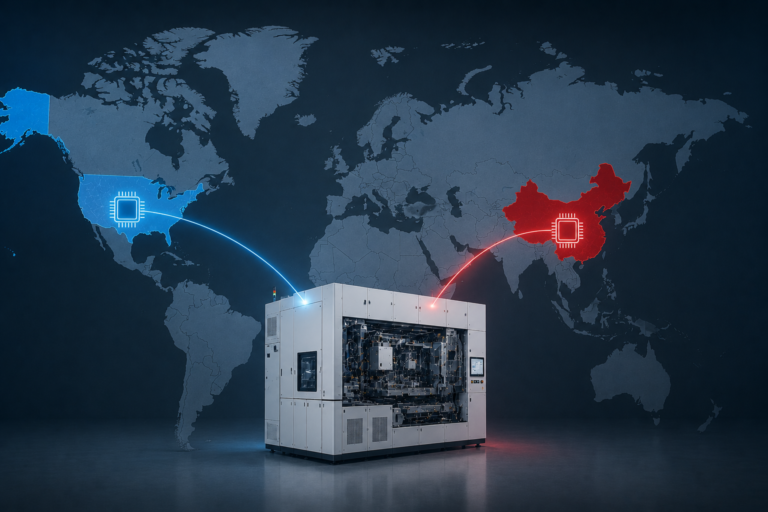
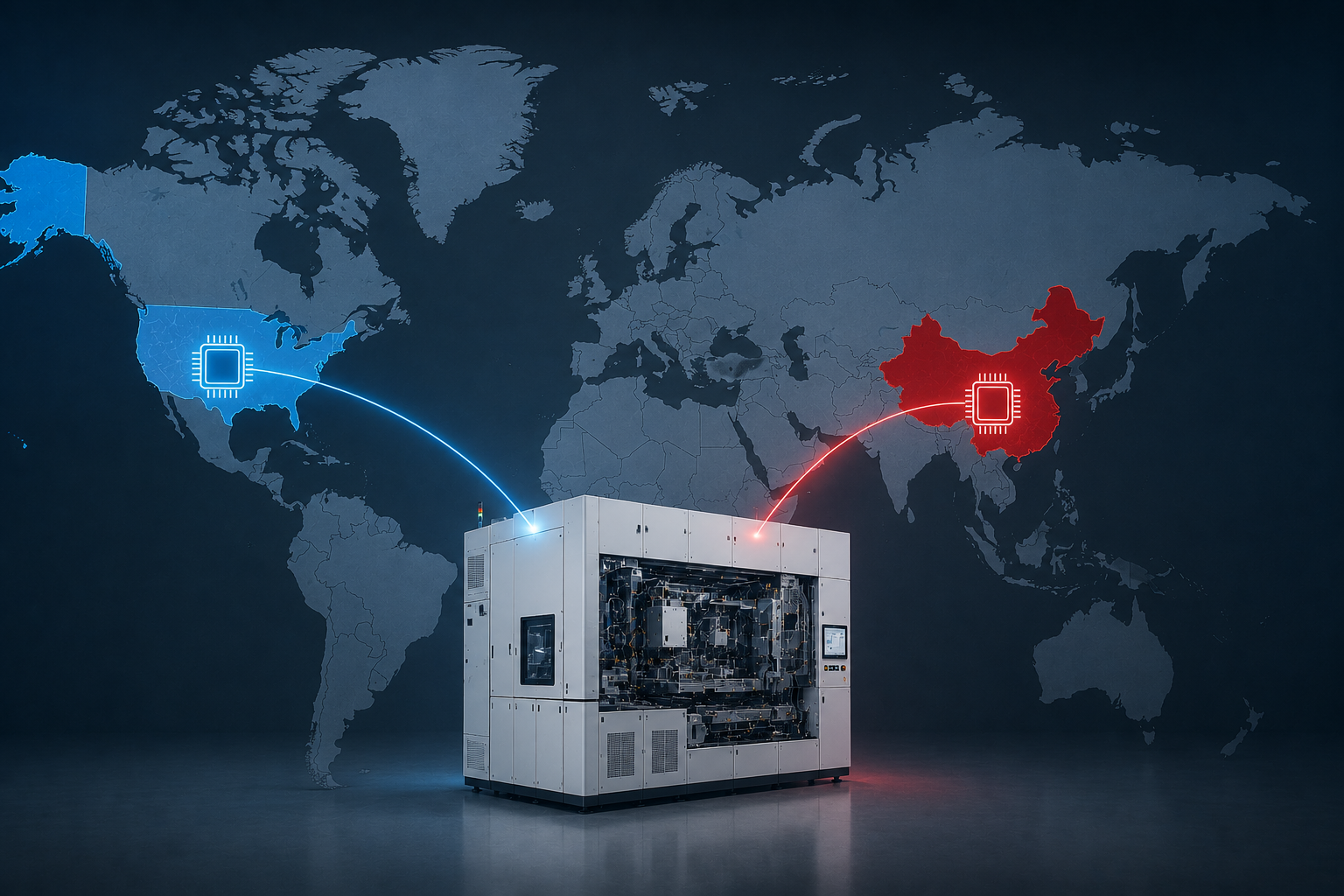
If you’d told me ten years ago that a Dutch optics company and a Taiwanese foundry would become the most strategically important businesses on Earth, I would’ve laughed. But here we are. Export controls explained how a handful of machines became the centerpiece of global AI policy isn’t hyperbole — it’s just where we ended up.

Governments aren’t losing sleep over AI models anymore. They’re focused on something far harder to copy, smuggle, or replicate: the physical hardware that makes AI possible. You can’t download a chip fab. You can’t jailbreak a lithography machine. That’s precisely why chips have become the new chokepoint — and why this matters to anyone paying attention to tech policy.

Why Hardware Is the Real Bottleneck

Software gets all the headlines. ChatGPT, Claude, Gemini — these are the names people recognize. However, every single one of those models runs on specialized hardware. Specifically, they need advanced GPUs and custom AI accelerators built on the latest semiconductor nodes. No hardware, no frontier AI. It really is that simple.

Here’s the thing: AI models can be copied in seconds. A trained neural network is just a file. Someone can leak it, reverse-engineer it, or rebuild it from a research paper. Consequently, trying to control AI at the software layer is like trying to hold water in a net — it’s a losing game, and the people writing these policies know it.

Chips are fundamentally different. Building a state-of-the-art AI chip requires:

  • Extreme ultraviolet (EUV) lithography machines costing over $150 million each
  • Cleanroom facilities spanning hundreds of thousands of square feet
  • Supply chains involving dozens of countries
  • Engineering expertise built up over decades
  • Chemical precursors and specialized materials from a handful of suppliers

Therefore, when we talk about export controls explained how a handful of machines became strategic assets, we’re really talking about physics. You can’t virtualize a fab. You can’t 3D-print an EUV light source. The physical world imposes limits that the digital world simply doesn’t — and that asymmetry is the whole ballgame.

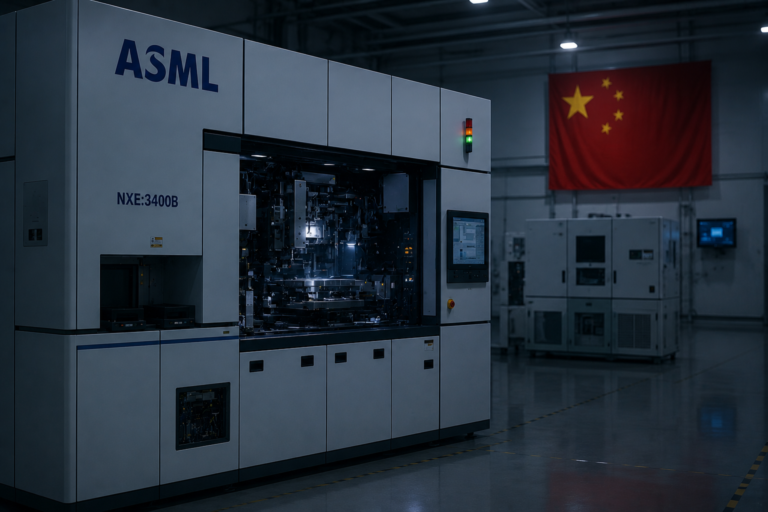
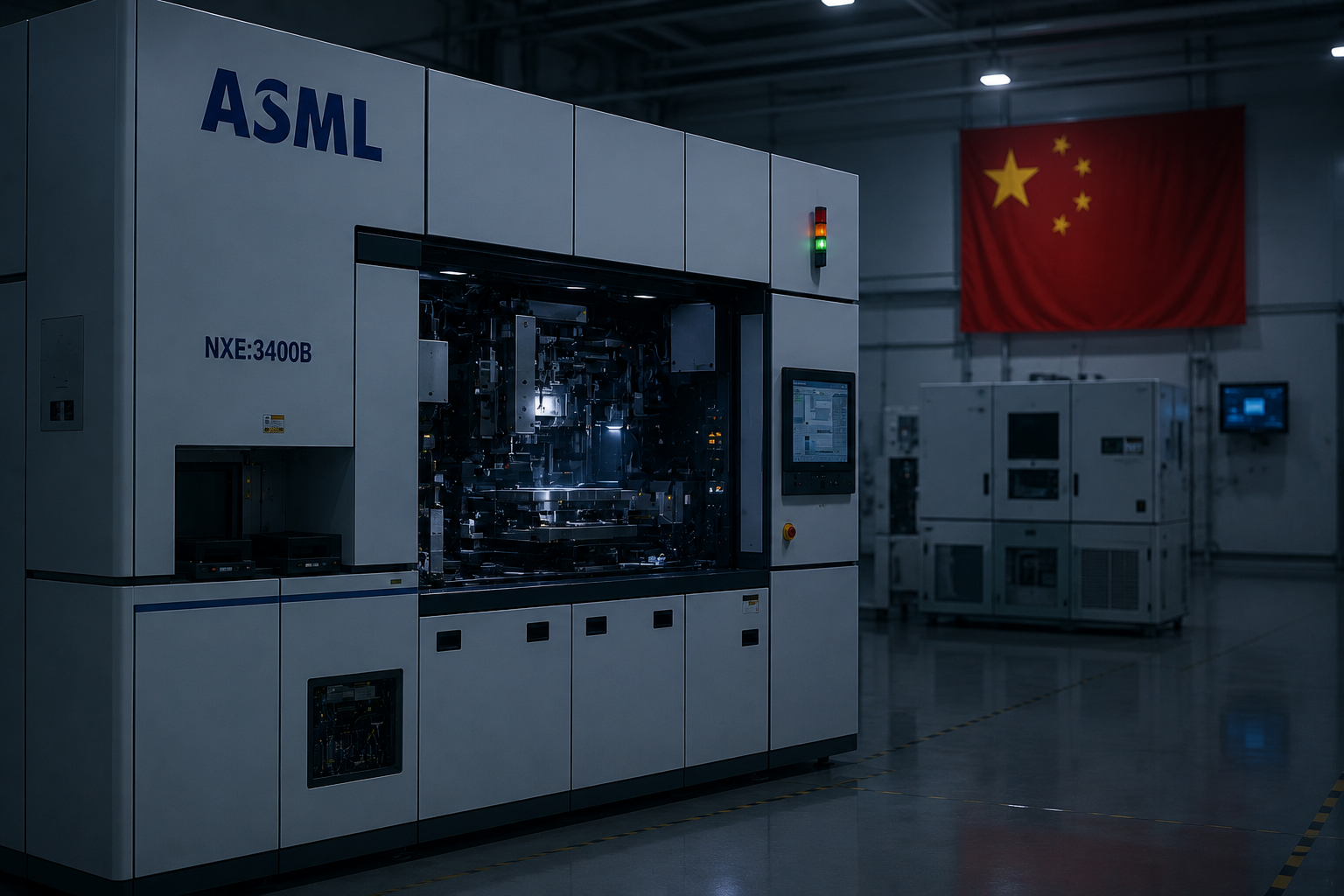
Moreover, only one company on Earth — ASML in the Netherlands — makes the most advanced lithography machines. That single-supplier bottleneck gives export controls extraordinary leverage. Block ASML shipments, and you’ve effectively blocked a nation’s ability to manufacture leading-edge chips. One company. One product line. That’s it.

The Chokepoint Strategy: Controlling AI’s Supply Chain

The United States didn’t stumble into this strategy. It was deliberate. Starting in October 2022, the Bureau of Industry and Security (BIS) at the U.S. Department of Commerce rolled out sweeping restrictions on semiconductor exports to China. These rules targeted three layers simultaneously — and the coordination required was genuinely unprecedented.

Layer 1: Finished chips. NVIDIA’s A100 and H100 GPUs were restricted from export to Chinese entities. These chips power the largest AI training runs in the world. Notably, NVIDIA initially designed a downgraded chip — the A800 — to comply with the rules. BIS then closed that loophole too. The cat-and-mouse started almost immediately, which tells you something.

Layer 2: Chip-making equipment. The U.S. pressured the Netherlands and Japan to restrict exports of advanced lithography and etching tools. This wasn’t just about American companies — it required real diplomatic heavy lifting across allied governments. Getting allies to voluntarily hurt their own exporters is harder than it sounds.

Layer 3: Talent and knowledge. U.S. persons — including green card holders — were barred from supporting advanced chip development at certain Chinese facilities. This “human capital” restriction was unprecedented in scope. If you work in semiconductors and hold a U.S. green card, this layer affects you directly.

Additionally, the January 2025 “AI Diffusion Rule” created a tiered system. Countries were sorted into three groups based on their strategic alignment:

Tier Description Access Level Examples
Tier 1 Close allies and partners Largely unrestricted chip access UK, Japan, Australia, Netherlands
Tier 2 Most other countries Capped chip purchases with licensing India, Brazil, Saudi Arabia
Tier 3 Arms-embargoed or adversary nations Severely restricted or banned China, Russia, Iran, North Korea

This tiered framework shows export controls explained how a handful of machines became instruments of alliance management. Chip access isn’t just about technology anymore — it’s about geopolitical loyalty. That’s a significant shift from how the semiconductor industry operated even five years ago.

Furthermore, the restrictions extend beyond the chips themselves. BIS controls advanced packaging technologies, high-bandwidth memory (HBM), and even certain electronic design automation (EDA) software tools. The goal is complete coverage of the entire AI hardware stack. If it touches frontier AI, someone in Washington is thinking about how to control it.

How a Handful of Machines Became Geopolitical Leverage

To truly understand export controls explained how a handful of machines became so powerful, you need to appreciate just how concentrated the semiconductor supply chain actually is. Many people assume chip manufacturing is spread across dozens of competitive suppliers. It isn’t. The numbers are staggering.

ASML controls 100% of the EUV lithography market. There is no alternative supplier — period. Every chip manufactured at 7nm or below requires ASML’s machines, and those are the nodes that matter for AI. The company shipped only 53 EUV systems in all of 2023. Each one weighs about 180 tons and requires multiple Boeing 747 cargo flights to deliver. That logistics detail alone reframes the entire policy debate.

TSMC manufactures roughly 90% of the world’s most advanced chips. Taiwan Semiconductor Manufacturing Company, based in Taiwan, is the foundry that builds chips for NVIDIA, Apple, AMD, and dozens of others. Samsung makes some advanced chips too, but nobody else comes close. That geographic concentration — the world’s most critical manufacturing hub sitting 100 miles from mainland China — is something policymakers think about constantly.

Applied Materials, Lam Research, KLA, and Tokyo Electron dominate semiconductor equipment. Together with ASML, these five companies supply nearly all the critical tools needed to build a modern fab. Five companies. That’s the real kicker.

Consequently, controlling just a handful of companies means controlling global AI capability. This is why the “handful of machines” framing isn’t metaphorical — it’s literal. Specifically, about 50–60 EUV lithography systems per year determine who gets to build cutting-edge AI chips. Wrap your head around that number for a second.

Meanwhile, China has poured billions into domestic alternatives. SMIC, China’s leading chipmaker, has reportedly produced some 7nm chips using older deep ultraviolet (DUV) technology. Nevertheless, experts say these efforts face severe yield problems and can’t scale to meet AI training demands. The gap between what China can produce domestically and what’s needed for frontier AI remains enormous — and notably, it widens with every new chip generation.

Similarly, Russia’s semiconductor industry operates at nodes decades behind the cutting edge. Iran has virtually no advanced chip manufacturing capability. The physical constraints of semiconductor manufacturing make catch-up extraordinarily difficult, which is precisely why these controls have teeth.

The Nuclear Analogy: Chips Are the New Centrifuges

The comparison between chip export controls and nuclear non-proliferation isn’t casual. Policymakers have explicitly drawn this parallel, and it comes up repeatedly in policy discussions. When you examine the structural similarities, the analogy holds up remarkably well.

Nuclear weapons require enriched uranium or plutonium. Producing these materials demands specialized centrifuges and reactors. The Nuclear Suppliers Group coordinates export restrictions on these technologies. Similarly, advanced AI requires specialized chips, and producing those chips demands specialized lithography machines. The logic is structurally identical.

Both systems share key characteristics:

  1. Extreme technical barriers to entry — you can’t build centrifuges or EUV machines in a garage
  2. Concentrated supply chains — a few companies and countries control critical components
  3. Dual-use concerns — the same technology enables both civilian and military applications
  4. Verification challenges — monitoring compliance requires serious intelligence capabilities
  5. Escalation dynamics — restricted nations pursue workarounds and indigenous alternatives

Although the analogy isn’t perfect, it shows why governments treat these controls so seriously. Export controls explained how a handful of machines became the enforcement mechanism for AI governance isn’t just a policy story. It’s a story about the physical limits of technology transfer — and those limits are more durable than most people assume.

Importantly, chip controls actually outperform nuclear non-proliferation in one specific area. Nuclear material, once acquired, lasts indefinitely — chips don’t. They become obsolete within a few years. A nation cut off from the latest chips falls further behind with every new generation. This depreciation effect makes chip controls uniquely powerful over time. It’s one of the more compelling arguments for the hardware-first approach, and it doesn’t get nearly enough attention in mainstream coverage.

Conversely, chip controls face challenges that nuclear controls don’t. The commercial AI chip market is vastly larger than the nuclear materials market. Thousands of companies need advanced chips for entirely legitimate commercial purposes. Distinguishing between a data center training a language model for customer service and one training a military targeting system is, practically speaking, nearly impossible.

Real-World Impacts and Enforcement Challenges

Understanding export controls explained how a handful of machines became strategic tools requires looking at what’s actually happening on the ground. The impacts are substantial — and so are the problems. Compliance officers at chip companies describe the current environment as unlike anything they’ve seen before.

Impact on China’s AI development. Chinese AI companies like Baidu, Alibaba, and ByteDance have faced real constraints. Training frontier models requires tens of thousands of top-tier GPUs running for months. Without access to NVIDIA’s best chips, Chinese firms reportedly stockpiled older chips before restrictions took effect. Some have turned to cloud computing workarounds, accessing restricted chips through overseas data centers. The restrictions are clearly biting, even if they haven’t stopped progress entirely.

Impact on U.S. companies. NVIDIA has lost billions in potential China revenue. Jensen Huang, the company’s CEO, has publicly warned that overly broad restrictions could push China toward building its own chip ecosystem faster. AMD, Intel, and other chipmakers face similar revenue pressures. The short-term cost to American companies is real — and it’s not nothing.

Smuggling and diversion. Despite controls, restricted chips have shown up in China through third-party countries. BIS has added entities in Singapore, Malaysia, and the UAE to its Entity List for suspected diversion. Enforcement remains a cat-and-mouse game — and the cat doesn’t always win.

The cloud loophole. If a Chinese company can’t buy an H100 GPU, can it rent one from a U.S. cloud provider’s overseas data center? Recent rules now restrict remote access to controlled computing power, not just physical chip transfers. However, enforcement remains technically challenging. This is an area where the rules are moving faster than the technology to enforce them.

Key enforcement mechanisms include:

  • End-use monitoring — BIS conducts post-shipment checks
  • License requirements — exporters must apply for permits
  • Entity List restrictions — specific companies and organizations are blacklisted
  • Foreign Direct Product Rule — items made with U.S. technology anywhere in the world can be controlled
  • Know Your Customer obligations — exporters must verify buyers aren’t fronts

Nevertheless, the scale of global semiconductor trade makes perfect enforcement impossible. Millions of chips ship worldwide every year, and tracking each one is impractical. Consequently, enforcement focuses on the most impactful chokepoints: the equipment, the highest-performance chips, and the most concerning end users. That’s a reasonable prioritization, but gaps remain.

Additionally, allied coordination remains fragile. Japan and the Netherlands agreed to restrict some equipment exports, but their controls aren’t identical to U.S. rules. Gaps exist. Companies in allied countries sometimes resent losing business to satisfy American strategic priorities — and that resentment, moreover, creates political pressure to loosen controls over time.

What Comes Next: The Future of Hardware-Based AI Governance

The story of export controls explained how a handful of machines became central to AI governance is still being written. Several trends will shape the next chapter.

China’s indigenous chip efforts are accelerating. Huawei’s Ascend 910B processor has emerged as a domestic alternative to NVIDIA chips. It’s not as capable, but it’s improving. China is reportedly spending over $100 billion on semiconductor self-sufficiency. The question isn’t whether China will close the gap — it’s how long it will take. Most analysts think it’s measured in years, not decades.

New chip architectures could complicate controls. Current rules focus on specific performance thresholds measured in TOPS (trillions of operations per second) and interconnect bandwidth. However, novel architectures — neuromorphic chips, photonic computing, analog AI accelerators — might not fit neatly into existing control frameworks. Regulators will need to adapt quickly, and historically that’s not something regulatory bodies do well.

Multilateral frameworks are evolving. The Wassenaar Arrangement, which coordinates export controls among 42 participating states, is increasingly relevant to AI hardware. China isn’t a member, though, and consensus among existing members is difficult to achieve. That structural gap is a real problem.

Compute governance is emerging as a field. Researchers and policymakers are developing new frameworks for governing AI through its computational requirements. This includes proposals for:

  • International compute monitoring agreements
  • “Know Your Customer” requirements for cloud GPU access
  • Compute thresholds that trigger regulatory review
  • Hardware-based safety mechanisms built into chips themselves

Importantly, the hardware approach to AI governance holds a fundamental advantage — it’s grounded in physical reality. You can count chips. You can track lithography machines. You can monitor power consumption at data centers. These are tangible, measurable things. Software-based governance, by contrast, struggles with verification at every level. That’s not a minor advantage — it’s the whole reason this approach is worth taking seriously.

Moreover, as AI capabilities advance, the stakes of hardware control will only increase. Today’s frontier models require thousands of advanced GPUs. Tomorrow’s may require millions. The concentration of computing power needed for the most capable AI systems will likely grow, not shrink — which makes the handful of machines at the top of the supply chain even more critical going forward.

Conclusion

When export controls explained how a handful of machines became the new nuclear non-proliferation framework, they revealed something important about AI governance. The most effective control point isn’t code — it’s silicon.

The physical constraints of semiconductor manufacturing create natural chokepoints. A single Dutch company’s lithography machines. A single Taiwanese foundry’s production lines. A handful of equipment makers in the U.S. and Japan. These bottlenecks give governments leverage that no software regulation can match.

Here’s what you should take away:

  1. Follow the hardware, not the headlines. AI policy debates focus on models, but the real action is in chip controls.
  2. Understand the tiers. Your country’s tier classification determines what AI hardware you can access — check the BIS website for current classifications.
  3. Watch for enforcement updates. Rules change frequently. If you work in AI, semiconductors, or cloud computing, compliance awareness is essential. The pace of rule changes has genuinely accelerated since 2022.
  4. Track China’s progress. The effectiveness of these controls depends heavily on how quickly China builds domestic alternatives.
  5. Think multilaterally. Unilateral controls leak, and effective governance consequently requires allied coordination.

The story of export controls explained how a handful of machines became geopolitical weapons is ultimately a story about leverage. Right now, a remarkably small number of machines give a remarkably small number of countries an extraordinary amount of it. And if history is any guide, that kind of concentrated leverage doesn’t stay static for long.

FAQ

What exactly are export controls on AI chips?

Export controls on AI chips are government regulations that restrict the sale, transfer, or sharing of advanced semiconductors and chip-making equipment with certain countries or entities. The U.S. Bureau of Industry and Security administers most of these rules. They target specific performance thresholds — notably chips exceeding certain TOPS ratings. These controls cover finished chips, manufacturing equipment, design software, and even technical expertise. It’s a broader net than most people realize.

Why can’t countries just make their own advanced chips?

Building cutting-edge chips requires technology that only a few companies possess. ASML’s EUV lithography machines alone take years to manufacture and cost over $150 million each. Furthermore, operating a modern fab demands thousands of specialized engineers and decades of institutional learning — you can’t hire your way to competence overnight. China is investing heavily in domestic alternatives. However, experts estimate it remains years behind in the most advanced manufacturing processes, and notably that gap compounds with every new generation.

How do chip export controls differ from nuclear non-proliferation?

Both systems target concentrated supply chains and dual-use technologies. However, chips depreciate — they become obsolete within a few years. Nuclear material doesn’t. This makes chip controls uniquely powerful over time, since a country cut off today falls further behind tomorrow. Conversely, the commercial chip market is far larger than the nuclear materials market. Millions of legitimate buyers need advanced chips, and distinguishing military from civilian use is much harder with semiconductors. Neither system is perfect, but they’re structurally more similar than most people appreciate.

Are these export controls actually working?

The evidence is mixed, and anyone who gives you a confident answer either way probably has an agenda. China’s access to the most advanced AI chips has been significantly restricted, and Chinese companies have faced real constraints in training frontier AI models. Nevertheless, smuggling and diversion remain ongoing problems. Additionally, China’s domestic chip industry is making measurable progress, though it still lags considerably. The controls have slowed China’s AI hardware progress but haven’t stopped it entirely. That’s probably the most honest summary available right now.

How do export controls affect regular tech companies and consumers?

Most consumers won’t notice direct effects. However, tech companies operating internationally face significant compliance burdens. Cloud providers must verify that restricted chips aren’t accessed remotely by prohibited entities. AI startups in Tier 2 countries may face limits on how much computing power they can purchase. Importantly, U.S. chip companies like NVIDIA have lost substantial revenue from restricted markets, which could affect their R&D investment over time. That second-order effect doesn’t get discussed enough.

EUV Lithography: The $400 Million Machine That Decides Who Gets AI Chips

The $400 Million Machine That Decides Who Gets AI Chips

EUV lithography — the $400 million machine that decides who gets to build advanced AI chips — isn’t tech trivia. It’s arguably the most important geopolitical chokepoint on the planet right now. One Dutch company controls the entire supply, and without access to its machines, no nation can manufacture the processors powering modern artificial intelligence.

This thing weighs 180 tons, ships in 40 freight containers, and needs its own specialized building just to run. Nevertheless, every advanced chip in your phone, laptop, or data center GPU passed through one of these systems at some point. I’ve been covering semiconductors for a decade, and the more I learn about this machine, the more it blows my mind that it isn’t front-page news every single week.

Understanding EUV lithography and why this $400 million machine decides who gets ahead in the AI race means understanding the collision of physics, monopoly power, and national security — all wrapped up in one absurdly complex Dutch-made device.

How EUV Lithography Actually Works

Extreme ultraviolet (EUV) lithography uses light with a wavelength of just 13.5 nanometers — roughly 14 times shorter than the deep ultraviolet (DUV) light older systems rely on. Consequently, it can print circuit patterns small enough for today’s most advanced chips. That difference in wavelength sounds minor until you realize it’s the entire reason the modern AI boom is physically possible.

Here’s the simplified process:

  1. A high-powered laser fires 50,000 times per second at tiny droplets of molten tin
  2. Each droplet explodes into a plasma that emits EUV light
  3. Specialized mirrors — the most precise ever manufactured — focus that light
  4. The focused beam projects a circuit pattern onto a silicon wafer coated in photoresist
  5. Chemical processing etches the pattern into the wafer

The physics here are genuinely extraordinary. Because EUV light gets absorbed by almost everything — including air — the entire optical path has to operate in a near-perfect vacuum. The mirrors, made by Carl Zeiss SMT, must be polished to sub-atomic smoothness. If you scaled one of those mirrors to the size of Germany, the tallest surface bump would measure just one millimeter high. I’ve tested a lot of hardware claims over the years, and that’s the one spec that still makes me stop and stare.

Why does any of this matter for AI? Modern AI accelerators like NVIDIA’s H100 and AMD’s MI300X contain billions of transistors. Specifically, the H100 packs 80 billion transistors onto a single chip. Only EUV lithography can print features small enough to hit that density. Without it, you simply can’t build competitive AI hardware — full stop.

Why ASML Holds an Absolute Monopoly

The story of EUV lithography as the $400 million machine that decides who gets manufacturing capability is really the story of ASML, a company headquartered in Veldhoven, the Netherlands. Most people outside the semiconductor world have never heard of it. That’s wild, given what it controls.

ASML is the sole manufacturer of EUV lithography systems on Earth. Not one competitor exists — and not because others haven’t tried. Notably, both Nikon and Canon attempted to develop competing systems. Both failed. That fact is more revealing than any market share report.

Why ASML succeeded where others couldn’t:

  • Decades of investment. ASML spent over 20 years and billions of dollars developing EUV before shipping its first commercial system — most companies don’t have that kind of patience
  • A massive supply chain. Each EUV machine contains components from over 5,000 suppliers across 60 countries
  • Government backing. The Dutch, German, and U.S. governments all supported EUV research through various programs
  • Optical expertise. The partnership with Carl Zeiss for mirror manufacturing proved genuinely irreplaceable

The numbers tell the story clearly. ASML’s most advanced system, the Twinscan EXE:5000, costs roughly $400 million per unit. The company ships only about 50–60 EUV systems per year. Meanwhile, global demand far exceeds supply — and that gap isn’t closing anytime soon.

Here’s a comparison of lithography generations:

Feature DUV (ArF Immersion) EUV High-NA EUV
Wavelength 193 nm 13.5 nm 13.5 nm
Minimum feature size ~38 nm ~13 nm ~8 nm
Cost per system ~$100M ~$200–400M ~$400M+
Manufacturer ASML, Nikon, Canon ASML only ASML only
Node capability 7 nm (with tricks) 5 nm, 3 nm 2 nm and below
Annual output Hundreds ~50–60 Single digits

Look at that last row. Single digits for High-NA. That’s the real kicker — this monopoly means EUV lithography literally decides who gets to participate in advanced semiconductor manufacturing. No alternative path exists for chips below 7 nanometers, and that’s not a temporary situation.

The Geopolitical Battleground Over Access

Understanding why EUV lithography as the $400 million machine decides who gets strategic advantage means looking hard at export controls. The U.S. has made chip manufacturing access a centerpiece of its technology competition with China — and this machine is ground zero.

In October 2022, the U.S. Bureau of Industry and Security imposed sweeping export controls on advanced semiconductor technology. These rules specifically targeted China’s ability to acquire EUV systems. Additionally, the Netherlands and Japan agreed to set up similar restrictions in early 2023. The diplomatic maneuvering behind those agreements was far more contentious than the press releases suggested.

The impact has been severe for China:

  • China’s leading chipmaker, SMIC, cannot purchase any EUV systems
  • SMIC remains stuck at roughly 7 nm using older DUV multi-patterning techniques
  • Chinese firms have spent billions trying to develop domestic alternatives
  • No Chinese company has demonstrated a working EUV light source — not even close

However, China isn’t standing still. The country has stockpiled older DUV systems from ASML and is investing heavily in domestic lithography through companies like Shanghai Micro Electronics Equipment (SMEE). Nevertheless, experts widely agree that replicating EUV technology domestically would take China at least a decade — if it’s even possible. And that’s the optimistic read.

The key players in the EUV access game:

  • Taiwan (TSMC): The world’s largest advanced chip manufacturer. Operates the most EUV systems globally. Produces chips for Apple, NVIDIA, AMD, and Qualcomm
  • South Korea (Samsung): Second-largest user of EUV systems. Competing with TSMC at 3 nm and below
  • United States (Intel): Aggressively acquiring EUV systems for its foundry expansion under the CHIPS and Science Act
  • China: Blocked from purchasing any EUV equipment. Increasingly isolated from cutting-edge manufacturing

This dynamic connects directly to AI competition. Importantly, whoever controls access to EUV lithography — the $400 million machine — effectively decides who gets to produce the GPUs and AI accelerators driving the artificial intelligence revolution. The machine isn’t just a tool anymore. It’s a weapon of industrial policy.

Why the $400 Million Price Tag Is Actually a Bargain

The sticker price sounds insane. A $400 million machine that decides who gets to compete in chipmaking feels like an absurd expense — until you run the math. This surprised me when I first worked through the numbers a few years back.

Consider the economics. A single advanced AI chip like NVIDIA’s H100 sells for roughly $25,000–$40,000. A modern EUV system can process about 200 wafers per hour, and each wafer yields dozens of chips. Over a machine’s operational lifetime of roughly 10 years, one EUV system helps produce chips worth tens of billions of dollars. Suddenly $400 million looks almost reasonable.

Moreover, the alternative is far more expensive than most people realize. Before EUV, chipmakers used a technique called multi-patterning with older DUV systems. This required engineers to expose each layer of a chip multiple times — sometimes four or more passes per layer. Consequently, manufacturing costs skyrocketed, yields dropped, and production slowed dramatically.

EUV vs. DUV multi-patterning economics:

  • DUV quad patterning: 4 exposures per layer, lower throughput, higher defect rates
  • EUV single patterning: 1 exposure per layer, faster production, better yields
  • Net result: EUV actually reduces cost per transistor despite the higher machine price

And the machine itself is only part of the bill. Fabs that use EUV require:

  • Clean rooms with air 10,000 times cleaner than a hospital operating room
  • Massive power supplies — a single EUV system consumes about 1 megawatt of electricity (per machine, not per facility)
  • Specialized infrastructure costing $10–20 billion per facility
  • Thousands of trained engineers and technicians who take years to develop

TSMC’s newest Arizona fab will cost over $40 billion. Similarly, Intel’s Ohio facilities carry a $20 billion price tag. Therefore, the $400 million figure, while eye-catching, actually understates the true barrier to entry. The machine is expensive; the ecosystem around it is staggering.

The Future: High-NA EUV and What Comes Next

The evolution of EUV lithography isn’t slowing down. The next-generation $400 million machine that decides who gets to push beyond 2 nm chips is already shipping — it’s called High-NA (numerical aperture) EUV, and it’s somehow even more complex than what came before.

ASML shipped its first High-NA system, the Twinscan EXE:5200, to Intel in late 2023. This machine uses a larger lens system to print even finer features. Specifically, it achieves 8 nm resolution compared to 13 nm for standard EUV. I’ve been tracking this roadmap for years, and the jump in complexity is genuinely hard to overstate.

What High-NA EUV enables:

  • 2 nm and 1.4 nm chip nodes — critical for next-generation AI processors
  • Higher transistor density — more computing power per square millimeter
  • Better energy efficiency — smaller transistors use less power
  • Continued Moore’s Law scaling — extending the roadmap through at least 2030

Additionally, ASML is already working on Hyper-NA EUV for the decade beyond. This technology would push resolution below 5 nm, enabling chips with over a trillion transistors. That’s not science fiction — it’s an engineering program with a budget.

But significant challenges remain. High-NA EUV systems are even more complex, requiring new photoresist materials, different mask designs, and upgraded metrology tools. Furthermore, the cost per system exceeds $400 million, with some estimates reaching $500 million or more. The fabs that can actually afford and operate these things will be a very short list.

The AI connection is direct. Future AI models will demand even more powerful chips. OpenAI and other AI labs are already pushing the limits of current hardware — training models like GPT-4 required thousands of advanced GPUs running for months. Consequently, next-generation AI systems will need chips that only High-NA EUV can produce. No EUV access, no frontier AI hardware. It really is that simple.

The race for EUV lithography access — the $400 million machine that decides who gets to build tomorrow’s AI chips — is accelerating faster than most people outside this industry appreciate.

How EUV Lithography Shapes the AI Chip Supply Chain

The influence of EUV lithography as the $400 million machine that decides who gets chips extends far beyond the fab floor. It shapes the entire AI industry’s supply chain from top to bottom — and the concentration risk embedded in that chain should honestly keep more people up at night.

The current supply chain looks like this:

  1. ASML builds the EUV machine in the Netherlands
  2. TSMC or Samsung operates the machine in Taiwan or South Korea
  3. NVIDIA, AMD, or Apple designs the chips manufactured on these machines
  4. Cloud providers (AWS, Google, Microsoft) buy the finished chips
  5. AI companies rent compute time from cloud providers
  6. End users interact with AI products built on that compute

Every single link depends on EUV access. Notably, a disruption at any point — specifically at the ASML or TSMC level — would cascade through the entire chain almost immediately. This vulnerability is precisely why the U.S. government invested $52.7 billion through the CHIPS Act to bring advanced manufacturing onshore.

The concentration risk is staggering:

  • One company (ASML) makes all EUV machines
  • One company (TSMC) manufactures roughly 90% of the world’s most advanced chips
  • Both operate in geopolitically sensitive regions
  • A conflict involving Taiwan could halt global AI chip production overnight

Although diversification efforts are underway, they’ll take years to matter. Intel’s U.S. fabs won’t reach full EUV production until 2025–2026 at the earliest. Similarly, TSMC’s Arizona facility has faced repeated delays. Meanwhile, demand for AI chips continues to surge with no sign of leveling off.

Bottom line: EUV lithography remains the $400 million machine that decides who gets to participate in the AI revolution — and for the foreseeable future, that bottleneck isn’t going anywhere.

Conclusion

The story of EUV lithography — the $400 million machine that decides who gets to build advanced AI chips — is ultimately a story about concentrated power at a scale most industries never see. One company, ASML, controls the most critical technology in semiconductors. Access to its machines determines which nations can manufacture cutting-edge AI processors. And right now, that list is very, very short.

Here’s what you should take away:

  • EUV lithography isn’t just expensive equipment — it’s a strategic asset that shapes global AI competition
  • The $400 million machine decides who gets manufacturing independence, consequently shaping national tech trajectories for decades
  • Export controls have turned chip lithography into a geopolitical weapon, notably affecting China’s AI hardware ambitions
  • No viable alternative to ASML’s technology exists today — and won’t for years
  • Future High-NA EUV systems will deepen this dependency, not reduce it

Actionable next steps for staying informed:

  1. Follow ASML’s quarterly earnings calls for production capacity updates
  2. Track SEMI industry reports on fab construction timelines
  3. Monitor U.S. Commerce Department announcements on export control changes
  4. Watch Intel’s foundry roadmap for domestic EUV manufacturing milestones
  5. Pay attention to TSMC’s Arizona and Japan expansion progress

The intersection of physics, monopoly economics, and national security makes EUV lithography the most consequential technology most people have never heard of. I’ve spent a decade covering this industry and I’m still finding new layers to it. Understanding how this $400 million machine decides who gets ahead isn’t optional for anyone following the AI industry — it’s essential, and honestly, it’s fascinating once you dig in.

FAQ

How much does an EUV lithography machine cost?

A standard EUV system from ASML costs between $200 million and $400 million, depending on the model. The newest High-NA EUV machines exceed $400 million — some estimates push toward $500 million once you factor in configuration. Additionally, installation, maintenance, and facility upgrades add significantly to the total cost of ownership, so the sticker price is really just the starting point.

Why can’t other companies build EUV machines?

ASML spent over two decades developing EUV technology with support from thousands of suppliers across dozens of countries. The engineering challenges are immense — from generating a stable EUV light source to manufacturing atomically smooth mirrors that don’t exist anywhere else. Consequently, competitors like Nikon and Canon abandoned their EUV programs entirely. The knowledge, supply chain, and sustained investment required create a barrier to entry that’s effectively insurmountable at this point.

Can China develop its own EUV lithography technology?

China is actively trying through companies like SMEE. However, most industry analysts believe domestic EUV development would take at least 10–15 years — and that’s assuming everything goes right. The challenge isn’t just building the machine; it’s replicating the entire ecosystem of specialized components, materials, and hard-won expertise. Nevertheless, China continues investing billions in the effort, so it’s worth watching even if success remains a long shot.

What chips require EUV lithography to manufacture?

Any chip manufactured at 5 nm or below requires EUV lithography. This includes Apple’s A17 and M3 processors, NVIDIA’s H100 and H200 GPUs, AMD’s MI300X accelerators, and Qualcomm’s Snapdragon 8 Gen 3. Importantly, all leading AI training chips depend on EUV manufacturing — which is exactly why export controls targeting this technology hit so hard.

How does EUV lithography affect AI development?

EUV lithography directly enables the advanced chips powering AI training and inference. Without EUV, manufacturers can’t produce processors with enough transistors for competitive AI performance. Therefore, the $400 million machine decides who gets to build the hardware that AI companies need. Limited EUV access means limited AI chip supply, which consequently constrains how quickly AI capabilities can scale — notably affecting everyone from frontier AI labs down to the cloud providers they depend on.

What happens if ASML’s factory is disrupted?

A disruption at ASML’s Veldhoven facility would halt all new EUV machine production globally. Existing machines would continue operating, but no new capacity could come online — and given that demand already outstrips supply, that gap would widen fast. Chipmakers would be forced to rely on older DUV technology, severely limiting advanced chip production. This scenario represents one of the most significant single points of failure in the global technology supply chain, and it’s a risk that frankly doesn’t get enough attention outside policy circles.

References

Did China Get Its Hands on ASML’s Restricted Chip Machine?

Did China Get Its Hands on ASML's Restricted Chip Machine?

The question of whether China has obtained ASML’s restricted chip machine technology keeps surfacing in geopolitical circles — and it’s not going away anytime soon. This isn’t just a trade dispute. It’s a battle over who controls the future of artificial intelligence, and the answer is a lot messier than most headlines let on.

ASML Holding, the Dutch semiconductor equipment maker, builds the only machines capable of producing the world’s most advanced chips. These extreme ultraviolet (EUV) lithography systems cost over $200 million each. Consequently, they’ve become the most restricted technology on Earth — the crown jewels of the entire chip industry.

Why ASML’s EUV Machines Matter So Much

To understand why China obtaining ASML’s restricted chip machine dominates headlines, you first need to understand what EUV lithography actually does. Traditional chip-making uses deep ultraviolet (DUV) light to etch circuits onto silicon wafers. EUV uses a much shorter wavelength — just 13.5 nanometers — allowing chipmakers to print transistors at 7nm, 5nm, 3nm, and beyond.

Only ASML makes these machines. No other company on Earth has cracked the engineering challenge. Each EUV system contains over 100,000 parts and uses a laser to vaporize tin droplets 50,000 times per second. I’ve followed semiconductor equipment for years, and that detail still genuinely impresses me every time.

Here’s the thing: advanced AI chips — like NVIDIA’s H100 and A100 — require EUV lithography for manufacturing. Without access to these machines, a country simply cannot produce frontier AI processors. Therefore, controlling EUV access means controlling AI capability. Full stop.

Key facts about ASML’s position:

  • Market share: 100% of the EUV lithography market
  • Revenue: Over €27.6 billion in 2023
  • Customers: TSMC, Samsung, Intel, and SK Hynix
  • Backlog: Years-long waiting lists for new machines
  • Employees: Approximately 42,000 worldwide

Notably, ASML isn’t just a Dutch company in practice. Its supply chain spans the US, Germany, and Japan, and American components are critical to every single EUV system. This gives Washington significant — and arguably underappreciated — influence over where these machines end up. That’s the real kicker here.

Timeline of Restrictions: How the US and Netherlands Blocked China

The story of whether China has accessed ASML’s restricted chip machine technology unfolds across a decade of escalating restrictions. Fair warning: the timeline is dense, but the pattern it reveals is worth understanding.

2018–2019: The Trump administration began pressuring the Netherlands to block EUV sales to China. Although ASML had been in discussions with Chinese chipmakers, the Dutch government quietly withheld export licenses. No formal ban existed yet — nevertheless, not a single EUV system shipped to China.

October 2022: The Bureau of Industry and Security at the US Commerce Department issued sweeping chip export controls. These rules targeted China’s ability to manufacture advanced semiconductors. Additionally, they restricted American citizens from supporting Chinese chip production — a provision that surprised many people in the industry.

January 2023: The US, Netherlands, and Japan reached a trilateral agreement aligning export controls across all three countries. Specifically, it covered both EUV and advanced DUV lithography systems, and ASML confirmed it would comply.

September 2023: The Dutch government formally established new export control rules. ASML could no longer ship its most advanced DUV systems — the TWINSCAN NXT:2000 and newer — to China. Furthermore, all EUV systems remained completely off-limits.

2024: Reports emerged suggesting China may have obtained restricted ASML technology through indirect channels. Meanwhile, ASML reported that China accounted for 49% of its equipment sales in Q1 2024 — mostly older DUV systems still permitted under the rules. That number raised a lot of eyebrows, and rightly so.

2025: Restrictions tightened further. Whether China has obtained ASML’s restricted chip machine capabilities through workarounds or smuggling remains under active investigation by multiple governments.

Each restriction prompted Chinese efforts to find alternatives, and each workaround prompted tighter controls. It’s a genuine cat-and-mouse game — and the stakes are measured in trillions.

What China Can and Cannot Produce Without EUV Access

Understanding the technical gap is essential. When people ask whether China has obtained ASML’s restricted chip machine technology, they’re really asking: can China make advanced AI chips?

The short answer is no — not at the frontier. Here’s a comparison of what’s possible with and without EUV lithography:

Capability With EUV Access Without EUV Access (China’s Position)
Smallest node 3nm and below 7nm (with difficulty)
Transistor density 100+ million per mm² ~40 million per mm²
AI chip performance Frontier (H100-class) 2–3 generations behind
Power efficiency Industry-leading Significantly higher power draw
Yield rates High (mature process) Lower, especially at 7nm
Production volume Mass production capable Limited, expensive runs
Cost per wafer Optimized 2–5x higher at comparable nodes

China’s most advanced chipmaker, SMIC, has reportedly produced 7nm chips using older DUV equipment. However, this requires a technique called multi-patterning — essentially, the machine exposes the wafer multiple times to achieve finer patterns. It works, but it’s slow, expensive, and produces lower yields. I’ve seen this technique described as “doing algebra with a crayon” — technically possible, but not pretty.

Importantly, 7nm is where NVIDIA’s older A100 chips were manufactured. NVIDIA’s current H100 and H200, however, use TSMC’s 4nm process, which requires EUV. Consequently, China faces a growing — not shrinking — performance gap in AI training hardware.

What China is doing instead:

  • Stockpiling older DUV machines before restrictions tighten further
  • Investing billions in domestic lithography through companies like Naura and Shanghai Micro Electronics Equipment (SMEE)
  • Developing alternative chip designs that squeeze more performance out of older nodes
  • Exploring chiplet designs that combine multiple smaller chips into one package
  • Acquiring restricted technology through third countries — a practice under increasing scrutiny

SMEE, China’s domestic lithography champion, currently produces machines capable of roughly 90nm processes. That’s about 15 years behind ASML’s EUV capability. Similarly, building the entire supply chain — from specialized mirrors to ultra-pure chemicals — presents enormous challenges that money alone can’t solve overnight. Closing this gap isn’t impossible, but most experts put the timeline at a decade or more. And that’s assuming no further setbacks.

The Ripple Effects on AI Training Infrastructure

The question of China obtaining ASML’s restricted chip machine access connects directly to AI competitiveness — more directly than most people realize. Modern large language models require massive computing power. Training GPT-4-class models reportedly costs over $100 million in compute alone, and the chips doing that work need the most advanced manufacturing possible.

How chip restrictions shape AI capabilities:

  1. Training speed — Frontier AI chips process data faster. Without them, training runs take longer and cost more.
  2. Model size limits — Less efficient chips mean practical limits on how large a model can be.
  3. Energy costs — Older-node chips consume more power per operation. This makes large-scale training facilities significantly more expensive to run.
  4. Inference deployment — Running trained models at scale also requires efficient chips. Older hardware means slower, costlier AI services.

This hardware bottleneck is exactly why governments treat chip-making equipment like weapons. The logic is brutally straightforward: control the chips, and you control AI development. As the Brookings Institution notes in its analysis of AI geopolitics, this dynamic is reshaping how nations think about technology competition.

Additionally, the restrictions create a two-tier global AI ecosystem. Countries with access to EUV-manufactured chips can build frontier AI — countries without access cannot. Therefore, geographic location increasingly determines AI capability. That’s a genuinely unsettling dynamic if you think it through.

China’s workarounds for AI training:

  • Huawei’s Ascend 910B — Made on older processes, it’s China’s best domestic AI training chip. However, it reportedly delivers roughly 60–70% of the NVIDIA A100’s performance. Not nothing, but not enough.
  • Cloud access — Some Chinese companies have accessed advanced chips through overseas cloud providers, though the US has moved to close this loophole.
  • Efficiency innovations — Chinese AI labs like DeepSeek have shown impressive results with fewer resources. Their DeepSeek-V3 model showed that clever engineering can partly offset hardware disadvantages. This surprised me when I first dug into the benchmarks — the gap is narrower than the hardware specs suggest.

Nevertheless, efficiency gains have limits. At some point, raw compute matters — and raw compute depends on chip manufacturing capability. Consequently, the question of whether China has obtained ASML’s restricted chip machine technology isn’t just about trade policy. It’s about the future balance of AI power between nations.

How China Might Have Accessed Restricted Technology

Several credible reports suggest that despite restrictions, some restricted ASML technology may have reached China. The methods are varied and sometimes surprising. Specifically, investigators and journalists have identified at least four distinct pathways — and none of them involve anything as dramatic as smuggling a 180-ton machine across a border.

Diversion through third countries. Restricted equipment gets shipped to a permitted country, then re-exported to China. The US Department of Commerce has flagged multiple cases of suspected diversion, and shell companies in Southeast Asia and the Middle East have drawn particular scrutiny. This is the most well-documented route.

Secondhand equipment markets. Older EUV and advanced DUV machines sometimes appear on secondary markets when fabs upgrade. Although ASML tracks its installed base carefully, enforcement gaps exist. Moreover, individual components can be harder to trace than complete systems — and components are often what matters most.

Talent recruitment. China has aggressively recruited engineers with EUV experience from ASML, TSMC, and Samsung. While a person isn’t a machine, specialized knowledge speeds up domestic development enormously. ASML has reportedly lost hundreds of employees to Chinese competitors over the past five years. That’s the kind of slow-burn technology transfer that’s very hard to stop.

Reverse engineering and domestic development. With access to older DUV systems, Chinese engineers can study lithography principles and attempt to build domestic alternatives. This path is the slowest but hardest to restrict — and therefore, in some ways, the most concerning long-term.

But here’s the thing: there’s also real reason for skepticism about the most dramatic claims. A complete EUV system weighs approximately 180 tons and requires specialized installation teams. It needs ongoing service and maintenance that only ASML provides. Smuggling one would be extraordinarily difficult. Furthermore, running it without ASML’s support infrastructure would be nearly impossible — these aren’t plug-and-play devices.

So when headlines ask whether China has obtained ASML’s restricted chip machine capabilities, the honest answer involves degrees. Full EUV capability? Almost certainly not. Incremental technology gains through various channels? Quite possibly. The distinction matters enormously — and it’s one most headlines flatten into something simpler.

What Comes Next in the Semiconductor Standoff

The battle over whether China has accessed ASML’s restricted chip machine technology won’t end soon. Several developments will shape the next phase, and the next two years are likely to be decisive.

ASML’s next-generation High-NA EUV systems are now shipping to leading chipmakers. These machines cost roughly $380 million each and enable 2nm and smaller chip production. They represent an even wider technology gap for China to bridge. Alternatively — and this is worth sitting with — they create even stronger incentive for China to find workarounds. The higher the stakes, the more aggressive the response.

Tightening enforcement remains a priority for the US and its allies. The Bureau of Industry and Security has expanded its foreign direct product rule, giving Washington authority over any technology containing American components — regardless of where it’s manufactured. That’s a significant reach, and it’s being tested constantly.

China’s domestic investment continues at unprecedented levels. Beijing has committed over $47 billion to its “Big Fund III” for semiconductor development. Although money alone can’t solve physics and engineering challenges, sustained investment at this scale will eventually narrow the gap. You shouldn’t underestimate what a determined, well-funded effort can accomplish — even against long odds.

Key indicators to watch:

  • SMIC’s ability to produce chips below 7nm consistently
  • SMEE’s progress toward advanced DUV capability
  • ASML’s quarterly reports on China revenue (a useful proxy for permitted sales)
  • US enforcement actions against suspected diversion networks
  • Breakthroughs in alternative lithography techniques like nanoimprint

Importantly, this isn’t just a bilateral US-China issue. Japan’s Tokyo Electron and other equipment makers face similar restrictions. The entire global semiconductor supply chain is being restructured along geopolitical lines — and this fragmentation raises costs for everyone while potentially slowing overall innovation. That’s a tradeoff most policy discussions gloss over, and it deserves more attention.

Conclusion

The question of whether China has obtained ASML’s restricted chip machine technology has a complicated answer — and anyone offering you a simple one is probably selling something. Full EUV capability hasn’t reached China through official channels. However, partial technology transfer through talent recruitment, individual components, and older systems continues despite tightening controls. The cat-and-mouse game between restriction and circumvention shows no signs of ending.

For anyone following AI development, understanding this hardware dimension is essential. China’s access — or lack of access — to ASML’s restricted chip machines directly determines which countries can build frontier AI systems. The chips powering tomorrow’s AI models depend on today’s lithography machines. That’s not hype. That’s just how the physics works.

What you should do next:

  • Follow ASML’s quarterly earnings reports for China revenue data
  • Track BIS enforcement actions for signs of technology diversion
  • Monitor Chinese chipmakers’ node advancement announcements
  • Read analyses connecting chip restrictions to AI capability gaps
  • Consider how semiconductor geopolitics affects your own technology investments and career

Bottom line: the semiconductor supply chain isn’t just a tech industry story anymore. It’s the foundation of the AI race — and whoever controls the machines that make the chips will shape the future of artificial intelligence. Pay attention to this one.

FAQ

Has China actually obtained an ASML EUV machine?

There’s no confirmed public evidence that China has obtained a complete, functional ASML EUV system. The Dutch government has blocked export licenses since 2019. Nevertheless, reports of partial technology acquisition through indirect channels persist. A full EUV system weighs 180 tons and requires ASML’s ongoing support, making covert acquisition extremely difficult.

Why can’t China build its own EUV lithography machine?

EUV lithography is arguably the most complex technology humans have ever built. It requires specialized components from dozens of suppliers across multiple countries. China’s most advanced domestic lithography company, SMEE, currently produces machines roughly 15 years behind ASML’s EUV capability. Furthermore, building the entire supporting ecosystem — from ultra-flat mirrors to specialized light sources — requires decades of accumulated expertise that can’t simply be purchased or rushed.

What chips can China currently manufacture without EUV access?

China’s SMIC has shown it can produce 7nm chips using older DUV lithography with multi-patterning techniques. However, yields are reportedly low and costs are high. Most Chinese chip production remains at 14nm and above. Consequently, China cannot domestically manufacture chips comparable to NVIDIA’s latest H100 or H200 AI processors, which require EUV-based 4nm or 5nm processes.

How do ASML restrictions affect China’s AI development?

Without access to EUV-manufactured chips, China’s AI training infrastructure lags roughly 2–3 generations behind the US. This means longer training times, higher energy costs, and practical limits on model size. Although Chinese labs like DeepSeek have shown impressive efficiency gains, the hardware gap creates a real ceiling. Additionally, the restrictions affect inference deployment, making it costlier to serve AI applications at scale.

Could China catch up in chip manufacturing despite the restrictions?

Catching up is theoretically possible but practically very difficult. China’s massive semiconductor investments — over $47 billion in Big Fund III alone — show serious commitment. However, lithography isn’t just about money. It requires deep expertise in optics, materials science, precision engineering, and software. Most experts estimate China is at least 10–15 years from producing competitive EUV-class systems domestically. Meanwhile, ASML continues advancing to High-NA EUV, potentially widening the gap further.

Why does the Netherlands control such a critical technology?

ASML’s dominance stems from decades of European investment in precision optics and lithography research. The company was spun out of Philips in 1984 and built its EUV capability over 20 years with contributions from research institutions like IMEC in Belgium. Importantly, ASML’s supply chain is genuinely global — American company Cymer provides the light source, and German company Zeiss makes the mirrors. This multinational dependency gives multiple governments real influence over where the technology goes. Specifically, US components in every EUV system give Washington effective veto power over exports — a point that often gets lost in coverage framing this as purely a Dutch policy story.

References

Amazon One Medical Data Breach: HIPAA Fallout Explained

Amazon One Medical Data Breach

The Amazon One Medical data breach HIPAA implications cybersecurity conversation isn’t going away — and frankly, it shouldn’t. When one of the most powerful tech companies on the planet fumbles patient data, that’s not a footnote. That’s a five-alarm fire.

Amazon’s acquisition of One Medical raised eyebrows from day one. Privacy advocates warned that parking healthcare data inside a tech giant’s ecosystem was asking for trouble. Turns out, they were right. The breach exposed deep structural cracks in how big tech handles protected health information (PHI). It also forced regulators to ask some genuinely uncomfortable questions about HIPAA enforcement in the age of corporate consolidation.

This isn’t just another data breach story. It’s a case study in what happens when move-fast-and-ship-it thinking collides head-on with healthcare’s strict compliance requirements. Furthermore, it reveals systemic vulnerabilities that extend far beyond Amazon’s walls.

Timeline of the Amazon One Medical Data Breach

Understanding the Amazon One Medical data breach means walking through the events in order. The timeline is instructive — things unraveled fast, and the response came slowly.

Amazon completed its $3.9 billion acquisition of One Medical (formally 1Life Healthcare) in February 2023. That deal handed Amazon access to millions of patient records across hundreds of clinics nationwide. Privacy concerns surfaced almost immediately — I remember the tech press being unusually loud about this one, even by acquisition-coverage standards.

Here’s how the key events unfolded:

  1. Early 2023: Amazon integrates One Medical systems into its broader infrastructure. Security researchers note gaps in data segmentation.
  2. Mid-2023: Reports emerge of unauthorized data sharing between Amazon’s retail and healthcare divisions. The Federal Trade Commission (FTC) begins preliminary inquiries.
  3. Late 2023: One Medical sends breach notification letters to affected patients. The scope of exposed data becomes clearer — and messier.
  4. Early 2024: Multiple state attorneys general launch investigations. Congressional hearings are proposed.
  5. 2024 ongoing: The U.S. Department of Health and Human Services (HHS) Office for Civil Rights intensifies its review of Amazon’s HIPAA compliance posture.

Notably, this breach didn’t stem from some dramatic Hollywood-style hack. It resulted from a combination of misconfigured systems, inadequate access controls, and genuinely poor data governance during integration. That’s what makes this case so instructive — the failures were structural, not incidental. Nobody had to break in. The door was already open.

Meanwhile, affected patients reported receiving vague notification letters that explained almost nothing. Many had no idea what data was actually compromised. Consequently, trust in the platform eroded rapidly — and that kind of trust doesn’t come back easily.

What Data Was Exposed and Why It Matters

The types of data involved in the Amazon One Medical data breach make this incident particularly alarming. Healthcare breaches aren’t like stolen credit card numbers — you can’t just issue a new Social Security number.

Data types reportedly affected include:

  • Full names, dates of birth, and contact information
  • Insurance identification numbers and plan details
  • Medical record numbers and appointment histories
  • Prescription information and medication lists
  • Lab results and diagnostic codes
  • Internal clinical notes from provider visits

This goes far beyond basic personally identifiable information (PII). We’re talking about the most sensitive data a person can have — the stuff you’d never want a stranger to read. Specifically, medical records carry lifelong implications for identity theft, insurance fraud, and personal safety.

Additionally, the breach raised serious concerns about Amazon’s use of health data for commercial purposes. Although Amazon publicly stated it wouldn’t use One Medical data for advertising, the breach revealed that internal data boundaries were weaker than anyone had claimed. The Electronic Frontier Foundation (EFF) flagged this as a critical trust violation — and I’d argue they were being diplomatic about it.

Why healthcare data is uniquely valuable to attackers:

  • Medical records sell for $250–$1,000 each on dark web markets
  • They contain enough detail to support full identity theft
  • Unlike financial data, health records can’t be “canceled” or reissued
  • They enable insurance fraud schemes that can quietly persist for years

Therefore, the HIPAA implications of this breach extend well beyond fines. They touch on fundamental patient rights and the long-term consequences of exposure that most people won’t feel for months or years.

Here’s the thing: a stolen credit card is a bad Tuesday. Stolen medical records are a problem you might be untangling for the rest of your life.

HIPAA Compliance Gaps Exposed by the Breach

The HIPAA implications of the Amazon One Medical situation show just how fragile compliance can be during major corporate transitions. HIPAA’s Security Rule, Privacy Rule, and Breach Notification Rule all came into play — and Amazon’s handling raised red flags across every single one.

Security Rule failures were the most obvious. HIPAA’s Security Rule requires covered entities to set up administrative, physical, and technical safeguards. During the integration of One Medical’s systems into Amazon’s infrastructure, several of those safeguards apparently broke down. Fair warning: the details here are dry, but they matter.

Key compliance gaps identified include:

  • Insufficient access controls: Employees outside the healthcare division could apparently access PHI through shared authentication systems — a direct violation of HIPAA’s “minimum necessary” standard.
  • Inadequate risk assessments: HIPAA requires regular, documented risk assessments. The rapid integration timeline allegedly compressed or skipped critical steps entirely.
  • Weak encryption practices: Some data at rest and in transit reportedly lacked proper encryption during the migration window.
  • Delayed breach notification: HIPAA’s Breach Notification Rule requires covered entities to notify affected individuals within 60 days. Questions arose about whether Amazon actually hit that deadline for all affected patients.
  • Business associate agreement gaps: Amazon’s complex corporate structure created genuine confusion about which entities qualified as business associates under HIPAA.

Nevertheless, Amazon isn’t some compliance newbie. The company operates Amazon Web Services (AWS), which holds HIPAA-eligible certifications. That’s what makes the One Medical failures so puzzling — the tools existed. The implementation just didn’t hold up.

Similarly, this mirrors patterns seen in other large-scale breaches. When organizations prioritize speed over security during M&A activity, compliance gaps almost always surface. The cybersecurity failures here weren’t about lacking technology. They were about lacking discipline.

HIPAA Requirement Expected Standard What Reportedly Happened
Access controls Role-based, minimum necessary Overly broad access across divisions
Risk assessment Regular, documented evaluations Compressed or incomplete during integration
Encryption End-to-end for PHI Gaps during data migration
Breach notification Within 60 days of discovery Delayed and unclear communications
Business associate agreements Clear contracts with all partners Ambiguous due to corporate structure
Audit logging Complete activity tracking Inconsistent across legacy and new systems

Importantly, HHS can impose penalties ranging from $100 to $50,000 per violation. Maximum annual penalties reach $1.5 million per violation category. For a breach of this scale, the financial exposure is enormous — and honestly, it probably should be.

Risks of Consolidating Patient Data Across Tech Giants

The Amazon One Medical data breach HIPAA implications cybersecurity concerns highlight a broader industry trend worth watching closely. Tech giants are aggressively entering healthcare, and that consolidation creates risks that traditional healthcare organizations simply never had to manage.

Amazon isn’t alone in this push. Google’s parent company Alphabet invested heavily in health tech through Verily and Calico. Apple continues expanding HealthKit and health monitoring through Apple Watch. Microsoft acquired Nuance Communications for $19.7 billion, specifically gaining access to clinical documentation systems used by thousands of hospitals. Everyone wants a seat at the healthcare data table.

Why consolidation amplifies risk:

  • Larger attack surfaces: More connected systems mean more entry points for attackers — it’s basic math.
  • Data aggregation: Combining health data with consumer behavior data creates extraordinarily detailed personal profiles. The implications become clear once you map it out concretely.
  • Regulatory complexity: Tech companies operate across jurisdictions with different privacy laws. HIPAA, state laws, and international regulations like GDPR create a compliance maze that’s genuinely hard to work through.
  • Cultural mismatches: Tech companies move fast. Healthcare compliance requires moving carefully. These cultures clash — hard — during integration.
  • Single points of failure: When one company controls multiple data types, a single breach exposes everything simultaneously.

Conversely, proponents argue that tech companies bring superior engineering talent and infrastructure. AWS, for example, provides some of the most robust cloud security available. However, the problem isn’t capability — it’s governance. And governance is a people problem, not a technology problem.

This connects directly to patterns observed in ransomware attacks on critical infrastructure, where large-scale data consolidation created similar systemic vulnerabilities. The Cybersecurity and Infrastructure Security Agency (CISA) has repeatedly warned about the dangers of concentrating sensitive data without proportional security investments — though those warnings don’t always land the way they should.

Moreover, the Amazon One Medical data breach shows how acquisitions create temporary but genuinely dangerous security gaps. During integration, legacy systems and new platforms must coexist. That coexistence almost always introduces misconfigurations, duplicated data stores, and unclear ownership of security responsibilities. “Temporary” gaps have a way of becoming permanent ones.

Practical risks patients face:

  • Losing real control over where their data actually lives
  • Murky consent processes when data transfers between corporate entities
  • Limited ability to delete or restrict data once it enters a large ecosystem
  • Potential for health data to quietly influence non-medical decisions (insurance pricing, employment screening)

Although Amazon has stated it maintains strict data separation, the breach undermined those assurances directly. And here’s the real kicker — trust, once broken in healthcare, is extraordinarily difficult to rebuild. Patients remember.

Lessons for Enterprise Security Architecture

The Amazon One Medical data breach HIPAA implications cybersecurity case offers concrete lessons. Organizations handling sensitive data — especially during mergers and acquisitions — should take these seriously. Teams that learn them the hard way rarely forget them. Don’t be that team.

  1. Treat integration as a high-risk security event. Merging IT systems is inherently dangerous. Every connection point is a potential vulnerability. Conduct thorough security assessments before, during, and after integration. Don’t rush it. Seriously — don’t.
  2. Set up zero-trust architecture from day one. Zero trust means no user or system gets automatic access — every request must be verified independently. This approach would’ve prevented many of the access control failures in the One Medical breach. NIST’s Zero Trust Architecture guidelines provide a solid starting framework.
  3. Maintain strict data segmentation. Health data should never mix with commercial data. Period. This requires both technical controls (separate databases, encryption keys, network segments) and organizational controls (dedicated teams, clear policies, regular audits).
  4. Invest in continuous compliance monitoring. Point-in-time audits aren’t enough — they’re a snapshot of one moment in a constantly shifting environment. Organizations need real-time monitoring tools that flag compliance issues immediately. Tools like Vanta, Drata, and Secureframe can automate much of this work, and they’re worth every dollar.
  5. Prioritize transparency in breach communications. Vague notification letters erode trust faster than the breach itself sometimes. Be specific about what happened, what data was affected, and what steps patients should take. Honesty costs less than litigation — always.
  6. Run tabletop exercises for acquisition scenarios. Security teams should rehearse breach response plans that specifically account for the challenges of corporate integration. Standard incident response plans often don’t cover these situations well. You don’t want to discover that gap during an actual incident.
  7. Engage regulators proactively. Don’t wait for HHS or the FTC to come knocking. Proactive engagement shows good faith and can meaningfully influence how regulators view your compliance posture. This is a no-brainer that too many organizations skip.

Additionally, organizations should review their cybersecurity insurance policies carefully. Many contain exclusions for breaches occurring during corporate transitions — a detail that catches teams completely off guard. Understanding your coverage gaps before an incident is critical, not optional.

Enterprise security checklist for healthcare acquisitions:

  • [ ] Complete pre-acquisition security assessment of target company
  • [ ] Map all data flows involving PHI
  • [ ] Update or create business associate agreements
  • [ ] Set up network segmentation between legacy and new systems
  • [ ] Deploy multi-factor authentication across all access points
  • [ ] Establish a dedicated incident response team for the integration period
  • [ ] Schedule weekly compliance reviews during the first 90 days
  • [ ] Train all staff on HIPAA requirements specific to the transition
  • [ ] Engage external auditors for an independent assessment
  • [ ] Document everything for potential regulatory review

Conclusion

The Amazon One Medical data breach HIPAA implications cybersecurity case will shape healthcare tech policy for years to come. It shows that even the most well-resourced companies can fail badly at protecting patient data. Furthermore, it proves — pretty convincingly — that rapid corporate integration without proportional security investment creates unacceptable risk.

So here’s what you should do right now. If you’re a One Medical patient, review your breach notification letter carefully. Monitor your insurance statements for unfamiliar charges. Consider placing a fraud alert with the major credit bureaus — it takes about ten minutes and it’s worth doing.

If you’re a healthcare technology leader, audit your own HIPAA compliance posture immediately. Pay particular attention to access controls, data segmentation, and business associate agreements. Don’t assume your current safeguards will survive a major organizational change. They probably won’t.

Moreover, advocate for stronger regulatory frameworks. HIPAA was written in 1996 — it wasn’t designed for the realities of tech-giant-scale data consolidation. Support legislative efforts that strengthen patient data protections and increase penalties for cybersecurity negligence. The rules haven’t kept pace with the risks, and that gap is growing.

Bottom line: the Amazon One Medical data breach isn’t just Amazon’s problem. It’s a warning shot for every organization that touches health data. The question isn’t whether your systems will be tested. It’s whether they’ll hold up when they are.

FAQ

What exactly happened in the Amazon One Medical data breach?

The Amazon One Medical data breach involved unauthorized access to patient data during and after Amazon’s integration of One Medical’s healthcare systems. Specifically, misconfigured access controls and weak data segmentation allowed broader access to protected health information than HIPAA permits. The breach affected multiple categories of sensitive data, including medical records, insurance information, and prescription histories.

What are the HIPAA implications of the Amazon One Medical breach?

The HIPAA implications are significant. Amazon potentially violated the Security Rule (inadequate safeguards), the Privacy Rule (unauthorized data access), and the Breach Notification Rule (delayed patient communications). Consequently, HHS could impose substantial fines. Additionally, state attorneys general may pursue separate enforcement actions under state health privacy laws.

How can I tell if my data was affected by the breach?

If you were a One Medical patient during the affected period, you should’ve received a breach notification letter. However, not all notifications were timely or clear. Check your mail and email for communications from One Medical or Amazon. You can also contact One Medical’s patient support directly. Furthermore, monitor your insurance explanation of benefits statements for unfamiliar claims.

What should affected patients do to protect themselves?

Take these steps immediately. First, place a fraud alert with Equifax, Experian, and TransUnion. Second, monitor your health insurance statements monthly for unauthorized claims. Third, request a copy of your medical records to verify accuracy. Fourth, consider an identity theft protection service. Importantly, report any suspicious activity to the FTC at IdentityTheft.gov.

How does this breach compare to other major healthcare data breaches?

The Amazon One Medical data breach stands out because of the corporate context. Unlike ransomware-driven breaches at hospitals, this one resulted from integration failures during a major acquisition. Nevertheless, the data types exposed are similar to breaches at Anthem (2015) and Premera Blue Cross (2015). The key difference is the involvement of a tech giant, which raises unique questions about data consolidation and commercial use of health information.

What changes should healthcare organizations make to prevent similar breaches?

Organizations should adopt zero-trust architecture, set up strict data segmentation, and invest in continuous compliance monitoring. Specifically, any merger or acquisition involving PHI should trigger a dedicated security assessment — not a compressed one, a thorough one. Moreover, organizations need to update business associate agreements, train staff on HIPAA requirements, and engage external auditors during transition periods. The Amazon One Medical data breach HIPAA implications cybersecurity lessons apply broadly to any organization handling sensitive health data.

References

What Makes a Model ‘Frontier’? The Fuzzy Line Labs Use

What Makes a Model 'Frontier'?

Understanding what makes model ‘frontier’ fuzzy line labs use isn’t just about reading press releases. It’s about digging into the evaluation frameworks that actually back those claims up. Specifically, how do researchers measure whether an AI model genuinely deserves the “frontier” label — or whether it’s just good marketing? This guide breaks down the benchmarks, testing methodologies, and scoring frameworks that validate frontier status. It focuses on the how — the measurable criteria that separate genuinely advanced models from everything else. Whether you’re a developer, researcher, or tech decision-maker, you’ll walk away knowing exactly how frontier capability gets proven. And honestly, some of what I’ve found might surprise you.

How Benchmarks Determine What Makes Model ‘Frontier’ Fuzzy Line Labs Use

Benchmarks are standardized tests for AI models — they measure reasoning, knowledge, and problem-solving. Without them, “frontier” would be a meaningless buzzword. MMLU (Massive Multitask Language Understanding) is arguably the most important benchmark right now. It covers 57 subjects, ranging from elementary math to professional law. A model scoring above 85% on MMLU typically enters frontier territory. However, raw scores alone don’t tell the whole story.

ARC (AI2 Reasoning Challenge) tests scientific reasoning at a grade-school level. That sounds easy. It isn’t. The “Challenge” subset specifically targets questions that simple retrieval methods get wrong. Consequently, high ARC scores indicate genuine reasoning rather than just pattern matching. I’ve watched plenty of models that look impressive in demos completely fall apart here.

Additionally, several other benchmarks matter:

  • HellaSwag — Tests commonsense reasoning through sentence completion
  • TruthfulQA — Measures whether models avoid generating false information
  • WinoGrande — Evaluates pronoun resolution and contextual understanding
  • GSM8K — Assesses grade-school math problem-solving with step-by-step reasoning
  • HumanEval — Focuses on code generation accuracy

Each benchmark captures a different dimension of intelligence. Therefore, what makes model ‘frontier’ fuzzy line labs use meaningful is performance across multiple benchmarks simultaneously — not just one. A model that aces coding but falls apart on reasoning doesn’t qualify, full stop.

Consider a concrete example: a model might generate syntactically correct Python in HumanEval but completely misread a two-sentence logic puzzle on WinoGrande. That inconsistency disqualifies it from frontier status even if its headline coding score looks impressive in a product announcement. Breadth of capability is the actual bar, and it’s higher than most vendor marketing implies.

The Stanford HELM framework aggregates many of these benchmarks into a holistic evaluation. It’s become a go-to resource for comparing frontier model claims objectively. Notably, it’s one of the few tools that makes cross-model comparison genuinely fair.

Benchmark Comparison: Leading Frontier Models Scored Side by Side

Numbers speak louder than marketing copy. The table below compares publicly reported benchmark scores across leading models. Notably, these scores help clarify what makes model ‘frontier’ fuzzy line labs use a credible standard — and where even the best models are quietly struggling.

Benchmark GPT-4 Claude 3.5 Sonnet Gemini 1.5 Pro Llama 3.1 405B Mistral Large
MMLU (5-shot) 86.4% 88.7% 85.9% 88.6% 84.0%
ARC Challenge 96.3% 95.0% 94.4% 95.3% 92.7%
HellaSwag 95.3% 89.0% 92.5% 89.2% 88.1%
TruthfulQA 59.0% 68.0% 61.2% 51.0% 55.3%
GSM8K 92.0% 96.4% 91.7% 96.8% 91.0%
HumanEval 67.0% 92.0% 71.9% 89.0% 73.2%

Important caveats about this table:

  • Scores come from published technical reports and model cards
  • Testing conditions vary between labs (few-shot settings, prompting strategies)
  • Some scores are self-reported, which introduces potential bias
  • Benchmarks get updated, so scores shift over time

Nevertheless, clear patterns emerge. Models scoring consistently above 85% across MMLU, ARC, and GSM8K tend to earn frontier recognition. Meanwhile — and this genuinely surprised me when I first dug into it — TruthfulQA scores remain low across all models. We’re talking 51–68%. That’s a striking gap, and it shows an area where even frontier systems are nowhere close to solved.

The real kicker? That HumanEval spread. GPT-4 sits at 67% while Claude 3.5 Sonnet hits 92%. For anyone making decisions about code generation, that 25-point gap matters enormously. If your team is evaluating models for an internal developer tooling platform, choosing based on aggregate MMLU scores alone could mean deploying a model that underperforms on the exact task your engineers use it for every day. Always cross-reference the benchmark most relevant to your actual workload.

The Hugging Face Open LLM Leaderboard provides regularly updated comparisons. It’s an excellent resource for tracking how new releases stack up. I check it more often than I probably should.

Custom Evaluation Frameworks That Define What Makes Model ‘Frontier’ Fuzzy Line Labs Use

Standard benchmarks aren’t enough. They carry well-documented limitations, and consequently, leading labs develop custom evaluation frameworks to supplement public benchmarks. Contamination is the biggest problem — models may have seen benchmark questions during training, which inflates scores without reflecting genuine capability. Similarly, benchmark saturation occurs when top models all score above 90%, making meaningful differentiation nearly impossible.

Here’s how major labs address these challenges:

  1. Red-teaming evaluations — Human experts try to break the model through adversarial prompting. The harder a model is to break, the more frontier-worthy it becomes.
  2. Private held-out test sets — Labs create proprietary benchmarks that models haven’t seen during training, providing a much cleaner signal.
  3. Human preference studies — Real users compare outputs from different models blind. Chatbot Arena from LMSYS runs the largest such study, using Elo ratings similar to chess rankings.
  4. Domain-specific evaluations — Medical licensing exams, bar exams, and coding competitions test real-world professional capability.
  5. Safety and alignment testing — Frontier models must show responsible behavior alongside raw capability.

Importantly, what makes model ‘frontier’ fuzzy line labs use credible often depends on these custom evaluations more than public benchmarks. A model might ace MMLU but fail badly at following complex multi-step instructions. I’ve seen this happen — it’s more common than vendors want to admit.

A useful illustration: imagine asking a model to draft a legal summary, flag three potential counterarguments, reformat the output as a numbered list, and keep the whole thing under 300 words. Many models that score above 90% on MMLU will drop one of those constraints entirely. That kind of multi-step instruction following is exactly what custom evaluations catch and what standard benchmarks routinely miss.

Anthropic’s responsible scaling policy provides a concrete example worth studying. They define specific capability thresholds that trigger additional safety requirements. Models reaching certain capability levels undergo more rigorous evaluation before deployment. That’s frontier status tied directly to measurable, tested criteria — not just marketing language.

Moreover, Google DeepMind has published research on developing more robust evaluation methods. Their work on “beyond-benchmark” evaluation stresses testing models in realistic, open-ended scenarios rather than multiple-choice formats. Fair warning: understanding their methodology takes real effort, but it’s worth it.

The Testing Methodology Behind Frontier Model Validation

Understanding how tests are conducted matters as much as understanding what gets tested. The methodology determines whether results are trustworthy. Therefore, grasping testing methodology is essential to understanding what makes model ‘frontier’ fuzzy line labs use reliable — and where you should be skeptical.

Few-shot vs. zero-shot testing dramatically affects scores. In zero-shot testing, the model receives no examples before answering. In few-shot testing (typically 5-shot), the model sees several example question-answer pairs first. Most MMLU scores are reported as 5-shot. However, not every lab uses identical prompting templates — and that’s a bigger deal than it sounds. Two labs can test the same model under nominally identical conditions and produce scores that differ by three to five percentage points simply because their prompt wording diverges slightly. That gap is enough to shift a model’s apparent ranking.

Temperature settings also matter significantly. Temperature controls output randomness. Lower temperatures produce more consistent answers, while higher temperatures add creativity but reduce reliability. Benchmark scores typically use low temperature settings for reproducibility.

Key methodological considerations include:

  • Chain-of-thought prompting — Letting models “think step by step” significantly boosts math and reasoning scores
  • System prompt variations — Different system prompts can shift performance by several percentage points
  • Sampling strategies — Some evaluations use pass@k metrics, measuring whether the correct answer appears in k attempts
  • Context window usage — Longer context windows can improve performance on certain tasks but may hurt others
  • Post-processing rules — How extracted answers are parsed from model outputs affects scoring

A practical tradeoff worth noting: chain-of-thought prompting reliably improves GSM8K scores, sometimes by ten points or more, but it also increases token usage and latency. A model that needs explicit step-by-step instructions to perform well on math may not be practical for a high-volume production environment where response speed matters. Methodology choices that look neutral on paper carry real operational consequences.

Additionally, reproducibility remains a genuine challenge. When one lab reports a score, independent researchers should be able to replicate it. The EleutherAI Language Model Evaluation Harness has become the standard open-source tool for reproducible benchmarking. It standardizes prompting formats, scoring methods, and reporting. If a lab isn’t using something like this, that’s worth noting.

Ablation studies provide another critical layer. These tests remove model components one at a time to understand what’s actually driving performance. Specifically, they help identify whether a model’s frontier scores come from genuine capability or from shortcuts that won’t hold up in production.

Conversely, some evaluation approaches are considered unreliable. Self-evaluation — asking a model to grade its own outputs — introduces obvious bias. Similarly, evaluating on training data produces artificially inflated scores. So what makes model ‘frontier’ fuzzy line labs use trustworthy from a methodology standpoint? Transparency, bottom line. Labs that publish their evaluation code, prompting templates, and raw results earn more credibility than those sharing only headline numbers. It’s not a complicated ask.

Practical Guide: Evaluating Frontier Claims for Your Use Case

Knowing benchmarks exist isn’t enough. You need to apply this knowledge to your actual workflow — not some hypothetical scenario.

Step 1: Identify your primary use case. Different tasks demand different capabilities. Code generation? Focus on HumanEval and SWE-bench scores. Customer support? Prioritize TruthfulQA and human preference ratings. Research assistance? MMLU and ARC matter most.

Step 2: Look beyond aggregate scores. A model scoring 88% on MMLU might score 95% on history questions but 70% on advanced physics. Subcategory breakdowns show whether a model is truly frontier for your domain — and that distinction matters enormously in practice. Stanford HELM publishes subject-level breakdowns for several benchmarks; spending twenty minutes with those tables before committing to a model is time well spent.

Step 3: Run your own evaluations. Create a test set of 50–100 representative queries from your actual workflow. Test multiple models against this set. I’ve tested dozens of these frameworks, and this approach tells you more than any public benchmark, every single time. If you’re building a medical documentation tool, pull fifty real anonymized note-drafting prompts. If you’re building a contract review assistant, use fifty actual clause-analysis questions. The specificity of your test set is directly proportional to how useful the results will be.

Step 4: Consider practical factors alongside benchmarks:

  • Latency and response time
  • Cost per token
  • API reliability and uptime
  • Context window size
  • Fine-tuning availability
  • Data privacy and compliance

Step 5: Track the NIST AI Risk Management Framework for evolving standards. The US government is actively developing evaluation criteria for AI systems. These standards increasingly influence what makes model ‘frontier’ fuzzy line labs use meaningful from a regulatory perspective. This one’s easy to overlook — don’t.

Alternatively, third-party evaluation services are worth a shot. Companies like Scale AI and Patronus AI offer independent model testing. Their results often differ from self-reported scores, providing a valuable reality check. Furthermore, community-driven evaluations offer grassroots insights that formal benchmarks miss entirely. Reddit communities, Discord servers, and tech forums frequently share real-world performance comparisons that complement the official numbers with actual experience.

Ultimately, what makes model ‘frontier’ fuzzy line labs use relevant to your organization depends on alignment between benchmark performance and your actual requirements. A model that’s frontier on paper but mediocre for your specific tasks isn’t worth the premium. No amount of benchmark marketing should convince you otherwise.

The Future of Frontier Model Evaluation

Evaluation frameworks are evolving rapidly. Current benchmarks carry known limitations. Consequently, the AI research community is developing next-generation assessment tools that are more resistant to the problems we’ve already identified.

Benchmark saturation is driving innovation. When multiple models score above 90% on MMLU, the benchmark loses its ability to separate them. Researchers are therefore creating harder benchmarks like GPQA (Graduate-Level Google-Proof Q&A) and MATH (competition-level mathematics) to push the ceiling higher. This is a sensible response to an obvious problem, but it takes time to build and validate new frameworks properly. GPQA questions are specifically designed so that even PhD-level domain experts answer them correctly only about 65% of the time — which gives frontier models meaningful room to differentiate before the benchmark saturates again.

Multi-modal evaluation is expanding what counts as frontier. Models now handle text, images, audio, and video. New benchmarks must assess cross-modal reasoning. Can a model analyze a chart, read surrounding text, and draw correct conclusions? That’s frontier territory in 2024 and beyond — and most current benchmarks weren’t built for it.

Agent-based evaluation represents another frontier entirely. Instead of answering isolated questions, models increasingly perform multi-step tasks — booking travel, debugging code across files, or conducting research across multiple sources. Evaluating these capabilities requires entirely new frameworks. Honestly, we’re still early. SWE-bench, which tests whether models can resolve real GitHub issues in open-source repositories, is one of the more credible early attempts at agent-based evaluation. A model that scores well on SWE-bench has demonstrated something meaningfully different from a model that merely answers multiple-choice questions correctly.

Moreover, what makes model ‘frontier’ fuzzy line labs use credible will increasingly involve safety evaluations. The AI Safety Institute in the UK and similar US initiatives are developing standardized safety benchmarks. Models must show both capability and responsibility to earn frontier status — and that’s a meaningful shift from where things stood even two years ago.

Notably, the concept of “frontier” itself is a moving target. Today’s frontier becomes tomorrow’s baseline. GPT-3 was considered frontier in 2020, and by 2024, open-source models had surpassed it. This constant advancement means evaluation frameworks must continuously evolve alongside the models they’re measuring.

Key trends to watch:

  • Dynamic benchmarks that update questions regularly to prevent contamination
  • Process-based evaluation that assesses reasoning steps, not just final answers
  • Adversarial robustness testing that measures performance under attack
  • Cross-lingual evaluation beyond English-centric benchmarks
  • Real-world task completion metrics replacing synthetic test scenarios

The organizations defining these evaluation standards will shape what makes model ‘frontier’ fuzzy line labs use meaningful for years to come. Keep an eye on who’s setting those standards — it matters more than which model wins any given benchmark this month.

Conclusion

Understanding what makes model ‘frontier’ fuzzy line labs use a credible designation requires looking beneath the surface. Benchmarks like MMLU, ARC, and HumanEval provide the quantitative foundation. Custom evaluation frameworks add crucial depth, and rigorous testing methodology ensures results are actually trustworthy — not just impressive-sounding.

Here are your actionable next steps:

  1. Study the benchmark comparison table above to understand where leading models excel and struggle
  2. Build a custom evaluation set tailored to your specific use case — don’t rely solely on public benchmarks
  3. Verify methodology whenever a lab claims frontier status — ask about few-shot settings, contamination checks, and reproducibility
  4. Monitor evolving standards from NIST and international AI safety bodies
  5. Test multiple models against your real workflows before committing to one

The frontier label carries weight — but only when backed by transparent, reproducible, multi-dimensional evaluation. Now you know exactly how to verify those claims yourself. What makes model ‘frontier’ fuzzy line labs use ultimately meaningful is the rigor behind the measurement. Demand that rigor from every model provider you evaluate. And if they can’t show their work? That’s your answer right there.

FAQ

What does “frontier” mean in the context of AI models?

A “frontier” AI model represents the current cutting edge of capability. Specifically, it performs at or near the best-known level across multiple evaluation benchmarks simultaneously. The term implies the model pushes boundaries beyond what was previously achievable. Importantly, frontier status isn’t permanent — it shifts as newer, more capable models emerge, sometimes faster than anyone expects.

How reliable are benchmark scores for comparing AI models?

Benchmark scores provide useful directional guidance. However, they aren’t perfectly reliable. Data contamination, inconsistent testing methodologies, and self-reporting bias all affect accuracy. Therefore, you should treat benchmarks as one data point among many. Independent evaluations and real-world testing provide essential complementary evidence.

Why do different sources report different benchmark scores for the same model?

Several factors cause score discrepancies. Different prompting templates, few-shot settings, temperature parameters, and answer extraction methods all affect results. Additionally, model versions get updated silently. A score reported in March might not reflect a June model update. Always check the evaluation methodology and model version when comparing scores.

What makes model ‘frontier’ fuzzy line labs use different from standard model evaluation?

What makes model ‘frontier’ fuzzy line labs use distinctive is the complete, multi-dimensional approach to evaluation. Standard model evaluation might test a single capability. Frontier evaluation demands excellence across reasoning, knowledge, safety, and practical task completion simultaneously. Furthermore, frontier evaluation incorporates custom benchmarks, red-teaming, and human preference studies beyond standard automated tests.

Can open-source models achieve frontier status?

Yes. Models like Llama 3.1 405B have shown benchmark scores competitive with proprietary frontier models. Nevertheless, achieving frontier status requires massive computational resources for training. The evaluation criteria remain the same regardless of whether a model is open-source or proprietary — performance on standardized benchmarks determines frontier status, not licensing terms.

How often do frontier model evaluation standards change?

Evaluation standards evolve continuously. Major benchmark updates typically occur every 6–12 months. Meanwhile, entirely new benchmarks emerge as existing ones become saturated. The rapid pace of AI development forces evaluation frameworks to keep up. Consequently, what qualifies as “frontier” today may become baseline within a year. Staying current requires monitoring organizations like Stanford CRFM, LMSYS, and NIST regularly.

Geopolitical AI Access: Why Your Location Matters

Geopolitical AI Access

Geopolitical AI access: why location matters isn’t just a theoretical concern anymore. It’s a daily reality for millions of researchers, developers, and businesses worldwide — and most people in comfortable tech hubs don’t think about it until it hits them directly.

The country you live in determines which AI tools you can use. Full stop.

OpenAI, Google, and Anthropic don’t serve every nation equally. Some countries face outright bans, while others deal with feature restrictions or quietly degraded service. Furthermore, these restrictions are tightening — not loosening. This situation has shifted dramatically in just the past two years, and understanding the enforcement picture has become genuinely essential for anyone working in global technology.

The New Geography of AI Restrictions

The map of AI access looks nothing like the open internet we once imagined.

Geopolitical AI access matters because location determines whether you can even sign up for frontier models like GPT-4, Claude, or Gemini. And the boundaries are more aggressive than most people realize.

OpenAI’s restricted list is the most well-known example. As of 2025, OpenAI blocks access from roughly 30 countries and territories — including China, Russia, Iran, North Korea, Syria, and Cuba. However, it also sweeps in nations that genuinely surprise observers, like Belarus, Venezuela, and several Central African states. It’s broader than the headlines suggest.

Why do these restrictions exist? Three primary forces drive them:

  1. U.S. export control laws — The Bureau of Industry and Security (BIS) maintains entity lists and country-based restrictions that AI companies must follow.
  2. Sanctions compliance — OFAC (Office of Foreign Assets Control) sanctions prohibit U.S. companies from providing services to designated countries.
  3. Corporate risk management — Companies sometimes restrict access beyond what’s strictly required, just to avoid regulatory headaches down the road.

Notably, these aren’t voluntary choices by AI labs — they’re legal obligations. A U.S.-based company that provides AI services to sanctioned nations risks massive fines and criminal prosecution. Consequently, compliance teams at OpenAI, Google, and Anthropic maintain strict geofencing systems. It’s not about values; it’s about liability.

Meanwhile, the U.S. Department of Commerce keeps expanding its controls. The October 2023 semiconductor export rules and subsequent 2024 updates specifically targeted AI-capable chips. These chip restrictions create a second layer of AI access limits. Countries can’t build their own frontier models without advanced hardware, so even the workaround gets blocked.

Country-by-Country Breakdown: Who Can Access What

Understanding geopolitical AI access requires looking at specific providers and specific nations. The restrictions aren’t uniform, and enforcement mechanisms vary significantly across platforms. Similarly, what counts as “blocked” differs between a hard ban and a payment-infrastructure gap — a distinction that matters enormously for people living this reality.

Here’s a comparison of access restrictions across major AI providers:

Country/Region OpenAI (GPT-4/ChatGPT) Google (Gemini) Anthropic (Claude) Meta (Llama — Open Source)
United States Full access Full access Full access Full access
EU/UK Full access Full access Full access Full access
Japan/South Korea Full access Full access Full access Full access
China Blocked Blocked Blocked Downloadable*
Russia Blocked Blocked Blocked Downloadable*
Iran Blocked Blocked Blocked Downloadable*
India Full access Full access Full access Full access
Brazil Full access Full access Full access Full access
Cuba Blocked Blocked Blocked Downloadable*
UAE/Saudi Arabia Full access Full access Limited Full access

*Open-source models like Llama can technically be downloaded anywhere, although Meta’s license technically restricts sanctioned nations.

The asterisk on open-source models matters enormously. Meta’s Llama models exist in a genuine gray zone. The weights are publicly available, and anyone with internet access can theoretically download them. Nevertheless, Meta’s acceptable use policy explicitly prohibits use in sanctioned countries. So you’ve got a technical free-for-all sitting right next to a legal prohibition — and nobody’s quite figured out how to reconcile that.

Key observations from this breakdown:

  • Gulf states enjoy broad access despite complex diplomatic relationships with the U.S. The UAE has become a major AI investment hub — worth watching if you’re thinking about where global AI infrastructure is heading.
  • India faces zero restrictions from major providers. Its massive developer population has full, unrestricted access to frontier models, which is one reason Indian AI talent has grown so fast recently.
  • Southeast Asian nations generally have access, although some smaller countries run into API limits that aren’t officially documented anywhere.
  • African nations face a genuine patchwork — some have full access, while others face restrictions based on sanctions or simply lack of payment infrastructure support. The second category is often overlooked in policy conversations.

Importantly, geopolitical AI access: why location matters extends well beyond outright bans. Even in permitted countries, users regularly encounter tiered access. Certain API features, model versions, or enterprise tools may not be available everywhere — and you often won’t find a clear explanation for why.

How Enforcement Actually Works

Blocking a country from using AI sounds straightforward. The reality is far messier.

Geopolitical AI access restrictions rely on multiple enforcement layers, each with different strengths and weaknesses. The gaps are bigger than most compliance teams would probably like to admit.

IP address geofencing is the first line of defense. AI providers check your IP address against known ranges from restricted countries, which blocks most casual users. However, VPNs can bypass this easily. Specifically, a user in Tehran with a U.S.-based VPN could access ChatGPT without much technical difficulty.

Phone number verification adds another layer. OpenAI requires phone verification for new accounts, and numbers from sanctioned countries get rejected. Additionally, some providers cross-reference phone number country codes with IP locations — which catches some VPN users who forget to think about their SIM card.

Payment method screening creates a third barrier. Credit cards and payment systems from sanctioned nations typically can’t process transactions with U.S. companies. Consequently, even if someone bypasses IP and phone checks, paying for API access becomes genuinely difficult.

KYC (Know Your Customer) requirements for enterprise accounts represent the strictest enforcement tier. Companies seeking API access for commercial use must verify their identity and location. The Bureau of Industry and Security requires exporters of controlled technology to screen customers against denied party lists — and enterprise sales teams take this seriously in ways that consumer signups don’t.

But here’s the thing: enforcement is imperfect. Determined users in restricted countries regularly access these tools. VPN use is widespread, third-party resellers operate in gray markets, and open-source model weights flow freely once released. Anyone building compliance programs on the assumption that technical barriers are airtight is in for a rude surprise.

The enforcement gap creates a genuinely strange situation. Casual users in sanctioned countries often find workarounds within an afternoon, while legitimate researchers and companies in those same countries — the ones who’d use AI responsibly — can’t get official access, support, or enterprise agreements. Therefore, the current system arguably punishes compliance while failing to stop determined circumvention.

This paradox sits at the heart of every serious debate about why geopolitical AI access and location matter for policy design.

Real-World Impact on Researchers and Companies

The human cost of AI access restrictions often gets completely lost in policy discussions.

Geopolitical AI access barriers create concrete, measurable harm to real people and organizations — not just abstract competitive disadvantages in some government whitepaper.

Academic researchers in restricted countries face severe disadvantages. A machine learning researcher in a sanctioned nation can’t use GPT-4’s API for experiments. They can’t benchmark work against frontier models or access the latest tools that peers in permitted countries use daily. Consequently, the global AI research community fractures along geopolitical lines — and we all lose the contributions those researchers would have made.

Startups and businesses face even steeper challenges. Consider these scenarios:

  • A health-tech startup in a restricted country can’t integrate Claude for medical text analysis
  • A translation company can’t access Gemini’s multilingual capabilities through official channels
  • An education platform can’t use GPT-4 to build tutoring tools for local students

Multinational corporations encounter a different version of this problem. A U.S. company with employees in restricted countries must work through genuinely complex compliance requirements. Can their Russia-based engineer access the company’s AI development tools? The answer often depends on specific license terms, legal interpretations, and which lawyer you ask — which isn’t a satisfying answer when you need to ship a product.

Moreover, the European Union’s AI Act adds another dimension entirely. EU regulations focus on AI safety rather than geopolitical access. Nevertheless, they create additional compliance layers that affect how AI services get delivered across borders — and the interaction between EU rules and U.S. export controls isn’t always clean.

The talent drain effect deserves special attention. Skilled AI researchers in restricted countries increasingly relocate just to access frontier tools. This brain drain benefits receiving countries but devastates local tech ecosystems — specifically, countries that might develop responsible AI capabilities lose the very people who could build them.

Additionally, geopolitical AI access restrictions shape global competition in ways that cut against their stated purpose. China’s response to being cut off from U.S. AI tools has been massive domestic investment. Companies like Baidu, Alibaba, and newer players like DeepSeek have built genuinely competitive alternatives. Similarly, Russia has accelerated development of domestic AI systems, although with considerably less success so far.

The irony is hard to miss. Restrictions intended to maintain U.S. technological advantage may actually accelerate competitors’ self-sufficiency. Although the short-term impact slows restricted nations, the long-term consequences remain genuinely uncertain — and that uncertainty should make policymakers uncomfortable.

The Evolving Regulatory Framework Behind AI Access

Understanding geopolitical AI access: why location matters requires examining the legal structure underneath it. Multiple regulatory frameworks interact to produce the current restriction picture, and no single document captures all of it.

U.S. Export Administration Regulations (EAR) form the foundation. The Commerce Department classifies AI models and related technology under export control categories. The Federal Register regularly publishes updates to these classifications, and they’ve been publishing a lot of updates lately. Recent rules have specifically addressed:

  • Foundation models above certain parameter thresholds
  • AI training infrastructure and cloud computing access
  • Technical data related to AI development
  • Chips capable of powering AI training workloads

OFAC sanctions operate separately from export controls. They prohibit virtually all transactions with comprehensively sanctioned countries. This means AI companies can’t provide even free services to users in these nations without a specific license. No exceptions for good intentions.

The AI Diffusion Rule, announced in early 2025, represents the most significant recent development. It creates a tiered system for AI chip and model exports:

  1. Tier 1 — Close allies with unrestricted access (about 18 countries)
  2. Tier 2 — Most other countries with capped access levels
  3. Tier 3 — Arms-embargoed and sanctioned nations with near-total restrictions

Notably, this framework explicitly acknowledges that location determines AI access. It turns what was previously a patchwork of company-level decisions into actual government policy — a significant escalation worth paying attention to.

Allied nations are responding with their own frameworks. Japan and the Netherlands have aligned their semiconductor export controls with U.S. policies. The UK is developing its own AI governance approach. Furthermore, international bodies like the OECD are working on multilateral AI governance principles, although multilateral agreement on anything moves slowly.

The compliance burden on AI companies is substantial and genuinely underappreciated from the outside. They must simultaneously handle:

  • U.S. federal export controls
  • OFAC sanctions requirements
  • EU data protection and AI regulations
  • Individual country laws where they operate
  • Their own terms of service and acceptable use policies

Consequently, many AI companies now maintain large legal and compliance teams dedicated solely to managing geopolitical access questions. These costs are real, and they ultimately reach customers through pricing. Regulatory complexity isn’t free.

What This Means for U.S. Tech Professionals

Even if you’re based in the United States, geopolitical AI access: why location matters affects your work in ways that sneak up on you.

If you work for a multinational company, you likely encounter access restrictions regularly — or you will soon. Sharing AI-powered tools with overseas colleagues requires compliance screening. Specifically, you need to verify that colleagues in foreign offices aren’t located in restricted jurisdictions. That conversation gets awkward fast if nobody’s thought about it in advance.

If you’re building AI-powered products, you must decide which markets to serve. Geofencing your application adds real development costs. Moreover, you need legal counsel to determine which countries your AI product can legally operate in — and “I assumed it was fine” isn’t a compliance strategy.

Practical steps for U.S. tech professionals:

  • Audit your AI supply chain. Know which providers you depend on and understand their geographic restrictions thoroughly.
  • Review your company’s compliance program. Ensure your organization has clear policies for AI tool access across international offices — ideally before an incident forces the conversation.
  • Monitor regulatory changes. The Commerce Department’s BIS website publishes regular updates to restricted entity and country lists.
  • Consider open-source alternatives. For international collaborations, open-source models may offer more flexibility, although license restrictions still apply — don’t assume “open source” means “no rules.”
  • Document your compliance efforts. If regulators ever question your practices, documentation is what protects you.

The competitive implications matter too. U.S. companies that can’t deploy AI tools globally face real disadvantages against competitors from less restrictive jurisdictions. Although the U.S. leads in AI development, access restrictions may meaningfully limit the global market reach of American AI products — and that tension isn’t getting resolved anytime soon.

Additionally, understanding these dynamics helps you make smarter career decisions. Roles in AI compliance, export control, and international tech policy are growing fast. These positions essentially didn’t exist five years ago, and now they rank among the most in-demand specializations in tech law.

Conclusion

Geopolitical AI access: why location matters is no longer an abstract policy discussion. It’s a practical reality shaping how AI tools get built, deployed, and used worldwide — and the gap between people who understand this and people who don’t is becoming a real professional disadvantage.

The current picture creates clear winners and losers. Citizens of allied nations enjoy full access to frontier AI models, while people in sanctioned countries face significant barriers. Meanwhile, everyone in between handles a complex patchwork of partial restrictions that nobody fully maps out for them.

Your actionable next steps are straightforward. First, understand which restrictions apply to your specific situation. Second, build compliance awareness into your development workflows before you need it. Third, stay informed about regulatory changes — they’re happening fast, and the AI Diffusion Rule alone reshaped things in 2025. Fourth, consider how open-source models might complement restricted proprietary tools in your international work.

The geography of AI access will keep evolving. New regulations, new alliances, and new technologies will reshape the map. Nevertheless, one thing stays constant: where you are determines what AI you can use. That’s the core reality behind geopolitical AI access: why location matters — and it isn’t changing anytime soon.

FAQ

Which countries are completely blocked from accessing ChatGPT and GPT-4?

OpenAI blocks access from approximately 30 countries and territories. The most notable include China, Russia, Iran, North Korea, Syria, Cuba, and Belarus. However, the complete list changes periodically as sanctions and export control policies evolve. Check OpenAI’s current terms of service for the latest restricted country list — don’t rely on anything you read more than a few months ago.

Can people in restricted countries use VPNs to access AI tools like Claude or Gemini?

Technically, VPNs can bypass IP-based geofencing. However, doing so typically violates both the AI provider’s terms of service and potentially U.S. law. Geopolitical AI access restrictions exist because of legal requirements, not just corporate preference. Users who get around these controls risk account termination — and in some cases, they may face legal consequences in their own countries too.

How do AI access restrictions affect open-source models like Meta’s Llama?

Open-source models create a unique enforcement challenge that nobody has cleanly solved. Once model weights are publicly released, they can be downloaded from essentially anywhere. Nevertheless, Meta’s license agreement explicitly prohibits use in sanctioned countries. Importantly, the practical enforcement of these license terms is extremely difficult. This gap between legal restriction and technical reality remains one of the biggest unresolved issues in geopolitical AI access policy.

Are U.S. allies like the EU and Japan affected by any AI access restrictions?

Generally, no. Close U.S. allies enjoy full access to frontier AI models. The AI Diffusion Rule’s Tier 1 category includes about 18 allied nations with unrestricted access. Furthermore, EU countries, Japan, South Korea, Australia, and the UK face no meaningful restrictions on accessing commercial AI tools. However, these nations do have their own AI regulations that affect how tools get deployed domestically — the EU’s AI Act being the most consequential example.

What happens to a U.S. company if it accidentally provides AI services to a sanctioned country?

Violations of U.S. export controls and sanctions can result in severe penalties — fines reaching millions of dollars and potential criminal prosecution. Additionally, the company could face removal from government contracts, which is devastating for anyone doing federal work. Therefore, most U.S. AI companies invest heavily in compliance infrastructure. If an accidental violation does occur, voluntary self-disclosure to OFAC or BIS can significantly reduce penalties — so document everything and don’t try to quietly paper it over.

Will AI access restrictions get stricter or more relaxed in the future?

Current trends strongly suggest restrictions will tighten. The AI Diffusion Rule formalized a tiered access system that didn’t previously exist, and moreover, growing geopolitical tensions between the U.S. and China make relaxation unlikely in the near term. Conversely, some industry voices argue that overly strict controls push innovation overseas — and they have data to back that up. The most likely outcome is continued tightening with occasional targeted exemptions for specific research or humanitarian purposes. Understanding geopolitical AI access: why location matters will only become more important for tech professionals in the years ahead.

References

Teleoperation Vs Full Autonomy Spectrum Robotics

Introduction

Choosing between teleoperation and full autonomy spectrum robotics can dramatically impact your workflow. Whether you’re new to this or seasoned, this guide will help you as we approach 2026. As technology continues to evolve, understanding the nuances between these two approaches becomes increasingly crucial. The choice you make can influence not just your immediate operational efficiency but also your long-term strategic capabilities.

The decision between teleoperation and full autonomy is akin to choosing between flexibility and efficiency. In today’s rapidly changing technological landscape, making the right choice can be the difference between leading the pack and playing catch-up. With advancements in AI and machine learning, both teleoperation and full autonomy offer unique benefits that can be tailored to fit specific industry needs. This guide will delve deep into these options, providing insights and practical tips to help you make an informed decision.

Understanding Teleoperation

Teleoperation involves the remote control of robots by a human operator. This method provides the advantage of human judgment and adaptability, which can be crucial in complex or unpredictable environments. Imagine a scenario in a hazardous environment, such as a nuclear plant or an underwater exploration site. Here, teleoperation allows human operators to manage robots from a safe distance, ensuring both safety and precision.

Consider a scenario in the medical field: a surgeon performing a complex procedure in a remote rural hospital. Through teleoperation, the surgeon can control robotic arms with precision, performing intricate surgeries that would otherwise require the patient to travel to a distant city. This not only saves time and resources but also democratizes access to high-quality medical care.

Teleoperation is also highly valuable in sectors like space exploration. When robots are sent to explore planets or asteroids, the unpredictable nature of these environments makes human judgment indispensable. Operators on Earth can guide robots to collect samples or conduct experiments, adjusting for unforeseen obstacles or opportunities as they arise.

Exploring Full Autonomy

On the other hand, full autonomy allows robots to perform tasks without human intervention. These systems use sophisticated algorithms and machine learning to make decisions on the fly. For example, in a warehouse setting, fully autonomous robots can manage inventory, navigate aisles, and even optimize routes for efficiency, all without human input. This can significantly reduce labor costs and increase productivity.

In agriculture, autonomous drones equipped with sensors and cameras can scout large fields, monitor crop health, and even apply fertilizers or pesticides with pinpoint accuracy. This level of autonomy not only increases crop yields but also reduces the environmental impact by minimizing the overuse of chemicals.

Another striking example can be found in the automotive industry. Autonomous vehicles are becoming more prevalent, with the potential to revolutionize transportation. These vehicles can navigate traffic, adhere to road rules, and even communicate with other vehicles to optimize traffic flow, all while reducing the risk of human error.

Why This Matters

We’re experiencing a significant shift in teleoperation vs full autonomy spectrum robotics. The tools are faster and more capable—yesterday’s solutions might falter against today’s advancements. Pinpointing what truly adds value can save you time and money. I’ve tried a lot of these, and some are real game-changers. The impact of choosing the right approach can be seen across various sectors, from manufacturing and healthcare to logistics and beyond.

Real-World Implications

Consider the healthcare industry, where robotic surgery is becoming increasingly prevalent. Teleoperated surgical robots allow surgeons to perform delicate procedures with high precision, often from remote locations. This not only expands access to expert care but also improves patient outcomes. Conversely, autonomous robotic systems in hospitals can handle logistics tasks such as delivering medications and transporting linens, freeing up staff to focus on patient care.

In the logistics industry, autonomous delivery robots are changing the game. These robots can navigate city streets to deliver packages directly to customers’ doors, significantly speeding up delivery times and reducing the need for human couriers. This shift not only enhances efficiency but also reduces the carbon footprint associated with traditional delivery methods.

Economic Considerations

The economic implications are also significant. Investing in the right robotic systems can lead to substantial cost savings. For instance, autonomous robots in manufacturing can operate around the clock, increasing production without the need for additional shifts. This reduces labor costs and increases output, providing a competitive advantage in the market.

For small businesses, the initial cost of investing in robotics might seem daunting, but the long-term savings and efficiencies often outweigh these upfront expenses. By automating repetitive tasks, businesses can reallocate human resources to more strategic roles, driving innovation and growth.

In the agricultural sector, the use of autonomous machinery can lead to better resource management, reducing waste and increasing profitability. Farmers can optimize the use of water, fertilizers, and pesticides, leading to more sustainable and cost-effective farming practices.

Step-by-Step Implementation

1. Define your goals — Figure out what success looks like for you. What’s your ultimate aim? Are you looking to increase efficiency, reduce costs, or improve safety? Clearly defining your objectives will guide your decision-making process.

Consider a manufacturing company aiming to increase productivity. Their goal might be to reduce production time by 20% within a year. By defining this goal, they can tailor their approach to either teleoperation or full autonomy, ensuring that their chosen method aligns with their strategic objectives.

2. Evaluate options — Don’t rush in. Test at least three different tools or approaches. Thankfully, most platforms offer trials. Look for features that align with your goals, such as ease of integration, scalability, and support services.

For example, a logistics company might explore different autonomous vehicle platforms. They would evaluate each option based on factors like route optimization capabilities, integration with existing systems, and customer support. This thorough evaluation ensures that they select the best tool for their unique needs.

3. Build your workflow — Choose the best elements and turn them into a smooth process. Don’t forget to document each step. This documentation will be invaluable for training new team members and troubleshooting any issues that arise.

In a healthcare setting, a hospital implementing robotic logistics systems would document each step of the medication delivery process. This ensures that all staff understand the system’s operation, reducing errors and improving patient care.

Practical Tips

  • Pilot Projects: Start with a small-scale pilot project to test the waters. This allows you to assess the technology’s impact and make necessary adjustments before full-scale implementation.

A retail company might start by automating a single warehouse location, monitoring the effects on inventory management and order fulfillment before expanding to additional sites.

  • Feedback Loops: Establish feedback loops with your team to continuously gather insights and improve processes. This will help in identifying any bottlenecks or areas for improvement.

In a tech company, regular team meetings to discuss the performance of teleoperated systems can provide valuable insights. Team members might suggest improvements or highlight issues, driving continuous enhancement of the system.

Comparison Table

Approach Speed Quality Cost Best For
Manual Slow High control Free Small projects
AI-Assisted Fast Good with editing $20-50/mo Scale operations
Fully Automated Fastest Needs review $50-200/mo High volume
Hybrid Moderate Best balance $30-80/mo Most teams

Detailed Analysis

  • Manual: Ideal for projects where precision and control are paramount, but time is not a constraint. Consider a small art restoration project where each detail must be meticulously handled.

For example, in a bespoke furniture workshop, artisans might prefer manual methods to ensure each piece meets exacting standards of craftsmanship and quality.

  • AI-Assisted: Best for operations that need speed but retain a human touch, such as content creation or customer service automation.

A marketing agency might use AI-assisted tools to generate content quickly, allowing human editors to add the final touches and ensure brand consistency.

  • Fully Automated: Perfect for high-volume tasks like data processing or large-scale manufacturing where speed is critical, but occasional human review ensures quality.

In a financial institution, automated systems can process thousands of transactions per second, with human oversight to manage exceptions or unusual patterns.

  • Hybrid: Offers a balanced approach, combining human oversight with automation. Useful in environments like financial services, where regulatory compliance and speed are both critical.

A hybrid approach in a law firm might involve automated document review with human lawyers providing the final assessment, ensuring both efficiency and compliance with legal standards.

Common Mistakes to Avoid

  • Jumping in without research: Understand the capabilities and limitations of each system. Research and due diligence can prevent costly mistakes.

A startup might rush to implement the latest technology without fully understanding its integration requirements, leading to disruptions and inefficiencies.

  • Relying solely on one tool without knowing its limits: Diversify your toolkit to cover different needs and scenarios.

An e-commerce company might initially rely solely on automated customer service bots, only to find that complex queries require human intervention. Balancing automation with human support can improve customer satisfaction.

  • Prioritizing speed over quality: Fast solutions are tempting, but they can compromise quality. Balance is key.

In software development, rushing to deploy new features without adequate testing can lead to bugs and customer dissatisfaction. A balanced approach ensures robust and reliable software.

  • Not adjusting based on feedback: Continuous improvement should be part of your strategy. Use feedback to refine and enhance your processes.

A manufacturing plant might gather employee feedback on automated systems, using it to tweak processes and improve efficiency.

Tradeoffs to Consider

  • Cost vs. Benefit: While automation can reduce labor costs, initial investments can be high. Consider the long-term savings and productivity gains against upfront costs.

A large corporation might invest heavily in robotics, anticipating that the long-term reduction in labor costs and increased efficiency will outweigh the initial expense.

  • Flexibility vs. Control: Teleoperation offers more control and flexibility, while full autonomy can handle repetitive tasks efficiently. Evaluate which is more important for your specific needs.

In a research lab, teleoperation might be preferred for experiments requiring precise control, while full autonomy could be used for routine data collection tasks.

Conclusion

Maximizing the benefits of teleoperation vs full autonomy spectrum robotics involves choosing the right tools, maintaining a steady workflow, and adapting based on results. Start small, measure your outcomes, and scale what works. For further insights, check out this resource. Additionally, explore this article for more on automation trends. For a deeper dive into robotics, visit this link. Make informed decisions and optimize your processes for success.

Future Outlook

As we move closer to 2026, the landscape of robotics will continue to evolve. Staying informed about the latest trends and technologies will be critical. Innovations in AI, machine learning, and sensor technology will further blur the lines between teleoperation and full autonomy, offering even more sophisticated and capable solutions. Keeping an eye on these developments will ensure that your operations remain competitive and cutting-edge.

The future promises advancements such as enhanced AI algorithms that learn from minimal data, making autonomous systems even more adaptive and efficient. Teleoperation might integrate more seamlessly with virtual reality, providing operators with immersive control experiences. These innovations will not only redefine industry standards but also open new possibilities for businesses willing to embrace the future of robotics.

Further reading

Authoritative external references (each link opens in a new tab):

FAQ

What is the best way to get started with teleoperation vs full autonomy spectrum robotics?

Start with a small pilot project. Test one approach thoroughly before committing fully. This allows you to identify potential challenges and address them early on. Engage with vendors to understand their support and training offerings, which can be crucial during the initial phase.

A company looking to implement teleoperated drones for inspection tasks might begin with a single site, evaluating performance and gathering data to inform broader deployment.

How much does teleoperation vs full autonomy spectrum robotics typically cost?

Expect costs from free (manual) to $200+/month for enterprise solutions. Most find the sweet spot at $20-50/month. Consider not just the subscription fees but also the costs associated with training, maintenance, and upgrades.

In an educational setting, schools might invest in teleoperation systems for remote learning, factoring in costs for equipment, software licenses, and ongoing support.

Is teleoperation vs full autonomy spectrum robotics worth the investment?

For most, yes. The time saved usually offsets the cost in the first month—trust me, I’ve done the math. However, the value extends beyond just time savings. Enhanced accuracy, improved safety, and the ability to scale operations are significant benefits that can justify the investment.

In the construction industry, autonomous machinery can increase safety by performing dangerous tasks, reducing the risk of accidents and associated costs.

How long does it take to see results with teleoperation vs full autonomy spectrum robotics?

You’ll notice changes in 1-2 weeks. But allow a month for significant improvements. This timeline can vary based on the complexity of your operations and the level of integration required.

A logistics firm implementing autonomous sorting systems might see immediate improvements in package handling times, with full operational efficiency achieved within a month.

What are the alternatives?

Manual methods, outsourcing, and other platforms are available too. The best choice depends on your need for speed and quality. Manual methods offer control, outsourcing can bring expertise, and alternative platforms might provide unique features or cost advantages.

A business might outsource specific tasks, such as customer support, to third-party providers with specialized expertise, balancing cost and quality.

Can beginners use teleoperation vs full autonomy spectrum robotics effectively?

Absolutely. Modern tools are quite beginner-friendly. Start simple and build your skills over time. Many platforms offer extensive resources and community support to help new users get up to speed quickly.

In a tech startup, new employees might use intuitive teleoperation interfaces to manage robotic systems, with training resources available to enhance their proficiency.

References