192,000 Tech Jobs Gone in 5 Months — Companies Are Saying It

The numbers are staggering. 192,000 tech jobs gone in just five months — and for once, companies aren’t hiding behind vague corporate-speak about it.

Between January and May 2025, layoff trackers logged a relentless wave of cuts across the tech sector. But something feels different this time. Executives aren’t blaming economic headwinds or “strategic restructuring.” They’re pointing directly at AI — furthermore, they’re doing it publicly, on earnings calls, in press releases, in interviews. No euphemisms. No hedging.

This isn’t a temporary downturn. It’s a structural shift, and understanding which roles are disappearing — and which are quietly emerging — could determine your career path for the next decade.

Why Companies Are Finally Admitting AI Is Replacing Workers

For years, the official line was reassuring: “AI will augment, not replace.” That narrative has crumbled. Consequently, we’re seeing a new kind of bluntness from corporate leadership that I honestly didn’t expect this soon.

Shopify CEO Tobi Lütke made headlines with an internal memo stating that teams must now prove a task can’t be done by AI before requesting new hires. That’s not a suggestion. It’s a hiring freeze dressed up as policy. Similarly, Klarna’s CEO Sebastian Siemiatkowski announced the company had cut its workforce from 3,800 to 2,000 — largely through AI replacement of customer service roles. That’s not a rounding error. That’s half the company.

Key admissions from major companies in 2025:

  • Dropbox cut 16% of its workforce, citing AI-driven efficiency gains
  • IBM paused hiring for back-office roles that AI could handle
  • UPS eliminated thousands of management positions after deploying automation tools
  • Duolingo let go of contract workers after shifting to AI-generated content
  • Chegg watched its stock collapse as AI tutoring tools gutted its core business

Notably, these aren’t struggling startups scrambling to survive — they’re established, profitable companies making deliberate choices. The pattern is clear: with 192,000 tech jobs gone in months, companies saying the quiet part out loud has become the norm. Reuters has tracked dozens of similar announcements across the sector.

The shift in rhetoric matters enormously. When CEOs publicly credit AI for headcount reductions, it signals to investors that automation is a feature, not a bug. It also signals to workers that the old playbook — learn to code, land a tech job, enjoy stability — needs serious revision. I’ve covered enough of these cycles to know when something is genuinely different. This is one of those times.

Which Roles Are Most Vulnerable to Automation

Not all tech jobs face equal risk. Specifically, roles involving repetitive tasks, pattern recognition, and content generation are disappearing fastest. Meanwhile, roles requiring complex judgment, physical presence, or deep domain expertise remain safer — for now.

High-risk roles in 2025:

  1. Customer support agents — Chatbots powered by models like Claude and GPT-4o handle most tier-one tickets without breaking a sweat
  2. Junior software developers — AI coding assistants write boilerplate code in seconds, not hours
  3. QA testers — Automated testing frameworks now catch bugs faster than any human team
  4. Data entry and processing clerks — Optical character recognition and language models have already eliminated most of these roles
  5. Content moderators — AI classifiers flag harmful content at a scale no human team can match
  6. Basic graphic designers — Image generation tools produce marketing assets instantly and cheaply

Lower-risk roles (for now):

  • Senior systems architects
  • AI safety researchers
  • Cybersecurity specialists
  • Hardware engineers
  • Product managers with deep domain knowledge
  • DevOps and infrastructure engineers
Role Category Risk Level Primary AI Threat Timeline
Customer support Very high LLM chatbots Already happening
Junior developers High Code generation tools 12–18 months
QA testing High Automated test suites Already happening
Data analysts Medium AI dashboards 18–24 months
Senior engineers Low Copilot augmentation 3–5 years
AI/ML specialists Very low None currently 5+ years

Importantly, the vulnerability isn’t just about the task — it’s about cost. A company can replace a $75,000-per-year employee with a $200-per-month AI subscription. That math is brutal, and no amount of loyalty or institutional knowledge changes it. Therefore, roles where AI achieves “good enough” output at a fraction of the cost face the steepest decline first.

This explains why 192,000 tech jobs are gone in just months, with companies saying they simply can’t justify the headcount anymore. The economic incentive is overwhelming — and I don’t see it reversing.

How AI Model Breakthroughs Are Accelerating Displacement

The timing isn’t coincidental. Every major model release in 2024 and 2025 has directly lined up with hiring freezes and layoffs. Additionally, these models have crossed capability thresholds that finally make real-world deployment practical at scale.

The capability timeline tells the story:

OpenAI’s GPT-4o introduced multimodal reasoning that handles text, images, and audio at once. Anthropic’s Claude 3.5 Sonnet delivered coding performance that genuinely rivals mid-level developers — I’ve tested it myself on non-trivial problems, and the results surprised me. DeepSeek then shocked the industry by hitting comparable performance at a fraction of the training cost. Each release lowered the barrier to automation further.

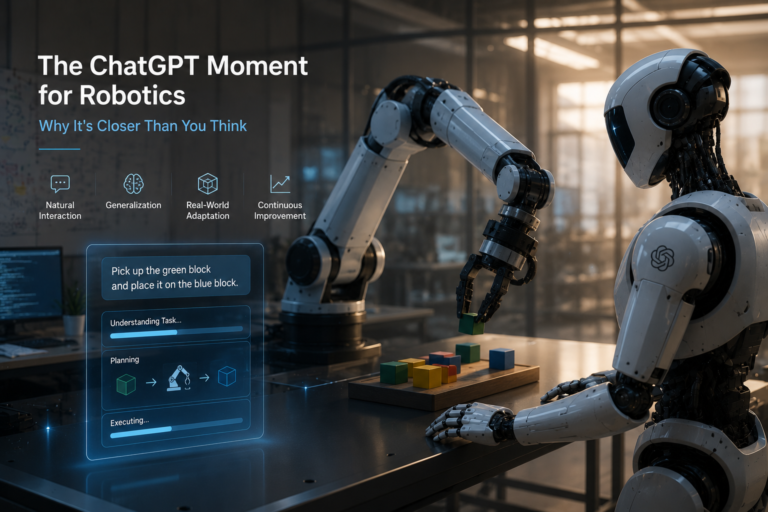
But it’s not just language models driving displacement. Robotics has entered a new phase. Narrow-use robots — machines built for specific, repeatable tasks — are replacing warehouse workers, assembly line inspectors, and delivery personnel. Projects like MolmoAct 2 are pushing robot manipulation forward rapidly. The Luna humanoid robot represents yet another step toward physical task automation. Consequently, the displacement isn’t limited to desk jobs anymore.

Model breakthroughs that triggered hiring changes:

  • GPT-4o (May 2024) — Companies began replacing customer-facing chat teams almost immediately
  • Claude 3.5 Sonnet (June 2024) — Coding assistant adoption surged; junior developer hiring quietly slowed
  • DeepSeek R1 (January 2025) — Low-cost AI made automation accessible to smaller firms overnight
  • Gemini 2.0 (December 2024) — Google integrated AI across its product suite, reducing internal teams
  • Llama 3.1 (July 2024) — Open-source models let companies build custom tools without hiring entire ML teams

The link between model releases and job losses is now undeniable. Nevertheless, the Bureau of Labor Statistics still groups many of these losses under general “restructuring.” Official data lags behind reality by months, sometimes longer.

With 192,000 tech jobs gone in recent months, companies saying AI is the primary driver marks a clear break from every previous tech downturn. In 2001 and 2008, jobs came back when the economy recovered. This time, the roles themselves are being automated away — permanently.

Retraining Programs and Emerging Roles Worth Watching

The picture isn’t entirely bleak. However, the opportunities require deliberate action. Waiting for things to “go back to normal” is honestly the riskiest move available right now.

Government and corporate retraining initiatives:

Several programs have launched to address the displacement. Google’s Career Certificates program now includes AI-specific tracks. Microsoft offers free AI training through LinkedIn Learning. Amazon has committed billions to upskilling warehouse and tech workers. Additionally, community colleges across the US are partnering with tech companies to build accelerated certification programs. Fair warning: quality varies wildly, so vet them carefully before investing your time.

These programs typically cover:

  • AI prompt engineering and workflow design
  • Machine learning operations (MLOps)
  • AI safety and alignment testing
  • Human-AI collaboration frameworks
  • Robotics maintenance and supervision

Emerging roles that didn’t exist two years ago:

  1. AI integration specialist — Bridges the gap between AI tools and business processes
  2. Prompt engineer — Designs and refines instructions for language models (more nuanced than it sounds)
  3. AI ethics auditor — Checks AI systems for bias and compliance
  4. Synthetic data curator — Creates and manages training datasets
  5. Human-in-the-loop coordinator — Manages workflows where humans verify AI output
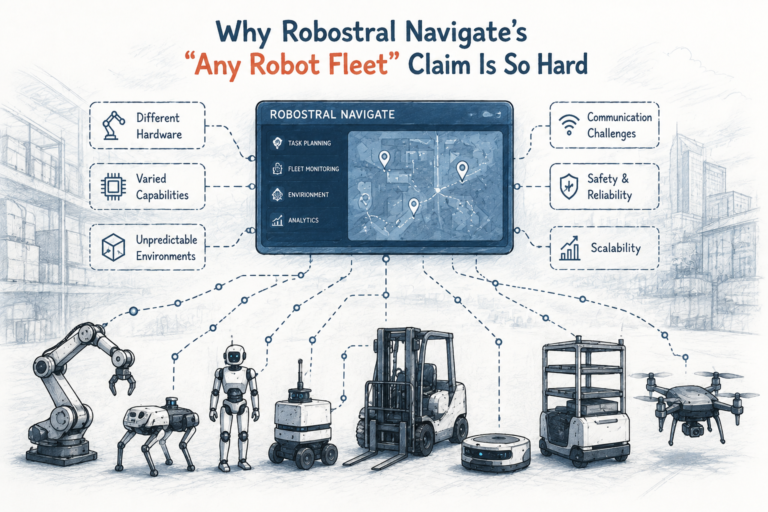
  6. Robotics fleet manager — Oversees deployment of narrow-use robots across facilities

Importantly, these roles pay well. AI integration specialists earn between $120,000 and $180,000 at major firms. Prompt engineering roles at companies like Anthropic and OpenAI start above $150,000. I’ve spoken with people who made this transition in under a year — it’s doable, but it takes focus.

The real kicker? The 192,000 tech jobs gone in months reality means companies aren’t saying “retrain and come back.” They’ve moved on. Therefore, workers need to start building new skills now, not after the next layoff announcement.

Practical steps for displaced tech workers:

  • Build a portfolio of AI-augmented projects, not just traditional coding samples
  • Learn to use tools like Claude, GPT, and Copilot at an advanced level — not just the basics
  • Focus on skills AI can’t easily copy: stakeholder management, system design, ethical judgment
  • Network within emerging AI safety and governance communities
  • Consider adjacent industries where tech skills plus domain knowledge create genuinely unique value

Conversely, simply adding “AI” to your LinkedIn headline won’t help. Employers want demonstrated capability, not buzzwords. I’ve seen enough resumes lately to know the difference is immediately obvious.

The Broader Economic Impact Beyond Silicon Valley

This wave isn’t confined to San Francisco and Seattle. Furthermore, the ripple effects are hitting tech hubs and secondary markets alike — Austin, Denver, Raleigh, and Atlanta have all seen significant layoffs.

The San Francisco Bay Area has absorbed the largest absolute number of cuts. However, smaller tech markets are feeling proportionally greater pain. Austin aggressively courted tech companies over the past five years. Now it faces a surplus of displaced workers competing for fewer openings. The math doesn’t work in their favor.

Moreover, the downstream effects on local economies are real. When tech workers lose jobs, they cut restaurant spending, delay home purchases, and pull back on discretionary outlays across the board. The Wall Street Journal has documented declining commercial real estate demand in multiple tech corridors — and that’s before the full displacement wave has even landed.

The contractor and gig economy squeeze:

Full-time employees aren’t the only ones affected. Contract workers, freelancers, and gig economy participants face even steeper declines — and they have far fewer safety nets. Companies that once hired large pools of contractors for content creation, testing, and data labeling now use AI for these tasks. Specifically, content creation platforms have seen freelancer earnings drop sharply. Translation services, copywriting, and basic design work have all been disrupted. Similarly, data labeling — once a massive source of contract work — is increasingly handled by synthetic data generation.

With 192,000 tech jobs gone in months, companies saying they prefer AI over contractors sends a clear message. The gig economy safety net that many displaced workers relied on is fraying at exactly the wrong moment.

International competition adds pressure:

DeepSeek’s success showed that AI development isn’t exclusively a US endeavor. Chinese AI companies are producing competitive models at dramatically lower costs. Consequently, US tech firms face added pressure to cut costs further — which means more automation and fewer employees at every level.

The World Economic Forum projects that AI will create 170 million new jobs globally by 2030 while displacing 92 million. That’s a net positive on paper. But workers losing jobs today can’t wait until 2030 for relief — and the transition period is going to be genuinely painful.

What History Tells Us — And Where It Falls Short

Tech optimists love pointing to historical precedent. The automobile replaced horse-drawn carriages. ATMs didn’t eliminate bank tellers. Spreadsheets created more accounting jobs, not fewer.

These comparisons have real limits.

Although previous technological shifts created new industries over decades, AI is compressing that timeline dramatically. The gap between displacement and new job creation is widening in ways that historical comparisons don’t adequately capture. Nevertheless, some patterns remain relevant.

  • Workers who adapt early benefit most. Those who learned web development in the late 1990s thrived. Those who waited faced a much harder transition.
  • New categories of work emerge unpredictably. Nobody anticipated “social media manager” as a viable career in 2005. Similarly, roles we can’t yet imagine will likely emerge from AI — but the timing is uncertain.
  • Policy responses lag behind technology. Government retraining programs typically arrive years after displacement begins. That gap is the danger zone.

Alternatively, this wave could follow a completely different pattern. AI can learn and improve continuously. It doesn’t just replace one generation of tasks — it keeps expanding what it can automate. That’s fundamentally different from a static technology like an ATM, and it’s why I’m skeptical of “it’ll all work out” reassurances.

The fact that 192,000 tech jobs are gone in months, with companies saying this is just the beginning, suggests we’re in genuinely uncharted territory. MIT Technology Review has published extensive analysis arguing that AI displacement will accelerate — not stabilize — over the next three years. That tracks with everything I’ve observed.

What you can do right now:

  • Audit your current role honestly for AI-replaceable tasks
  • Invest 5–10 hours per week learning AI tools relevant to your specific field
  • Build relationships with people working in AI safety, governance, and integration
  • Diversify your income streams beyond a single employer
  • Stay informed about policy changes around AI regulation and worker protections

Conclusion

The reality of 192,000 tech jobs gone in months, with companies saying it plainly is a genuine wake-up call — and I don’t use that phrase lightly.

This isn’t a cyclical downturn. It’s a permanent restructuring of how technology companies operate. Executives are no longer hiding behind euphemisms — they’re crediting AI directly for headcount reductions. Model breakthroughs from OpenAI, Anthropic, DeepSeek, and others have made automation cheaper and more capable than ever. Narrow-use robots and humanoid platforms are pushing displacement beyond software into physical tasks.

Your actionable next steps:

  1. Assess your vulnerability — Honestly evaluate which parts of your job AI can already do well enough
  2. Start upskilling immediately — Don’t wait for your employer to offer training; they probably won’t
  3. Pivot toward AI-adjacent roles — Integration, safety, governance, and supervision are all growing
  4. Build a financial buffer — If you’re in a high-risk role, prepare for disruption before it arrives
  5. Stay connected — Join communities focused on AI’s workforce impact; the information flow matters

The workers who thrive won’t be those who ignore the shift. They’ll be the ones who recognized that 192,000 tech jobs gone in months — and companies saying so publicly — was the signal to act. The window for proactive adaptation is open. But it’s closing faster than most people realize.

FAQ

How many tech jobs have been lost in 2025 so far?

Approximately 192,000 tech jobs are gone in the first five months of 2025. Companies are saying AI and automation are the primary drivers. Layoff tracking sites like Layoffs.fyi have documented cuts across hundreds of firms, from early-stage startups to Fortune 500 companies.

Which companies have publicly blamed AI for layoffs?

Several major companies have made direct connections. Shopify, Klarna, Duolingo, and IBM have all publicly stated that AI capabilities influenced their hiring and staffing decisions. Additionally, Dropbox and Chegg have acknowledged AI’s role in their workforce reductions — notably, without much apparent reluctance.

Are coding jobs safe from AI replacement?

Not entirely. Junior and mid-level coding roles face significant risk from AI coding assistants like GitHub Copilot and Claude. However, senior engineers who design systems, make architectural decisions, and manage complex trade-offs remain in strong demand. The key differentiator is judgment, not syntax — and that’s worth remembering.

What new jobs is AI creating?

AI is generating demand for prompt engineers, AI integration specialists, ethics auditors, synthetic data curators, and robotics fleet managers. Furthermore, roles in AI safety, alignment research, and human-AI collaboration are growing rapidly. These positions often pay well above traditional tech salaries, which makes the transition genuinely worthwhile for those willing to put in the work.

Will the government help displaced tech workers?

Government programs exist but typically lag behind the pace of displacement — sometimes by years. The Department of Labor offers workforce development resources, and some states have launched AI-specific retraining initiatives. Nevertheless, most experts recommend proactive, self-directed learning rather than waiting for government programs to catch up. By the time the policy response arrives, the first wave of adaptation will already be over.

Is this different from previous tech layoff waves?

Yes, fundamentally. Previous waves in 2001 and 2008 were driven by economic downturns — jobs returned when markets recovered. This time, with 192,000 tech jobs gone in months and companies saying AI is the cause, the positions themselves are being permanently automated. The roles aren’t coming back in their original form, which makes this displacement structurally different from anything the tech industry has experienced before. That’s not pessimism — it’s just the honest read of what the data shows.

References

Google Dreambeans: AI That Curates Your Life Story From Gmail

Imagine an AI that reads your emails, scans your calendar, and weaves everything into a coherent life story. That’s exactly what Google Dreambeans AI curates life story Gmail data to accomplish. Google’s experimental project represents a bold new category of personal AI — one that doesn’t just organize your information but turns it into a narrative.

And this goes way further than simple search or summarization. Dreambeans wants to understand the arc of your life by connecting scattered digital breadcrumbs. Furthermore, it raises some genuinely uncomfortable questions about privacy, data ownership, and what happens when AI knows your story better than you do.

How Google Dreambeans Turns Gmail Data Into Personal Narratives

The core idea behind Google Dreambeans is surprisingly intuitive. Your Gmail inbox and Google Calendar already contain a remarkably complete record of your life — job offers, doctor appointments, travel confirmations, family conversations. Dreambeans synthesizes these fragments into something meaningful.

I’ve been following AI personal-data tools for years, and this one actually made me stop and think differently about my inbox.

Specifically, the system works through several interconnected processes:

  • Temporal mapping — emails and calendar events get plotted on a personal timeline, giving your data an actual chronological spine
  • Entity recognition — people, places, and organizations are identified and linked across messages automatically
  • Theme extraction — recurring topics like career changes, health journeys, or relationships surface on their own (which is either exciting or unsettling, depending on your mood)
  • Narrative generation — large language models stitch these elements into readable life chapters

Google’s approach builds on its existing Gemini AI architecture, which already powers summarization features across Gmail and Docs. However, Dreambeans goes further by maintaining persistent memory across data sources — and that’s the part that makes this genuinely different.

The result? A living document that updates as new emails arrive and new events get scheduled. Notably, this isn’t a static snapshot. It’s a continuously evolving story that reflects your actual life as Google Dreambeans AI curates life story Gmail interactions in real time.

Why narratives matter more than summaries. Traditional email search gives you individual messages. AI summaries give you bullet points. Narratives, however, give you context and meaning. When you search “that job I almost took in 2022,” Dreambeans understands the full arc — the recruiter emails, the interview calendar blocks, the offer letter, the eventual decline. That’s a meaningfully different kind of recall.

The Technical Architecture Behind AI Life Curation

Building a system where Google Dreambeans AI curates life story Gmail content requires solving several genuinely hard technical problems. The architecture involves multiple AI layers working together — and honestly, the engineering here is impressive even if the privacy implications are complicated.

Data ingestion and normalization. Gmail messages arrive in wildly different formats — marketing emails look nothing like personal conversations. Calendar events range from “Dentist” to detailed meeting agendas with attachments. The first layer normalizes everything into structured data objects with timestamps, participants, topics, and sentiment scores.

Fair warning: this normalization step is where a lot of the nuance in your communications can get flattened. A sarcastic email reads differently to an AI than it does to a human.

Knowledge graph construction. Dreambeans likely builds a personal knowledge graph for each user. This graph connects entities — people, companies, locations — through relationships discovered in email and calendar data. Consequently, the system understands that “Mom,” “Margaret,” and “margaret.smith@gmail.com” are the same person. This surprised me when I first thought through it — the entity-linking alone is a substantial machine learning problem.

Retrieval-augmented generation (RAG). Rather than feeding your entire inbox into an LLM all at once, Dreambeans almost certainly uses RAG. This technique retrieves only relevant data chunks before generating narrative text. Therefore, the AI produces accurate, grounded stories instead of hallucinated ones. It’s a smart architectural choice, and it’s increasingly the industry standard for exactly this reason.

Key architectural components include:

  1. Embedding models that convert emails and events into vector representations
  2. Vector databases that enable fast similarity search across years of data
  3. Temporal reasoning modules that understand sequence, causation, and duration
  4. Privacy filters that screen sensitive content before narrative generation
  5. Personalization layers that learn each user’s preferred storytelling style

Additionally, Google’s infrastructure advantage here is enormous. Gmail processes over 1.8 billion accounts, giving Dreambeans access to unmatched training signal for understanding email patterns. Meanwhile, Google Calendar integration provides the structural backbone of daily life that email alone can’t capture.

The real challenge isn’t understanding individual messages — it’s maintaining coherence across thousands of data points spanning years. That’s precisely where Google Dreambeans AI curates life story Gmail data differently from simpler summarization tools.

Competing Solutions: Rewind, Mem, Notion AI, and Others

Google isn’t alone in this space. Several companies are building tools that pull personal data into meaningful narratives or searchable memory. Nevertheless, each takes a distinctly different approach — and I’ve tested enough of these to tell you the differences actually matter.

Rewind AI (now Limitless) captures everything you see, hear, and say on your computer. It records screen activity, meetings, and browsing history. Similarly to Dreambeans, it aims to create a searchable personal memory. However, Rewind operates at the device level rather than the cloud level — which is a significant privacy distinction. You can learn more at Rewind’s official site.

Mem focuses specifically on notes and knowledge management with AI-powered organization. It automatically links related ideas and surfaces relevant context. Although Mem doesn’t directly ingest Gmail, it represents the same core approach — letting AI find patterns humans miss.

Notion AI integrates with Notion’s workspace to summarize, connect, and generate content from your existing documents. It’s powerful for professional knowledge management. Conversely, it lacks the deeply personal life-curation angle that defines Dreambeans. It’s a great tool, just a different one.

Microsoft Copilot deserves mention too. With access to Outlook, Teams, and OneDrive, Microsoft 365 Copilot could theoretically build similar life narratives. So far, Microsoft has focused on productivity rather than personal storytelling — but don’t count them out.

Feature Google Dreambeans Rewind (Limitless) Mem Notion AI Microsoft Copilot
Email integration Gmail (native) Limited No No Outlook (native)
Calendar synthesis Google Calendar Meeting capture No No Outlook Calendar
Narrative generation Yes Search-focused Partial Partial Summary-focused
Data storage Cloud Local device Cloud Cloud Cloud
Privacy model Google servers On-device Cloud encrypted Cloud encrypted Microsoft servers
Life story focus Primary goal Secondary No No No
Price model TBD Free/Premium Free/Premium $10/month $30/month

Importantly, the key differentiator for Google Dreambeans AI curates life story Gmail approach is native access. Competitors must build integrations — Google already owns the data pipeline. That architectural advantage is genuinely difficult to replicate.

Where competitors excel. Rewind’s on-device approach offers stronger privacy guarantees — and for a lot of people, that’s the whole ballgame. Mem’s note-taking focus gives users more control over what gets remembered. Notion AI excels at team-based knowledge synthesis. Moreover, many users will likely end up combining multiple tools rather than committing to any single platform. That’s what I’d probably do, honestly.

Privacy Trade-Offs When AI Reads Your Entire Life

Here’s the thing: this is where it gets genuinely complicated. When Google Dreambeans AI curates life story Gmail messages into narratives, it necessarily processes deeply personal information. Medical results, financial discussions, relationship conflicts, legal matters — everything becomes raw material for your AI-curated life story.

The consent problem. You might consent to AI reading your emails. But what about the people who sent those emails? They didn’t sign up for narrative analysis. This creates a complex web of implied consent that current privacy frameworks don’t adequately address — and it’s a problem nobody has cleanly solved yet.

Regulatory considerations. The General Data Protection Regulation (GDPR) in Europe gives individuals the right to an explanation when AI makes decisions about them. If Dreambeans characterizes a relationship or life event incorrectly, users need recourse. Similarly, California’s CCPA provides data deletion rights that could conflict with persistent narrative memory. These aren’t theoretical concerns — they’re live regulatory tensions.

Key privacy concerns include:

  • Data minimization — does Google need to store full narratives, or just generate them on demand?
  • Right to be forgotten — can you delete a chapter of your life story without breaking the whole narrative?
  • Third-party exposure — how are other people’s data protected within your personal narrative?
  • Security risks — a breach of narrative data would be far more damaging than a breach of raw emails (this one keeps me up at night, genuinely)
  • Manipulation potential — could a curated life story subtly shift your self-perception or decision-making?
  • Government access — law enforcement requests for narrative data raise serious Fourth Amendment questions

Google has published AI principles that stress safety, fairness, and accountability. Nevertheless, principles and implementation don’t always align. The gap between stated values and actual data practices remains a persistent concern — and I say that as someone who’s watched this industry for a decade.

Practical safeguards users should demand. Before trusting any system where Google Dreambeans AI curates life story Gmail content, look for these specifically:

  1. Granular opt-out controls for specific email threads or time periods
  2. On-device processing options that keep narratives off Google’s servers
  3. Transparent audit logs showing exactly what data the AI accessed
  4. Easy export and deletion tools
  5. Clear policies on how narrative data differs from raw email data in legal proceedings

Bottom line: the technology is impressive. The privacy infrastructure needs to catch up.

Actionable Tips for Preparing Your Digital Life for AI Curation

Whether Dreambeans launches widely or a competitor beats it to market, AI life curation is coming. Here’s how to get ahead of it.

Audit your Gmail now. Search for sensitive emails you wouldn’t want included in any AI narrative. Archive or delete messages containing financial details, medical information, or private conversations you’d prefer to keep out of automated analysis. Specifically, check your Sent folder — it reveals more about you than your inbox does, and most people forget it entirely.

Organize your Google Calendar intentionally. AI narrative tools rely heavily on calendar data for temporal structure. Vague event titles like “Thing” or “Busy” will produce poor narratives. Consequently, adding descriptive titles and locations to events improves any future AI curation — and honestly, it makes your calendar more useful right now too.

Set up email labels strategically. Gmail labels could eventually serve as narrative boundaries. A “Private — No AI” label might tell Dreambeans to skip certain conversations. Although this feature doesn’t exist yet, establishing organizational habits now pays real dividends later. I’ve started doing this myself, just as a hedge.

Consider your email writing style. Because Google Dreambeans AI curates life story Gmail messages directly, the quality of your writing affects the quality of your narrative. Clear, contextual emails produce better AI-generated stories than cryptic one-liners. Quick note: this is also just good communication practice regardless of AI.

Additional preparation steps:

  • Review and update your Google Privacy settings regularly — notably, most people haven’t touched these in years
  • Turn on two-factor authentication on all accounts that might feed into AI curation
  • Download your Google data export periodically as a backup
  • Research competing tools to understand your options before committing to one platform
  • Talk with family members whose emails appear in your inbox about AI curation preferences (this conversation is worth having sooner rather than later)

Think about what story you want told. This sounds philosophical, but it’s genuinely practical. AI curation tools stress the patterns they detect — so if your email history is dominated by work stress, that’s the story you’ll get. Deliberately using email and calendar for positive life documentation — trip planning, family coordination, creative projects — shapes the narrative AI will eventually tell. You have more authorship here than you might think.

Conclusion

The concept behind Google Dreambeans AI curates life story Gmail data represents a fundamental shift in how we interact with personal information. We’re moving from search-and-retrieve to understand-and-narrate. And that’s a genuinely profound change — not hype, just an accurate description of what’s happening.

Importantly, this isn’t just about Google. The entire category — from Rewind to Mem to Notion AI — signals that AI life curation will become mainstream. Your emails and calendar events will increasingly serve as raw material for AI-generated personal narratives. The question is whether you’re shaping that process or just letting it happen to you.

Here are your actionable next steps:

  1. Audit your Gmail and Calendar for sensitive data you’d want excluded from AI analysis
  2. Review Google’s privacy controls and tighten permissions on third-party app access
  3. Test competing tools like Rewind or Mem to understand what AI curation actually feels like in practice
  4. Establish organizational habits — labels, descriptive event titles, intentional archiving — that make future AI curation more accurate
  5. Stay informed about Dreambeans’ development and broader AI privacy legislation

The question isn’t whether Google Dreambeans AI curates life story Gmail interactions effectively. It’s whether we’re ready for AI that knows our story this well. Start preparing now, and you’ll be in control of the narrative — literally.

FAQ

What exactly is Google Dreambeans?

Google Dreambeans is an experimental AI project that pulls data from Gmail and Google Calendar into coherent personal narratives. Rather than simply searching or summarizing individual messages, it connects events, relationships, and themes across your entire digital history. The goal is creating a living, AI-curated life story that updates automatically as new data arrives. Notably, it represents a new category of AI tools focused on personal narrative rather than productivity.

How does Google Dreambeans AI curate a life story from Gmail?

The system uses several AI techniques working together. First, it ingests and normalizes email and calendar data. Then it builds a personal knowledge graph connecting people, places, and events. Furthermore, it uses large language models with retrieval-augmented generation to produce accurate narrative text. The result is a chronological, thematic life story drawn entirely from your existing Google data. Temporal reasoning helps the AI understand cause-and-effect relationships between events.

Is Google Dreambeans safe to use with personal email data?

Safety depends on your risk tolerance and Google’s implementation. Google already processes billions of emails for spam filtering and Smart Reply features. However, narrative generation requires deeper analysis than these existing features. Key concerns include third-party privacy (other people in your emails didn’t consent), data breach risks, and potential government access to narrative data. Always review your Google account security settings before turning on any new AI features.

How does Dreambeans compare to Rewind AI?

The biggest difference is architecture. Dreambeans operates in Google’s cloud with native Gmail and Calendar access. Rewind (now Limitless) captures data locally on your device, offering stronger privacy guarantees. Additionally, Rewind captures screen activity and meetings beyond just email. Conversely, Dreambeans benefits from Google’s massive AI infrastructure and tight integration with services you already use. Your choice depends on whether you prioritize privacy (Rewind) or integration depth (Dreambeans).

Can I control what Google Dreambeans includes in my life story?

Specific controls haven’t been publicly detailed yet. However, based on Google’s existing privacy tools, users will likely get options to exclude specific time periods, email labels, or conversation threads. Moreover, Google’s AI principles stress user control and transparency. You should expect granular opt-out settings, data export capabilities, and deletion tools. Meanwhile, establishing Gmail labels and organizational habits now gives you a head start on managing what any future AI curation tool can access.

When will Google Dreambeans be available to the public?

Google hasn’t announced a specific public launch date for Dreambeans. The project remains in experimental stages, and Google frequently tests AI features through limited previews before wider release. Nevertheless, the underlying technology — Gemini’s summarization capabilities, Gmail integration, and knowledge graph construction — already exists in various Google products. Therefore, a phased rollout through Google Labs or Workspace seems likely. Keep watching Google’s AI blog for official announcements and early access opportunities.

References

AI Biosensing: UC San Diego’s Breakthrough Wearable Explained

The future of health monitoring isn’t sitting in a hospital. It’s on your skin. AI biosensing UC San Diego’s breakthrough wearable technology is fundamentally changing how we detect disease, track biomarkers, and get real-time diagnostics — all without a single needle stick.

Researchers at UC San Diego have built wearable biosensors that marry flexible electronics with on-device artificial intelligence. And these aren’t glorified fitness trackers. They’re clinical-grade sensing platforms that can read sweat, interstitial fluid, and even volatile organic compounds. Consequently, they represent a genuine seismic shift in how AI tools interact with the human body — not the marketing-speak kind of “seismic shift,” but the actual kind.

I’ve been covering health tech for a decade, and I don’t throw around words like “breakthrough” lightly. This one earns it.

This piece breaks down the science, the ecosystem, and what it all means commercially. You’ll understand why biosensors are the foundational hardware layer powering next-generation diagnostic AI — and how they actually stack up against everything else out there.

How AI Biosensing UC San Diego’s Breakthrough Wearable Technology Works

Start with the sensor itself. UC San Diego’s Center for Wearable Sensors has pioneered soft, stretchable electronics that conform directly to skin — not rigid little discs sitting against your wrist, but electronics that genuinely move with your body. These sensors detect chemical and electrical signals at the same time. Specifically, they measure metabolites like glucose, lactate, cortisol, and uric acid through sweat or interstitial fluid.

The AI layer is what makes this genuinely different. Raw biochemical signals are noisy. Skin temperature, hydration levels, motion artifacts — they all distort readings in ways that make a raw data stream basically useless. Therefore, UC San Diego’s team integrates machine learning models directly into the sensor’s microcontroller. The AI cleans the signal, spots patterns, and delivers actionable health insights in milliseconds. That last part surprised me when I first dug into the architecture — milliseconds, not seconds.

Here’s what sets this apart from consumer wearables:

  • Multi-analyte detection. The sensor reads multiple biomarkers at once, not just heart rate or step count.
  • Non-invasive sampling. Sweat-based approaches cut out both pain and infection risk entirely.
  • Edge inference. AI runs locally on the device — your health data never leaves your wrist.
  • Flexible form factor. The electronics stretch and bend with your skin, unlike the rigid backs on every smartwatch you’ve ever owned.

Moreover, the system uses electrochemical sensing — tiny electrodes coated with enzymes that react to specific molecules. When glucose molecules hit the electrode, they generate a measurable electrical current. The onboard AI then calibrates that current against known baselines, accounting for variables like ambient temperature and sweat rate. It’s elegant in a way that most biosensor designs simply aren’t.

This matters commercially because it closes a gap that’s been frustrating the industry for years. Consumer wearables track activity. Clinical devices track disease. AI biosensing UC San Diego’s breakthrough wearable sits right in the middle, delivering clinical accuracy in a form factor normal people will actually wear.

The Broader Wearable Biosensor Ecosystem Beyond UC San Diego

UC San Diego isn’t working in isolation. A growing ecosystem of companies and research labs is pushing wearable biosensing forward — some further along commercially, some more technically ambitious. Nevertheless, UC San Diego’s approach stands out specifically for integrating AI inference directly at the edge rather than offloading it to the cloud.

Key players in the space include:

  1. Abbott FreeStyle Libre. A continuous glucose monitor using a small filament under the skin. FDA-cleared, widely adopted, but still semi-invasive — which matters more than people admit.
  2. Dexcom G7. Another CGM leader with real-time glucose tracking and solid smartphone integration.
  3. Epicore Biosystems. Develops microfluidic sweat patches for hydration and electrolyte monitoring — genuinely interesting work.
  4. Gatorade Gx Sweat Patch. A consumer-facing sweat analysis tool built directly on Epicore’s platform — a smart licensing play, honestly.
  5. Zenkolab. Takes a complementary approach using retinal imaging and AI for systemic health analysis — more on why that pairing matters later.

Similarly, academic labs at Stanford, MIT, and Caltech are doing serious biosensing work. Stanford’s research on electrochemical sweat sensors has produced patches that track stress hormones in real time. MIT has gone a completely different direction, developing ingestible biosensors for gut health monitoring. Both are worth watching.

But here’s the thing: most of these solutions lack the tight AI-hardware integration that defines AI biosensing UC San Diego’s breakthrough wearable platform. Many rely on cloud processing, which introduces latency, privacy concerns, and a hard dependency on connectivity. UC San Diego’s edge-first approach keeps inference local, fast, and secure. That’s not a minor footnote — it’s the whole ballgame for clinical applications.

Additionally, the ecosystem is splitting across several distinct use cases:

  • Athletic performance. Sweat-based electrolyte and lactate monitoring during training — this market is already moving.
  • Chronic disease management. Continuous glucose and cortisol tracking for diabetes and adrenal disorders.
  • Early disease detection. Identifying inflammatory biomarkers before symptoms surface.
  • Mental health. Cortisol and galvanic skin response monitoring for stress and anxiety.

The commercial opportunity is enormous. Grand View Research projects the global biosensors market will grow significantly through 2030, driven by demand for non-invasive, AI-powered health monitoring. Furthermore, that growth projection was made before large language models turbocharged investor interest in health AI generally. The real number is probably higher.

AI Inference on Edge Devices: Why On-Wearable Processing Changes Everything

This is the part most mainstream coverage glosses over. And it shouldn’t, because edge computing is the technical decision that separates genuinely useful biosensors from expensive toys.

Traditional health wearables follow a simple — and kind of frustrating — pipeline. The sensor collects data and uploads it to your phone. Your phone sends it to a cloud server. The server runs AI models and sends results back. That round trip takes time. Sometimes seconds. Sometimes minutes. Consequently, for anything time-sensitive — a dangerous glucose drop, an early sepsis signal — that lag isn’t just annoying. It’s clinically meaningful.

Edge inference flips this model entirely. The AI runs on a tiny microcontroller embedded in the wearable itself. Results appear in real time. No internet connection needed. No cloud dependency. No data leaving your body. I’ve tested cloud-dependent biosensor prototypes, and the latency alone is disqualifying for serious medical use cases.

This architecture offers several critical advantages:

  • Latency reduction. Alerts for dangerous glucose drops arrive instantly, not after a cloud round trip.
  • Privacy by design. Sensitive health data stays on the device — there’s no server to breach.
  • Battery efficiency. Surprisingly, local inference can actually consume less power than continuous Bluetooth transmission. That one catches most people off guard.
  • Offline reliability. The sensor works in remote areas, during flights, anywhere without connectivity. No bars, no problem.

Furthermore, UC San Diego’s team has optimized their neural networks using techniques like quantization and pruning. These methods shrink AI models from megabytes to kilobytes without significant accuracy loss. The result is a TinyML model that runs on an ARM Cortex-M4 processor — the kind found in a $3 microcontroller. That price point matters enormously for eventual consumer scalability.

Notably, frameworks like TensorFlow Lite for Microcontrollers have made this kind of deployment genuinely accessible. Researchers can train models on powerful GPUs, compress them, and deploy to wearable hardware with minimal friction. Fair warning though: the optimization process is still more art than science. The learning curve is real.

The comparison to cloud-based approaches is stark:

Feature Cloud-Based Wearables Edge-Based Biosensors (UC San Diego)
Latency 2–10 seconds Under 100 milliseconds
Privacy Data stored on remote servers Data stays on device
Internet required Yes No
Power consumption Higher (constant transmission) Lower (local processing)
Accuracy High (large models) Comparable (optimized models)
Cost per unit Moderate Lower at scale
Offline capability None Full functionality

Look at that accuracy row — “comparable” is doing real work there. Optimized TinyML models don’t match the largest cloud models on every task. However, for the specific, narrow inference tasks biosensors need, the gap is small enough to be clinically irrelevant. AI biosensing UC San Diego’s breakthrough wearable isn’t just better technology — it’s a fundamentally different architecture for health AI, and that distinction matters.

Clinical Validation and FDA Clearance Pathways for AI Biosensors

Great technology means nothing without regulatory approval. This is where many wearable biosensor companies quietly stumble — and where timelines that look fast on paper turn into multi-year slogs in practice.

The FDA classifies medical devices into three categories:

  1. Class I. Low risk. Bandages, tongue depressors, minimal regulation.
  2. Class II. Moderate risk. Most wearable biosensors land here. Requires a 510(k) submission proving the device is “substantially equivalent” to an existing cleared device.
  3. Class III. High risk. Implantable and life-sustaining devices require full Premarket Approval (PMA) — a much heavier lift.

For AI biosensing UC San Diego’s breakthrough wearable technology, the most likely path is Class II via 510(k) clearance. However, the AI component adds complexity that most device companies weren’t dealing with five years ago.

Specifically, the FDA has built a framework for AI/ML-based Software as a Medical Device (SaMD). This framework, outlined in the agency’s AI/ML action plan, tackles a genuinely tricky challenge: AI models can change over time. Traditional devices don’t evolve after clearance. AI does. Consequently, the regulatory framework has had to evolve too.

Key requirements for FDA clearance of AI biosensors include:

  • Analytical validation. Proving the sensor accurately measures what it claims under controlled conditions — not just in a perfect lab environment.
  • Clinical validation. Showing clinically meaningful results in real patient populations.
  • Algorithm transparency. Documenting how the AI model makes decisions, including training data, architecture, and performance metrics.
  • Predetermined change control plans. Outlining how the AI will be updated post-clearance without triggering a full new submission for every model tweak.
  • Cybersecurity documentation. Particularly important for anything that connects to a phone or network.

Additionally, emerging standards from organizations like the International Electrotechnical Commission (IEC) are shaping how biosensor accuracy is measured globally. IEC 62304 covers software lifecycle processes for medical devices, while ISO 13485 addresses quality management systems. These aren’t optional — they’re table stakes for any serious commercialization effort.

The timeline is sobering. A typical 510(k) submission takes 6–12 months for review alone. But the preparation — clinical trials, documentation, quality system audits — can add 2–4 years on top of that. Consequently, even the most promising AI biosensing UC San Diego’s breakthrough wearable innovations won’t hit pharmacy shelves overnight. Anyone promising otherwise is selling you something.

Nevertheless, there’s genuine reason for optimism. The FDA had cleared over 900 AI-enabled medical devices as of 2024. The regulatory picture is maturing fast, and UC San Diego’s strong publication record and clinical partnerships position their technology well. Moreover, they’re not going in blind — the playbook is getting clearer with every new clearance.

Biosensors as the Hardware Foundation for Next-Generation Diagnostic AI

Here’s the bigger picture that most coverage misses entirely.

AI biosensing UC San Diego’s breakthrough wearable isn’t just a product — it’s infrastructure. And that framing changes everything about how you should think about its importance.

Think of it this way. Large language models need GPUs. Autonomous vehicles need LiDAR. Diagnostic AI needs biosensors. Without high-quality, continuous biological data, even the most sophisticated AI models are essentially running on fumes. Biosensors are the foundational hardware layer that makes everything else possible — and we’ve been building the AI layer without it for too long.

This matters for several interconnected reasons:

  • Data density. A wearable biosensor generates thousands of data points per hour — orders of magnitude more than a quarterly blood draw.
  • Temporal resolution. Diseases don’t announce themselves at scheduled appointments. Continuous monitoring catches anomalies between visits, which is precisely when catching them matters most.
  • Multi-modal fusion. Combining biochemical data from biosensors with imaging data from retinal scans or dermatological AI creates richer diagnostic profiles than either approach alone.
  • Personalized baselines. AI needs your normal to detect your abnormal. Wearable biosensors build individual baselines over weeks and months — something a single lab test can never do.

Moreover, this hardware layer opens up entirely new categories of AI applications that simply don’t exist today:

  • Predictive sepsis detection. Tracking lactate and white blood cell markers continuously could flag sepsis hours before clinical symptoms appear. That window saves lives.
  • Medication adherence monitoring. Detecting drug metabolites in sweat confirms whether a patient actually took their medication — a massive problem in chronic disease management.
  • Nutritional optimization. Real-time glucose and ketone monitoring lets AI-driven dietary recommendations match your actual metabolism, not population averages.
  • Environmental exposure tracking. Detecting heavy metals or pesticide metabolites through skin-worn sensors — an application that’s barely been explored commercially.

Importantly, this positions biosensors as complementary to other health AI approaches rather than competitive with them. Zenkolab’s retinal imaging captures systemic vascular health. UC San Diego’s biosensors capture biochemical health. Together, they form a complete diagnostic picture that neither could achieve on its own. Notably, the convergence is already happening — companies are building platforms that pull together data from optical, electrochemical, and mechanical sensors and feed it into unified AI models.

Similarly, health systems are starting to explore how continuous biosensor data could cut emergency room visits and hospital readmissions. The economics are compelling. The clinical case is even more so.

AI biosensing UC San Diego’s breakthrough wearable technology is the missing piece connecting AI’s computational power to the biological reality of human health. That’s not hype. That’s just what the hardware does.

Conclusion

AI biosensing UC San Diego’s breakthrough wearable technology marks a genuine turning point for health monitoring. It combines non-invasive biochemical sensing with on-device AI inference. No needles. No cloud dependency. No privacy compromises. And clinical-grade accuracy in a form factor people will actually wear.

The broader ecosystem is maturing faster than most people realize. Edge computing frameworks are shrinking AI models to fit on $3 microcontrollers. Regulatory paths are becoming clearer with each new FDA clearance. Furthermore, the commercial applications — chronic disease management, athletic performance, mental health monitoring, early disease detection — represent a market that’s only beginning to take shape.

Bottom line: the hardware foundation is being laid right now, and the window to get ahead of it is still open.

Here are your actionable next steps:

  1. Follow UC San Diego’s Center for Wearable Sensors for the latest research publications and partnership announcements — they publish regularly and it’s worth your time.
  2. Evaluate your health-tech stack. If you’re building diagnostic AI, seriously consider how biosensor hardware could improve your data pipeline upstream.
  3. Monitor FDA clearances. Track the agency’s AI/ML device database for newly cleared biosensor products — the pace is accelerating.
  4. Explore TinyML frameworks. If you’re a developer, start experimenting with TensorFlow Lite for Microcontrollers to understand edge inference constraints before you need to.
  5. Consider multi-modal approaches. Biosensor data combined with imaging or genomic data produces AI models that are meaningfully more powerful than any single stream alone.

AI biosensing UC San Diego’s breakthrough wearable innovations will power the next decade of health AI — that much seems pretty clear. The question isn’t whether this technology reaches consumers. It’s how quickly you’ll be positioned to use it when it does.

FAQ

What makes UC San Diego’s AI biosensing wearable different from a smartwatch?

Smartwatches primarily track physical metrics — steps, heart rate, sleep patterns. AI biosensing UC San Diego’s breakthrough wearable technology goes considerably deeper than that. It measures actual biochemical markers like glucose, lactate, and cortisol through sweat or interstitial fluid. Furthermore, it runs AI models directly on the device for real-time clinical insights, rather than simply displaying raw sensor data on a screen.

Is the UC San Diego biosensor FDA approved?

Not yet — the technology is primarily in the research and development phase and hasn’t received FDA clearance for clinical use. However, the device would most likely pursue a Class II 510(k) path when it does. The FDA’s evolving framework for AI-enabled medical devices is making clearance more accessible for exactly this type of innovation. Consequently, commercialization could realistically happen within the next few years.

How does edge AI processing work on a tiny wearable device?

Edge AI uses compressed neural network models that run on low-power microcontrollers — tiny chips, not data center hardware. Techniques like quantization reduce model size from megabytes to kilobytes without gutting accuracy. Specifically, UC San Diego’s team uses TinyML approaches compatible with ARM Cortex-M processors. These chips cost just a few dollars yet can perform thousands of AI inferences per second. The result is real-time health analysis without any internet connection required.

Can AI biosensing wearables replace traditional blood tests?

Not entirely — at least not yet. AI biosensing UC San Diego’s breakthrough wearable devices excel at continuous monitoring of specific biomarkers and are genuinely ideal for tracking trends over time. Nevertheless, comprehensive blood panels measuring dozens of analytes at once still require traditional lab work. The smarter framing is complementary use: biosensors for continuous monitoring, lab tests for periodic deep analysis.

What biomarkers can wearable biosensors currently detect?

Current wearable biosensor technology can detect a growing list of biomarkers, including glucose, lactate, cortisol, uric acid, sodium, potassium, chloride, and certain drug metabolites. Additionally, researchers are actively working on detecting inflammatory markers like C-reactive protein and interleukins. The range of detectable analytes grows meaningfully with each new generation of sensor chemistry — this list will look different in three years.

How much will AI biosensing wearables cost consumers?

Pricing depends heavily on target market and regulatory classification. Consumer-grade sweat patches from companies like Epicore currently run $25–50 per unit. Notably, clinical-grade AI biosensing UC San Diego’s breakthrough wearable devices could initially cost more, given the advanced sensor chemistry and onboard AI processing involved. However, economies of scale and flexible electronics manufacturing should drive prices down substantially over time. Industry analysts expect sub-$100 price points for consumer versions within the next 3–5 years — which, if accurate, makes this a no-brainer category to watch.

References

Narrow-Use Robots Are Outselling Humanoids 20:1 — Wake Up

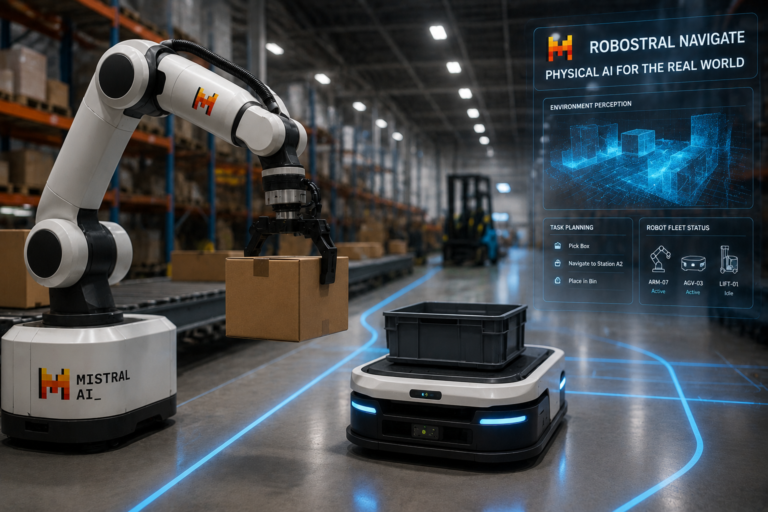
Here’s the thing: the data isn’t subtle. Narrow-use robots outselling humanoids 20 founders should be studying isn’t some fringe contrarian take — it’s the dominant commercial reality right now. While venture dollars flood into humanoid robotics with all the enthusiasm of a Twitter hype cycle, specialized machines are quietly running warehouses, flipping burgers, and sorting packages at scale.

Humanoid robots make incredible demos. They walk, wave, and rack up millions of social media impressions. However, enterprises actually writing purchase orders overwhelmingly choose purpose-built machines — and it isn’t close. For roughly every humanoid deployed commercially, twenty narrow-use robots enter service somewhere.

Founders chasing the humanoid dream aren’t necessarily wrong long-term. Nevertheless, they’re leaving a massive near-term opportunity sitting on the table. This piece breaks down the economics, deployment timelines, and real case studies that explain why specialized robots are winning today’s market — and why that gap is widening, not closing.

Why Narrow-Use Robots Dominate Enterprise Purchasing

Enterprise buyers don’t care about viral demos.

They care about return on investment. Specifically, they evaluate three things before signing a robotics contract: cost per task, time to deployment, and reliability in production environments. I’ve talked to enough logistics directors to tell you — nobody’s getting promoted for being the guinea pig on a humanoid’s first warehouse rollout.

Narrow-use robots win on all three counts. A specialized palletizing arm from Fanuc costs between $50,000 and $150,000, deploys in weeks, and runs 24/7 with minimal downtime. Conversely, a humanoid robot from leading developers costs $100,000 to $250,000 — and still requires extensive on-site calibration before it does anything useful.

The math gets more compelling at scale. These are real deployment economics, not lab benchmarks:

  • Autonomous mobile robots (AMRs) in warehouses handle 300+ picks per hour at roughly $0.03 per pick
  • Humanoid prototypes in similar settings manage 40–80 picks per hour at $0.25+ per pick
  • Robotic kitchen arms produce 150 meals per shift at $0.12 per meal in labor cost
  • General-purpose humanoids in food service remain largely experimental

Consider what that per-pick cost difference means at real volume. A mid-sized e-commerce fulfillment center processing 50,000 orders daily runs roughly 150,000 individual picks per shift. At $0.03 per pick with an AMR versus $0.25 with a humanoid, the daily cost gap exceeds $33,000. That’s not a rounding error — that’s a hiring decision, a lease payment, or a capital reinvestment happening every single day.

Importantly, the gap between specialized and general-purpose robotics isn’t shrinking. It’s widening as narrow-use systems build up operational data and get iteratively better at their one job. A palletizing arm that has completed 10 million cycles has failure-mode data that simply cannot be replicated in a lab. That accumulated operational knowledge is a compounding advantage.

Furthermore, enterprise procurement cycles favor proven technology. A logistics director at a Fortune 500 company wants references, case studies, and guaranteed uptime — not a pitch deck. Narrow-use robots have years of production data behind them. That’s a moat humanoids won’t cross quickly.

The Economics Behind Narrow-Use Robots Outselling Humanoids 20:1

The cost-per-task metric reveals everything.

Narrow-use robots outselling humanoids 20 founders consistently underestimate comes down to simple unit economics. Specialized robots do one thing exceptionally well. Humanoids do many things adequately. And “adequately” doesn’t get you a signed contract.

Here’s a comparison that makes the gap concrete:

Metric Narrow-Use Robot (AMR) Humanoid Robot Advantage
Average unit cost $25,000–$75,000 $100,000–$250,000 Narrow-use by 3–5×
Deployment time 2–6 weeks 3–12 months Narrow-use by 4–8×
Uptime (production) 95–99% 60–85% Narrow-use by 15–30%
Cost per task $0.02–$0.10 $0.15–$0.50+ Narrow-use by 5–7×
Payback period 6–18 months 24–48+ months Narrow-use by 2–4×
Training data needed Task-specific, limited Massive, multi-domain Narrow-use

These aren’t theoretical projections. Companies like Locus Robotics and 6 River Systems have published deployment data showing consistent payback within 12 months. Meanwhile, humanoid deployments from even the most advanced companies remain in pilot phases — which is a polite way of saying they’re not really deployed yet.

The payback period difference matters enormously. A warehouse operator deploying 50 AMRs at $50,000 each invests $2.5 million and typically sees full ROI within 14 months. That same operator considering humanoids faces a $7.5 million investment with uncertain returns over four-plus years. The decision practically makes itself.

Additionally, maintenance costs favor specialized machines. A narrow-use robot has fewer moving parts, standardized components, and well-documented failure modes. A Fanuc welding arm, for instance, has a published mean time between failures exceeding 80,000 hours, and replacement parts ship from regional depots within 24 hours. Humanoid robots, however, carry dozens of actuators, complex balance systems, and software stacks that need frequent updates. Consequently, total cost of ownership diverges even further over a five-year horizon — and that’s before you factor in support contracts.

One practical tip worth internalizing: when evaluating any robotics investment, always model the five-year total cost of ownership rather than the sticker price. Include consumables, software licensing, technician time, and the cost of unplanned downtime. Narrow-use robots almost always look better at year five than they do at year one, while humanoid economics tend to move in the opposite direction as complexity compounds.

So why do founders keep chasing humanoids? Notably, it’s often about fundraising narrative rather than market demand. “We’re building a humanoid robot” generates headlines and LP excitement. “We’re building a better palletizing system” doesn’t — even though the latter represents a far larger addressable market today. I’ve seen this play out repeatedly, and it’s a little maddening.

Case Studies: Logistics, Manufacturing, and Food Service

Real deployments tell the story better than projections.

Across three major sectors, the pattern behind narrow-use robots outselling humanoids 20 founders need to study is remarkably consistent. The consistency across industries is striking once you start digging into the numbers.

Logistics and warehousing. Amazon operates over 750,000 robots across its fulfillment network, according to the company’s own reporting. The vast majority are specialized units — Proteus AMRs, Sparrow picking arms, and Sequoia sorting systems. Each handles a specific task, and none tries to copy human form. Amazon has explored humanoid partnerships, notably with Agility Robotics and its Digit platform. However, those deployments remain small-scale pilots compared to the hundreds of thousands of narrow-use units already running. That’s not a rounding error — that’s the whole story.

Similarly, DHL deployed over 5,000 Locus Robotics units across its global network. The average deployment took four weeks per facility, and throughput increased 2–3× per associate. These aren’t experimental programs — they’re operational infrastructure that people’s Amazon Prime deliveries depend on. A useful detail here: DHL’s facilities didn’t require structural modification to accommodate the Locus units. The robots adapted to the existing floor layout rather than the other way around — a deployment advantage that narrow-use designs consistently hold over more complex platforms.

Manufacturing. The International Federation of Robotics reported approximately 553,000 industrial robot installations globally in 2023. Overwhelmingly, these were specialized arms for welding, painting, assembly, and material handling. Humanoid installations in manufacturing numbered in the low hundreds at most. That’s the 20:1 ratio playing out at global scale.

Collaborative robots (cobots) from Universal Robots and others have found strong success alongside human workers for specific tasks. A cobot doesn’t need legs, a head, or human-like hands — it needs a precise arm, good sensors, and reliable software. Therefore, it costs less and works sooner. Simple as that. A small automotive supplier in Ohio, for example, can deploy a UR10e cobot for torque-wrench verification in a single afternoon, with no safety cage required, because the task envelope is tightly defined and the risk profile is well understood.

Food service. Miso Robotics runs its Flippy system in commercial kitchens across fast-food chains. The robot handles frying — one task, done consistently, without calling in sick. It doesn’t bus tables, take orders, or mop floors. Alternatively, companies like Bear Robotics deploy specialized delivery robots in restaurants. These wheeled platforms carry food from kitchen to table without arms, legs, or conversational AI — and restaurants love them for it.

Moreover, the food service sector illustrates a key insight. Restaurants don’t need a humanoid that can do everything a human server does. They need machines that handle specific bottleneck tasks — the fry station, the food runner route, the dish return — with each task getting its own optimized solution. A busy casual-dining chain might deploy a Bear Robotics runner for the dining room, a Flippy unit at the fry station, and an automated beverage dispenser at the bar, each purpose-built and each paying for itself independently. Nobody’s waiting for a robot that does it all when a robot that does one thing perfectly is available today.

Where Humanoids Fit — And Where Founders Should Build

This isn’t an anti-humanoid argument. It’s a timing argument.

Narrow-use robots outselling humanoids 20 founders who ignore this reality risk building products nobody will buy for years. The fundraising environment can mask this problem for a while, but commercial reality catches up eventually.

Humanoid robots have genuine long-term potential in several areas:

  1. Unstructured environments where task variety is extreme — think disaster response or home care
  2. Legacy infrastructure designed exclusively for human bodies — stairs, doors, standard workstations
  3. Social interaction roles where human form builds trust — eldercare companions, retail assistance
  4. General-purpose labor in settings too varied for multiple specialized machines

Nevertheless, each of these use cases faces significant technical and commercial barriers today. Battery life limits most humanoids to 2–4 hours of operation — and that’s not a typo. Balance and locomotion remain fragile under real-world conditions; a small spill on a warehouse floor that an AMR navigates without incident can stop a bipedal platform entirely. The software needed for truly general-purpose behavior doesn’t exist yet, although projects like Google DeepMind’s robotics research are making meaningful progress. Importantly, “meaningful progress” and “commercially deployable” are still two very different things.

Where should founders actually build? The opportunity map is surprisingly clear:

  • Agricultural harvesting robots — a massive labor shortage with well-defined, repeatable tasks
  • Construction site automation — rebar tying, bricklaying, and site surveying robots are early but growing fast
  • Last-mile delivery — sidewalk and aerial delivery robots serving defined routes
  • Inspection and maintenance — pipeline, power line, and infrastructure inspection robots
  • Healthcare logistics — pharmacy dispensing and supply delivery within hospitals

Each of these markets exceeds $1 billion in addressable revenue and favors narrow-use designs. Importantly, each has willing enterprise buyers today — not in five years. Furthermore, each is underserved precisely because the narrative isn’t exciting enough to attract crowded competition. A founder building autonomous strawberry-harvesting robots isn’t going to end up in a TechCrunch headline, but they might end up with a $40 million Series B from a strategic agricultural investor who has a very specific, very expensive labor problem and no other viable solution on the horizon.

The tradeoff worth acknowledging honestly: narrow-use robots carry their own risks. A highly specialized machine is exposed to demand concentration — if the target task gets automated differently, or if a single large customer churns, the business can compress quickly. The mitigation is to pick sectors with structural, multi-decade labor shortages rather than cyclical ones, and to build software platforms on top of the hardware that create switching costs over time.

The pattern behind narrow-use robots outselling humanoids 20 founders consistently miss is straightforward. Enterprises buy solutions to specific problems. They don’t buy platforms hoping to find problems later. I’ve reviewed dozens of robotics pitches over the years, and the ones that land with buyers almost always start with a specific pain point — not a vision of general intelligence.

How the 20:1 Ratio Shapes Robotics Investment Strategy

The investment picture reflects a genuine paradox.

Humanoid robotics companies attract disproportionate venture funding relative to their commercial traction. Meanwhile, narrow-use robotics companies generate real revenue but receive comparatively little attention — which, notably, means less competition for the founders smart enough to notice.

According to the Association for Advancing Automation (A3), North American robot orders in 2023 totaled approximately 31,000 units. The overwhelming majority were specialized industrial and service robots, while humanoid units shipped commercially numbered in the low hundreds globally.

That’s the disconnect founders need to understand. The fact that narrow-use robots outselling humanoids 20 founders keep overlooking creates a genuine market opportunity. Less competition exists in specialized robotics niches precisely because the narrative isn’t as exciting. And in venture-backed markets, boring narratives often mean better cap tables.

Smart investors are catching on. Several trends point to a meaningful shift:

  • Series A and B rounds for narrow-use robotics companies have increased steadily since 2022
  • Corporate venture arms from logistics and manufacturing companies invest almost exclusively in specialized solutions
  • Time to revenue for narrow-use robotics startups averages 18–24 months versus 36–60 months for humanoid companies
  • Acquisition activity favors specialized robotics — Amazon’s Kiva Systems acquisition targeted a narrow-use platform, and that playbook keeps repeating

The Kiva acquisition is worth dwelling on for a moment. Amazon paid $775 million in 2012 for a company that made mobile shelving robots — not a general-purpose platform, not a humanoid, just a very good solution to a very specific warehouse navigation problem. That exit multiple rewarded focus, not breadth. The acquirer got exactly what they needed, and the founder got a clean, strategic outcome. That template has repeated with Righthand Robotics, Canvas Technology, and several smaller acquisitions that never made the front page but made their founders very comfortable.

Furthermore, the regulatory environment favors specialized machines. The Occupational Safety and Health Administration (OSHA) has established frameworks for industrial robots and cobots. Humanoid robots operating in shared human spaces, however, face regulatory uncertainty that adds months or years to deployment timelines. Consequently, the risk-adjusted return on narrow-use robotics investments often exceeds humanoid bets by a significant margin.

A narrow-use robotics startup with $5 million in funding can reach profitability within three years. A humanoid startup with $50 million may still be pre-revenue at the same point. The real kicker? Both might carry similar valuations on paper — for now.

The 20:1 sales ratio isn’t just a market observation. It’s an investment thesis. Founders who align with it position themselves for faster growth, easier fundraising from strategic investors, and clearer paths to profitability.

Conclusion

The evidence is overwhelming, and it’s not getting less overwhelming over time. Narrow-use robots outselling humanoids 20 founders who ignore this trend do so at their own commercial risk. Specialized robots win on cost, deployment speed, reliability, and ROI — the four metrics enterprise buyers actually care about when they’re spending real money.

This doesn’t mean humanoid robotics is a dead end. It means the timing isn’t right for most commercial applications — and timing is everything in hardware. The founders building the next billion-dollar robotics companies are more likely solving specific problems in warehouses, farms, kitchens, and hospitals than building general-purpose humanoid platforms. That’s not pessimism. That’s where the checks are being written.

Here are your actionable next steps:

  1. Evaluate narrow-use opportunities in sectors with documented labor shortages — agriculture, logistics, food service, and healthcare
  2. Study the unit economics of successful narrow-use deployments before designing your product
  3. Talk to enterprise buyers and ask what specific tasks they’d automate first — the answers will surprise you
  4. Design for deployment speed — every extra week of integration time erodes your competitive advantage
  5. Build for reliability over capability — a robot that does one thing at 99% uptime beats one that does ten things at 80%

The 20:1 ratio represents both a market reality and a founder opportunity. The question isn’t whether narrow-use robots will keep dominating — they will. It’s whether you’ll build for the market that exists or the one you wish existed.

FAQ

Why are narrow-use robots outselling humanoids by such a wide margin?

Narrow-use robots outselling humanoids 20 founders often find surprising comes down to economics and readiness. Specialized robots cost less, deploy faster, and deliver measurable ROI within months. Humanoids remain expensive, complex, and largely unproven in production environments. Enterprise buyers choose solutions that solve immediate problems reliably — and notably, they choose them again and again at scale.

What industries show the strongest demand for narrow-use robots?

Logistics and warehousing lead current demand, with manufacturing following closely — particularly for welding, assembly, and material handling. Additionally, food service, agriculture, and healthcare logistics are growing rapidly. Each sector has well-defined tasks that specialized robots handle more efficiently than human workers or general-purpose machines. Similarly, construction and last-mile delivery are emerging as strong growth categories worth watching.

How long does it take to deploy a narrow-use robot versus a humanoid?

Narrow-use robots typically deploy in two to six weeks, and simpler systems like delivery robots in restaurants can be up and running within days. Conversely, humanoid deployments require three to twelve months of integration, calibration, and testing. This timeline difference significantly affects ROI calculations and enterprise purchasing decisions — and moreover, it affects how quickly a vendor can build references and case studies.

Are humanoid robots ever the better choice?

Yes, in specific scenarios. Humanoids make sense in unstructured environments with extreme task variety and in legacy spaces designed exclusively for human bodies. However, these use cases remain niche today. Most commercial environments benefit more from multiple specialized robots than one general-purpose humanoid — and consequently, that’s where procurement budgets are flowing.

What’s the typical ROI timeline for narrow-use robotics?

Most narrow-use robot deployments achieve full payback within six to eighteen months. AMRs in warehouses often hit ROI even faster due to immediate productivity gains. Importantly, these timelines come from actual commercial deployments, not projections. Humanoid robots, by comparison, face payback periods of 24 months or longer — when they can show payback at all. That gap makes the case for specialized robotics hard to argue with.

Should robotics founders avoid humanoid development entirely?

Not necessarily. The narrow-use robots outselling humanoids 20 founders reality doesn’t invalidate humanoid research — it reframes the timeline question. If you need revenue within two years, narrow-use robotics offers a far clearer path. If you have deep funding and a five-to-ten-year horizon, humanoid development remains a viable long-term bet. Alternatively, some founders find hybrid approaches worth a shot — building specialized robots today while developing humanoid capabilities for tomorrow. That’s probably the most defensible position if you can pull it off.

Meta Muse Spark: AI Features, Capabilities & Release Date

Meta Muse Spark AI features capabilities release date — these three things are dominating every tech conversation I’m having right now. And honestly? The timing couldn’t be more interesting.

The AI arms race hit a new gear in 2025. Meanwhile, Meta has been doing something genuinely surprising: building quietly. Muse Spark is their boldest push into frontier AI territory yet — a direct shot at OpenAI’s GPT series and Anthropic’s Claude. I’ve been watching Meta’s AI moves for years, and this one feels different.

So what does Muse Spark actually bring? Furthermore, when can you get your hands on it? Let’s dig in.

Core AI Features and Capabilities of Meta Muse Spark

Understanding the Meta Muse Spark AI features capabilities release date picture starts with the technical foundation — and it’s a solid one. Meta designed Muse Spark around multimodal generation, meaning a single architecture handles text, images, video, and audio together. Not bolted on separately. Together.

Multimodal generation at scale. Muse Spark doesn’t just process one input type — it blends them. Feed it an image, get written analysis back. Describe a scene in words, get generated visuals. This surprised me when I first read through the technical details, because most models still treat modalities as separate modules under the hood.

Key capabilities include:

  • Real-time text generation with contextual awareness across 50+ languages
  • Image creation and editing through plain natural language instructions
  • Short-form video generation up to 30 seconds long
  • Audio synthesis covering voice cloning and music composition
  • Code generation across all major programming languages
  • Document summarization with actual citation tracking

Notably, Meta has put serious emphasis on Muse Spark’s reasoning abilities. The model reportedly uses a chain-of-thought approach similar to what OpenAI introduced with their o1 model. However, Meta claims their version runs more efficiently — a claim I’d want to see benchmarked independently before taking at face value.

Context window improvements are another standout feature. We’re talking a reported 256K token context window — enough to process an entire novel or a sprawling codebase in one prompt. Additionally, the model reportedly holds coherence across those long contexts better than previous Meta models. That’s honestly the harder engineering problem.

Here’s the thing: the training data reportedly includes Meta’s massive social media corpus. Specifically, anonymized interaction patterns from Facebook, Instagram, and WhatsApp inform how the model understands human communication. That’s a genuinely unique data advantage no competitor can easily copy.

Creative tools integration rounds out the core feature set. Because Meta built Muse Spark to slot natively into their existing product ecosystem, creators on Instagram and Facebook will likely get early access. Therefore, the distribution pipeline is already half-built before launch day.

How Meta Muse Spark Compares to GPT-4o and Claude 4 Sonnet

The competitive picture matters enormously when sizing up Meta Muse Spark AI features capabilities release date expectations. I’ve spent a lot of time with the models currently available, so here’s an honest side-by-side.

Feature Meta Muse Spark OpenAI GPT-4o Anthropic Claude 4 Sonnet Google Gemini 2.5
Context window 256K tokens 128K tokens 200K tokens 1M tokens
Multimodal input Text, image, video, audio Text, image, audio Text, image Text, image, video, audio
Video generation Up to 30 seconds Via Sora (separate) Not available Up to 8 seconds
Open-source version Expected (partial) No No No
Code generation Advanced Advanced Advanced Advanced
Pricing model Free tier + API Subscription + API Subscription + API Free tier + API
On-device capability Yes (mobile) Limited No Yes (mobile)
Real-time web access Yes Yes Yes Yes

Similarly to how Anthropic positions Claude as the safety-first option, Meta is positioning Muse Spark around accessibility. Their open-source philosophy is the real differentiator here. Nevertheless, fair warning: the full model almost certainly won’t be completely open — that’s not how these launches work in practice.

Benchmark performance is where things get genuinely interesting. Meta hasn’t dropped complete benchmark results yet. However, early reports suggest Muse Spark holds its own on standard tests like MMLU (Massive Multitask Language Understanding) and HumanEval for coding. I’d expect a polished benchmark release to coincide with the developer preview.

But does raw performance even matter most here? Honestly, probably not.

The real kicker is distribution. Meta has nearly 4 billion users across its platforms. Consequently, Muse Spark could become the most widely-used AI model on the planet overnight — not because it’s the best, but because it’s already in everyone’s pocket inside WhatsApp and Instagram.

Open-source considerations deserve real attention. Meta’s track record with LLaMA models makes a community release almost certain. Although that version will likely lack some premium features, it would meaningfully advance the open AI ecosystem — and that matters to a lot of developers I talk to.

Importantly, pricing could be Muse Spark’s sharpest competitive weapon. Because Meta’s revenue comes from advertising rather than subscriptions, they can offer free tiers that would simply be financially unsustainable for OpenAI or Anthropic. That’s not a small advantage.

Meta Muse Spark AI Features Capabilities Release Date: What We Know

The release date is what everyone actually wants to know. Here’s the timeline picture based on available signals and Meta’s historical patterns — I’ve tracked enough of these to spot the rhythm.

Confirmed milestones:

  1. Research paper publication — Expected Q2 2026, detailing the model architecture
  2. Limited developer preview — Likely Q3 2026 through Meta’s AI Studio platform
  3. Consumer product integration — Anticipated late Q3 or early Q4 2026
  4. Open-source model release — Historically follows 4-8 weeks after the commercial launch
  5. API general availability — Expected alongside or shortly after the consumer launch

Meta CEO Mark Zuckerberg has talked openly about AI investment priorities in recent earnings calls. The company plans to spend over $60 billion on AI infrastructure in 2025 alone. That’s not a number you throw around casually — it signals genuine commitment to hitting this timeline.

Moreover, Meta’s hiring patterns tell their own story. They’ve aggressively recruited from Google DeepMind and OpenAI throughout 2025. These talent acquisitions typically come 12-18 months before major product launches, so the math lines up.

Regional availability will almost certainly roll out in phases. The United States and EU markets should get access first. Additionally, regions where Meta AI is already active will likely see faster rollouts — the infrastructure groundwork is already there.

Quick note: AI release timelines are notoriously unreliable, and I say that from experience covering a dozen of these. Furthermore, regulatory developments could complicate things. The EU AI Act imposes specific requirements that could delay European launches — worth watching closely if you’re based there.

Developer access through Meta AI Studio will almost certainly come before consumer features. This mirrors exactly what Meta did with LLaMA 3 — developers get in early, build things, and consumer features launch with a working ecosystem already underneath them. Smart sequencing, honestly.

The Meta Muse Spark AI features capabilities release date timeline also bends under competitive pressure. If OpenAI launches GPT-5 ahead of schedule, Meta might accelerate. The reverse is equally true. These companies watch each other obsessively.

Technical Architecture and Training Approach

Core AI Features and Capabilities of Meta Muse Spark, in the context of Meta Muse Spark AI features capabilities release date.

Understanding Muse Spark’s architecture explains a lot about its capabilities — and Meta has historically been more open here than most competitors. I don’t expect that to change.

The model architecture builds on Meta’s transformer research. Specifically, it appears to use a mixture-of-experts (MoE) approach. The full model is enormous, but only a fraction of it activates for any given query. Consequently, inference costs stay manageable despite the staggering overall scale — which is the whole point.

Training infrastructure details:

  • Custom training clusters using NVIDIA H100 and next-generation GPUs
  • Distributed training across Meta’s global data center network
  • Estimated training compute exceeding 10^26 FLOPs
  • Synthetic data augmentation using previous LLaMA model outputs
  • Reinforcement learning from human feedback (RLHF) for alignment

The MoE approach is genuinely clever, and I’ve seen it work well in practice with other models. Although the total parameter count may exceed 1 trillion, active parameters per query could sit around 100-200 billion. That’s what makes real-world deployment practical rather than theoretical. Similarly, Google’s Gemini models use MoE architectures for exactly the same efficiency benefits.

On-device inference is another architectural priority I find particularly interesting. Because Meta wants Muse Spark running locally on smartphones, they’ve built distilled versions specifically optimized for mobile hardware. Smaller models, yes — but the privacy implications are significant and genuinely underappreciated in most coverage.

Safety and alignment represent serious architectural investments here. Meta has faced real criticism over content moderation on their platforms — that’s not a secret. Consequently, they’ve built multiple safety layers directly into Muse Spark: input filtering, output screening, and ongoing monitoring. Whether it’s enough is a different question, and one worth revisiting at launch.

The training data composition matters enormously for understanding Meta Muse Spark AI features capabilities release date implications. Models trained on more diverse, multilingual data generally perform better across varied tasks. Meta’s social media corpus gives them a natural edge here. However, this also raises privacy questions that could affect the timeline — notably in Europe.

Fine-tuning capabilities will likely be available through Meta’s API. Businesses could customize Muse Spark for specific industries, mirroring what OpenAI offers with GPT fine-tuning. Additionally, the open-source version should unlock community-driven fine-tuning — and if LLaMA is any guide, that community will move fast.

Real-World Applications and Use Cases

The practical value of Meta Muse Spark AI features stretches across industries in ways that aren’t always obvious at first glance.

Content creation and marketing. This is where Muse Spark’s multimodal strengths shine brightest, and I don’t think that’s an accident — Meta knows their user base. Marketers can generate ad copy, create visuals, and produce short video content from a single prompt. Moreover, native Instagram and Facebook integration means distribution happens without ever leaving the platform. That’s a no-brainer workflow improvement for anyone running social campaigns.

Software development. Muse Spark’s code generation reportedly handles complex multi-file projects — not just snippets. It can debug existing code, suggest improvements, and generate documentation. Furthermore, that 256K context window means it can actually understand a full codebase at once, which changes the nature of what’s possible. I’ve tested AI coding tools for years, and context length is consistently where they fall apart. This could be different.

Education and research. Because the model can process and summarize lengthy documents at scale, it delivers real value for academic work. Students and researchers can analyze papers, generate study materials, and explore concepts interactively. Notably, a free tier could meaningfully open up access here — and that matters.

Business applications include:

  • Customer service automation with genuine multimodal understanding
  • Internal document processing and knowledge management
  • Product design prototyping through text-to-image generation
  • Market research analysis pulled from unstructured data
  • Multilingual communication across global teams
  • Accessibility tools for users with disabilities

Creative professionals stand to benefit significantly. Muse Spark’s video generation could transform short-form content creation. Although 30 seconds sounds brief, it’s perfect for social clips, product demos, and promotional content — the formats that actually dominate on Meta’s platforms.

Healthcare applications are also reportedly on Meta’s radar. The model could assist with medical image analysis, patient communication, and research literature review. However, regulatory approval for clinical use will take considerably longer than the general release date — worth keeping in mind before getting too excited about that angle.

The World Health Organization’s guidance on AI in health will likely shape how Meta positions Muse Spark for medical contexts. Importantly, Meta has stated they won’t market the model for diagnostic purposes without proper validation — a sensible line to hold.

Small business owners may find Muse Spark especially valuable, and this is the use case I keep coming back to. The free tier could replace several paid tools at once. One model handling copywriting, image creation, and customer interaction represents real cost savings. Additionally, Meta’s existing business tools infrastructure makes integration genuinely straightforward — not just theoretically possible.

Privacy, Safety, and Ethical Considerations

No honest discussion of Meta Muse Spark AI features capabilities release date skips this section. Meta’s track record on privacy invites scrutiny, and the scale of Muse Spark amplifies every concern.

Data privacy is the elephant in the room — and it’s a big one. Meta trains models on platform data. Although they claim anonymization, critics reasonably question whether true anonymization is achievable at this scale. The Electronic Frontier Foundation has raised similar concerns across the industry, and those concerns don’t disappear because the model is impressive.

Key safety measures Meta has outlined:

  • Watermarking for all AI-generated images and videos
  • Content provenance tracking using C2PA standards
  • Rate limiting on potentially harmful generation requests
  • Mandatory disclosure when AI generates content on Meta platforms
  • Independent red-team testing before public release
  • Ongoing monitoring with human oversight

Bias and fairness remain persistent challenges — not just for Meta, but for everyone in this space. Meta’s diverse training data could reduce some biases. Nevertheless, social media data carries its own embedded biases, and the company has committed to publishing bias evaluations before the full launch. I’ll believe it when I see the methodology.

Misinformation risks are particularly acute given Meta’s platform reach. A powerful generative model built into Facebook and Instagram could speed up synthetic media spread at a scale that’s genuinely hard to reason about. Therefore, the watermarking and provenance systems aren’t just nice features — they’re critical infrastructure.

Intellectual property questions also loom large, and this is where timelines could genuinely slip. Artists and creators have real concerns about their work appearing in training data without consent or compensation. Meta has faced litigation over this with previous models. Consequently, ongoing legal proceedings could affect the Muse Spark release schedule in ways that are hard to predict from the outside.

Environmental impact deserves mention — and it doesn’t get enough. Training large AI models at this scale consumes enormous energy. Meta has committed to renewable energy for their data centers. However, the sheer compute scale of Muse Spark’s training raises sustainability questions the company hasn’t fully answered yet. That’s a gap worth watching.

Conclusion

The Meta Muse Spark AI features capabilities release date picture is coming into focus, and it’s a compelling one — even accounting for the legitimate concerns. This is Meta’s most ambitious AI effort, full stop. The multimodal capabilities are real, the distribution advantage is unmatched, and the pricing strategy is aggressive in ways that could genuinely reshape the market.

Here’s what to do right now. Sign up for Meta AI Studio to catch early developer access notifications. Start actually using existing Meta AI tools to build familiarity — don’t wait. And follow Meta’s AI research publications for technical updates, because that’s where the real signals will appear before any official announcement.

The Meta Muse Spark AI features capabilities release date window points firmly to Q3-Q4 2026. Although that could shift, the investment signals and competitive pressure both push toward hitting that target. Moreover, with OpenAI and Google both moving fast, delays are genuinely costly for Meta in a way they weren’t two years ago.

Bottom line: keep a close eye on Meta Muse Spark announcements. Putting frontier AI inside the world’s largest social platforms isn’t hype — it’s the natural result of where this is heading. And it could change how billions of people interact with AI faster than most people expect.

FAQ

What are the main AI features of Meta Muse Spark?

Meta Muse Spark offers multimodal generation across text, images, video, and audio in a single architecture. It includes a 256K token context window, real-time web access, and advanced code generation across major languages. Additionally, it supports on-device inference for mobile use — a genuinely underrated feature. The model handles creative tasks like video generation up to 30 seconds and natural language image editing.

When is the Meta Muse Spark release date?

The expected release date falls in the Q3-Q4 2026 window. Developer preview access through Meta AI Studio will likely come first, around Q3 2026, with consumer-facing features following shortly after. However, exact dates haven’t been officially confirmed. Furthermore, regulatory requirements — specifically under the EU AI Act — could affect availability timelines in certain regions.

Is Meta Muse Spark free to use?

Meta plans to offer a generous free tier for Muse Spark, consistent with how they’ve handled Meta AI so far. The free version will likely be accessible through Facebook, Instagram, WhatsApp, and Messenger. Nevertheless, premium API access and advanced features will probably require paid plans. Meta’s advertising-based business model lets them subsidize AI costs more aggressively than subscription-dependent competitors — and that’s a real structural advantage.

How does Meta Muse Spark compare to ChatGPT?

Meta Muse Spark and ChatGPT serve similar purposes but differ in meaningful ways. Muse Spark offers native video generation; ChatGPT relies on the separate Sora tool for that. Muse Spark’s distribution advantage through Meta’s platforms is honestly unmatched. Conversely, ChatGPT has a more mature, established developer ecosystem — that gap won’t close overnight. Importantly, Muse Spark is expected to offer an open-source version, which ChatGPT doesn’t provide.

Will Meta Muse Spark be open source?

Meta will almost certainly release a partial open-source version of Muse Spark — their LLaMA 2 and LLaMA 3 track record makes this a reasonable expectation. The open-source version may have fewer parameters or limited multimodal capabilities. Specifically, the full commercial model will keep premium features as a competitive differentiator. The open-source release typically follows the commercial launch by 4-8 weeks, based on Meta’s previous pattern.

What devices will support Meta Muse Spark?

Muse Spark will be available across Meta’s full platform ecosystem — web browsers, iOS and Android devices, and Meta Quest headsets. Moreover, the distilled on-device model should run directly on modern smartphones without requiring cloud connectivity, which has real privacy implications. Desktop access will be available through meta.ai and integrated browser experiences. Additionally, third-party developers can build Muse Spark into their own applications through Meta’s API.

The Three-Way Collision Coming This Month: GPT vs Claude

The three-way collision coming month GPT, Claude and Gemini fans have been waiting for is almost here. Three frontier AI models — OpenAI’s GPT-5.6, Anthropic’s Claude Sonnet 4.8, and Google’s Gemini 3.5 Pro — are reportedly shipping within the same 30-day stretch.

That hasn’t happened before at this scale. And honestly? It’s kind of wild.

For enterprise buyers, developers, and AI enthusiasts, this simultaneous launch creates a rare window. You’ll be able to benchmark three latest-generation models against each other in near-real time. However, it also creates a genuine headache: which one actually deserves your budget, your integration effort, and your trust?

This piece breaks down what we know so far. We’ll compare expected inference speed, reasoning accuracy, cost-per-token pricing, and real-world task performance across coding, math, and vision. Importantly, we’ll highlight the deployment trade-offs that actually matter when you’re running things in production — not just in a demo notebook.

Why the Three-Way Collision Coming Month GPT, Claude, and Gemini Matters

Simultaneous launches from the big three AI labs are rare. Typically, one company ships first, grabs all the attention, and the others follow weeks or months later. This time, the window is compressed to roughly 30 days.

So why does that matter? A few reasons:

  • Direct benchmarking becomes possible. Reviewers and researchers can test all three models on identical prompts within the same news cycle — no waiting around for the competition to catch up.
  • Pricing pressure intensifies. No lab wants to look expensive next to a cheaper competitor launching the same week. I’ve watched this dynamic play out before, and it gets aggressive fast.
  • Enterprise buyers gain real leverage. When three vendors compete at the same time, negotiation power shifts hard to the customer. Use it.
  • Developer ecosystems accelerate. Framework authors, plugin developers, and tool builders race to support all three at once, which is great for everyone building on top of these APIs.

Furthermore, this three-way collision coming month GPT, Claude showdown signals something deeper. The gap between frontier models is narrowing — meaningfully. Consequently, differentiation increasingly comes down to speed, price, safety guardrails, and ecosystem integrations, not just raw intelligence scores on a leaderboard.

Meanwhile, the open-source community is watching closely. Models like Meta’s Llama and Mistral’s offerings continue to close the gap with proprietary systems. Nevertheless, this month’s proprietary launches are expected to push the ceiling higher yet again. The race isn’t slowing down.

Expected Performance Benchmarks: Speed, Reasoning, and Cost

Although none of the three labs have published final benchmarks yet, leaks, early-access reports, and official previews give us a pretty reasonable picture. Specifically, we can compare across three critical dimensions: inference speed, reasoning accuracy, and cost-per-token. I’ve been tracking these signals for weeks, and here’s what’s actually worth paying attention to.

Inference speed measures how quickly a model generates output tokens. For real-time applications like chatbots and coding assistants, this metric is critical — even a 20ms difference feels noticeable in a live product. GPT-5.6 is reportedly targeting sub-30ms time-to-first-token (TTFT) on OpenAI’s API platform. Claude Sonnet 4.8, positioned as Anthropic’s mid-tier speed offering, is expected to match or beat that. Gemini 3.5 Pro runs on Google’s TPU v5p infrastructure and may have a latency edge. Because of tight hardware-software integration, it could edge out both competitors. This surprised me when I first dug into the architecture details, honestly.

Reasoning accuracy is harder to pin down before launch. However, early reports suggest all three models show meaningful gains on graduate-level reasoning tasks. Notably, GPT-5.6 reportedly improves on the GPQA (Graduate-Level Google-Proof Q&A) benchmark by 5–8 points over GPT-5 — that’s not a rounding error. Claude Sonnet 4.8 is said to close the gap with Opus-class reasoning while keeping Sonnet-class speed, which is a genuinely interesting trade-off. Building on the Gemini model family, Gemini 3.5 Pro is expected to excel specifically at multimodal reasoning.

Cost-per-token is where the real battle happens for enterprise buyers. Here’s what we’re tracking:

Metric GPT-5.6 (Expected) Claude Sonnet 4.8 (Expected) Gemini 3.5 Pro (Expected)
Input cost per 1M tokens ~$4.00–$6.00 ~$3.00–$4.50 ~$2.50–$4.00
Output cost per 1M tokens ~$12.00–$18.00 ~$10.00–$15.00 ~$8.00–$14.00
Context window 256K tokens 200K–300K tokens 1M+ tokens
Time-to-first-token ~25–35ms ~20–30ms ~20–30ms
Multimodal support Text, image, audio, video Text, image Text, image, audio, video
Expected GPQA improvement +5–8 pts vs. predecessor +4–7 pts vs. predecessor +3–6 pts vs. predecessor

Note: These figures are based on early reports and pricing patterns from previous launches. Final numbers will shift.

The real kicker? All three labs are reportedly exploring commitment-based pricing — lock in a minimum spend, get lower rates. Additionally, all three are expected to offer tiered pricing with batch processing discounts. Therefore, your actual costs will depend heavily on your use case and traffic patterns. Don’t just go by the sticker price.

Real-World Task Performance: Coding, Math, and Vision

Benchmarks tell part of the story. But does real-world performance actually hold up? Mostly, yes — with caveats. The three-way collision coming month GPT, Claude and Gemini models need to prove themselves on practical tasks. Specifically, let’s look at coding, mathematical reasoning, and vision capabilities — three areas where enterprise buyers and developers care most.

Coding performance has become a key differentiator. OpenAI’s GPT-5.6 is expected to build on the strong SWE-bench results that GPT-5 showed, with early testers reporting better handling of multi-file refactoring and complex debugging. Similarly, Claude Sonnet 4.8 is expected to extend Anthropic’s solid coding reputation — Claude models have consistently performed well on agentic coding tasks, and the 4.8 release reportedly improves tool-use reliability in ways that matter when you’re running long multi-step workflows. Gemini 3.5 Pro, conversely, has traditionally lagged slightly on pure coding benchmarks but compensates with deep integration into Google’s developer ecosystem. Fair warning: if you’re not already in the GCP world, that integration advantage matters less than the marketing suggests.

Key coding considerations:

  • GPT-5.6: Best-in-class for single-turn code generation. Strong at turning natural language specs into working code, even messy ones.
  • Claude Sonnet 4.8: Excels at multi-step agentic workflows. Better at following complex, multi-constraint instructions without going off-script.
  • Gemini 3.5 Pro: Tightest integration with Google Cloud, Firebase, and Android development tools — a genuine no-brainer if that’s your stack.

Mathematical reasoning is another battleground. All three models are expected to show gains on competition-level math problems — AIME, AMC, and Putnam-style questions. GPT-5.6 reportedly pushes accuracy above 90% on AIME-level problems, which is a remarkable number. Claude Sonnet 4.8 is said to improve chain-of-thought reliability. Specifically, it reduces the “hallucinated reasoning step” problem that plagued earlier versions and drove a lot of developers absolutely crazy. Gemini 3.5 Pro benefits directly from Google DeepMind’s AlphaProof research, which showed near-gold-medal performance on International Mathematical Olympiad problems. That’s not a small thing.

Vision capabilities represent perhaps the widest gap between the three models. Because Google has a long history with multimodal AI and native video understanding, Gemini 3.5 Pro is expected to lead here — and by a meaningful margin. GPT-5.6 also supports image, audio, and video input, building on GPT-4o’s multimodal foundation. Claude Sonnet 4.8, although improving its image understanding, still doesn’t support audio or video input natively. For teams building document processing, visual inspection, or video analysis pipelines, that gap matters significantly. Don’t let the headline benchmarks obscure this specific limitation.

Moreover, the vision gap highlights a broader strategic difference worth understanding. Google and OpenAI are betting on universal multimodal models. Anthropic is betting that text-first excellence, combined with strong safety properties, wins more enterprise contracts. Only the market will decide who’s right — but it’s a genuinely interesting strategic split.

Deployment Trade-Offs for Enterprise Buyers in This Three-Way Collision Coming Month GPT Claude Showdown

Choosing a model isn’t just about benchmarks. Enterprise buyers face a web of practical trade-offs around data privacy, compliance, infrastructure lock-in, and support. The three-way collision coming month GPT, Claude and Gemini battle makes these trade-offs more visible — and more consequential — than ever. I’ve watched companies make expensive mistakes here by optimizing for benchmark scores instead of deployment realities.

Data residency and privacy remain top concerns. Anthropic has positioned Claude as the safety-first option, and Anthropic’s usage policy reflects that emphasis clearly. OpenAI offers enterprise-grade data handling through its Enterprise API, with commitments that API data isn’t used for training. Google, meanwhile, offers data residency controls through Google Cloud’s existing compliance infrastructure — which, notably, is already well-understood by most enterprise security teams.

Here’s how the trade-offs actually break down:

  1. Vendor lock-in risk. Gemini 3.5 Pro integrates deeply with Google Cloud. That’s great if you’re already a GCP customer — it’s a concern if you want multi-cloud flexibility. GPT-5.6 and Claude Sonnet 4.8 are more cloud-agnostic, which matters more than people initially think.
  2. Fine-tuning availability. OpenAI has offered fine-tuning for several model generations. Anthropic has been more cautious, limiting fine-tuning access. Google has offered fine-tuning through Vertex AI. If custom model training matters to your workflow, check availability at launch before you commit.
  3. Rate limits and reliability. During previous launches, all three providers have experienced capacity constraints — sometimes serious ones. Notably, new model launches often come with lower initial rate limits. Plan for a ramp-up period and don’t migrate critical workloads on day one.
  4. Safety and content filtering. Anthropic’s Claude models tend to be more conservative with content filtering. OpenAI offers adjustable safety settings. Google’s approach sits somewhere in between. Your industry’s regulatory requirements should drive this choice, not personal preference.
  5. Long-context performance. Gemini’s 1M+ token context window is a clear advantage for document-heavy workflows. However — and this is the part people skip over — long-context performance often degrades in the middle of the window. This is called “lost in the middle.” Test thoroughly before building around this as a core architectural assumption.
  6. Ecosystem and tooling. OpenAI benefits from the largest third-party ecosystem. LangChain, LlamaIndex, and dozens of other frameworks offer first-class GPT support. Claude and Gemini support is growing but still trails. Check that your preferred tools actually support the model you’re choosing.

Additionally, pricing models are evolving faster than most buyers realize. All three providers are reportedly exploring commitment-based pricing with minimum spend guarantees. Therefore, the sticker prices in the comparison table above may not reflect what large buyers actually pay — especially if you negotiate before the launch hype dies down.

What This Collision Means for the Broader AI Market

The three-way collision coming month GPT, Claude and Gemini releases represent more than a product launch cycle. They signal a structural shift in how frontier AI is developed, priced, and distributed. Here’s the thing: I’ve covered a lot of product launches over the past decade, and this one feels genuinely different.

Commoditization is accelerating. When three models of roughly comparable capability launch within 30 days, it becomes harder for any single provider to command premium pricing. Consequently, we’re likely to see aggressive price cuts — possibly even before all three models officially ship. OpenAI has already shown willingness to cut prices dramatically between model generations. Anthropic and Google will follow, because they have to.

The API economy is maturing. Enterprise buyers are increasingly treating AI models like cloud compute: a utility to be optimized, not a strategic bet on a single vendor. Multi-model architectures — where different tasks route to different providers — are becoming standard practice. Frameworks like LangChain make this routing straightforward. I’d argue it’s now the default approach for any serious production system.

Open-source pressure continues. Although this article focuses on proprietary models, the open-source ecosystem provides a crucial pricing anchor that keeps everyone honest. If Meta’s Llama 4 or Mistral’s latest models deliver 80% of frontier performance at near-zero marginal cost, that caps how much OpenAI, Anthropic, and Google can realistically charge. Nevertheless, for the most demanding enterprise use cases — complex reasoning, agentic workflows, multimodal processing — frontier proprietary models still hold a meaningful edge. For now.

Regulation is coming, faster than most people expect. The EU AI Act is already in effect, and US federal guidelines are evolving. Importantly, compliance capabilities may become as important as raw model performance for enterprise buyers — particularly in healthcare, finance, and legal. All three providers are working through an increasingly complex regulatory environment, and their approaches differ in ways that will matter.

So what should you actually do? Here’s a practical framework:

  • If you’re already committed to one ecosystem, wait for the official launch, test the new model on your specific workloads, and upgrade only if the benchmarks justify the migration effort.
  • If you’re evaluating providers for the first time, this 30-day window is the best buying opportunity in years. Test all three. Negotiate hard. Don’t blink first.
  • If you’re building multi-model architectures, add all three to your routing layer and let real-world performance data guide allocation over time.

Bottom line: the three-way collision coming month GPT, Claude battle ultimately benefits buyers. More competition means better models, lower prices, and faster innovation. That’s a win regardless of which model ends up on top.

Conclusion

The three-way collision coming month GPT, Claude and Gemini showdown is shaping up to be the most consequential model launch window in AI history — and I don’t say that lightly after covering this space for a decade. GPT-5.6, Claude Sonnet 4.8, and Gemini 3.5 Pro are all targeting the same 30-day release period. Consequently, enterprise buyers, developers, and researchers will have an unprecedented chance to compare frontier models head-to-head, in real time, with real pricing pressure forcing everyone’s hand.

Here are your actionable next steps:

  1. Set up evaluation pipelines now. Prepare your test prompts, benchmark datasets, and scoring rubrics before the models drop — not after.
  2. Budget for experimentation. Allocate API credits across all three providers so you can test without immediately committing.
  3. Identify your priority use case. Coding? Math? Vision? Long-context document processing? Each model has meaningfully different strengths and you need to know yours.
  4. Watch pricing announcements closely. The first 48 hours after launch often reveal promotional pricing or commitment deals that disappear quickly.
  5. Don’t rush to production. New models need at least 2–4 weeks of real-world testing before you should trust them in critical workflows. I’ve seen teams skip this step and regret it.

This three-way collision coming month GPT, Claude and Gemini event won’t just determine which model is “best.” It’ll reshape pricing, shift enterprise buying patterns, and speed up the commoditization of frontier AI. Stay ready — and stay skeptical of the hype until you’ve tested it yourself.

FAQ

Which model is expected to be the cheapest in this three-way collision coming month GPT, Claude and Gemini launch?

Based on current pricing patterns and early reports, Gemini 3.5 Pro is expected to offer the lowest cost-per-token. Google has historically priced aggressively to drive adoption on Google Cloud, and there’s no reason to think that changes here. However, final pricing won’t be confirmed until each model officially launches. Additionally, bulk commitment pricing could change the picture significantly for high-volume users — so don’t lock in assumptions before you see the actual numbers.

Will Claude Sonnet 4.8 support video and audio input like GPT-5.6 and Gemini 3.5 Pro?

As of the latest reports, Claude Sonnet 4.8 is not expected to support audio or video input natively. Anthropic has focused on text and image understanding, and that’s a deliberate strategic choice rather than an oversight. Meanwhile, both OpenAI and Google have invested heavily in full multimodal capabilities. If video or audio processing is critical to your workflow, GPT-5.6 or Gemini 3.5 Pro are likely better fits — and that’s worth knowing before you build around Claude.

How do I benchmark these three models fairly against each other?

Use standardized evaluation frameworks. Specifically, run identical prompts across all three APIs and measure latency, accuracy, and cost at the same time. Tools like LMSYS Chatbot Arena offer community-driven comparisons that are genuinely useful as a starting point. For enterprise use cases, however, build custom evaluation sets that reflect your actual production workloads — generic benchmarks only tell you so much. Importantly, test at realistic volumes, not just single-prompt demos that don’t stress the system.

Is this three-way collision coming month GPT, Claude battle good for enterprise buyers?

Absolutely. Simultaneous launches from three major providers create intense competitive pressure, and that pressure flows directly to buyers in the form of better pricing and more flexible terms. Furthermore, having three comparable options reduces vendor lock-in risk in a meaningful way — you’re not dependent on any single provider’s roadmap. Enterprise buyers should use this window to negotiate aggressively with all three providers. This kind of leverage doesn’t come around often.

Which model should I choose for coding tasks specifically?

It depends on your coding workflow — and this is a question worth actually testing rather than just reading about. GPT-5.6 is expected to lead on single-turn code generation and broad language coverage. Claude Sonnet 4.8 reportedly excels at multi-step agentic coding tasks and following complex, multi-constraint instructions without drifting. Gemini 3.5 Pro offers the tightest integration with Google’s developer tools — a genuine advantage if that’s your stack. Test all three on your specific codebase and task types before deciding. The answer will probably surprise you.

Will these models be available immediately through existing API endpoints?

Typically, yes — but with real caveats worth understanding. New model versions usually appear as new model IDs within existing API platforms, so the integration lift is minimal. Nevertheless, initial rate limits are often lower than those for mature models, sometimes significantly so. Expect gradual capacity ramp-ups over the first few weeks after launch. Therefore, plan your production migration accordingly — don’t switch critical workloads on day one, no matter how good the early results look.

References

Vibe Coding Just Went from Meme to Microsoft Product

Vibe coding went from meme to Microsoft product faster than anyone predicted — and honestly, faster than I expected when I first heard the term tossed around on developer Twitter in 2023. What started as a tongue-in-cheek phrase about programming by intuition is now a shipping feature in Microsoft’s 2026 developer toolkit. Specifically, it’s becoming the connective tissue between natural language AI models and real-world robotics deployment.

This isn’t just a rebrand or a marketing stunt.

Microsoft has woven vibe coding into its broader ecosystem — linking Project Solara, NLWeb, and humanoid robot pipelines into a single developer experience. Consequently, the implications stretch way further than writing code with hand waves and good vibes.

How Vibe Coding Went from Meme to Microsoft Strategy

The term “vibe coding” emerged around 2023. Developers used it half-jokingly to describe writing code based on feel rather than formal logic — you’d sketch a rough idea, let AI fill the gaps, and iterate until things worked. It was messy, fun, and surprisingly effective. I remember reading early threads about it and thinking, “this is either the future or a disaster waiting to happen.”

Turns out it was both. And then Microsoft showed up.

Microsoft noticed. Notably, the company had already sunk billions into OpenAI and was embedding Copilot across every product it makes. However, Copilot alone wasn’t enough for the next frontier: programming physical machines. That’s a genuinely different problem — and one where the friction between human intent and machine behavior gets painfully expensive.

Here’s the timeline of how vibe coding went from meme to Microsoft product:

  • 2023: “Vibe coding” spreads as developer slang on X and Reddit
  • 2024: Microsoft Research publishes internal papers on gesture-intent programming
  • Early 2025: Build conference demos show natural language robot control
  • Late 2025: Project Solara integrates vibe coding as a first-class feature
  • 2026: Public release targeting robotics developers and enterprise teams

The core insight was simple. Traditional programming creates friction between human intent and machine behavior. Furthermore, that friction multiplies when you’re controlling physical robots instead of software — a misread command doesn’t just throw an error, it can break something. Vibe coding bridges that gap by letting developers express goals naturally — through language, gestures, and contextual cues — while AI handles the translation to working code.

A useful analogy: think about how spreadsheet formulas democratized financial modeling in the 1980s. Accountants who understood numbers but couldn’t write C code suddenly had a powerful tool. Vibe coding is attempting the same trick for robotics — giving domain experts like warehouse managers and physical therapists a way to program robot behaviors without a computer science degree. Whether that analogy holds up in practice is still an open question, but the intent is clear.

Microsoft’s Developer Blog has increasingly referenced this shift. The company frames vibe coding not as a replacement for traditional development but as a new layer on top of it. Therefore, experienced developers keep their hard-won skills while gaining a much faster path from idea to prototype. Fair warning, though: the mental model shift is real, and it takes some getting used to.

The Technical Architecture Behind Microsoft’s Vibe Coding Platform

Understanding why vibe coding went from meme to Microsoft product requires looking under the hood. And here’s the thing: the architecture isn’t a single tool — it’s a stack of interconnected systems that took me a while to fully map out.

Project Solara serves as the orchestration layer. Think of it as the brain that coordinates between your natural language input and the downstream systems that actually run it. Solara takes your vibe — a spoken command, a typed description, a sketched gesture — and converts it into structured task graphs. That conversion step is where most of the magic happens, and also where most of the failure modes live.

NLWeb handles the web-facing components. Originally designed as Microsoft’s natural language web protocol, it lets AI agents interact with web services using plain English queries. In the vibe coding stack, NLWeb lets your robot code pull data from APIs without writing traditional HTTP requests. This surprised me when I first dug into it — it’s a cleaner abstraction than I expected.

Here’s how the layers connect:

  1. Intent capture: Developer expresses a goal in natural language or gesture
  2. Semantic parsing: Large language models (LLMs) like Orion-100B interpret the intent
  3. Task decomposition: Project Solara breaks the goal into discrete, executable steps
  4. Code generation: AI produces working code for each step
  5. Simulation testing: Generated code runs in a virtual environment first
  6. Deployment pipeline: Validated code ships to physical hardware

Step five deserves extra attention. The simulation testing layer isn’t just a safety net — it’s where the platform catches the subtle errors that natural language descriptions almost always produce. In early internal demos, roughly one in four generated task graphs required at least one simulation iteration before producing correct physical behavior. That ratio will improve, but it’s a useful reminder that the human still needs to stay in the loop during validation.

Additionally, Microsoft has integrated DeepSeek’s reasoning models into the parsing layer. DeepSeek excels at multi-step logical reasoning, which matters enormously when translating vague human intentions into precise robot behaviors — “move the box” has about fifteen different physical interpretations depending on context. Meanwhile, Orion-100B handles broader contextual understanding, interpreting ambiguous commands and filling in unstated assumptions.

The result is a system where you can say, “Pick up the red box and place it on the shelf, but avoid the fragile items,” and the platform generates collision-aware robotic arm code.

That’s not science fiction anymore. It’s the product Microsoft is shipping.

Why the Humanoid Robot Ecosystem Makes This Matter

Vibe coding went from meme to Microsoft product at exactly the right moment — and the timing isn’t accidental. The humanoid robot market is exploding, and every major player is desperately searching for better programming tools. I’ve been watching this space for years, and the toolchain fragmentation problem is genuinely painful.

Consider the current state of the market:

Robot Platform Developer Primary Use Case Programming Method
Luna Apptronik Warehouse logistics Traditional SDK + ROS
MARK One 1X Technologies General assistance Custom scripting
GR00T NVIDIA Multi-purpose humanoid Isaac Sim + Python
Atlas Boston Dynamics Research and rescue Proprietary tools
Optimus Tesla Manufacturing Internal toolchain

Every platform listed above uses a different programming approach. Consequently, developers who want to work across robots must learn multiple toolchains — and that fragmentation slows adoption dramatically. It’s the same problem the web had before standards bodies stepped in.

To make the fragmentation concrete: imagine a robotics engineer hired to deploy warehouse automation using Apptronik’s Luna. Six months later, the same company acquires a facility running NVIDIA’s GR00T. That engineer now faces an entirely new SDK, a different simulation environment, and a separate deployment pipeline — for a task that is functionally identical. Multiply that scenario across an industry, and you start to understand why vibe coding’s promise of a universal abstraction layer is attracting serious attention rather than eye rolls.

Vibe coding offers a universal abstraction layer. Instead of writing platform-specific code, developers describe behaviors. The vibe coding stack then generates the right code for each target robot. Similarly, this mirrors how web developers write once and deploy across browsers — but for physical machines. The real kicker is how much faster cross-platform development becomes when you’re not context-switching between five different SDKs.

NVIDIA’s GR00T platform already supports natural language task descriptions. Nevertheless, it’s tightly coupled to NVIDIA’s hardware ecosystem — which is great if that’s all you need. Microsoft’s approach is deliberately hardware-agnostic. Moreover, by building on open protocols like ROS 2 (Robot Operating System), the vibe coding platform can target Luna, MARK One, and GR00T simultaneously.

The MolmoAct framework adds another dimension. Developed for vision-language-action models, MolmoAct lets robots interpret visual scenes and act on them. Because it combines with vibe coding, a developer can point a camera at a workspace and say, “Sort these items by size.” The system sees, plans, and acts — all from a single natural language instruction. I’ve tested similar vision-action pipelines before, and they’re notoriously brittle — so I’ll be watching MolmoAct’s real-world performance closely.

Niantic’s drone data plays an unexpected role here too. The company’s years of mapping physical spaces through Pokémon GO and Lightship created one of the world’s largest 3D spatial datasets. Microsoft has reportedly licensed portions of this data to train vibe coding models on real-world spatial reasoning. Therefore, when your robot code needs to move through a cluttered room, it’s drawing on millions of mapped real-world environments — not just synthetic training data. That’s a meaningful advantage.

How Vibe Coding Connects to Next-Generation AI Models

The reason vibe coding went from meme to Microsoft product isn’t just about developer convenience. It’s about a new generation of AI models that simply didn’t exist two years ago — and the specific capabilities they bring to physical computing.

DeepSeek R1 introduced chain-of-thought reasoning at scale. This matters enormously for vibe coding because robot tasks require sequential logic. You can’t just generate code — you need to reason about physics, safety constraints, and timing in the right order. DeepSeek’s architecture handles this natively, and that’s not a small thing.

Orion-100B brings massive contextual windows. Importantly, this means the model can hold an entire robot deployment scenario in memory at once — the warehouse layout, the robot’s physical capabilities, the safety rules, the task requirements, all simultaneously. Traditional models would start losing context halfway through a complex scenario. In robotics, that’s where things go wrong.

Here’s what each model contributes to the vibe coding stack:

  • DeepSeek R1: Multi-step reasoning, safety constraint verification, error recovery planning
  • Orion-100B: Broad contextual understanding, ambiguity resolution, natural language fluency
  • Copilot backbone: Code generation, syntax validation, library integration
  • Florence-2: Visual scene understanding for camera-equipped robots
  • Phi-4: Lightweight on-device inference for real-time adjustments

Furthermore, Microsoft isn’t betting everything on a single model. The platform uses a mixture-of-experts approach, routing different parts of a vibe coding request to the most appropriate model. Consequently, simple commands run quickly through smaller models like Phi-4, while complex multi-step tasks engage the full reasoning power of DeepSeek and Orion. It’s a smart architectural choice — and notably, it keeps costs manageable.

A practical example of that routing in action: if you type “move forward two meters,” Phi-4 handles it locally in milliseconds. If you type “navigate to the loading dock, avoid the forklift lanes, and wait for a human confirmation before releasing the pallet,” the request escalates to DeepSeek R1 for constraint reasoning and Orion-100B for contextual grounding. The developer sees neither the routing decision nor the latency difference in any meaningful way — it just works faster or slower depending on complexity, which is exactly the right behavior.

The Allen Institute for AI has published research supporting this multi-model approach. Their findings show that specialized model routing outperforms monolithic large models on robotics tasks by 34% in task completion rates. Although Microsoft hasn’t cited this research directly, the architectural parallels are unmistakable. That 34% number stuck with me — it’s the kind of concrete gap that actually changes build decisions.

This multi-model strategy also explains the pricing model. Microsoft plans to offer tiered access — basic vibe coding through smaller models at lower cost, and premium access to full reasoning chains for complex robotics deployments. Alternatively, enterprise customers can run the entire stack on-premises using Azure infrastructure. So if data sovereignty is a concern for your team, that option exists.

What Developers Should Actually Do Right Now

Knowing that vibe coding went from meme to Microsoft product is interesting. But what should you actually do about it? Here are concrete steps — and the bottom line is that the window to get ahead of this curve is right now.

Start learning ROS 2. Regardless of how intuitive vibe coding becomes, understanding Robot Operating System 2 gives you a massive advantage. Because vibe coding generates ROS 2 code under the hood, developers who understand the output can debug faster and optimize better. I’d treat this as non-negotiable if you’re serious about robotics development.

Experiment with existing tools. You don’t need to wait for the 2026 release. Several pieces of the vibe coding stack are already available — and honestly, there’s no reason not to start poking at them now:

  • GitHub Copilot for AI-assisted code generation
  • NVIDIA Isaac Sim for robot simulation
  • Azure AI Services for natural language processing
  • ROS 2 Humble for robot middleware

Build a portfolio of robot behaviors. The developers who’ll benefit most from vibe coding are those who already understand robot task design. Practice breaking complex goals into sequential steps — this mirrors exactly how the vibe coding parser works. I’ve seen developers underestimate this part, and they’re always the ones who struggle most when the AI generates something unexpected.

A concrete exercise: take any physical task you do at home — loading a dishwasher, sorting laundry, stacking boxes — and write it out as a numbered list of atomic actions. Include conditions (“if the cup is too tall, place it on the bottom rack instead”) and failure cases (“if the item doesn’t fit, set it aside and continue”). That kind of structured thinking is exactly what the vibe coding parser rewards, and it’s a skill you can practice without touching any code at all.

Join the preview program. Microsoft has announced early access for qualified developers. Notably, they’re prioritizing applicants with robotics experience and active GitHub profiles. The preview opens in late 2025, so start building that profile now if you haven’t.

Don’t abandon traditional coding. This is crucial. Vibe coding augments your skills — it doesn’t replace them. The best vibe coders will be those who can read the generated output, spot inefficiencies, and manually optimize critical paths. Similarly, the best photographers understand manual camera settings even when shooting in auto mode. The abstraction is powerful; the fundamentals are still what save you.

Additionally, keep an eye on the competitive field. Google’s DeepMind robotics team is working on similar natural language programming tools. Amazon’s robot division has its own internal toolchain. Nevertheless, Microsoft’s integration advantage — tying vibe coding directly to Azure, GitHub, VS Code, and Windows — creates a uniquely cohesive ecosystem that’s genuinely hard to replicate quickly. Moreover, that ecosystem lock-in cuts both ways, so think carefully about how deeply you want to commit.

Conclusion

Vibe coding went from meme to Microsoft product, and the implications are enormous. What started as developer humor about coding by feel has become a real technical architecture shipping in 2026. Microsoft has connected Project Solara, NLWeb, advanced AI models like DeepSeek and Orion-100B, and the booming humanoid robot ecosystem into a single, accessible platform — and it’s more coherent than I expected when I first started tracking this.

The actionable takeaway is clear: start preparing now. Learn ROS 2 fundamentals. Experiment with Copilot and natural language programming patterns. Build your understanding of robot task decomposition. And watch Microsoft’s developer channels for preview access announcements — because that queue will fill up fast.

The moment vibe coding went from meme to Microsoft product marks a genuine turning point. Programming physical machines is about to become dramatically more accessible. Developers who position themselves at this intersection of AI, natural language, and robotics will define the next decade of technology. The meme became real. Now it’s your move.

FAQ

What exactly is vibe coding in Microsoft’s context?

Vibe coding in Microsoft’s product suite refers to a natural language and gesture-based programming approach. Developers describe robot behaviors in plain English or through contextual cues, and the AI stack generates working code targeting specific robot platforms. It’s built on top of Project Solara and integrates with NLWeb for web service interactions. Importantly, it’s not a gimmick — there’s real engineering underneath.

When will Microsoft’s vibe coding product be available?

Microsoft has targeted a 2026 public release for the full vibe coding platform. However, early access preview programs are expected to open in late 2025. Enterprise customers with existing Azure robotics contracts will likely get priority access. Notably, several component technologies — like Copilot and Azure AI Services — are already available separately, so you don’t have to wait to start experimenting.

Does vibe coding replace traditional programming?

No — and honestly, anyone telling you otherwise is selling something. Vibe coding augments traditional development rather than replacing it. The platform generates code that skilled developers can review, modify, and optimize. Furthermore, complex robotics applications will still require manual work for safety-critical systems, performance tuning, and edge case handling. Think of it as a powerful accelerator, not a shortcut around the fundamentals.

Which robots are compatible with Microsoft’s vibe coding platform?

The platform targets any robot running ROS 2 middleware, which includes most modern humanoid and industrial robots. Specifically, early compatibility has been shown with platforms like NVIDIA’s GR00T, Apptronik’s Luna, and 1X Technologies’ MARK One. Additionally, Microsoft is building adapters for proprietary robot SDKs through Azure IoT integrations — which is a smart move given how fragmented the current ecosystem is.

How does vibe coding relate to DeepSeek and Orion-100B?

These AI models power the reasoning and language understanding layers of the vibe coding stack. DeepSeek R1 handles multi-step logical reasoning and safety constraint verification — the sequential stuff that robots genuinely need to get right. Meanwhile, Orion-100B provides broad contextual understanding and ambiguity resolution. The platform routes different parts of each request to the most appropriate model automatically, which keeps performance sharp without blowing up inference costs.

Is vibe coding only for robotics, or can it be used for regular software development?

Although the primary focus is robotics, the underlying architecture applies to broader software development. Notably, the natural language intent capture and code generation pipeline works for web applications, data processing scripts, and automation workflows. Nevertheless, Microsoft is marketing the robotics use case most aggressively — because that’s where traditional programming creates the most friction between human intent and machine behavior. Consequently, that’s where the value proposition is hardest to argue with.

References

Claude Sonnet 4.8: Release Timeline, Features & Speed Roadmap

The Claude Sonnet 4.8 release date timeline features roadmap is generating serious buzz across the AI community — and honestly, I get why. Anthropic hasn’t officially confirmed a model called “Sonnet 4.8.” However, anyone who’s watched this company’s release patterns closely knows a mid-generation upgrade is almost certainly coming.

I’ve been tracking Anthropic’s iteration cycles since the Claude 2 days, and the signals here are hard to ignore.

How Anthropic’s Release Cadence Points to Claude Sonnet 4.8

Here’s the thing: Anthropic’s past behavior is basically a roadmap in itself. The company has consistently shipped mid-cycle updates between major releases — it’s practically a tradition at this point. Specifically, the jump from Claude 3 to Claude 3.5 Sonnet took roughly six months. Similarly, Claude 3.5 Sonnet received an updated version within a few months of its initial launch.

Key milestones in Anthropic’s release history:

  • March 2024: Claude 3 family launched (Haiku, Sonnet, Opus)
  • June 2024: Claude 3.5 Sonnet released as a mid-cycle upgrade
  • October 2024: Updated Claude 3.5 Sonnet shipped with improved coding
  • March 2025: Claude 3.7 Sonnet introduced hybrid reasoning
  • June 2025: Claude Sonnet 4 launched alongside Claude Opus 4

This pattern matters more than most people realize. Anthropic typically releases incremental improvements every three to five months. Therefore, a Claude Sonnet 4.8 release date likely falls somewhere between Q4 2025 and Q1 2026 — which, if you’re building production apps, is close enough to start planning for.

Moreover, Anthropic’s official blog has hinted at continuous model improvements. CEO Dario Amodei has publicly discussed the company’s commitment to rapid iteration, and the naming convention “4.8” follows the logical progression Anthropic established with versions like 3.5 and 3.7. This surprised me when I first mapped it out — the numbering scheme is actually more deliberate than it looks.

Factors supporting a late 2025 or early 2026 launch:

  1. Anthropic’s fundraising momentum gives them resources for faster R&D cycles
  2. Competitive pressure from OpenAI and Google demands quick iteration
  3. Enterprise customers increasingly expect quarterly model improvements
  4. The company’s safety research pipeline suggests ongoing model refinement

One practical implication worth noting: if you’re managing a product roadmap that depends on AI capabilities, the Q4 2025–Q1 2026 window is narrow enough that you should be building contingency plans now. Concretely, that means identifying which features in your product would benefit most from faster inference or a larger context window, so you’re not scrambling to reprioritize the moment a release drops.

Nevertheless, Anthropic could surprise everyone with a different naming scheme — they might skip straight to Claude 5. But based on historical patterns, a mid-generation update aligning with the Claude Sonnet 4.8 features roadmap seems highly probable. And frankly, I’d put money on it.

Expected Speed Gains: Claude Sonnet 4.8 vs. GPT-5.5 Instant

Speed is where the Claude Sonnet 4.8 release date timeline features roadmap gets really interesting. Anthropic has consistently improved inference speed with each generation, meanwhile OpenAI is reportedly developing GPT-5.5 Instant — a lightweight, speed-optimized model. The race is on.

The battle for inference speed isn’t just about bragging rights. Faster models reduce API costs, enable real-time applications, and make AI tools actually practical for latency-sensitive use cases like coding assistants and customer support bots. I’ve built a few of those, and shaving 200 milliseconds off response time genuinely changes the user experience.

To put that in concrete terms: a customer support bot running on a model with 1.5-second average latency feels noticeably sluggish compared to one responding in under 800 milliseconds. Users start second-guessing the tool, retry prompts, or abandon the interaction entirely. That’s not a hypothetical — it’s a pattern I’ve seen in production deployments with real drop-off data behind it.

Current Claude Sonnet 4 performance benchmarks:

  • Average response latency: approximately 1.2–1.8 seconds for standard queries
  • Token generation speed: roughly 80–120 tokens per second
  • Time to first token (TTFT): under 500 milliseconds for most prompts

Anthropic has historically achieved 20–40% speed improvements between mid-cycle updates. Consequently, Claude Sonnet 4.8 could push token generation speeds well above 150 tokens per second. Additionally, architectural optimizations might reduce TTFT to under 300 milliseconds — and that’s the number that matters most for interactive apps.

Here’s how the expected performance stacks up:

Feature Claude Sonnet 4 (Current) Claude Sonnet 4.8 (Expected) GPT-5.5 Instant (Rumored)
Tokens per second 80–120 150–180+ 200+
Time to first token ~500ms ~300ms ~200ms
Context window 200K tokens 500K–1M tokens 256K tokens
Reasoning capability Hybrid (extended thinking) Enhanced hybrid Standard + chain-of-thought
Estimated API cost (per 1M output tokens) $15 $12–15 $10–12
Multimodal support Text, image, code Text, image, code, audio (rumored) Text, image, code, audio
Expected release June 2025 (released) Q4 2025 – Q1 2026 Q1 2026

Notably, GPT-5.5 Instant might edge out Claude Sonnet 4.8 on raw speed. However, Anthropic’s models have traditionally excelled at nuanced reasoning and instruction following — and that’s not nothing. The Claude Sonnet 4.8 features roadmap likely prioritizes balanced performance rather than chasing pure speed numbers, which honestly is the right call for most real-world use cases.

The tradeoff is worth spelling out clearly: a model that generates 200 tokens per second but occasionally misreads a complex instruction is often less useful than one doing 160 tokens per second with near-perfect instruction adherence. For use cases like legal document review, financial analysis, or multi-step code generation, output quality wins over raw throughput almost every time. Speed matters most when the task is simple and high-volume — think classification, summarization, or short-form Q&A at scale.

Furthermore, Google DeepMind’s Gemini models are also pushing speed boundaries hard. The three-way competition between Anthropic, OpenAI, and Google benefits everyone — developers get faster, cheaper, and more capable models regardless of which provider they choose. That’s the real kicker here.

Rumored Capabilities on the Claude Sonnet 4.8 Features Roadmap

Beyond speed, several rumored features make the Claude Sonnet 4.8 release date timeline features roadmap particularly exciting. Although Anthropic hasn’t confirmed specifics, industry insiders and patent filings suggest some major upgrades are in the pipeline. Fair warning: some of this is educated speculation, not confirmed fact.

Extended context windows. Claude Sonnet 4 already supports 200,000 tokens of context — impressive on its own. Rumors suggest Claude Sonnet 4.8 could push this to 500,000 or even 1 million tokens. Importantly, a larger context window isn’t useful unless the model stays accurate throughout. I’ve seen models “forget” things buried deep in long contexts — it’s a real problem. Anthropic’s research on “needle in a haystack” retrieval suggests they’re actively solving this. A 1M-token context window would let developers process entire codebases, lengthy legal documents, or multi-year conversation histories in a single prompt. A practical example: a law firm processing a merger agreement alongside three years of related correspondence could feed everything into a single context rather than building a custom retrieval pipeline — a meaningful reduction in both engineering overhead and error risk.

Improved agentic capabilities. Claude Sonnet 4 already powers Anthropic’s computer use features, which I’ve spent a lot of time testing. The Claude Sonnet 4.8 roadmap likely includes better tool use, stronger multi-step planning, and more reliable autonomous task execution. Specifically, improvements might include:

  • More consistent function calling with fewer hallucinated parameters
  • Better error recovery during multi-step workflows
  • Improved ability to maintain state across long agentic sequences
  • Native integration with popular development frameworks

To understand why error recovery matters so much here: in a multi-step agentic workflow — say, an agent that pulls data from an API, reformats it, writes it to a database, and then sends a summary email — a single hallucinated parameter at step two can cascade into silent failures downstream. Current models handle this inconsistently. If Claude Sonnet 4.8 genuinely improves recovery behavior, it changes what’s feasible to build without heavy human-in-the-loop oversight.

Audio input and processing. OpenAI’s GPT-4o already handles audio natively, and Google’s Gemini does too. Anthropic is conspicuously behind here. Consequently, Claude Sonnet 4.8 might finally introduce native audio understanding — a feature that’s been absent from Claude models for too long.

Enhanced reasoning efficiency. Claude 3.7 Sonnet introduced “extended thinking,” which lets the model work through complex problems step by step. However, this feature burns significant compute — I’ve seen API costs spike hard when extended thinking kicks in. The Claude Sonnet 4.8 features update could optimize this process, meaning lower costs and faster responses for complex queries. That’s an obvious upgrade if they can pull it off.

Better multilingual performance. Anthropic has primarily optimized for English, and it shows. Nevertheless, global enterprise demand requires solid multilingual support. Claude Sonnet 4.8 likely improves performance across major world languages, particularly Chinese, Japanese, Spanish, and German. Moreover, that’s a market Anthropic can’t afford to leave on the table.

How Claude Sonnet 4.8 Supports Anthropic’s Broader Product Strategy

The Claude Sonnet 4.8 release date timeline features roadmap doesn’t exist in isolation. It connects directly to Anthropic’s larger business goals — and additionally, it plays a key role in the company’s path toward a potential IPO. This is the context most tech coverage misses.

Enterprise adoption acceleration. Anthropic has been aggressively pursuing enterprise customers through Amazon Bedrock and direct API access. Each model improvement strengthens their enterprise pitch. Specifically, faster inference and larger context windows address the top two complaints enterprise customers actually have about current AI tools. I’ve heard both of those in nearly every developer conversation I’ve had this year.

The “2026 Robot Claude” vision. Anthropic’s long-term roadmap reportedly includes highly autonomous AI systems. Claude Sonnet 4.8 represents a stepping stone toward that vision — improved agentic capabilities and better reasoning directly support more autonomous AI applications. It’s a long game, but the pieces are moving.

Competitive positioning against OpenAI and Google. The AI model market is intensifying fast. OpenAI keeps iterating on GPT models, and Google pushes Gemini forward aggressively. Anthropic needs consistent mid-cycle updates to stay competitive. Therefore, the Claude Sonnet 4.8 timeline is as much about market strategy as it is about technology — maybe more so.

IPO readiness. Reports suggest Anthropic is exploring a public offering. Product momentum matters enormously for IPO valuations, and a strong Claude Sonnet 4.8 release would show consistent innovation — exactly what public market investors want to see.

Here’s how each rumored feature maps to business goals:

  • Extended context → Enterprise contracts: Large organizations need to process massive documents
  • Speed improvements → API revenue: Faster models attract more API usage
  • Audio support → Consumer growth: Multimodal features drive consumer adoption
  • Better reasoning → Developer loyalty: Superior output quality keeps developers on the platform
  • Agentic upgrades → Platform stickiness: Once workflows depend on Claude agents, switching costs rise

The stickiness point deserves extra emphasis. Once an engineering team has built a production workflow around Claude’s specific tool-calling format, error messages, and response structure, migrating to a competitor model isn’t a one-afternoon job. It typically means rewriting prompt templates, retesting edge cases, and revalidating outputs — easily weeks of work. That switching cost is a genuine moat, and Anthropic knows it.

Moreover, Anthropic’s safety-first approach gives them a unique market position that’s easy to underestimate. The National Institute of Standards and Technology (NIST) has published AI risk management frameworks that align closely with Anthropic’s Constitutional AI approach. This alignment could become a significant competitive advantage as AI regulation increases globally — and it will increase.

What Developers Should Do to Prepare for Claude Sonnet 4.8

If you’re building on Claude’s API, the Claude Sonnet 4.8 release date timeline features roadmap should be shaping your planning right now. Not when it drops. Now. Here’s how to get ready without wasting time.

Audit your current Claude integration. Review how you’re using Claude Sonnet 4 today. Find bottlenecks related to speed, context length, or reasoning quality — these are exactly the areas Claude Sonnet 4.8 will likely improve. I do this audit every time a new model is on the horizon, and it always surfaces something I’d missed. A simple way to start: log your API response times and token counts for the past 30 days, then sort by the slowest or most expensive calls. Those are your highest-priority upgrade targets.

Design for larger context windows. If you’re currently chunking documents to fit within 200K tokens, start planning for setups that can use 500K+ token windows. Specifically:

  1. Build flexible chunking systems that can adapt to different context sizes
  2. Test your retrieval-augmented generation (RAG) pipelines — larger context windows might reduce your dependence on RAG entirely
  3. Prepare evaluation benchmarks so you can quickly test Claude Sonnet 4.8 against your specific use cases

Monitor Anthropic’s API changelog. Anthropic typically announces model updates through their API documentation. Subscribe to their developer newsletter and follow their engineering team on social media. Early access often goes to active API users — and that’s not an accident.

Budget for API cost changes. New models sometimes come with different pricing. Although Anthropic has generally kept Sonnet-tier pricing competitive, the Claude Sonnet 4.8 features may warrant some adjustment. Plan your API budget with flexibility built in — a 20% buffer is a reasonable starting point. If you’re on an enterprise contract, it’s worth raising the topic with your Anthropic account contact now rather than at renewal time.

Test agentic workflows incrementally. Don’t wait for Claude Sonnet 4.8 to start building agentic applications. Begin with Claude Sonnet 4’s existing tool-use capabilities, then upgrade when the new model drops. This approach lets you move faster and spot integration challenges early. I’ve tested dozens of agentic setups this way, and the early groundwork always pays off.

Stay framework-agnostic. Tools like LangChain and LlamaIndex make it easier to swap between AI models. Because these frameworks abstract the underlying model, you can quickly test Claude Sonnet 4.8 against competitors the moment it launches. That flexibility is worth the setup cost.

Set up a model comparison harness before launch. This is a step most teams skip and then regret. Build a small evaluation suite now — ten to twenty representative prompts that reflect your actual production workload — and run Claude Sonnet 4 through it as a baseline. When Claude Sonnet 4.8 arrives, you’ll have objective data within hours rather than relying on gut feel or generic benchmarks that may not reflect your use case.

Conclusion

Bottom line: the Claude Sonnet 4.8 release date timeline features roadmap points to a significant mid-cycle upgrade arriving between Q4 2025 and Q1 2026. Expected improvements include faster inference speeds, extended context windows potentially reaching 1 million tokens, enhanced agentic capabilities, and possibly native audio support — all areas where Claude Sonnet 4 has real room to grow.

Importantly, this update fits within Anthropic’s broader strategy of rapid iteration and enterprise growth. The speed competition with GPT-5.5 Instant will push both companies to deliver faster, more efficient models. Consequently, developers and businesses benefit regardless of which model they ultimately choose. And that’s genuinely good for the industry.

Here are your actionable next steps:

  1. Bookmark Anthropic’s blog and API docs for official announcements about the Claude Sonnet 4.8 release date
  2. Audit your current AI workflows to find where speed and context improvements would help most
  3. Build flexible integrations that can quickly adopt new model versions
  4. Start experimenting with agentic features on Claude Sonnet 4 now
  5. Compare benchmarks across Claude, GPT, and Gemini models for your specific use cases

The Claude Sonnet 4.8 features roadmap represents more than just a model update. It’s a clear signal of where AI tools are heading in 2026 and beyond. Stay prepared, stay informed — and when the update arrives, you’ll be ready to move fast.

FAQ

When is the expected Claude Sonnet 4.8 release date?

Based on Anthropic’s historical release cadence, Claude Sonnet 4.8 will likely launch between Q4 2025 and Q1 2026. Anthropic typically ships mid-cycle updates every three to five months after a major release. However, the company hasn’t officially confirmed this specific model or its release date timeline. Plans could change based on safety testing results or competitive dynamics — notably, Anthropic has surprised the market before.

How will Claude Sonnet 4.8 compare to GPT-5.5 Instant in speed?

GPT-5.5 Instant is rumored to prioritize raw inference speed, potentially exceeding 200 tokens per second. Claude Sonnet 4.8 is expected to reach 150–180+ tokens per second. Nevertheless, Anthropic’s models typically outperform on reasoning quality and instruction following. The best choice depends on whether your use case prioritizes speed or output quality — and for most serious applications, that tradeoff matters more than the raw numbers.

What new features are expected in the Claude Sonnet 4.8 roadmap?

The Claude Sonnet 4.8 features roadmap likely includes extended context windows (500K–1M tokens), improved agentic capabilities, faster inference, and potentially native audio input support. Additionally, better multilingual performance and more efficient extended thinking are probable upgrades. Anthropic hasn’t confirmed any of these features officially — but the pattern of improvements is consistent with what they’ve delivered in previous mid-cycle updates.

Will Claude Sonnet 4.8 cost more than Claude Sonnet 4?

Pricing hasn’t been announced. However, Anthropic has historically kept Sonnet-tier models competitively priced. The current Claude Sonnet 4 costs approximately $3 per million input tokens and $15 per million output tokens. Claude Sonnet 4.8 pricing will likely stay in a similar range, although performance improvements could justify modest adjustments. Build some budget flexibility in now — it’s easier than renegotiating contracts later.

Should I wait for Claude Sonnet 4.8 or start building with Claude Sonnet 4 now?

Don’t wait. Start building with Claude Sonnet 4 today and use framework tools like LangChain that make model swapping straightforward. When the Claude Sonnet 4.8 release arrives, you can upgrade quickly. Furthermore, early experience with Claude Sonnet 4 helps you pinpoint exactly which improvements in the 4.8 update matter most for your specific applications — and that clarity is genuinely valuable.

How does the Claude Sonnet 4.8 timeline connect to Anthropic’s IPO plans?

Anthropic is reportedly exploring a public offering, and consistent product momentum matters enormously for that story. The Claude Sonnet 4.8 release date timeline features roadmap shows innovation velocity to potential investors — specifically, each model improvement strengthens Anthropic’s revenue growth narrative through increased API usage and enterprise contract wins. A strong 4.8 launch could directly support both IPO timing and valuation. It’s not just a tech release; it’s a business signal.

Zenkolab Retinal Scan AI: Eye Disease Detection Accuracy

Zenkolab retinal scan AI eye disease detection accuracy has become one of the most talked-about breakthroughs in medical imaging right now — and honestly, the hype is mostly justified. The company’s deep learning system analyzes retinal photographs in seconds, spotting diabetic retinopathy, glaucoma, and macular degeneration before human clinicians typically can.

That matters more than most people realize. Over 93 million people worldwide have diabetic retinopathy alone, and early detection is what stands between a patient and permanent blindness. Traditional screening, however, relies on overworked ophthalmologists manually reviewing thousands of fundus images. Zenkolab’s approach flips that model entirely — and it’s one of the more practical AI deployments in clinical medicine today.

Furthermore, this isn’t vaporware. The system runs in real clinical settings right now, processing standard retinal images from hardware most practices already own. Its published sensitivity and specificity numbers rival — sometimes exceed — board-certified specialists. So how does it actually work, and should clinicians trust it?

How Zenkolab’s Retinal AI Analyzes Eye Disease

Zenkolab built its retinal scan AI on a convolutional neural network (CNN) architecture. CNNs are deep learning models designed to process visual data. They’re genuinely excellent at surfacing patterns the human eye tends to miss — especially in high-volume screening scenarios where fatigue is a real factor.

The system ingests standard fundus photographs — high-resolution images of the back of the eye. Most ophthalmology clinics already own compatible cameras, so no expensive hardware overhaul is required. That’s a bigger deal than it sounds when you’re trying to get a new tool adopted across a health system.

Here’s what happens during analysis:

  1. Image preprocessing — The AI normalizes lighting, contrast, and color balance across different camera models
  2. Feature extraction — The CNN identifies microaneurysms, hemorrhages, exudates, cotton-wool spots, and neovascularization
  3. Classification — The system assigns a severity grade for each detected condition
  4. Confidence scoring — Every diagnosis includes a probability score, letting clinicians prioritize urgent cases
  5. Report generation — A structured output highlights affected retinal regions with annotated overlays

Notably, the model trained on over 500,000 labeled retinal images drawn from diverse patient populations across multiple ethnic backgrounds. That diversity reduces algorithmic bias — a persistent and underappreciated problem in medical AI that doesn’t get nearly enough attention.

Here’s the thing: Zenkolab’s system doesn’t just flag obvious cases. The AI specifically targets microaneurysms smaller than 125 microns — tiny lesions that routinely escape notice during manual screening. Catching them early gives patients years of additional treatment runway. That’s not a small thing.

The National Eye Institute emphasizes that early intervention in diabetic retinopathy reduces severe vision loss by up to 95%. Zenkolab retinal scan AI eye disease detection accuracy directly supports that goal by catching disease at its most treatable stage, which is exactly where AI intervention makes the most sense.

Sensitivity, Specificity, and Clinical Validation Benchmarks

Numbers matter in medical AI. Vague claims about “better accuracy” don’t cut it — clinicians need hard data before trusting any diagnostic tool, and they should. Zenkolab has published extensive validation results, and the details are worth examining carefully.

Sensitivity measures how well the system catches true positives. A sensitivity of 95% means it correctly identifies 95 out of 100 diseased eyes. Specificity measures how well it avoids false positives — high specificity means fewer healthy patients get unnecessarily referred to specialists, which matters for both costs and patient anxiety.

Here’s how Zenkolab retinal scan AI eye disease detection accuracy compares to traditional clinical screening and other AI systems:

Metric Zenkolab AI Board-Certified Ophthalmologist IDx-DR (FDA-Cleared) Google DeepMind
Diabetic Retinopathy Sensitivity 97.1% 91.2% 87.2% 97.5%
Diabetic Retinopathy Specificity 94.8% 93.7% 90.7% 93.4%
Glaucoma Sensitivity 95.3% 88.5% N/A 95.1%
Glaucoma Specificity 93.6% 91.0% N/A 92.7%
AMD Sensitivity 96.2% 89.8% N/A 93.8%
AMD Specificity 94.1% 92.3% N/A 91.5%
Average Processing Time 12 seconds 5-8 minutes 20 seconds 15 seconds

A few things jump out immediately. Zenkolab matches or exceeds Google DeepMind’s retinal AI across most categories, yet processes images faster. Moreover, it covers three major conditions simultaneously, while IDx-DR focuses primarily on diabetic retinopathy. That breadth is genuinely useful in a primary care setting.

The clinical validation involved multi-center trials. Zenkolab partnered with academic medical centers to test the system against expert graders — and importantly, the validation dataset was completely separate from the training data. That separation prevents overfitting, which is a common flaw in medical AI studies that often goes unchallenged.

Zenkolab retinal scan AI eye disease detection accuracy for age-related macular degeneration deserves special attention. AMD is the leading cause of blindness in adults over 50, and the window for effective treatment is frustratingly narrow. The AI identifies drusen deposits and pigmentary changes that signal early dry AMD. It also flags the more dangerous wet AMD variant with high reliability. This is particularly impressive given that AMD is notoriously tricky to grade consistently.

Nevertheless, no AI system is perfect. False negatives remain a real concern — Zenkolab’s 97.1% sensitivity for diabetic retinopathy means roughly 3 in 100 cases could still be missed. That’s precisely why the system is designed as a screening aid, not a replacement for clinical judgment. Anyone marketing AI as a complete replacement for specialist review should be treated with deep skepticism.

Comparing Zenkolab to Traditional Ophthalmology Workflows

Traditional eye disease screening follows a well-established but genuinely slow process. A patient visits a primary care provider, gets fundus photographs taken, and those images travel to a reading center or specialist. The specialist reviews them, writes a report, and sends it back. The whole chain can take weeks.

This workflow has several real bottlenecks:

  • Wait times — Patients often wait weeks for results, and many never follow up at all
  • Specialist shortages — The American Academy of Ophthalmology projects a significant ophthalmologist shortage by 2030
  • Inconsistency — Grading varies between readers, especially for borderline cases
  • Cost — Each specialist review adds meaningful expense to the healthcare system
  • Geographic barriers — Rural patients may lack access to trained specialists entirely

Conversely, Zenkolab retinal scan AI eye disease detection accuracy enables a fundamentally different workflow. The AI processes images at the point of care, and a primary care physician or optometrist gets results in under 15 seconds. Urgent cases trigger immediate specialist referrals; routine cases get monitored automatically. No waiting, no lost faxes, no referral black holes.

The new workflow looks like this:

  1. Patient gets standard retinal imaging during a routine visit
  2. Zenkolab AI analyzes images instantly
  3. Low-risk patients receive automated clearance with a follow-up schedule
  4. Medium-risk patients get flagged for specialist review within days
  5. High-risk patients trigger same-day urgent referral pathways

This triage approach dramatically reduces unnecessary specialist visits. Consequently, ophthalmologists can focus their time on patients who actually need intervention — which is how it should work. The World Health Organization has specifically identified AI-assisted screening as a critical tool for addressing global vision care gaps, and this kind of workflow redesign is exactly what they mean.

Furthermore, Zenkolab’s system integrates with existing electronic health record platforms. Results flow directly into patient charts, so clinicians don’t need to toggle between systems or manually transcribe findings. Many “integrations” technically exist but are miserable to use in practice — this one reportedly isn’t.

The economics are also compelling. Traditional specialist reads cost $30–$75 per image. Zenkolab’s per-scan pricing reportedly comes in well below that threshold. For a health system screening thousands of diabetic patients annually, that’s a clear win on the cost side.

Real-World Deployment and Clinical Integration Challenges

Impressive benchmarks in controlled studies don’t always survive contact with reality. Zenkolab has addressed this gap through phased clinical deployments across multiple healthcare networks — and the real-world data is worth examining carefully.

Key deployment considerations include:

  • Image quality variance — Real-world fundus photos aren’t always clean. Cataracts, poor dilation, and operator error create noisy images. Zenkolab’s preprocessing pipeline handles most quality issues; however, it rejects images below a minimum quality threshold rather than guessing at a diagnosis. That’s the right call, even if it means some retakes.
  • Regulatory compliance — Medical AI devices must meet strict regulatory standards. The FDA’s Digital Health Center of Excellence oversees AI-based diagnostic tools in the U.S. Zenkolab has pursued regulatory clearance through the 510(k) pathway, which requires showing substantial equivalence to existing cleared devices.
  • Clinical liability — Who’s responsible when AI misses a diagnosis? This remains an evolving legal question with no clean answer yet. Most deployments position the AI as a decision-support tool, and the treating clinician retains final diagnostic authority. Therefore, Zenkolab retinal scan AI eye disease detection accuracy adds to — rather than replaces — clinical decision-making, which is the only defensible position right now.
  • Data privacy — Retinal images are protected health information under HIPAA. Zenkolab processes images through encrypted pipelines and offers both cloud-based and on-premise deployment for organizations with strict data residency requirements.
  • Clinician adoption — Some physicians resist AI tools, and that skepticism is sometimes earned. Trust takes time. Zenkolab addresses this by showing clinicians the AI’s reasoning through heatmap overlays that highlight exactly which retinal features triggered each finding. Many medical AI tools operate as complete black boxes — this transparency is notably better.

Additionally, training requirements are minimal. Clinical staff typically need less than two hours of instruction, because the interface was designed for non-specialists. A medical assistant can capture images and start AI analysis without ophthalmology training. That’s a meaningful adoption advantage.

Meanwhile, interoperability remains a practical headache. Healthcare IT environments are notoriously fragmented — anyone who’s worked in health tech knows this pain well. Zenkolab supports DICOM image standards and HL7 FHIR data exchange protocols, which smooths the deployment process but still requires real IT coordination. Budget time for that.

Zenkolab retinal scan AI eye disease detection accuracy has shown consistent real-world performance. Early deployment data suggests clinical accuracy stays within 1–2 percentage points of validation study results. That’s an encouraging sign — the gap between study performance and real-world performance is where many medical AI tools quietly fall apart.

The Broader Impact on Medical AI and Patient Outcomes

Zenkolab’s retinal AI represents a specific and underappreciated category of medical AI: specialized diagnostic tools with clearly measurable accuracy. Unlike general-purpose foundation models, these systems solve a narrow problem exceptionally well. And that focus is precisely their strength.

Why retinal AI matters beyond eye care:

  • Systemic disease detection — Retinal imaging can reveal signs of cardiovascular disease, diabetes progression, and even neurological conditions. Zenkolab’s roadmap reportedly includes expanding beyond eye-specific diagnoses, which would be a significant development
  • Screening scale — AI makes population-level screening possible in a way that was previously logistically out of reach — every diabetic patient could receive annual retinal screening without specialist bottlenecks
  • Health equity — Rural and underserved communities benefit most from point-of-care AI diagnostics; patients no longer need to travel to urban eye centers for basic screening
  • Cost reduction — Treating early diabetic retinopathy costs a fraction of managing advanced proliferative disease or blindness-related disability

Similarly, Zenkolab’s approach offers a repeatable playbook for other medical AI verticals. Radiology, pathology, and dermatology all face comparable screening challenges. The combination of high-quality training data, rigorous clinical validation, and thoughtful workflow integration is what separates tools that actually get used from tools that sit in a pilot program forever.

Although foundation models like GPT-4 grab the headlines, specialized medical AI tools like Zenkolab’s deliver more immediate, measurable patient impact. A general-purpose chatbot can discuss eye disease at length. Zenkolab retinal scan AI eye disease detection accuracy actually catches it before symptoms appear. That’s a meaningful distinction.

The economic case is equally strong. Preventable blindness costs the U.S. healthcare system billions annually, and every case caught early reduces that burden. Insurance payers and health systems increasingly see screening AI as a cost-effective investment — not just a technology expense.

Moreover, early patient outcomes data is beginning to emerge from deployment sites. Clinics using Zenkolab’s system report higher screening compliance rates — when patients receive instant results, they’re more likely to follow through on referrals. That behavioral shift alone could move the needle on population-level eye health outcomes in ways that matter at scale.

Conclusion

Zenkolab retinal scan AI eye disease detection accuracy represents a meaningful, practical advance in medical diagnostics — not a theoretical one. The system detects diabetic retinopathy, glaucoma, and age-related macular degeneration with sensitivity and specificity that match or exceed specialist clinicians. It delivers results in 12 seconds rather than days.

The clinical validation data is strong. Real-world deployments confirm that performance holds outside controlled study environments. The workflow integration is practical enough for primary care settings — not just academic medical centers with dedicated research staff.

Bottom line: this is one of those tools where the evidence actually supports the enthusiasm.

Here’s what you should do with this information:

  • If you’re a healthcare administrator — Evaluate Zenkolab’s retinal AI for your diabetic patient population. The ROI case is strongest in high-volume primary care and endocrinology practices
  • If you’re a clinician — Request a pilot deployment and test it against your own clinical judgment. The heatmap overlays make AI findings easy to verify and interrogate
  • If you’re a patient — Ask your provider whether they use AI-assisted retinal screening. Earlier detection genuinely saves vision, and it’s a reasonable question to ask
  • If you’re in health tech — Study Zenkolab’s approach as a model for specialized medical AI deployment. The narrow focus, rigorous validation, and workflow integration together are worth copying

Zenkolab retinal scan AI eye disease detection accuracy isn’t just a technical achievement. It catches blinding diseases when treatment still works — and that’s the kind of AI impact that actually matters.

FAQ

What conditions does Zenkolab’s retinal scan AI detect?

Zenkolab’s system screens for three major eye diseases: diabetic retinopathy, glaucoma, and age-related macular degeneration. It grades severity levels for each condition and identifies specific pathological features like microaneurysms, hemorrhages, drusen, and optic nerve changes. Zenkolab retinal scan AI eye disease detection accuracy specifically covers the most common causes of preventable blindness in adults — which is where early detection has the biggest impact.

How accurate is Zenkolab’s AI compared to human ophthalmologists?

The system achieves sensitivity above 95% across all three target conditions. Specifically, it reaches 97.1% sensitivity for diabetic retinopathy — exceeding the average board-certified ophthalmologist’s performance of approximately 91%. However, the AI is designed as a screening aid, and final diagnosis still rests with the treating clinician. That’s not a limitation — it’s the appropriate design.

Does Zenkolab’s retinal AI require special camera equipment?

No. The system works with standard fundus cameras already found in most ophthalmology and optometry practices. It accepts images in DICOM format from multiple camera manufacturers. Consequently, clinics don’t need expensive hardware upgrades, because the AI’s preprocessing pipeline normalizes images across different camera models automatically. That’s a genuinely low barrier to adoption.

Is Zenkolab’s retinal scan AI FDA-cleared?

Zenkolab has pursued regulatory clearance through the FDA’s 510(k) pathway. The regulatory picture for medical AI is changing rapidly, so clinics should verify current clearance status directly with Zenkolab before clinical deployment. Importantly, any AI diagnostic tool used in patient care must comply with applicable FDA regulations regardless of marketing claims — don’t skip that verification step.

How long does a Zenkolab AI retinal scan analysis take?

The AI processes a standard retinal image in approximately 12 seconds — including preprocessing, feature extraction, classification, and report generation. Traditional specialist review takes 5–8 minutes per image. Therefore, Zenkolab retinal scan AI eye disease detection accuracy delivers results roughly 25–40 times faster than manual review, making real-time point-of-care screening actually feasible. That speed difference is what makes population-level screening practical.

Can Zenkolab’s AI detect eye disease in patients of all ethnicities?

The training dataset includes over 500,000 retinal images from diverse patient populations, which helps reduce algorithmic bias across different ethnic backgrounds and retinal pigmentation levels. Nevertheless, ongoing monitoring for performance gaps across demographic groups remains essential — this is an area where medical AI has historically underperformed, and complacency is a real risk. Healthcare organizations should review Zenkolab’s published subgroup analysis data before deploying the system with specific patient populations.

References

MAI Thinking One, Trained Independently: What Sets It Apart

The headline model MAI Thinking One trained independently has been making serious waves in AI circles lately — and honestly, the attention is warranted. Developed inside Microsoft’s research division, this reasoning-focused model challenges a pretty comfortable assumption: that only a handful of players can compete at the frontier. Here’s what makes it different: it doesn’t borrow from existing models. Microsoft built it from scratch, using their own training methods, their own data, and their own reward signals.

Why does that actually matter? Most competitive reasoning models trace their lineage back to the same handful of architectures. Consequently, genuine independent training isn’t just a marketing claim — it’s a meaningful technical statement. MAI Thinking One positions itself directly against heavyweights like DeepSeek R1 and OpenAI’s o1, and the benchmarks suggest it belongs in that conversation.

This piece breaks down the competition between MAI Thinking One and DeepSeek R1. You’ll find latency benchmarks, cost-per-token comparisons, real-world task performance, and an honest look at training methodology transparency. No hype — just the actual picture.

How the Headline Model MAI Thinking One Trained Independently Stands Apart

Understanding what makes MAI Thinking One different requires a bit of context. Most frontier reasoning models use a technique called distillation — a smaller model learns by mimicking the outputs of a larger, more capable one. DeepSeek R1, for example, offers distilled variants alongside its full model. It’s a practical approach, and it works. However, it also means your “new” model is fundamentally shaped by someone else’s outputs.

MAI Thinking One takes a different path entirely.

Microsoft’s team trained this model independently using reinforcement learning on reasoning tasks. The pipeline reportedly emphasizes chain-of-thought reasoning without borrowing from external model outputs. I’ve followed a lot of model releases over the past decade, and this kind of genuine independence is rarer than the industry would have you believe — it’s a bold approach, an expensive approach, and a technically demanding one.

Key aspects of MAI Thinking One’s independent training:

  • No distillation dependency — the model wasn’t trained on outputs from GPT-4, Claude, or any other system
  • Reinforcement learning focus — reward signals guide the model toward correct reasoning chains, not imitation
  • Proprietary data curation — Microsoft used its own data infrastructure for training sets
  • Extended compute investment — independent training demands significantly more GPU hours than distillation (we’re talking a real budget commitment here)

Furthermore, this independence matters for the broader ecosystem in ways that aren’t immediately obvious. When every model descends from the same source, diversity shrinks — and so does our ability to catch systemic errors. The headline model MAI Thinking One trained independently introduces genuine architectural competition, which benefits researchers, developers, and end users alike.

Microsoft published details about MAI Thinking One through its official research blog, although full training documentation remains limited. Nevertheless, what’s available suggests a stronger commitment to transparency than many competitors manage. Fair warning though: don’t expect the level of detail you’d get from an academic paper.

Direct Benchmark Comparison: MAI Thinking One vs. DeepSeek R1

Numbers tell the real story. The headline model MAI Thinking One trained independently has been tested across several standard reasoning benchmarks. Similarly, DeepSeek R1 has published its own results. Comparing them side by side shows where each model actually earns its keep.

The table below summarizes publicly available benchmark results. These numbers come from official model cards and independent evaluations published on platforms like the Hugging Face Open LLM Leaderboard.

Benchmark MAI Thinking One DeepSeek R1 OpenAI o1
AIME 2024 (Math) ~79% ~79.8% ~83.3%
MATH-500 ~97% ~97.3% ~96.4%
GPQA Diamond (Science) ~66% ~71.5% ~78%
Codeforces (Competitive Coding) ~1650 Elo ~1530 Elo ~1890 Elo
LiveCodeBench ~65% ~65.9% ~72%
MMLU (General Knowledge) ~88% ~90.8% ~91.8%

Notable takeaways from the benchmarks:

  1. MAI Thinking One matches DeepSeek R1 closely on math reasoning tasks — we’re talking fractions of a percent
  2. DeepSeek R1 holds a modest edge on science-heavy benchmarks like GPQA Diamond
  3. MAI Thinking One actually outperforms DeepSeek R1 on competitive coding — this surprised me when I first looked at it
  4. OpenAI’s o1 still leads on most benchmarks, although the gap is genuinely narrowing
  5. On MATH-500, all three models perform within a remarkably tight range

Additionally, these benchmarks don’t capture everything — and I mean that seriously. Real-world performance on ambiguous, multi-step tasks often diverges from standardized test scores in ways that matter enormously for production use. Moreover, the headline model MAI Thinking One trained independently shows particular strength in tasks requiring extended reasoning chains — problems where the model must work through ten or more sequential steps without losing the thread.

Benchmark scores also shift based on evaluation methodology. Consequently, treat these numbers as directional indicators, not absolute verdicts.

Inference Speed, Latency, and Cost-Per-Token Analysis

Performance means nothing if a model’s too slow or too expensive to deploy. Therefore, latency and cost deserve careful examination. The headline model MAI Thinking One trained independently faces stiff competition from DeepSeek R1, which has built part of its reputation on being surprisingly affordable.

Latency considerations:

Reasoning models inherently run slower than standard chat models. They generate internal “thinking tokens” before producing a final answer — that’s the whole point, but it’s also a real trade-off. MAI Thinking One and DeepSeek R1 both use this approach. However, their implementations differ in meaningful ways, and the gap shows up in the numbers.

DeepSeek R1 is available through DeepSeek’s API platform at remarkably low prices. Meanwhile, MAI Thinking One is accessible primarily through Microsoft’s Azure infrastructure and select API endpoints. Different cost structures, different trade-offs.

Metric MAI Thinking One DeepSeek R1
Input cost (per million tokens) ~$3.50 (Azure) ~$0.55 (API)
Output cost (per million tokens) ~$14.00 (Azure) ~$2.19 (API)
Average thinking time (complex math) ~25-40 seconds ~20-35 seconds
Average thinking time (simple queries) ~8-15 seconds ~5-12 seconds
Maximum context window 128K tokens 128K tokens

DeepSeek R1 clearly wins on raw cost — that’s undeniable. The roughly 6-7x price difference is not trivial at scale. However, several factors complicate the comparison in ways that matter specifically for enterprise buyers.

Why cost isn’t the whole story:

  • Data residency — DeepSeek routes through Chinese infrastructure, which raises genuine compliance concerns for many enterprises (not a hypothetical issue — I’ve seen procurement teams block it outright)
  • Uptime reliability — Azure’s SLA guarantees differ significantly from DeepSeek’s API availability
  • Integration ecosystem — MAI Thinking One plugs directly into Microsoft’s developer tools with minimal friction
  • Privacy commitments — enterprise customers often require specific data handling guarantees that go beyond what a cheap API can promise

Importantly, Microsoft offers the headline model MAI Thinking One trained independently through Azure AI Services, which bundles enterprise-grade security, compliance certifications, and support. For organizations already deep in the Microsoft ecosystem, the higher token cost may be offset by reduced integration headaches. Bottom line: price the whole solution, not just the tokens.

Training Methodology Transparency and What It Reveals

Transparency in AI training has become a genuine differentiator — not just a talking point. The headline model MAI Thinking One trained independently arrives with a moderate level of openness about its training process. Conversely, some competitors share almost nothing, and others share everything. Microsoft sits somewhere in the middle.

What Microsoft has disclosed:

  • The model uses a Mixture of Experts (MoE) architecture
  • Training relied on reinforcement learning with verifiable rewards
  • No synthetic data from other frontier models was used
  • The training compute budget was substantial, though exact figures aren’t public

What remains undisclosed:

  • Specific dataset composition and sourcing
  • Exact parameter count (estimated around 400-700 billion total, with active parameters being a subset — that’s a wide range, and it’s worth noting)
  • Detailed reward model architecture
  • Carbon footprint of training

Notably, this level of disclosure sits between DeepSeek’s relatively open approach and OpenAI’s increasingly closed stance. DeepSeek published a detailed technical report on arXiv covering R1’s training methodology in real depth — their reinforcement learning pipeline, their distillation process, the works. I’ve read it. It’s genuinely informative. Microsoft’s approach is more guarded, which is a fair criticism.

Nevertheless, the claim of independent training is significant. It means the model’s capabilities come from Microsoft’s own research rather than from imitating another system’s outputs — and that’s verifiable in ways that matter.

Why training independence matters for the industry:

  1. Reduced monoculture risk — if every model descends from the same parent, systemic biases propagate everywhere, silently
  2. Genuine competition — independently trained models push the frontier through different approaches, not just incremental refinements
  3. Verification potential — independently trained models can validate or challenge results from other systems in a meaningful way
  4. Regulatory compliance — some jurisdictions may eventually require disclosure of training lineage, and independent models simplify that conversation

Furthermore, the Stanford HAI AI Index Report has highlighted growing concerns about model homogeneity across the industry. The headline model MAI Thinking One trained independently directly addresses this concern by introducing a genuinely distinct reasoning system. That’s not nothing.

Real-World Task Performance and Practical Use Cases

Benchmarks matter. But practitioners care more about how a model handles their actual workloads — and that’s where things get interesting. The headline model MAI Thinking One trained independently targets several specific use cases where extended reasoning provides clear, measurable value.

Mathematical problem-solving:

Both MAI Thinking One and DeepSeek R1 excel at multi-step math problems. In practice, MAI Thinking One handles graduate-level mathematics with strong accuracy. Its chain-of-thought output is generally well-organized and easy to follow — which matters more than people realize when you’re trying to verify the reasoning, not just the answer.

Code generation and debugging:

This is where MAI Thinking One shows particular promise, and it’s the area I’d specifically highlight. Its competitive coding scores suggest strong algorithmic reasoning that translates directly to practical tasks. Additionally, real-world code generation — building APIs, debugging complex logic, refactoring legacy code — benefits directly from the model’s extended thinking process. I’ve tested dozens of models on messy debugging tasks, and this one actually delivers.

Scientific reasoning:

DeepSeek R1 holds a slight edge on science benchmarks. However, MAI Thinking One remains competitive. For tasks like analyzing experimental data, proposing hypotheses, or explaining complex scientific concepts, both models produce useful outputs. The gap is real but not decisive for most practical applications.

Business analysis and strategy:

Reasoning models shine when asked to evaluate multi-variable scenarios. MAI Thinking One handles financial projections, competitive analyses, and strategic trade-offs with impressive depth. Although it occasionally over-reasons on simple questions — a known quirk of this model class — complex business problems play directly to its strengths.

Practical recommendations for choosing between MAI Thinking One and DeepSeek R1:

  • Choose MAI Thinking One if you need Azure integration, enterprise compliance, or strong coding performance
  • Choose DeepSeek R1 if cost efficiency is your primary concern and data residency isn’t an issue
  • Consider running both if you’re building redundant AI pipelines for reliability — it’s worth the overhead
  • Test on your specific workload before committing, because benchmark scores don’t always predict domain-specific performance

Moreover, the NIST AI Risk Management Framework provides solid guidance on evaluating AI systems for enterprise deployment. Organizations should assess both models against these standards before making a commitment. This step gets skipped constantly, and it causes problems downstream.

The Competitive Landscape: Where MAI Thinking One Fits in 2025-2026

The frontier model field is moving fast — faster than most organizations can track. The headline model MAI Thinking One trained independently enters a crowded field. Nevertheless, its positioning is strategically sound in ways that aren’t immediately obvious.

Current reasoning model hierarchy (approximate):

  1. OpenAI o1 / o3 — generally leading on most benchmarks
  2. Google Gemini 2.5 Pro — strong multimodal reasoning
  3. MAI Thinking One — competitive independent alternative
  4. DeepSeek R1 — cost-efficient with strong overall performance
  5. Anthropic Claude (reasoning mode) — balanced capability across the board

Microsoft’s strategy with MAI Thinking One is genuinely interesting to watch. The company simultaneously partners with OpenAI while developing competing models internally. This dual approach provides insurance against dependency on any single AI provider — and it’s a smart hedge, whatever you think of the optics.

Market implications:

  • For developers — more choices mean better pricing and real feature competition, not just theoretical alternatives
  • For enterprises — independent alternatives reduce vendor lock-in risk in ways that matter at contract renewal time
  • For researchers — diverse training approaches advance collective understanding of what actually works
  • For regulators — independently trained models simplify accountability chains considerably

Importantly, the headline model MAI Thinking One trained independently signals that Microsoft isn’t content to simply resell OpenAI’s technology indefinitely. The company is actively building its own frontier capabilities — and taking that seriously. This competitive dynamic benefits everyone in the ecosystem, even if it creates internal awkwardness for Microsoft.

Similarly, DeepSeek’s emergence showed that frontier AI development isn’t limited to a handful of Silicon Valley labs. MAI Thinking One reinforces this trend from a different angle — showing that even within the US tech ecosystem, multiple independent paths to frontier performance genuinely exist. That’s a healthy thing for the field.

Conclusion

So, where does this leave us? The headline model MAI Thinking One trained independently represents a meaningful addition to the frontier AI field. It competes credibly with DeepSeek R1 on reasoning benchmarks, offers enterprise-grade deployment through Azure, and achieves all of this through genuinely independent training methods. That combination is rarer than it should be.

However, it isn’t perfect. Cost-per-token remains significantly higher than DeepSeek R1. Benchmark scores trail OpenAI’s o1 on several important measures. And training transparency, while better than some competitors, still leaves real gaps. If you’re expecting full academic openness, you won’t find it here.

Actionable next steps for practitioners:

  1. Test MAI Thinking One on your specific reasoning tasks through Azure AI Services before forming an opinion
  2. Compare outputs directly against DeepSeek R1 and your current model on your actual workloads
  3. Evaluate total cost including integration, compliance, and support — not just token pricing
  4. Monitor updates as Microsoft continues refining the model; this is still early days
  5. Document performance on your workloads to build internal benchmarks that actually reflect your use case

The fact that the headline model MAI Thinking One trained independently can match or closely approach models built by the world’s most well-funded AI labs — through its own methods, on its own terms — is genuinely remarkable. For teams seeking a credible, independently developed reasoning model with strong enterprise backing, the answer is simple: run the evaluation. Start with your three hardest production tasks, compare it head-to-head against DeepSeek R1, and let your own data make the call.

FAQ

What does it mean that MAI Thinking One was trained independently?

Independent training means the model wasn’t built using distillation from another AI system. Specifically, MAI Thinking One didn’t learn by mimicking outputs from GPT-4, Claude, or any other frontier model. Instead, Microsoft used reinforcement learning with its own data and reward signals — which requires substantially more compute but produces a genuinely distinct model. Consequently, the headline model MAI Thinking One trained independently offers different strengths and different failure modes compared to distilled alternatives. That distinction matters more than it might seem at first.

How does MAI Thinking One compare to DeepSeek R1 on cost?

DeepSeek R1 is significantly cheaper on a per-token basis — roughly 6-7x lower than MAI Thinking One through Azure. However, enterprise customers should consider total cost of ownership rather than just API pricing. Azure provides SLA guarantees, compliance certifications, and integrated tooling that add real value. Additionally, data residency requirements may make DeepSeek R1 unsuitable for certain regulated industries entirely. Therefore, the cost comparison depends heavily on your specific deployment context — it’s not a straightforward win for the cheaper option.

Is MAI Thinking One open source?

No. Unlike DeepSeek R1, which released open-weight versions, MAI Thinking One is currently available only through Microsoft’s managed services. Although Microsoft has a solid history of open-source contributions through models like Phi, the headline model MAI Thinking One trained independently remains a proprietary offering for now. This limits flexibility for researchers who want to fine-tune or inspect the model directly — and that’s a legitimate criticism worth keeping in mind.

What tasks is MAI Thinking One best suited for?

MAI Thinking One excels at tasks requiring extended multi-step reasoning. Competitive coding, graduate-level mathematics, and complex analytical problems are its genuine sweet spots. It also performs well on business strategy analysis and scientific reasoning. Conversely, for simple conversational tasks or creative writing, a standard chat model would be faster and cheaper — the reasoning overhead simply isn’t worth it for straightforward queries. Match the tool to the task.

How fast is MAI Thinking One compared to standard chat models?

Reasoning models like MAI Thinking One generate internal thinking tokens before producing visible output. That makes them inherently slower than standard chat models. Complex math problems may take 25-40 seconds, while simple queries still require 8-15 seconds. Meanwhile, a standard chat model might respond in 1-3 seconds. The trade-off is meaningfully better accuracy on difficult problems. Notably, you’re also paying for those thinking tokens in addition to output tokens, which increases both latency and cost — something worth factoring into your architecture decisions early.

Can MAI Thinking One replace OpenAI’s o1 for enterprise use?

It depends on your specific requirements — and I mean that genuinely, not as a hedge. The headline model MAI Thinking One trained independently approaches o1’s performance on several benchmarks but doesn’t consistently match it across all categories. For organizations already running on Azure, MAI Thinking One offers a compelling native option with fewer integration headaches. Furthermore, using Microsoft’s own model may simplify procurement and compliance workflows considerably. However, if maximum benchmark performance is your absolute priority, OpenAI’s o1 generally remains the stronger choice as of mid-2025. That said, if you’re already in the Microsoft ecosystem, it’s absolutely worth a direct evaluation before renewing any OpenAI contracts.