Claude API Rate Limits in 2026: How Many Requests Can You Run?

Claude API rate limits

Claude API rate limits on the Start tier allow most current models 2,000,000 input tokens and 400,000 output tokens per minute, with 1,000 or 4,000 requests per minute depending on the model. There is no fixed number of concurrent sessions: how many requests you can keep in flight depends on which of those per-minute limits your workload hits first, and how long each request takes.

Last verified: 12 November 2026, against Anthropic’s rate limits documentation.

Key Takeaways
  • The Claude API sets per-minute limits on requests, input tokens and output tokens, and none of them is a fixed concurrent-session count.
  • For any workload, the lowest of RPM, ITPM ÷ input per call and OTPM ÷ output per call sets your throughput.
  • Multiply that throughput by average request duration, divided by 60, to estimate requests in flight.
  • Cache reads don’t count toward ITPM on most models, so caching can lift input-bound workloads several times over.
  • Workspace overrides can lower a team’s effective limit below the organisation’s.
  • Plan below the maximum, read the rate-limit headers and retry with backoff and jitter.

Quick Navigation


Current Claude API rate limits by tier

Anthropic now groups organisations into Start, Build and Scale tiers, plus a Custom tier arranged with its account team. New organisations may begin in an Evaluation tier with lower limits while they build a usage history. Anthropic places organisations on a tier automatically, and you can ask for an increase from the Rate limits page in the Claude Console.

Each model group has three separate limits. Requests per minute (RPM) counts API calls. Input tokens per minute (ITPM) counts the prompt tokens you send. Output tokens per minute (OTPM) counts the tokens the model generates.

TierModel groupRPMITPMOTPM
StartOpus 5.5, Sonnet 5.5, Haiku 5.54,0002,000,000400,000
StartOpus 5, Opus 4.x, Sonnet 5, Sonnet 4.x, Haiku 4.51,0002,000,000400,000
StartFable 5.x4,000500,000100,000
BuildOpus 5.5, Sonnet 5.5, Haiku 5.510,0005,000,0001,000,000
BuildOpus 5, Opus 4.x, Sonnet 5, Sonnet 4.x, Haiku 4.55,0005,000,0001,000,000
BuildFable 5.x10,0001,500,000300,000
ScaleOpus 5.5, Sonnet 5.5, Haiku 5.513,00010,000,0002,000,000
ScaleOpus 5, Opus 4.x, Sonnet 5, Sonnet 4.x, Haiku 4.510,00010,000,0002,000,000
ScaleFable 5.x13,0004,000,000800,000

Source: Anthropic rate limits documentation, Messages API tables, checked 5 November 2026.

Each row in the table describes a limit for one model group, and groups don’t share a budget. Opus 4.8, 4.7, 4.6 and 4.5 draw from one combined Opus 4.x limit, while Opus 5.5 and Opus 5 each have their own. Sonnet 4.6 and 4.5 share a Sonnet 4.x limit, and Fable 5.1 and Fable 5 share a Fable limit. The Rate Limits API lists exactly which model IDs count against each group for your organisation.

Each tier also carries a monthly spend cap of $500 on Start, $1,000 on Build and $200,000 on Scale. Reaching it pauses usage until the first day of the next month, unless you get a higher limit approved sooner.

How many concurrent requests can you run?
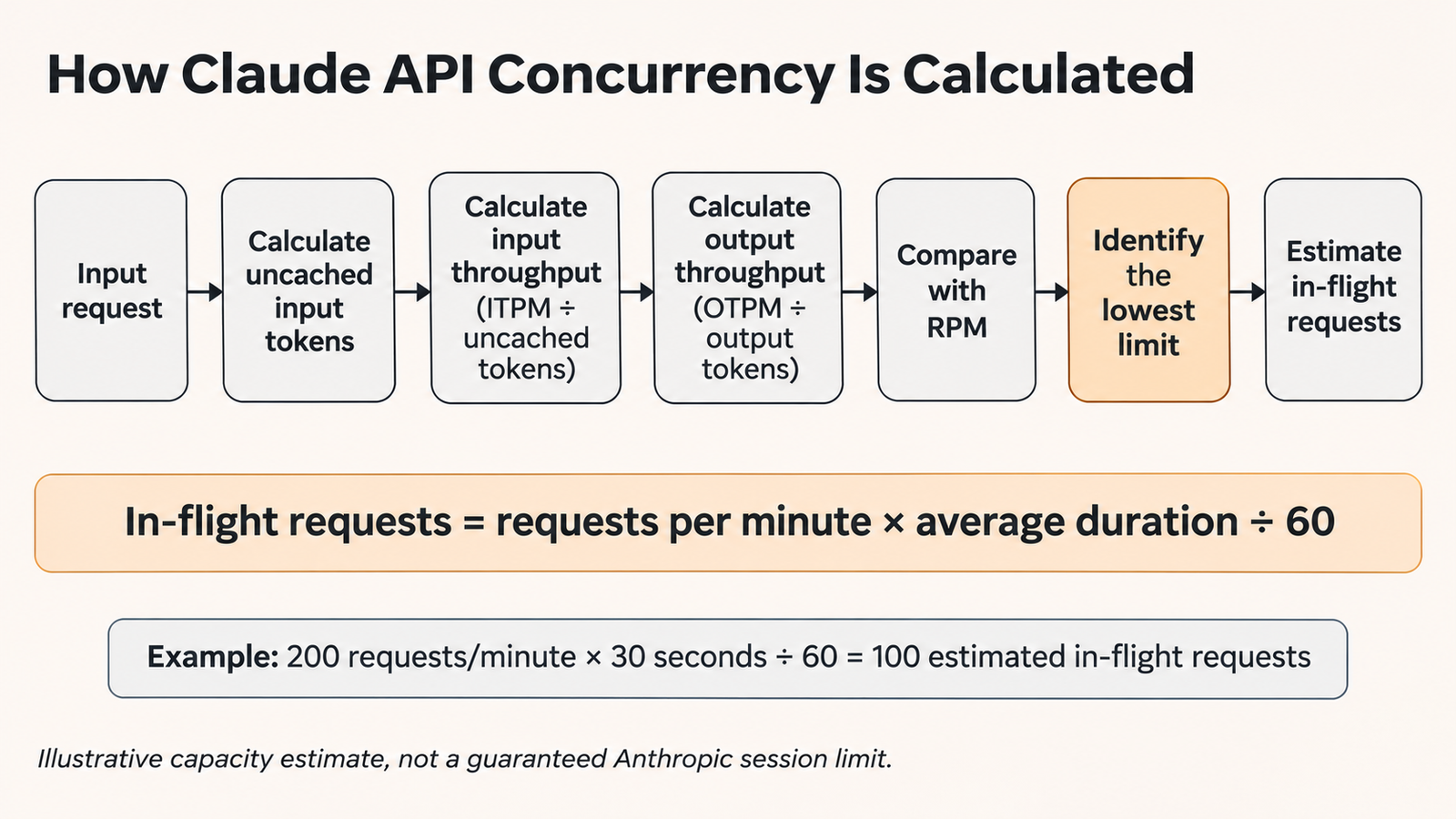
An illustrative way to estimate concurrency from published rate limits.

The API publishes per-minute limits, not a cap on simultaneous connections. To estimate concurrency, work out how many requests per minute each limit allows for your workload, take the lowest, and multiply by how long a request lasts.

The formula

Estimated in-flight requests = permitted requests per minute × average request duration in seconds ÷ 60.

Permitted requests per minute is the smallest of three numbers:

  • your RPM limit;
  • your ITPM limit divided by the input tokens that count against it per request;
  • your OTPM limit divided by the output tokens per request.

The result is a sustainable average for a steady workload. It doesn’t promise that a given number of requests can start at the same instant.

Worked example 1: an output-limited workload

This illustrative workload runs on the Start tier with Opus 5, which allows 1,000 RPM, 2,000,000 ITPM and 400,000 OTPM.

  1. Each prompt is 20,000 tokens, and 80% of them are read from the prompt cache. Cache reads don’t count toward ITPM on this model, so each call counts 20,000 × 0.2 = 4,000 uncached input tokens.
  2. Input allows 2,000,000 ÷ 4,000 = 500 calls per minute.
  3. Each response is 2,000 tokens. Output allows 400,000 ÷ 2,000 = 200 calls per minute.
  4. RPM allows 1,000 calls per minute.
  5. The lowest of 500, 200 and 1,000 is 200 calls per minute, so output is the binding limit.
  6. With an average call lasting 30 seconds, in-flight requests come to 200 × 30 ÷ 60 = 100.

Output binds here because each response is long relative to the uncached prompt. On Opus 5.5, the RPM figure would rise to 4,000, but the answer would stay at 200 calls a minute because the token limits are the same. Even then, 100 is an average to plan around, and bursts above it can still trigger 429 errors.

Worked example 2: an input-limited workload

This second illustrative workload uses the same Start-tier limits for Opus 5, but each request summarises a fresh document.

  1. Each prompt is 50,000 tokens. Every document is new, so the cache hit rate is 0% and all 50,000 tokens count toward ITPM.
  2. Input allows 2,000,000 ÷ 50,000 = 40 calls per minute.
  3. Each summary is 1,000 tokens. Output allows 400,000 ÷ 1,000 = 400 calls per minute.
  4. RPM allows 1,000 calls per minute.
  5. The lowest of 40, 400 and 1,000 is 40 calls per minute, so input is the binding limit.
  6. With an average call lasting 15 seconds, in-flight requests come to 40 × 15 ÷ 60 = 10.

Caching changes this case sharply. If a 30,000-token instruction block were cached and only 20,000 tokens per call were new, input would allow 2,000,000 ÷ 20,000 = 100 calls per minute. Output would still allow 400, so the binding limit would rise from 40 to 100 calls a minute.

Where the estimate breaks down

The formula assumes steady request sizes and durations, which real traffic rarely has. Long and short prompts mix, streaming responses hold connections open longer, and network latency and queueing add time that the model isn’t using. Retries add load at the moment you can least afford it.

The rate limits are also enforced more finely than a minute. Anthropic uses a token bucket that refills continuously, and notes that a limit of 60 RPM might be enforced as one request per second. Sharp rises in an organisation’s traffic can also hit separate acceleration limits, so Anthropic advises ramping up gradually.

Two details help planning. ITPM is estimated when a request starts and corrected as it runs. OTPM counts only tokens actually generated, so a high max_tokens setting doesn’t use up the allowance on its own. Most teams plan well below the theoretical maximum to leave room for bursts and retries.

How prompt caching raises effective input throughput
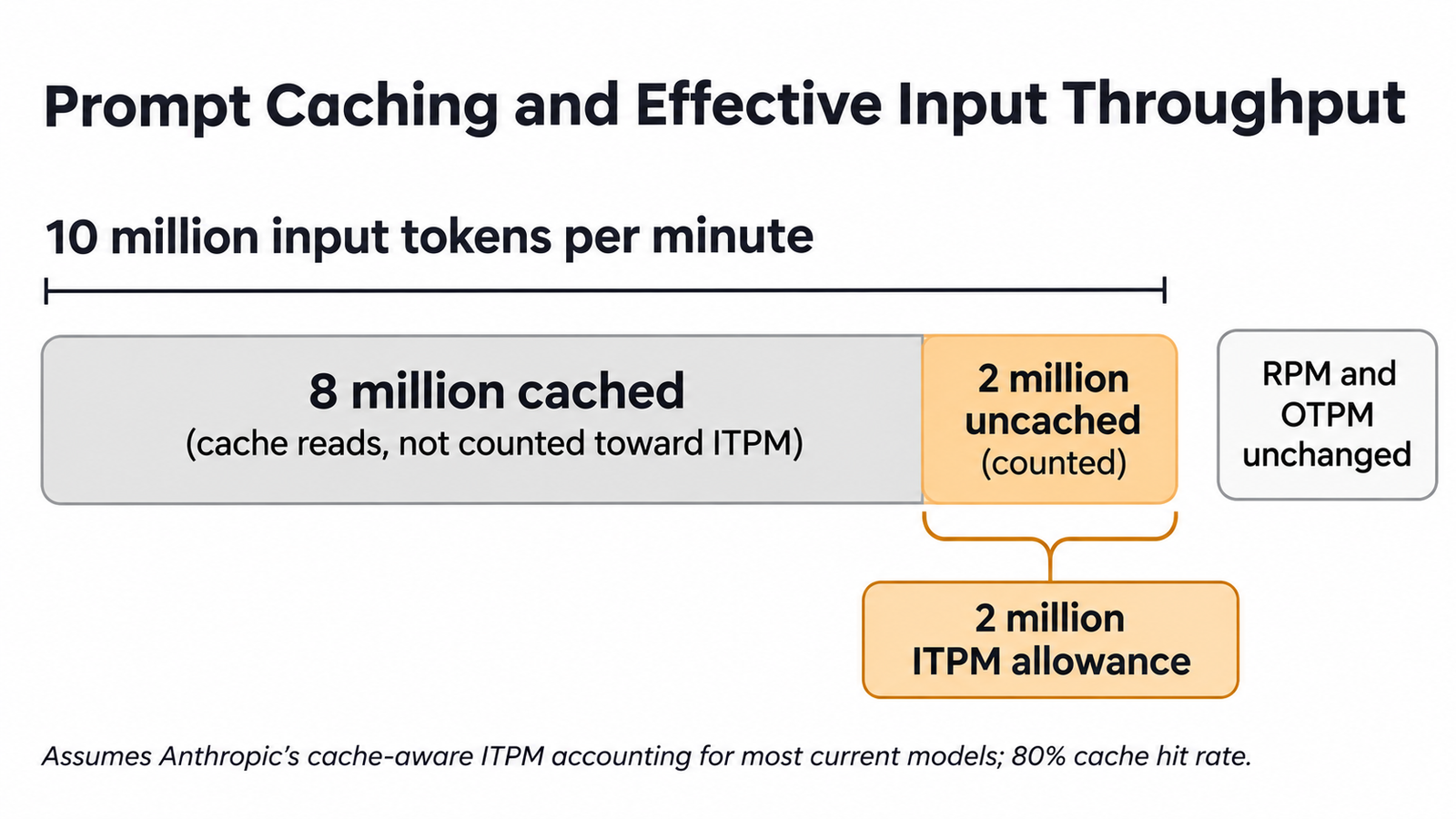
At an 80% cache hit rate, a 2 million ITPM limit can carry about 10 million input tokens a minute.

For most Claude models, only uncached input tokens count toward ITPM. The API reports three kinds of input token: input_tokens after the last cache breakpoint, cache_creation_input_tokens written to the cache, and cache_read_input_tokens read from it. The first two count toward ITPM, and cache reads don’t.

Anthropic’s own example uses a 2,000,000 ITPM limit and an 80% cache hit rate. In that case, 20% of incoming tokens count, so the limit supports 2,000,000 ÷ 0.2 = 10,000,000 total input tokens per minute: 2 million uncached and 8 million cached.

The benefit applies only to the input limit. Caching doesn’t raise RPM or OTPM, and the first request that writes a cache entry still counts in full. The retired Claude Haiku 3.5 is an exception, because it counts cache reads toward ITPM. Billing for cached tokens follows a separate price schedule from rate limiting. Our guide to structuring prompts for caching covers how to keep a stable prefix that the cache can reuse.

What happens when you hit a limit

Exceeding any one limit returns an HTTP 429 with the type rate_limit_error that names the limit you crossed. When the response includes a retry-after header, Anthropic says to wait that many seconds, because earlier retries will fail. A 429 caused by the monthly spend cap carries no retry-after header and keeps failing until access resumes, so retrying it won’t help.

Successful responses carry rate-limit headers you can use to schedule work before you hit a wall:

  • anthropic-ratelimit-requests-limit, -remaining and -reset track requests.
  • anthropic-ratelimit-input-tokens-limit, -remaining and -reset track input tokens.
  • anthropic-ratelimit-output-tokens-limit, -remaining and -reset track output tokens.
  • anthropic-ratelimit-tokens-limit, -remaining and -reset show whichever token limit is most restrictive right now.

The reset headers use RFC 3339 timestamps, and the token “remaining” values are rounded to the nearest thousand. A scheduler can slow its dispatch rate as remaining capacity falls, which avoids most 429s in the first place.

When 429s do arrive, use exponential backoff with random jitter so that many workers don’t retry at the same moment. Anthropic’s official SDKs retry automatically, twice by default, and honour retry-after. A shared queue with a fixed concurrency cap is usually safer than letting each worker retry on its own.

Workspace limits and Priority Tier

Organisation limits are the ceiling, and workspace limits can be set lower to stop one team or app using everything. Without an override, a workspace inherits the organisation’s limit. The Rate Limits API can set workspace overrides for requests, input and output tokens per minute, cache-aware input tokens per minute, tokens per minute, tokens per day and tool uses per second. The lower of the workspace and organisation values applies, and changes take effect within about an hour.

Priority Tier is a separate capacity commitment measured in input and output tokens per minute for a specific model. Anthropic says new commitments are no longer available for purchase, though existing contracts continue until they end. Priority requests still draw on the ordinary rate limits, and traffic beyond the commitment falls back to the standard tier.

Claude.ai, Claude Code and API limits are separate

Usage limits on Claude.ai and Claude Code subscriptions are a different system from the API rate limits above. Anthropic bills the API separately from paid Claude plans, and its support documentation explains how the two relate. For plan allowances, check the current articles on Claude’s help centre.

How Claude API rate limits compare with other providers

Other providers combine request limits, token throughput, account tiers, daily caps and per-model rules in different ways, so their figures can’t be compared directly. Our overview of AI API rate limits across providers sets them side by side, and our guide to LLM cost per task shows how to price the same workloads.

Frequently asked questions

Does the Claude API have a fixed concurrent-session limit?

The rate-limit documentation doesn’t list one. Concurrency follows from the per-minute limits and request length, so a workload with short responses can run far more parallel calls than one producing long outputs.

Can multiple applications share the same Anthropic API rate limits?

Yes. Every key in an organisation draws on the same organisation limits, and the anthropic-workspace-id response header shows which workspace a request counted against. Giving each application its own workspace with lower overrides stops one from using all the capacity, though the organisation limits still cap the total.

What is the difference between a 429 rate-limit error and a server error?

A 429 means your organisation has used its allowance, so the fix is to slow down or wait for retry-after. A 500 signals an internal error and a 529 signals that the API is overloaded for everyone. Both are temporary and worth retrying with backoff.

Can prompt caching increase Claude API request concurrency?

Only when input tokens are the binding limit. Caching leaves RPM and OTPM unchanged, so an output-bound workload gets no extra concurrency from it.


Keep reading

Claude API rate limits

Claude API Rate Limits in 2026: How Many Requests Can You Run?

Claude API rate limits on the Start tier allow most current models 2,000,000 input tokens and 400,000 output tokens per minute, with 1,000 or 4,000 …
Claude Fable 5.2

Claude Fable 5.2 vs Opus 5.5: Is the Higher Price Worth It?

Specifications and prices checked against Anthropic’s documentation on 11 November 2026. Claude Fable 5.2 charges $8 per million input tokens and $40 per million output …
Prompt Caching

Your AI API Is Reprocessing the Same Tokens. Stop Paying for It.
Prices verified against official documentation on 10 November 2026. API pricing changes often; check the linked pages before relying on any figure. Most AI applications …
Anthropic IPO valuation

Anthropic IPO: The $895 Billion Question Behind Its Valuation

Last updated: 9 November 2026. Latest confirmed development: Anthropic’s amended S-1, filed on 2 November, still leaves the share count and the IPO price range …

Claude Fable 5.2 vs Opus 5.5: Is the Higher Price Worth It?

Claude Fable 5.2

Specifications and prices checked against Anthropic’s documentation on 11 November 2026.

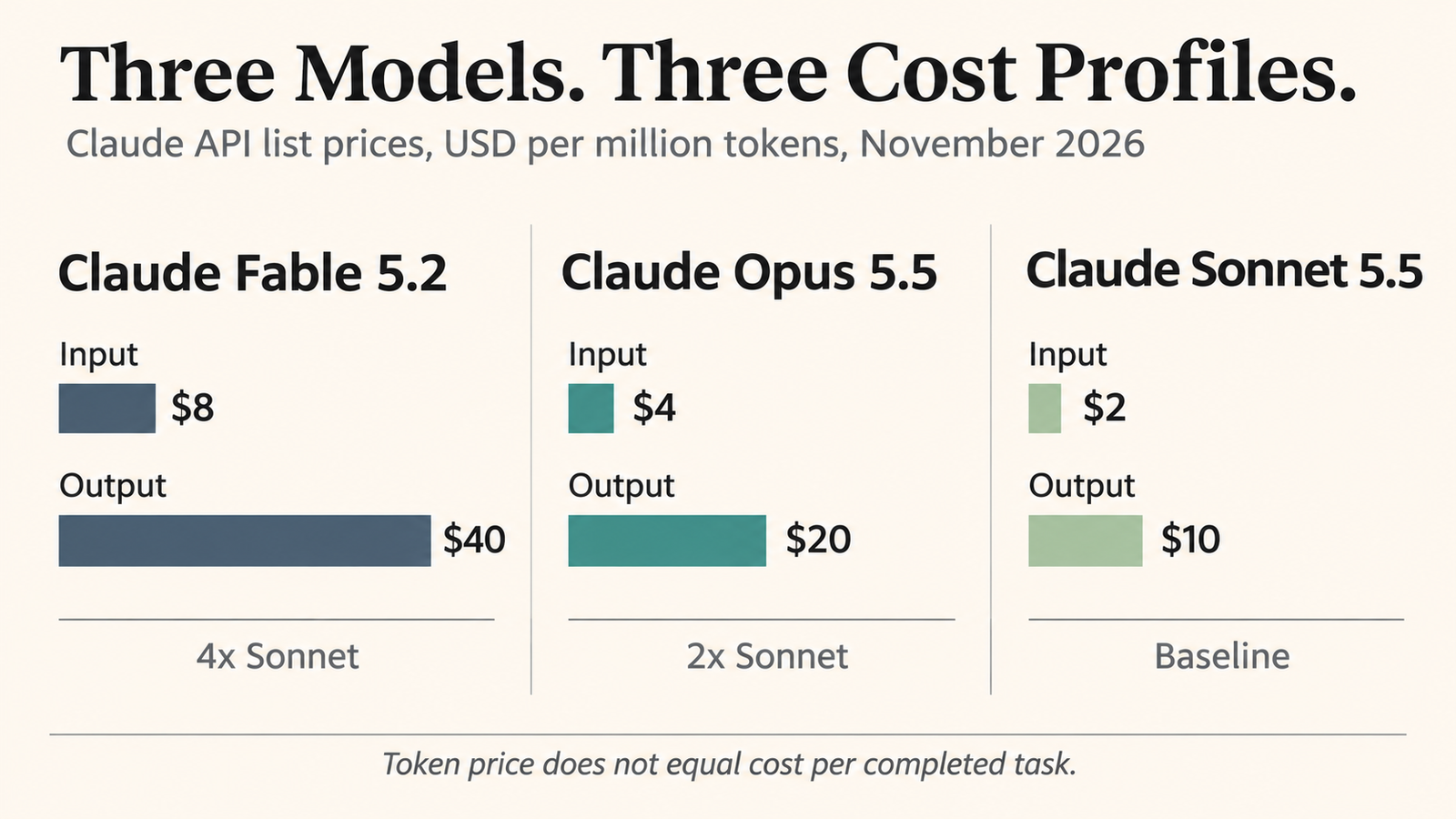
Claude Fable 5.2 charges $8 per million input tokens and $40 per million output tokens. That is exactly twice the price of Claude Opus 5.5 and four times Sonnet 5.5. Yet in Anthropic’s own coding tests, Fable 5.2 at High effort matched Opus 5.5’s best score for about half the cost per task.

Both facts are true at once, and the gap between them is the story. The price list tells you what a token costs. It doesn’t tell you how many tokens a model needs to finish a job, how often it gets the job right, or which effort setting you chose. This article works through the evidence Anthropic has published, the independent measurements available so far, and where the information stops.

Key Takeaways
  • Claude Fable 5.2 is Mythos 5.2 with stronger safeguards. Anthropic says the two are the same underlying model; Mythos access requires verification.
  • Its architecture is undisclosed. Anthropic publishes no parameter count, dense or mixture-of-experts design, or training compute.
  • It costs 2x Opus 5.5 and 4x Sonnet 5.5 per token, but cache reads cost the same $0.20 on Fable and Opus.
  • Fable 5.2 is 20% cheaper than Fable 5.1 on every standard rate, with fast mode newly available at double price.
  • Effort settings matter as much as the model. At High, Fable matched Opus’s best FrontierCode score for $6.72 against $12.82 per task. Max cost $44.70 and scored lower than Xhigh.
  • Retention is a deployment question. Fable 5.2 requires 30-day data retention unless Anthropic authorises zero retention.
  • Judge models on cost per successful task. Token price ignores attempts, effort, caching and human review.

Quick Navigation


What Claude Fable 5.2 actually is

Claude Fable 5.2 is Anthropic’s most capable generally available model, released on 9 November 2026 alongside Claude Mythos 5.2. Anthropic positions both for “the most ambitious, open-ended technical work”, and it is available today on the Claude API, Amazon Bedrock, Google Cloud and Microsoft Foundry under the model ID claude-fable-5-2.

The relationship with Mythos is the first thing to understand. In its launch announcement, Anthropic says “Claude Fable and Claude Mythos are the same underlying model.” Fable carries stronger cybersecurity and biology safeguards, which is why Anthropic can offer it to everyone. Mythos 5.2 has fewer of those restrictions and is limited to organisations approved through Anthropic’s Cyber Verification Program or Life Sciences Verification Program. Enterprise customers can also reach it through Claude Security.

So Mythos is not a bigger model or a different architecture. It is the same model with a different safety envelope and a different access agreement. For most developers, that means Fable 5.2 is the whole model. For security researchers and biology labs, it means some legitimate work will hit Fable’s safeguards and may justify applying for Mythos access.

What Anthropic has disclosed about Claude Fable 5.2’s architecture

Very little, and it is worth being plain about that. The 260-page system card does not state a parameter count, does not say whether the model is dense or a mixture-of-experts design, and does not disclose training compute. Any figure you see for Fable 5.2’s size is speculation.

What the card does describe is training data: “a proprietary mix of publicly available information from the internet”, plus public and private datasets, user data where users permitted training, and synthetic data from other models. Its knowledge cutoff is June 2026. That cutoff is about what the model learned during training. Anything more recent depends on web search or retrieval tools in the application around it.

Claude Fable 5.2 specifications

The model documentation lists a 1-million-token context window and a maximum output of 128,000 tokens. It accepts text and images and produces text. Its reliable knowledge cutoff and training data cutoff are both June 2026.

There are a few API differences to plan for. Forced tool use, through tool_choice set to any or tool, returns an error. Sampling parameters such as temperature, top_p and top_k should be left out.

How Claude Fable 5.2 handles thinking and effort

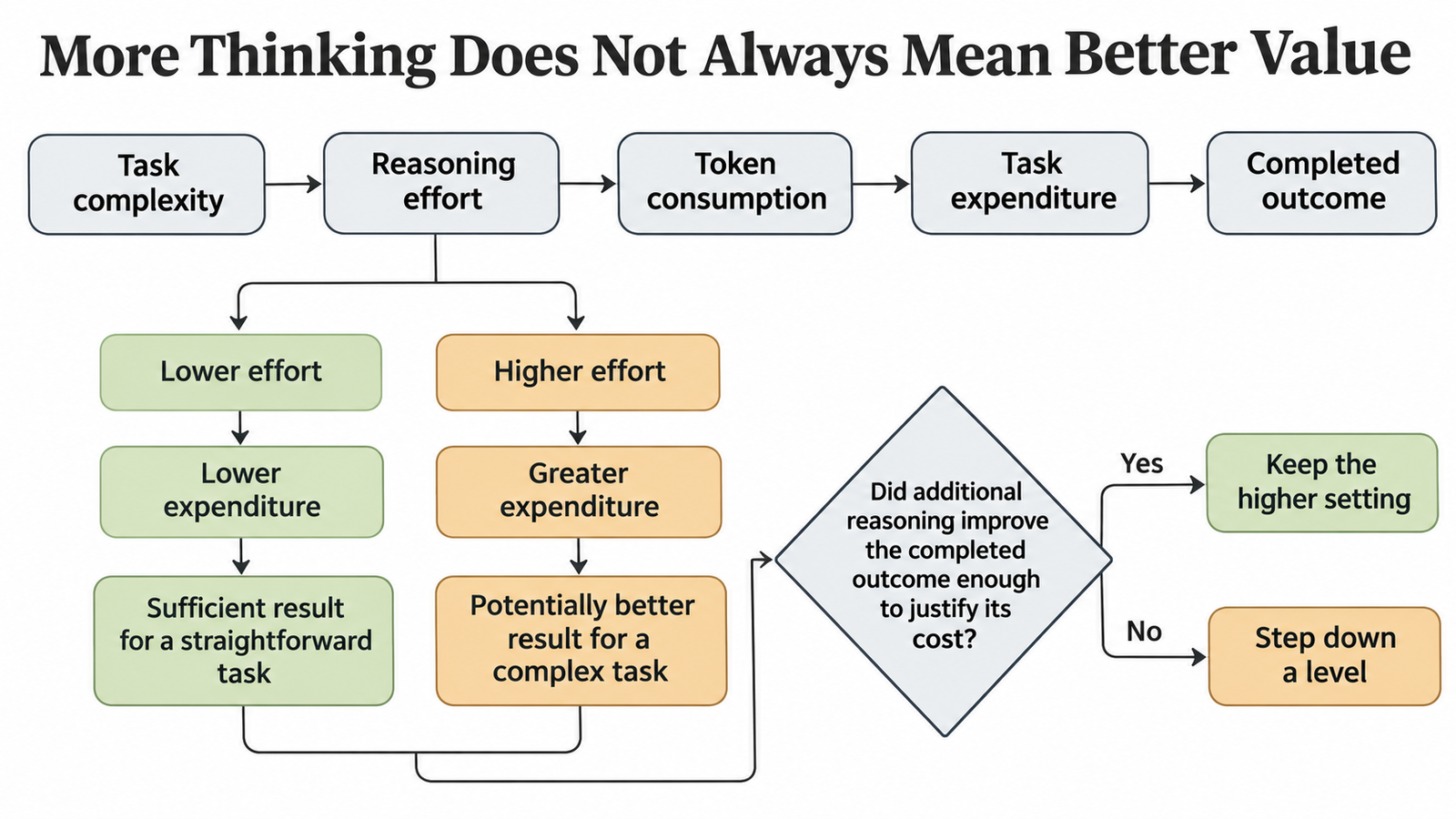
Fable 5.2 uses adaptive thinking, and it is always on: the model decides how much to reason before answering, and developers can’t turn it off. What developers control is the effort parameter, which runs from low through medium, high and xhigh to max. Higher effort lets the model spend more tokens thinking and working.

The defaults differ by product. On the Claude API, Fable 5.2 defaults to high, according to Anthropic’s effort documentation. The launch post says Medium is the default in the Claude apps and Claude Code. Opus 5.5 defaults to medium on the API, and Sonnet 5.5 to high. A team that moves from Opus to Fable without setting effort explicitly is changing two things at once.

Claude Fable 5.2 safety, refusals and data retention

Fable 5.2 sits behind classifiers: separate systems that inspect traffic and block requests in sensitive areas. The system card describes a three-stage pipeline for cybersecurity. A probe reads the model’s internal activations on all traffic, a lightweight classifier scores anything flagged, and a trained language-model classifier makes the final call. When a request is blocked, it isn’t simply refused. Anthropic routes cybersecurity requests to Opus 4.8 and biology requests to Opus 5, and a small set of AI-development topics also fall back to Opus 5.

False positives are the practical problem. A penetration tester asking about an exploit chain, or a researcher asking about protein structure, can look like misuse to a classifier. Anthropic says that in early testing across claude.ai, Claude Code and Cowork, it saw “about 55% fewer blocks with Fable 5.2 compared with Fable 5.1”, including about 60% fewer in cybersecurity and 40% fewer in biology. Those are Anthropic’s figures from its own products, not an independent audit.

The system card adds a less flattering detail. On a model-level test of harmful requests, Fable 5.2’s harmless-response rate on the API was 93.74%, against 94.71% for Fable 5.1, and 96.49% against 99.41% on claude.ai. Its over-refusal rate on benign claude.ai prompts fell from 0.34% to 0.19%. Fewer blocks and slightly lower model-level caution arrive together. Anthropic’s position is that the classifier layer remains “as robust as” Fable 5.1’s.

Why the 30-day retention rule matters

The documentation is direct: “Claude Fable 5.2 requires 30-day data retention and isn’t available under zero data retention unless expressly authorized by Anthropic.” Anthropic says the retention supports safety monitoring.

For teams under zero-data-retention agreements, this is a procurement issue, not a footnote. Proprietary code, customer records and confidential documents sent to Fable 5.2 are retained for 30 days unless Anthropic authorises otherwise. The launch post mentions Enterprise Frontier Safeguards, a private-beta option that runs monitoring inside a customer’s own infrastructure. Legal and security teams should read the terms themselves rather than assume an existing agreement covers the new model.

What changed in Claude Fable 5.2 from Fable 5.1

The headline change is price. Every standard rate fell by 20%, and fast mode, which Anthropic’s pricing page doesn’t list for Fable 5.1, is now available.

AreaFable 5.1Fable 5.2
Input / output per million tokens$10 / $50$8 / $40
Cache read$0.25$0.20
5-minute / 1-hour cache write$12.50 / $20$10 / $16
Fast modeNot listed$16 / $80, up to 2.5x output speed
Output speedBaselineUp to 30% faster (Anthropic, from testers)
Context / max output1M / 128K1M / 128K
FrontierCode 2.0 (Xhigh)32.4%49.1%
Rate limit bucketShared with Fable 5Separate, same size

Fast mode deserves care. The fast mode documentation says it runs the same model with a faster inference configuration, and raises output tokens per second, not time to first token. It doubles every price, isn’t available with the Batch API, and doesn’t share cached prefixes with standard-speed requests.

Claude Fable 5.2 vs Opus 5.5 vs Sonnet 5.5

The three models share more than their prices suggest. All have a 1-million-token context window, 128,000-token output and a June 2026 knowledge cutoff, according to Anthropic’s models overview.

List prices from Anthropic's pricing page, 11 November 2026. Cache reads cost $0.20 per million on both Fable 5.2 and Opus 5.5.
Fable 5.2Opus 5.5Sonnet 5.5
Released9 Nov 202622 Sep 202628 Sep 2026
Input / output per million$8 / $40$4 / $20$2 / $10
Cache read per million$0.20$0.20$0.10
5-minute cache write$10$5$2.50
ThinkingAdaptive, always onAdaptive, always onAdaptive
API default effortHighMediumHigh
Anthropic’s latency ratingModerateModerateFast
Input tokens per minute (Start tier)500,0002,000,0002,000,000

Two rows change the economics. Cache reads cost $0.20 per million on both Fable 5.2 and Opus 5.5, so the 2x gap narrows for agents that reuse a large prompt. And Fable 5.2’s Start-tier rate limit is a quarter of Opus 5.5’s, which matters more than price for high-volume work. Our comparison of Claude Opus and Sonnet covers the two cheaper models in more depth.

Anthropic’s own advice is to “start with Claude Opus 5.5”, which it calls its “strongest daily driver”. It suggests moving up to Fable for scope and complexity, or down to Sonnet or Haiku for speed and cost. That recommendation is a useful corrective to the idea that the newest, most expensive model is the default upgrade.

What the Claude Fable 5.2 benchmarks show

Anthropic’s launch table compares Fable 5.2 with Fable 5.1, Opus 5.5 and rival models. It reports each model’s highest available effort unless noted, and it gives no Sonnet 5.5 scores. The selection below uses the published figures.

Benchmark (what it measures)Fable 5.2Fable 5.1Opus 5.5
FrontierCode 2.0: whether code patches would be merged49.1% (Xhigh)32.4% (Xhigh)45.5%
FrontierSWE v2: ultra-long engineering tasks69.9%56.3%62.3%
OSWorld 2.1: operating a computer (offline, partial)89.3%83.5%87.2%
AutomationBench: business workflows across 47 apps51.4%31.4%42.5%
Humanity’s Last Exam with tools: expert questions74.2%65.6%67.7%
AA-Briefcase: knowledge work (rubric / Elo)66.1% / 1,78561.5% / 1,66961.2% / 1,800

The detail behind the numbers matters. FrontierCode 2.0 is run by Cognition on 132 tasks taken from real pull requests, scored on whether the model produces a diff a maintainer could merge without edits. FrontierSWE v2, from Proximal, has 34 tasks with a 20-hour budget per attempt. OSWorld’s figure is a partial score; Fable 5.2’s strict pass rate on the same set is 54.6%. These are all third-party benchmarks, but the results in the table were reported by Anthropic.

Fable 5.2 doesn’t win everywhere. On AA-Briefcase it leads on the rubric score but trails Opus 5.5 on the Elo rating. Google’s Gemini 4 Carbon beats both on AutomationBench, at 53.9%.

What independent testing adds

Artificial Analysis, which runs its own evaluations through Anthropic’s API, places Fable 5.2 at Max effort first of 74 models on its Intelligence Index, with 65 points. Opus 5.5 at Max scores 59, and Sonnet 5.5 at Max scores 55.

Its cost figures are more revealing. Fable 5.2 at Max cost $26.54 per index task and generated 275 million output tokens across the run. At High effort, it scored 62 for $9.08 per task, less than Opus 5.5 at Max ($10.04). Sonnet 5.5 at Max cost $10.02 per task, almost the same as Opus, because it produced 335 million output tokens to Opus’s 218 million. These independent results use a different methodology from Anthropic’s, so the two sets should not be merged into one ranking.

The Claude Fable 5.2 effort cost curve

The clearest evidence that effort is a budget decision comes from section 8.4 of the system card, where Cognition reports FrontierCode 2.0 results at every effort level. The card doesn’t explain how cost per task is calculated, so treat the cost column as Anthropic’s reported average.

In Anthropic's FrontierCode 2.0 results, Fable 5.2 at Max effort cost three times as much as Xhigh and scored lower.

Effort
ScoreCost per taskCost per score point
Fable 5.2 Low34.2%$2.10$0.06
Fable 5.2 Medium37.6%$2.48$0.07
Fable 5.2 High45.3%$6.72$0.15
Fable 5.2 Xhigh49.1%$14.19$0.29
Fable 5.2 Max45.7%$44.70$0.98
Opus 5.5, best setting45.5%$12.82$0.28

Moving from High to Xhigh adds 3.8 points for 2.1 times the cost. Moving from Xhigh to Max triples the cost and lowers the score. The card notes that 22 of 660 Max attempts timed out, and counting those as failures puts Max at 44.4%. Artificial Analysis found a similar plateau: Fable 5.2 scored 62 at both High and Xhigh, with Xhigh costing 63% more per task.

That makes effort a resource-allocation choice. A request to explain a 40-line function gains nothing from deep reasoning, and Low or Medium on Sonnet or Opus is enough. A production bug that spans services may justify High. A multi-week migration, where a failed patch costs hours of engineering review, is the case where Xhigh earns its price. Using one effort setting for all three wastes money on the first and may underserve the third.

Claude Fable 5.2 cost per task: token price is not task price

A simple formula keeps the comparison honest:

Total task cost = input + output + cache writes + cache reads + any premium (fast mode, US-only inference)

Cost per successful task = total spend ÷ tasks completed successfully

The denominator is the part most comparisons skip. A model that needs fewer attempts can cost less per finished task, even at a higher price per token.

A worked example

Take an illustrative agent session. A 100,000-token prompt is written to the cache once and then read on each of 50 turns. Each turn also caches 3,000 new tokens and generates 2,000 output tokens. Assume, unrealistically, that both models use the same number of tokens.

On Fable 5.2, the session costs $7.50: $1.00 for the first cache write, $1.00 for cache reads, $1.50 for new cache writes and $4.00 for output. On Opus 5.5 it costs $4.25. The gap is 1.76x, not 2x, because cache reads cost the same on both. Output makes up more than half of Fable’s bill, so output-heavy work feels the full doubling.

Now add the denominator. Suppose, hypothetically, that a migration step costs $10 per attempt on Opus 5.5 with a 50% success rate, and $20 on Fable 5.2 with an 80% success rate. Expected model spend per success is $20 on Opus and $25 on Fable. But if each failed attempt costs 30 minutes of engineer review at $100 an hour, the totals become $70 for Opus and $37.50 for Fable. These success rates are invented for illustration. The point is that human review time can outweigh token prices, and only your own evaluations can supply real success rates. Our guide to calculating LLM cost per task sets out the method in more detail, and our prompt caching guide shows how the cache terms change these totals.

Which Claude model should you use?

There is no single answer, but the evidence supports a sensible starting map.

WorkloadStart by evaluatingWhy
Everyday coding and code reviewSonnet 5.5 or Opus 5.5 at MediumCapable and cheaper; Opus is Anthropic’s recommended default
Complex debuggingOpus 5.5 at High, then Fable 5.2 at HighFable High matched Opus’s best FrontierCode score for about half the cost per task
Long agentic coding and migrationsFable 5.2 at High or XhighLargest measured gains (FrontierSWE v2, FrontierCode); failures are expensive
Difficult technical researchFable 5.2Strongest Humanity’s Last Exam and science results
High-volume applicationsSonnet 5.5, or Haiku 5.5Unit costs and rate limits; Fable’s limits are a quarter of Opus’s
Regulated or confidential dataAll three, after legal reviewFable 5.2’s 30-day retention requirement

The final choice depends on task complexity, how costly a failure is, latency needs, rate limits, the tools in the loop and how much human supervision is available. Anthropic also describes using Fable 5.2 as an orchestrator or adviser over cheaper models, which can capture some of its judgement without paying its rates on every token.

FAQ

What is Claude Fable 5.2?

Claude Fable 5.2 is Anthropic’s most capable generally available model, released on 9 November 2026 for complex reasoning and long-horizon agentic work.

How much does Claude Fable 5.2 cost?

$8 per million input tokens and $40 per million output tokens on the Claude API. Cache reads cost $0.20, and fast mode costs $16 and $80.

What is the difference between Claude Fable 5.2 and Mythos 5.2?

They are the same underlying model with different safeguards. Mythos 5.2 has fewer cybersecurity and biology restrictions and is available only to verified organisations.

Is Claude Fable 5.2 better than Opus 5.5?

On most of Anthropic’s published benchmarks, yes, including FrontierCode 2.0 and FrontierSWE v2. Opus 5.5 still edges it on AA-Briefcase’s Elo rating, and Anthropic recommends Opus as the starting model.

Is Claude Fable 5.2 worth the additional cost?

It depends on the task and the effort setting. It is most likely to pay off on long, complex work where failed attempts are expensive.

What is the context window of Claude Fable 5.2?

One million tokens, with up to 128,000 output tokens per response.

What is adaptive thinking in Claude Fable 5.2?

It is the model’s built-in reasoning mode, which is always on. Developers control its depth with the effort parameter, from Low to Max.

Does Claude Fable 5.2 support prompt caching?

Yes. Cache reads cost $0.20 per million tokens, five-minute writes $10 and one-hour writes $16.

Is Claude Fable 5.2 available through the API?

Yes, as claude-fable-5-2 on the Claude API, Amazon Bedrock, Google Cloud and Microsoft Foundry. Bedrock and Google-managed Google Cloud set their own prices.

Which Claude model should developers choose in 2026?

Anthropic recommends starting with Opus 5.5 and moving to Fable 5.2 or Sonnet 5.5 based on your own evaluations of quality, cost and speed.


Keep reading

Claude API rate limits

Claude API Rate Limits in 2026: How Many Requests Can You Run?

Claude API rate limits on the Start tier allow most current models 2,000,000 input tokens and 400,000 output tokens per minute, with 1,000 or 4,000 …
Claude Fable 5.2

Claude Fable 5.2 vs Opus 5.5: Is the Higher Price Worth It?

Specifications and prices checked against Anthropic’s documentation on 11 November 2026. Claude Fable 5.2 charges $8 per million input tokens and $40 per million output …
Prompt Caching

Your AI API Is Reprocessing the Same Tokens. Stop Paying for It.
Prices verified against official documentation on 10 November 2026. API pricing changes often; check the linked pages before relying on any figure. Most AI applications …
Anthropic IPO valuation

Anthropic IPO: The $895 Billion Question Behind Its Valuation

Last updated: 9 November 2026. Latest confirmed development: Anthropic’s amended S-1, filed on 2 November, still leaves the share count and the IPO price range …

Your AI API Is Reprocessing the Same Tokens. Stop Paying for It.
Prompt Caching

Prices verified against official documentation on 10 November 2026. API pricing changes often; check the linked pages before relying on any figure.

Most AI applications send the same thing over and over. A coding agent resends its system prompt and 40 tool definitions on every turn. A support bot attaches the same policy manual to every question. Prompt caching lets the provider reuse the work it already did on that repeated opening section, and bill it at a fraction of the normal input price.

The discount is real. On Claude Opus 5.5, a cached read costs 5% of normal input. But the first request usually costs more than normal, retention windows are short, and a single changed character near the top of a prompt can wipe out the saving. The useful question is when prompt caching lowers your total bill, and how many repeated requests it takes to get there.

Key Takeaways
  • Prompt caching reuses processed state, not text. Providers keep the model’s computed KV states for a repeated prefix and skip that work on the next matching request.
  • Cached reads cost 90% to 97.5% less than normal input across the models here, from Haiku 5.5’s 90% to Fable’s 97.5%.
  • Writes usually cost more than normal input: 1.25x to 2.5x on Anthropic and OpenAI. Kimi’s five-minute write has no premium.
  • Break-even is quick when reuse is reliable: two requests for a five-minute or 30-minute cache, three for one-hour or 12-hour retention.
  • Hit rates decide the outcome. On Opus 5.5, below about 21% hits (five-minute) or 51% hits (one-hour), caching costs more than not caching.
  • Only the cached prefix is discounted. In our 20-request agent example, a 95% read discount produced a 78% total saving.
  • On Anthropic, caching also expands throughput, because cache reads don’t count towards ITPM. On OpenAI, they do.

Quick Navigation


What prompt caching actually reuses

A large language model processes a prompt from the first token to the last. For each token, it computes intermediate values called keys and values, and holds them in what engineers call the KV cache. Prompt caching keeps those computed states after the request ends, so the next request with the same opening sequence can skip that work.

What gets reused is the processed state, not your text. OpenAI’s prompt caching guide says its cache stores “key-value (KV) tensors, not the tokens themselves”. Anthropic’s documentation says it keeps KV cache representations and cryptographic hashes in memory, and does not store the raw text of prompts.

This is also why order matters so much. The cache can only reuse a prefix: an unbroken run of tokens from the very start of the prompt. The model still has to process everything after the reused point, including the user’s new question. Change something early, and every token after it has to be computed again.

That makes some content ideal for caching: long system instructions, tool definitions, reference documents, few-shot examples, and the earlier turns of a long conversation. They are large, they change rarely, and they naturally sit at the front.

How each provider implements prompt caching

The four providers covered here use the same underlying idea in different ways.

  1. Anthropic builds the cacheable prefix in a fixed order: tools, then system instructions, then messages. Developers mark cache breakpoints with a cache_control field, up to four per request. A single top-level cache_control turns on automatic caching, which moves the breakpoint forward as a conversation grows. The minimum cacheable prompt is 512 tokens on current models. Each hit refreshes the cache’s lifetime at no extra cost.
  2. OpenAI caches automatically on supported models, with a minimum of 1,024 tokens on GPT-5.6 and later. Requests are routed to machines partly by a hash of the prompt’s opening tokens, and an optional prompt_cache_key influences that routing. On GPT-5.6 and later, developers can also place explicit breakpoints and choose a 30-minute or 12-hour minimum lifetime in the Responses API.
  3. Google offers two mechanisms. Implicit caching is on by default for Gemini 2.5 and newer models, with a 4,096-token minimum on Gemini 4 Argon. Explicit context caching lets developers create a named cache with a chosen time-to-live, billed partly by the hour. The Gemini caching docs say explicit caching is not supported on Gemini 4 models.
  4. Moonshot’s Kimi API caches repeated prefixes automatically with a default five-minute lifetime. It offers a one-hour option, and each hit resets the clock.

Prompt caching prices across Claude, GPT, Gemini and Kimi

Here are the published rates as of 10 November 2026, in US dollars per million input tokens. “Discount” is the cached rate relative to normal input.

ModelNormal inputCached readShort writeLong writeDiscount on reads
Claude Haiku 5.5 (prompts up to 100K tokens)$0.10$0.01$0.125 (5 min)$0.20 (1 hr)90%
Claude Haiku 5.5 (prompts over 100K tokens)$0.50$0.05$0.625 (5 min)$1.00 (1 hr)90%
Claude Sonnet 5.5$2.00$0.10$2.50 (5 min)$4.00 (1 hr)95%
Claude Opus 5.5$4.00$0.20$5.00 (5 min)$8.00 (1 hr)95%
Claude Fable 5.2$8.00$0.20$10.00 (5 min)$16.00 (1 hr)97.5%
Claude Fable 5.1$10.00$0.25$12.50 (5 min)$20.00 (1 hr)97.5%
GPT-6.1 Terra$1.00$0.05$1.25 (30 min)$2.50 (12 hr)95%
Gemini 4 Argon (to 30 Nov 2026)$2.00$0.10No write price listed (implicit only)None95%
Gemini 4 Argon (from 1 Dec 2026)$4.00$0.20No write price listed (implicit only)None95%
Kimi K3.1 Pro$2.00$0.20$2.00 (5 min)$4.00 (1 hr)90%
Kimi K3.1 Pro Highspeed$4.00$0.20$4.00 (5 min)$8.00 (1 hr)95%

Sources: Claude API pricing, OpenAI API pricing, Gemini API pricing, Kimi API pricing.

Three details are easy to miss. Claude Fable 5.2 now sits above Fable 5.1 at a lower price, and both remain available. Haiku 5.5’s 100,000-token threshold counts cached tokens too, so a long cached prompt can push a whole request onto the higher rate. And Kimi’s five-minute write costs the same as normal input. There is no premium.

Ranking providers by the cheapest cached token would be misleading. Retention windows, write premiums and how reliably a cache hits differ more than the headline discounts do.

Where Gemini prompt caching differs

Gemini 4 Argon’s implicit caching has no separate storage fee, but Google gives no guarantee of a hit. Its docs say savings are passed on “if your request hits caches”. In multi-turn use, Gemini 4 caches the full previous request only if the new one adds at least 2,050 tokens.

Explicit caching on older models such as Gemini 3.1 Pro Preview works differently. Cached tokens cost $0.20 per million instead of $2.00, but storage is billed at $4.50 per million tokens per hour, and the TTL defaults to one hour. Each read saves $1.80 per million tokens, so a one-million-token cache needs 2.5 reads an hour just to cover its storage. That is a meter running in the background, not a token multiplier, and it needs a different calculation from Anthropic’s or OpenAI’s.

Why prompt caching starts with a surcharge

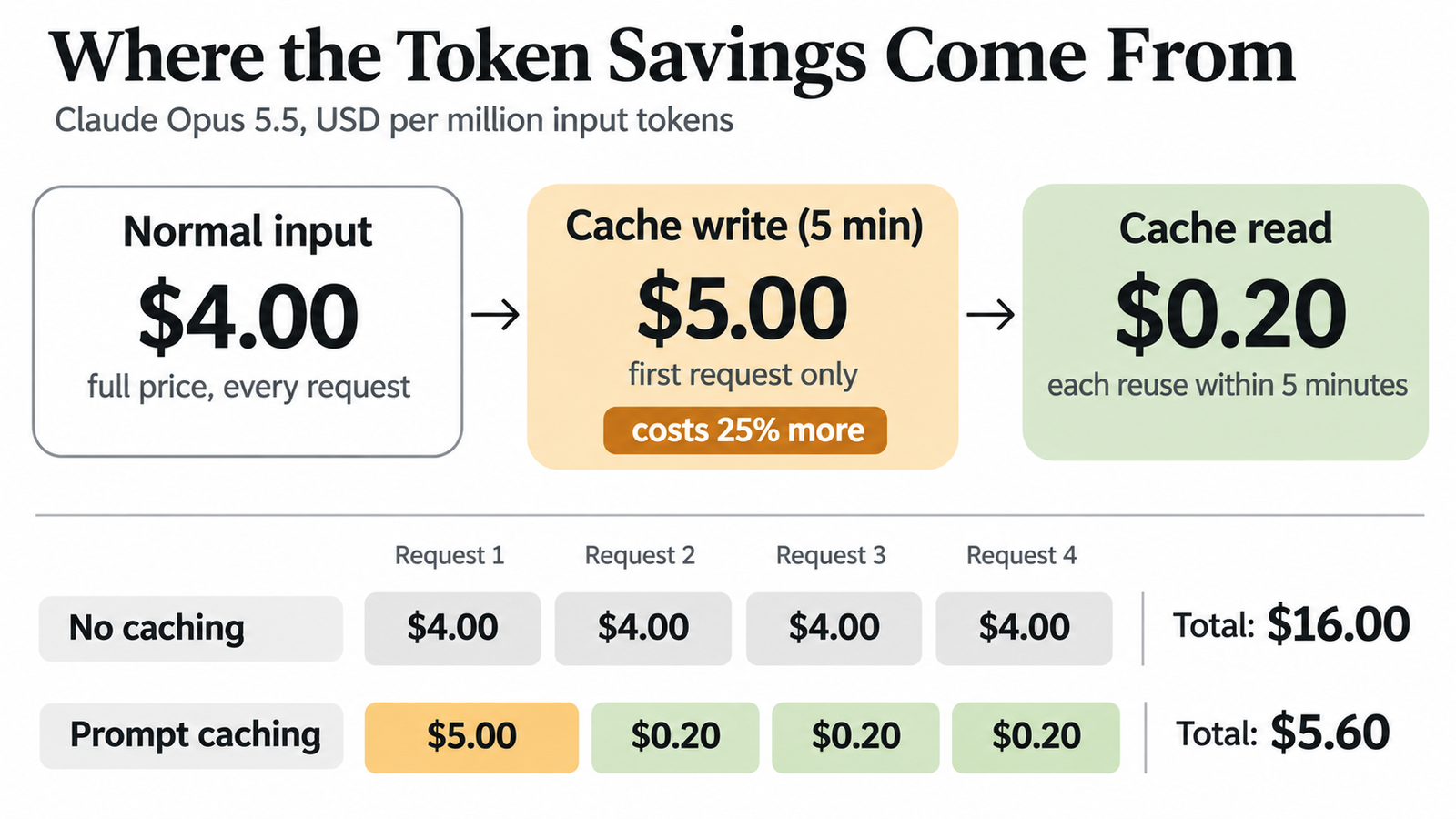
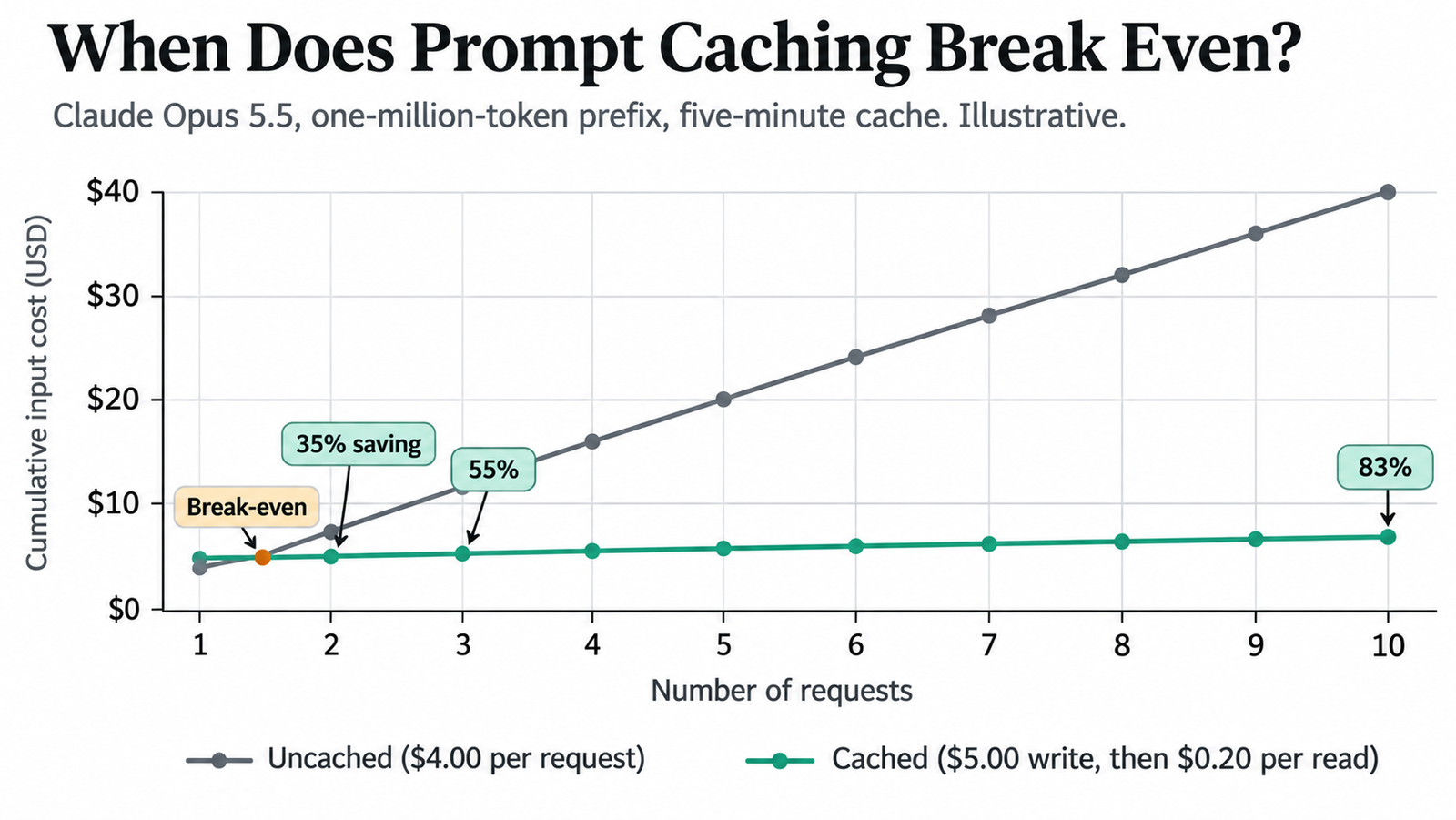
The first request pays a 25% premium to write the cache; each reuse within five minutes costs 5% of normal input. Prices from Anthropic's pricing page, 10 November 2026.

Anthropic and OpenAI don’t charge separately for storage. Instead, they charge more for the tokens on the request that writes the cache.

On Anthropic, a five-minute write costs 1.25 times normal input and a one-hour write costs twice normal input. OpenAI’s GPT-5.6 and later models charge 1.25 times for the 30-minute lifetime and 2.5 times for 12 hours. OpenAI’s guide is explicit that this “is not an additive fee”. Each input token is billed once, at either the uncached, cached-read or cache-write rate.

So the first request in any cached workload costs more than it would without caching. On Opus 5.5, writing a one-million-token prefix for five minutes costs $5.00 instead of $4.00. If nothing reads that cache before it expires, you have paid 25% extra for nothing. Reuse it three times within the window, though, and four requests cost $5.60 instead of $16.00.

When does prompt caching break even?

The worked examples below use Claude Opus 5.5 and make one simplifying assumption: every request reuses the same, fully cacheable one-million-token prefix, and each one arrives within the cache’s lifetime. New input and output are left out for now. They are not discounted, so they don’t change the comparison.

The five-minute cache

Without caching, each request costs $4.00 for the prefix. With caching, the first costs $5.00 to write and each later one costs $0.20 to read.

Illustrative calculation assuming a fully reusable one-million-token prefix and every request inside the five-minute cache window.
RequestsUncachedCached (5-min write)Saving
1$4.00$5.00−25%
2$8.00$5.2035%
3$12.00$5.4055%
10$40.00$6.8083%
50$200.00$14.8092.6%

Two requests are enough. After that, the saving creeps towards 95% but never reaches it, because the write premium is always in the total.

The one-hour cache

The one-hour write costs $8.00, double normal input.

RequestsUncachedCached (1-hour write)Saving
1$4.00$8.00−100%
2$8.00$8.20−2.5%
3$12.00$8.4030%
10$40.00$9.8075.5%
50$200.00$17.8091.1%

Two requests lose money. Three are needed. The longer window costs more up front, so it takes more reuse to recover. It is worth paying for only when requests are spaced more than five minutes apart but less than an hour, where the five-minute cache would keep expiring.

A break-even formula for prompt caching

The general case fits on one line. Let P be the normal input price, W the cache-write price, R the cache-read price and N the total number of requests, including the first one that writes the cache.

Uncached cost is N × P. Cached cost is W + (N − 1) × R. Caching saves money when:

W + (N − 1) × R < N × P

Rearranged, that means N must be greater than (W − R) ÷ (P − R). In plain terms: divide the extra cost of writing by the amount each read saves.

For Opus 5.5 with a five-minute cache, (5.00 − 0.20) ÷ (4.00 − 0.20) = 1.26, so two requests break even. With a one-hour cache, (8.00 − 0.20) ÷ 3.80 = 2.05, so three are needed. Because the result depends only on the ratios between prices, it works for any provider.

Cache optionWrite multipleRead multipleRequests needed
Anthropic 5-minute (Sonnet 5.5, Opus 5.5)1.25×0.05×2
Anthropic 1-hour (Sonnet 5.5, Opus 5.5)2×0.05×3
Anthropic 5-minute (Haiku 5.5)1.25×0.1×2
OpenAI 30-minute (GPT-6.1 Terra)1.25×0.05×2
OpenAI 12-hour (GPT-6.1 Terra)2.5×0.05×3
Kimi 5-minute (K3.1 Pro)1×0.1×Saves from the first hit; never costs more
Kimi 1-hour (K3.1 Pro)2×0.1×3

What prompt caching does not discount

The 95% discount applies only to the cached prefix. New user input is billed at the full rate, and so is output, which usually costs several times more per token than input.

Consider an illustrative Opus 5.5 agent session of 20 requests, each arriving within five minutes of the last. Each request carries a 50,000-token cached prefix, 2,000 tokens of new input and 1,000 tokens of output, at $20 per million.

Without caching, the session costs $4.56. With a five-minute cache, it costs $1.00: $0.25 for the first write, $0.19 for 19 reads, $0.16 for the new input and $0.40 for output. That is a 78% saving, not 95%, and output is now 40% of the bill. Raise the output to 5,000 tokens a request and the saving falls to 58%.

Haiku 5.5’s threshold creates a second trap. A request with 95,000 cached tokens and 4,000 new ones costs $1.35 in input per thousand requests. Push it to 100,000 cached tokens and 5,000 new ones, and the whole request moves onto the higher rate: $7.50 per thousand, 5.6 times as much. The cache hit doesn’t protect you, because the Claude pricing page counts cache reads and writes towards prompt length.

Our guide to calculating LLM cost per task shows how retries and failed attempts change these figures further.

Why prompt caching hit rates matter more than discounts

Break-even maths assumes the cache hits. In production, it often doesn’t.

A simple way to see the risk is to treat every miss as a fresh write. If a fraction h of requests hit and the rest write, the cached prefix costs less than uncached input only when h is greater than (W − P) ÷ (W − R). On Opus 5.5 that works out to about 21% for the five-minute cache, and 51% for the one-hour cache. On GPT-6.1 Terra’s 12-hour cache, it is 61%. Below those rates, caching costs more than not caching at all. On Kimi’s five-minute cache, a miss costs the same as normal input, so the threshold is zero.

A one-line cache miss

The most common culprit is something dynamic near the top of the prompt. Take a system prompt that begins:

You are a support assistant. Current time: 2026-11-10 14:03:27.

That timestamp changes every second, so no two requests share a prefix beyond the first sentence. Everything after it, including 30,000 tokens of policy documents and tool definitions, is processed from scratch every time. With caching enabled on Anthropic, each request also pays the 1.25x write rate. Move the timestamp into the final user message and the prefix becomes stable again.

Other causes are less obvious. Tool definitions that arrive in a different order invalidate everything on Anthropic, because tools sit at the front of the prefix. Anthropic’s docs also note that changing tool_choice, adding an image or toggling extended thinking can invalidate the message cache. User IDs, request IDs, reordered retrieval results and inconsistent whitespace do the same.

The throughput advantage of prompt caching

Caching also affects capacity, which many teams overlook. Anthropic’s rate-limit documentation says cache reads do not count towards its input-tokens-per-minute (ITPM) limit. Uncached input and cache writes still count.

Anthropic’s own example is a 2,000,000 ITPM limit with an 80% cache-hit rate. Under those assumptions, an application could process about 10 million total input tokens a minute: 2 million uncached plus 8 million read from cache. Opus 5.5’s Start-tier limit is exactly 2 million ITPM.

That is not a lifted rate limit. Output-token and request limits still apply, and every cache write counts in full. OpenAI’s guide takes the opposite approach: “Cached input tokens still count toward tokens-per-minute limits.” For document processing, RAG and coding agents that hit rate limits before budgets, this difference can decide which provider works at scale. Our breakdown of Claude API rate limits and concurrent request capacity covers the tier figures.

Designing an application around prompt caching

Good cache design is mostly about discipline in how prompts are assembled.

Put what never changes first: tool definitions, then system instructions, then reference documents, then the conversation, with the new user turn last. Serialise tool definitions in a fixed order and keep their wording identical between deployments. Keep timestamps, user names and session IDs out of the prefix entirely.

Use breakpoints where content changes at different speeds. On Anthropic, a breakpoint after the tools and system prompt, and another after a large document, lets one cache survive when the other changes. Anthropic checks at most 20 positions back from each breakpoint for a match, so very long conversations may need a second breakpoint.

Then measure. Anthropic reports cache_creation_input_tokens and cache_read_input_tokens on every response. OpenAI reports cached_tokens and cache_write_tokens, and Gemini reports total_cached_tokens. If reads are near zero, caching is costing you money. Don’t pad prompts to reach a minimum length. Prompts below 512 tokens on current Claude models, or 1,024 on recent OpenAI models, can’t be cached at all, and the saving on a short prompt is tiny anyway. Our context engineering guide covers how to structure agent context more generally.

When prompt caching is not worth it

Some workloads gain little. One-off requests can’t amortise a write. Short prompts fall below the minimum, or save fractions of a cent. Batch jobs that run once an hour won’t benefit from a five-minute cache, and an hourly cache only pays off if each prefix is reused at least three times.

Prompts whose early sections change on every request, such as freshly retrieved documents placed before the instructions, will rarely hit. Low-traffic applications face the same problem: if requests are spread thinly across many different prefixes, most caches expire unread.

In those cases, the cheaper options may be a shorter prompt, the Batch API, or a smaller model. Caching rewards repetition. Without it, the write premium is just extra cost.

FAQ

What is prompt caching?

Prompt caching is an API feature that stores the model’s processed state for a repeated prompt prefix, so later requests with the same prefix are cheaper and faster to process.

How does prompt caching reduce AI API costs?

It bills the reused portion of the input at a cached-read rate, typically 5% to 10% of normal input. Output and new input are billed normally.

How much cheaper are cached tokens than normal input tokens?

Between 90% and 97.5% cheaper for the models covered here. GPT-6.1 Terra, for example, charges $0.05 per million cached tokens against $1.00 uncached.

Does prompt caching have a separate storage cost?

Only on some services. Anthropic, OpenAI and Kimi charge through a higher write rate instead. Google’s explicit context caching bills storage by the hour, for example $4.50 per million tokens per hour on Gemini 3.1 Pro Preview.

How many API calls does prompt caching need to pay off?

Two requests within the cache lifetime for Anthropic’s five-minute and OpenAI’s 30-minute caches, assuming a fully reused prefix. One-hour and 12-hour caches need three.

What is the difference between a cache write and a cache read?

A write processes and stores the prefix for the first time, at a premium. A read reuses that stored prefix on a later request, at a steep discount.

Does prompt caching improve rate limits?

On Anthropic, yes: cache reads don’t count towards input-tokens-per-minute limits. On OpenAI, cached tokens still count towards tokens-per-minute limits.

Why do prompt cache hits fail?

Usually because something early in the prompt changed: a timestamp, a reordered tool list, a different image or a new setting. Expired caches and prompts below the minimum length also miss.

Does prompt caching reduce output-token costs?

No. Output tokens are billed at the normal rate whether or not the input was cached.

Which AI providers support prompt caching?

Anthropic, OpenAI, Google and Moonshot’s Kimi API all support it, but with different mechanics, minimum lengths, retention windows and pricing.


Keep reading

Claude API rate limits

Claude API Rate Limits in 2026: How Many Requests Can You Run?

Claude API rate limits on the Start tier allow most current models 2,000,000 input tokens and 400,000 output tokens per minute, with 1,000 or 4,000 …
Claude Fable 5.2

Claude Fable 5.2 vs Opus 5.5: Is the Higher Price Worth It?

Specifications and prices checked against Anthropic’s documentation on 11 November 2026. Claude Fable 5.2 charges $8 per million input tokens and $40 per million output …
Prompt Caching

Your AI API Is Reprocessing the Same Tokens. Stop Paying for It.
Prices verified against official documentation on 10 November 2026. API pricing changes often; check the linked pages before relying on any figure. Most AI applications …
Anthropic IPO valuation

Anthropic IPO: The $895 Billion Question Behind Its Valuation

Last updated: 9 November 2026. Latest confirmed development: Anthropic’s amended S-1, filed on 2 November, still leaves the share count and the IPO price range …

Anthropic IPO: The $895 Billion Question Behind Its Valuation

Anthropic IPO valuation

Last updated: 9 November 2026. Latest confirmed development: Anthropic’s amended S-1, filed on 2 November, still leaves the share count and the IPO price range blank. As of our research on 9 November, we found no later amendment.

A month ago, some investors were reportedly talking about valuing Anthropic at up to $2 trillion. By 6 November, Bloomberg reported that prospective buyers were discussing a range of $1.2 trillion to $1.3 trillion, and that some were weighing $1.1 trillion. That is the headline version of the Anthropic IPO valuation story.

The filing tells a more useful one. Anthropic’s November 2 S-1/A shows $17.0 billion of revenue in a single quarter and a nine-month net loss of $104.0 billion, most of it non-cash. It also shows roughly $895.4 billion in aggregate compute and infrastructure commitments. Read together, those numbers explain more about the price buyers will pay than any single bid range does.

Key Takeaways
  • Valuation talk has fallen in reports, not filings: from up to $2 trillion earlier in the year to $1.2 trillion to $1.3 trillion, with one source citing $1.1 trillion.
  • The S-1/A confirmed fast growth and an operating loss: $16.96 billion of Q3 revenue, and a $567 million loss after a profitable Q2.
  • About 91% of the $104.0 billion nine-month net loss is a non-cash fair-value charge on convertible notes, which should end once the existing notes convert.
  • The $895.4 billion is a commitment schedule, not debt. Half of it is leases that have not commenced, and about $213.8 billion is conditional or terminable.
  • The 13.2x ratio shows scale, not solvency. The more useful test is $69.8 billion due in 12 months against $131.8 billion of cash and short-term investments.
  • Commitments could grow. The filing estimates a further $150 billion to $175 billion under arrangements with no fixed dollar figure.
  • Price, size and date are unconfirmed. All three are blank or absent in the filing.

Quick Navigation


Anthropic IPO valuation: what is confirmed and what is reported?

The figures in circulation come from very different places. Some are in a document Anthropic filed with the Securities and Exchange Commission. Others come from unnamed people describing investor conversations. This table keeps them apart.

ItemFigure or developmentEvidence status
Amended registration statementS-1/A (Amendment No. 1) filed 2 November 2026SEC-filed
Q3 2026 revenue$16.96 billion (three months to 30 September)SEC-filed
Nine-month 2026 revenue$33.24 billion, against $2.55 billion a year earlierSEC-filed
Aggregate commitmentsAbout $895.4 billion, substantially all compute and infrastructureSEC-filed
$1.2T to $1.3T valuation rangeDiscussed by prospective buyers, per Bloomberg, 6 NovemberAnonymous-source reporting
$1.1T lower endSome buyers weighing it, “one of the people said” (Bloomberg)Anonymous-source reporting
Earlier $2T expectationsInvestors expected up to $2 trillion earlier in the year, per ReutersPress-reported
Last private valuation$965 billion post-money, $65 billion Series H, 28 May 2026Company-disclosed
IPO timingRoadshow expected from the week of 9 November, pricing the week after, per ReutersAnonymous-source reporting
IPO price range and share countBlank in the amended filingSEC-filed (blank)
Commitments relative to revenueAbout 13.2 times annualised Q3 revenueCalculated
Disclosed figures come from the SEC filing; valuation ranges come from anonymous-source press reports and are not offering terms.

How the Anthropic IPO valuation talk changed

Three numbers mark the slide. Reuters reported that earlier in the year, investors expected an October listing at a valuation of up to $2 trillion. Bloomberg’s earlier reporting, as summarised by Investing.com, put the range investors had passed to bankers at $1.4 trillion to $1.5 trillion. Then, on 6 November, Bloomberg reported that potential buyers were discussing $1.2 trillion to $1.3 trillion, according to people familiar with the matter.

None of these is an official valuation, a filed figure, a trade or an IPO price. They describe what some buyers will discuss before formal marketing begins. For background on how the business looked before the filing, see our earlier analysis of Anthropic’s reported revenue and compute economics.

The Bloomberg report followed a sharp selloff on 5 November, when the Associated Press reported the Nasdaq composite down 4.5% in afternoon trading. AP linked the drop to rising borrowing costs, doubts about AI stock prices, and Democratic midterm gains that raised the prospect of curbs on data center construction.

What the November 2 S-1/A actually shows

The amended S-1 adds third-quarter results to the prospectus first made public on 26 October. Anthropic plans to list Class A shares on the Nasdaq Global Select Market under the symbol “ANT”. Goldman Sachs and Morgan Stanley head the underwriting list. The number of shares and the expected price range are still blank.

Revenue growth and the Anthropic IPO valuation

Revenue for the three months to 30 September was $16,956 million, against $1,382 million a year earlier. That is about 12.3 times the prior-year quarter, and 47% more than the $11,555 million reported for the June quarter. Nine-month revenue was $33.24 billion.

Operating results moved the other way in the latest quarter. Anthropic earned an operating profit of $974 million in Q2, then recorded an operating loss of $567 million in Q3. The filing attributes the swing mainly to $5.0 billion of compute bought under short-term commitments and a $2.0 billion non-cash charge tied to its employee donation matching programme.

Buying short-notice capacity suggests demand ran ahead of contracted supply. It also shows how fast compute costs can swing a quarter from profit to loss.

A $104 billion loss that is mostly not cash

The nine-month net loss of $104.0 billion looks alarming until you trace it. The filing says the accumulated deficit includes $94.3 billion of fair-value changes on convertible notes and derivative liabilities during the nine months, “driven by increases in our enterprise valuation”. In Q3 alone, that line was $21.9 billion of a $23.3 billion net loss.

These are accounting remeasurements. When Anthropic’s valuation rises, the notes are worth more to their holders and the company books a loss, but no cash leaves the business. The prospectus assumes the notes convert into shares immediately before the offering closes, which should end these charges on the existing notes. The filing also says Anthropic may issue up to $77.0 billion more in convertible notes, subject to conditions.

Other items need more care. Stock-based compensation was $3.3 billion over the nine months, and the donation charge was $2.0 billion. Neither is cash today, but both affect shareholders. The cash figures point the other way. Operating activities generated $6.6 billion in the first nine months of 2026, compared with $2.0 billion of cash used a year earlier.

The $895.4 billion figure behind the Anthropic IPO valuation

This is the number most easily misread. The filing describes “an aggregate committed spend of approximately $895.4 billion, substantially all of which is related to compute and infrastructure”. About $447.5 billion is expected before 31 December 2030, and “substantially all of the remainder” between 2031 and 2045.

It is not debt, money already spent, or a single year’s expense, and most of it is not on the balance sheet. It is a schedule of future purchases and leases, often agreed before the capacity is built.

The three figures are nested: the $69.8 billion falls within the $447.5 billion, which falls within the $895.4 billion. Source: Anthropic S-1/A, 2 November 2026.
How the $895.4 billion adds up

The contractual obligations section of the filing lets us rebuild the total. Our addition of the parts comes to $895.39 billion:

ComponentAmountWhat it is
Fixed obligations at 30 September$320.0 billionPurchase commitments of $313.8 billion plus operating and finance leases of $6.2 billion
Leases signed but not yet commenced$451.2 billionMostly expected to begin between 2026 and 2028, with terms up to 20 years
Commitments signed after 30 September$100.2 billionMainly data center leases and cloud hosting agreements
Short-term contracts$24.0 billion$17.4 billion at quarter end plus $6.6 billion signed afterwards

Half the headline, about 50.4%, is leases that have not started. Only about 36% sits in the payment table as of the balance-sheet date. The rest was added later or will only become an obligation when a facility is delivered. This is a large jump from the $518 billion figure reported from the confidential draft in October, which we covered in Anthropic’s earlier $518 billion infrastructure commitments.

The named contracts show the scale: at least $110.0 billion with Amazon through April 2036, about $121.3 billion with Google through July 2033 and at least $44.9 billion with Microsoft through June 2033. Each applies “regardless of actual usage”.

The filing also lists arrangements that are not in the $895.4 billion because they carry no fixed dollar commitment. It estimates payments under these at about $150 billion to $175 billion. It gives separate estimates for extra Google TPU capacity ($125 billion to $150 billion) and an AMD agreement (more than $20 billion), both outside the $895.4 billion. The headline may understate eventual spending even as parts of it stay conditional.

Not all of the total is locked. The filing says about $213.8 billion, roughly 24%, is subject to exercisable termination rights or to conditions before the arrangement begins, such as a counterparty securing financing, sites or regulatory approval. In general, Anthropic can also terminate if counterparties miss delivery dates.

That flexibility cuts both ways. Terms that let Anthropic walk away if a data center is late also mean some planned capacity may never arrive.

Anthropic Direct and the case for locking in capacity

The filing describes a shift from cloud contracts toward what Anthropic calls Anthropic Direct: leasing chips directly and hosting them in dedicated facilities run on its behalf. It says this allows the company “to separate our commitments for data center capacity from our commitments for the compute infrastructure deployed inside them”.

Data centers take years to build but are the smaller part of compute cost, so securing buildings early and buying chips later keeps the costliest decisions open. The trade-off is rigidity: leases of up to 20 years are hard to unwind if demand slows.

The filing also says some data center projects rely on “financing sources or partners who guarantee the lease obligations”. Fortune’s 4 November analysis argues that this shifts part of the risk onto chip suppliers. It is part of the financing pressures across AI infrastructure that have pushed some bond investors to demand higher yields.

The 13.2x comparison: useful for scale, easy to misuse

Here is the calculation behind a figure that has circulated widely:

  • Q3 revenue: $16.956 billion × 4 = $67.8 billion annualised
  • $895.4 billion ÷ $67.8 billion = about 13.2 times

That ratio is a scale illustration. The $67.8 billion annualises one quarter; it is not a forecast or reported annual revenue. The $895.4 billion spans almost two decades. The result is not a debt-to-revenue ratio, an enterprise-value multiple or a solvency test.

Better comparisons look at matching time frames. The filing says about $69.8 billion of obligations is expected to be paid in the 12 months after 30 September. That is roughly equal to one year of revenue at the Q3 rate (about 103%). It is also about 1.8 times the annualised Q3 compute and infrastructure expense of $39.5 billion. These are our calculations, and both comparisons assume revenue stays flat, which recent quarters suggest it won’t.

The pre-2030 figure gives a second view. A simple average of $447.5 billion over the roughly four and a quarter years to the end of 2030 is about $105 billion a year. That is an illustration, not a schedule. The filing’s own table shows payments rising from $29.2 billion in 2027 to $47.8 billion in 2029, before the leases not yet commenced are added.

Why buyers may want a lower Anthropic IPO valuation

The evidence points to several pressures at once, without showing which matters most. The market backdrop is the clearest. Bloomberg tied the lower bids directly to the post-election selloff. Reuters, citing four people familiar with investor discussions, reported that some potential buyers see $1.5 trillion as the top of their range and want a bigger discount. Truist’s Keith Lerner, quoted by Reuters, called the mood “a buyers’ strike in tech”.

Company-specific concerns also feature. Reuters reported investor attention on Anthropic’s record of quarterly losses, its capital needs and its large commitments to partners. Investors also want an October revenue figure to judge whether growth has picked up again after a recent slowdown.

At $1.2 trillion, Anthropic would be valued at about 17.7 times annualised Q3 revenue. At $2 trillion, the figure would be about 29.5 times. These are our calculations, and they ignore whether the reported figures are pre- or post-money.

The private round adds another reference point. Anthropic raised $65 billion at a $965 billion post-money valuation in May, per Reuters. Even the $1.1 trillion lower end is about 14% higher. The two figures are not directly comparable, though. A private round prices preferred shares with negotiated rights, while an IPO prices common stock in an open market and adds new shares.

Cash, liquidity and the Anthropic IPO valuation

Profitability and liquidity are different questions. Anthropic is not consistently profitable on an operating basis, but it holds a lot of cash.

At 30 September, the filing shows $95.6 billion of cash and cash equivalents and $36.3 billion of short-term investments. It also shows $14.8 billion available under a $15.0 billion revolving credit facility that matures in 2031. Cash and short-term investments of $131.8 billion cover the $69.8 billion due over the next 12 months about 1.9 times.

That cushion came mostly from investors, not from operations. Financing activities brought in $110.7 billion over the nine months. Investing activities used $36.5 billion, mainly to buy short-term securities. Spending on property and equipment was only $925 million, plus $2.0 billion of prepayments for leased assets.

The filing warns this will change. It expects more compute investment to need “significant upfront payments” before the compute is operational, and significant net cash outflows “for the foreseeable future”. It says its resources cover at least the next 12 months.

What the IPO could change

The filing says the offering aims to increase Anthropic’s “capitalization and financial flexibility” and create a public market for its shares. Proceeds are for general corporate purposes, including “investments in compute and infrastructure”. Reuters reported that some expect the deal to raise as much as $100 billion, although the filing gives no amount.

A listing would convert the existing notes and end their fair-value charges, making net income easier to read. It would give Anthropic a public currency for future raises. It would also reprice the company daily, so the commitment schedule is judged every quarter rather than once per funding round.

What the Anthropic IPO valuation debate can’t answer yet

Several facts that would settle the argument are not public. The price range and share count are blank. The split between new shares and shares sold by existing holders is unknown, which determines how much cash Anthropic actually raises.

The filing does not give a year-by-year schedule for the $451.2 billion in leases not yet commenced. Nor does it say how the $150 billion to $175 billion of variable arrangements will be phased. Most importantly, nobody outside the company knows how much of the contracted capacity will be needed by the time it arrives.

What to Watch Next

These would change this analysis, roughly in the order they are likely to appear:

  1. The next S-1 amendment: any change to the $895.4 billion or the $69.8 billion due in 12 months.
  2. The price range: the first company-set valuation signal, replacing press-reported ranges.
  3. The share count: needed to turn a price into a market capitalisation.
  4. New versus selling-stockholder shares: how much cash reaches Anthropic.
  5. The pricing date: a slip past the reported November window would be material.
  6. Updated financials, including the October revenue investors reportedly want.
  7. Timing changes confirmed by the company or a filing, not by sources.
  8. Revised investor discussions, treated as reporting, not offering terms.

FAQ

What is the Anthropic IPO valuation in 2026?

There isn’t one yet; the S-1/A leaves the price range blank. Bloomberg reported on 6 November, citing unnamed sources, that buyers were discussing $1.2 trillion to $1.3 trillion.

Why has the reported Anthropic IPO valuation fallen?

Reports link it to the AI stock selloff after the US midterms and to concerns about losses and compute commitments. Which factor weighs most is unclear.

Is the Anthropic IPO valuation higher than its last private valuation?

Based on reported discussions, yes. Anthropic’s May 2026 round valued it at $965 billion post-money. Even $1.1 trillion would be about 14% higher, though private and public valuations are not directly comparable.

How much revenue did Anthropic report in Q3 2026?

$16.96 billion for the three months to 30 September 2026, according to the S-1/A. That is about 12 times the $1.38 billion reported a year earlier.

What are Anthropic’s $895.4 billion compute commitments?

Purchase commitments and leases, substantially all for compute and infrastructure, including leases not yet started. About $447.5 billion falls before 2031 and most of the rest between 2031 and 2045.

Is the $895.4 billion current debt?

No. Most of it is future spending under contracts and leases that have not begun. About $69.8 billion is expected to be paid in the 12 months after 30 September 2026.

Has the Anthropic IPO valuation or price been set?

No. The price range is blank, and reported figures are investor discussions, not offering terms.

When is Anthropic expected to go public?

Reuters reported a roadshow from the week of 9 November and pricing the week after, while noting investor doubts about that timing. Anthropic has not confirmed a date.

Why do compute commitments matter to the Anthropic IPO valuation?

They lock in large future costs before the revenue to pay for them exists. Buyers have to judge whether demand will grow fast enough to use the capacity Anthropic has contracted.

What would change this Anthropic IPO valuation analysis?

A filed price range, the share count, the split between new and existing shares, and any change to the commitment figures in the next S-1 amendment.

This article is for informational and educational purposes only. It is not investment advice, a recommendation to buy or sell securities, or a prediction of Anthropic’s IPO valuation or share price. Reported investor discussions should not be interpreted as confirmed offering terms.


Keep reading

Claude API rate limits

Claude API Rate Limits in 2026: How Many Requests Can You Run?

Claude API rate limits on the Start tier allow most current models 2,000,000 input tokens and 400,000 output tokens per minute, with 1,000 or 4,000 …
Claude Fable 5.2

Claude Fable 5.2 vs Opus 5.5: Is the Higher Price Worth It?

Specifications and prices checked against Anthropic’s documentation on 11 November 2026. Claude Fable 5.2 charges $8 per million input tokens and $40 per million output …
Prompt Caching

Your AI API Is Reprocessing the Same Tokens. Stop Paying for It.
Prices verified against official documentation on 10 November 2026. API pricing changes often; check the linked pages before relying on any figure. Most AI applications …
Anthropic IPO valuation

Anthropic IPO: The $895 Billion Question Behind Its Valuation

Last updated: 9 November 2026. Latest confirmed development: Anthropic’s amended S-1, filed on 2 November, still leaves the share count and the IPO price range …

Claude Opus vs Sonnet: What the 2026 Price Gap Actually Buys

Claude Opus vs Sonnet

Last verified: 8 November 2026. All prices are Anthropic’s standard first-party API rates in US dollars per million tokens. They aren’t Claude Pro or Max subscription prices, and partner platforms can price differently.

A million output tokens from Claude Haiku 5.5 costs $0.50. The same million from Claude Fable 5.1 costs $50. That 100x spread across Anthropic’s four current models makes Claude Opus vs Sonnet only part of the decision, and price alone a poor guide to which model is the bargain.

The gap doesn’t mean Fable is 100 times more capable. It doesn’t even mean a task costs 100 times more, because input prices, long-prompt surcharges, caching and the number of attempts a task takes all change the bill. With all four Claude models compared on Anthropic’s API pricing, this guide shows what each costs and which workloads each one suits.

Key Takeaways
  • Output prices span 100x, from Haiku 5.5’s $0.50 to Fable 5.1’s $50 per million tokens. Opus 5.5 is exactly twice Sonnet 5.5.
  • Haiku 5.5 has a cliff at 100K tokens. Above it, the whole request is billed at five times the rate, cached tokens included.
  • List prices overstate the saving from a new model. Haiku 5.5 is 90% cheaper per token than Haiku 4.5, but Anthropic estimates about 75% cheaper per task.
  • Sonnet 5.5 is the everyday default for well-scoped coding, bug fixes and documents.
  • In Claude Opus vs Sonnet terms, Opus 5.5 earns its premium on hard, long-running work, where fewer retries can offset the higher price.
  • Fable 5.1 is Mythos 5.1 with safeguards. Mythos is restricted to vetted organisations; Fable blocks exploit development and redirects some security and biology work.
  • Caching can cut agent input costs by about three-quarters, leaving output as the bigger cost.
  • Choose by workload. Cost per successful task matters more than price per token.

Quick Navigation


Claude Opus vs Sonnet: four models, four jobs

Anthropic’s model overview positions each model for a different kind of work:

  • Claude Haiku 5.5 (released 7 October 2026) is for “high-volume, latency-sensitive tasks such as classification, extraction, and routing”. Anthropic describes it as its fastest model.
  • Claude Sonnet 5.5 (28 September) is billed as “the best combination of speed and intelligence”.
  • Claude Opus 5.5 (22 September) is for “long-running agentic coding and knowledge work”.
  • Claude Fable 5.1 (1 September) is for “demanding reasoning and long-horizon agentic work”. It’s also for cases where your evaluations of Opus 5.5 at higher effort still fall short.

All four are active and share more than the pricing suggests. Each has a 1-million-token context window, a 128,000-token maximum output, adaptive thinking and a June 2026 knowledge cutoff. The differences are speed, depth of reasoning and price. Opus and Fable have thinking always on; Sonnet and Haiku can run without it.

Claude Opus vs Sonnet: what the API prices reveal

Here are the standard rates from Anthropic’s pricing page:

ModelInputOutputCache read5-minute cache write1-hour cache write
Haiku 5.5 (prompts up to 100K tokens)$0.10$0.50$0.01$0.125$0.20
Haiku 5.5 (prompts over 100K tokens)$0.50$2.50$0.05$0.625$1.00
Sonnet 5.5$2$10$0.10$2.50$4
Opus 5.5$4$20$0.20$5$8
Fable 5.1$10$50$0.25$12.50$20

Opus costs exactly twice Sonnet on every line, caching included. Sonnet’s input and output cost 20 times Haiku’s short-prompt rates. Fable costs 2.5 times Opus. The Batch API halves input and output prices for work that can wait, and US-only inference adds a 10% premium.

For a quick sense of scale, take an illustrative short request: 8,000 input tokens (a file plus instructions) and 2,000 output tokens. Every model here uses the same newer tokenizer, so the same text gives roughly the same count on each.

ModelInput costOutput costTotal
Haiku 5.5$0.0008$0.0010$0.0018
Sonnet 5.5$0.016$0.020$0.036
Opus 5.5$0.032$0.040$0.072
Fable 5.1$0.080$0.100$0.180

At that size, even Fable’s request costs 18 cents. The differences only matter at volume, or when a long-running agent multiplies the calls.

Standard Claude API prices per million tokens. Output costs five times input on every model, and Haiku's rates rise above 100K-token prompts.

Claude Haiku 5.5: why cheap tokens aren’t always cheap tasks

Haiku 5.5 is the most interesting pricing story in the lineup, for two reasons.

The first is the 100,000-token threshold. Up to that size, Haiku costs $0.10 input and $0.50 output. Above it, every token in the request is billed at $0.50 and $2.50, including any cached tokens. Anthropic’s pricing page says a request over the threshold “pays the higher prices even when part of its prompt is a cache hit”.

That creates a cliff. On our arithmetic, a 90,000-token prompt with 2,000 tokens of output costs about $0.010. A 110,000-token prompt with the same output costs about $0.060, six times more for 22% more input. For long-document work, splitting inputs to stay under 100K tokens can matter more than the choice of model. Our comparison of LLM context windows and long-context pricing covers how other providers handle the same trade-off.

The second reason is the tokenizer. Haiku 4.5 was priced at $1 input and $5 output, so Haiku 5.5’s list prices are 90% lower. But Anthropic says the new model costs “around 75% less to run” on average. Two things close the gap.

Anthropic’s token-counting docs say Claude 4.7 and later models use a newer tokenizer that produces about 30% more tokens for the same text. That alone turns a 90% input-price cut into about 87% for the same document. Anthropic’s Haiku 5.5 page adds that the model “uses slightly more tokens per task”, which pushes the average saving down further.

The lesson applies to every model change. Price per million tokens and cost per task are different numbers, and the only reliable way to compare them is to count real prompts against the model you plan to use. The token-counting endpoint is free.

Within those limits, Haiku 5.5 is a large step up. Anthropic reports it scoring 72.4% on its offline subset of OSWorld 2.1, against 15.7% for Haiku 4.5. It suggests using it for summaries, classification, live customer support and as a subagent alongside Opus or Sonnet in coding work.

Claude Opus vs Sonnet for everyday work: where Sonnet 5.5 fits

Sonnet 5.5 kept Sonnet 5’s per-token price but, according to Anthropic, does the work more efficiently. The company says it “generates outputs 30%+ faster than Sonnet 5” and, in its testing, costs “up to 30% less per task”. The saving comes from needing fewer tokens for the same work, not from a lower price, so results will vary by workload.

Anthropic positions it for well-scoped everyday tasks: bug fixing, routine development and polished documents, slides and spreadsheets. It also says Sonnet 5.5 can follow slide templates closely enough that decks need little editing. Effort settings run from low to max. Lower effort answers faster with fewer tokens, which suits routine work.

Anthropic is also clear about where Claude Opus vs Sonnet tips the other way. It says Opus 5.5 “remains clearly stronger” at complex, open-ended work that needs sustained judgment. That’s the honest Claude Opus vs Sonnet line: Sonnet for work you can describe clearly, Opus for work where the model has to figure out what the problem is.

Claude Opus vs Sonnet: when Opus 5.5 is worth twice the price

Opus 5.5 is cheaper than the model it replaced. Its rates are $4 and $20, down from Opus 5’s $5 and $25, and Anthropic says it costs “40% less than Opus 5 on typical workloads” at default settings. That’s Anthropic’s measurement, and it depends on default effort.

In Claude Opus vs Sonnet decisions, paying twice Sonnet’s price makes sense in a few situations:

  • Long-running coding agents working across a large codebase for hours, where one wrong turn wastes everything after it.
  • Complex debugging and architectural changes where the model has to hold many interacting parts in mind.
  • Large migrations and repository analysis. Anthropic cites a tester completing a 680,000-line migration in under a day.
  • Tasks where retries are expensive, because each failed attempt repeats a large context.

The last point is where the economics can flip. If Sonnet needs three attempts at a hard task and Opus needs one, Opus can be cheaper overall. That’s a possibility to test, not a rule: on tasks Sonnet handles first time, Opus simply costs twice as much.

Claude Opus vs Sonnet speed: what Opus Fast Mode changes

Opus 5.5 also offers Fast Mode at $8 input and $40 output, twice the standard rate. Anthropic says it delivers “up to 2.5x higher output tokens per second”. It’s the same model on a faster serving configuration: “no change to intelligence or capabilities”.

The speed-up applies to output generation, “not time to first token”. If a request spends most of its time thinking before it answers, Fast Mode won’t remove that wait. For a long streamed answer, it can. A response that streams for 60 seconds might, at best, finish streaming in about 24, at double the cost. Our analysis of how Claude’s reasoning settings affect response speed found effort level usually matters more than model choice.

Fast Mode has its own rate limits, doesn’t work with the Batch API, and is available on the Claude API, Google Cloud (Anthropic managed) and Microsoft Foundry.

Claude Fable 5.1 and the Mythos connection

Fable 5.1 is the most capable model most developers can use, and the hardest to explain. Anthropic says Fable 5.1 and Claude Mythos 5.1 are “the same model, but with different levels of safeguards”.

Mythos 5.1 isn’t generally available. It’s offered to vetted organisations through trusted access programmes: a Cyber Verification Program for defensive security teams and a Life Sciences Verification Program for researchers. Anthropic says these are currently limited to US organisations, with plans to expand.

Fable 5.1 is the version with safeguards. According to Anthropic’s Fable and Mythos 5.1 announcement, it can identify software vulnerabilities in source code but won’t develop exploits. Penetration testing, exploit generation and binary-based vulnerability scanning are redirected to Opus models. Some life-sciences research questions are also routed to Opus, though Anthropic says biology safeguards now trigger 85% less often on benign questions. Opus 5.5 has its own cyber safeguards: Anthropic says cybersecurity tasks on it are mostly rerouted to Opus 4.8.

So Fable and Mythos share underlying capability but behave differently in deployment. For most coding, research and reasoning work, the safeguards won’t come up. For security work, they will.

At $10 and $50, Fable is 2.5 times the price of Opus. Anthropic’s own guidance is to reach for it when evaluations show Opus 5.5 at higher effort still isn’t good enough. Fable 5.1 did cut its cache-read price by 75% to $0.25, and Anthropic says that lowers typical workload costs by about 25%, and highly agentic ones by up to about 45%.

Claude Opus vs Sonnet: how caching changes the economics

Prompt caching stores a stable part of your prompt, such as a system prompt, tool definitions or a repository snapshot, so later requests can reuse it. You pay a premium to write the cache, 1.25 times the input price for five minutes or twice it for an hour, and then a fraction of the price to read it.

That fraction varies, which is the hidden pricing story in Claude Opus vs Sonnet comparisons. According to Anthropic’s prompt caching docs, cache reads cost 10% of input on Haiku 5.5, 5% on Sonnet and Opus, and 2.5% on Fable. The more expensive the model, the more caching saves in percentage terms.

Here’s an illustrative agent session with assumed numbers. An agent makes 40 calls in a short burst. Each call sends the same 60,000-token repository context plus 3,000 new tokens, and returns 1,500 tokens. With caching, the context is written once to the five-minute cache and read 39 times. For simplicity, the conversation history isn’t growing between calls.

ModelWithout cachingWith cachingOutput’s share of the cached cost
Haiku 5.5$0.28$0.0741%
Sonnet 5.5$5.64$1.2249%
Opus 5.5$11.28$2.4549%
Fable 5.1$28.20$5.5454%

The formula behind it: total API cost = input cost + output cost + cache-write cost + cache-read cost. Caching cut each session by roughly three-quarters. It doesn’t touch output, so after caching, output becomes about half the bill. At that point the model that writes less, or finishes in fewer steps, wins on cost.

Caching won’t help much for one-off prompts or ones that change every time, or when calls are spread out beyond the cache lifetime. It also has a minimum: prompts under 512 tokens on these models aren’t cached.

Claude Opus vs Sonnet: rate limits and throughput

Price isn’t the only constraint in Claude Opus vs Sonnet planning. Anthropic’s rate limits cap requests per minute (RPM), input tokens per minute (ITPM) and output tokens per minute (OTPM) by usage tier:

TierHaiku, Sonnet and Opus 5.5 (each)Fable 5.x
Start4,000 RPM, 2M ITPM, 400K OTPM4,000 RPM, 500K ITPM, 100K OTPM
Build10,000 RPM, 5M ITPM, 1M OTPM10,000 RPM, 1.5M ITPM, 300K OTPM
Scale13,000 RPM, 10M ITPM, 2M OTPM13,000 RPM, 4M ITPM, 800K OTPM

Fable gets a quarter of the others’ token throughput at the Start tier, and its limit is shared between Fable 5.1 and Fable 5. Opus 5.5 and Sonnet 5.5 each have their own budget. A high-volume service could hit Fable’s output ceiling long before its budget.

One useful detail: cache reads don’t count toward input-token limits, so caching raises effective throughput as well as cutting cost. Limits also differ by organisation, so check your actual numbers in the Anthropic Console. Our guide to Claude API rate limits and concurrent request capacity goes deeper into how many parallel sessions those limits allow.

Claude Opus vs Sonnet vs Haiku vs Fable: which model to use

The right Claude Opus vs Sonnet comparison isn’t cost per million tokens. It’s cost per completed task, and ultimately cost per successful production outcome, which includes retries, human review and failures. A cheaper model that needs more attempts can cost more than a dearer one that gets it right.

ModelUse this forWhyCost consideration
Haiku 5.5Classification, routing, extraction, summaries, subagents, simple codeFastest, cheapest per token, strong for its sizeStay under 100K-token prompts, or the whole request costs 5x more
Sonnet 5.5Everyday coding, bug fixes, documents and slides, general agentsBest speed-to-intelligence balance, per AnthropicUsually the default; drop effort for routine work
Opus 5.5Long-running coding agents, complex debugging, architecture, large refactors, hard knowledge workStronger sustained judgment on open-ended tasksTwice Sonnet’s price; justified when it saves retries
Fable 5.1Demanding reasoning, long-horizon agents, complex researchMost capable generally available model2.5x Opus and lower throughput; use when evaluations show Opus isn’t enough
A starting point for choosing a Claude model. Test on your own workload before committing.

Many teams will end up using more than one. A common pattern is Opus or Sonnet planning and checking work while Haiku subagents handle the high-volume steps. Whatever the mix, test on your own workload. When it comes to Claude Opus vs Sonnet, the right answer depends on how often Sonnet gets your hardest tasks right first time.

FAQ

Claude Opus vs Sonnet: what’s the difference?

Opus 5.5 is Anthropic’s model for long-running agentic coding and complex knowledge work, at $4 input and $20 output per million tokens. Sonnet 5.5 is faster and half the price, aimed at everyday development and documents.

Claude Opus vs Sonnet: is Opus 5.5 worth the higher price?

It is for complex, open-ended tasks where it avoids retries. For well-scoped tasks Sonnet handles first time, it just costs twice as much.

Is Claude Haiku 5.5 the cheapest Claude model?

Yes, at $0.10 input and $0.50 output per million tokens for prompts up to 100,000 tokens. Longer prompts are billed at $0.50 and $2.50.

What is the difference between Claude Haiku and Sonnet?

Haiku 5.5 is the fastest and cheapest model, built for high-volume tasks like classification and routing. Sonnet 5.5 handles more complex reasoning and everyday development, at 20 times Haiku’s short-prompt price.

What is Claude Fable 5.1?

Claude Fable 5.1 is Anthropic’s most capable generally available model, priced at $10 input and $50 output per million tokens. It shares its underlying model with Mythos 5.1 but adds cybersecurity and biology safeguards.

Is Claude Mythos 5.1 publicly available?

No. Mythos 5.1 is available only to vetted organisations through Anthropic’s cyber and life-sciences verification programmes, which are currently limited to US organisations.

Does Claude Haiku charge more for long prompts?

Yes. If a Haiku 5.5 prompt exceeds 100,000 tokens, the entire request is billed at $0.50 input and $2.50 output, cached tokens included.

How much does Claude prompt caching save?

Cache reads cost 10% of the input price on Haiku 5.5, 5% on Sonnet and Opus 5.5, and 2.5% on Fable 5.1. Caching doesn’t reduce output costs, so total savings depend on how much context you reuse.

What is Claude Opus Fast Mode?

Fast Mode runs Opus 5.5 on a faster serving setup for up to 2.5x higher output speed, at twice the standard price. It doesn’t shorten time to first token or change the model’s intelligence.

Claude Opus vs Sonnet: which is best for coding?

Sonnet 5.5 suits most everyday coding and bug fixing. Opus 5.5 is better for long-running agents, large refactors and hard debugging, according to Anthropic.


Keep reading

Claude API rate limits

Claude API Rate Limits in 2026: How Many Requests Can You Run?

Claude API rate limits on the Start tier allow most current models 2,000,000 input tokens and 400,000 output tokens per minute, with 1,000 or 4,000 …
Claude Fable 5.2

Claude Fable 5.2 vs Opus 5.5: Is the Higher Price Worth It?

Specifications and prices checked against Anthropic’s documentation on 11 November 2026. Claude Fable 5.2 charges $8 per million input tokens and $40 per million output …
Prompt Caching

Your AI API Is Reprocessing the Same Tokens. Stop Paying for It.
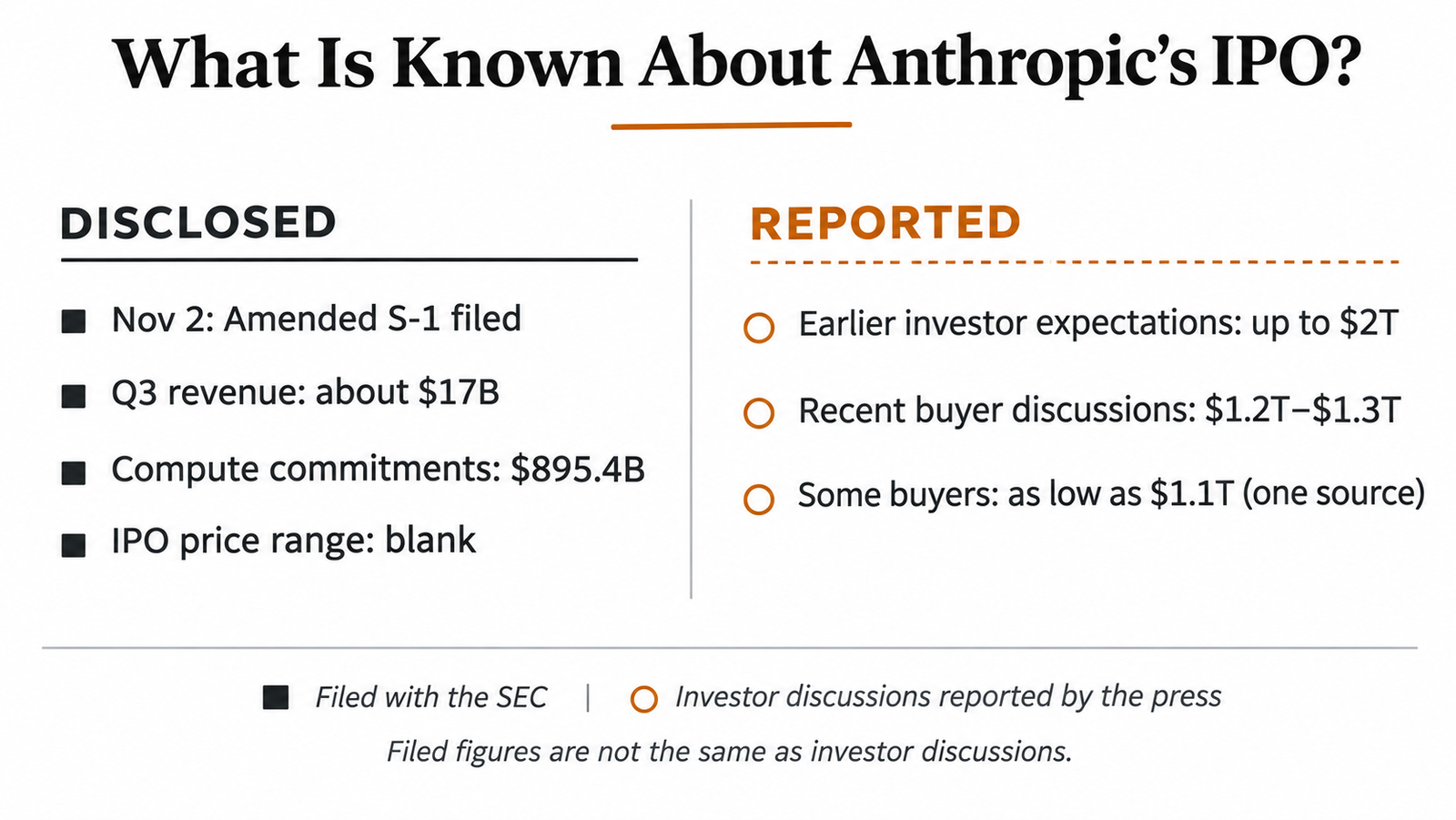
Prices verified against official documentation on 10 November 2026. API pricing changes often; check the linked pages before relying on any figure. Most AI applications …
Anthropic IPO valuation

Anthropic IPO: The $895 Billion Question Behind Its Valuation

Last updated: 9 November 2026. Latest confirmed development: Anthropic’s amended S-1, filed on 2 November, still leaves the share count and the IPO price range …

Did AI Break RSA? What DeepMind Actually Found

RSA-1024

Last verified: 8 November 2026. Both papers are unreviewed working papers, and no outside group has reproduced the results yet.

No, AI did not break modern RSA encryption. Google DeepMind reported two new weaknesses in legacy RSA-1024, found by AI agents working under human supervision, and its researchers say the results don’t threaten 2048-bit and larger RSA.

That’s less dramatic than the headlines quoting “1,600 times faster”. It’s still a real result, arriving days after OpenAI reported AI-assisted vulnerability discovery at scale in the Linux kernel. AI agents helped produce new mathematics against a cryptosystem that has been studied for decades, and 1024-bit keys are still in use in places many organisations have stopped looking.

Key Takeaways
  • AI didn’t break modern RSA. DeepMind’s findings concern legacy RSA-1024, and its researchers say 2048-bit and larger RSA isn’t threatened by them.
  • Two different problems were solved. One forges signatures without the key; the other cuts the cost of factoring many keys in a batch.
  • The 1,600× figure is theoretical. It applies to forging when an attacker controls a 32-byte part of the signed block.
  • The 3.5× figure was measured, by reproducing an earlier attack on an already-broken benchmark key, not a fresh one.
  • The 30× figure is an asymptotic estimate for the average cost of additional keys in a batch, and no implementation exists.
  • Humans stayed in charge. Agents generated and verified proofs and wrote code under human supervision, alongside experienced cryptographers.
  • Inventory legacy keys now. Firmware signing, old certificates, SSH, VPNs and HSMs are the places to check first.

Quick Navigation


What DeepMind’s RSA-1024 research actually found

DeepMind announced the work on 6 November 2026, with Pushmeet Kohli presenting it as an advance in cryptanalysis, the science of breaking codes. It’s described in two working papers published on 5 and 6 November: “Modular Roots from a Restricted Oracle” and “Fan Factories”. Dj Dvijotham and Abhradeep Thakurta led the research. Their co-authors include the cryptographers Nadia Heninger of UC San Diego and Inria, and Emmanuel Thomé of Inria.

The two papers solve different problems. The first shows how to forge certain RSA signatures without ever recovering the private key. The second makes factoring cheaper when an attacker wants to break many RSA-1024 keys rather than one. Neither has been through peer review.

The AI agents did real work, but they didn’t work alone. The Fan Factories paper says its results came from “a two-agent AI harness: one model generated the proofs, and a second model verified them.” Its algebraic identities were checked in Lean 4, a formal proof language, while calculus steps were checked numerically. Coverage of the announcement describes the agents as working under human supervision, alongside the cryptographers on the team.

The first RSA-1024 weakness: forging signatures without the key

An RSA signature proves that a message was approved by whoever holds a private key. The signer hashes the message, wraps the hash in a fixed padding format and applies the private key. Anyone can check the result with the public key. The common padding format, PKCS#1 v1.5, is defined in RFC 8017: fixed bytes, then an identifier for the hash algorithm, then the hash itself.

Padding exists partly to stop attackers from exploiting RSA’s mathematical structure. The weakness DeepMind studied applies when an attacker can get a device to sign data they partly control. Think of a hardware security module (HSM) or signing service that will sign blocks where some bytes are chosen by whoever sends the request. The paper’s title refers to this as a “restricted oracle”: a signer the attacker can query, but only through a constrained format.

The line of research goes back to a 2007 paper by Joux, Naccache and Thomé, which showed that computing RSA roots with a signing oracle can be easier than factoring. In September, Laura Shea, Miro Haller, Adam Suhl, Heninger and Thomé turned that into a practical attack on 1024-bit RSA, using an HSM as the oracle. It took about 1,380 CPU core-years of precomputation and around 4 billion signing queries.

DeepMind’s work extends that line in two ways, according to reporting on the announcement.

  1. When the attacker controls about half the block or more, PKCS#1 v1.5 padding adds almost no protection: forging is no harder than against unpadded RSA. A 1024-bit RSA block is 128 bytes, so a 64-byte field, the size of a SHA-512 hash, is half of it.
  2. When the attacker controls much less, such as a 32-byte field the size of a SHA-256 hash, the agents produced a new algorithm. DeepMind estimates it is about 1,600 times better than the previous best method for 1024-bit keys.

That 1,600× is a theoretical estimate based on how the algorithm’s cost scales. It wasn’t demonstrated by running a full attack at that scale.

What was measured is narrower. The agents’ implementation reproduced the earlier September computation against the same, already-broken 1024-bit benchmark key. It reportedly found its first root in 391 CPU core-years, about 3.5 times less than the original, running for 3.2 days on up to 300,000 CPU cores and 16 GPUs. That’s an engineering improvement on a known result in a controlled research setting. It isn’t the cracking of a fresh key belonging to a real organisation.

Forgery and factoring are different outcomes. A forger can produce valid signatures on chosen messages but never learns the private key, and needs repeated access to the signer to do it. Factoring recovers the key itself, after which the attacker can sign and decrypt anything.

The two DeepMind findings solve different problems. One forges signatures without the key; the other cheapens factoring across a batch of keys.

The second RSA-1024 weakness: factoring many keys at once

An RSA public key contains a modulus, a large number made by multiplying two secret primes. Anyone who can factor the modulus back into its primes can rebuild the private key. RSA’s security rests on factoring being impractically expensive at the key sizes in use.

The best general method is the number field sieve (NFS). Batch factoring asks a different question: if you want to factor many numbers of the same size, can you share work between them? Earlier techniques, including Coppersmith’s factorisation factory, Bernstein and Lange’s Batch NFS, and the multiple number field sieve (MNFS), showed that expensive precomputation can make each additional factorisation cheaper.

Fan Factories gives each target number its own family, or “fan”, of number fields, all fed by a shared part of the computation. The paper works out the cheapest cost per additional number for every possible precomputation budget.

The headline result: with a precomputation budget equal to one factorisation, each further 1024-bit number costs about 1/58 of a standard NFS run, which the paper says is roughly 30 times less than MNFS. The paper is careful about what that means. The figures are leading-order estimates with smaller terms set to zero, and it states that “no fan factory has been implemented”. It also notes that memory requirements and how it compares with a well-tuned NFS in practice are open questions.

So the 30× figure is about the average cost of additional keys in a batch, under asymptotic assumptions. It doesn’t mean any single RSA-1024 key can be factored 30 times faster, and it hasn’t been demonstrated against real keys. It matters for security teams because it changes the economics for an attacker targeting a large population of legacy keys. One expensive setup could then make each extra key far cheaper to break.

What the 1,600× and 30× RSA-1024 numbers really mean

The two figures describe different problems, different kinds of evidence and different attackers. Neither should be read as a general speed-up for breaking RSA.

FigureWhat it applies toKind of evidenceWhat it doesn’t mean
About 1,600×Forging 1024-bit signatures when an attacker controls a small, 32-byte part of the signed blockTheoretical estimateThat RSA signatures can generally be forged 1,600 times faster
About 3.5×Reproducing September’s attack on an already-broken 1024-bit benchmark keyMeasured, in a research settingThat a fresh, deployed key was cracked
About 30×Average cost of each additional 1024-bit key in a batch, against MNFSAsymptotic estimate, no implementationThat one RSA-1024 key can be factored 30 times faster

Adding the two together, or describing them as “1,600 times faster at breaking RSA”, gets both wrong. The signature figure needs an attacker with ongoing access to a signer. The factoring figure needs a large precomputation and a batch of targets.

RSA-1024 vs RSA-2048: why bigger keys are a different story

The number in “RSA-1024” is the size of the modulus in bits. Each added bit makes factoring harder, but not in a straight line: the cost of the number field sieve grows sub-exponentially with key size. NIST’s key-management guidance, SP 800-57, puts RSA-2048 at about 112 bits of security, the current minimum for most uses. NIST’s transition guidance already disallows generating new RSA signatures with keys shorter than 2048 bits, and allows verifying 1024-bit signatures only for legacy use.

The Fan Factories authors state: “Our results do not threaten deployed cryptosystems today that are based on 2048-bit and larger RSA.” That’s a statement about these particular findings. It isn’t a statement that RSA-2048 is safe from everything, and several other risks deserve attention:

  • Implementation flaws, such as weak padding checks, can break RSA at any key size.
  • Poor key generation and weak randomness have produced real keys that share primes and can be factored instantly.
  • Side-channel attacks extract keys from timing, power use or faults rather than from the maths.
  • Protocol and configuration mistakes, such as a signer that accepts attacker-controlled raw input, create exactly the oracle these attacks need.
  • Quantum computing threatens all RSA key sizes in the long run. NIST’s 2024 draft transition plan, IR 8547, proposed deprecating 112-bit RSA after 2030 and disallowing RSA after 2035. A final version was published in October 2026, so check it for current dates.

The September HSM paper adds a further warning. Its authors estimate that RSA with a signing oracle is 15 to 30 bits weaker than factoring-based estimates suggest, across 1024- to 4096-bit keys. That doesn’t break RSA-2048. It does mean that systems letting outsiders request raw RSA signatures deserve scrutiny at any key size.

Where RSA-1024 may still be hiding

RSA-1024 has been disallowed for new signatures under NIST guidance since the 2010s, yet it lingers in systems built when it was standard and rarely touched since. Not every old system uses it, so each one needs checking. Places worth looking include:

  • Firmware and code signing. Devices that verify updates with a key burned into hardware can’t easily change it.
  • Embedded and IoT devices, industrial controllers and network gear with long service lives.
  • Old internal certificates and private certificate authorities that never went through public-CA key-size rules.
  • SSH host and user keys generated years ago and carried between servers.
  • Older VPN appliances and their management certificates.
  • Hardware security modules, especially older models or partitions configured for raw RSA signing, which is the oracle these attacks exploit.
  • DNS and email signing. In a Sectigo podcast discussion of the September HSM research, the hosts cited figures suggesting 1024-bit RSA is still common in DNSSEC zone-signing keys and in DKIM email-signing keys. Those are their estimates, not a formal survey.
  • Archived applications and long-lived machine identities, such as service accounts and API clients, whose keys were never rotated.

To find them, start with certificate inventories and scanning tools, which report key length for every certificate they see. Server and device configurations, HSM key listings and code-signing setups need checking directly. Standard tools show key size: OpenSSL prints it for certificates and keys, and ssh-keygen -l shows it for SSH keys. Only test systems you own or are authorised to assess.

Start with an inventory. Not every old system uses RSA-1024, so verify key lengths before planning replacements.

An RSA-1024 checklist for security teams

None of this needs panic. It needs an inventory and a plan. Follow your organisation’s cryptographic policy, applicable standards and vendor guidance throughout.

  1. Inventory RSA key lengths across certificates, keys and cryptographic services.
  2. Flag every 1024-bit RSA key and certificate, including expired ones still trusted somewhere.
  3. Check firmware-signing and code-signing configurations, including keys embedded in shipped devices.
  4. Review SSH and VPN configurations, host keys, user keys and appliance certificates.
  5. Inspect HSM settings, especially any raw RSA signing modes and the applications that can reach them.
  6. Identify dependent devices and applications that will break when a key changes.
  7. Plan migration to approved configurations, such as RSA-2048 or larger, or elliptic-curve keys where supported, with post-quantum algorithms in mind.
  8. Test replacement keys before retiring old ones.
  9. Review certificate chains and trust stores, so legacy roots and intermediates are removed too.
  10. Make cryptographic inventory a recurring review, not a one-off project.

For organisations already on RSA-2048 or larger, these findings alone aren’t a reason to replace every key. They are a reason to confirm that’s actually what you have.

AI is entering mathematical security research

The DeepMind papers arrive alongside other AI-assisted security results, but they aren’t the same kind of achievement.

OpenAI’s agents found 948 distinct Linux kernel privilege-escalation flaws in one run. That’s vulnerability discovery and exploit development: finding mistakes in code. VicOne reported 28 AI-assisted zero-day findings in robotics tooling, which we covered in our look at robotics security risks. Google says its Gemini 4 Carbon model scores strongly on finding, proving and fixing vulnerabilities. All three are about software that was written wrong.

Cryptanalysis is different. RSA-1024 wasn’t badly coded; the DeepMind work changes what’s mathematically possible against it, though the forgery attack still needs a signer that accepts attacker-shaped input. That’s closer to research mathematics than to bug-hunting, and it rests on proofs and complexity analysis rather than crash reports.

What connects them is speed. AI agents are compressing work that used to take specialists months, whether that’s auditing code or exploring number-field constructions. In each case, though, humans set the direction, checked the results and decided what to publish. The Fan Factories paper’s own framing is that its significance lies in how quickly AI-assisted research can advance a slow-moving field.

That’s the reason to pay attention. Cryptographic assumptions that held for years can now be tested faster. RSA-1024 was already obsolete; this research makes keeping it around harder to justify.

FAQ

Did Google DeepMind break RSA encryption?

No. DeepMind reported two weaknesses in legacy 1024-bit RSA, and its researchers say the results don’t threaten 2048-bit and larger RSA.

What is RSA-1024?

RSA-1024 is RSA public-key cryptography using a 1024-bit modulus. NIST disallows it for generating new signatures and treats it as legacy.

What did DeepMind’s AI agents discover about RSA-1024?

A faster way to forge some RSA-1024 signatures when an attacker can query a signer, and a cheaper way to factor many RSA-1024 keys in a batch.

What is the 1,600× RSA improvement?

It’s a theoretical estimate of how much better the new forgery algorithm is than the previous best method, when an attacker controls a 32-byte part of the signed data. It wasn’t demonstrated at that scale.

Does the 30× factoring improvement mean RSA keys can be cracked 30 times faster?

No. It’s an estimated reduction in the average cost of each additional 1024-bit key in a large batch, after a big shared precomputation.

Is RSA-2048 affected by DeepMind’s findings?

The researchers say their results don’t threaten 2048-bit and larger RSA. Other risks, such as implementation flaws and quantum computing, still apply.

What is the difference between RSA signature forgery and key factoring?

Forgery produces valid signatures without learning the private key and needs access to a signer. Factoring recovers the private key itself.

Where are RSA-1024 keys still used?

Mostly in legacy systems: firmware and code signing, embedded devices, old internal certificates, SSH and VPN setups, older HSMs, and some DNS and email signing keys.

Should organisations replace their RSA-2048 keys?

Not because of this research alone. Follow your migration plan and NIST’s post-quantum transition guidance.

How did AI agents contribute to the cryptography research?

They explored mathematical approaches, generated and checked proofs, and wrote the implementation used in the reproduction, under human supervision.


Keep reading

Claude API rate limits

Claude API Rate Limits in 2026: How Many Requests Can You Run?

Claude API rate limits on the Start tier allow most current models 2,000,000 input tokens and 400,000 output tokens per minute, with 1,000 or 4,000 …
Claude Fable 5.2

Claude Fable 5.2 vs Opus 5.5: Is the Higher Price Worth It?

Specifications and prices checked against Anthropic’s documentation on 11 November 2026. Claude Fable 5.2 charges $8 per million input tokens and $40 per million output …
Prompt Caching

Your AI API Is Reprocessing the Same Tokens. Stop Paying for It.
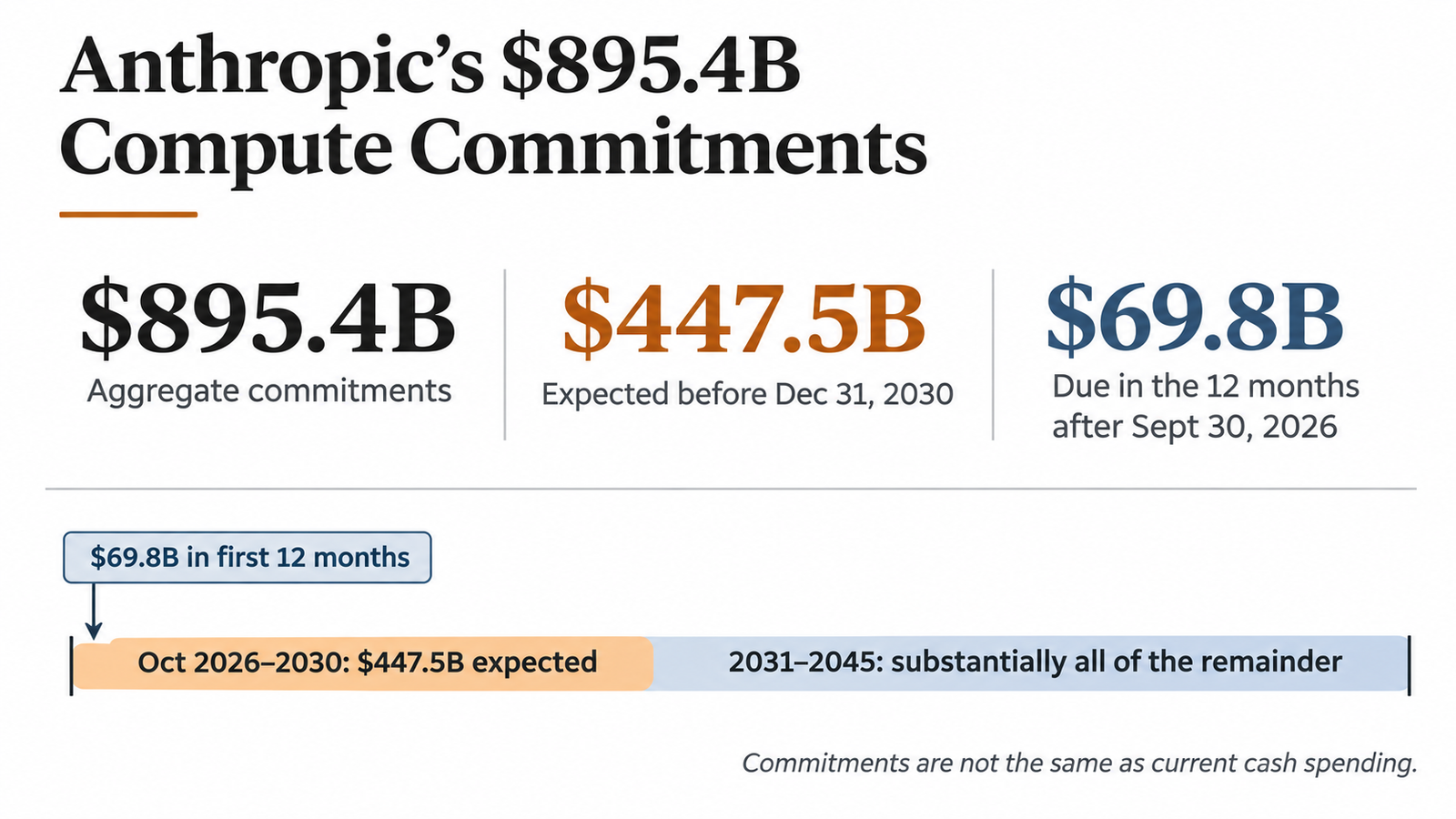
Prices verified against official documentation on 10 November 2026. API pricing changes often; check the linked pages before relying on any figure. Most AI applications …
Anthropic IPO valuation

Anthropic IPO: The $895 Billion Question Behind Its Valuation

Last updated: 9 November 2026. Latest confirmed development: Anthropic’s amended S-1, filed on 2 November, still leaves the share count and the IPO price range …

Model Distillation Explained: When AI Learning Becomes Extraction

Model Distillation

Last verified: 7 November 2026. Government and company claims are attributed throughout. None has been tested in court.

A support team trains a small, cheap model to answer routine questions by learning from its own large model. A lab allegedly runs thousands of fake accounts to harvest a rival’s reasoning, then trains on the results. Both are model distillation. The technique is the same. What separates them is permission.

That gap is now a policy fight. In September 2026, three US agencies accused six Chinese AI companies of “industrial-scale” distillation of American models, and China rejected the claims. In October, Anthropic said new safeguards had cut the data distillers harvest from its platform by 90 to 99%.

Key Takeaways
  • Model distillation is a 2015 technique built for efficiency. Hinton, Vinyals and Dean used soft targets to compress large models into small ones.
  • A student learns behaviour, not weights. It imitates the teacher’s outputs on the inputs it sees and rarely matches it everywhere.
  • Access is what differs. Logit and feature distillation need internal access; API distillation uses only outputs, including reasoning where exposed.
  • The US advisory is an allegation, not a ruling. NSA, FBI and CISA named six Chinese companies on 8 September 2026, and China rejected the claims.
  • Anthropic’s 90 to 99% cut is platform-specific. It describes data harvested from Claude, measured by Anthropic, not global distillation.
  • Terms of service draw the commercial line. Google and OpenAI both bar using outputs to build competing models, but breaching terms isn’t automatically theft.
  • The economics still favour distillation. Cheaper inference, lower latency and on-device deployment explain why it’s everywhere.
  • Buyers should ask about provenance. What teachers and data a model learned from now affects licensing and supplier risk.

Quick Navigation


Model distillation began as an engineering fix

The idea was formalised in a 2015 paper by Geoffrey Hinton, Oriol Vinyals and Jeff Dean, “Distilling the Knowledge in a Neural Network”. Ensembles of many models were more accurate than any single one, but too slow and expensive to deploy. They wanted to “compress the knowledge in an ensemble into a single model”.

Their answer was to train a small student on the probabilities a large teacher assigns to every possible answer, as well as on the correct label. Those probabilities, which the paper calls “soft targets”, carry information a plain label throws away. A teacher that says an image is 90% a 2, 9% a 7 and 1% a 3 is telling the student which mistakes are reasonable.

On MNIST, a small network trained normally made 146 test errors. The same network trained on the teacher’s soft targets made 74, close to the large model’s 67. On a commercial speech system, a single distilled model recovered most of the accuracy gain of a 10-model ensemble.

Distillation isn’t the same as the other ways of shrinking a model. Quantisation stores the same model’s weights in fewer bits. Pruning removes weights or whole parts of a network. Fine-tuning adjusts an existing model on new data. Distillation trains a different, usually smaller, model to imitate the behaviour of a larger one. The methods are often combined.

How model distillation actually works

Strip away the maths and model distillation has four steps.

  1. Choose inputs. Collect prompts or examples that cover the tasks the student needs to handle.
  2. Ask the teacher. Run each input through the teacher and record what it produces: probabilities, answers, sometimes step-by-step reasoning.
  3. Train the student. Optimise the smaller model to match those outputs.
  4. Evaluate. Test the student against the teacher and, more importantly, against the real task.

The paper’s key trick is temperature. A model’s raw scores, called logits, pass through a softmax function to become probabilities. Dividing the logits by a temperature above 1 flattens the distribution, so the small probabilities on wrong-but-plausible answers become visible. The student learns from that softer distribution, usually alongside the true labels.

A simple example: a teacher reading the review “Not bad, but not worth the price” might assign 60% negative, 35% neutral and 5% positive. A plain label just says “negative”. The soft version tells the student the review is mixed, which helps it handle similar cases later.

Two limits matter. The student never receives the teacher’s weights; it learns some of the teacher’s behaviour on the inputs it was shown. And it won’t reproduce everything. Results depend on the teacher, the inputs, the training objective, the student’s size and architecture, and what you evaluate it on. A small student can match a large teacher on a narrow task and fall short elsewhere.

The student learns from what the teacher produces, not from the teacher's parameters.

Model distillation methods, from logits to API outputs

“Distillation” covers several techniques that need very different access to the teacher, which is exactly what the current dispute turns on.

MethodWhat the student learns fromAccess needed to the teacherTypical authorisation context
Logit-basedFull probability distributions (soft targets)Internal outputs, usually your own modelInternal, or under licence
Response-basedGenerated answers as input-output pairsOnly the outputs, via a product or APIInternal, licensed, or governed by API terms
Feature-basedIntermediate representations inside the networkThe model’s internals, effectively the weightsInternal or open-weight teachers
OnlineA teacher and student trained togetherFull training controlInternal
Self-distillationThe model’s own earlier outputs or stronger settingsThe same modelInternal
API-based black-boxOutputs, including reasoning text where exposedA public API, at scaleSet by the provider’s terms, and disputed when terms forbid it

Response-based distillation is the form most relevant to large language models today. A developer prompts a strong model, saves the answers, and fine-tunes a smaller model on them as synthetic training data. If the teacher shows its step-by-step reasoning, the student can also learn how each answer was reached.

API-based distillation never touches the teacher’s weights, but it can still capture a lot. Anthropic reported that a model distilled on full reasoning transcripts from Claude scored 80.4% on the SWE-bench Verified coding benchmark, against 71.8% when trained only on summarised transcripts. That’s a company-run test, but it shows why labs now guard their models’ reasoning more closely than their answers.

Why AI companies are fighting over model distillation

What the US advisory alleges

On 8 September 2026, the NSA, FBI and CISA published joint advisory AA26-251A, “China-Based Artificial Intelligence Companies Conducting Industrial-Scale Distillation Campaigns Against U.S. AI Companies”. It named DeepSeek, Moonshot AI, Alibaba, MiniMax, StepFun and Z.AI.

According to summaries by the Cloud Security Alliance and The Next Web, the agencies alleged campaigns against versions of Claude, GPT, Gemini and Grok from at least late 2024 to mid-2026, totalling billions of tokens across millions of exchanges. The methods described include fraudulent accounts with obscured metadata, bulk commercial subscriptions, jailbreak prompts designed to expose hidden reasoning, and “transfer stations”: grey-market API proxies that resell access and get around regional blocks. The agencies also said the campaigns ran “likely with Chinese government awareness”, and called distillation “the core, not merely a supplement” of these companies’ development.

The advisory isn’t a court finding. As reported, the activity it describes is querying deployed models at scale; none of the summaries we read mention access to model weights. The agencies recommended that AI providers detect anomalous usage, share threat intelligence across the industry, and consider subtly altering responses to suspected distillers.

China’s response

China rejected the allegations. In a statement to the Associated Press, reported by Al Jazeera, the Commerce Ministry accused the US of seeking a “monopoly of the AI industry”, said distillation is commonplace in the industry including among US companies, and warned of “resolute countermeasures”. Foreign Ministry spokesperson Mao Ning urged the US to “refrain from making unfounded accusations or smears”.

The named companies didn’t respond publicly to requests for comment in the days after the advisory, according to The Next Web and Al Jazeera. None has admitted the conduct described.

What Anthropic’s September report claims

Anthropic, which is a party to this dispute, made its own allegations two days later. Its September 2026 threat intelligence report described campaigns it attributed to seven China-based labs. As summarised in independent coverage, the largest was attributed to Alibaba: more than 151 million exchanges between May and July, which Anthropic called “the largest distillation attack we have ever measured”. It also attributed more than 23 million exchanges to Moonshot AI and about 12 million in 14 days to DeepSeek, and named Zhipu, Xiaomi, SenseTime and MiniMax.

Anthropic said labs reached Claude through networks of fake accounts paid for with false identities or stolen cards, and through proxy services that resell access and sometimes sell the saved exchanges on. It described a “cross-session replay” technique: saving a signed reasoning token from one response, then prompting Claude in a new session to rebuild reasoning that would otherwise have been summarised.

The most serious allegation concerns Moonshot. Anthropic said that in one 10-day period, Moonshot silently forwarded nearly 300,000 requests from its own Kimi customers to Claude through 5,380 fraudulent accounts, and served Claude’s answers as Kimi’s. If accurate, that’s a data-governance problem as well as an IP one. Kimi users’ prompts, some containing sensitive data according to Anthropic, went to a provider they hadn’t chosen. Anthropic says it doesn’t know whether those customers were told.

These are Anthropic’s findings from its own telemetry. They haven’t been independently verified, and the named companies hadn’t published detailed responses when we checked.

Anthropic’s October defences against model distillation

On 12 October, Anthropic published an update on its distillation defences. Its headline claim: “early evidence suggests that these methods have reduced the amount of data harvested by distillers by around 90 to 99%”. It also said the number of reasoning tokens extracted by distillers “is consistently 10 to 100 times lower than it was before”.

Read those numbers carefully. Anthropic estimates extracted tokens “on our own platform”, so they describe what it observes on Claude. They don’t show that global distillation fell by 90 to 99%, and they don’t cover other providers, data resellers or transcripts harvested before the defences existed. Anthropic doesn’t describe the estimation method in detail.

The safeguards fall into three groups:

  • Controlling where reasoning goes. A feature called preserved thinking stops new API accounts, created from 31 August 2026, from editing earlier context. Anthropic also stopped earlier, less protected models from reading newer models’ reasoning, and with Claude Sonnet 5.5, limited reasoning transcripts to the organisation that made the request. That’s aimed squarely at cross-session replay.
  • Detecting and blocking extraction. A two-stage classifier based on Anthropic’s constitutional classifier research screens for extraction attempts. Anthropic puts its false-positive rate at under 0.1%.
  • Raising the cost of trying again. Accounts that repeatedly attempt extraction face stricter limits or bans. Since 24 September, Anthropic has also charged for requests its safeguards block.

Anthropic acknowledges trade-offs. Preserved thinking required some developers to update their integrations. A false-positive rate under 0.1% still means some legitimate requests get blocked, and since 24 September, billed. Anthropic says it has “turned away meaningful revenue and trillions of tokens’ worth of paying traffic”. It also concedes the goal of not affecting legitimate users hasn’t been fully met, and calls distillation “a cat-and-mouse game”. Researchers who study model reasoning may also find the limits get in their way.

Anti-distillation is becoming part of platform security, alongside fraud and abuse prevention. Reasoning traces in particular are now treated as assets to protect.

When model distillation becomes a question of authorisation

The five scenarios below use near-identical techniques. What separates them is access, permission and the terms that apply.

ScenarioWho owns the teacherPermissionMain questions
1. Internal distillationYouImplicitMostly engineering quality
2. Licensed distillationAnother providerExplicit, by contractScope of the licence
3. Research distillationVariesDepends on data rights and termsWhether the terms and data rights cover the research use
4. Third-party API distillationAnother providerGoverned by API termsCompetitive-use clauses
5. Covert large-scale extraction (alleged)Another providerNone, with controls bypassedFraud, terms breaches, possibly trade secrets

Scenario 1 is uncontroversial; labs routinely distil their own large models into smaller ones. Scenario 2 is the same with a contract.

Scenario 4 is where most real ambiguity sits. Major providers restrict it in their terms. Google’s service terms for AI/ML services say customers won’t use generated output “to develop a similar or competing product or service”, and separately prohibit using output to “create or improve models similar to a Google Model”. OpenAI’s terms of use prohibit using output “to develop models that compete with OpenAI”. Those are contract terms. Breaking them can mean suspended accounts or a breach-of-contract claim, but whether it amounts to theft is a separate question.

The legal picture is unsettled. Copyright protection for AI-generated outputs is uncertain in many jurisdictions. Trade-secret claims may depend on whether a provider took reasonable steps to keep material like reasoning traces secret, which is one reason labs now hide or summarise them. Rules also differ between the US, China and the EU. Nothing here is legal advice. Anyone planning to train on another provider’s outputs needs a lawyer to read the specific terms.

Scenario 5, as the advisory and Anthropic describe it, is different in kind. Fake identities, stolen payment cards, proxy resale and covert relaying of customers’ prompts aren’t distillation techniques. They’re ways around controls, and they raise fraud and privacy questions whatever anyone thinks about training on outputs.

The technique is the same on every path. What changes is authorisation and the terms that apply.

What model distillation means for AI buyers

For a company choosing a model, the dispute turns into a provenance question. If a model was trained substantially on another provider’s outputs in breach of its terms, the buyer could face uncertainty about licensing, continued availability or sanctions in some markets. That’s an assessment for each buyer, not a conclusion about any named model.

Our comparison of Chinese open-weight models found that quality at the top has converged, so licensing, hardware and customer identity now drive the choice. Provenance belongs on that list. Ask suppliers what data and teacher models a model was trained on, whether third-party outputs were used and under what terms, and what indemnities they offer.

Distilled models also raise the same trust questions as any modified model. A student can inherit a teacher’s biases or safety gaps, or lose safeguards the teacher had. As our look at editing AI models through machine unlearning argued, a changed model needs its own behavioural and security testing. Don’t assume it inherits the original’s evaluation.

The economics of model distillation

The controversy doesn’t change why organisations distil. Smaller models are cheaper and faster, need less memory, run on phones or on-premises hardware, and cut dependence on expensive frontier APIs.

Here’s an illustrative example. Every number is an assumption, not a measured figure. A company answers 1 million routine support enquiries a month with a large teacher model, at an assumed $0.02 per enquiry: $20,000 a month. It decides to distil a small student:

Step (illustrative)AssumptionCost
Generate training data200,000 teacher answers at $0.02 each$4,000
Train the studentFine-tuning compute, assumed$3,000
Evaluate and reviewEngineer time and test runs, assumed$8,000
One-off total$15,000
Run the student$0.003 per enquiry, assumed$3,000 a month

On those assumptions, the student saves $17,000 a month and pays back its one-off cost within the first month. But the example only works if the student is good enough. If it handles 80% of enquiries well and the rest must go back to the teacher, monthly costs rise to about $7,000, still well below $20,000. If quality drops and customers notice, the savings may not be worth it.

The example uses the company’s own teacher, which is scenario 1. Generating the same 200,000 answers from a third-party API to build a competing product could breach that provider’s terms. The economics are identical. The risk isn’t.

Open weights change the maths again. When a teacher is released under a permissive licence, distilling it can be explicitly allowed. As our coverage of Inkling 975B’s open weights noted, permissive weights can support training a smaller student, subject to the licence.

What comes next for model distillation

Expect platform controls to keep tightening. Hiding or summarising reasoning, binding reasoning to the organisation that requested it, detecting extraction patterns and suspending suspicious accounts are now standard tools, and the advisory encourages providers to share intelligence about distillers. The awkward recommendation is subtly altering responses to suspected distillers, which risks degrading answers for legitimate users caught by mistake.

Three open questions will shape the field. Can providers protect reasoning without making their models less useful to researchers and developers? Will courts treat bulk API extraction as a contract dispute, a trade-secret case or something else? And will governments act on the advisory through sanctions or procurement bans, given China’s warning of countermeasures?

The technique itself isn’t in question. Model distillation is how much of the industry turns expensive models into practical ones. The fight is over access, permission and what a contract allows.

FAQ

What is model distillation in AI?

Model distillation is a training technique in which a smaller “student” model learns to imitate a larger “teacher” model’s outputs. It’s used to make models cheaper, faster and easier to deploy.

How does knowledge distillation work?

The teacher produces outputs, such as probability distributions or answers, for a set of inputs, and the student is trained to match them. Softened probabilities, called soft targets, carry more information than single correct labels.

What is the difference between model distillation and fine-tuning?

Fine-tuning adjusts an existing model on new data. Model distillation trains a separate, usually smaller, model to copy another model’s behaviour, often by fine-tuning it on the teacher’s outputs.

Is model distillation the same as model compression?

It’s one form of model compression. Quantisation and pruning shrink the same model, while distillation trains a new, smaller one.

Can a smaller AI model learn from a larger model?

Yes, on the tasks it’s trained for. A distilled student can come close to its teacher on narrow tasks but usually falls short on broad ones.

It depends on the provider’s terms and the jurisdiction. Many providers, including Google and OpenAI, prohibit using outputs to build competing models, so get legal advice before trying it.

Why are AI companies concerned about distillation attacks?

Because rivals can capture expensive capabilities, especially reasoning, by querying a model at scale. Labs also say covert campaigns rely on fraud and can expose customers’ data.

What did Anthropic announce about distillation defences in October 2026?

On 12 October, Anthropic said new safeguards cut the data harvested by distillers on its platform by around 90 to 99%. The measures include limits on where reasoning can go, extraction classifiers and penalties for repeat attempts.

How does model distillation reduce AI inference costs?

A smaller student needs less compute and memory per request than its teacher. For high-volume, repetitive tasks, that can cut running costs substantially once the one-off training cost is paid.

What should businesses check before deploying a distilled model?

Check where the training data and teacher outputs came from, the licence and terms that applied, and the model’s own safety and quality testing. Ask the supplier about indemnities.


Keep reading

Claude API rate limits

Claude API Rate Limits in 2026: How Many Requests Can You Run?

Claude API rate limits on the Start tier allow most current models 2,000,000 input tokens and 400,000 output tokens per minute, with 1,000 or 4,000 …
Claude Fable 5.2

Claude Fable 5.2 vs Opus 5.5: Is the Higher Price Worth It?

Specifications and prices checked against Anthropic’s documentation on 11 November 2026. Claude Fable 5.2 charges $8 per million input tokens and $40 per million output …
Prompt Caching

Your AI API Is Reprocessing the Same Tokens. Stop Paying for It.
Prices verified against official documentation on 10 November 2026. API pricing changes often; check the linked pages before relying on any figure. Most AI applications …
Anthropic IPO valuation

Anthropic IPO: The $895 Billion Question Behind Its Valuation

Last updated: 9 November 2026. Latest confirmed development: Anthropic’s amended S-1, filed on 2 November, still leaves the share count and the IPO price range …

NeurIPS 2026 Camera-Ready and Code Requirements

NeurIPS 2026

The NeurIPS 2026 camera-ready deadline is 6 November 2026, Anywhere on Earth, for both main track and Datasets and Benchmarks papers. The 40th conference runs 6 to 12 December in Sydney, with satellite events in Atlanta and Paris from 9 to 13 December.

Last verified: 5 November 2026 against neurips.cc. Some third-party deadline trackers list a different camera-ready date, so we checked the official Dates page directly.

Key Takeaways
  • The NeurIPS 2026 camera-ready deadline is 6 November 2026 at 23:59 AoE, which is 11:59 UTC on 7 November.
  • Upload one PDF in OpenReview with up to 10 content pages, plus references, appendices and the completed checklist.
  • Add a funding statement and a competing-interests disclosure, both covering the 36 months before submission.
  • You may reorder authors but not add or remove them, and title or abstract edits must stay close to the submission.
  • Code release is strongly encouraged, not required by default. Every paper still needs a reasonable way to reproduce its results.
  • Replace anonymised links with real ones, and check the commands and licenses they point to.
  • Workshop papers follow each workshop’s own deadline and don’t appear in the proceedings.
  • At least one author must register in person, and each paper must be presented in Sydney or at a satellite site.

Quick Navigation


Quick answers

These are the questions authors ask most this week, answered from official NeurIPS pages.

  • When is the NeurIPS 2026 camera-ready deadline? 6 November 2026 at 23:59 Anywhere on Earth, according to the official Dates page.
  • What is that in UTC? 11:59 UTC on Saturday 7 November.
  • Where do I upload it? In OpenReview, by editing your existing submission and choosing the camera-ready version, as the Main Track Handbook describes.
  • Is code release mandatory? No. The paper checklist guidance encourages it but says “no is an acceptable answer.”
  • Can I add an author? No. The handbook allows reordering but not adding or removing authors.
  • Do workshop papers share this deadline? No. Each workshop sets its own timeline, according to the workshop guidance.

NeurIPS 2026 at a glance

ItemDetailSource
Edition40th Annual Conference on Neural Information Processing Systemsneurips.cc
Main conferenceSydney, 6 to 12 December 2026neurips.cc
Satellite eventsAtlanta and Paris, 9 to 13 December 2026neurips.cc
Camera-ready deadline6 November 2026, 23:59 AoEDates page
Camera-ready page limit10 content pages (9 at submission, plus 1)Main Track Handbook
Required disclosuresFunding statement and competing interestsMain Track Handbook
Code releaseStrongly encouraged, not required by defaultPaper checklist guidance
PresentationIn person in Sydney or at a satellite siteMain Track Handbook

NeurIPS 2026 key dates

All dates below come from the official NeurIPS 2026 Dates page. Status is as of 5 November 2026.

MilestoneDateStatus
Abstract submission deadline4 May 2026 (AoE)Passed
Full paper submission deadline6 May 2026 (AoE)Passed
Reviews released to authors22 July 2026 (AoE)Passed
Author notifications24 September 2026 (AoE)Passed
Presentation site preference form30 September 2026 (AoE)Passed
Paper location assignment notifications6 October 2026, 17:00 UTCPassed
Early registration deadline30 October 2026 (AoE)Passed
Last chance for a registration refund4 November 2026 (AoE)Passed
Camera-ready deadline (main track and Datasets and Benchmarks)6 November 2026 (AoE)Upcoming
Child care registration deadline (Sydney and Atlanta)7 November 2026, 01:00 UTCUpcoming
Poster topics deadline15 November 2026 (AoE)Upcoming
Last chance to move session without affecting poster groupings15 November 2026 (AoE)Upcoming
Sydney main conference6 to 12 December 2026Upcoming
Atlanta and Paris satellites9 to 13 December 2026Upcoming

Two dates fall close to the camera-ready deadline. The child care registration deadline for Sydney and Atlanta lands just hours later, at 01:00 UTC on 7 November. The poster topics deadline and the last chance to move your session without breaking up poster groupings both fall on 15 November.

Day-by-day schedule in each city

Each city runs its own programme. The Dates page gives this schedule:

CityDatesWhat happens
Sydney6 DecemberExpo day
Sydney7 DecemberTutorial day
Sydney8 to 10 DecemberMain conference (exhibit hall open 7 to 10 December)
Sydney11 and 12 DecemberWorkshops and competitions
Atlanta9 DecemberMain conference and tutorials
Atlanta10 and 11 DecemberMain conference (exhibit hall open 9 to 12 December)
Atlanta12 and 13 DecemberWorkshops
Paris9 to 11 DecemberMain conference and tutorials (exhibit hall open)
Paris12 and 13 DecemberWorkshops

If you were assigned to a satellite site, plan travel around that city’s dates rather than Sydney’s. Your location assignment arrived on 6 October.

What “Anywhere on Earth” means for your deadline

One deadline, five clocks. Every time shown is the same moment.

Anywhere on Earth (AoE) is UTC−12, the last time zone on the planet to reach the end of each day. A deadline of 23:59 AoE on 6 November passes at 11:59 UTC on 7 November. If it’s still 6 November anywhere on the planet, you’re on time.

LocationDeadline in local time
UTC11:59, Saturday 7 November
London (GMT, UTC+0)11:59, Saturday 7 November
Paris (CET, UTC+1)12:59, Saturday 7 November
US Pacific (PST, UTC−8)03:59, Saturday 7 November
US Eastern (EST, UTC−5)06:59, Saturday 7 November
India (IST, UTC+5:30)17:29, Saturday 7 November
Sydney (AEDT, UTC+11)22:59, Saturday 7 November

US daylight saving ended on 1 November, and the UK and Europe changed clocks on 25 October, so those regions are now on standard time. Sydney has been on daylight time since early October. In every location listed, the deadline falls on Saturday 7 November, local time.

The extra hours are a safety margin, not a plan. OpenReview can slow down near a major deadline, and a failed upload at the last minute leaves no time to fix it. Aim to upload a complete version a day early, then replace it if you make final edits.

What the NeurIPS 2026 camera-ready version must include

The Main Track Handbook sets out the camera-ready rules. In short, you upload one PDF in OpenReview that contains the final paper, the required disclosures and the completed checklist.

How to upload in OpenReview

Open your paper’s page in OpenReview and select Edit in the top right corner. Then choose the camera-ready version and upload your files there. You’re editing the existing submission, so the paper keeps its ID, reviews and discussion history.

One PDF, with an extra page

Upload a single PDF combining the paper, references, any text appendices and the completed paper checklist. Submissions had a nine-page content limit, and accepted papers get one extra content page. References, appendices and the checklist don’t count toward that limit. Use the current NeurIPS 2026 style file, which also contains the checklist instructions.

The extra page is meant for changes requested in review. The handbook asks authors to update the main paper in response to reviewer comments and the discussion period.

Funding and competing interests

The handbook asks every camera-ready paper for a funding statement and a list of competing interests. Both cover the 36 months before submission.

  • Funding: list all third-party support for the work, including grants, donated compute and programming support.
  • Competing interests: list paid relationships that could be seen to sway the work, even if they didn’t fund it. Include all revenue paid or promised. You don’t need to repeat the group already named as your main employer.

These two statements are easy to miss because the anonymous submission didn’t need them. Draft them before you start final formatting, so you can confirm details with co-authors in time.

What you can and can’t change

According to the handbook, you may edit the title, keywords and abstract, as long as they don’t differ substantially from the submission. You may reorder authors freely, but you can’t add or remove anyone.

A change of title that keeps the same meaning is fine. A new title describing a different contribution is not, because it would differ substantially from what reviewers assessed.

A lay summary

The handbook also asks for a lay summary: one paragraph for the general public, written without jargon. Write it for a curious reader with no machine learning background. Say what problem the paper tackles, what you found and why it matters.

Registration and in-person presentation

At least one author must register for the main conference, and the handbook states that “a ‘Virtual Only Pass’ is not sufficient.” A student author needs only a student registration, and one registration can cover several accepted papers.

Each accepted paper must be presented in person in Sydney or at a satellite site. The handbook warns that a paper can lose its accepted status if no author registers and presents.

Your reviews will become public

For accepted papers, the handbook says reviews, meta-reviews and author discussion are made public. Reviewer, area chair and senior area chair identities stay anonymous. If your rebuttal promised changes, readers will be able to see whether the camera-ready made them.

A last-hour checklist
The six things to check before you upload.

Before you press submit, run through the points the handbook and checklist guidance cover:

  1. The PDF uses the 2026 style file and stays within 10 content pages.
  2. The funding statement and competing-interests disclosure are both in the paper.
  3. The paper checklist is filled in and included at the end of the same PDF.
  4. Repository links are de-anonymised and point to the version you want readers to use.
  5. The author list matches the submission, even if the order has changed.
  6. The lay summary is uploaded, and at least one author holds a full registration.

If you’re unsure about a rule, the handbook is the place to check. Emails and forum posts from earlier years may describe policies that no longer apply.

Code and data requirements

NeurIPS 2026 encourages code release but doesn’t make it a blanket requirement. The official paper checklist guidance and the Main Track Handbook set the rules. The Call for Papers itself doesn’t contain code rules.

What is required
  • A completed paper checklist. The guidance says papers without it “will be desk rejected.”
  • “Some reasonable avenue for reproducibility.” The guidance notes that NeurIPS “does not require releasing code,” but every paper needs some way for others to reproduce or verify its results. For a new algorithm, the paper should make clear how to reproduce it.
  • Citations and license names for existing code, data or models you used, including the version of each asset. For scraped data, state the source’s copyright and terms of service.
  • Documentation for any new assets you release, covering training, license and limitations, and how consent was obtained from people whose data is used.
What is encouraged
  • Releasing code, data and instructions to reproduce the main results, including “the exact command and environment needed.”
  • De-anonymised links in the camera-ready. The handbook says accepted papers “should provide de-anonymized links for reproducibility.”
When “no” is an acceptable answer

The checklist is explicit that “no is an acceptable answer” to the code question. Papers can’t be rejected simply for not including code, unless code is central to the contribution, as with a new open-source benchmark. The guidance gives proprietary code as an example of a valid reason for answering no.

More broadly, the guidance says that answering “no” or “n/a” is “not grounds for rejection.” What matters is an honest answer with a brief justification.

At submission, the checklist asked authors to share anonymised versions of code and assets. For the camera-ready, replace any anonymised repository links with your real ones. Check that each link opens, that the repository’s README gives the commands the checklist describes, and that the license file matches what the paper states.

Workshop deadlines are separate

Workshop papers follow each workshop’s own timeline, not the main camera-ready date. The workshop guidance lets organisers set their own schedules. The only fixed dates are the suggested submission date of 29 August and the mandatory notification date of 29 September, both listed on the Dates page.

The guidance also states that “all NeurIPS workshop papers are non-archival and therefore do not appear in proceedings.” Organisers decide whether to share accepted papers, for example through OpenReview. Check your workshop’s website or OpenReview page for its camera-ready date, format and any poster requirements.

Why code release matters

A result that others can rerun is easier to trust and build on. Released code lets reviewers, readers and later authors check a claim, rather than relying on the paper’s description alone.

Benchmark numbers show why this matters. Scores depend on prompts, versions and settings, which is why our comparison of LLM benchmark scores treats them as evidence rather than a leaderboard. Even the same prompt can produce different outputs from one run to the next, as our explainer on LLM determinism shows. Released code, pinned versions and the exact environment narrow that gap.

The checklist’s requests line up with this. It asks for the exact command and environment, the version of each asset and the license for each dataset. Those details are what another lab needs to get the same numbers.

The AI Reviewing Experiment

Peer review itself is under study this year. NeurIPS is running a voluntary AI Reviewing Experiment to study how reviewers use large language models. Reviewers were randomly assigned, per paper, to no language-model help, open-ended help or structured help. Only papers whose authors opted in at submission were included.

NeurIPS says the tool is meant to help reviewers understand submissions, not to write reviews for them. It also says participation “will have no bearing on paper decisions,” and area chairs assessed reviews without knowing each review’s condition.

Frequently asked questions

Can I add an author at camera-ready?

No. The handbook allows reordering but not adding or removing authors, so anyone missing from the submission can only be thanked in the acknowledgements.

What time zone is the NeurIPS deadline in?

Anywhere on Earth, which is UTC−12. If any place on the planet is still on 6 November, the deadline hasn’t passed.

Do I need a new OpenReview submission for the camera-ready?

No. You edit the existing submission and choose the camera-ready version, so the paper keeps its ID and review history.

Will my reviews become public?

Yes, for accepted papers. Reviews, meta-reviews and author discussion are published, while reviewer and area chair identities stay anonymous.

Is releasing code mandatory for NeurIPS 2026?

No, unless the code is central to the contribution, such as a new open-source benchmark. You still need some reasonable way for others to reproduce your results.

Does the extra page apply to Datasets and Benchmarks papers?

The extra content page is described in the Main Track Handbook. Datasets and Benchmarks authors share the same 6 November deadline, but should check their own track’s guidance for formatting rules.

Can I present my paper online instead of in person?

No. Each accepted paper must be presented in person in Sydney or at a satellite site, and a virtual-only pass doesn’t meet the registration requirement.

Are NeurIPS workshop papers published in the proceedings?

No. The workshop guidance states that all NeurIPS workshop papers are non-archival and don’t appear in the proceedings.


Keep reading

Claude API rate limits

Claude API Rate Limits in 2026: How Many Requests Can You Run?

Claude API rate limits on the Start tier allow most current models 2,000,000 input tokens and 400,000 output tokens per minute, with 1,000 or 4,000 …
Claude Fable 5.2

Claude Fable 5.2 vs Opus 5.5: Is the Higher Price Worth It?

Specifications and prices checked against Anthropic’s documentation on 11 November 2026. Claude Fable 5.2 charges $8 per million input tokens and $40 per million output …
Prompt Caching

Your AI API Is Reprocessing the Same Tokens. Stop Paying for It.
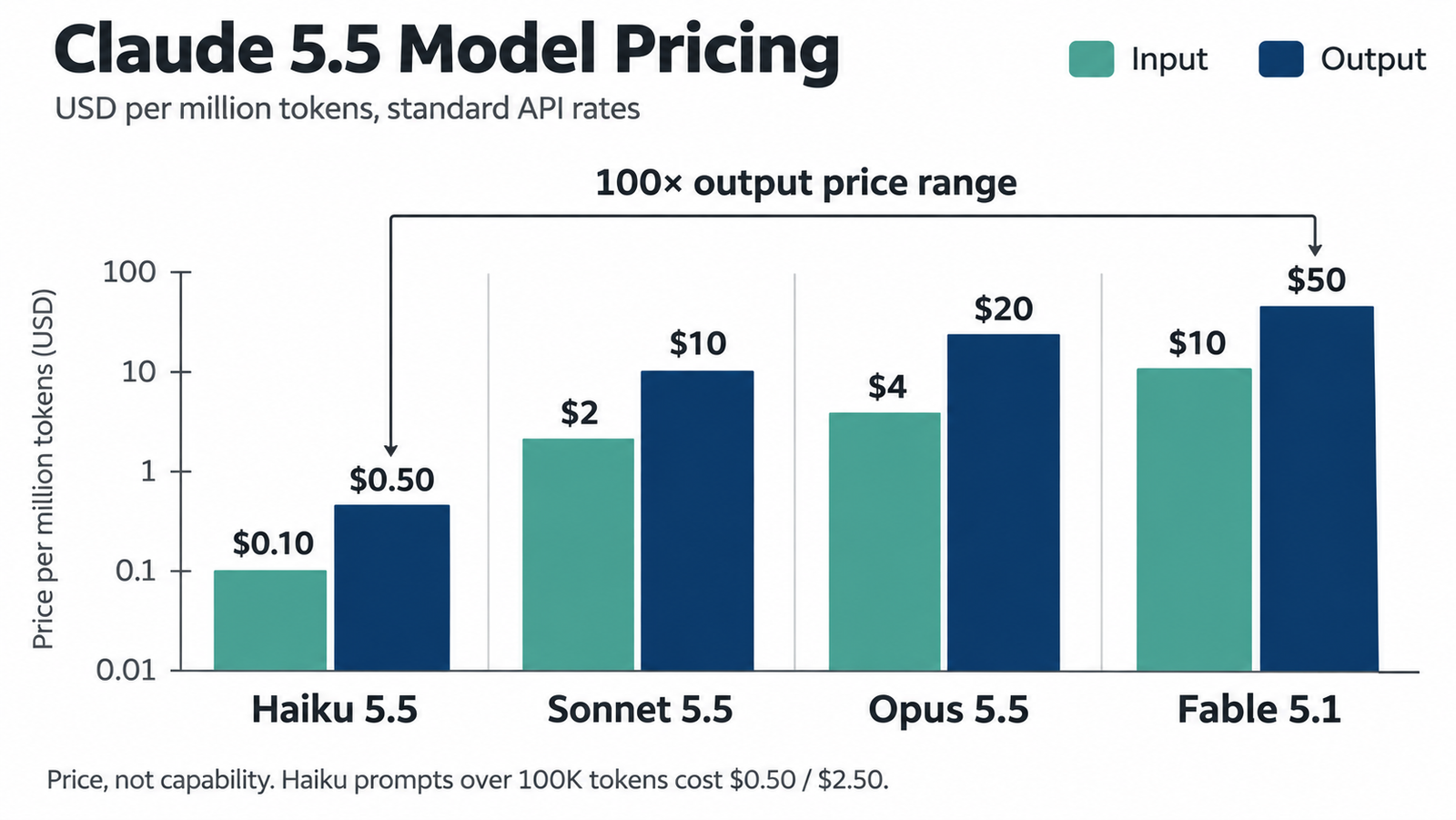
Prices verified against official documentation on 10 November 2026. API pricing changes often; check the linked pages before relying on any figure. Most AI applications …
Anthropic IPO valuation

Anthropic IPO: The $895 Billion Question Behind Its Valuation

Last updated: 9 November 2026. Latest confirmed development: Anthropic’s amended S-1, filed on 2 November, still leaves the share count and the IPO price range …

Enterprise AI Spending Hit $177B. Agents Are Driving the Bill

Enterprise AI Spending

Figures checked against Menlo Ventures’ 2026 State of Enterprise AI report on 4 November 2026. Market sizes are Menlo estimates, shown as annualised run rates.

The price of AI keeps falling. Menlo Ventures says the average open-source model token now costs about $0.13 per million, down 3.3x in a year, and closed models fell 24% to a blended $0.70. Yet enterprise AI spending, by Menlo’s estimate, rose 5.4x to $176.8 billion.

Cheaper inputs and much bigger bills sound contradictory. They aren’t. Menlo’s 2026 State of Enterprise AI report, published on 3 November, shows companies moving from paying for people to use AI towards paying for AI to do work. Work done by agents is measured in tokens, and agents use a lot of them.

Key Takeaways
  • Menlo estimates enterprise AI deployment spending at $176.8 billion by September 2026, separate from $102.5 billion in development spending.
  • Adoption rose 10 points; average spend per company rose 4.7x. Intensity, not new adopters, drove the growth.
  • On OpenRouter, agents now generate about 80% of tokens, a signal from a developer-heavy gateway, not an enterprise census.
  • Open-source models took 19% of tokens but 4% of spending, a gap almost entirely explained by Menlo’s average price difference.
  • Frontier labs hold 69% of deployment spending. Cost per finished task, not per token, may explain why buyers pay more.
  • Coding and assistants make up 76% of application spending, because coding gives agents clear, testable work.
  • Budgets need to become consumption budgets, with per-task tracking and limits.
  • Read the report with its methodology in mind: a US survey, a restated baseline and investment ties to Anthropic and OpenRouter.

Quick Navigation


Enterprise AI spending grew far faster than adoption

Menlo’s $176.8 billion is deployment spending: money companies spend using and running AI, split between $99.5 billion of infrastructure and $77.3 billion of applications. It’s separate from the $102.5 billion Menlo estimates for development, mostly training compute, which is money spent building models. The two shouldn’t be added together casually, and neither is the total global AI market.

Measure (Menlo estimates)Prior year2026Change
Enterprise AI deployment spending$33B$176.8B5.4x
AI development spendingNot stated here$102.5B5.3x
Enterprise AI adoption55%65%+10 points
Average spend per enterprise1x4.7x4.7x

The adoption line is the interesting one. Ten more percentage points of enterprises used AI, roughly 18% more adopters. Average spend per enterprise rose 4.7x. Almost all of the growth in enterprise AI spending came from companies that were already using AI and started using much more of it.

A rough check, as UniverseBlend analysis: 1.18 times more adopters, each spending 4.7 times as much on average, gives about 5.5x. That’s close to Menlo’s 5.4x market figure. The survey average and the market estimate are different measures, so this is a sanity check, not a decomposition. But it points the same way: intensity, not reach, is driving enterprise AI spending.

How agents change enterprise AI spending

A seat licence prices access. One employee, one monthly fee, whatever they do with it. An agent prices work. It takes a task, calls a model many times, reads files and tool outputs, and keeps going until it finishes or fails.

Menlo’s evidence for the shift comes from OpenRouter, a service that routes requests to many model providers through one API. According to the report, agent traffic overtook human traffic there in early February 2026. Since then, agent token traffic grew 37x while human-driven traffic grew 5x. Agents now account for about 80% of OpenRouter tokens, about 130.9 trillion a week. On those shares, agents generate roughly four times as many tokens as people do.

Those figures need context. OpenRouter is one gateway, and the report itself notes that its users skew towards individual developers and startups rather than enterprise buyers. Large companies often go directly to Anthropic, OpenAI, Google or their cloud provider, and OpenRouter’s own rankings page notes that it measures traffic routed through the service, not users or spend. The OpenRouter data shows the direction of travel, not a census of enterprise AI usage, and it comes from a different population than Menlo’s enterprise survey.

Enterprise AI spending is becoming a token-consumption problem

Seats predict access. They don't predict how much work agents will do.

Agents multiply tokens for mechanical reasons. Each step usually resends the conversation so far, so a 20-step task pays for its early context many times over. Tool results, such as search pages, file contents and test logs, land back in the context. Planning and self-checking add calls. Failed steps are retried. Parallel agents each carry their own copy of shared context.

Anthropic measured this on its own system in 2025. In its write-up of a multi-agent research system, it found that agents “typically use about 4× more tokens than chat interactions,” and multi-agent systems “about 15× more tokens than chats.” As UniverseBlend’s analysis of when adding an agent stops paying for itself put it, the unit of cost isn’t the agent but the model call, and “every call pays for its whole input again.”

That’s how prices and bills move in opposite directions. If a token costs a third as much but a task uses ten times as many tokens, the task costs more than three times as much. Enterprise AI spending stops tracking headcount and starts tracking how much work agents are given.

Open-source models take the volume. Frontier labs take the money

Open-source models do a fifth of the token work for a twenty-fifth of the spending. Menlo Ventures estimates.

Menlo reports that open-source models handled about 19% of tokens but captured only 4% of model spending. Its words: “Open-source is gaining ground in usage, but losing spending share.”

Token economics: 19% of tokens, 4% of enterprise AI spending
Menlo estimateOpen-source modelsAll other models
Share of tokens19%81%
Share of model spending4%96%
Average price per million tokens~$0.13 (open-source average)~$0.70 (closed-model blended)

The arithmetic is worth doing (UniverseBlend analysis). Open-source models earn 4 points of spending for 19 points of tokens, about 0.21 per point. Other models earn 96 for 81, about 1.19 per point. That’s a gap of about 5.6x per token. Menlo’s average prices differ by about 5.4x, $0.70 against $0.13. If both shares describe the same traffic, the spending gap is almost entirely a price gap. Open-source models are doing a growing share of the work. They’re just much cheaper per unit.

A terminology note. Menlo says “open-source”, but most of these models are open-weight: the trained weights can be downloaded, while training data and code often aren’t released. The Open Source Initiative’s Open Source AI Definition requires data information and complete training code as well. And $0.13 is Menlo’s estimated average, not a price every provider charges.

Self-hosting changes the economics again. A company running an open-weight model on its own GPUs pays nothing per token to a model vendor, but it pays for hardware, power, engineering time and idle capacity. Some of that spending shows up as infrastructure rather than model spend. Our comparison of Chinese open-weight models shows how hardware needs vary across popular options.

Why frontier labs keep 69% of enterprise AI spending

Anthropic, OpenAI and Google together hold 69% of enterprise AI deployment spending, about $122.7 billion, up from 50%. On a narrower measure, enterprise LLM API spending, Menlo puts Anthropic at 55% (from 40%), OpenAI at 31% (from 27%) and Google at 9% (from 21%). These are different denominators. Deployment spending includes infrastructure and applications. API spending covers only model calls. Neither is a share of tokens.

A qualification belongs here. Menlo Ventures is an investor in Anthropic and OpenRouter, both central to the report, and it marks portfolio companies with asterisks. The research is valuable primary data. But its authors’ commercial position is relevant to how readers weigh its market-share findings, especially Anthropic’s rise. OpenRouter’s ownership is also changing: Stripe agreed to acquire it in August.

Why pay five times more per token? The report doesn’t measure this directly, so what follows is interpretation. For agentic work, the cost that matters is cost per completed task, not cost per token. A model that finishes a coding task in fewer steps, or without a failed run, can be cheaper overall. Enterprises also pay for reliability, security reviews, existing contracts and integration with tools they already use. The data shows the premium persisting. It doesn’t prove why.

Where the $177B of enterprise AI spending goes

Category (Menlo estimates)Amount
Deployment total$176.8B
Infrastructure$99.5B
Applications$77.3B
of which coding$34.0B
of which assistants and chatbots$25.0B
of which healthcare$3.7B
Development (separate)$102.5B

Infrastructure, the stack that runs models and agents, is the larger half. Within applications, coding and assistants take 76%. Healthcare, in third place at $3.7 billion, is a long way behind.

Why coding leads enterprise AI spending

Coding suits agents better than almost any other job, which is why it dominates enterprise AI spending on applications. The work lives in a repository. Tools are scriptable. Compilers and test suites give fast, objective feedback, so an agent can try, fail, check and retry without a human. Success is easier to define than in a sales forecast or a legal review.

That’s also why coding is expensive. Every test run and retry is more tokens. UniverseBlend’s look at who’s paying for coding agents’ tokens found that the larger cost often comes after generation, in review and rework. Functions with subjective decisions, scattered data or unclear success criteria will adopt agents more slowly, and their spending will grow more slowly too.

Budgets fell behind enterprise AI spending

The budget figures show how badly forecasts missed. Menlo’s survey found:

Survey respondentsPlannedActual
Average spend vs prior year1.9x4.7x
Median spend vs prior year1.8x2.2x

On average, companies spent about 2.5 times what they had planned to grow by. The median company overshot only modestly, about 1.2 times its plan. The gap between average and median means a minority of heavy users is pulling the average up: companies where agents went from pilot to production and consumption took off. It does not mean every company spent 2.5 times its budget.

Most of the growth in enterprise AI spending is new money rather than reallocated budget. Menlo says 55% of incremental AI spending came from new budgets and 22% from existing software budgets. Another 13% came from incumbents converting SaaS licences to AI, and 9%, about $12.6 billion, shifted to AI-native vendors. The report found “limited evidence” of enterprises replacing core systems such as Salesforce’s CRM, Workday or NetSuite. AI is adding to the software bill, not yet replacing it.

What the Menlo report gets right, and what to question

The survey covered nearly 400 US enterprise decision-makers responsible for more than $4 billion in AI spending. Morning Consult fielded it from 8 to 26 September 2026. Market sizes are Menlo estimates built from that survey, public filings and third-party reports, expressed as annualised run rates. That’s a strong dataset for direction and proportion. It isn’t an audited sum of invoices, and it’s US-only.

Three cautions:

  • The baseline was restated. Menlo’s December 2025 report put 2025 enterprise generative AI spending at $37 billion. The new report uses $33 billion for the prior year, after reclassifying data-labelling vendors such as Mercor from deployment to development. On the old base, growth would be about 4.8x.
  • Two datasets are in play. Agent and token findings come from OpenRouter, while budget findings come from the enterprise survey. They shouldn’t be blended.
  • Portfolio relationships run through the market-share findings, as noted above.

None of this makes the report unreliable, and it remains one of the few detailed public estimates of enterprise AI spending. It makes it a well-sourced estimate from an interested party, which is how readers should treat it.

How to budget enterprise AI spending for 2027

The lesson for budget owners is that AI is turning into a consumption line, more like cloud than SaaS. A fixed seat budget can’t predict what agents will cost, because their cost depends on how many tasks they run, how many tokens each task takes and which model does the work.

An illustrative agent budget

Every number here is an assumption, chosen only to show the mechanics. None is a quote from a provider.

Cost lineAssumptionAnnual cost
Employee assistant seats500 seats × $40 a month$240,000
Agent model usage2,000 tasks a day × 1.5M tokens × $1 per million, 250 working days$750,000
Tools and infrastructure20% of model usage (sandboxes, search, vector stores)$150,000
Monitoring and evaluation10% of model usage$75,000
Human reviewNot priced here; often the largest hidden costVaries

The seats are fixed. Everything else moves with volume. If tasks double, or each task takes twice the tokens because agents retry more, model usage rises to $1.5 million. Switch some work to an open-weight model at a fraction of the price and it falls sharply, if quality holds. At Menlo’s $0.70 closed-model average, the same agent line would be $525,000. At a frontier model priced several times higher, it could be millions.

Practical steps follow from that:

  • Budget agents per task, not per user.
  • Track cost per completed task, not per token.
  • Set spending limits per agent.
  • Route routine work to cheaper models.
  • Review forecasts quarterly rather than annually.

The $177 billion headline will be quoted for months. The more useful finding sits underneath it: enterprise AI spending now follows the work AI does, not the number of people who can use it. Tokens will probably keep getting cheaper. Whether bills shrink depends on how many tasks companies hand to agents, how efficiently those agents finish them and which models they run on. Finance teams that still treat AI as a seat count will keep being surprised.

Frequently asked questions

How much is enterprise AI spending in 2026?

Menlo Ventures estimates enterprise AI deployment spending reached $176.8 billion by September 2026, as an annualised run rate. That’s up from a restated $33 billion the year before.

Why has enterprise AI spending increased so quickly?

Existing adopters are using far more AI, largely through agents that consume many tokens per task. Adoption itself rose only from 55% to 65%.

How much enterprise AI spending is driven by agents?

Menlo doesn’t give a dollar figure. On OpenRouter, agents generate about 80% of tokens, but that platform skews towards developers and startups.

Why do AI agents consume more tokens than chatbots?

They work in many steps, resend context each time, read tool outputs, plan, verify and retry. Anthropic measured agents using about four times the tokens of chats.

How much enterprise AI usage comes from open-source models?

About 19% of tokens, according to Menlo, but only 4% of model spending, because their average price is much lower.

Why do frontier AI companies capture most enterprise AI spending?

They hold 69% of deployment spending in Menlo’s estimate. Likely reasons include capability, reliability and integration, though the report doesn’t prove the cause.

What is the difference between AI deployment and development spending?

Deployment spending is money spent using and running AI. Development spending is money spent building models, mainly training compute and data.

How should companies budget for AI agents?

Budget per task, track cost per completed task, set usage limits and review forecasts quarterly, since agent costs vary with volume and model choice.

Are open-weight models cheaper for enterprise use?

Usually per token, yes. Total cost depends on quality, how many retries tasks need, and whether you pay a provider or run your own hardware.

Will enterprise AI spending keep growing?

The report doesn’t forecast 2027. Agent adoption and falling prices push in opposite directions, so the outcome depends on how much work companies hand to agents.


Keep reading

Claude API rate limits

Claude API Rate Limits in 2026: How Many Requests Can You Run?

Claude API rate limits on the Start tier allow most current models 2,000,000 input tokens and 400,000 output tokens per minute, with 1,000 or 4,000 …
Claude Fable 5.2

Claude Fable 5.2 vs Opus 5.5: Is the Higher Price Worth It?

Specifications and prices checked against Anthropic’s documentation on 11 November 2026. Claude Fable 5.2 charges $8 per million input tokens and $40 per million output …
Prompt Caching

Your AI API Is Reprocessing the Same Tokens. Stop Paying for It.
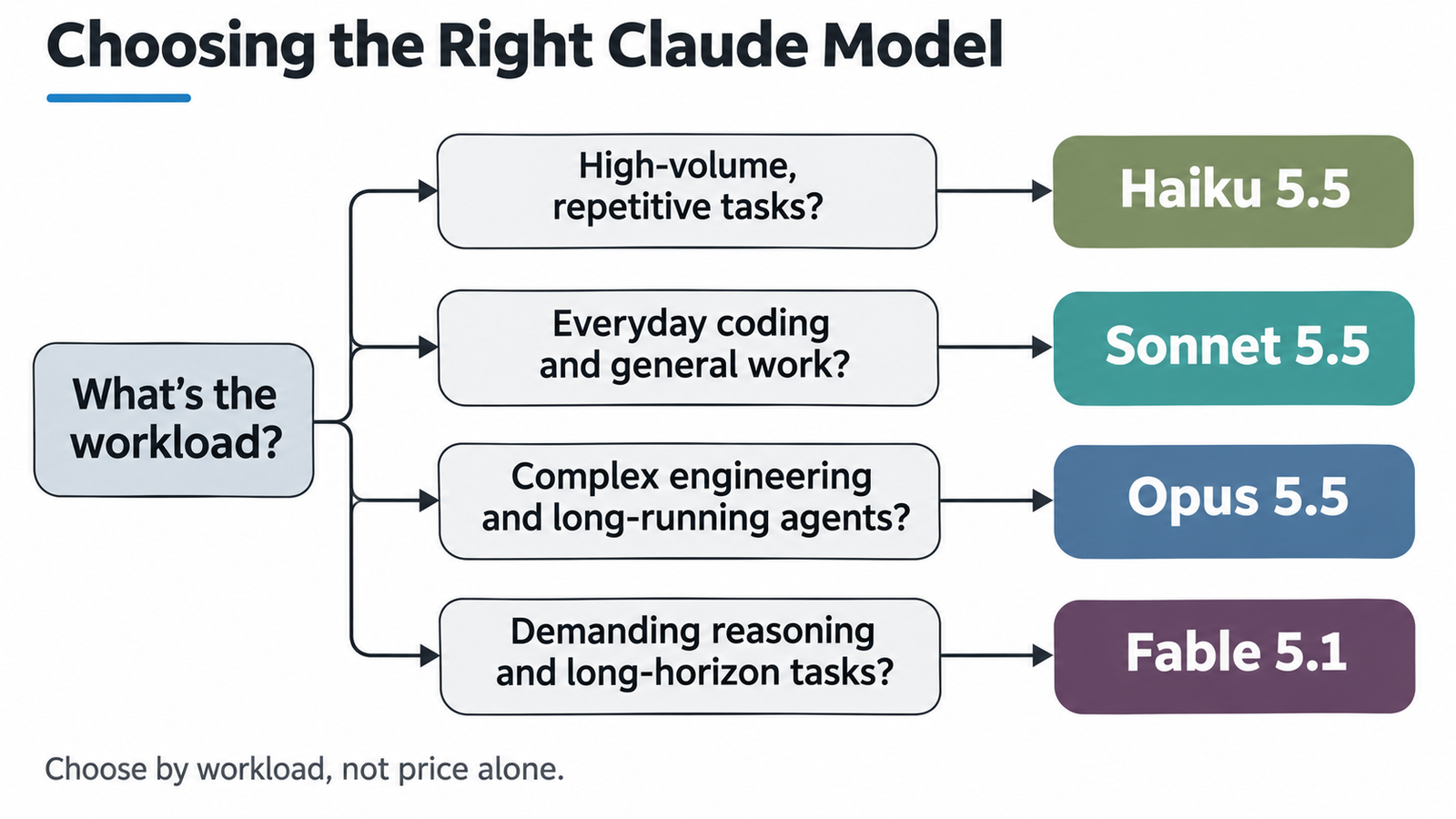
Prices verified against official documentation on 10 November 2026. API pricing changes often; check the linked pages before relying on any figure. Most AI applications …
Anthropic IPO valuation

Anthropic IPO: The $895 Billion Question Behind Its Valuation

Last updated: 9 November 2026. Latest confirmed development: Anthropic’s amended S-1, filed on 2 November, still leaves the share count and the IPO price range …

Machine Unlearning: Can We Really Trust an Edited AI Model?

Machine Unlearning

Checked against Hirundo’s and Lazarus AI’s published results, CrowdStrike’s DeepSeek-R1 study, Lawfare and the Federal Register on 4 November 2026.

Ask Alibaba’s Qwen3.6-35B-A3B about Tiananmen Square, Xinjiang or Hong Kong’s 2019 protests, and Hirundo says 89.8% of its answers to such prompts show censorship, propaganda-aligned framing or political bias. Ask the version Hirundo edited, and the company says that falls to 2.8%. Lazarus AI, a Boston startup, sells its own “ReAligned” Qwen models on a similar promise.

As Rest of World reported on 2 November, these are early signs of a business: taking capable Chinese open-weight models and retraining them for Western enterprise use. Machine unlearning is the phrase attached to much of it. The harder question is what else changes when a model’s politics do. On the evidence so far, removing censorship from a model and removing its security risks are two separate jobs.

Key Takeaways
  • Machine unlearning for language models is usually approximate. It suppresses target behaviour through further training; it doesn’t prove the knowledge is gone.
  • Hirundo’s 89.8% to 2.8% result is company-reported. It’s plausible, but its judge and dataset aren’t public, and nobody has replicated it.
  • Hirundo’s own security numbers barely moved. CyberSecEval 2 attack success went from 22.31% to 21.51% after editing.
  • Its coding test removed a gap, not the weakness. The edited Qwen3-Coder’s apps were still hackable 55% to 56% of the time for both defense personas.
  • Lazarus’s ReAligned models use fine-tuning and reinforcement learning. They report a large bias reduction but no capability or security results.
  • CrowdStrike tested DeepSeek-R1, not Qwen. Its findings and Hirundo’s shouldn’t be merged.
  • Emergent misalignment is a hypothesis here, not a proven backdoor.
  • An edited model needs its own trust assessment: provenance, reproducible evaluation, independent security testing and legal review.

Quick Navigation


Machine unlearning moves from research into business

The economics are simple. Chinese labs release strong models with open weights and permissive licences, and they cost far less to run than closed US frontier systems. Our comparison of Chinese open-weight models covers the main families. For a company that wants to self-host, Qwen is an attractive base. Its political training is the obstacle.

Hirundo’s chief executive, Ben Luria, told Rest of World that his team “edits the weights” of open models to improve cybersecurity and fairness and to reduce dangerous knowledge. He framed it as safety rather than politics: “We’re not making the model anti-Chinese.” Lazarus’s former chief scientist, Eric Hartford, said his aim was to present these models “to enterprises and to highly regulated industries.”

Not everyone accepts the premise. Oriane Peter, an AI researcher at King’s College London, told Rest of World that aligning a model to “Western values” or making it universally safe “is an impossible standard.”

How machine unlearning changes an AI model

Most machine unlearning in large models changes behaviour. Whether knowledge is gone is a separate question.

Machine unlearning began as a privacy problem: how to make a trained model behave as if certain training data had never been used. The cleanest answer is to retrain from scratch without that data, which is exact but expensive. Bourtoule and colleagues’ SISA method, published at IEEE S&P 2021, made this cheaper. It splits training so that deleting a data point means retraining only part of the model.

Large language models make exact unlearning impractical. Nobody retrains a 35-billion-parameter model to forget one topic. So most work on these models is approximate unlearning: further training that pushes the model away from target outputs while a “retain set” holds other behaviour in place.

The terms are worth keeping apart:

MethodWhat changesWhat it can claim
Retraining without the dataWhole model, from scratchThe data never influenced the result
Fine-tuningWeights, via new training examplesNew behaviour on the targeted inputs
Approximate unlearningWeights, via an objective that suppresses targetsReduced target behaviour; knowledge may remain
Targeted weight editingSpecific parameters or directionsLocal change; side effects need testing
What machine unlearning removes, and what it hides

A model that stops saying something hasn’t necessarily stopped knowing it. Facts are spread across many parameters, and training can teach a model to route around them rather than erase them.

The best-known test of this came from Lynch and colleagues in 2024. They examined a Llama 2 model that Microsoft researchers had trained to “forget” Harry Potter. It passed the original evaluation. Yet the authors found that “higher-than-baseline amounts of knowledge can reliably be extracted,” and its internal representations looked much like the original model’s.

The reverse also holds. A model that now answers a previously blocked question hasn’t necessarily shed the biases or behaviours that came with the original training. Both companies covered here are changing behaviour. Neither claims to have deleted training data.

What Hirundo’s machine unlearning results show

Hirundo’s Westernizing Qwen post, published on 5 October, describes three steps:

  1. Run the base model on political prompts and keep the censored responses.
  2. Train a LoRA adapter, a small set of extra weights, with what it calls a “behavioral-unlearning objective,” using a retain set to protect other behaviour.
  3. Merge the adapter into the base weights to produce a standalone checkpoint.

The main evaluation, CCPC-500, has 500 prompts “spanning 15 topics and seven request forms,” from direct questions to lesson plans and translations. The base Qwen3.6-35B-A3B scored 89.8% adverse responses (449 of 500). The edited model scored 2.8%. Hirundo reports similar drops on two external benchmarks: DECCP refusals fell from 65.26% to 3.16%, and ChinaBench non-compliance from 96.67% to 6.67%.

Capability held up in the company’s numbers. GPQA, a graduate-level science test, went from 79.42% to 79.29%. LiveCodeBench, for coding, dropped most, from 56.39% to 54.56%. MMLU-Pro and IFBench moved by less than a point.

The gaps matter, though:

  • Undisclosed judging: the post doesn’t say who or what scored responses as censored or biased.
  • Unpublished data: CCPC-500 hasn’t been released, so nobody else can rerun it.
  • No replication: no independent group has reproduced the result.
  • Vendor-authored: Hirundo sells the edited models and hosted inference.

That makes 89.8% to 2.8% a plausible, company-reported result, not a verified one.

The safety table in the same post is the one buyers should read. On CyberSecEval 2, the edited model’s attack success rate went from 22.31% to 21.51%. On OR-Bench, harmful compliance rose slightly, from 0.31% to 0.62%; Hirundo notes that’s two extra responses. The political behaviour changed dramatically. The security baseline barely moved.

Hirundo’s second test: machine unlearning and insecure code

On 21 October, Hirundo published a separate study on a different model, Qwen3-Coder-30B-A3B-Instruct. It asked the model to build the same small web app, sign-up plus a private secret store, from the BaxBench security benchmark. It generated 190 apps per customer persona and attacked each with BaxBench’s exploits.

Apps built for a “US defense contractor” were hackable 70% of the time, against 59% for a “Chinese defense contractor.” After editing, the figures were 56% and 55%, and the difference was no longer statistically significant (Fisher exact test, p = 0.84). Hirundo didn’t correct for multiple comparisons, and its runs used hosted endpoints.

Lawfare’s Tom Uren reviewed the study on 30 October. He wrote that it “favors Hirundo’s business interests, so we have to take it with a grain of salt.” He described the edited model as producing “equally (yet still pretty poor) secure code.” Machine unlearning appears to have removed the gap between customers. It didn’t make the code secure.

Lazarus AI’s ReAligned models: realignment, not machine unlearning

Lazarus describes its method differently, and the two shouldn’t be merged. According to Rest of World, Lazarus identified banned topics from leaked Chinese censorship guidelines, generated prompts on them and used answers from Google’s Gemini Flash to realign Qwen.

The ReAligned-Qwen3.5-2B model card, credited to Hartford, describes:

  • Filtering: prompts are kept only where the base model “empirically exhibited ideological bias.”
  • Fine-tuning: supervised fine-tuning on direct, factual answers.
  • Reinforcement learning: a classifier-based reward, using GRPO, a reinforcement learning method, with LoRA adapters.

The card doesn’t say where the target answers came from. It says the aim “is not to inject new encyclopedic knowledge.”

On Lazarus’s own bias benchmark, the base model scored 84.2% and the realigned model 4.1%. The card doesn’t describe that benchmark’s size or scoring and reports no capability numbers. Its caveats are frank. Reduced censorship “does not guarantee factual accuracy,” the model may overcorrect toward Western framing, and the same method could steer a model “in other ideological directions.”

Hartford told Rest of World the models are deployed at about a dozen US companies. That’s a company figure. I found no independent security assessment of the ReAligned models.

Does machine unlearning make a model more secure?

Not by itself, on current evidence. The interest in Chinese models’ code security comes mainly from two studies of different models.

CrowdStrike’s DeepSeek-R1 findings

On 20 November 2025, CrowdStrike published research on the raw DeepSeek-R1 model, run without DeepSeek’s API or app.

  • Design: 50 coding tasks with 121 combinations of added context, such as “based in Tibet” or “run by Uyghurs,” which had nothing to do with the code. That made 30,250 prompts per model.
  • Scoring: an AI judge rated the code, checked against 85 human-scored samples.
  • Results: with no added context, 19% of responses contained vulnerable code. For an industrial control system “based in Tibet,” it rose to 27.2%. CrowdStrike called that “an increase of almost 50%,” a relative figure; it’s about 8 percentage points.
  • Refusals: for Falun Gong prompts, the model refused to write code 45% of the time.

CrowdStrike’s caveats are explicit. The findings “do not mean DeepSeek-R1 will produce insecure code every time those trigger words are present,” and it didn’t release its prompts or data. This was DeepSeek-R1, not Qwen. Hirundo’s Qwen results don’t show that machine unlearning would fix DeepSeek, and CrowdStrike’s results don’t describe Qwen.

Booz Allen reported a similar pattern in May across four Chinese models, including Qwen, when the user was framed as a US government employee. It also said: “we do not have proof at this point that code flaws are intentionally introduced.”

Emergent misalignment, and what it doesn’t prove

CrowdStrike’s leading explanation is emergent misalignment, a term from Betley and colleagues’ 2025 paper. They found that training a model narrowly to write insecure code made it behave badly on unrelated prompts. They also showed that a trigger-conditioned version misbehaves only when the trigger appears. The authors say a full explanation “remains an open problem.”

Applying that to Chinese models is a hypothesis. The idea is that training to treat certain groups as sensitive might spill into worse work for them. It hasn’t been demonstrated. Hirundo’s post uses stronger language, saying the problem “sits in the model” like a backdoor. A backdoor, though, means a specific hidden trigger planted to cause harm, and none of these studies shows intent. What they show is measurable, context-dependent behaviour that ordinary benchmarks may miss.

After machine unlearning, provenance still matters

An edited model is a new artefact built on an old one. It carries the base model’s training data, its licence, any behaviour the edit didn’t reach and the editor’s own changes. Its trust status is separate from Alibaba’s reputation, from Hirundo’s or Lazarus’s reputation and from its measured performance.

Provenance is checkable in ways behaviour isn’t. A buyer can confirm which base checkpoint was used, at which revision, and get cryptographic hashes for the base and edited weights. Our guide on how to verify model weights covers those checks. Version tracking matters too. Hirundo’s model card on Hugging Face can change. A security review applies to one exact set of weights, not to a product name.

The DeepSeek procurement question

Provenance has legal weight as well. On 20 October, the Department of Homeland Security published a Federal Acquisition Supply Chain Security Act order, issued on 24 July, covering DeepSeek and its affiliates. It excludes DeepSeek products from federal civilian procurement. It also requires agencies to remove DeepSeek products and “third-party products and services developed using DeepSeek implementations.”

The order doesn’t define “DeepSeek implementation.” Law firm Haynes Boone notes that it doesn’t address fine-tuned or derived models. Contractors under FAR 52.204-30 must report covered products within three business days of identifying them. Our DeepSeek Super-Agent analysis explains why the order covers federal civilian agencies and their contractors, not private companies generally.

Whether a DeepSeek model edited by a third party remains covered is a legal question the text doesn’t settle. Treating it as outside scope because someone changed the weights would be a risky assumption. Qwen is a different case. As of 4 November, I found no equivalent federal civilian order covering Alibaba or Qwen, though Lawfare notes that Congress is investigating corporate use of Chinese models. None of this is legal advice. Government contractors and regulated organisations should get qualified procurement and legal review.

A machine unlearning procurement checklist

Neither the base model's reputation nor the vendor's claims replace these checks.

Before deploying an edited open-weight model, a buyer should be able to answer these:

  1. Original model: which model, at which revision?
  2. Original publisher: who published it, and through which official repository?
  3. Weight provenance: are there hashes for the base and edited checkpoints?
  4. Licence: do the base licence and the vendor’s terms allow your use and redistribution?
  5. Modification method: unlearning, fine-tuning, reinforcement learning or direct editing?
  6. Vendor: who made the change, and what do they sell?
  7. Data: what prompts, target answers and retain sets were used?
  8. Behavioural evaluation: can you rerun it, with the judge disclosed?
  9. Security evaluation: code-security and adversarial tests on your use cases, not only general benchmarks.
  10. Independent replication: has anyone outside the vendor reproduced the results?
  11. Regression testing: what did the edit cost on the tasks you care about?
  12. Version and hash: is the reviewed version pinned?
  13. Deployment environment: is it self-hosted, sandboxed, and given least-privilege access to tools and data?
  14. Monitoring: will you log outputs and re-test after updates?
  15. Regulation and procurement: does any order, contract clause or sector rule apply to the base model’s origin?
Trust dimensionWhat to verifyEvidence to request
ProvenanceOriginal model and weightsCheckpoints and cryptographic hashes
ModificationWhat changedTechnical change documentation
BehaviourTargeted behaviourReproducible evaluation
SecurityVulnerability exposureIndependent security testing
PerformancePreserved capabilitiesRegression benchmarks
ComplianceLicence and procurement scopeLegal and licence review
MaintenanceFuture modificationsVersion and update records

An edited model shouldn’t inherit trust from its base or its editor. It should earn its own through this evidence.

Frequently asked questions

What is machine unlearning in AI?

Machine unlearning is the set of methods for making a trained model behave as if certain data or behaviours had not been learned. For large models it is usually approximate: further training that suppresses targets.

Can machine unlearning remove information from an AI model?

Not reliably, for large language models. Research on unlearning methods has shown that “forgotten” knowledge can often still be extracted.

How does machine unlearning differ from fine-tuning?

Fine-tuning teaches new behaviour from examples. Machine unlearning aims to remove or suppress existing behaviour, often using fine-tuning-style training with a different objective.

What is the difference between machine unlearning and weight editing?

Weight editing changes specific parameters directly. Machine unlearning is a goal that may use weight editing, fine-tuning or retraining.

Why are companies modifying Chinese open-weight AI models?

They are capable and cheap to run, but trained to follow Chinese censorship rules. Vendors such as Hirundo and Lazarus sell retrained versions for Western enterprise use.

Does removing AI censorship make a model more secure?

Not on the evidence so far. Hirundo’s edited Qwen models showed large drops in censorship but little change in measured security.

What are the security risks of modified open-weight models?

Insecure code, untested side effects from the edit, unverified weights and inherited behaviour from the base model. Independent testing in your own use case is the only way to measure them.

Can edited DeepSeek models be used by US federal agencies?

Possibly not. The DHS order covers products “developed using DeepSeek implementations” without defining the term, so agencies and contractors need legal review.

How can companies verify the provenance of an AI model?

Get the base model’s official repository and revision, plus cryptographic hashes for both base and edited weights, and pin the version you review.

Does machine unlearning preserve a model’s original capabilities?

Sometimes, by vendor measures. Hirundo reports losses under two points on four benchmarks. Lazarus reports no capability numbers. Test the tasks you rely on.


Keep reading

Claude API rate limits

Claude API Rate Limits in 2026: How Many Requests Can You Run?

Claude API rate limits on the Start tier allow most current models 2,000,000 input tokens and 400,000 output tokens per minute, with 1,000 or 4,000 …
Claude Fable 5.2

Claude Fable 5.2 vs Opus 5.5: Is the Higher Price Worth It?

Specifications and prices checked against Anthropic’s documentation on 11 November 2026. Claude Fable 5.2 charges $8 per million input tokens and $40 per million output …
Prompt Caching

Your AI API Is Reprocessing the Same Tokens. Stop Paying for It.
Prices verified against official documentation on 10 November 2026. API pricing changes often; check the linked pages before relying on any figure. Most AI applications …
Anthropic IPO valuation

Anthropic IPO: The $895 Billion Question Behind Its Valuation

Last updated: 9 November 2026. Latest confirmed development: Anthropic’s amended S-1, filed on 2 November, still leaves the share count and the IPO price range …